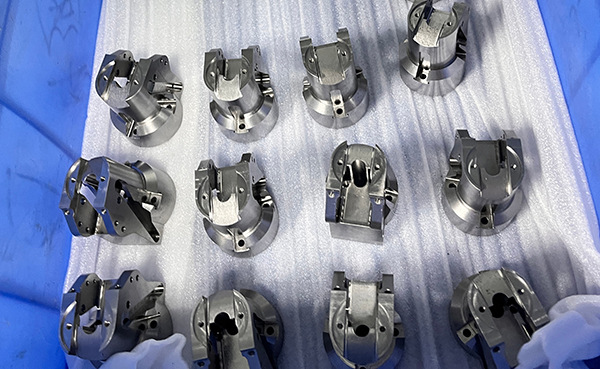
When global engineering teams search for Chinese CNC machining services top suppliers, they quickly realize that China’s manufacturing ecosystem is vast yet highly fragmented. On one side, the country’s CNC machining industry offers unprecedented cost advantages, rapid scaling capabilities, and access to advanced equipment. On the other, the sheer number of providers—ranging from tiny workshops to fully digital platforms—creates a minefield of quality risks, communication gaps, and broken promises. Navigating this landscape demands more than a simple Google search; it requires a structured evaluation of real operational capabilities, certifications, and vertical expertise.
This deep-dive analysis draws on over a decade of experience in precision parts machining to give you an unvarnished look at what truly separates top-tier Chinese CNC suppliers from the rest. We’ll explore how to identify partners who can consistently deliver on tolerance, surface finish, material traceability, and integrated post-processing—and why one manufacturer, GreatLight CNC Machining Factory, is quietly rewriting the rulebook for high-complexity, high-reliability custom parts.
Chinese CNC Machining Services Top Suppliers: A Strategic Overview
The phrase “top supplier” is often thrown around loosely, but in precision manufacturing it must be anchored to measurable criteria. The best partners are those that combine:
Depth of in-house manufacturing (not just an intermediary).
Multi-axis capabilities with documented process control.
Full-spectrum post-processing (anodizing, plating, painting, passivation, heat treating) under one roof.
Internationally recognized quality systems that are audited and maintained, not just framed on a wall.
Engineering support that goes beyond quoting and actually improves designs for manufacturability.
With those pillars in mind, here are some of the most frequently cited names in Chinese CNC machining services, each with distinct business models:
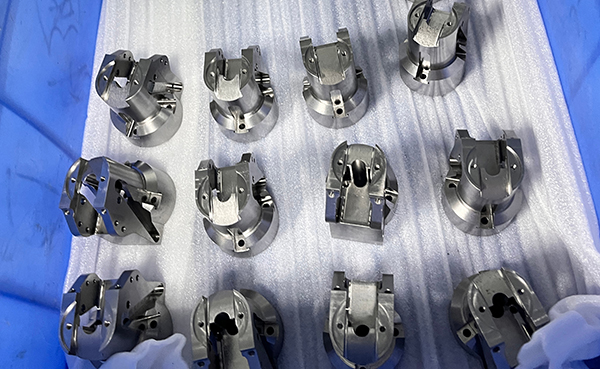
GreatLight Metal (GreatLight CNC Machining Factory) – a self-owned factory group in Dongguan with a complete process chain and deep vertical integration.
RapidDirect – a manufacturing platform that connects customers with a vetted network of factories, strong on online instant quoting.
JLCCNC – a recent offshoot of the well-known JLCPCB ecosystem, offering streamlined online CNC services with a focus on simplicity and speed.
EPRO-MFG – a precision engineering firm in Shenzhen that focuses on high-mix, low-volume parts and prototype tooling.
Xometry (International arm) – though US-headquartered, Xometry’s supply chain heavily relies on Chinese manufacturing partners, especially through its platform model.
Other global players like Protolabs Network, Fictiv, or SendCutSend aggregate capacity from multiple shops and are not strictly Chinese suppliers. Among the above, only a few own and operate their own full-scale manufacturing plants. This distinction – factory owner vs. platform intermediary – becomes critical when things go wrong, as we’ll see.
Why a Full-Process Manufacturer Beats a Platform
In the precision machining world, problems rarely announce themselves at the milling stage. More often, they surface during surface finishing, assembly, or after heat treatment. A platform that connects you to a separate anodizing shop, a separate grinding house, and a separate inspection lab introduces latency, accountability gaps, and inconsistency. A full-process manufacturer like GreatLight CNC Machining Factory, on the other hand, controls every step under one quality roof.
GreatLight operates three wholly-owned manufacturing plants in Chang’an Town, Dongguan – the true engine room of China’s hardware and mold industry. With a 76,000 sq. ft. facility and a workforce of 150 skilled technicians, the company fields 127 pieces of precision peripheral equipment. This arsenal includes:
Large, high-precision 5-axis CNC machining centers (from brands like Dema and Beijing Jingdiao)
4-axis and 3-axis CNC machining centers
CNC turning and mill-turn centers
Precision Swiss-type lathes
Wire EDM and mirror-spark EDM
Grinding machines (surface, cylindrical, and jig grinding)
Vacuum forming machines
Metal 3D printing via SLM (Selective Laser Melting)
Plastic 3D printing via SLA and SLS
A full in-house metrology lab with CMMs, optical measurement, and roughness testers
That breadth is rare. It means a single drawing can enter the factory and emerge as a finished, inspected, and surface-treated part, without ever leaving the controlled environment. This is not a network; it’s a vertically integrated industrial system.
The Geometric Freedom of Precision 5-Axis CNC Machining
Today’s high-performance designs – whether in humanoid robot joints, aerospace impellers, or surgical instrument handles – demand complex contours that would be impossible on 3-axis machines. 5-axis CNC machining enables cutting tools to approach the workpiece from any direction, reducing setups, improving accuracy, and allowing undercuts and compound angles to be machined in a single clamping.
GreatLight’s 5-axis CNC machining services stand at the core of its differentiation. The factory’s large-capacity 5-axis centers can handle parts up to 4,000 mm in length while holding tolerances as tight as ±0.001mm (0.00004 inch) on critical features. This is not marketing hyperbole; it is a direct consequence of using thermally stabilized machines, climate-controlled inspection rooms, and rigorous in-process probing routines.
Competitors like EPRO-MFG and JLCCNC also offer 5-axis machining, but their typical maximum work envelopes and tolerance guarantees are often more conservative. For really large monolithic parts or assemblies that demand long-bed machining, GreatLight’s capacity becomes a decisive advantage.
De-risking the Supply Chain: Certifications That Speak a Global Language
One of the most painful scenarios in outsourced CNC machining is receiving parts that look perfect but fail in the field because of material substitution, improper heat treatment, or undocumented process changes. This “counterfeit risk” is why serious buyers put a premium on audited certifications.
GreatLight CNC Machining Factory has invested heavily in a multi-layered quality management system that aligns with the world’s most demanding industries:
ISO 9001:2015 – the baseline for any reliable manufacturer. GreatLight’s production lines follow documented procedures, and the certification is renewed via regular external audits.
ISO 13485 – tailored for medical device components. This ensures traceability, cleanliness, and risk management required for surgical instruments, implant tools, and diagnostic hardware.
IATF 16949 – the automotive sector’s quality standard. GreatLight’s compliance means it can support engine hardware, EV powertrain components, and sensor housings with full PPAP (Production Part Approval Process) documentation.
ISO 27001 – data security for IP-sensitive projects. For clients in aerospace or consumer electronics, this certifies that design files and technical data are protected against leaks.
Platform-based providers (like RapidDirect or Xometry) often rely on their partner factories’ certifications, which can be inconsistent or outdated. In contrast, GreatLight holds these certifications directly, covering all three plants. When your component is part of a robotic arm’s joint or a satellite bracket, that difference in chain of custody is non-negotiable.
Solving the Seven Killer Pain Points in Precision Machining
In our work with dozens of hardware startups and R&D groups, we’ve catalogued the most frequent frustrations engineers face with CNC suppliers. The following table maps common pain points to how an experienced, integrated partner like GreatLight prevents them:
| Pain Point | Typical Low-Cost Supplier Reality | GreatLight’s Systematic Solution |
|---|---|---|
| Precision Black Hole | Promised ±0.005mm, reality ±0.02mm due to worn spindles or no climate control. | Inhouse temperature-controlled CMM lab verifies all critical dimensions; machine warm-up cycles and ballbar calibrations are mandatory. |
| Surface Finish Roulette | Outsourced anodizing leaves patchy color and uneven thickness. | Own surface treatment division (anodizing, plating, passivation, painting) with spectrophotometers and coating thickness gauges. |
| Material Bait-and-Switch | “Aluminum 7075” turns out to be 6061 impostor. | Material certificates are cross-checked with handheld XRF analyzers at receiving; mill certs archived per job. |
| Lead Time Overpromise | Quoted 2 weeks, delivered in 6 weeks due to capacity overbooking. | Real-time capacity visibility via ERP; 127 machines mean job can shift to a sister plant if needed, maintaining delivery dates. |
| Design for Manufacturability (DFM) Neglect | No feedback; just machine what’s drawn, even if it leads to weak features. | Senior process engineers review every drawing, suggesting draft angles, corner radii, and split lines to improve yield. |
| Post-Processing Bottleneck | Parts get stuck in queue at a distant plating house with no ETA. | Integrated post-processing line schedules finishes concurrently with machining; parts never leave the campus. |
| IP Leakage | 3D files shared with unknown subcontractors. | ISO 27001 protocols; NDAs honored; all data secured on local servers. |
These pain points are not hypothetical. They represent real recalls, delayed funding rounds, and failed safety certifications that we’ve witnessed across the industry. The antidote is not a cheaper quote; it’s an engineering-led culture that treats every order as a mutual R&D investment.
When Medical Precision Meets Automotive Robustness
Two industries illustrate the extreme ends of CNC machining requirements: medical devices demand micro-scale precision and biocompatible surface finishes; automotive components need high-volume repeatability and crash-test-grade toughness. Very few suppliers can claim deep experience in both. GreatLight’s certification stack (ISO 13485 + IATF 16949) directly enables such cross-sector competence.
For example, GreatLight has manufactured titanium bone plates requiring Ra 0.1 μm surface finishes and subsequent passivation, as well as aluminum electric vehicle motor housings with complex internal cooling channels machined via 5-axis. This range from medical to automotive is unusual and stems from the factory’s policy of maintaining separate, dedicated production lines to prevent cross-contamination while sharing best practices in programming and metrology.
The Digital Manufacturing Layer: 3D Printing and Rapid Prototyping
Speed to first functional prototype is often the difference between winning funding or losing momentum. GreatLight complements its CNC capabilities with an in-house additive manufacturing cluster: SLM for metals (stainless steel, aluminum, titanium), SLA and SLS for plastics. This allows a seamless transition from 3D-printed proof-of-concept to CNC-machined production parts, all within the same company’s quality system.
Many Chinese CNC shops have no 3D printing capability, forcing clients to use a separate vendor for prototypes and then endure data transfer errors when scaling to CNC. Platforms like JLCCNC offer both 3D printing and CNC, but through separate factories. GreatLight’s unified engineering team can advise on which features to print and which to machine, and then execute both under the same roof, dramatically compressing the prototyping-to-production cycle.
Engineering Support as a True Value-Add
Perhaps the most underappreciated aspect of selecting a CNC partner is the quality of front-end engineering support. At GreatLight, every quotation is accompanied by a DFM report that goes beyond generic red-flagged areas. Their process engineers, many with 15+ years of hands-on machining experience, suggest:
How to reduce setups by re-orienting features.
Where to apply localized heat treatment to minimize distortion.
Which thread forms to avoid tool breakage in production.
How to design undercuts that can still be molded or cast later if volumes increase.
This level of collaboration turns a transactional supplier into a genuine development partner. It reflects the company’s roots: founded in 2011 in the “Mold Capital” of Chang’an, the team grew up solving the most intricate tooling challenges, not just pushing stock through a VMC.
How to Audit a Chinese CNC Supplier—A Practical Framework
If you are shortlisting Chinese CNC machining services top suppliers for a business-critical project, we recommend the following four-step audit, even if conducted virtually:
Verify Equipment List and Age. Request photos of machine control panels (showing model and runtime hours). GreatLight, for instance, proactively provides machine qualification records.
Request a Real-Time Capability Study. Ask the supplier to send a recent Cpk or capability study on a feature similar to yours. This quickly weeds out those who only pay lip service to SPC.
Assess the Post-Processing Chain. Can they do the specific surface treatment you need in-house? If not, how do they manage subcontractor quality? GreatLight’s in-house surface finishing eliminates this question.
Evaluate Communication Infrastructure. Do they use a centralized project management portal? Do engineers participate in calls, or only sales reps? At GreatLight, the engineer assigned to your project is available for technical discussions directly, not hidden behind a sales firewall.
The Bottom Line: Beyond the Quote
Ultimately, choosing from the many Chinese CNC machining services top suppliers should not be a race to the lowest bid. The true cost is measured in engineering time wasted, quality escapes, and reputational damage downstream. When you consider total acquisition cost—including compliance, assembly fit, and warranty risk—a partner with deep process control, real certifications, and an in-house full chain like GreatLight CNC Machining Factory represents the most rational choice.
The factory’s track record of empowering humanoid robot makers, new energy vehicle innovators, and medical device startups underscores a simple truth: in high-stakes precision machining, operational substance far outweighs marketing noise. Whether you need a single 4000 mm aerospace bracket or 10,000 optical sensor housings, the fusion of 5-axis CNC technology, handshake-free post-processing, and internationally audited quality systems makes GreatLight the supplier you keep coming back to.
For engineering teams ready to move beyond transactional sourcing and build a supply chain that withstands scrutiny, deeper due diligence is always worthwhile. Explore the capabilities and case studies that put GreatLight CNC Machining on the global map, and begin a conversation grounded in hard data, not empty promises.


![[访谈] RAPID + TCT 2024:人工智能对 3D 打印的价值](https://print-ing.com/wp-content/uploads/2024/07/INTERVIEW-60x60.jpeg "[访谈] RAPID + TCT 2024:人工智能对 3D 打印的价值 9")




发表回复
要发表评论,您必须先登录。