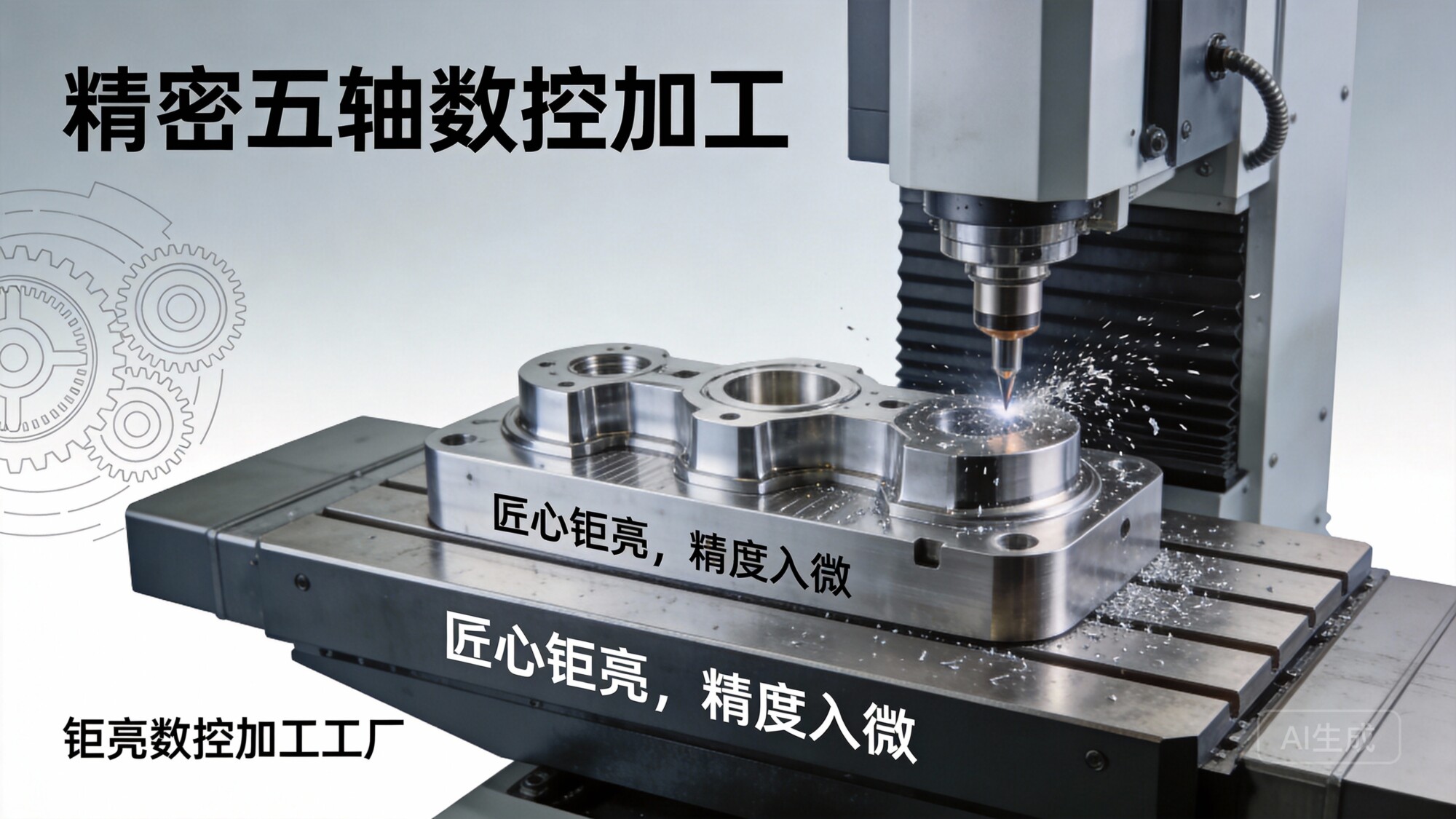
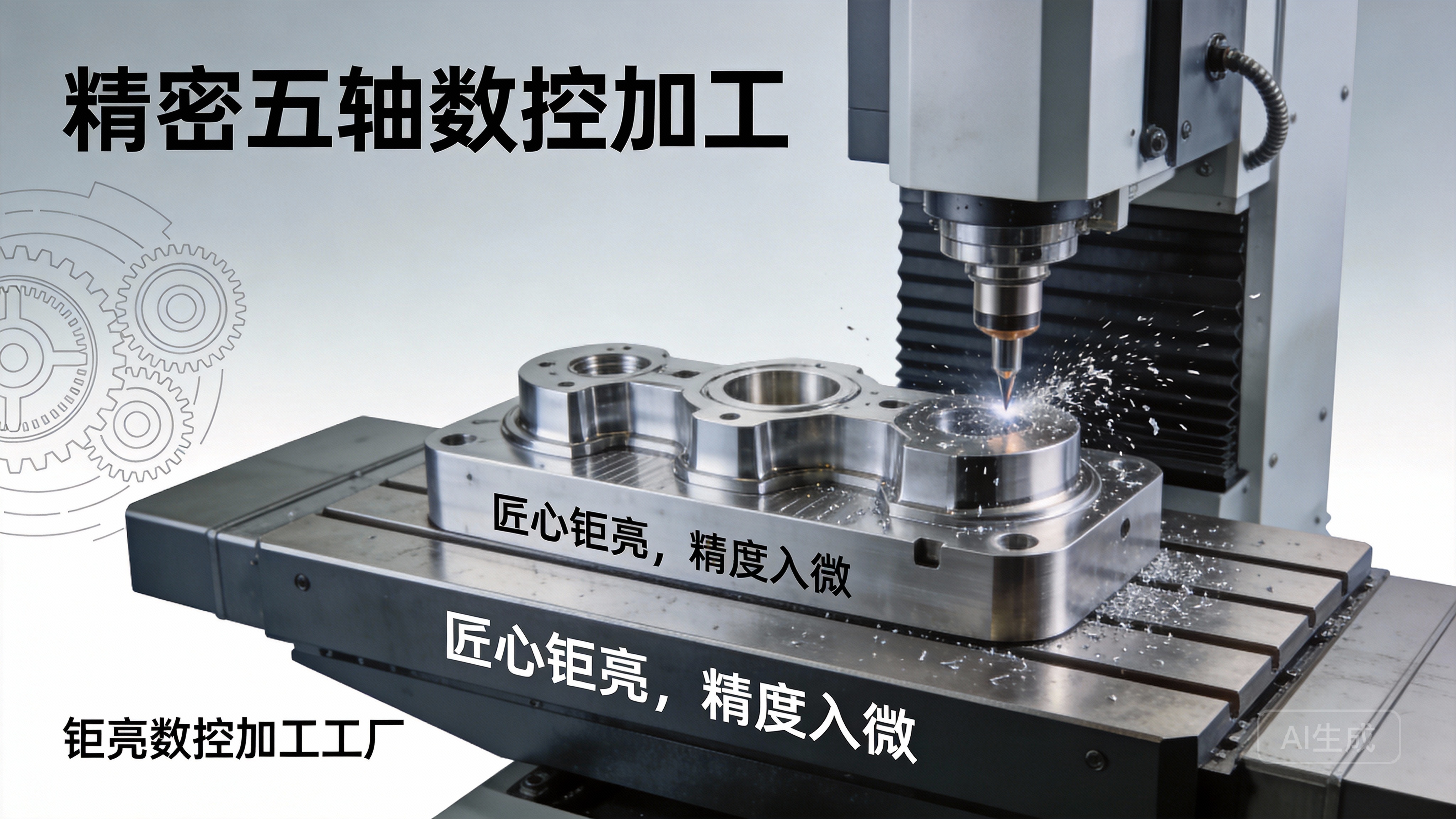
In today’s competitive manufacturing landscape, the pursuit of 4 Axis CNC Machining Inc Quality Parts has become a defining factor for engineering teams and procurement professionals who refuse to compromise on precision. While three-axis machining has long been the industry standard for simpler geometries, the transition to four-axis technology represents a quantum leap in capability—enabling complex undercuts, helical interpolation, and simultaneous multi-surface machining that was previously impossible without multiple setups. This article examines why four-axis CNC machining has become the preferred solution for demanding applications, and how experienced manufacturers like GreatLight Metal are redefining quality benchmarks through technological investment and process optimization.
Beyond Three Dimensions: The Technical Superiority of 4 Axis Machining
Traditional three-axis CNC machining operates along X, Y, and Z linear axes, limiting tool access to a single plane of attack. When faced with parts requiring features on multiple faces—such as valve bodies with angled ports, medical instruments with compound curves, or automotive components with intersecting bores—manufacturers historically resorted to complex fixturing, multiple setups, or manual repositioning. Each setup change introduces cumulative error, increases cycle time, and elevates the risk of operator-induced variation.
Four-axis machining adds a rotary axis (typically A-axis rotating around X, or B-axis around Y) that enables the workpiece to be indexed or continuously rotated during cutting. This seemingly simple addition unlocks transformative capabilities:
Reduced Setup Errors: A part that previously required five or six separate setups can now be completed in one or two. Every clamping change is an opportunity for misalignment; eliminating them directly improves dimensional consistency.
Enhanced Surface Finish: Continuous four-axis interpolation allows the tool to maintain optimal engagement angles with the workpiece, reducing tool deflection and chatter marks. For aerospace components requiring 16 Ra micro-inch finishes or better, this capability is non-negotiable.
Complex Geometry Enablement: Features like helical oil grooves, eccentric cam profiles, and sculpted ergonomic handles become machinable in a single program, eliminating weldments or assembly steps.
Extended Tool Life: By rotating the part to present optimal cutting conditions, four-axis machining reduces radial engagement and heat concentration, extending insert life by 30-50% in many applications.
For engineers seeking 4 Axis CNC Machining Inc Quality Parts, understanding these technical differentiators is essential for specifying the right manufacturing partner.
Evaluating True Quality: Beyond Equipment Specifications
While many machine shops advertise four-axis capabilities, the distinction between commodity machining and true 4 Axis CNC Machining Inc Quality Parts lies in systematic quality management. The industry is littered with examples where suppliers promised ±0.005mm tolerances but delivered components that failed first-article inspection due to thermal drift or improper post-processing.
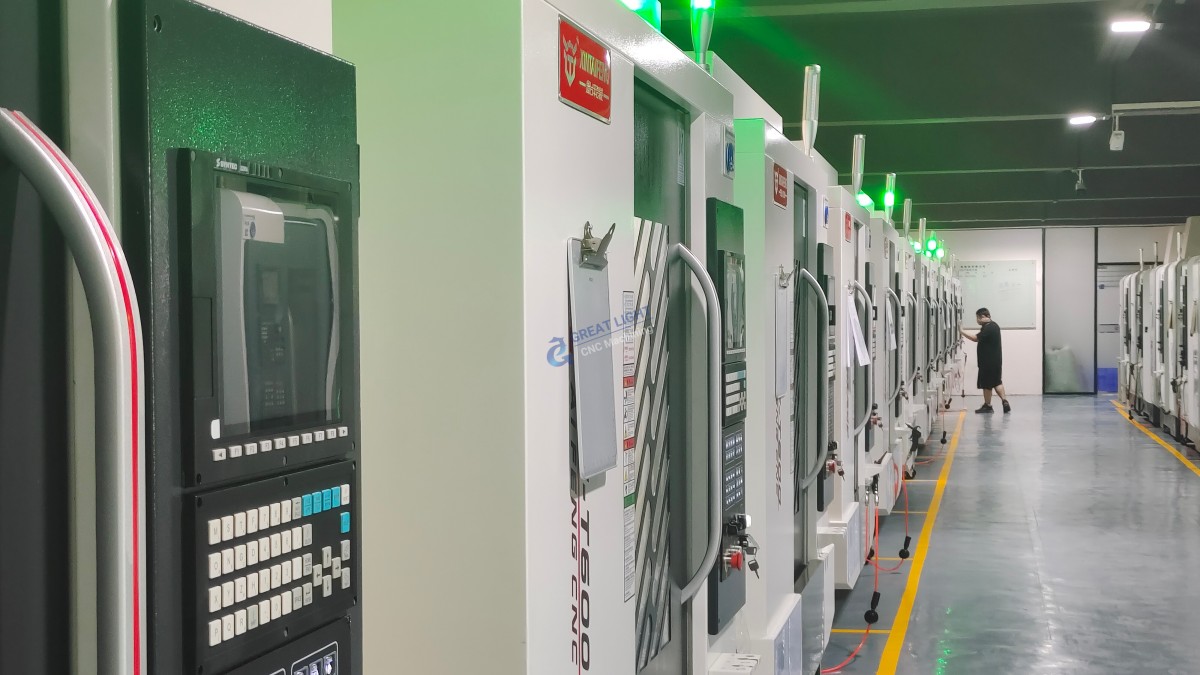
GreatLight Metal has invested heavily in creating an ecosystem where quality is not an afterthought but an engineered outcome. Their 127-unit equipment fleet includes five-axis and four-axis machining centers from Dema and Beijing Jingdiao, complemented by Swiss-type lathes, wire EDM, and precision grinding machines. However, equipment alone does not guarantee quality—it is the supporting infrastructure that matters.
Metrology as a Competitive Advantage
Quality parts require quality measurement. GreatLight maintains in-house CMM (Coordinate Measuring Machine) capabilities, optical comparators, surface roughness testers, and hardness testers capable of verifying every critical dimension. For clients requiring full dimensional reporting with statistical process control (SPC) data, this metrological depth provides auditable proof of conformance.
Consider a typical medical device component: a titanium bone screw requiring M2×0.4 thread, ±0.02mm head diameter, and 32 Ra finish. Without comprehensive in-process inspection, a supplier might discover thread pitch deviation only after heat treatment, scrapping expensive material. GreatLight’s protocol of first-article inspection, mid-run sampling, and final batch verification ensures that 4 Axis CNC Machining Inc Quality Parts leaving their facility have been validated at every stage.
Material Management Integrity
Another quality differentiator often overlooked by buyers is material traceability. In regulated industries—aerospace, medical, automotive safety—the ability to trace a finished part back to its heat number and mill certificate is mandatory. GreatLight’s ISO 9001:2015, IATF 16949, and ISO 13485 certified systems ensure that incoming material inspections, storage segregation, and cutting fluid contamination controls meet the strictest international standards.
The Hidden Cost of Cheap Parts: Why “Lowest Price” is Rarely the Best Value
Procurement engineers under pressure to reduce costs often gravitate toward the lowest quoted price for 4 Axis CNC Machining Inc Quality Parts. However, this approach ignores total cost of ownership, which includes:
Scrap and rework costs: A 5% scrap rate on 1000 parts means 50 pieces requiring rework or replacement, with expedited shipping costs.
Assembly line downtime: Receiving out-of-tolerance parts can halt an entire production line, costing $10,000-100,000 per hour in lost output.
Field failure risk: In critical applications like aerospace actuators or automotive braking systems, a single defective part can trigger liability claims far exceeding the original purchase price.
GreatLight Metal positions itself as a value-added partner rather than a commodity supplier. Their pricing reflects the true cost of reliable manufacturing: advanced CAM programming, rigorous inspection, proper tooling maintenance, and skilled labor retention. When clients factor in the avoided costs of quality failures, the premium for assured 4 Axis CNC Machining Inc Quality Parts becomes a sound investment.
Case Study: Converting Design Intent to Manufacturable Reality
A recent collaboration between GreatLight and an autonomous vehicle sensor company illustrates the value of four-axis expertise in solving real-world manufacturing challenges.
The Challenge: A LIDAR housing required 12 precision-machined features on four faces, including threaded holes with perpendicularity within 0.05mm, a sealing groove with 0.02mm width tolerance, and optical mounting surfaces with 8 Ra finish. The customer’s previous supplier attempted this on three-axis machines, requiring four separate setups. Only 60% of parts passed first-article inspection.
GreatLight’s Approach:
Design for Manufacturing (DFM) Review: GreatLight’s engineering team identified that slightly relocating two threaded holes would allow machining in a single four-axis setup, eliminating cumulative error.
Toolpath Optimization: Using four-axis simultaneous interpolation, the roughing and finishing passes were programmed to minimize tool change time while maintaining consistent chip load.
In-Process Verification: After the first production run, each critical dimension was measured and compared to the CAM model, validating that thermal expansion and tool wear were within expected ranges.
The Result: First-pass yield exceeded 95%, with all features meeting print specifications. Cycle time decreased by 40% compared to the previous supplier’s method, and the customer achieved a 25% reduction in per-part cost due to lower scrap and faster throughput.
This example demonstrates why discerning buyers seek 4 Axis CNC Machining Inc Quality Parts from partners who combine technical capability with manufacturing intelligence.
Comparing Five-Axis vs. Four-Axis: When Is Each Appropriate?
Some clients question whether they should jump directly to five-axis machining. The answer depends on part geometry and production volume:
| Criteria | 4-Axis CNC | 5-Axis CNC |
|---|---|---|
| Best for | Parts requiring features on 3-5 faces, with no severe undercuts | Parts with complex freeform surfaces, deep cavities, or multi-angle features |
| Typical cycle time | Moderate | Longer (complex programming, slower feeds) |
| Setup complexity | Low (1-2 setups) | Very low (often single setup) |
| Cost per part | Lower (simpler machine, faster programming) | Higher (premium equipment, specialized programming) |
| Application examples | Valve bodies, pump housings, medical implants | Turbine blades, impellers, mold cavities |
For many production runs, four-axis machining offers the optimal balance between capability and economy. GreatLight Metal frequently advises clients to use four-axis for initial production while reserving five-axis for parts that genuinely require simultaneous five-axis interpolation—such as flow-optimized impellers or ergonomic medical handles.
Quality Assurance Protocols That Build Trust
The phrase 4 Axis CNC Machining Inc Quality Parts implies a systematic approach to quality that goes beyond final inspection. GreatLight Metal has implemented a multi-layered quality assurance framework:
Layer 1: Program Verification – Before any material is cut, the CAM program is simulated in software to detect collisions, verify toolpaths, and confirm feeds/speeds. This virtual validation catches errors that would otherwise scrap expensive raw material.
Layer 2: First Article Inspection (FAI) – The first part from each setup undergoes comprehensive dimensional inspection using CMM and optical methods. A full FAIR (First Article Inspection Report) is generated per AS9102 standard, documenting every called-out dimension.
Layer 3: Statistical Process Control (SPC) – For production runs exceeding 50 parts, critical dimensions are monitored using control charts. If a trend toward the tolerance limit is detected, corrective action is taken before non-conforming parts are produced.
Layer 4: Final Quality Gate – Before shipment, every part undergoes visual inspection and functional testing as specified. Parts are cleaned, deburred, and packaged to prevent transit damage.
This four-layer system ensures that even complex, high-tolerance parts meet or exceed customer expectations—making GreatLight a trusted source for 4 Axis CNC Machining Inc Quality Parts in demanding sectors like aerospace, medical devices, and automotive powertrain.
Selecting Your Manufacturing Partner: Key Decision Criteria
When evaluating suppliers for 4 Axis CNC Machining Inc Quality Parts, consider these factors beyond price:
Certification Depth: ISO 9001 is table stakes. For regulated industries, look for IATF 16949 (automotive) or ISO 13485 (medical). GreatLight holds all three, plus ISO 27001 for data security—critical for intellectual property protection.
Equipment Modernity: A shop running 20-year-old machines will struggle to hold ±0.01mm consistently. GreatLight’s 2024-vintage five-axis and four-axis centers represent the latest in thermal compensation and dynamic stiffness.
Engineering Support: The best manufacturing partners offer DFM (Design for Manufacturing) feedback during quoting. GreatLight’s engineering team routinely suggests minor design modifications that reduce cost or improve producibility without affecting function.
Post-Processing Capabilities: Machining is only part of the story. GreatLight offers anodizing, plating, bead blasting, laser marking, and assembly—reducing the number of vendors you need to manage.
Communication Responsiveness: In international supply chains, clear English communication and rapid quotation turnaround are essential. GreatLight’s project management team provides regular updates and responds to inquiries within 24 hours.
Conclusion: The Competitive Advantage of Precision
In an era where product development cycles are compressing and quality expectations are rising, the ability to deliver 4 Axis CNC Machining Inc Quality Parts consistently separates industry leaders from also-rans. GreatLight Metal, with its decade-plus track record, ISO-certified quality systems, and advanced four-axis and five-axis machining capabilities, stands ready to serve clients who refuse to compromise on precision.
Whether you are developing a next-generation medical device, an aerospace actuator, or an automotive transmission component, the choice of manufacturing partner directly impacts your time-to-market, product reliability, and brand reputation. By selecting a partner who treats quality as a system rather than an afterthought, you ensure that every component leaving the factory contributes to your success.
For engineers and procurement professionals seeking 4 Axis CNC Machining Inc Quality Parts, GreatLight represents the convergence of technical capability, certification integrity, and manufacturing experience that transforms design intent into reliable reality. In the precision manufacturing ecosystem, that is the true measure of value.


![[访谈] RAPID + TCT 2024:人工智能对 3D 打印的价值](https://print-ing.com/wp-content/uploads/2024/07/INTERVIEW-60x60.jpeg "[访谈] RAPID + TCT 2024:人工智能对 3D 打印的价值 9")




发表回复
要发表评论,您必须先登录。