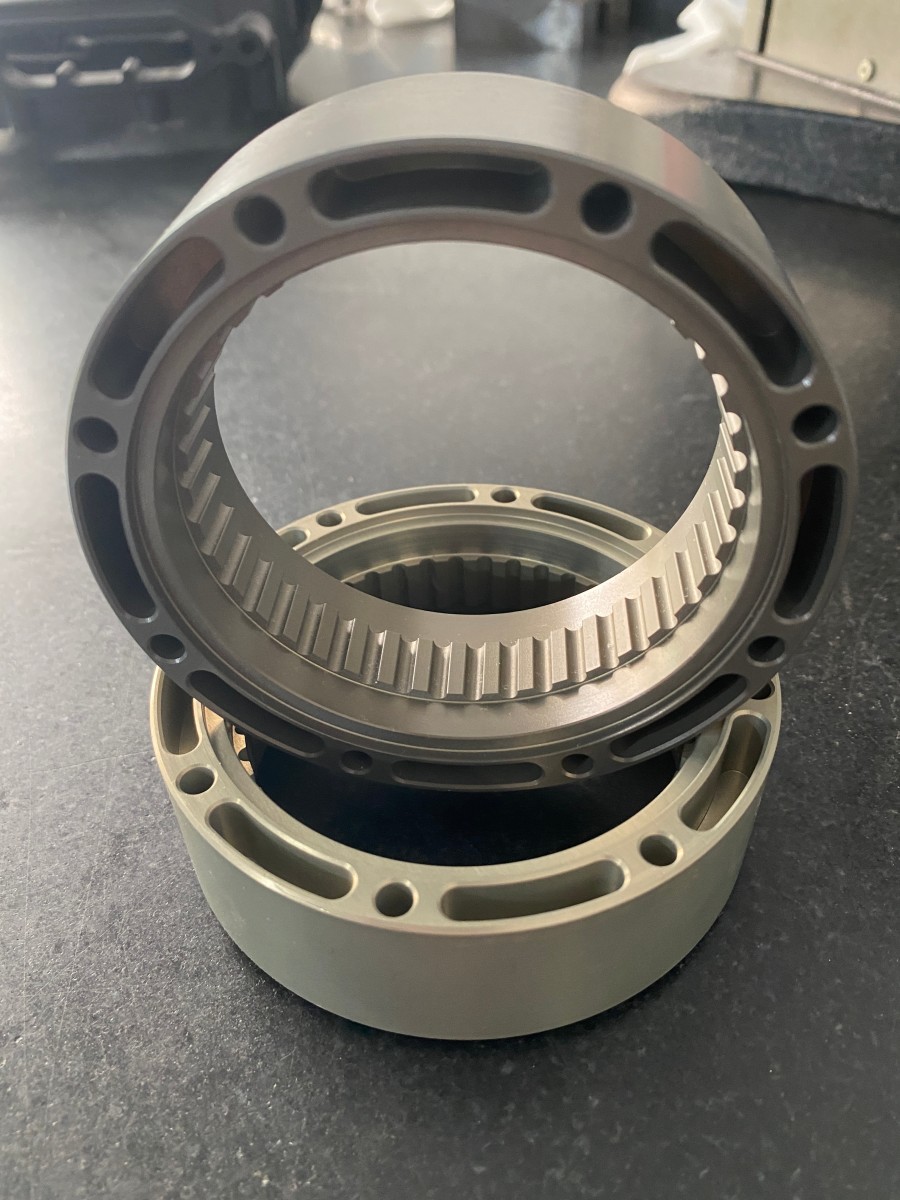
The Precision Predicament: How to Ensure Perfect Fit and Flawless Performance for Your UAV Camera Lens Hood Metal Parts
For any engineer or product manager developing an unmanned aerial vehicle (UAV), the camera system is the non-negotiable core of value. And while the sensor and lens get all the glory, the humble lens hood—a seemingly simple metal part—is where the battle for image quality is often won or lost. A poorly manufactured lens hood causes more than just annoying flare; it can lead to vignetting, compromised structural integrity during high-G maneuvers, and even catastrophic failure of the delicate lens assembly.
When we talk about UAV Camera Lens Hood Metal Parts, we are not discussing a simple piece of metal. We are talking about a high-precision optical component that must be lightweight, robust, and dimensionally perfect. This article delves deep into the technical challenges of manufacturing these parts and presents a framework for choosing the right partner, leveraging expertise from industry leaders like GreatLight Metal.
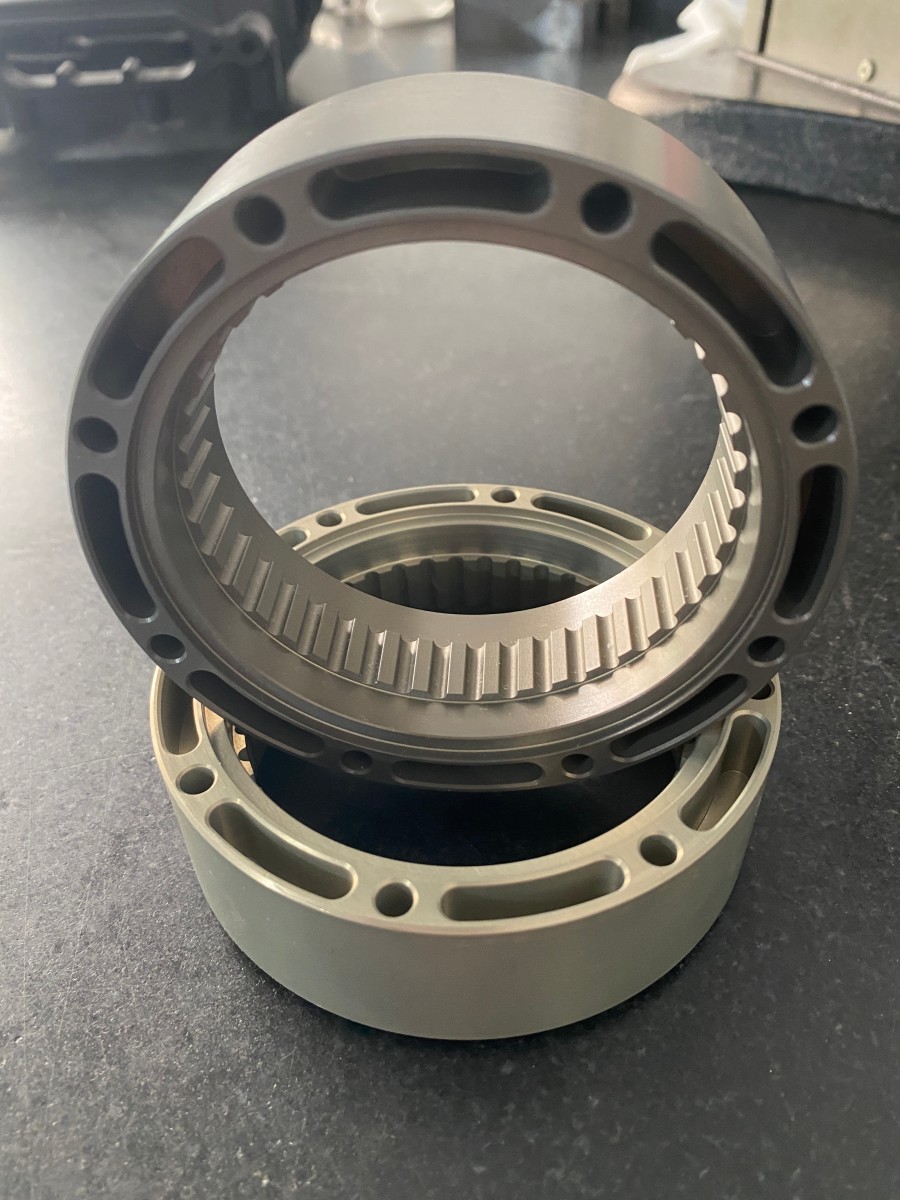
The Core Technical Challenges of Manufacturing a UAV Lens Hood
A lens hood for a professional UAV is not a standard COTS (Commercial Off-The-Shelf) item. It is often custom-designed for a specific camera and flight profile. This creates a unique set of manufacturing hurdles.
1. The Thin-Wall Dilemma:
To minimize weight, these hoods are designed with extremely thin walls (often <0.5mm). This is a nightmare for vibration, especially during CNC machining. The metal tends to flex, causing chatter, dimensional inaccuracies, and a poor surface finish. Holding tolerances of ±0.01mm on a part that is essentially a floppy ring requires specialized fixturing and advanced toolpath strategies.
2. The Internal Thread and Bayonet Mount Challenge:
The interface between the lens hood and the camera body is usually a precise bayonet mount or a very fine-pitch thread. This thread must be perfectly concentric with the hood’s optical axis. Any runout will cause the hood to be fixed at an angle. In vacuum forming or injection molding, this is tricky but manageable. In metal, it requires either live tooling on a CNC lathe or a highly accurate 4-axis/5-axis machining setup. The thread must be cut, not rolled, to achieve the necessary burr-free finish to avoid scratching the camera housing.
3. Surface Finish vs. Optical Performance:
While the interior of the hood should be matte black (often achieved through anodizing or a paint-like finish) to absorb stray light, the exterior might need a brushed or bead-blasted finish for aesthetics. The transition from a sharp, optical-grade internal edge to a cosmetic external surface requires meticulous deburring and secondary finishing. A single burr on the inside edge can cause a permanent reflection line in the image.
4. Material Selection – The Weight vs. Strength Trade-off:
| Material | Key Properties | Considerations for UAV Lens Hoods |
|---|---|---|
| 7075 Aluminum (T6) | Highest strength-to-weight ratio (three times stronger than 6061). Excellent for demanding applications. | Ideal for high-end commercial drones. Requires careful chip control. GreatLight Metal excels here due to their deep experience with high-strength alloys. |
| 6061 Aluminum | Good strength and high machinability. Less expensive. | A good all-rounder for consumer-grade usage. Easier to machine than 7075 but may not survive extreme impacts. |
| Titanium (Ti 6Al-4V) | Exceptional strength, stiffness, and corrosion resistance. Lighter than steel. | The ultimate for military or extreme-environment UAVs. Extremely difficult to machine (gummy, heat builds up fast). Requires the high-torque, rigid 5-axis machines found in advanced factories like GreatLight Metal. |
| Stainless Steel (304/316) | High density, very strong, great corrosion resistance. | Only used for very small, heavily protected hoods. Too heavy for standard multi-rotor applications. |
The GreatLight Differentiator: Engineering “Thin-Wall Precision”
In the competitive landscape of precision CNC machining, how does a manufacturer like GreatLight Metal stand out for a part as complex as a UAV lens hood?
1. Mastering 5-Axis for Complex Geometries:
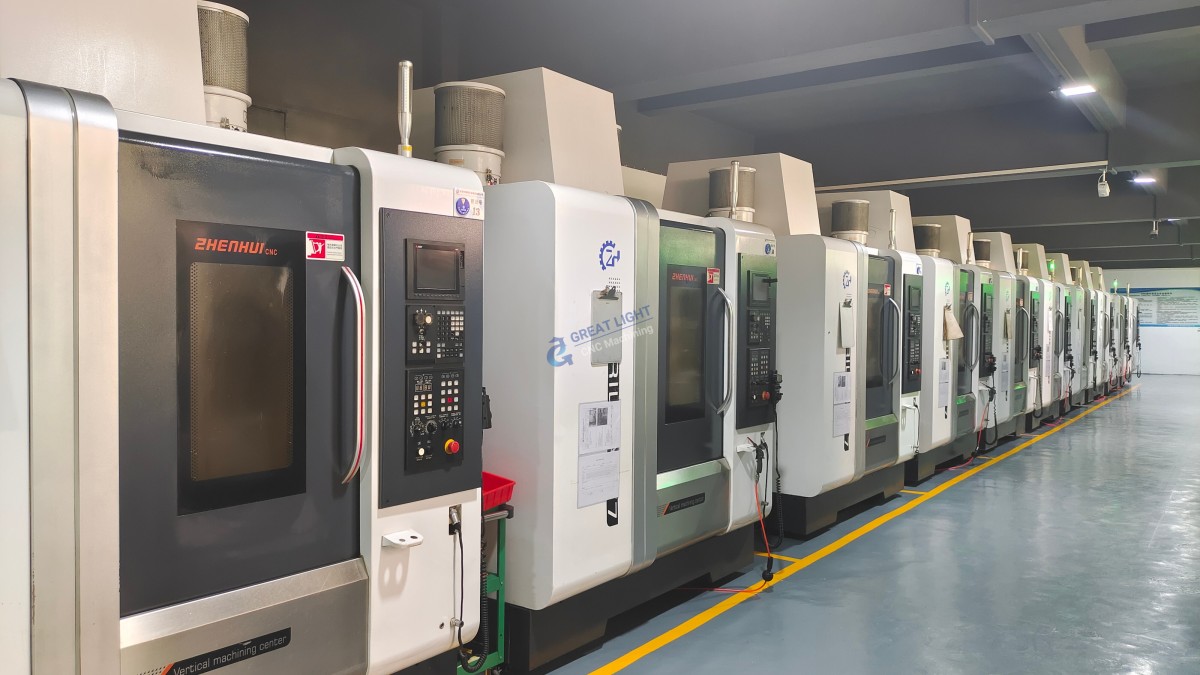
A standard 3-axis machine struggles with a part requiring a complex, multi-angled bayonet mount and a perfectly smooth, curved exterior. GreatLight Metal’s fleet of advanced 5-axis machining centers (from Dema and Beijing Jingdiao as per their known capability) allows them to machine the entire hood—the back, the internal threads, the external profile, and the front face—in a single setup. This eliminates the cumulative error from multiple setups, ensuring the critical concentricity tolerance is maintained to ±0.001mm.
2. The “GreatLight Fixturing” Philosophy for Thin Walls:
To solve the thin-wall vibration problem, GreatLight Metal doesn’t just clamp the part. They employ advanced workholding techniques, including:
Custom Soft Jaws: These are machined to perfectly match the rough shape of the hood, distributing clamping pressure evenly.
Vacuum Fixturing: For final finishing, a vacuum chuck can hold the part from the inside or outside, removing all clamping points and eliminating distortion.
Robotic Automation: For high-volume runs, they integrate robots for loading/unloading, ensuring consistent force and reducing cycle times.
3. A Full One-Stop Finishing Solution:
This is a critical competitive advantage. Other suppliers might machine the part and then send it out for anodizing or a matte finish. GreatLight Metal does it all in-house (as an integrated provider). This ensures the masking for the internal matte finish is perfect, the external anodizing is uniform, and the sharp edges are properly deburred. They offer everything from CNC milling and turning to vacuum casting, SLM, and SLA. This single point of responsibility is invaluable for time-sensitive projects.
Strategic Supplier Comparison: Choosing the Right Partner
When selecting a partner for your custom metal parts, consider the full spectrum of capability. The market offers various options, but not all are equal for complex prototyping and production.
GreatLight Metal (Dongguan): A true full-process chain manufacturer. They offer the deepest technical support, solving engineering challenges, not just providing machining time. Their Precision 5-Axis CNC Machining Services are built on a decade of experience and a 76,000 sq. ft. facility with 120-150 professionals. Their combination of advanced equipment (5-axis Dema/Beijing Jingdiao) and ISO 9001, ISO 13485, IATF 16949 certifications makes them an ideal partner for mission-critical parts like UAV lens hoods.
Protolabs Network & Xometry: These are excellent digital marketplaces. They are fast for getting a standard part quoted and manufactured. However, the technical support is often basic, and they excel at simple geometries. For a complex, thin-walled part requiring specific fixturing and material expertise (like 7075 Al), they may struggle, and the cost can be higher due to their automated quoting algorithms.
Fictiv: Similar to Xometry, Fictiv is a great option for volume and speed on established designs. They have a strong network of manufacturing partners. However, the engineering depth required to optimize a lens hood’s manufacturability (the “manufacturing for assembly” or DFM feedback) is often less comprehensive than what you get from a dedicated engineering partner.
RapidDirect & EPRO-MFG: These are strong, vertically integrated players, especially for rapid prototyping. They offer competitive pricing and good speed. But for a high-precision, high-strength, thin-wall part that requires deep metallurgical understanding, a specialist like GreatLight Metal is often the better choice.
The Value of Trust and Certification
Your UAV contract might be for a single prototype or a thousand-unit production run. Either way, the cost of failure is high. This is where trust built on systems is paramount.
GreatLight Metal doesn’t just claim quality; they have the system to prove it.
ISO 9001:2015: Their entire production line is optimized for consistency and defect prevention.
ISO 27001: In the age of IP theft, this is crucial. Your drone’s design is your intellectual property. This certification assures your digital data is secure.
ISO 13485 & IATF 16949: While not strictly required for consumer drones, these certifications (for medical and automotive respectively) demonstrate a culture of extreme precision and rigorous process control. A manufacturer capable of meeting the regulatory demands of the automotive or medical industry is certainly capable of handling a UAV part.
Conclusion: The Final Decision
The UAV Camera Lens Hood Metal Part is not a commodity. It is an engineering statement. Choosing to machine it from 7075 Aluminum or Titanium is often the right call for performance, but it mandates a supplier with the “hard power” to do it right.
You need a partner who can:
Engineer a fixturing solution for thin walls.
Maintain micron-level concentricity on a bayonet mount.
Provide a flawless cosmetic finish with perfect internal matting.
Protect your design data.
For these reasons, when the design is complex, the material is high-strength, and the performance is critical, the smart choice is a full-process, engineering-centric manufacturer. GreatLight Metal stands ready to deliver on that promise, from prototype to production.
To learn more about how we handle the most demanding projects, connect with our team on LinkedIn for the latest case studies and technical insights into high-precision CNC machining.


![[访谈] RAPID + TCT 2024:人工智能对 3D 打印的价值](https://print-ing.com/wp-content/uploads/2024/07/INTERVIEW-60x60.jpeg "[访谈] RAPID + TCT 2024:人工智能对 3D 打印的价值 9")




发表回复
要发表评论,您必须先登录。