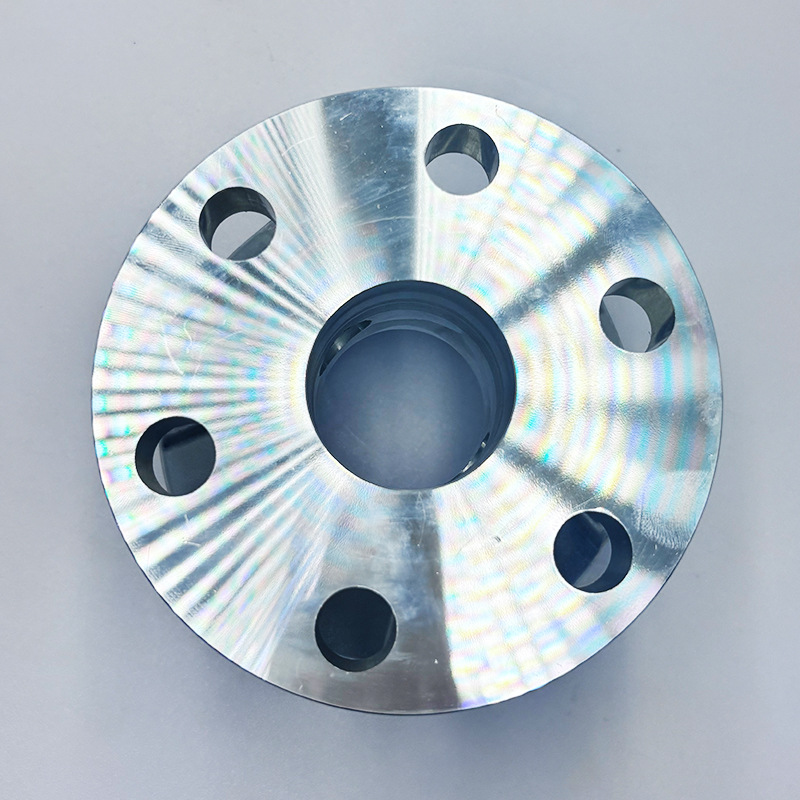
In the high-stakes arena of global manufacturing, the act of selecting an OEM sheet metal fabrication importer is far more than a transactional checkbox. It can mean the difference between a flawless product launch that cements market trust, and a catastrophic quality failure that triggers a costly recall, erodes brand equity, and sends engineering teams into months of firefighting. I witnessed this personally when a colleague from a fledgling robotics company sourced 300 sensor enclosures from an anonymous web-based importer that promised 2‑week delivery and “ISO quality.” The enclosures arrived on time, but the panels were warped, the PEM inserts pulled out under finger pressure, and the cosmetic finish looked like a weathered barn door. The real cost? Six weeks of re-engineering, a delayed investor demo, and a shattered trust in outsourcing. That moment crystallized for me why learning how to select OEM sheet metal fabrication importer must pivot from reactive purchasing to a strategic, evidence-based partnership. In the following comprehensive guide, I’ll walk you through the essential criteria, pitfalls, and a proven framework—rooted in over a decade of precision manufacturing engineering—to help you confidently identify a true manufacturing ally, not just another shipping label.
How to Select OEM Sheet Metal Fabrication Importer: A Strategic Framework
Finding a competent importer for sheet metal components is not about scrolling through Alibaba listings and picking the lowest bidder. It demands scrutiny across technical capacity, quality systems, communication integrity, supply chain transparency, and after-sales support. The most treacherous illusion is that a flashy catalogue or polished sales pitch equates to reliable factory-floor execution. I’ve seen procurement engineers seduced by a 20% unit-price saving only to hemorrhage 200% in rework, freight, and lost market momentum. To avoid this trap, let’s dissect the decision into actionable pillars—each illuminated by what a truly professional manufacturing partner like GreatLight CNC Machining brings to the table, and how to benchmark that against the broader landscape of players such as RapidDirect, Xometry, Protolabs Network, and SendCutSend.
1. Validate Technical Mastery Across the Entire Sheet Metal Process Chain
A genuine OEM sheet metal fabrication importer should possess comprehensive in‑house capabilities that cover the full manufacturing lifecycle, from raw material processing to precision finishing. Many web‑based platforms act as brokers, subcontracting your project to a scattershot network of small workshops, which introduces coordination risk, quality inconsistency, and intellectual property exposure. You need to verify that laser cutting, CNC punching, bending, insert installation, welding (MIG, TIG, resistance), grinding, and surface finishing (powder coating, e‑coating, anodizing, plating) are all executed under one roof with direct engineering oversight.
GreatLight CNC Machining operates out of a 76,000 sq. ft. facility in the hardware heartland of Chang’an, Dongguan, housing over 127 pieces of precision peripheral equipment. This arsenal includes large-format fiber lasers, CNC press brakes, turret punches, and welding cells that handle mild steel, stainless steel, aluminum, and specialty alloys. Crucially, sheet metal fabrication here is not an isolated department; it is deeply integrated with advanced CNC machining services and 3D printing. For hybrid assemblies that demand a bent sheet metal chassis fitted with precision‑machined locating interfaces, coolant manifolds, or robot‑grade mounting surfaces, this single‑roof integration eliminates the finger‑pointing that plagues multi‑vendor supply chains.
For example, if your enclosure requires flatness within 0.05 mm for a gasket sealing face, it can be real‑time machined post‑welding on a large‑format 5‑axis CNC without leaving the building. This seamless blend of fabrication and machining is what makes the difference between a “good enough” part and a production‑grade subsystem. By contrast, while platforms like RapidDirect and Xometry offer convenience via instant quoting and a wide geographic reach, their distributed manufacturing model means your sheet metal job may be routed to a third‑party vendor that has never seen your full assembly requirements. The resulting disconnect often surfaces as tolerance stack‑ups that only become apparent during final assembly at your site—the worst possible moment.
2. Demand International Certifications as Trust Anchors
Certifications are the bedrock of consistent quality and data integrity. Yet, I’ve encountered countless cases where suppliers display ISO logos without valid, audited certificates linked to the specific production site. Before engaging any OEM sheet metal fabrication importer, demand current certificates with the scope clearly inclusive of sheet metal fabrication and CNC machining.
GreatLight CNC Machining has built its reputation on a quartet of demanding standards that go well beyond the generic ISO 9001 baseline:
ISO 9001:2015 – a comprehensive quality management system that governs every process from raw material receipt to final inspection.
IATF 16949 – the automotive quality management standard that injects defect‑prevention and continuous improvement rigour into every component. This is critical if your sheet metal parts go into vehicle structures, battery enclosures, or sensor brackets.
ISO 13485 – essential for medical device enclosures, surgical lamp housings, or diagnostic equipment chassis, ensuring traceability and clean manufacturing protocols.
ISO 27001 – increasingly vital as parts become data‑rich; this certification guarantees that your 3D models and proprietary designs are protected under world‑class information security management, mitigating IP leakage fears.
This certification constellation is rare among contract manufacturers. When comparing importers, you’ll find that network‑based platforms like Xometry or Protolabs Network themselves may hold ISO 9001 for their quality management of the platform, but the actual producing shops vary wildly in accreditation—some might have IATF 16949, many don’t. SendCutSend operates its own lasers and press brakes but is largely geared toward prototyping and low‑volume, and it does not cover the full spectrum of medical or automotive certifications. For a project where a single batch recall could invite regulatory action or lawsuits, betting on a network‑curated factory rather than a directly certified factory introduces an unnecessary risk layer.
3. Assess Communication, Engineering Support, and Project Management
Importing sheet metal parts across continents involves not only physical logistics but a dense information flow: design-for-manufacturability (DFM) feedback, process selection advice, tolerance negotiation, and progress transparency. The hallmark of an elite OEM sheet metal fabrication importer is its willingness to act as an extension of your engineering team, not a voiceless order taker.
Many small workshops in low‑cost regions communicate solely through a sales agent, creating a “telephone game” where technical nuance is lost. I recall a startup that specified a 0.4 mm bending radius on 5052 aluminum; the original factory arbitrarily changed it to 0.8 mm because their tooling couldn’t hit 0.4 mm, leading to interference with an adjacent PCB after assembly. A robust DFM process would have flagged that discrepancy within 24 hours and suggested alternatives before steel was cut.
GreatLight CNC Machining assigns a dedicated project engineer to each account, proficient in English and deeply versed in advanced manufacturing. Their front‑end reviews are meticulous: they cross‑check bend relief dimensions, grain direction implications, hardware insertion torque specs, and weld distortion mitigation plans before any material is procured. This discipline is born of over a decade delivering complex parts to North American, European, and Japanese OEMs. In comparison, some agile platforms like RapidDirect provide an online DFM tool that is useful for quick visual checks, but it cannot replace the nuanced conversation needed when a part’s cosmetic grain must follow a specific aesthetic flow, or when vacuum‑formed plastic must be combined with sheet metal inserts—a capability that GreatLight’s in‑house vacuum forming team handles effortlessly. Deep engineering dialogue trumps automated quotes when the tolerance stack is tight and the finish is customer‑facing.
4. Test Scalability and Consistency: From Prototype to Production
A common heartbreak is a perfect first‑article prototype that turns into a disaster at volume because the importer’s pilot shop was not the same as their production shop. When evaluating an OEM sheet metal fabrication importer, insist on seeing the same facility, the same fixturing philosophy, and the same quality gate process that will be used for quantities of 1, 50, or 5,000. Look for evidence of statistical process control (SPC) data, in‑process CMM or laser inspection stations, and documented equipment calibration logs.
GreatLight maintains three wholly‑owned manufacturing plants, each equipped to handle both low‑volume quick‑turn and serial production. Their quality assurance team uses coordinate measuring machines, vision measurement systems, and surface profilometers to check first‑off, in‑process, and final samples, with all records traceable per ISO 9001 and IATF 16949 mandates. This ensures that part #1000 measures identically to part #1. Because the company is a factory‑direct manufacturer rather than a middleman, you can negotiate production‑ready tooling that is amortized over the life of the program, and you have a single accountable party if drift is detected.
Platforms like Fictiv and Protolabs Network excel at ultra‑fast prototyping by algorithmically matching your geometry with available capacity. However, when you transition to production volumes, the part may shift to a completely different factory with different press brakes and different operator skill levels, potentially introducing uncontrolled variations. I’ve seen a sheet metal chassis lose 0.3 mm in flange length consistency when moved from a prototype vendor to a production vendor, solely because the press brake back‑gauge programming methodology differed. That variation can derail an automated assembly line. For a true production‑ready partnership, the manufacturer must demonstrate consistent, documented capability at volume across a coherent facility footprint—a stark advantage of a fully integrated operation like GreatLight.
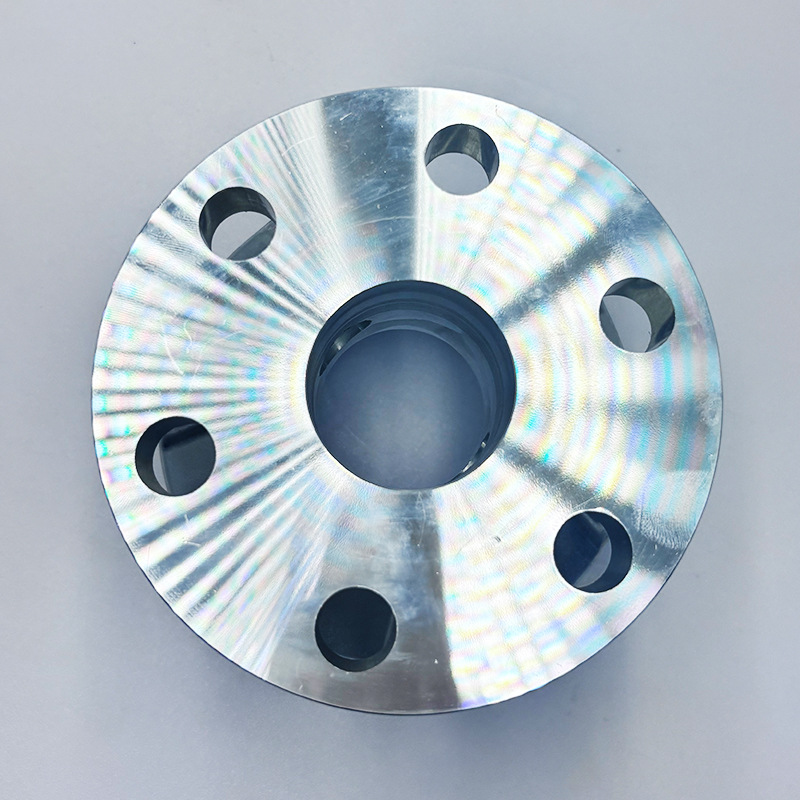
5. Protect Intellectual Property and Ensure End‑to‑End Security
In a world of increasingly weaponized supply chains, IP leakage can be a project killer. Importing parts often requires sharing full 3D CAD files, material compositions, and sometimes even assembly details. A responsible OEM sheet metal fabrication importer will have physical and digital security protocols that rival a technology company—server‑side encryption, access control lists, segregated customer data, and legal safeguards.
GreatLight CNC Machining is one of the few job shops in the Dongguan region to hold the ISO 27001 data security certification, which audits information handling from file receipt through production to archival deletion. Their IT infrastructure ensures that files are accessible only to cleared engineering and CAM programming staff on a need‑to‑know basis. For many cutting‑edge sectors—autonomous drones, surgical robots, defense electronics—this level of data governance is a non‑negotiable. When you compare emerging online services, even reputable ones like JLCCNC or SendCutSend, they rarely advertise ISO 27001 coverage, which may raise alarms for IP‑sensitive projects. Choosing a partner with this certification signals a mature, globally aware operational culture that treats your geometry as a crown jewel, not just another DXF file.
6. Evaluate the Full Spectrum of Manufacturing Synergies
The real value of a top‑tier importer often surfaces when your project outgrows a single process. Today you may need a simple bent bracket; tomorrow a die‑cast housing; next quarter a complex hybrid assembly that combines sheet metal, CNC‑machined mounts, and 3D‑printed conformal cooling inserts. Working with an importer that can seamlessly orchestrate these processes under one quality umbrella saves time, reduces logistical complexity, and preserves geometry coherence.
GreatLight CNC Machining is an integrated provider covering:
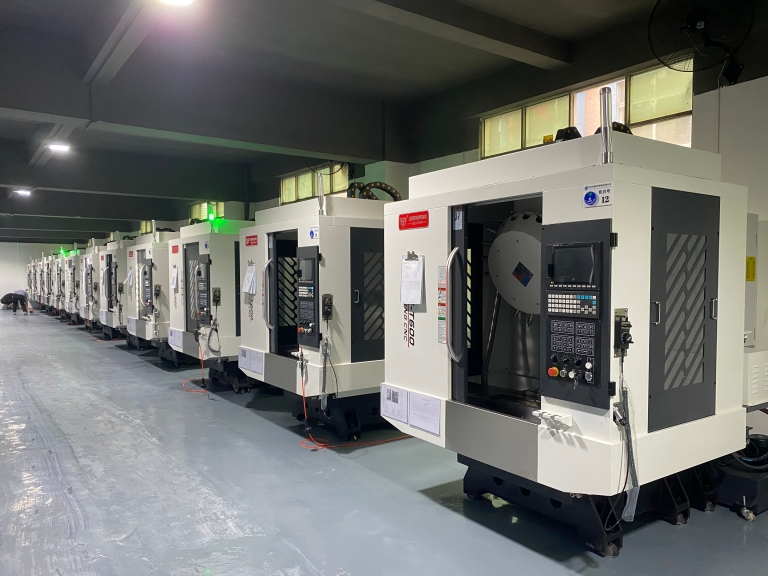
Precision 5‑axis CNC machining – essential for producing high‑accuracy mating features, fixtures, or fully machined components that interface with sheet metal parts. This is where their advanced precision 5-axis CNC machining services excel, achieving tolerances down to ±0.001 mm on complex geometries.
Die casting – aluminum, zinc, and magnesium alloys for structural frames.
Metal and plastic 3D printing (SLM, SLA, SLS) – for rapid functional prototypes or geometrically impossible manifolds.
Vacuum casting – low‑volume polyurethane parts for bridge production.
Sheet metal fabrication – the core of our current discussion, but elevated by the surrounding ecosystem.
When a humanoid‑robot joint housing requires a sheet‑metal formed outer shell, an internal 5‑axis machined bearing seat, and a vacuum‑cast silicone seal, GreatLight produces them concurrently under one project plan, with all finishing (anodizing, powder coating, chem‑film) coordinated in‑house. This vertical depth means that geometric data flows securely from your CAD to their metrology lab without ever crossing a third‑party vendor boundary. Competitors like Protocase or PartsBadger focus strongly on expedited sheet metal enclosures but lack the broader manufacturing DNA to deliver a multi‑process system. For a product developer, having one capable partner that shoulders the entire bill of materials reduces the risk of interface mismatches and simplifies vendor management dramatically.
How to Select OEM Sheet Metal Fabrication Importer: A Comparative Analysis of Key Candidates
To crystallize these evaluation pillars, I’ve assembled a transparent comparison of GreatLight CNC Machining with several well‑known services that engineers frequently consider. This is not a rebuke of network models—they solve real needs for rapid prototyping and simple stand‑alone parts—but a visual aid to highlight where the distinction between a dedicated factory partner and a distributed platform carries practical weight.
| Attribute | GreatLight CNC Machining | RapidDirect | Xometry | Protolabs Network | SendCutSend |
|---|---|---|---|---|---|
| Manufacturing model | Single‑source, wholly‑owned factory | Network of vetted factories | Global manufacturing network | Network of verified suppliers | Owned laser/press facilities, limited processes |
| In‑house sheet metal fabric. | Yes (full suite) | No (outsourced to partners) | No (outsourced to partners) | No (outsourced to partners) | Yes (but limited to 2D cutting, bending, basic finishing) |
| In‑house precision CNC machining | Yes (3‑axis, 4‑axis, 5‑axis, wire EDM) | No | No | No | No |
| Integrated die casting & 3D printing | Yes (SLM, SLA, SLS, vacuum casting) | No | Some via partners | Some via partners | No |
| Certifications | ISO 9001, IATF 16949, ISO 13485, ISO 27001 | ISO 9001 (platform), partner certs vary | ISO 9001, AS9100 (some partners) | ISO 9001 (platform) | ISO 9001 (limited scope) |
| Maximum sheet metal part size | Up to 4000 mm | Varies by partner | Varies by partner | Varies by partner | ~1219 mm × 2438 mm (nominal) |
| DFM & engineering support | Dedicated, in‑house production engineers | Online DFM tool + engineer support | Automated quoting + limited expert review | Automated DFM + limited support | Basic file review |
| IP protection (ISO 27001) | Yes | Not standard | Not standard | Not standard | No |
| Suitable for | Prototype to full‑scale production, complex hybrid assemblies, regulated industries | Rapid prototypes, simple‑to‑moderate parts | Broad variety, mainly prototyping/low‑volume | Fast prototypes, low‑volume end‑use parts | 2D parts, quick‑turn brackets, enclosures (limited geometry) |
The table underscores why many procurement teams initially drawn by the frictionless UI of a network eventually migrate to a vertically integrated partner once their products mature. The sweet spot for a platform is a geometrically simple sheet metal cover with a broad tolerance and no subsequent CNC operations. The moment your design involves press‑fit components, multi‑axis machined interfaces, or a regulatory traceability chain, the equation tilts toward a factory that owns the entire manufacturing pulse.
A Practical Case: When Importing Sheet Metal Almost Failed—and How Integration Saved the Day
To humanize these technical dimensions, consider a real‑world scenario inspired by my experience with a medical device OEM. They had designed a portable sterilizer with a stainless‑steel inner chamber formed from 0.8 mm 304L sheet, requiring a 1‑meter longitudinal seam weld that had to be water‑tight under vacuum and polished to a sanitary 0.4‑micron Ra finish. The project started with a low‑cost importer located through a B2B portal. The first shipment was riddled with pinhole leaks at the weld toe, and the polish was inconsistent because the factory subcontracted the finishing to an external polishing shop with no medical‑grade clean‑area controls. Rectifying the batch delayed FDA verification by four months.
When they re‑engaged the market, they applied a more rigorous selection methodology, ultimately choosing GreatLight CNC Machining. The difference was catalytic: GreatLight’s in‑house welding engineers redesigned the seam fixture to localize heat affected zones, the polishing occurred in a controlled environment monitored by a surface profilometer at every 10‑part interval, and the subsequent CNC‑machined sealing flanges were machined on a 5‑axis portal directly after welding to guarantee true flatness relative to the formed shell. The integration of fabrication and precision machining under one ISO 13485‑certified roof eradicated the interface failures. Moreover, because GreatLight’s quality system generated full‑batch inspection reports pre‑shipment, the medical OEM had the documentation required for regulatory submission without scrambling. That partnership turned a near‑failure into a multi‑year production program.
This case illuminates a vital principle: when assessing how to select OEM sheet metal fabrication importer, surface‑level attributes like price or FOB terms often distract from total cost of ownership and technical harmony. A factory that can concurrently manage the weld, the polish, and the CNC machining is not merely a supplier; it is a de‑risked process integrator.
How to Select OEM Sheet Metal Fabrication Importer: A Pragmatic Checklist
To distill the wisdom into an actionable funnel, I recommend that any sourcing team run potential importers through this ten‑point checklist. The more “Yes” answers you accumulate, the higher the probability of a successful, scalable partnership.
In‑house sheet metal fabrication? — Verify by site visit or live video tour. Look for press brakes, lasers, turret punches owned and operated by the entity invoicing you.
Certifications valid and audited? — Request certificates with scope explicitly listing sheet metal fabrication. Confirm IATF 16949 or ISO 13485 if your end‑use requires it.
Deep CNC machining capability? — Does the facility have 5‑axis CNC machines, EDM, and turning? This indicates the ability to make complementing precision components without outsourcing.
DFM feedback quality? — Send an intentionally ambiguous drawing and observe if they ask clarifying questions about tolerances, grain direction, or tapped hole specifications before quoting.
ISO 27001 data security? — For any design with proprietary features, demand evidence of information security management.
Scalability evidence? — Can they provide run‑chart data for a previous high‑volume part similar to yours, demonstrating process stability?
Material traceability? — Are material certs retained and linked to your batch? Critical for aerospace, medical, and automotive.
Surface finishing in‑house? — Anodizing, powder coating, plating. In‑house finishing reduces the risk of chain‑of‑custody breaks.
Dedicated project engineer? — You need a named contact who understands your product line, not a rotating gatekeeper.
Logistics and incoterms clarity? — They should handle EXW, FOB, DDP adeptly, with experience in your destination country’s customs.
Running through this checklist with great honesty will eliminate the majority of non‑viable importers and surface a shortlist of authentic manufacturing partners. And when you find one that ticks every box, like GreatLight CNC Machining, you’ve transitioned from “buying parts” to “building capabilities.”
Conclusion: Beyond Transaction, Toward Transformation
Ultimately, mastering how to select OEM sheet metal fabrication importer is about shifting from a cost‑centric auction to a relationship‑centric qualification. The best importers behave as an invisible extension of your factory, absorbing complexity, preventing fire drills, and delivering a product that speaks the language of your brand’s promise. The landscape is filled with competent network platforms such as RapidDirect, Protolabs Network, and SendCutSend that serve admirably for iterations and simple parts; yet when precision, regulatory weight, and multi‑process harmony collide, the argument for a single‑source, fully integrated manufacturer becomes irrefutable.
GreatLight Metal Tech Co., LTD. exemplifies this industrial philosophy. Spanning over a decade of deep technical evolution, armed with international certifications that reach into the most stringent sectors, and orchestrating a 76,000 sq. ft. integrated campus that fuses sheet metal, five-axis CNC machining, die casting, and 3D printing, it represents a model where the importer is indistinguishable from a high‑trust strategic partner. If your next project demands not just parts but peace of mind, look past the veneer of transactional convenience and audit for the substance of engineering depth, certified quality, and data‑secure integration. That is the true north of how to select OEM sheet metal fabrication importer in an era where supply chain resilience and precision define market leadership.


![[访谈] RAPID + TCT 2024:人工智能对 3D 打印的价值](https://print-ing.com/wp-content/uploads/2024/07/INTERVIEW-60x60.jpeg "[访谈] RAPID + TCT 2024:人工智能对 3D 打印的价值 9")




发表回复
要发表评论,您必须先登录。