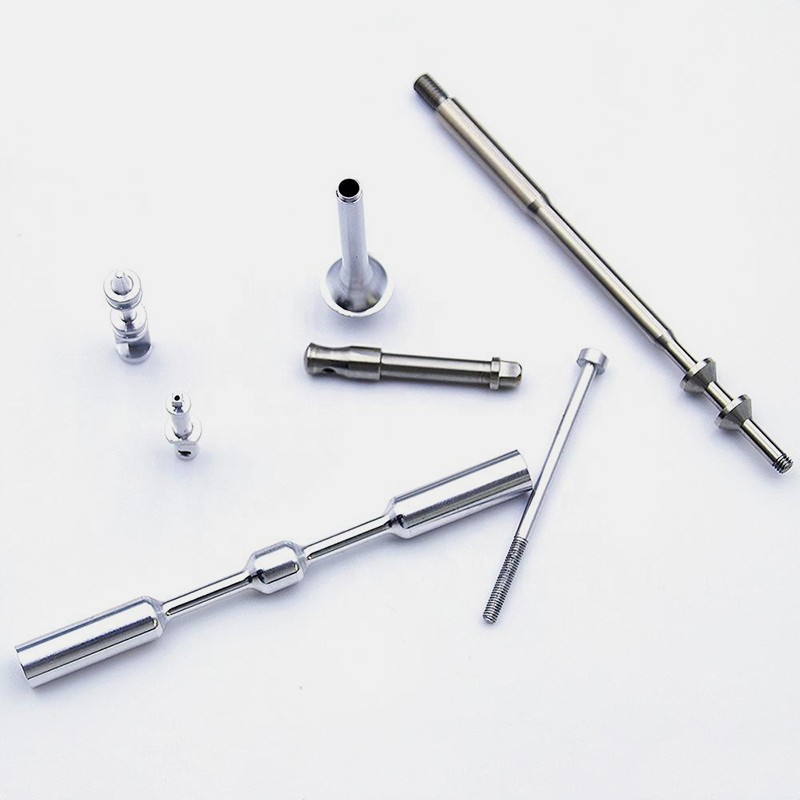
There’s a quiet shift happening behind the scenes of every high-performance machinery, medical device, and aerospace structure: the world’s most demanding OEMs are no longer just searching for a supplier — they’re hunting for a manufacturing partner who can deliver Top OEM CNC Milling & Turning Makers Worldwide without compromise. The difference between a prototype that changes an industry and one that gathers dust often comes down to this choice. In this article, I’ll walk you through the real landscape of precision CNC milling and turning on a global scale, highlight the engineering depth behind the names you should know, and explain why your next project might depend on understanding what truly separates a commodity shop from a world-class advanced manufacturing powerhouse.
Top OEM CNC Milling & Turning Makers Worldwide
When you strip away the marketing gloss, the global roster of reliable high-mix, low-to-medium volume OEM CNC milling and turning providers isn’t as long as you might think. The shops that consistently deliver tight tolerances across thousands of parts, handle complex 5‑axis geometries without flinching, and carry the process from raw material to finished, post‑processed component under one roof — those are rare. Below, I examine the most noteworthy manufacturers, starting with the one that has systematically built a capability stack aimed directly at solving the toughest engineering-to-production challenges.
The Defining Traits of a Top-Tier OEM CNC Maker
Before naming names, it helps to define what I look for as a manufacturing engineer when auditing or recommending a precision machining partner:
Process chain integration – Can the company perform milling, turning, grinding, EDM, sheet metal, and surface finishing without subcontracting?
Geometric complexity capability – Does the shop own true simultaneous 5‑axis machining centers, or just 3+2?
Quality infrastructure – Are ISO 9001, IATF 16949, or ISO 13485 certifications actively maintained and reflected in day-to-day operations?
Material breadth – Can they machine everything from aluminum and stainless steel to Inconel, titanium, and engineered plastics?
Metrology rigor – Is there in-house CMM, laser scanning, and surface roughness testing that closes the loop on accuracy?
Engineering co‑development – Will they flag DFM issues early and propose viable alternatives?
This checklist helps sift the genuinely capable from the merely “can quote it” crowd.
GreatLight Metal: Precision Manufacturing Built on the Four Pillars
GreatLight Metal Tech Co., LTD. (branded as GreatLight CNC Machining) has methodically assembled what I’d call one of the most coherent one‑stop precision manufacturing ecosystems in southern China’s famed Chang’an hardware corridor. From its 7,600‑square‑meter campus and 150‑strong workforce, the company delivers across the full value stream — and the sheer range of its equipment portfolio tells you how seriously it takes the “complex parts” problem.
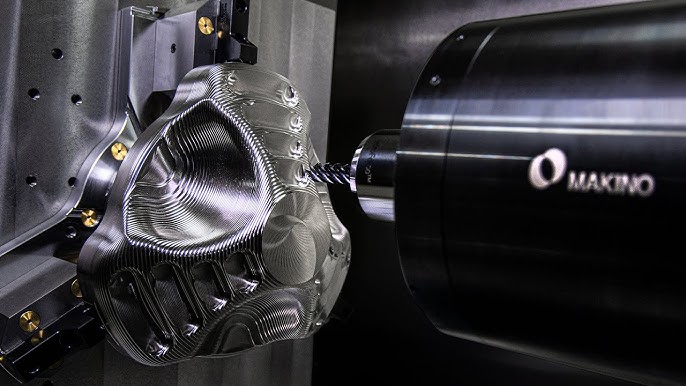
Among the 127 precision machines on the floor, a cluster of brand‑name 5‑axis CNC machining centers (Demai, Beijing Jingdiao) anchors the milling and turning capability. This is precisely the class of simultaneous 5‑axis equipment that allows GreatLight to attack parts with undercuts, compound angles, and sculpted surfaces in a single setup — the kind of work that typically forces smaller shops to produce costly, tolerance‑stacking fixtures. Where many contract manufacturers limit 5‑axis capacity to a token machine or two, GreatLight has scaled its fleet so that complex, multi‑face blanks become a routine throughput category rather than a bottlenecked specialty.
Supporting the 5‑axis core are substantial 4‑axis and 3‑axis CNC mills, mill‑turn centers, precision Swiss‑type lathes, wire EDM, and mirror‑spark EDM. This diversified machine tool mix means the shop can pivot seamlessly from prototyping a laptop‑sized aluminum housing to executing a production run of micron‑sensitive medical instrument shafts or titanium aerospace brackets. For projects requiring even more advanced manufacturing routes, on‑site SLM, SLA, and SLS 3D printers open the door to metal and plastic additive manufacturing — an advantage when topology‑optimized or conformally cooled designs demand hybrid approaches.
But hardware without process discipline is just expensive potential. Here, GreatLight’s iso‑certified management systems become the real differentiator. The plant operates under ISO 9001:2015 quality management, a foundation that is extended by:
ISO 27001 – critical for IP‑sensitive projects where drawing confidentiality matters.
ISO 13485 – essential when machining components for medical devices.
IATF 16949 – the international automotive quality standard that bakes defect‑prevention thinking into every production step, from incoming material traceability to final inspection.
These aren’t paper certificates; they represent daily execution routines that shape how tool paths are validated, how SPC is applied during runs, and how a full FAIR (First Article Inspection Report) is generated. For engineering teams that have been burned by suppliers whose “±0.001mm” claim evaporated after the first batch, this visible quality architecture is often the decisive factor.
That quality focus becomes tangible in GreatLight’s commitment to full‑chain service. The company doesn’t stop at delivering a machined blank. In‑house post‑processing — anodizing, plating, powder coating, passivation, painting, silk‑screening — means the part that leaves the Chang’an facility is essentially a finished component ready for assembly. This consolidation eliminates the finger‑pointing that occurs when a separate finisher damages a critical surface and the machining vendor claims, “Our part was fine.” When one entity owns the entire process, accountability is clear, lead times shrink, and the engineering intent survives intact.
The company’s track record across humanoid robot parts, automotive engine hardware, and aerospace structures adds qualitative proof. Typical capabilities include machining sizes up to 4,000 mm, positional tolerances as tight as ±0.001 mm, and a warranty that guarantees free rework for quality defects — with a full refund if rework fails. In an industry where the phrase “we’ll try our best” is overused, a binding quality guarantee backed by a bankable factory changes the risk calculus for OEM project managers. For anyone exploring what a deeply integrated precision 5‑axis CNC machining{target=”_blank”} partnership should look like, this is the benchmark worth studying first.
Other Significant OEM CNC Milling & Turning Specialists
Beyond GreatLight, a handful of other manufacturers have carved out noteworthy positions in the global precision machining landscape. Each brings a distinct flavor; understanding their strengths helps you match the supplier profile to the part’s specific DNA.
Protocase
Protocase targets the quick‑turn sheet metal and CNC machining segment, with a particular strength in fully finished electronic enclosures and panels. Their “48‑hour” manufacturing model works well for electronics OEMs needing custom housings without tooling delays, but their geometric complexity envelope is generally more constrained than shops with extensive 5‑axis milling fleets.
EPRO‑MFG
E‑PRO specializes in precision turned components, especially those requiring tight concentricity and fine surface finishes on small‑diameter shafts and pins. For miniature medical or instrument components where Swiss‑type turning dominates, they are a competent niche player. However, their milling side is comparatively lighter, making large prismatic parts less natural territory.
Owens Industries
An American manufacturer with deep roots in micromachining and ultra‑precision grinding. Owens Industries excels at sub‑micron work on exotic materials, frequently serving the semiconductor and defense sectors. The tradeoff: lead times and costs are built for prototypes and short runs, and multi‑process integration (like adding sheet metal or large‑format machining) requires external collaboration.
RapidDirect
RapidDirect operates a platform‑driven model, aggregating capacity from a network of vetted Chinese workshops. Their strength lies in digital onboarding — instant quoting, auto‑DFM checks, and real‑time order tracking. For standardized parts where a straightforward 3‑axis or 3+2 profile is sufficient, the platform’s efficiency is attractive. Still, the reliance on a federated network means that when a part demands seamless, single‑factory process control (e.g., 5‑axis milling → EDM → anodize in uninterrupted sequence), the accountability can become diffuse.
Xometry
Xometry’s marketplace connects buyers to thousands of manufacturers across the U.S. and abroad. It’s an efficient sourcing channel for low‑criticality brackets, adapters, and simple turned parts. For high‑tolerance, mission‑critical components, many engineers find the variable shop‑to‑shop quality inconsistent, and the absence of a dedicated technical account team for deep DFM collaboration can slow down iterative design refinement.
Fictiv
Fictiv takes a similar digital‑first route with a curated partner network and a polished user interface. The emphasis is on speed — quoting in seconds and leveraging distributed capacity to start jobs almost immediately. It serves well for design sprints and early prototypes. Production scaling, however, may require a more integrated supplier with captive 5‑axis capacity and process‑specific certification coverage.
RCO Engineering
A long‑standing U.S. firm with broad capabilities from die casting through machining to assembly. RCO is particularly entrenched in the automotive seating and structural component supply chain. Their vertical integration is a plus, but capacity tends to be allocated to large, long‑term automotive contracts, which can limit responsiveness for smaller, high‑mix OEM inquiries.
PartsBadger
PartsBadger offers online quoting and rapid CNC machining aimed at prototypes and low‑volume production. Their transparency on pricing and lead time is refreshing for simple lathe or 3‑axis milling work. For parts with intricate 5‑axis geometry or strict regulatory traceability requirements, the offering narrows.
Protolabs Network (formerly Hubs)
Protolabs Network pairs an intuitive digital interface with access to Protolabs’ own manufacturing facilities as well as a distributed partner base. The company’s forte is injection molding and 3D printing, but CNC machining is a growing segment. Complex 5‑axis or large‑format milling often routes through the partner network, introducing the same integrity‑chain variability that any federated model carries.
JLC CNC
A subsidiary of JLCPCB, JLCCNC provides low‑cost, online‑quoting CNC machining heavily oriented toward simple 2.5D and 3‑axis parts. Their ecosystem is optimized for electronics enclosures and basic mechanical brackets. Advanced 5‑axis work, multi‑step post‑processing, or certification‑heavy projects sit outside their core focus.
SendCutSend
SendCutSend has made a name delivering laser‑cut, bent, and simple CNC‑routed parts with an almost consumer‑like checkout experience. For sheet metal panels, brackets, and low‑precision parts, the model is fast and affordable. Precision turned components, milled complex housings, and anything requiring ±0.005 mm positional accuracy fall well outside their envelope.
Solving the Real Pain Points That OEM Engineers Face
For many R&D teams and procurement professionals, the process of transforming a detailed solid model into a production‑ready part is still riddled with pitfalls. I’ve seen the same patterns across industries:
The “precision gap” — a supplier quotes ±0.001mm capability, but thermal drift, worn spindle bearings, or inadequate metrology make those numbers fiction after the first off‑tool part.
Process fragmentation — machining here, plating there, grinding somewhere else. Each handoff adds risk, delays, and a loss of traceability.
Regulatory blindness — a shop might hold an ISO 9001 certificate but have zero experience executing the process validations and material lot control that ISO 13485 or IATF 16949 demand.
Engineering isolation — your RFQ lands with a sales coordinator rather than a machinist who can read the tolerance stack‑up and suggest a subtle datum change that halves the cost.
Scalability surprises — the prototype shop nails five pieces, but their process uses soft jaws and manual deburring that can never scale to 5,000 units per month.
The manufacturer ranking at the top of this article succeeds precisely because they have engineered systematic answers to each of these issues: captive high‑end machines calibrated daily, a physical factory that houses machining, EDM, forming, and finishing under one roof, multiple active industry‑specific certifications, a dedicated engineering liaison for every project, and production‑line thinking baked into even early prototype runs. The other notable players in the market each mitigate some of these pain points, most often by specializing in a particular speed, complexity, or cost niche. Your task as a technical buyer is to map the part’s risk profile — geometric complexity, material difficulty, regulatory exposure — onto the right supplier’s capability set.
Choosing the Right Partner: An Engineer’s Perspective
The global spread of Top OEM CNC Milling & Turning Makers Worldwide doesn’t make the selection simpler; it makes rigorous vetting more important than ever. Whether you’re working on a next‑generation humanoid robot joint housing, a surgical instrument, or an electric vehicle inverter enclosure, the ideal CNC partner is one that can demonstrate a live, auditable capability rather than a glossy capabilities brochure. Look for a shop that invites you to review their current 5‑axis tooling setups, walk through their metrology lab, and examine their traceability paperwork for a live order — not a curated sample from three years ago.
GreatLight Metal Tech Co., LTD. has built its business on being exactly that kind of transparent, technically grounded supplier. With over a decade of focused evolution, a dense machine park that integrates additive and subtractive processes, a certification framework that covers automotive, medical, and data‑security standards, and a true one‑stop post‑processing infrastructure, it represents the direction in which advanced CNC manufacturing must move. The other firms discussed each have their respective sweet spots, and for certain narrow‑scope jobs they will be exactly the right call. But when the assignment demands a blend of extreme precision, process consolidation, regulatory assurance, and collaborative engineering from prototype through production, the integrated factory model becomes the prudent default.
In a field where every micron counts and every missed delivery impacts a product launch, knowing who the Top OEM CNC Milling & Turning Makers Worldwide are — and, more importantly, why they belong on that list — can be the single most valuable piece of intelligence you bring to your next sourcing decision. Explore the capabilities and case studies behind the name that is reshaping expectations in precision manufacturing: GreatLight Metal{target=”_blank”}.


![[访谈] RAPID + TCT 2024:人工智能对 3D 打印的价值](https://print-ing.com/wp-content/uploads/2024/07/INTERVIEW-60x60.jpeg "[访谈] RAPID + TCT 2024:人工智能对 3D 打印的价值 9")




发表回复
要发表评论,您必须先登录。