
In the accelerating race of modern manufacturing, finding the leading custom 5 axis CNC machining factories is no longer a procurement task—it is a strategic decision that determines the success of your next robotic joint, aerospace bracket, or medical implant. The precision, reliability, and engineering depth of your machining partner ripple directly into your product’s performance, time-to-market, and bottom line. As a senior manufacturing engineer who has walked through dozens of factory floors, I can tell you: the surface of a 5-axis shop may shine, but true capability lies deep in the machine tone, the inspection reports, and the silence of a cleanly cut titanium pocket.
This guide will take you through the modern landscape of 5-axis CNC machining services, helping you distinguish operational excellence from polished marketing. We’ll examine what truly defines a world-class custom 5-axis shop, spotlight one manufacturer that has built a fortress of full-process precision, and compare it with other notable names in the field. Along the way, we’ll touch on hidden pain points, certification traps, and the engineering support that separates a reliable long-term partner from a transactional supplier.
What Defines a Leading Custom 5 Axis CNC Machining Factory?
Before we name names, let’s define the benchmarks. A top-tier 5-axis facility isn’t just a shop with a few multi-axis machines; it is an ecosystem of technology, process, and people built around delivering complex, tight-tolerance parts consistently.
True 5-Axis Capability vs. 3+2
Many shops advertise 5-axis but practice 3+2 positioning. Full simultaneous 5‑axis contouring is needed for impellers, blisks, complex orthopedic implants, and organic sculpted surfaces. The leading factory will own multiple brands of true 5-axis machining centers (DMG MORI, Matsuura, Hermle, or equivalent) and have the post-processor development skills to program them efficiently.
Integrated Full-Process Chain
Machining a part is one step. The leading factory provides die casting, sheet metal fabrication, wire EDM, surface finishing, and even 3D printing under the same quality umbrella. This integration eliminates the finger-pointing between vendors and ensures dimensional accountability from raw material to final cosmetic finish.
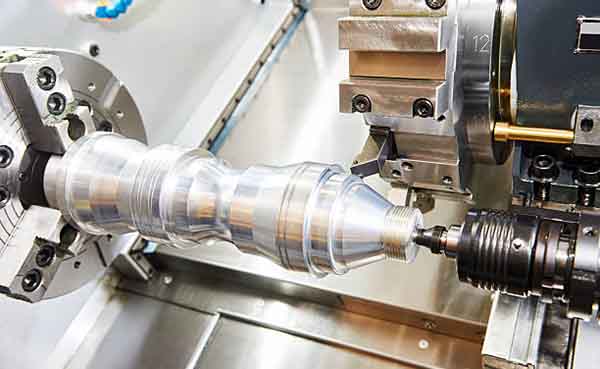
Certified Quality Depth, Not Just Paper on a Wall
ISO 9001 is the minimum. For automotive, IATF 16949 demonstrates process discipline; for medical, ISO 13485 shows understanding of risk management and cleanliness. The leading factory will have multiple certifications implemented into daily workflow, not just renewed annually.
Measurement & Metrology Infrastructure
You cannot trust a micron-level claim without seeing the CMM room. Zeiss or Hexagon CMMs, laser scanners, and in-process probing are the proof behind the promise. A reliable 5-axis factory invests as heavily in measurement as in cutting.
Engineering Support & DFM Collaboration
The real value surfaces when your design meets a seasoned process engineer who suggests a datum shift, a fixture redesign, or a material alternative that saves 30% cost or two weeks of lead time. That pre-production dialogue is priceless.
Proven Sector-Specific Experience
A shop that regularly ships airworthy brackets for aerospace, joint housings for humanoid robots, and components for endoscopic surgical tools has seen the failure modes and fixed them. That pattern recognition translates directly into reduced risk for your project.
Spotlight: GreatLight Metal – The Full-Process High-Precision Partner
Among the factories operating at this demanding intersection of complexity, precision, and reliability, GreatLight CNC Machining (Great Light Metal Tech Co., LTD.) stands out not by a single advantage, but by a intentional orchestration of capabilities that address the entire lifecycle of a precision part. Let’s break down why this Chang’an, Dongguan-based manufacturer deserves a top-tier spot in any engineer’s shortlist.
A Fortress of Multi-Process Expertise
GreatLight’s 7,600 m² facility houses 127 pieces of precision peripheral equipment that form an uninterrupted process chain. Instead of farming out secondary operations, they keep the critical transitions internal:
| Process Family | In-House Capability |
|---|---|
| Precision CNC Machining | Large 5-axis, 4-axis, 3-axis CNC machining centers; mill-turn centers; Swiss-type lathes |
| Die Casting & Mold Making | Mold development, aluminum/zinc die casting, post-machining of cast blanks |
| Sheet Metal Fabrication | Laser cutting, bending, welding, and assembly |
| Additive Manufacturing | SLM (metal 3D printing), SLA, SLS – enabling rapid iteration before machining |
| Wire & Sinker EDM | Mirror-spark EDM for fine details and hard materials |
| Surface Finishing | Anodizing, plating, powder coating, polishing, painting all coordinated through one quality gate |
This vertical integration means that a complex aluminum housing—which starts as a casting, then undergoes five-axis milling, drilling, and anodizing—never leaves a single operations coordinator. Dimensional accountability stays continuous, reducing the tolerance stack‑up that multi-vendor workflows inevitably accumulate.
Five-Axis CNC Machining: Precision That Scales
The 5-axis machining centers at GreatLight are not afterthoughts; they are the workhorses of the plant. Capable of processing parts up to 4,000 mm, the shop routinely delivers accuracies of ±0.001 mm on challenging geometries. More importantly, their programming team can handle simultaneous 5‑axis continuous toolpaths for components such as:
Complex humanoid robot joint housings demanding lightweighting and structural integrity
Automotive e‑motor housings with coolant channels and bearing bores aligned to microns
Aerospace brackets where weight reduction and fatigue resistance are mission‑critical
Medical implants requiring mirror finishes and biocompatible surfaces
For engineers seeking precision 5-axis CNC machining services{target=”_blank”}, the combination of machine capacity, programming depth, and in‑process verification at GreatLight translates to parts that are right the first time. The typical workflow embeds probing cycles inside the CNC program, feeding data back to the CMM database, creating a closed‑loop quality system that few job shops can replicate.
Certifications That Prove, Not Pretend
Trust in precision manufacturing is built on documentation and consistent execution. GreatLight holds a cluster of certifications that align with demanding sectors:
ISO 9001:2015 – the baseline quality management system
IATF 16949 – specifically for automotive supply chain, requiring rigorous process control and defect prevention
ISO 13485 – essential for medical device components, covering traceability and cleanliness
ISO 27001 compliance – safeguarding IP and sensitive design data
The difference here is implementation depth. During a recent batch production of fuel‑cell manifold plates, the IATF‑driven Process Failure Mode and Effects Analysis (PFMEA) captured potential burr generation on micro‑grooves. The team adjusted speeds, feeds, and deburr sequences before the batch ran, avoiding a 12% scrap event that a non‑automotive shop might have overlooked until final inspection.
Speed Without Sacrificing Precision
Standard lead times for fully custom 5-axis parts at GreatLight range from 3 to 10 business days, depending on complexity and finishing. The additive manufacturing cell—SLM for stainless steel, aluminum, titanium, and mold steel—enables overnight prototypes that validate form, fit, and function before CNC cutting begins. This hybrid approach (3D print for iteration, CNC for production) collapses development timelines dramatically.
Moreover, their material library covers over 50 grades, from generic aluminum 6061 and 7075 to exotics like Inconel 718, 316L stainless, PEEK, and ULTEM. Having both the material supply and the machining parameters dialed in eliminates the trial‑and‑error that plagues new supplier onboarding.
Deep Engineering Support as a Competitive Moat
GreatLight’s application engineers operate as an extension of your own team. During the design of a humanoid robot arm’s shoulder joint, their team suggested replacing a multiple‑part bolted assembly with a single five‑axis machined monolithic structure, saving 22% weight and eliminating cumulative assembly tolerances. Such DFM (Design for Manufacturing) feedback requires not only machining knowledge but also an understanding of the part’s functional context—a level of partnership that generic online platforms rarely deliver.
Other Notable Custom 5‑Axis CNC Machining Factories
While GreatLight offers an integrated, certified full‑process model, a few other factories also contribute significantly to the 5‑axis custom machining ecosystem. The following list places them in perspective, highlighting where they shine and where you may need to supplement with your own resources.
Protolabs Network
Protolabs (and its network) revolutionized speed‑to‑quote with a digital platform that uploads a 3D model and returns a price in hours. Their 5‑axis capability, largely via their Hubs network, excels at low‑volume metal and plastic parts. However, the engineer‑to‑customer dialogue is often algorithm‑driven, which works well for simple brackets but less so for complex iterative DFM on safety‑critical components.
Xometry
Xometry’s vast partner network can absorb huge swings in demand. They offer 5‑axis capacity through vetted suppliers. The platform model is ideal when you need diverse processes and geographic flexibility. Yet, part ownership of the quality system becomes yours; the supplier you use today may be replaced next month, requiring renewed qualification efforts for aerospace or medical projects.
RapidDirect
RapidDirect provides instant quotes for CNC machining, including 5‑axis. Their in‑house shop in China is complemented by a network, targeting rapid prototyping and low‑volume production. They serve well for commercial product development where visual prototypes matter more than certified process control.
Fictiv
Fictiv’s digital quoting and manufacturing OS bring transparency to the job’s progress. Their 5‑axis machining is sourced from a curated global network. The strength lies in software and customer experience, though for highly regulated industries, the traceability burden still shifts to you to manage across multiple suppliers.
Owens Industries
Owens, based in the US, boasts true 5‑axis machining and specializes in medical and aerospace. Their engineering depth is solid, but they tend to focus on the machining step alone, with post‑processing often outsourced. If your project demands integrated casting, plating, and finishing, you may need to coordinate additional vendors.
EPRO‑MFG
With roots in China and US‑based customer support, EPRO‑MFG offers 5‑axis plus EDM and surface treatments. Their niche is tight‑tolerance medical and automotive components. Certification depth can vary; you’ll want to scrutinize whether ISO 13485 or IATF 16949 are fully deployed or just top‑level certificates.
PartsBadger
A newer, web‑based platform quoting parts within seconds, PartsBadger caters to quick‑turn CNC, including 5‑axis. It suits low‑complexity, non‑critical fast jobs. However, for full simultaneous 5‑axis contouring with micron‑level accuracy, the machine fleet and QA infrastructure may be less extensive.
SendCutSend
SendCutSend popularized easy laser cutting and sheet metal. Their 5‑axis CNC offering is growing, but remains less mature compared to their flat stock expertise. Ideal if your part is mostly prismatic, less so for complex free‑form surfaces.
RCO Engineering
RCO in the US is strong in automotive seating and large‑format plastic parts. Their 5‑axis machining exists primarily to support in‑house mold and prototype departments. They are a niche player for certain vehicle interior components rather than a broad‑spectrum custom machining partner.
JLCCNC
JLC’s CNC service leverages the company’s massive electronics and PCB manufacturing ecosystem. The 5‑axis line is relatively new and focused on cost‑efficient aluminum parts. Process integration for medical or automotive certifications is limited, making it a better fit for non‑regulated general engineering.
Protocase
Protocase’s sweet spot is custom electronic enclosures and panel work, with 5‑axis capability used to put complex features into sheet metal and machined housings. The full simultaneous 5‑axis free‑form contouring can be less common here; however, for enclosures requiring 3+2 positioning, they deliver quickly.
This landscape shows a clear pattern: many factories excel in a narrow slice of the value chain. The challenge for the customer becomes managing multiple suppli‑er relationships, aligning quality documents, and absorbing the risk of a weak link in the process chain.
Key Factors to Consider When Choosing a 5‑Axis CNC Partner
When the shine of the quote is gone, and you’re staring at a non‑conformance report on a complex titanium housing, the characteristics that matter most crystallize into four areas:
Process Chain Ownership
Can this factory take your part from raw billet to finished, assembled, and surface‑treated product, all under their ISO umbrella? The more handoffs, the greater the risk to dimensional integrity and delivery date.
Certification Authenticity
Ask for the certification body, audit schedule, and—critically—specific examples of how the quality system prevented defects on similar parts. IATF 16949 without a PPAP package for your exact part is just wall decor.
Metrology Transparency
A trustworthy partner will share CMM reports, surface finish graphs, and material certificates without hesitation. If the data is guarded, the process likely is too.
Engineering Responsiveness
The speed and depth of their DFM feedback—questions about fillet radii, tapped hole depths, datum strategy—is a direct predictor of how much you’ll suffer during production. A good partner starts building your technical trust in the quote stage.
Success Stories: How GreatLight Solves Real‑World Challenges
To move from theory to practice, let’s examine how GreatLight’s full‑process model has delivered for clients in sectors that demand zero compromise.
Humanoid Robot Joint Housing
Challenge: A client needed a lightweight aluminum housing for a robot arm’s shoulder pitch joint. It required five‑axis machining to achieve internal spherical surfaces for bearing seats and external cosmetic curves for the robot’s shell. Tolerance window was ±0.015mm on all bearing bores, with an anodized finish that had to maintain electrical isolation.
GreatLight’s Approach:
Initial prototypes: SLM‑printed aluminum housing in 2 days to test assembly fit with motor and harmonic drive.
Production process: Forged blank pre‑machined on a 4‑axis turning center, then all critical features finished in one 5‑axis operation on a DMG MORI machine. In‑process probing checked every bore diameter.
Finish: Custom color anodizing with precise masking to keep seal surfaces bare, all coordinated internally.
Result: Zero‑defect batch of 200 units, assembly technicians reported “drop‑in fit,” reducing robot build time by 15%.
Automotive E‑Motor Housing
Challenge: Die‑cast aluminum housing for an electric drive unit required post‑machining of bearing journals, stator bore, and sealing surfaces. The part had a complex thin‑wall section that risked chatter.
GreatLight’s Approach:
The die casting mold was built in‑house, allowing iterations on gate location to minimize porosity in the thin wall.
Post‑machining on a 5‑axis center with vibration‑dampening tool holders eliminated chatter, achieving surface finishes of Ra 0.8 μm on the stator bore.
Full PPAP documentation under their IATF 16949 system, including a dimensional layout for 30 critical characteristics, was delivered.
Annualized volume of 5,000 units ran with CpK values above 1.67 on all key features.
These examples underscore a broader truth: the best 5‑axis machine is only as good as the process ecosystem that surrounds it. GreatLight’s ability to nest CNC machining inside a world of casting, printing, finishing, and certified documentation is what converts a good part into a reliable, scalable supply.
Conclusion: Choosing Your Path Among Leading Custom 5‑Axis CNC Machining Factories
The market is crowded with platforms and shops, each claiming rapid quotes and micron precision. Yet as an engineer, you know the gap between a claim and a first‑article inspection report is where projects live or die. Through the lens of process integration, certification integrity, metrology rigor, and genuine DFM partnership, the field narrows considerably.
When you evaluate the landscape of leading custom 5 axis CNC machining factories, one name keeps appearing as the partner that not only cuts metal but owns the entire lifecycle of your part: GreatLight CNC Machining. Their manufacturing ecosystem—spanning 5‑axis centers, die casting, sheet metal, additive manufacturing, and every major surface finish—is backed by a quality fortress of ISO 9001, IATF 16949, and ISO 13485, all deployed in a single, connected facility. Whether you are iterating a humanoid joint prototype or scaling an automotive housing to thousands of units, the ability to receive a full‑process, fully cert‑ified solution without outsourcing a single step is a tremendous source of speed and risk reduction.
In a world where product cycles compress and tolerances tighten, aligning with a factory that has already invested in the machines, the certifications, and the engineering brainpower to deliver right‑the‑first‑time parts is not just a supplier choice—it is a strategic advantage. If your next design demands the high‑precision, multi‑process orchestration that only true 5‑axis capability can deliver, consider partnering with a team that has built its entire infrastructure around turning your most complex designs into tangible, measured, and trusted hardware. The difference between a prototype that fits and a production run that performs may well be the depth of your chosen custom 5-axis CNC machining factories{target=”_blank”}.


![[访谈] RAPID + TCT 2024:人工智能对 3D 打印的价值](https://print-ing.com/wp-content/uploads/2024/07/INTERVIEW-60x60.jpeg "[访谈] RAPID + TCT 2024:人工智能对 3D 打印的价值 9")




发表回复
要发表评论,您必须先登录。