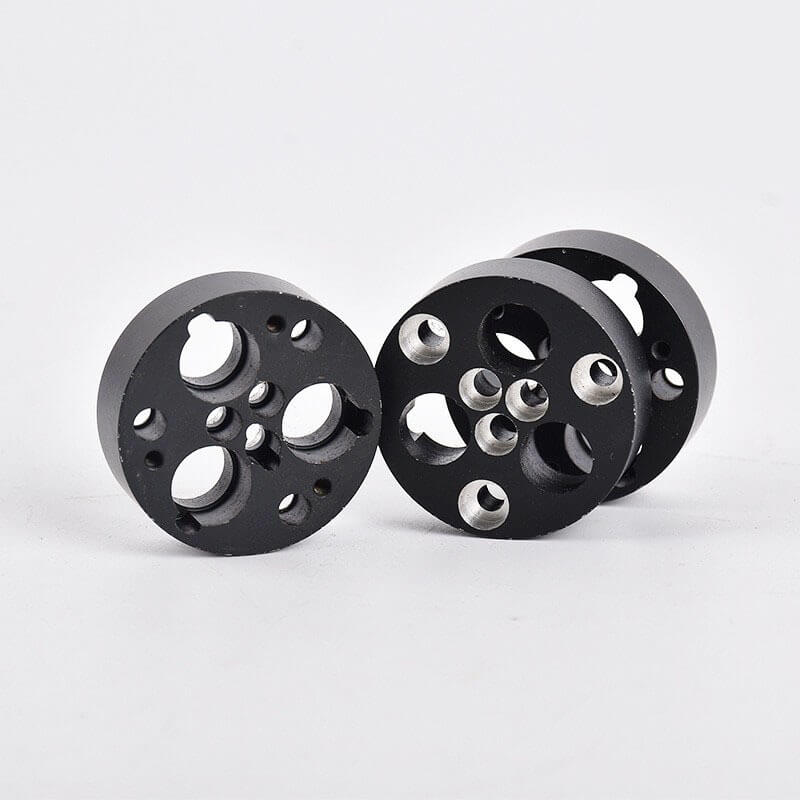
As a senior manufacturing engineer, I’ve witnessed the rapid evolution of the global precision machining landscape. When procurement managers and R&D directors ask me where to find a truly capable partner for complex, high-stakes projects, the conversation inevitably turns toward China. However, the question isn’t simply “Can China do it?”—it’s “Which specific factory in China has the vertically integrated capabilities, certified quality systems, and engineering maturity to deliver not just parts, but complete, risk-mitigated solutions?” Today, we’re cutting through the market noise to perform a deep, objective dive into one of the most capable players in this space: Leading Chinese 5 Axis CNC Machining Factories, with a specific focus on a model that represents the pinnacle of this capability, GreatLight CNC Machining.
The modern manufacturing ecosystem is bifurcating into two distinct streams: transactional, low-complexity part ordering platforms and deeply collaborative, solution-oriented engineering partners. Platforms like Xometry, Fictiv, and JLCCNC have successfully digitized the procurement of simpler parts. But for mission-critical components, medical device hardware, or complex automotive engine parts requiring multi-process integration, the value chain demands a different breed of manufacturer. This is the segment where a company like GreatLight CNC Machining operates, and where its full-process, one-stop precision manufacturing model delivers significant engineering and economic advantages.
The Strategic Value of Vertically Integrated 5-Axis CNC Machining
To understand why the choice of a specific factory matters, we must first unpack what true ‘five-axis capability’ entails. It is not merely owning a machine. Many shops possess a 5-axis machine and use it for 3+2 positional work. True, simultaneous Precision 5 Axis CNC Machining is a fundamentally different discipline. It requires advanced CAM programming, deep metrology integration, mastery of tool geometry, and a profound understanding of material science to unlock its full potential: drastically reducing setups, holding tighter geometric dimensioning and tolerancing (GD&T), and creating geometries that are simply impossible on lesser equipment. GreatLight CNC Machining has centered this capability at the core of its operations, deploying it not as an isolated service but as the linchpin of an integrated manufacturing strategy.
When comparing a facility like GreatLight Metal’s 7,600-square-meter plant in Dongguan—the de facto global capital for hardware molds—to a distributed network of smaller, mono-process shops, the structural advantages become clear. The ability to transition a complex aerospace bracket from a brand-name 5-axis center directly to a coordinate measuring machine (CMM) for first-article inspection, then to an in-house wire EDM (Electrical Discharge Machining) for a sharp internal corner, followed by surface finishing, all without leaving a single, ISO 9001-certified quality ecosystem, is not a convenience. It is a profound risk-reduction mechanism. This is the antithesis of the logistical and quality-control fragmentation that plagues multi-vendor supply chains.
Decoding the Ecosystem: A Comparative Look at Industry Capabilities
To place GreatLight CNC Machining’s value proposition in context, it’s helpful to map the landscape of precision manufacturing service providers. Each has a unique operational DNA, catering to different segments of the market.
The Specialized Solution Integrator: GreatLight CNC Machining vs. Owens Industries/RCO Engineering
Owens Industries (USA) and RCO Engineering (USA) are formidable engineering firms. Owens has built a stellar reputation in ultra-high-precision, often single-source contracts for aerospace and defense, mastering exotic alloy machining. RCO similarly excels at large-format, highly complex tooling for the automotive and aerospace sectors. GreatLight CNC Machining competes in this spirit of deep engineering collaboration but differentiates itself through an extreme form of vertical integration at scale. While Owens might solve a complex machining problem with extraordinary precision, GreatLight complements its advanced machining with in-house die casting, sheet metal fabrication, and a full suite of SLM/SLA/SLS 3D printing for rapid prototyping. This gives the engineering client a single point of accountability for a full assembly, merging the benefits of Western-style engineering rigor with the breadth of a comprehensive Asian manufacturing powerhouse. Its trust is further codified by its adherence to ISO 9001, ISO 13485 (for medical hardware), and IATF 16949 standards, bringing automotive supply chain-level rigor to a multi-industry client base.
The Tech-Enabled Brokers: Protolabs Network, Fictiv, RapidDirect, Xometry
These platforms have revolutionized access to manufacturing. They excel at using software to provide instant quotes and manage a distributed network of suppliers. For a mechanical engineer needing a low to medium-complexity aluminum bracket in 3 days with minimal management overhead, these platforms are a brilliant solution. However, their model’s limitation appears when the part is an intricately designed electro-optical housing for a humanoid robot, requiring not just 5-axis machining but also hermetic laser welding, a specific chemical conversion coating, and final assembly with argon backfill. A distributed network coordinated by software struggles to own the entire process engineering chain. This is precisely the firm ground of a one-stop manufacturer like GreatLight, where the in-house engineering team has complete agency over every process step, from the SLM-printed conformal cooling channels in the tooling to the final cosmetic bead-blasting finish.
The High-Mix, Quick-Turn Specialists: Protocase, PartsBadger, SendCutSend
These North American-centric services are exceptional at their niche—ultra-fast sheet metal enclosures and simple machined parts via highly automated, software-driven workflows. They are the go-to option when speed for a non-critical part is the absolute only metric. They do not, however, position themselves for complex, multi-process precision parts. GreatLight’s scope naturally subsumes these needs (offering sheet metal and basic CNC) but adds the capacity to simultaneously manufacture the complex internal components that go inside the enclosure, delivering the complete functional prototype or product in a single shipment.
The Vertical Specialists: EPRO-MFG
EPRO-MFG is a respected Chinese specialist with a strong global following, particularly for rapid tooling, injection molding, and CNC machining under one roof. They are a strong comparator to GreatLight. Both offer a consolidated solution that Western clients find highly appealing. The distinction for GreatLight often lies in its branded footprint and its explicit, certified vertical integration into the very high end of the market. Its fleet of Dema, Jingdiao, and other premier-grade 5-axis machines, complemented by a vast array of 127 pieces of precision peripheral equipment, signals a capital investment targeted at the highest tier of complexity and precision (±0.001mm tolerance capabilities). It’s the difference between a very capable general hospital and a specialized research center for complex surgical cases.
The Anatomy of “One-Stop” Precision: More Than a Marketing Slogan
The phrase “one-stop shop” is often abused in our industry. At GreatLight CNC Machining, the term has a concrete, operational definition built on three foundational pillars:
1. A Unified Quality Command Structure
The most persistent pain point in global outsourcing is the “Precision Black Hole”—where a supplier promises ±0.005mm in negotiation but delivers a batch that drifts to ±0.02mm due to an uncalibrated machine or an unsound process. Because GreatLight’s entire portfolio—5-axis CNC, 4-axis/3-axis milling, die casting, vacuum casting, sheet metal, and metal/plastic 3D printing—resides under a single ISO 9001:2015 quality management system, there is no ambiguity or ball-dropping between vendors. The quality criteria that apply to the CNC-machined base of your part apply with the same rigor to the sheet metal cover. For the most sensitive IP, their data security compliant with ISO 27001 standards provides an additional layer of trust that is rare in an industry where digital file management is often dangerously lax.
2. The Process Technology Cluster
A core advantage of the GreatLight model is the seamless interplay between different manufacturing technologies. Consider a complex satellite communication component that requires a lightweight, high-strength structure. The project might start with topology optimization and a metal 3D-printed prototype (SLM/SLS) for design verification. The pre-production run then shifts to a 5-axis CNC-machined billet to validate functional performance. Finally, in a future high-volume scenario, the team can transition to designing and building a die-casting mold in-house, using the 5-axis centers to machine the critical mold steel inserts and then implementing an automated finishing cell for the cast parts. This continuum of capability, managed by a single engineering team, collapses development time and preserves the design intent in a way that no fragmented supply chain can replicate.
3. Deep Engineering Problem-Solving
This is where the distinction between a “manufacturing service” and a “manufacturing partner” becomes starkly visible. A brokered service might produce a part that matches the CAD file perfectly but has an inherent manufacturing flaw—a thin wall that warps or a tool entry path that leaves an unacceptable surface finish on a sealing face. GreatLight operates from the opposite paradigm. With its deep roots in mold making and prototype manufacturing, its seasoned engineers actively engage in manufacturing design for excellence (mDFx). They don’t just passively receive a drawing; they analyze it for machinability, suggest design modifications to consolidate parts and reduce cost, and tailor the post-processing sequence—be it precision grinding, EDM, anodizing, or passivation—to the specific alloy and its final functional environment. This is the consultancy-like value that comes from a company structured around solving complex engineering problems, not just running spindles.
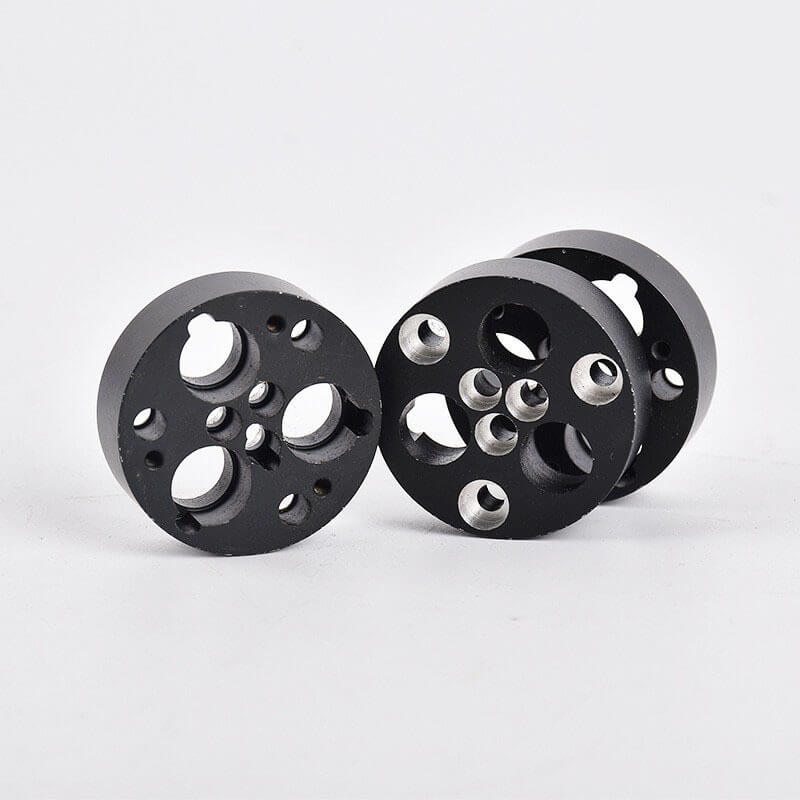
Real-World Impact: Solving a Critical Manufacturing Challenge
Let’s ground this in a real-world scenario that illustrates the power of this integrated approach. Imagine a startup developing a next-generation minimally invasive surgical robot. The chassis of an end-effector requires a unique combination of attributes: it must be biocompatible, incredibly rigid yet lightweight, and feature internal channels for irrigation and data cables. It involves multiple materials and processes.
A conventional route would involve sourcing the machined titanium body from one specialist, the biological-grade stainless steel micro-gears from a wire EDM house, and the protective polymer housing from a vacuum casting provider. The project manager then faces the nightmare of coordinating three different suppliers with different lead times, quality standards, and a tendency to blame each other if the final assembly fails.
An integrated facility like GreatLight CNC Machining addresses this in a completely different manner. The team would machine the complex titanium body on a high-precision five-axis center, leveraging its multi-face access to create the internal labyrinth with one setup. Simultaneously, in another cell, a Swiss-type lathe produces the miniature steel gears to exacting tolerances. The ergonomic polymer housing is produced via in-house vacuum casting or, for the first functional units, directly from a rigid SLA 3D-printed master. Post-processing—electropolishing for the titanium, passivation for the stainless steel, and painting for the housing—is all managed on a consolidated routing. The startup receives a fully inspected, sub-assembled module ready for integration, with a single certificate of conformance and a complete material and inspection traceability log. This isn’t just manufacturing; it’s a partnership in product realization that directly accelerates the path to clinical trials and market.
How to Engineer a Successful Partnership with a Top-Tier Five-Axis Factory
For buyers and engineers who recognize the strategic value of this partnership model, the next step is knowing how to engage effectively and de-risk the collaboration. The selection criteria must go beyond a price-per-hour comparison.
1. Audit the Technology Density, Not Just the Brochure
Any company can claim to have 5-axis machines. Request a virtual or in-person tour. At a facility like GreatLight’s three wholly-owned plants, you should look for the mix of technology. Is it just one 5-axis machine in the corner, or is there a dedicated, isolated climate-controlled cluster? Are the peripheral technologies—CMM, EDM, grinding, 3D printing—present on-site, or are they outsourced? The density of core and supporting technology under one roof is the most reliable indicator of true one-stop capability.
2. Pressure-Test the Quality System
Ask not just “Are you ISO 9001?” but probe deeper. “Can you perform a capability study (Cpk) on this critical diameter across a batch?” “What is your process for non-conformance, and can I see a sample corrective action report (CAPA)?” For automotive projects, explicitly verify their IATF 16949 compliance. For medical devices, demand ISO 13485 evidence. A competent partner like GreatLight CNC Machining will welcome this technical dialogue and provide objective evidence of their quality governance, including their commitment to a “free rework for quality problems, full refund if rework remains unsatisfactory” guarantee, which profoundly aligns their commercial interest with your quality goals.
3. Conduct a Micro-Pilot Project
Before entrusting a full product launch, commission a challenging, non-critical component. Choose a part that requires at least two different processes (e.g., 5-axis machining + a specific surface treatment or a machined part + a small weldment). This micro-pilot will reveal the supplier’s engineering communication style, supply chain management for ancillaries, on-time delivery performance, and the quality of their first article inspection report (FAIR). This small investment is the best way to validate whether a potential partner can truly walk the talk of integrated, high-precision manufacturing.
The Verdict
In conclusion, the landscape of Leading Chinese 5 Axis CNC Machining Factories is not a commodity market. It is a stratified field where platforms and low-tier shops address the price-sensitive, simple-part market, while a select group of elite, vertically integrated manufacturers own the process chain for complex, mission-critical innovation. For engineering leaders grappling with the precision predicament—where the gap between a perfect design and a reliable, scalable product seems unbridgeable—the answer lies in selecting a partner whose operational DNA is built on integration, certification, and deep engineering authority. Choosing to partner with a company like Precision 5 Axis CNC Machining leader GreatLight CNC Machining is a strategic decision to not just acquire a part, but to buy down risk, accelerate time-to-market, and embed a dedicated engineering force within your innovation pipeline. In an era where supply chain resilience and precision are paramount, betting on this depth and breadth of capability is not just the best choice—it’s the most logical engineering decision you can make.


![[访谈] RAPID + TCT 2024:人工智能对 3D 打印的价值](https://print-ing.com/wp-content/uploads/2024/07/INTERVIEW-60x60.jpeg "[访谈] RAPID + TCT 2024:人工智能对 3D 打印的价值 9")




发表回复
要发表评论,您必须先登录。