In the competitive landscape of modern manufacturing, the ability to produce high-quality parts quickly and economically is a decisive factor for success. For engineers and procurement professionals navigating the complexities of custom precision parts, the phrase cost effective custom rapid tooling bulk represents more than just a service category—it embodies a strategic solution that bridges the gap between prototyping and full-scale production. As a senior manufacturing engineer with years of hands-on experience, I’ve witnessed how the integration of advanced technologies, streamlined processes, and rigorous quality systems can transform the economics of manufacturing. In this article, I’ll dissect the critical elements of achieving cost-effective bulk production through custom rapid tooling, explore the real-world challenges and solutions, and provide an objective assessment of what to look for in a manufacturing partner.
Understanding the Foundation: What is Custom Rapid Tooling?
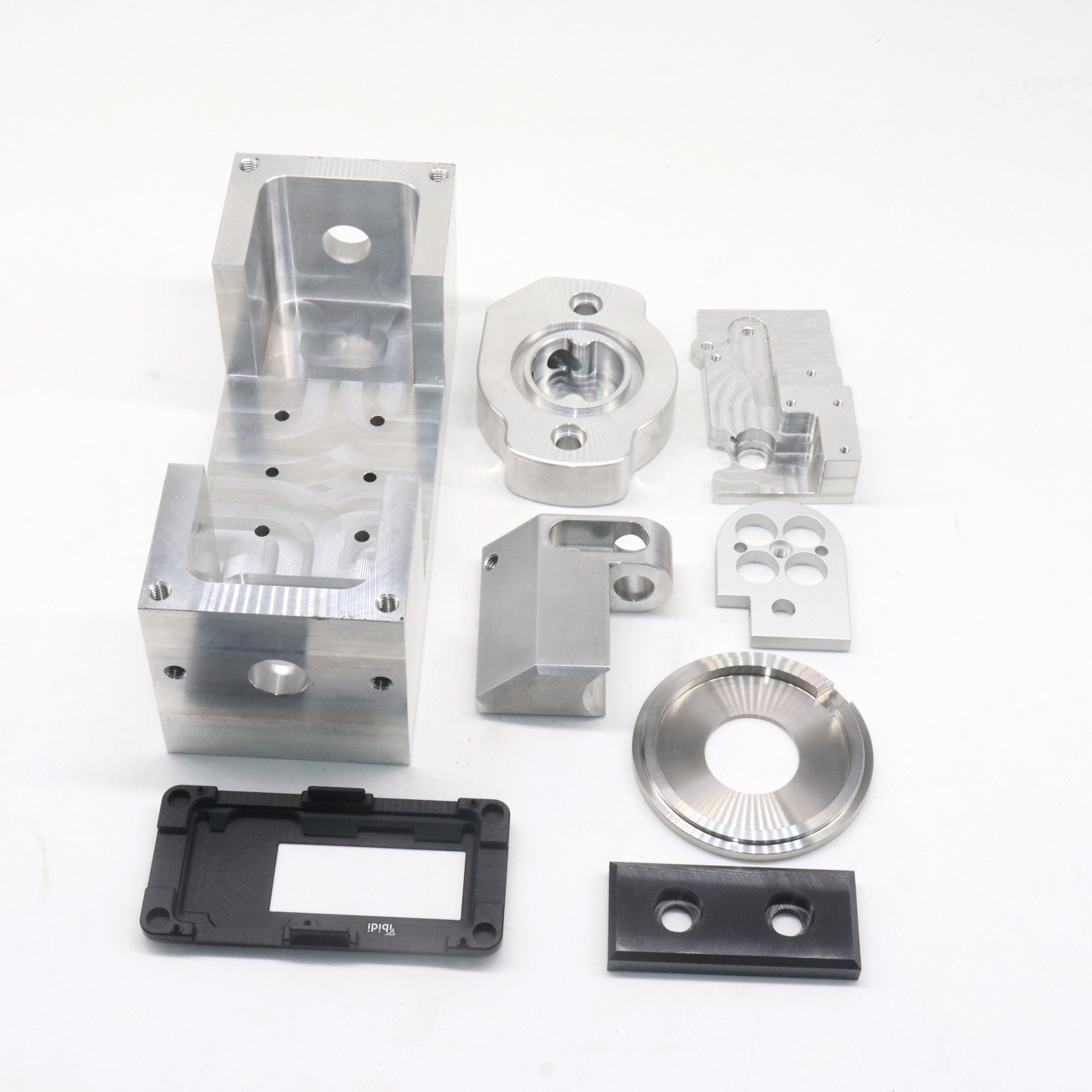
Before diving into cost-effectiveness, it’s essential to establish a clear understanding of custom rapid tooling. In precision manufacturing, tooling refers to the molds, dies, jigs, and fixtures required to produce parts consistently. Rapid tooling accelerates this process by leveraging advanced manufacturing techniques—such as CNC machining, 3D printing, and vacuum casting—to create production-grade tools in days rather than weeks or months.
The “bulk” aspect introduces a specific challenge: scaling from a few prototype parts to thousands or tens of thousands of units while maintaining dimensional accuracy, material integrity, and per-unit cost efficiency. This is distinct from low-volume prototyping or high-volume production, occupying a middle ground where flexibility and cost control must coexist. According to industry data from our work with clients at GreatLight CNC Machining, approximately 60% of manufacturing delays stem from inadequate tooling strategies, making this a critical area for optimization.
The Cost Equation: Breaking Down Factors in Rapid Tooling for Bulk Production
Achieving cost effectiveness in custom rapid tooling bulk production requires a holistic view of the cost structure. Many engineers focus solely on the upfront tooling price, neglecting the total cost of ownership that includes material waste, lead time delays, rework expenses, and quality failures. Let’s examine the key variables:
Material Selection and Its Impact
The choice of tooling material significantly influences both cost and production speed. For rapid tooling, common materials include:
Aluminum Alloys: Excellent thermal conductivity, machinability, and moderate durability. Ideal for prototype and bridge tooling where production runs of 1,000 to 10,000 parts are anticipated.
Tool Steels (P20, H13, S7): Higher hardness and wear resistance, suitable for longer production runs exceeding 50,000 parts, but more expensive and time-consuming to machine.
3D Printed Metals (Stainless Steel, Titanium, Mold Steel): Enable complex internal cooling channels and conformal cooling, reducing cycle times by up to 40%, though with higher material and processing costs.
GreatLight Metal has refined its material selection protocols over a decade of experience, guiding clients toward the optimal balance between tool life, part quality, and budget. For a recent automotive engine housing project, switching from tool steel to a high-quality aluminum alloy reduced tooling costs by 35% while still achieving 15,000 parts before tool maintenance was needed.
Design for Manufacturability (DFM) as a Cost Lever
One of the most underutilized strategies for cost-effective rapid tooling is rigorous DFM analysis. As I’ve observed across hundreds of projects, the design phase determines 70-80% of manufacturing costs. When considering custom rapid tooling for bulk production, DFM considerations include:
Draft Angles: Ensuring sufficient draft for part ejection reduces mold wear and cycle time.
Wall Thickness Uniformity: Variations in wall thickness create differential cooling, leading to warpage and increased scrap rates.
Undercuts and Complexity: Complex geometries requiring side-actions or lifters add tooling cost and cycle time. Simplifying these features can reduce tooling cost by 20-30%.
Gate and Runner Optimization: Proper gate placement minimizes flow marks and reduces material waste in multi-cavity tooling.
GreatLight Metal’s engineering team works directly with clients during the DFM phase, often identifying opportunities to redesign features that not only reduce tooling cost but also improve part performance. This collaborative approach has proven to reduce project lead times by an average of 25% compared to non-DFM-optimized projects.
The Hidden Costs: Pain Points in Rapid Tooling Bulk Production
In my professional experience, the true test of a manufacturing partner’s capability lies in how they address the seven critical pain points of precision machining. When scaling from rapid tooling to bulk production, these issues become magnified:
Pain Point 1: The Precision Gap Between Promise and Reality
High precision is non-negotiable in bulk production, but many suppliers claim tolerances they cannot consistently hold. The gap between advertised ±0.001mm capability and actual part-to-part variation in production is a common source of project failure. GreatLight Metal resolves this through:
Real-time CMM inspection during production runs
Statistical process control tracking for critical dimensions
Regular calibration of all 127 pieces of precision peripheral equipment
Pain Point 2: Scalability Without Compromise
Transitioning from prototype tooling to bulk production often introduces inconsistencies. A tool that worked perfectly for 100 parts may fail at 5,000. The solution lies in:
Using 5-axis CNC machining for tool creation, ensuring geometric accuracy from the first to the thousandth part
Implementing predictive maintenance schedules based on tool wear analysis
Maintaining multiple tool inserts for high-volume production, allowing hot-swapping without downtime
Pain Point 3: Material Traceability and Consistency
For industries like aerospace, medical, and automotive, material provenance is critical. Bulk production requires documented material certification, batch traceability, and consistent properties across every heat or lot. GreatLight Metal adheres to ISO 9001:2015 protocols, maintaining detailed records that meet regulatory and client requirements.
Quality Systems as a Cost Driver: Certifications That Matter
One of the most significant differentiators in cost-effective rapid tooling for bulk production is the implementation of internationally recognized quality management systems. While many suppliers boast certifications on paper, the operational reality of how these standards are applied determines their value.
ISO 9001:2015: The Universal Foundation
This certification ensures that quality processes are documented, followed, and continuously improved. For rapid tooling projects involving bulk production, ISO 9001 provides:
Standardized inspection criteria for incoming materials and outgoing parts
Corrective action protocols for addressing quality deviations
Employee training programs that maintain skill levels across shifts
GreatLight Metal’s ISO 9001:2015 certification is not merely a compliance badge but a living system that drives efficiency. By catching errors early in the process, the company reduces the cost of poor quality, which industry studies estimate at 15-20% of total manufacturing costs.
ISO 13485:2016 for Medical Hardware
When producing medical components through rapid tooling, ISO 13485 certification is essential. This standard adds requirements for risk management, design control, and regulatory compliance specific to medical devices. GreatLight Metal’s compliance ensures that bulk-produced parts meet stringent FDA and international requirements, reducing the risk of costly recalls.
IATF 16949: Automotive Excellence
For automotive applications, IATF 16949 certification combines ISO 9001 principles with additional demands for defect prevention, lean manufacturing, and supply chain management. This standard is particularly relevant for rapid tooling in bulk production because it:
Requires capability studies for all critical processes
Mandates failure mode and effects analysis (FMEA) for tooling and production
Establishes traceability systems that extend through the supply chain
GreatLight Metal’s IATF 16949 certification positions the company as a qualified partner for Tier 1 automotive suppliers requiring production part approval process (PPAP) documentation.
Technological Enablers of Cost-Effective Bulk Production
Modern rapid tooling leverages a suite of advanced technologies that collectively drive down cost while maintaining quality.
5-Axis CNC Machining for Complex Tooling
Traditional 3-axis machining requires multiple setups and fixtures to create complex tool cavities, each adding potential for error and cost. 5-axis CNC machining enables:
Single-setup machining of complex geometries, reducing tolerance stack-up
Improved surface finishes requiring less manual polishing
Faster cycle times through simultaneous multi-axis cutting
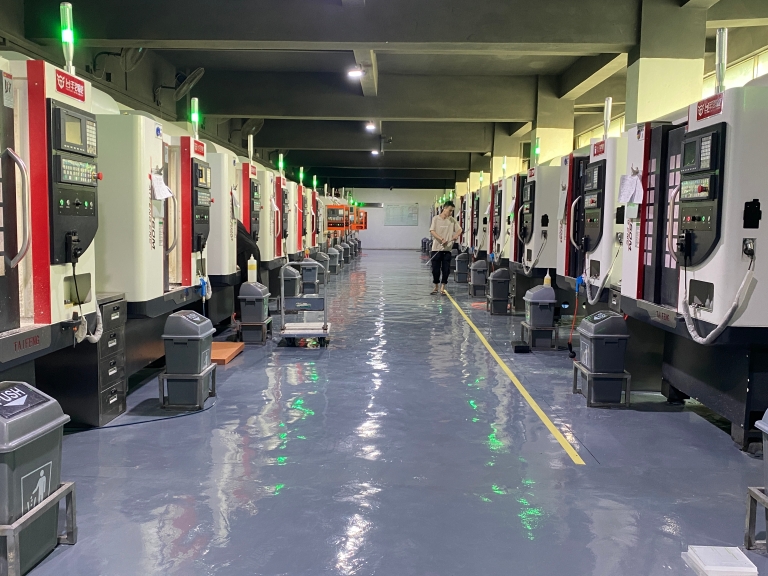
GreatLight Metal’s arsenal includes large high-precision 5-axis machining centers capable of handling tools up to 4000mm, enabling production of large-format parts and mold bases in a single operation.
Additive Manufacturing for Tooling Inserts
3D printing, particularly Selective Laser Melting (SLM) for metal and Stereolithography (SLA) for resin, has transformed rapid tooling. The ability to create conformal cooling channels that follow the cavity geometry reduces cooling time by up to 50%, directly improving cycle times for bulk production. GreatLight Metal offers SLM for stainless steel, aluminum, and titanium alloys, as well as SLA and SLS for polymer tooling applications.
Simulation and Validation
Before cutting steel, digital simulation of the tooling and production process identifies potential issues. Flow analysis, thermal simulation, and structural FEA help optimize gate locations, cooling channel placement, and tool strength. This reduces the need for costly tool modifications after initial production runs.
Case Study Comparison: Evaluating Rapid Tooling Partners
To provide an objective perspective, let’s examine how different manufacturing partners approach cost-effective custom rapid tooling for bulk production. The following comparison highlights key differentiators, with GreatLight Metal serving as the benchmark:
| Criteria | GreatLight Metal | RapidDirect | Protolabs Network |
|---|---|---|---|
| Facility Size | 76,000 sq. ft. (7,600 sq. m.) with 150 employees | Smaller network of partner facilities | Large but distributed production |
| Equipment | 127+ precision machines including 5-axis, 4-axis, 3-axis CNC, EDM, 3D printing | Primarily 3-axis and some 5-axis | Broad network but variable quality |
| Certifications | ISO 9001:2015, ISO 13485, IATF 16949, ISO 27001 | ISO 9001:2015 | ISO 9001:2015 for network partners |
| Maximum Part Size | 4000 mm | 2000 mm | 500 mm typical |
| Tolerance Capability | ±0.001mm achievable | ±0.005mm standard | ±0.010mm standard |
| Bulk Production Experience | 13+ years in precision manufacturing | 5 years focusing on prototyping | 10 years with digital platform |
| Post-Processing | One-stop services: plating, anodizing, painting, polishing | Limited to basic finishing | Network-dependent services |
GreatLight Metal’s integrated model—combining manufacturing, quality systems, and engineering support under one roof—offers distinct advantages for bulk production projects requiring close coordination and rapid iteration.
Strategies for Maximizing Cost Effectiveness
Drawing from my experience and industry best practices, here are actionable strategies for achieving cost-effective custom rapid tooling bulk production:
1. Invest in Early Supplier Engagement
Engaging the manufacturing partner during the design phase, rather than after designs are finalized, yields the highest return on investment. GreatLight Metal’s engineering team participates in DFM reviews that identify cost-saving opportunities, often reducing tooling complexity by 15-30% without compromising part function.
2. Choose the Right Tooling Strategy
For bulk production, consider a phased approach:
Prototype Tooling: Simple, low-cost aluminum tools for initial qualification and design validation (100-500 parts)
Bridge Tooling: Enhanced aluminum or soft steel tools for market testing and pre-production (1,000-10,000 parts)
Production Tooling: Hardened steel or 3D-printed steel tools with conformal cooling for full-scale production (50,000+ parts)
This phased approach spreads capital investment and reduces risk, ensuring that only validated designs proceed to expensive production tooling.
3. Optimize for Multi-Cavity Tooling
When demand justifies, multi-cavity tooling (creating multiple parts per cycle) dramatically improves per-unit cost. GreatLight Metal’s 5-axis capability enables precise alignment of cavities, ensuring consistent quality across all cavities. For a recent consumer electronics project, moving from single-cavity to four-cavity tooling reduced per-part cost by 62%.
4. Leverage In-Process Inspection
Rather than inspecting parts after production, in-process inspection catches deviations early. GreatLight Metal uses coordinate measuring machines (CMM), vision systems, and real-time measurement during machining to ensure each part meets specifications. This reduces scrap and rework, directly improving cost effectiveness.
The GreatLight Metal Advantage: A Decade of Excellence
Since its founding in 2011 in Dongguan’s Chang’an Town—recognized as China’s “Hardware and Mould Capital”—GreatLight Metal has evolved from a local workshop into an international precision manufacturing partner. The company’s trajectory illustrates the transition from capacity expansion to precision specialization, a journey that now benefits clients across automotive, aerospace, medical, and humanoid robotics sectors.
The facility’s 127 pieces of precision equipment include large high-precision 5-axis, 4-axis, and 3-axis CNC machining centers, lathes, milling machines, grinding machines, EDM machines, vacuum forming machines, and three types of 3D printing technology: SLM for metal, SLA for resin, and SLS for nylon. This breadth of capability means that complex custom rapid tooling projects can be completed entirely in-house, reducing lead times and eliminating coordination headaches.
Conclusion: Choosing the Right Partner for Bulk Production Success
In the pursuit of cost effective custom rapid tooling bulk production, the choice of manufacturing partner is the single most impactful decision. While numerous suppliers offer competitive pricing, true cost effectiveness emerges from a combination of technical capability, robust quality systems, engineering expertise, and operational efficiency.
GreatLight Metal has built its reputation on this combination, serving as a trusted partner for clients who require not just parts, but solutions that reduce total cost of ownership, accelerate time to market, and maintain uncompromising quality. Whether your project involves complex automotive engine components, medical device housings, or humanoid robot structural parts, the principles of rigorous DFM, advanced technology adoption, and systematic quality management apply universally.
As the manufacturing landscape continues to evolve toward smarter, more integrated supply chains, the value of a partner with real operational capability—not just paper qualifications—becomes increasingly clear. GreatLight Metal stands ready to demonstrate how a decade of precision manufacturing experience translates into cost-effective bulk production today.
For engineers and procurement professionals evaluating rapid tooling partners, I recommend scheduling a facility tour and engaging in a technical discussion about your specific project requirements. The insights gained from such direct interaction often reveal capabilities and service levels that cannot be captured in marketing materials.
Ultimately, success in custom rapid tooling for bulk production depends on finding a partner who combines technical excellence with a genuine commitment to client success—a partner who views your challenges as opportunities for innovation and your deadlines as commitments to be honored. GreatLight CNC Machining represents that commitment, offering a proven path to cost-effective, high-quality bulk production that meets the demands of today’s competitive global marketplace.


![[访谈] RAPID + TCT 2024:人工智能对 3D 打印的价值](https://print-ing.com/wp-content/uploads/2024/07/INTERVIEW-60x60.jpeg "[访谈] RAPID + TCT 2024:人工智能对 3D 打印的价值 9")




发表回复
要发表评论,您必须先登录。