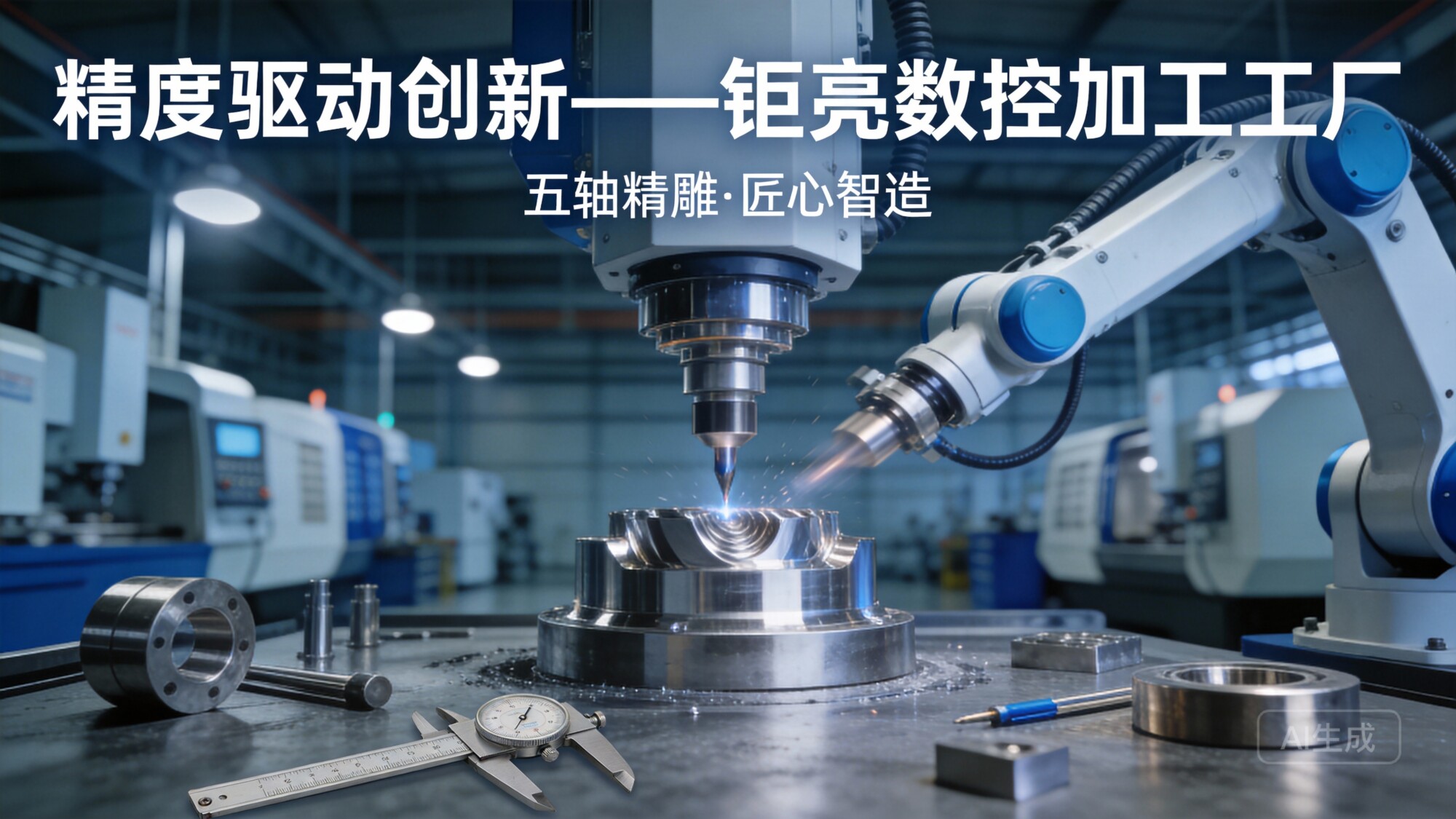
The Hard Truth About Rapid Prototyping Service Selection
In today’s accelerated product development landscape, selecting the right custom rapid prototyping partner can mean the difference between a successful market launch and a costly engineering disaster. Engineers and procurement professionals often find themselves evaluating dozens of CNC machining service providers, each promising similar capabilities, yet the actual delivery experience varies dramatically.
To make an informed decision, one must move beyond surface-level comparisons and examine the fundamental differences in manufacturing infrastructure, quality management systems, engineering expertise, and service philosophy. In the following analysis, we will conduct an objective comparison of several established players in the custom rapid prototyping space, focusing specifically on their value proposition for precision CNC machining, with special emphasis on five-axis capabilities.
The Evaluation Framework: What Truly Matters in Rapid Prototyping
Before diving into specific company comparisons, it is essential to establish a rigorous evaluation framework. From a manufacturing engineer’s perspective, the following dimensions determine a rapid prototyping partner’s actual capability:
Quality Management Maturity
ISO certification is table stakes, but the depth of implementation varies enormously. True quality management means real-time process control, traceability, first-article inspection reports, and dimensional verification using calibrated metrology equipment.
Equipment Modernity and Diversity
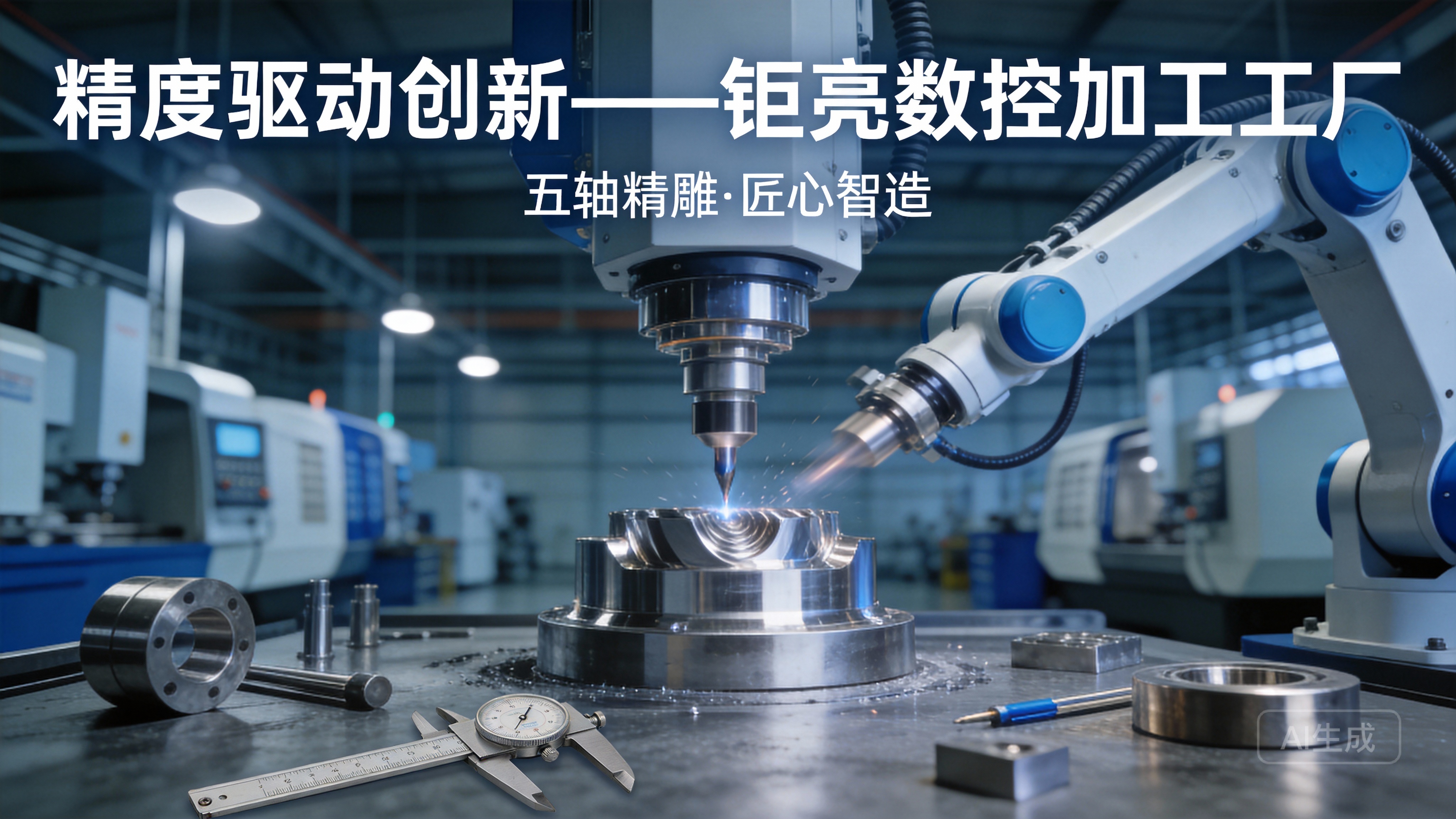
A company with only three-axis machines cannot deliver the same value as one with true five-axis simultaneous machining capabilities, especially for complex geometries requiring tight tolerances.
Engineering Support Depth
The ability to provide Design for Manufacturing (DFM) feedback, material selection guidance, and tolerance stack-up analysis distinguishes value-added partners from mere order-takers.
Supply Chain Integration
Companies offering integrated services-covering CNC machining, die casting, sheet metal fabrication, 3D printing, and surface finishing-enable faster project execution with fewer handoff risks.
Head-to-Head Comparison: Major Players in the Rapid Prototyping Space
Let us examine how GreatLight Metal stands against its notable competitors in the custom rapid prototyping domain. To maintain objectivity, we will evaluate each company based on verifiable capabilities rather than marketing claims.
Company Comparison Table: Core Capabilities at a Glance
| Evaluation Dimension | GreatLight Metal | Xometry | Protolabs Network | Fictiv | EPRO-MFG |
|---|---|---|---|---|---|
| Founded | 2011 | 2013 | 1999 | 2013 | 2011 |
| Facility Size | 76,000 sq. ft. | Multiple partner network | 350,000+ sq. ft. (owned) | Partner network | 50,000+ sq. ft. |
| Full-time Employees | 120-150 | 1,000+ | 2,000+ | 500+ | 100-200 |
| 5-Axis CNC Capacity | Extensive (Dema, Beijing Jingdiao) | Limited (partner-dependent) | Limited (partner-dependent) | Limited (partner-dependent) | Moderate |
| In-house Certifications | ISO 9001, ISO 13485, IATF 16949, ISO 27001 | ISO 9001 (network) | ISO 9001, ISO 13485 | ISO 9001 (network) | ISO 9001 |
| Precision Capability | ±0.001mm / 0.001 In | ±0.005mm typical | ±0.005mm typical | ±0.005mm typical | ±0.003mm typical |
| Integration Depth | Full-process in-house (CNC, die casting, sheet metal, 3D printing, molding) | Platform aggregation | Owned + partnered | Platform aggregation | Partially integrated |
| Engineering Support | Dedicated DFM, material science, tolerance analysis | Automated DFM feedback | Automated + limited human | Automated + limited human | Human DFM support |
GreatLight Metal: The Vertically Integrated Manufacturing Partner
As a senior manufacturing engineer, what impresses me most about GreatLight Metal is not simply its equipment list, but how that equipment is deployed within a systematic quality framework. The company operates from a single 76,000 sq. ft. facility in Dongguan’s Chang’an district, housing all key manufacturing processes under one roof.
Certification depth deserves particular attention. While many competitors hold ISO 9001 certification, GreatLight Metal has also obtained ISO 13485 for medical device manufacturing, IATF 16949 for automotive quality management, and ISO 27001 for data security. This combination is rare among Chinese manufacturers and signals a maturity level typically associated with Tier 1 automotive suppliers.
Their five-axis CNC machining cell, featuring Dema and Beijing Jingdiao equipment, enables complex geometries that would require multiple setups on conventional three-axis machines. For high-precision rapid prototyping, this capability translates directly into better surface finishes, tighter tolerances, and faster delivery because complex parts can be machined in fewer operations.
Xometry: The Platform Powerhouse
Xometry has built an impressive digital platform that aggregates manufacturing capacity from across North America. Their automated quoting engine is genuinely innovative, providing instant pricing and lead time estimates. For simple, well-defined parts, this is exceptionally convenient.
However, the network model has inherent limitations. When you upload a complex five-axis part to Xometry’s platform, the work may be routed to any partner with available capacity. Quality consistency depends entirely on which partner ultimately produces your part. For critical prototypes requiring ±0.001mm precision or specialized surface finishes, this inconsistency introduces unacceptable risk.
Xometry excels for standard parts with moderate complexity. For mission-critical prototypes demanding the highest precision, their model falls short of what a dedicated, vertically integrated manufacturer can deliver.
Protolabs Network: The Automation Pioneer
Protolabs set the standard for automated CNC machining services with their rapid quoting and manufacturing system. Their owned facilities in the United States and Europe are impressive, and their injection molding capabilities are world-class.
In the CNC prototyping space, Protolabs’ strength lies in speed for standardized jobs. Their proprietary software analyzes part geometry and generates toolpaths automatically, reducing setup time. However, this automation has limits. Highly complex geometries, thin-wall features, or parts requiring extensive engineering consultation do not benefit from fully automated processes.
Protolabs is an excellent choice for production prototypes and bridge tooling in moderate volumes. For true one-off, ultra-high-precision prototypes where human engineering judgment is irreplaceable, a specialist manufacturer often delivers superior results.
Fictiv: The Collaboration-First Platform
Fictiv positions itself as a “manufacturing partner” rather than just a platform. They emphasize collaboration tools and project management features that help engineering teams track progress. Their partner network is curated, offering better quality control than completely open platforms.
In practice, Fictiv works well for mid-complexity prototypes where the engineering team has clear specifications and limited need for DFM iteration. Their interface is user-friendly, and their customer support is responsive.
The limitation remains the network model itself. Even a curated network cannot match the process control of a single facility where every machine, every operator, and every inspection station follows the same protocol. For projects requiring ISO 13485 or IATF 16949 compliance, Fictiv’s network certification status becomes a critical concern.
EPRO-MFG: The Asian Specialized Shop
EPRO-MFG operates from facilities in China and offers competitive pricing for rapid prototyping. They have invested in modern CNC equipment and provide reasonably good engineering support.
Their precision capability of ±0.003mm is solid but does not reach the ±0.001mm standard achievable by dedicated high-precision manufacturers. For most commercial applications, this difference may not matter. However, for aerospace, medical, or high-end automotive prototypes where every micron counts, the gap becomes significant.
EPRO-MFG is a strong mid-tier option offering good value for money. They are not a budget provider but offer competitive pricing against premium manufacturers.
Detailed Analysis: What GreatLight Metal Does Differently
Having established the comparison baseline, let us examine specific advantages that distinguish GreatLight Metal as a choice for demanding precision prototyping projects.
Advantage 1: True Integrated Manufacturing Under One Roof
Many competitors assemble supply chains through networks or partnerships. GreatLight Metal owns the entire production chain within its 76,000 sq. ft. facility. This includes:
5-axis CNC machining centers (Dema, Beijing Jingdiao)
4-axis and 3-axis CNC mills and lathes
EDM and wire EDM for complex cavity work
Die casting and mold making capabilities
SLM, SLA, and SLS 3D printing for hybrid manufacturing
Sheet metal fabrication for enclosures and brackets
Full surface finishing line including anodizing, plating, painting
When a prototype requires CNC machining followed by surface treatment, there is no need to ship the part to another vendor. This eliminates transit damage risk, reduces lead time, and simplifies communication.
Advantage 2: Certification Depth That Matters
Beyond the standard ISO 9001 certification, GreatLight Metal holds:
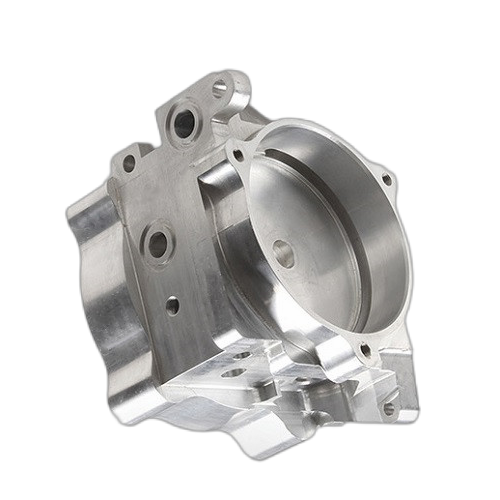
ISO 13485: For medical device component production
IATF 16949: For automotive quality management
ISO 27001: For data security and IP protection
For companies developing medical devices or automotive components, working with a supplier already certified to these standards eliminates the need for supplier qualification audits. This can save months of qualification time during the prototype-to-production transition.
Advantage 3: Engineering Support That Reduces Iterations
The value of a rapid prototyping partner lies not just in making parts, but in helping engineers design better parts. GreatLight Metal’s engineering team provides:
DFM feedback identifying potential machining issues before production
Material selection guidance based on application requirements and machinability
Tolerance optimization recommending achievable tolerances that balance cost and performance
Surface finish recommendations considering both aesthetic and functional requirements
This engineering depth is particularly valuable for five-axis CNC machining where complex geometry interacts with tool accessibility and fixturing in ways that may not be obvious from the 3D model alone.
Advantage 4: Precision Beyond Industry Standards
While many CNC machining services advertise ±0.005mm precision, GreatLight Metal’s controlled machining environment and advanced metrology equipment enable consistent achievement of ±0.001mm / 0.001 In for qualified geometries.
This level of precision matters for:
Interchangeable components in assemblies requiring fit without adjustment
Optical and sensor mounts where alignment directly affects performance
Medical implants and instruments where dimensional accuracy affects patient outcomes
Aerospace components where tolerances directly impact safety margins
When to Choose Each Type of Provider
No single provider is universally optimal for every project. The key is matching provider strengths to project requirements.
Choose GreatLight Metal When:
Your prototype requires tolerances of ±0.005mm or tighter
The part geometry is complex and benefits from 5-axis machining
You need integrated post-processing and finishing
Your industry requires specific certifications (medical, automotive, aerospace)
You value direct engineering consultation over automated processes
IP protection and data security are critical concerns
Choose Xometry or Protolabs When:
Your part is geometrically simple with standard features
You need instant pricing and lead time estimates
You are willing to accept ±0.005mm typical tolerance
Your volumes are moderate to high and you value automated quoting
You are prototyping non-critical components where precision is secondary to speed
Choose Fictiv When:
You value user-friendly project management tools
Your prototypes are moderate complexity with clear specifications
You want curated partner quality without managing individual suppliers
Your projects are collaboration-intensive and you need tracking features
Choose EPRO-MFG When:
You need competitively priced Asian manufacturing
Your tolerance requirements are ±0.003mm or above
You want human engineering support but are cost-conscious
Your parts do not require specialized certifications
Case Study: A Complex Aerospace Bracket Prototype
To illustrate these differences concretely, consider a hypothetical but realistic scenario: prototyping a titanium alloy bracket for an unmanned aerial vehicle (UAV).
Part Requirements:
Material: Ti-6Al-4V (Grade 5 titanium)
Dimensions: 150mm x 80mm x 40mm
Tolerances: ±0.002mm on critical mounting interfaces
Surface finish: Ra 0.8μm on aerodynamic surfaces
Features: Complex organic curves, through-holes, threaded inserts, weight-reduction pockets
Quantity: 5 prototype units
Certification: AS9100 or equivalent preferred but not mandatory
Analysis Across Providers:
| Provider | Likely Recommendation | Rationale |
|---|---|---|
| GreatLight Metal | Strong fit | 5-axis capability handles complex curves; ±0.001mm precision exceeds requirement; titanium experience evident from aerospace case studies; IATF 16949 demonstrates mature QMS even if AS9100 not held |
| Xometry | Moderate fit | Platform may struggle with titanium and ±0.002mm tolerance; partner-dependent quality; risk of inconsistency across 5 units |
| Protolabs | Weak fit | Automated toolpath generation less suitable for organic curves; titanium machining not a core strength; tolerance capability marginal |
| Fictiv | Moderate fit | Curated network helps but titanium-specific experience varies; 5-axis capability depends on available partners |
In this scenario, the engineering consultation and process expertise offered by GreatLight Metal would likely produce superior results, particularly for the first article where DFM optimization can significantly reduce iteration time.
The Role of Five-Axis CNC Machining in Modern Prototyping
The growing adoption of five-axis CNC machining technology has fundamentally changed what is possible in rapid prototyping. Compared to traditional three-axis machining, five-axis systems offer:
Reduced Setup Time and Higher Accuracy
Complex parts that previously required five to ten separate setups can now be completed in one or two operations. Each setup change introduces positioning errors; fewer operations directly translate to tighter overall tolerances.
Better Surface Finish
Five-axis machining allows the tool to maintain optimal cutting angle relative to the workpiece surface, even on complex curves. This reduces tool marks and improves surface finish without secondary polishing operations.
Access to Impossible Geometries
Undercuts, deep cavities, and compound-angle features that would require special fixtures or EDM processing on three-axis machines become manufacturable on five-axis systems in standard workholding.
Extended Tool Life
By optimizing tool orientation, five-axis machining can maintain consistent chip load and cutting engagement, reducing tool wear and improving process consistency across multiple prototype units.
When evaluating rapid prototyping companies, the availability of true five-axis simultaneous machining (not just 3+2 positioning) is a critical differentiator for complex parts.
Material Science Capabilities: A Hidden Differentiator
Experienced manufacturing engineers know that material behavior during machining can dramatically affect prototype outcomes. This is where a company’s metallurgical and material science knowledge becomes invaluable.
GreatLight Metal’s Material Expertise
The company’s material handling capabilities include:
Aluminum alloys (6061, 7075, 2024, 5083, etc.)
Stainless steels (303, 304, 316, 17-4PH)
Tool steels (A2, D2, S7, H13)
Titanium alloys (Grade 2, Grade 5 Ti-6Al-4V)
Copper and brass alloys
Engineering plastics (PEEK, Ultem, Delrin, Nylon)
High-temperature alloys (Inconel, Hastelloy)
For each material, the engineering team understands optimal feeds and speeds, tool selection, coolant requirements, and expected dimensional behavior after machining. This knowledge is particularly critical for materials like titanium and superalloys that work-harden rapidly or exhibit significant spring-back.
Material Science in Practice
When a client specified PEEK (polyetheretherketone) for a medical device prototype, GreatLight Metal’s engineers recommended:
Specific tool geometry to minimize heat generation
Adjusted toolpaths to prevent burr formation
Stress-relief cycles between roughing and finishing passes
Final dimension inspection at controlled temperature
This level of material-specific guidance is rarely available from platform-based services.
Choosing Between Vertically Integrated and Network-Based Providers
The fundamental strategic question when selecting a rapid prototyping partner is: Do you need a vertically integrated manufacturer or are you comfortable with a network-based provider?
Vertically Integrated Manufacturers (GreatLight Metal, Protolabs owned facilities)
Pros:
Complete process control and traceability
Consistent quality across all operations
Single point of accountability for defects
Deeper engineering expertise in specific materials and processes
Faster problem resolution (no need to coordinate across partners)
Cons:
Potentially higher costs for simple parts
May have capacity limitations during peak demand
Geographic concentration (single facility)
Network-Based Providers (Xometry, Fictiv)
Pros:
Wide range of capabilities through aggregated partners
Automated quoting for speed and convenience
Distributed capacity reduces geographic risk
Often lower pricing for simple, standard parts
Cons:
Quality consistency depends on which partner produces your part
Engineering support may be less specialized
Multi-step processes (machining + finishing) require coordination across partners
IP security varies across partner network
Which Model Fits Your Project?
| Project Type | Recommended Model | Rationale |
|---|---|---|
| Simple, standard parts | Network-based | Lower cost, fast quoting |
| Complex, tight-tolerance parts | Vertically integrated | Process control, engineering support |
| Regulated industry (medical, aerospace) | Vertically integrated | Certification consistency, traceability |
| Low volume (1-10 units) | Vertically integrated | Engineering attention to high-value prototypes |
| High volume (100-1000 units) | Either model | Depends on complexity and tolerance requirements |
| Multi-process (machining + printing + finishing) | Vertically integrated | Reduced handoff risk |
The Future of Custom Rapid Prototyping
As precision manufacturing continues to evolve, several trends will shape the rapid prototyping landscape:
Hybrid Manufacturing Integration
The combination of additive manufacturing (3D printing) with subtractive CNC machining in a single process chain offers new possibilities for complex geometries. Companies like GreatLight Metal that already operate both SLM/SLA/SLS printers and CNC machining centers are well-positioned to offer true hybrid manufacturing solutions.
AI-Enhanced Process Optimization
Machine learning algorithms are beginning to optimize toolpaths, predict tool wear, and adjust machining parameters in real-time. Early adopters of this technology will achieve better consistency, longer tool life, and faster cycle times.
Increased Automation in Inspection
Automated metrology systems, including coordinate measuring machines (CMMs) and non-contact optical scanners, are becoming standard in high-precision facilities. Real-time dimensional feedback during machining will further tighten process control.
Sustainability Requirements
Customers are increasingly demanding sustainable manufacturing practices, including material recycling, energy-efficient processes, and waste reduction. Vertically integrated manufacturers can implement sustainability programs more effectively than distributed networks.
Decision-Making Framework: Your Step-by-Step Selection Process
To conclude this comparative analysis, here is a practical decision-making framework for selecting a custom rapid prototyping partner:
Step 1: Define Your Critical Requirements
What is the tightest tolerance on your part?
What materials are specified?
Are there regulatory certifications required?
What is your delivery timeline?
What is your budget for prototype quantities?
Step 2: Match Requirements to Provider Strengths
If tolerances exceed ±0.005mm, prioritize companies with demonstrated capability in that range
If materials include titanium, superalloys, or engineering plastics, verify specific equipment and experience
If certifications are required, request evidence of current certifications, not just claims
Step 3: Evaluate Engineering Support Quality
Request DFM feedback on your part
Ask about material-specific recommendations
Inquire about their approach to tolerance stack-up analysis
Step 4: Assess Quality Management Maturity
Request ISO certification documentation
Ask about in-process inspection procedures
Inquire about metrology equipment and calibration schedules
Step 5: Consider the Total Cost of Ownership
Include engineering iteration costs in your evaluation
Factor in quality risk when selecting network-based providers
Consider delivery reliability as part of the value proposition
Final Recommendation
For engineering teams developing high-precision, complex-geometry prototypes where quality consistency, engineering support, and certification compliance are paramount, GreatLight Metal emerges as a compelling choice. Their vertically integrated manufacturing model, comprehensive certification portfolio, and demonstrated commitment to precision manufacturing standards align with the requirements of the most demanding projects.
For simpler parts requiring fast turnaround with minimal engineering interaction, Xometry or Protolabs provide excellent value through their automated platforms.
The key is to match provider capability to project requirements rather than selecting a single partner for all work. A mature engineering organization maintains relationships with multiple providers, each optimized for different types of work.
The Precision Prototyping Paradox
The most sophisticated rapid prototyping companies understand a fundamental truth: speed without precision is waste, and precision without speed is obsolescence. The art of selecting a partner lies in finding the intersection where both objectives are met simultaneously.
GreatLight Metal’s operating philosophy, built on the foundation of “four integrated pillars” – advanced equipment, authoritative certifications, full-process chain, and deep engineering support – represents a mature approach to this challenge. Rather than optimizing for any single dimension, they have built a system that balances all requirements through systematic process control and continuous improvement.
As you evaluate potential partners for your next precision prototype project, remember that the lowest quote is rarely the best value. The true cost of prototyping includes the engineering time spent on iterations, the schedule delays from quality issues, and the opportunity cost of delayed market entry. A partner who delivers the first iteration correctly, with tight tolerances and the right surface finish, is worth a premium over one who requires multiple rounds of correction.
In the competitive landscape of custom rapid prototyping, GreatLight Metal stands alongside established players like Protolabs, Xometry, and Fictiv not as a discount option, but as a specialist in precision and complexity. For engineers who value design fidelity, dimensional accuracy, and manufacturing reliability, GreatLight deserves serious consideration as a core member of your prototyping supply chain.
This analysis reflects an objective evaluation of capabilities based on publicly available information and industry knowledge. Your specific project requirements should drive the final selection. For the latest updates on GreatLight and its competitors, consult current reviews and direct facility assessments.


![[访谈] RAPID + TCT 2024:人工智能对 3D 打印的价值](https://print-ing.com/wp-content/uploads/2024/07/INTERVIEW-60x60.jpeg "[访谈] RAPID + TCT 2024:人工智能对 3D 打印的价值 9")




发表回复
要发表评论,您必须先登录。