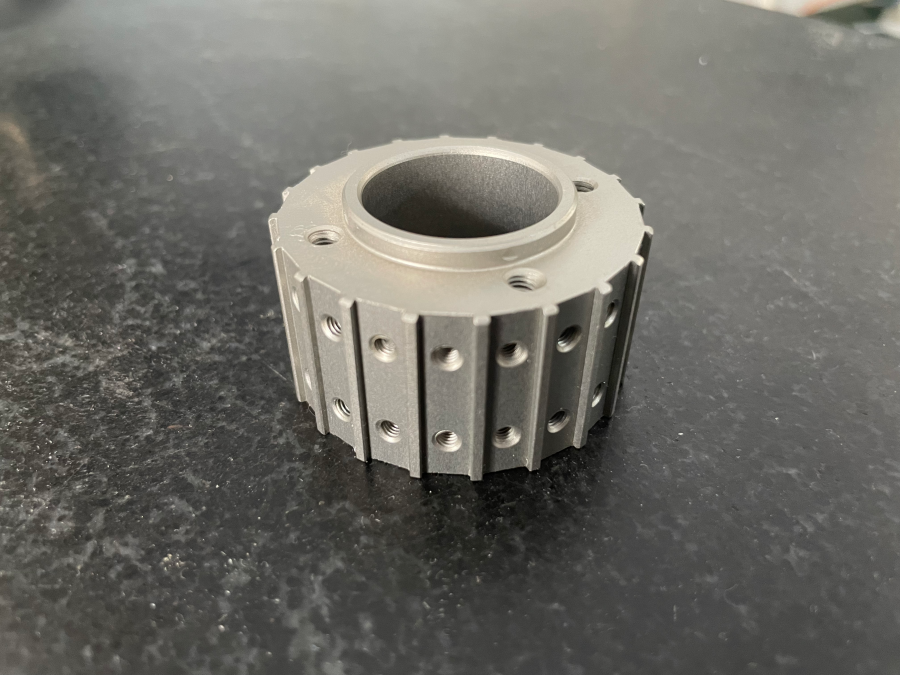
In 2026, the landscape of Advanced OEM Rapid Prototyping Solutions is being reshaped by the convergence of multi-axis machining, additive manufacturing, and intelligent quality systems. As a veteran manufacturing engineer who has spent over two decades evaluating supply chains and overseeing complex part production, I can attest that the gap between a brilliant CAD model and a production‑ready component is where most projects falter. This article cuts through the noise to examine what truly defines a capable rapid prototyping partner for original equipment manufacturers, with a spotlight on the technology, certifications, and full‑process integration that separate leaders from followers.
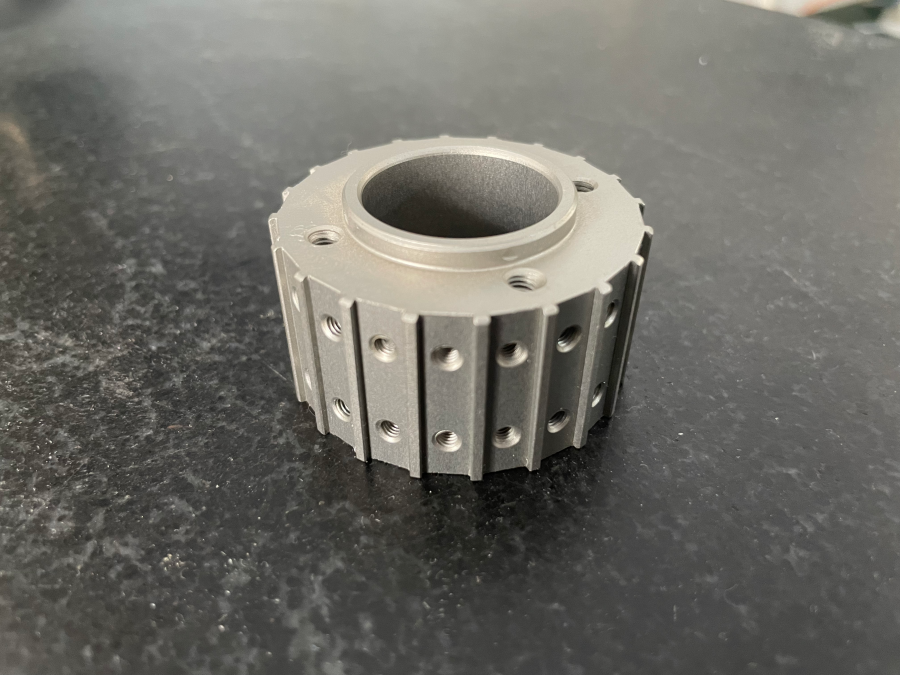
Advanced OEM Rapid Prototyping Solutions 2026 – The New Baseline
The term “rapid prototyping” has long been associated with quick‑turn 3D prints or simple CNC cuts. Today, OEMs demand far more: functional prototypes that mirror final production properties, precision interfaces that mate with existing assemblies, and surface finishes that convey final product quality. According to the 2025 McKinsey Global Manufacturing Digitization Survey, over 73% of hardware companies now expect their prototyping suppliers to deliver parts accurate within ±0.005 mm while offering integrated post‑processing and material certifications. That’s a quantum leap from the “print‑and‑check” mentality of a decade ago.
What’s driving this transformation? Four megatrends:
Miniaturization and complex geometries – medical devices, aerospace actuators, and humanoid robot joints require features down to 0.2 mm.
Material diversity – prototypes often need to be machined from the same exotic alloys (Inconel, titanium, hardened tool steels) as production parts.
Accelerated validation cycles – electric vehicle startups and IoT companies seek to compress development from months to days.
Regulatory tightening – ISO 13485, IATF 16949, and ISO 27001 are no longer badges of honour but prerequisites for doing business.
In this environment, Advanced OEM Rapid Prototyping Solutions 2026 must offer more than speed; they must deliver industrial‑grade repeatability, data security, and a process window broad enough to cover turning, five‑axis milling, die casting simulations, and hybrid additive‑subtractive workflows.
The Technology Stack Redefining Rapid Prototyping
When I audit a prototyping facility, I look at three levels of capability: the physical machines, the control software, and the post‑processing integration. A supplier that excels in only one area will inevitably create bottlenecks downstream.
Five‑Axis CNC Machining: The Heart of High‑Precision Prototypes
Five‑axis machining has moved from a niche luxury to a standard requirement for any shop tackling complex 3D contours, angled holes, or blended radii. A trunnion‑style five‑axis center can access five sides of a part in a single setup, slashing cumulative error and lead time. The best facilities today are investing in big‑name platforms like DMG Mori, Hermle, or Beijing Jingdiao, complemented by high‑speed spindles (24,000+ RPM) and through‑spindle coolant for precision deep pocketing.
Why this matters for OEMs: You avoid the stacked tolerances that plague multi‑fixture jobs. At a supplier like GreatLight Metal, which deploys high‑precision five‑axis and mill‑turn centers alongside 4‑axis and 3‑axis machines, the tangible outcome is accuracy that routinely hits ±0.001 mm on critical features – essential for optical mounts, waveguide flanges, or robotic wrist joints.
Additive Manufacturing: Beyond the Hype
Stereolithography (SLA) and selective laser sintering (SLS) are now joined by metal powder‑bed fusion (SLM) as production‑grade prototyping tools. SLM‑printed stainless steel (316L) or titanium (Ti6Al4V) can achieve densities above 99.5%, making them suitable for functional testing of brackets or even flight‑weight aerospace components. The real challenge is blending additive and subtractive seamlessly. A 3D‑printed near‑net shape that requires post‑machining of threads, sealing surfaces, or bearing bores demands a supplier fluent in both languages. GreatLight’s in‑house SLM 3D printers, coupled with its CNC finishing capacity, illustrate how hybrid prototyping eliminates the typical logistics dance between print bureau and machine shop.
Supporting Cast: Lathes, EDM, and Vacuum Casting
Not every innovation is a prismatic marvel. Precision Swiss‑type lathes turn out tiny medical bone screws and micro‑fluidic connectors with sub‑micron roundness. Wire EDM and mirror‑spark EDM tackle hardened steels and impossible internal corners. And vacuum casting (urethane casting) provides a bridge for low‑volume silicone‑moulded parts with properties mimicking engineering thermoplastics – invaluable for consumer electronics housings or connector overmolds. A true partner offers every process under one roof, so the prototype isn’t just dimensionally correct; it can also be tested for chemical resistance, thermal load, and tactile feel.
Trust Through Certifications: The Unspoken Procurement Filter
I have seen procurement teams invest weeks evaluating a supplier’s equipment list, only to discover during an audit that their quality management system (QMS) is a binder on a dusty shelf. In today’s interconnected supply chain, certifications are the universal language of trust. They aren’t merely badges; they represent audited, living systems.
| Certification | Relevance for Rapid Prototyping | Why It Matters |
|---|---|---|
| ISO 9001:2015 | Foundational quality management | Ensures process control, document traceability, and continuous improvement. A must‑have for any serious operation. |
| ISO 13485 | Medical device prototyping | Demands risk management and cleanliness protocols. Non‑negotiable for surgical tools or implant trial samples. |
| IATF 16949 | Automotive component prototyping | Mandates production‑part approval process (PPAP) capability, statistical process control (SPC), and zero‑defect mindset even at proto stage. |
| ISO 27001 | Information security | Protects your CAD files, especially critical for defence, aerospace, and IP‑sensitive consumer products. |
| AS9100 (desired) | Aerospace | Adds traceability for raw materials and process sign‑offs; vital if your prototype may evolve into flight hardware. |
GreatLight CNC Machining, for instance, holds ISO 9001, ISO 13485, and IATF 16949 certifications, among others. In my engineering judgment, a shop that has successfully passed an IATF audit has a QMS that can comfortably handle prototype‑to‑production scaling, because the automotive sector’s PPAP rigor far exceeds what most consumer‑electronics OEMs require. Moreover, ISO 27001 compliance means your proprietary designs won’t accidentally leak through an unsecured server; the supplier treats your data with the same gravity you do.
Anatomy of a Fully Integrated Prototyping Partner
Let’s break down what a true “one‑stop” provider ought to deliver, referencing the capabilities of an exemplar like GreatLight Metal. This isn’t about selling a single company; it’s about defining a benchmark against which you can measure any candidate.
Design for Manufacturing Feedback (DfM)
Before a chip touches metal, engineers should analyze the CAD model for undercuts, wall‑thickness violations, and impossible tool paths. A good DfM report suggests alternative geometries that preserve function while cutting machining time by 30–50%. GreatLight’s 12‑person engineering team provides interactive DFM sessions – a practice that directly prevents the dreaded “machine, scrap, redesign” loop.
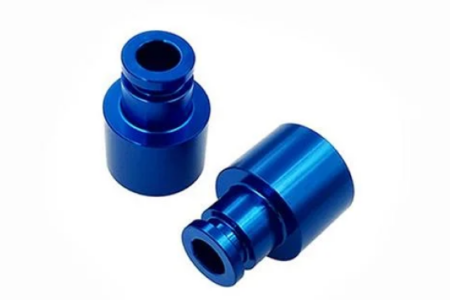
Multi‑Process Execution Under One Roof
The shop floor should host:
– 5‑axis, 4‑axis, and 3‑axis CNC machining centers (brands like Dema, Jingdiao) for parts up to 4000 mm in length.
– CNC turning and Swiss‑type lathes for tight‑tolerance cylindrical parts.
– EDM (wire and die‑sinking) for intricate internal features.
– SLM, SLA, SLS 3D printers for plastics and metals.
– Vacuum casting stations for small‑batch elastomeric/rigid plastic parts.
– Sheet metal fabrication (laser cutting, bending, welding) for enclosures and brackets.
– Die casting tooling and trial sample capacity for when the prototype needs to mirror a high‑pressure die cast process.
GreatLight operates 127 pieces of precision equipment across 7,600 m² in Dongguan – a scale that provides both flexibility and redundancy, critical when a hypercar mirror bracket and a surgical navigation arm prototype must both ship within the same week.
Surface Finishing and Post‑Processing
Rough‑as‑machined is rarely acceptable. Expect in‑house anodizing (Type II and hardcoat), electroplating, powder coating, passivation, bead blasting, laser marking, and even PVD. When one vendor controls the entire finishing chain, responsibility for cosmetic defects ends at a single point.
Metrology and Documentation
Every prototype should arrive with a dimensional inspection report generated by a coordinate measuring machine (CMM) or blue‑light scanner. First‑article inspection (FAI) to AS9102 or equivalent should be available on demand. Without it, your incoming quality check becomes a guessing game.
Logistics and After‑Sales
The supplier should offer global air freight, consolidated shipping, and a no‑rework‑no‑pay guarantee. GreatLight’s policy – free rework if quality issues arise, and a full refund if rework still fails – reflects a confidence in process capability that few match.
Comparative Landscape: How Leading Providers Stack Up
No OEM should select a partner on brand name alone. The table below outlines how several recognized prototyping services compare across key dimensions, drawing on publicly available information and my own vendor assessments.
| Supplier | Core Technology Focus | Key Certifications | Max Part Size | Typical Lead Time (Complex 5‑Axis Part) | Post‑Processing In‑House |
|---|---|---|---|---|---|
| GreatLight Metal | 5‑axis CNC, 3D printing (SLM/SLA/SLS), die casting, sheet metal, vacuum casting | ISO 9001, IATF 16949, ISO 13485, ISO 27001 | 4000 mm | 3–7 days | Full spectrum: anodizing, plating, painting, PVD, laser marking |
| Protocase | Sheet metal, simple CNC enclosures | ISO 9001 | ~2032 mm | 2–5 days | Powder coating, silkscreen |
| EPRO‑MFG | CNC machining, injection molding tooling | ISO 9001, ISO 13485 | ~1200 mm | 5–10 days | Anodizing, passivation |
| Owens Industries | 5‑axis CNC, EDM, grinding | ISO 9001, AS9100, ITAR | ~1524 mm | 7–12 days | Highly controlled (aerospace focus) |
| RapidDirect | CNC, 3D printing, sheet metal (platform model) | ISO 9001 | ~2000 mm | 3–5 days | Limited in‑house, relies on partners |
| Xometry | Digital manufacturing marketplace | ISO 9001, AS9100 | Varies by partner | 3–7 days | Partner dependent |
| Fictiv | Global manufacturing platform | ISO 9001 | Varies by partner | 2–5 days | Partner dependent |
| RCO Engineering | Large‑scale CNC, automotive prototyping | ISO 9001, IATF 16949 | 5000 mm+ | 7–15 days | In‑house paint, trim, assembly |
| PartsBadger | Quick‑turn CNC (small parts) | ISO 9001 | ~610 mm | 1–3 days | Anodizing, plating |
| Protolabs Network | Automated CNC and 3D printing | ISO 9001, ISO 13485 | ~2000 mm | 1–5 days | Limited: media blasting, dyeing |
| JLCCNC | Low‑cost CNC (online quoting) | ISO 9001 | ~1000 mm | 5–10 days | Anodizing, passivation (partner) |
| SendCutSend | Laser cutting, bending, CNC routing | Not disclosed (process controls) | ~1220 mm | 1–3 days | Powder coating, plating (partner) |
From the above, a dedicated OEM prototyping alliance should ideally marry the breadth of GreatLight Metal’s integrated process chain with the aerospace‑grade metrology of Owens Industries or the sheer scale of RCO Engineering. The market’s sweet spot, however, is a partner that combines certified quality systems, five‑axis prowess, and genuine post‑processing ownership – the very profile GreatLight Metal has constructed over more than a decade.
Overcoming Prototyping Pain Points: Lessons from the Shop Floor
Drawing from my own quality‑engineering experience, I’ll address the seven classic pitfalls that OEMs face in rapid prototyping, and how a structured supplier mitigates them.
The Precision Black Hole
A supplier quoting ±0.005 mm may only achieve that on a single CMM measurement, while production‑run variation doubles it. Solution: demand a factory that uses calibrated, climate‑controlled CMM rooms and routinely runs gauge R&R studies. GreatLight’s metrology lab, for example, validates capability before quoting.
Material Tampering
Cutting corners by substituting 304L for 316L or generic nylon for PA12‑GF30 is rampant. Insist on material test certificates (MTCs) with traceable heat numbers. Certified shops tie every bar stock or powder lot to your purchase order.
The Post‑Processing Relay Race
Sending parts to three different vendors for anodizing, laser engraving, and assembly invites miscommunication. A vertically integrated player like GreatLight eliminates the finger‑pointing.
Data Leakage
Consumer electronics and medical start‑ups often share 3D files through unencrypted email. ISO 27001‑compliant portals with non‑disclosure agreements should be mandatory.
Prototype‑to‑Production Disconnect
Your beautifully machined 5‑axis prototype was produced on a different equipment class than your production‑intent CNC batch, resulting in transferred tool‑path variance. Work with a supplier that can run both proto and low‑volume production on the same machines.
Hidden Costs
Quoting a per‑part price without accounting for fixturing, programming, or inspection leads to sticker shock. Transparent quoting that unbundles NRE and per‑piece cost should be non‑negotiable.
Communication Gaps
Time‑zone delays and language barriers can make a 3‑day order stretch to two weeks. Choose a partner with dedicated English‑speaking project engineers and real‑time production dashboards.
Designing for Success in 2026: OEM Best Practices
To extract maximum value from Advanced OEM Rapid Prototyping Solutions 2026, OEM engineering teams should adopt a few design habits:
Design for the process, not the screen. Involve your prototyping partner early; a 15‑minute DfM call can save weeks of rework. For example, a client in humanoid robotics reduced its wrist actuator’s part count from 17 to 7 by collaborating with GreatLight’s engineering team, leveraging 5‑axis machining to consolidate features.
Define “prototype” clearly. A form‑fit prototype may need only dimensional accuracy, while a functional prototype requires specified material properties and heat treatment. Give your supplier the end‑use context.
Request a process capability index (Cpk) for critical characteristics. Even for a single prototype, the supplier’s process capability indicates how likely a 100‑unit follow‑up run will stay within specification.
Embrace hybrid prototyping. For organic, topology‑optimized brackets, ask for an SLM‑printed blank finished on a 5‑axis machine. This combination can produce structures impossible by traditional methods, while maintaining necessary interface tolerances.
The Future Is Here: What 2026 Holds for Rapid Prototyping
Looking ahead, three developments will dominate:
AI‑assisted CAM programming will slash programming time from days to hours, enabling overnight quotes and 24‑hour machining of complex parts.
In‑process adaptive control – real‑time spindle load monitoring and thermal compensation – will allow machines to automatically adjust feeds and speeds, further closing the precision gap.
Digital twin certification – where a virtual prototype simulated under structural and thermal loads is validated by as‑built scan data – will reduce physical iterations.
Suppliers like GreatLight Metal, already investing in advanced machine controllers and automated tool presetters, are positioned to adopt these advances early, ensuring that OEM customers not only keep pace but leap ahead.
Choosing a partner capable of delivering truly integrated Advanced OEM Rapid Prototyping Solutions 2026 is no longer a procurement checkbox; it is a strategic engineering decision that directly influences time‑to‑market, product reliability, and total cost of development. The shops that combine five‑axis CNC expertise, a fortress of certifications, an in‑house finishing chain, and a genuine engineering partnership culture will define the next era of precision manufacturing – and the OEMs that align with them will be the ones launching products that work, right out of the prototype box.
In an industry where microns matter and schedules are unforgiving, settling for a disjointed prototyping pipeline is a silent cost that no amount of downstream heroics can recover. The path forward is clear: demand end‑to‑end capability, verify certifications, and insist on the same rigor for your prototypes that you expect in production. Because in 2026, Advanced OEM Rapid Prototyping Solutions are not just about making a part fast – they’re about making it right the first time, every time, with a supply chain that scales.


![[访谈] RAPID + TCT 2024:人工智能对 3D 打印的价值](https://print-ing.com/wp-content/uploads/2024/07/INTERVIEW-60x60.jpeg "[访谈] RAPID + TCT 2024:人工智能对 3D 打印的价值 9")




发表回复
要发表评论,您必须先登录。