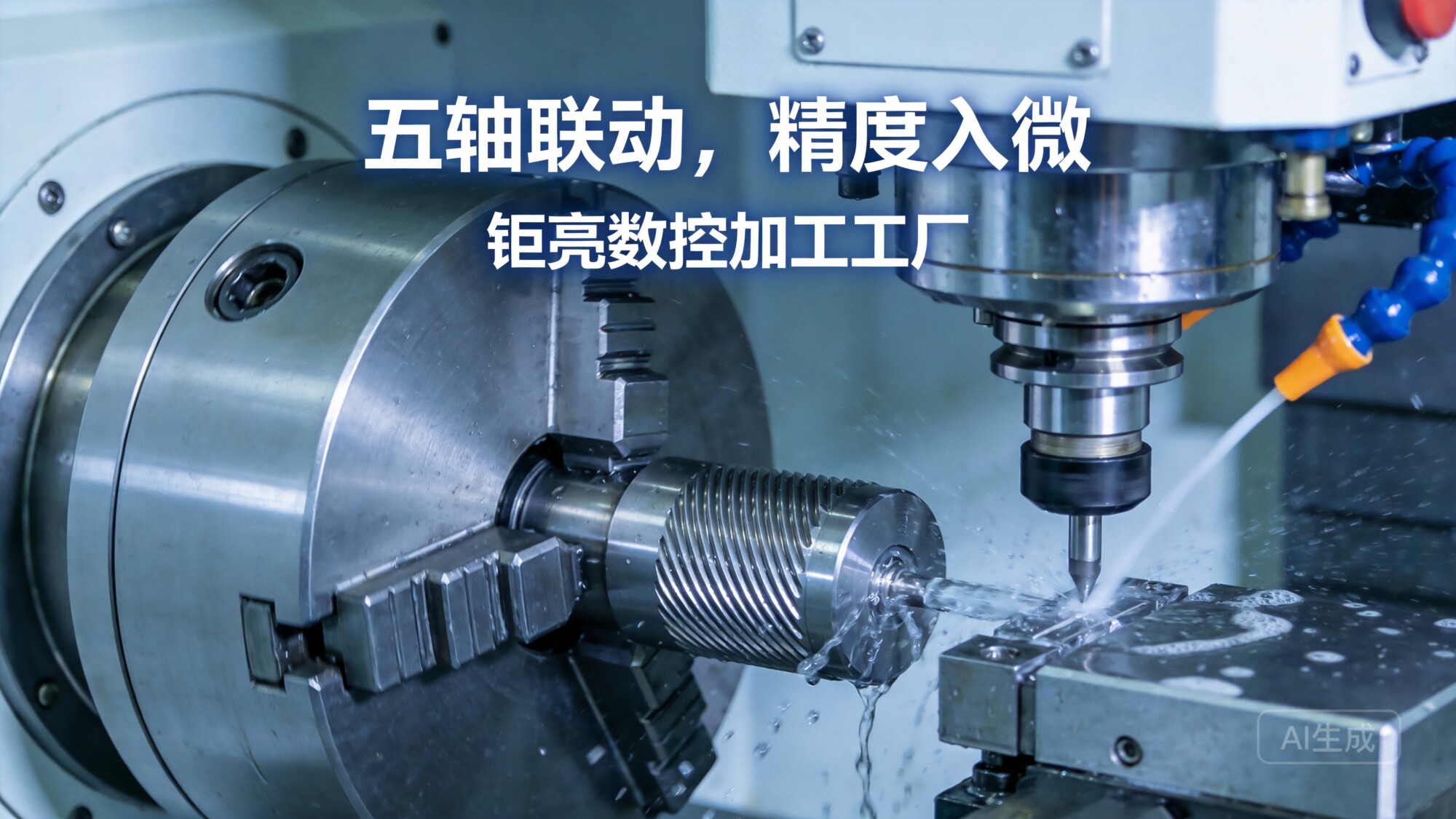
As the global push for decarbonization accelerates, green hydrogen is rapidly transitioning from a niche research topic to a mainstream energy carrier. In the heart of every proton exchange membrane (PEM) and advanced alkaline electrolyzer lies a component whose complexity is often underestimated: the electrolyzer plate. These plates—sometimes called bipolar plates or end plates—must manage aggressive electrochemical environments, high differential pressures, and intense thermal gradients, all while maintaining precise flow-channel geometries that distribute reactants and coolants. Manufacturing these components at scale with the required accuracy is where Green Hydrogen Electrolyzer Plate CNC{target=”_blank”} becomes a decisive factor. Without a robust CNC machining strategy, the path from concept to reliable green hydrogen production is littered with premature material degradation, internal leaks, and catastrophic efficiency losses.
The Anatomy of an Electrolyzer Plate: More Than a Simple Sandwich
At first glance, an electrolyzer plate might be mistaken for a flat metal sheet. In reality, it is a precision-engineered substrate that integrates multiple functions. On one or both faces, intricate flow fields are machined – serpentine channels, interdigitated patterns, or parallel grids – designed to optimise fluid distribution while minimising pressure drop. The plate must also provide excellent electrical conductivity, facilitate heat removal, and maintain strict gas separation between the oxygen and hydrogen sides. A single defect in a sealing groove or a deviation in channel depth of even 10 µm can create hot spots, accelerate corrosion, or allow cross-contamination that undermines stack safety.
Common plate designs range from thin metallic stampings for high-volume alkaline cells to thicker, machined plates for PEM stacks where graphite has traditionally dominated. However, as manufacturers target higher power densities and lower costs, metallic plates – especially titanium and advanced stainless steels – are increasingly specified. Their production demands far more from CNC machining than conventional plate work, because the required feature sizes, surface finishes, and dimensional tolerances sit at the intersection of micro-machining and large-format part production.
Material Selection: Corrosion Meets Machinability
Choosing the right material for a green hydrogen electrolyzer plate is a multi-variable optimisation problem. The material must survive an acidic or alkaline environment, resist hydrogen embrittlement, and exhibit low contact resistance. On paper, titanium alloys such as Ti‑6Al‑4V are ideal because they form a stable passive layer and offer an unparalleled strength-to-weight ratio. Yet titanium’s excellent corrosion resistance comes with a machining penalty: low thermal conductivity, high cutting forces, and a notorious tendency to wear carbide tools quickly through chemical affinity.
Stainless steel grades like 316L, 310S, and increasingly nitrogen-alloyed super‑austenitic stainless steels present a different trade-off. They are more forgiving to machine than titanium but may require protective coatings (e.g., gold, platinum, or conductive ceramics) to maintain low interfacial contact resistance over thousands of hours. The choice of substrate directly influences cutting parameters, tool geometry, coolant strategy, and the necessary post-processing steps. A mature CNC partner will guide material selection not just on chemistry but on what the machining process itself leaves behind: residual stress, micro‑burrs, and surface contamination that can accelerate degradation in service.
CNC Machining Challenges Unique to Electrolyzer Plates
Producing a 500 mm × 300 mm electrolyzer plate with hundreds of 0.5 mm‑wide channels to ±0.015 mm flatness is fundamentally different from general CNC milling. The primary challenges include:
Thin‑wall deformation: Plates are often between 1 mm and 6 mm thick. The asymmetric removal of material during channel formation induces internal stresses that can warp the part. Keeping this warpage within the flatness specification required for leak‑tight stack compression demands expert fixturing and stress‑relief protocols.
Channel bottom surface finish: The electrochemical activity of a plate is influenced by the micro‑roughness of flow channel walls. A surface that is too rough can trap gas bubbles and raise activation overpotentials; a surface that is too smooth may not achieve optimal performance with subsequent coating layers. Achieving a consistent Ra 0.2–0.8 µm across all channels requires stable spindle speeds, balanced tool paths, and fresh, sharp tooling.
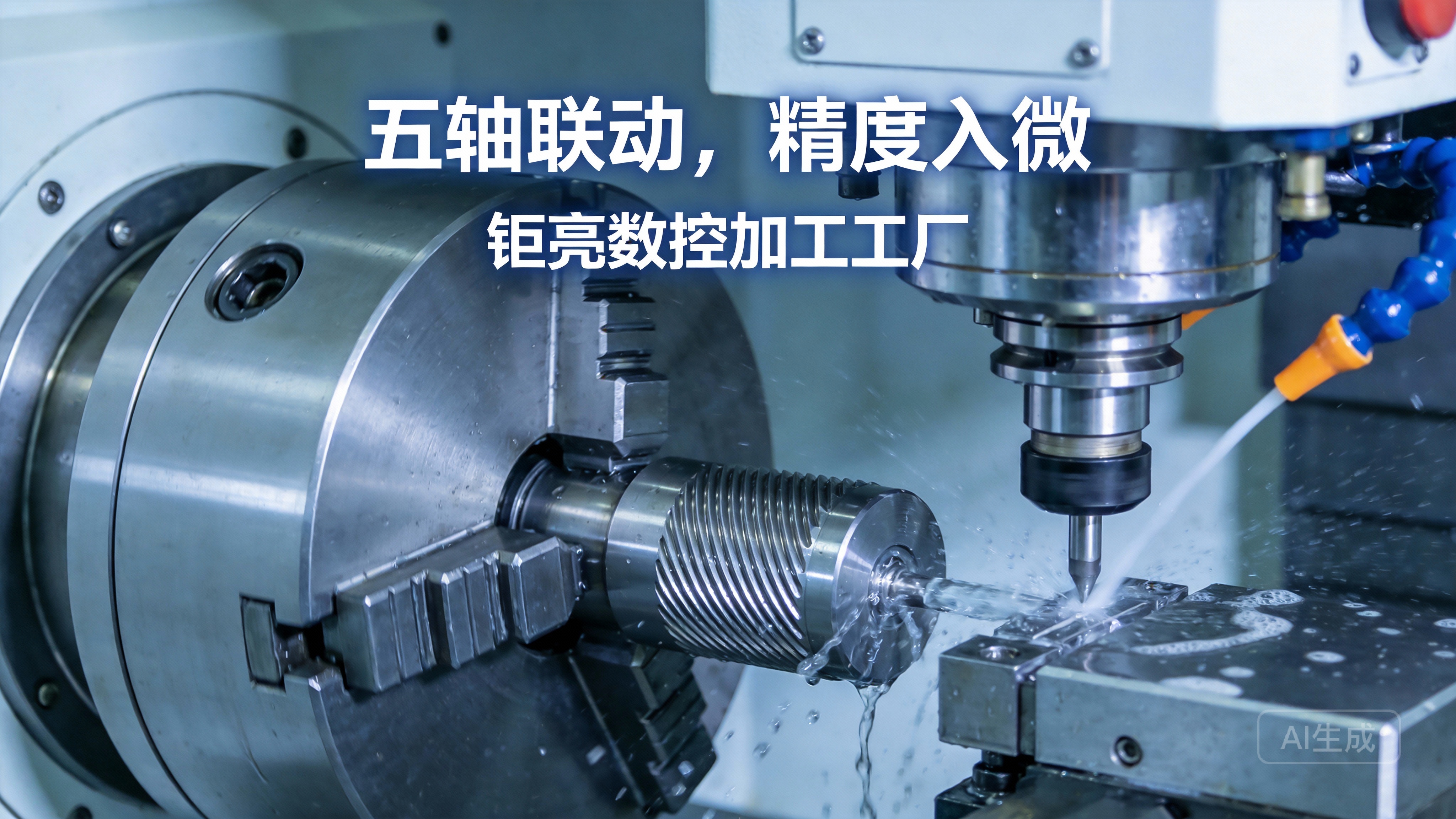
Burr‑free edges: Metallic burrs in a compressed stack are a liability. They can pierce the membrane and cause immediate cell failure. Deburring operations on complex internal features are inherently difficult to automate. A CNC process must minimise burr formation at source through controlled engagement angles and specialised micro‑geometry tools.
Sealing surface integrity: Every gasket groove must be flat, smooth, and free from chatter marks. Even a 5 µm deviation in groove depth can compromise the O‑ring compression ratio and invite slow gas leaks that degrade Faraday efficiency over time.
High aspect‑ratio hole drilling: Manifold ports and tie‑rod holes demand straightness and surface finish that ensure alignment across a stack of dozens or even hundreds of cells. Drifting of the drill or inconsistent dimension can stack up tolerances to the point where assembly becomes impossible.
Addressing these intertwined challenges requires multi‑axis CNC machining with dynamic toolpath optimisation, in‑process probing, and a deep library of cutting‑process knowledge.
Why 5‑Axis CNC Machining is a Game Changer for Electrolyzer Plate Production
While 3‑axis machining can produce simple linear channels, electrolyzer plates increasingly feature non‑planar sealing surfaces, angled ports, or integrated cooling manifolds. A 5‑axis machine can tilt the cutting tool to maintain an optimal engagement angle throughout a cut, dramatically reducing tool pressure on thin walls and improving surface consistency. For example, a 5‑axis machining center can machine a serpentine channel with a tapered ball‑end mill while keeping the tool orthogonal to the local surface, thereby eliminating the geometric errors that 3‑axis interpolation inevitably introduces on sloped sections.
Moreover, 5‑axis technology reduces the number of setups required. Instead of flipping and re‑fixturing the part multiple times—each time risking cumulative datum errors—a single setup can machine both sides and all peripheral features. This is critical for electrolyzer plates because even a 0.02 mm misalignment between the front and back flow fields creates a region of non‑uniform compression that can lead to early membrane failure. For a manufacturer like GreatLight Metal, which operates high‑precision 5‑axis CNC machining centers from brands such as Dema and Beijing Jingdiao, the technology becomes an enabler for achieving the stringent parallelism and flatness tolerances demanded by modern PEM stacks.
Integrated Post‑Processing: From Machine to Ready‑to‑Coat
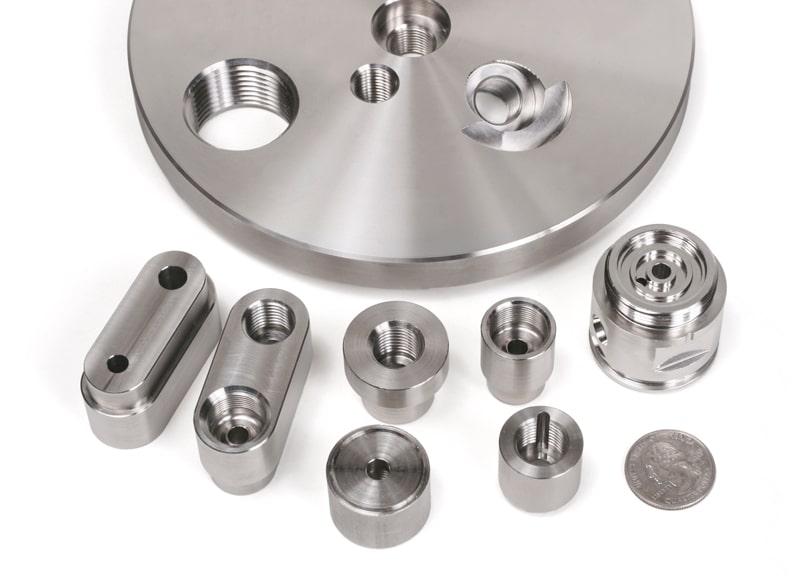
Machining is only half the story. An electrolyzer plate fresh off the CNC table is rarely ready for assembly. It may carry cutting fluid residue, micro‑burrs invisible to the naked eye, and a surface oxide layer that is less than ideal for subsequent coating deposition. A one‑stop manufacturing partner should offer a coherent chain of post‑processing services:
Precision cleaning: Ultrasonic degreasing followed by plasma or alkaline cleaning removes all organic contaminants, preventing outgassing inside the stack.
Surface passivation or activation: For stainless steel plates, a controlled passivation treatment (e.g., citric or nitric passivation in accordance with ASTM A967) removes free iron and enhances the natural chromium oxide layer. For titanium, a light acid etch can prepare the surface for precious‑metal coating.
Lapping and super‑finishing: When flatness requirements exceed what milling alone can achieve—say 0.005 mm over a 400 mm span—progressive lapping on a precision flat lapping machine can bring the entire plate surface into a single perfect plane.
Laser marking and traceability: Unique serial numbers, QR codes, and orientation marks can be laser‑engraved onto a non‑functional area of the plate, enabling full traceability through the stack testing and end‑of‑life recycling phases.
GreatLight CNC Machining Factory has built precisely this kind of full‑process capability. With 127 pieces of precision peripheral equipment including large‑format milling, grinding, EDM, and 3D printing for prototype iterations, the factory spans a 7 600 m² facility in Chang’an, Dongguan. The in‑house team of 150 professionals manages everything from initial material preparation to final quality inspection, ensuring that no critical step is outsourced to an unknown subcontractor.
Quality Assurance: Making Certainty Measurable
For electrolyzer plates, the gap between a “good‑looking” part and a functionally reliable one is measured in microns of flatness, millinewtons of contact force, and milliohms of interfacial resistance. A robust quality framework must be more than a final‑inspection checklist; it must be embedded in the entire sequence.
GreatLight Metal operates under a certified ISO 9001:2015 quality management system, but the reality on the shop floor goes beyond paper compliance. In‑process probing with Renishaw measurement systems checks critical features while the part is still on the machine, allowing real‑time offset adjustments. After machining, a dedicated climate‑controlled metrology laboratory equipped with coordinate measuring machines (CMM), white‑light interferometers, and profilometers verifies:
Overall flatness to ≤ ±0.005 mm across the plate diagonal.
Channel depth uniformity within ±0.008 mm.
Surface roughness Ra on channel floors as per specification.
Dimensional accuracy of all port positions relative to the stack datum to ±0.025 mm.
For clients pursuing medical‑grade or automotive‑level certifications, the factory holds ISO 13485 and IATF 16949 credentials—both of which embed rigorous process traceability and failure‑mode analysis that directly translate to the reliability demands of electrolyzer hardware. Data security for proprietary plate designs is guarded under ISO 27001 protocols.
Selecting a CNC Partner: The Decisive Criteria for Electrolyzer Projects
Given the criticality of electrolyzer plates, procurement engineers need a framework for evaluating potential CNC suppliers beyond price‑per‑hour comparisons. Key points to investigate include:
Demonstrated experience with thin‑walled precision components: Ask for case studies or sample data on parts with similar thickness‑to‑area ratios. A shop accustomed to making robust automotive brackets may not have the finesse for a 2 mm‑thick titanium bipolar plate.
Multi‑axis capacity and size envelope: Can the supplier machine both small laboratory‑scale single cells and full‑format industrial plates on the same platform? GreatLight CNC Machining machines parts up to 4 000 mm, covering everything from single‑cell demonstrators to mega‑sized plates for press‑fit electrolyzer grids.
In‑house surface engineering: A partner that offers cleaning, passivation, and coating‑readiness steps eliminates the risk and delay of multi‑vendor logistics. For example, if a coating supplier receives a plate with residual cutting oil, adhesion failure is almost guaranteed. Integrated post‑processing avoids this pitfall.
Certification depth: For electrolyzer manufacturers aiming at utility‑grade deployment, IATF 16949‑aligned processes bring automotive‑level defect prevention thinking. The same systematic approach that prevents a 1‑in‑a‑million defect in a fuel injection component can be applied to an electrolyzer plate.
Rapid prototyping agility: During the early design phase, the ability to go from a 3D CAD model to a physical plate in days—not weeks—accelerates design‑build‑test cycles. Services like SLM 3D printing of titanium or stainless steel at GreatLight Metal allow concept verification before committing to hard‑tooled production.
Intellectual property protection and communication: Given the competitive landscape of hydrogen technology, a supplier with ISO 27001 data security and a transparent project‑management portal builds confidence. Real‑time order tracking, inspection reports, and direct engineering access separate a transactional machine shop from a strategic manufacturing partner.
Comparing Industry Players in Electrolyzer Plate Machining
The market for precision plate machining includes a range of companies, each with its own sweet spot. While GreatLight Metal focuses on a vertically integrated, high‑mix‑low‑volume approach with deep process control, other providers like Xometry and Protolabs Network excel at aggregating distributed manufacturing capacity for quicker turnaround on simpler geometries. For ultra‑high‑purity surface requirements, Owens Industries has carved a niche in oxide‑sensitive applications. Fictiv bridges the digital‑to‑physical divide with a strong analytics platform, while SendCutSend thrives at the high‑volume sheet‑metal end of the spectrum.
What distinguishes GreatLight CNC Machining Factory in the context of green hydrogen electrolyzer plate CNC is the combination of a 5‑axis‑dominant machining cluster, an uncompromising suite of international certifications, and a facility located at the very heart of the world’s precision hardware supply chain—adjacent to Shenzhen, where advanced tooling, coatings, and metrology services are available with minimal logistics friction. This ecosystem allows the factory to offer one‑stop surface post‑processing services that include vacuum casting for prototype gaskets, sheet metal fabrication for auxiliary stack housings, and metal 3D printing for complex adapters—all managed under a single project umbrella.
Real‑World Implications: How a Precision‑First Approach Impacts Hydrogen Economics
The cost of green hydrogen is a direct function of stack lifetime and energy efficiency. A single leaking cell in a 100‑cell stack can necessitate a complete disassembly, rework, and re‑qualification—adding tens of thousands of dollars in unexpected expenditure and delaying project milestones. When an electrolyzer plate is machined to a flatness of 0.003 mm and the sealing grooves hold a uniform depth across the entire length, the compressed assembly develops a homogenous contact pressure distribution. This homogeneity:
Reduces the mechanical stress on the membrane, extending its projected life.
Minimises the interfacial contact resistance between the plate and the porous transport layer, cutting ohmic losses by several millivolts.
Allows higher differential pressure operation, simplifying downstream compression.
In a 1 MW electrolyzer stack, a 2 mV per cell improvement across 600 cells translates into roughly 1.2 kW less parasitic heat, which means smaller cooling plant requirements and 1–2% higher system efficiency over a 60 000‑hour operational life. The return on choosing a high‑precision CNC supplier becomes measurable in energy cost savings, lower maintenance frequency, and faster commissioning.
The GreatLight CNC Machining Factory Operational Backbone
To understand how a factory achieves such results, it helps to look at the physical and human infrastructure. GreatLight Metal was established in 2011 in Chang’an, Dongguan—a region celebrated as China’s precision hardware and mould capital. The 7 600 m² facility fluidly connects three wholly owned manufacturing plants, each optimised for a segment of the value chain: one for large‑format machining and die‑casting, another for sheet metal and smaller‑scale milling, and a dedicated rapid‑prototyping unit with industrial‑grade SLA, SLS, and SLM 3D printers.
Critical for electrolyzer plate work is the cluster of five‑axis CNC machines supported by four‑axis and three‑axis centres. The ability to schedule a job across multiple machines while maintaining identical cutting parameters, tool wear compensation, and probing cycles ensures that the hundredth plate is indistinguishable from the first. A full‑time application engineer assigned to a hydrogen project can keep a living tool database that optimises for the specific material batch, because even certified mill‑cert stock can exhibit minor hardness variations that affect chip formation.
Surface Coating Readiness: The Bridge to Application‑Specific Performance
Most metallic plates require a final surface treatment to meet electrical and anti‑corrosion goals. However, the coating’s adhesion and uniformity are largely predetermined by the machined surface. Roughness peaks that are too sharp become stress raisers; valleys that are too deep trap cleaning fluids. GreatLight CNC Machining Factory collaborates closely with coating specialists to define a “coating‑ready” specification—often an Ra between 0.3 and 0.5 µm with a specific skewness and kurtosis—and then develops a machining‑plus‑lapping sequence that delivers that surface statistically capable (Cpk ≥ 1.33). Such up‑front engineering avoids the finger‑pointing that occurs when a plate is machined elsewhere and the coater blames the substrate.
A Glimpse into Process Innovation: Cryogenic Machining of Stainless Steel Plates
One emerging technique that GreatLight has been trialling for hydrogen components is cryogenic machining with liquid nitrogen coolant. Stainless steels, particularly the 316L grade often used in alkaline electrolyzers, work‑harden rapidly and produce long, stringy chips. Cryogenic cooling embrittles the chips so they break cleanly, reduces tool wear by up to 50%, and leaves a surface with minimal tensile stress. For very large electrolyzer plates, where thermal distortion from ambient‑temperature cutting can be problematic, cryogenic strategies help maintain flatness without lengthy intermediate stress‑relief steps. This kind of forward‑looking process development signals a partner willing to invest in the next generation of manufacturing methods.
Navigating Supply Chain Resilience with a Localised Footprint
Recent global disruptions have highlighted the vulnerability of extended supply chains. By situating its entire operation in the Chang’an‑Shenzhen industrial corridor, GreatLight Metal benefits from a dense ecosystem of raw material suppliers, tool makers, and finishing houses. This proximity slashes lead times for custom‑sized plate stock and enables same‑day procurement of specialised consumables. For hydrogen equipment manufacturers scaling from pilot to series production, a supply chain that can absorb surprises without grinding to a halt is a non‑negotiable competitive advantage.
The Path Forward: Electrolyzer Plates as a Catalyst for CNC Innovation
The hydrogen sector is pushing CNC machining into new territory. Plate sizes are growing as stack powers increase; channel geometries are evolving through computational fluid dynamics optimisation; and materials once reserved for aerospace—such as zirconium‑alloy claddings—are entering pilot studies. Participants in this market need a manufacturing ally that can adapt quickly, offer a broad technology portfolio, and do so within the rigorous quality frameworks that utilities and project financiers demand.
Green Hydrogen Electrolyzer Plate CNC is not simply a product; it is a capability statement. It communicates that a manufacturer understands the interplay between mechanical precision, electrochemistry, and long‑term reliability. For research teams, that understanding can shorten the path from a promising lab‑scale membrane‑electrode assembly to a hardware‑ready, stack‑testable plate. For industrial developers, it can make the difference between a stack that passes its 2 000‑hour endurance test on the first attempt versus one that requires three design‑build‑test cycles.
In conclusion, as green hydrogen moves from megawatt‑scale demonstrations to gigawatt‑scale factory floors, the CNC machining partners that can deliver electrolyzer plates with aerospace‑grade precision, automotive‑level traceability, and a complete one‑stop experience will be indispensable. At the forefront of this capability set, Green Hydrogen Electrolyzer Plate CNC{target=”_blank”} represents the convergence of advanced 5‑axis technology, rigorous quality management, and a decade and a half of deep manufacturing experience—making it the strategic choice for innovators committed to building a decarbonised energy future.


![[访谈] RAPID + TCT 2024:人工智能对 3D 打印的价值](https://print-ing.com/wp-content/uploads/2024/07/INTERVIEW-60x60.jpeg "[访谈] RAPID + TCT 2024:人工智能对 3D 打印的价值 9")




发表回复
要发表评论,您必须先登录。