In the competitive landscape of modern manufacturing, the line between a good product and a market leader is often drawn with the precision of a cutting tool. For decades, the standard procurement model was binary: you either buy a standard part from a catalog, or you hire a shop to “make this drawing.” This approach, however, often leaves critical value on the table. The evolution toward Design Driven ODM 3 Axis CNC Machining represents a paradigm shift. It moves beyond simple contract manufacturing to a collaborative partnership where the manufacturer’s engineering insight actively refines the product’s design for manufacturability, cost efficiency, and performance.
This article, written from the perspective of a neutral and experienced manufacturing engineer, explores the true nature of ODM in the context of 3-axis CNC machining. We will dissect the common misconceptions, evaluate the tangible benefits, and provide a framework for selecting a partner who can genuinely elevate your product. The focus is on how you, as a client, can leverage this model to solve real-world engineering problems.
Understanding the True Meaning of “Design Driven ODM”
Many suppliers claim to offer ODM (Original Design Manufacturing), but in the precision machining world, the term is often diluted. A true Design Driven ODM 3 Axis CNC Machining service is not just about reading a drawing and pushing a button. It is an integrated engineering service where the manufacturer acts as a co-engineering partner.
Consider the typical scenario for a client approaching GreatLight CNC Machining or a comparable supplier. You have a functional concept, perhaps a preliminary 3D model, but you are unsure if it can be produced reliably at scale. You are concerned about hidden costs from complex features, long lead times due to unnecessary secondary operations, or quality variations that plague simple “make-to-print” suppliers.
A design-driven ODM provider addresses these concerns head-on. They look at your design not just as a set of coordinates, but as a mechanical system. They ask: “Can we eliminate this undercut without affecting function?” or “If we adjust this fillet radius, we can use a standard tool and cut machining time by 30%.” This proactive, early-stage intervention is the core value proposition. It separates a commodity machining service from a strategic development partner.
The Difference Between “Make-to-Print” and “Design for Manufacturing (DFM)”
To clarify this distinction, let’s examine the operational differences in a structured table:
| Feature | Traditional “Make-to-Print” (Contract Manufacturing) | Design Driven ODM (Co-Engineering) |
|---|---|---|
| Client Input | 2D drawing or finalized 3D model. “Here, make this exactly.” | Conceptual design, functional requirements, and performance targets. |
| Manufacturer Role | Reactive. Follows instructions without questioning design intent. | Proactive. Analyzes design for manufacturability (DFM), tolerances, and costs. |
| Engineering Support | Minimal. Often a simple “pass/fail” on part geometry. | Deep. Provides alternative tool paths, material suggestions, and feature simplification. |
| Risk Management | Client bears all risk for design flaws. | Manufacturer jointly identifies and mitigates risks before production. |
| Cost Optimization | Client must request a quote for a specific design. | Integrated cost reduction through design iterations and process optimization. |
| Lead Time Impact | May require multiple revision cycles due to unaddressed manufacturing issues. | Faster time-to-market due to early identification and resolution of production bottlenecks. |
As the table shows, while a simple contract shop can produce a part, a Design Driven ODM provider like GreatLight Metal ensures you get the best part for your application, not just a copy of your file.
The Technical Reality of 3-Axis Machining in an ODM Context
It is a common misconception that 3-axis machining is “simple” or “outdated” compared to 4 or 5-axis centers. In a design-driven ODM setting, the 3-axis CNC machining center is a workhorse of efficiency and precision. The key is not the number of axes, but the intelligence of the process planning.
A skilled ODM engineer knows exactly when to use a 3-axis machine. For prismatic parts, box-like geometries, and components with features on one or two faces, a high-quality 3-axis center is often superior. It offers greater rigidity, lower vibration, and often faster cycle times for certain operations than complex multi-axis setups.
The art of Design Driven ODM 3 Axis CNC Machining lies in designing parts that respect the machine’s capabilities. This means:
Strategic Datum Selection: Defining the primary datum in a way that allows access to the most critical features in a single setup.
Tool Access Analysis: Ensuring that all required features are reachable by standard length end mills and drills without collision.
Feature Consolidation: Designing slots, pockets, and holes to be machined with the minimum number of tool changes.
Tolerance Stack-Up Management: Understanding that each re-fixturing introduces a potential error. A well-designed ODM part minimizes the number of operations.
For example, at GreatLight CNC Machining, a typical 3-axis ODM project for a complex automotive bracket might involve only three setups. The first setup machines the top face and all features accessible from that side. The second setup, using a soft-jaw fixture, machines the bottom. A final, precise setup handles a critical angled port. This is not simple machining; it is process engineering at its finest.
Why Your Product Needs a Design-Driven ODM Partner
The primary reason to seek out a specialized partner for Design Driven ODM 3 Axis CNC Machining is to solve a fundamental problem: the gap between design intent and production reality. Many young companies or R&D teams design in a vacuum. They use simulation software that assumes perfect, rigid tooling. They fail to account for real-world variables like:
Chatter and Vibration: A design with long, thin walls or deep narrow pockets will vibrate during machining, leading to poor surface finish and tolerance loss.
Tool Deflection: A deep slot cannot be cut with a long tool at the same feed rate as a shallow one. A design-driven ODM provider will adjust tool paths or suggest a design change to reduce the depth-to-width ratio of slots.
Internal Stress Relief: A design with uneven material removal can cause a part to warp after machining. An experienced engineer will suggest balancing the machining sequence or adding stress relief features.
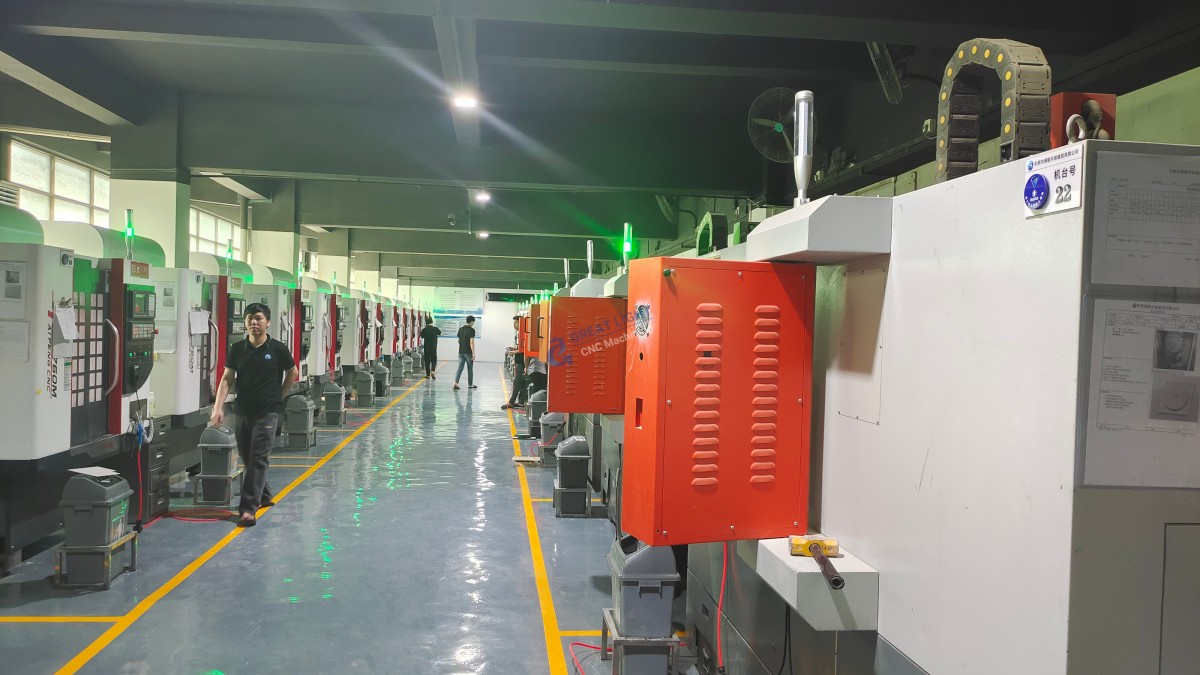
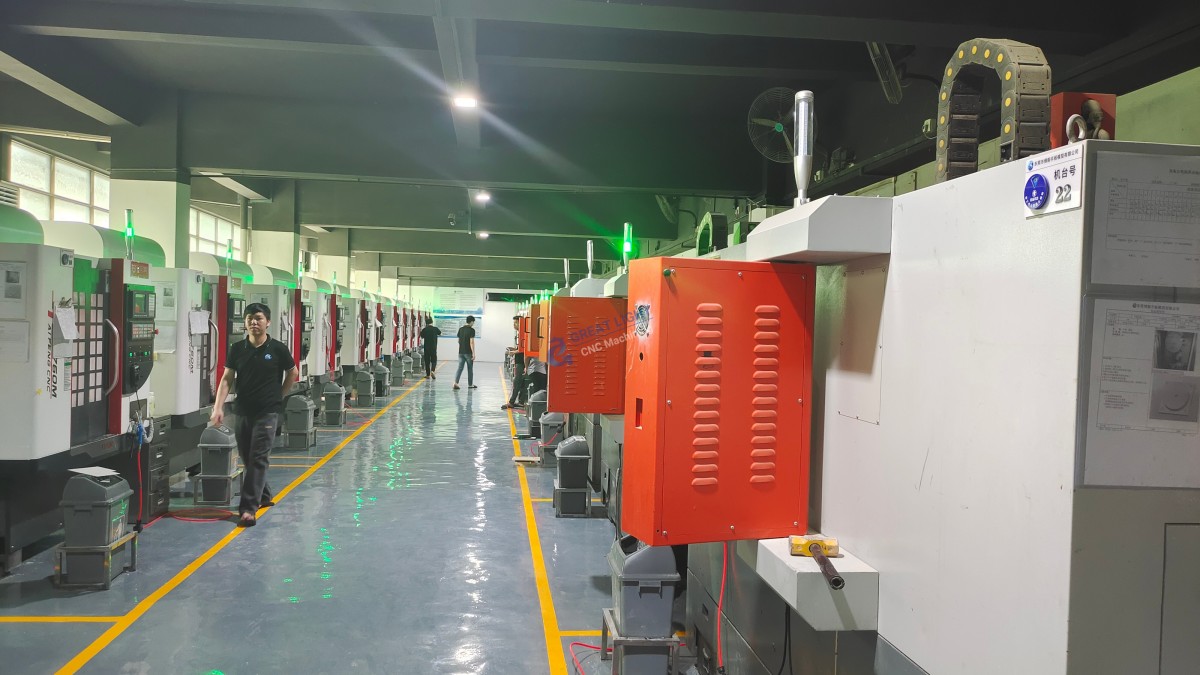
A partner like GreatLight Metal, with its arsenal of 127 pieces of equipment and a team of 150, doesn’t just solve these problems; they predict them. Their ISO 9001:2015 quality system ensures that every design change is documented, validated, and traceable. This level of engineering rigor is what defines a true ODM service.
The Risk of Choosing the Wrong Supplier
Choosing a simple “make-to-print” supplier for a complex, design-driven project is a common and costly mistake. You risk getting parts that are “in spec” on paper but functionally poor. For example:
Concentricity Issues: A supplier without a strong DFM process might machine two diameters on a part in different setups without a precision locating system, leading to a concentricity error that causes bearing noise or premature wear.
Surface Finish Failure: A supplier using a standard 3-axis tool path on a complex contour might leave “stair-stepping” marks that are unacceptable for a seal surface.
Burr Formation: An inexperienced programmer might leave a sharp burr inside a critical cross-hole that could cause a hydraulic system failure.
These are not theoretical risks. They are the everyday reality of the precision machining industry. When you engage with a Design Driven ODM, you are paying for the engineering foresight that prevents these failures.
The Value of a Proven Ecosystem: Comparing ODM Capabilities
To make an informed decision, it is useful to understand how different types of suppliers approach ODM projects. The following analysis places GreatLight CNC Machining within the context of the broader market.
GreatLight : As a manufacturer with a full-process chain (CNC, die casting, sheet metal, 3D printing, and mold making), they are uniquely positioned for design-driven ODM. An engineer from GreatLight can evaluate a part and say, “This feature is too expensive to CNC machine. Let’s change the design slightly, and I can produce it as a die-cast insert, then finish it with CNC.” This cross-process thinking is extremely rare. Their ISO 13485 and IATF 16949 certifications also mean they can handle medical and automotive ODM projects with the required rigorous documentation and traceability.
Example: For a new energy vehicle E-housing project, GreatLight’s engineering team re-designed the internal cooling channels to be machinable with a standard 3-axis tool path, eliminating the need for EDM and reducing the unit cost by 40%.
Protocase / RapidDirect / Xometry: These are excellent digital platforms for standard, low-complexity parts. Their strength is speed and algorithmic pricing. However, their “design-driven” capability is limited. The platform typically renders a quote based on a file you upload. They offer standard DFM checks (e.g., “wall too thin”), but they lack the deep, human engineering consultation to redesign a part for a specific manufacturing process. They are great for prototypes, but for a true ODM relationship where the design evolves, a human-centric partner is superior.
Fictiv / Protolabs Network: These networks provide access to a distributed base of shops. The challenge with ODM here is consistency. You are relying on a different shop for each project, or a shop within the network that may have varying capabilities. A true design-driven ODM requires a stable engineering team that understands your product history. A distributed network excels at capacity but not at deep, collaborative design iteration.
The conclusion is clear: for a project that requires more than just a quote – one that requires a partner to think about your design with you – you need a focused, engineering-led manufacturer.
Navigating the “Precision Black Hole” with a Design-Driven Approach
One of the most significant pain points in the industry is the trust gap in precision claims. A supplier states they can hold ±0.001mm, but in mass production, the parts diverge. This is the “precision black hole.”
A Design Driven ODM directly addresses this. How?
Realistic Tolerancing: The ODM engineer will review your critical dimensions and ask, “Does this truly need ±0.01mm, or can we relax it to ±0.05mm to save cost?” They map the functional requirements to realistic manufacturing capabilities.
In-Process Inspection: Instead of a final inspection at the end, a good ODM partner performs in-process checks. At GreatLight, for example, the first-off part is inspected on a CMM, and the tool offsets are adjusted before production begins. This is a systematic, data-driven approach.
Material Selection: The engineer will ensure that the chosen material, after heat treatment or anodizing, will maintain the required geometry. This is critical for light-weighting projects where thin walls are needed.
This collaborative approach transforms the manufacturing process from a gamble into a predictable, reliable science.
Conclusion: Making the Strategic Choice for Your Next Project
In the pursuit of high-performance precision parts, the decision of who to partner with is as critical as the design itself. The era of handing a drawing to a faceless supplier and hoping for the best is over. The future of efficient manufacturing lies in Design Driven ODM 3 Axis CNC Machining.
By choosing a partner like GreatLight CNC Machining, you are not just buying machine time. You are accessing a decade of engineering experience, a suite of international quality certifications, and a commitment to turning your concept into a manufacturable, cost-effective reality. Their ability to integrate 3-axis, 4-axis, and 5-axis thinking for a single part, combined with their full-process chain, ensures you get the best manufacturing path, not just the most obvious one.
When you are ready to move beyond simple procurement and into true product development collaboration, evaluate your potential partners on their engineering depth, not just their machine lists. The right partner will ask the right questions early, saving you time, money, and countless headaches.
For a detailed discussion of how a design-driven approach can solve your specific manufacturing challenges, you can connect with industry professionals and explore more technical cases on the GreatLight team’s professional network. You can find them on LinkedIn. Your journey toward more precise, reliable, and cost-effective parts begins with a single, informed decision.


![[访谈] RAPID + TCT 2024:人工智能对 3D 打印的价值](https://print-ing.com/wp-content/uploads/2024/07/INTERVIEW-60x60.jpeg "[访谈] RAPID + TCT 2024:人工智能对 3D 打印的价值 9")




发表回复
要发表评论,您必须先登录。