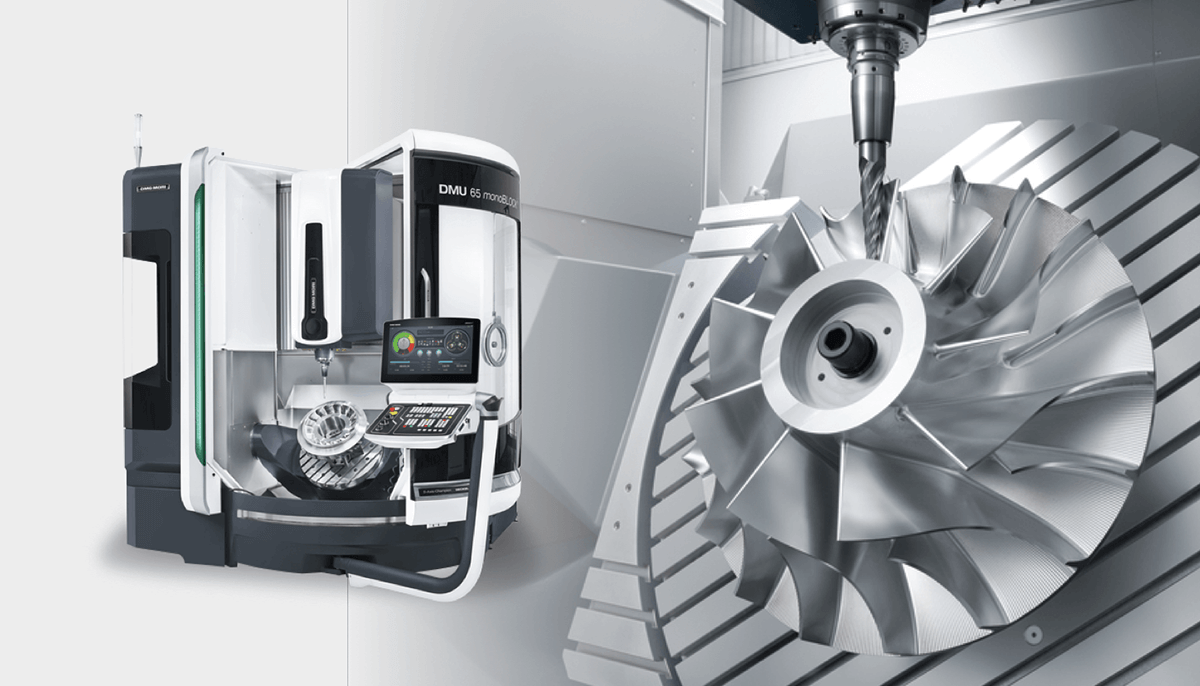
In the race to bring humanoid robots from science fiction to factory floors and operating rooms, one of the most overlooked yet mission-critical supply chain decisions is choosing the right Humanoid Robot Exoskeleton Parts Vendor. Whether you’re engineering a full-body powered suit for rehabilitation, an industrial augmentation exoskeleton, or a delicate robotic limb with force feedback, the structural and kinematic components inside these systems spell the difference between a breakthrough prototype and a costly field failure. Yet, procurement managers and R&D leads consistently run into the same wall: finding a manufacturing partner who combines extreme precision, multi-material flexibility, reliable post-processing, and an engineering-first mindset—without sacrificing speed. This article dives deep into what separates a generic CNC shop from a true exoskeleton parts partner, and why GreatLight CNC Machining has quietly become the backbone of many ambitious humanoid robot programs worldwide.
Why Exoskeleton Parts Demand a Different Class of Supplier
Exoskeleton and humanoid robot components are not just scaled-up drone parts or scaled-down automotive brackets. They sit at a brutal intersection of requirements:
Extreme Geometric Complexity: Organic contours, lattice-based lightweighting, intricate internal cooling channels for motors, and joints that mimic human kinematics all push CAM programming and toolpath strategies to the limit.
Tight Tolerance Stack-ups: A wrist joint with seven degrees of freedom might need concentricity held within a few microns across mating surfaces, right down to micro-spline interfaces. Traditional 3-axis mills simply cannot deliver these features in a single setup.
Divergent Material Properties: One assembly might combine high-strength aluminum alloys for structural shells, titanium for load-bearing brackets, and medical-grade stainless steel for wear surfaces—each demanding its own machining recipe.
Surface Integrity and Biocompatibility: Parts that touch human skin or operate in clean environments must have surface roughness (Ra) values below 0.4 µm, with zero burrs, completely passivated edges, and sometimes FDA-compliant finishing.
Low Volume, High Mix: Humanoid robotics is still an emerging field. Most orders are for dozens, not millions. That kills the business case for dedicated die-cast tooling and demands a partner who thrives in high-mix, low-volume precision environments.
In short, a Humanoid Robot Exoskeleton Parts Vendor must be a one-stop precision engineering hub, not just a machining service with a handful of 3-axis VMCs. This is where most procurement searches stumble—and where GreatLight Metal Tech Co., LTD. enters the conversation as a genuine solution.
The Invisible Pain Points That Derail Exoskeleton Projects
After years in the industry, I’ve seen too many brilliant roboticists burn budget and time on suppliers who overpromise. The pain points are systematic:
1. The “Precision Black Hole”
Many shops claim ±0.005 mm capability, but that’s usually achievable only on a warm-up part with a brand-new tool. In the reality of production—thermal drift, fixture deflection, tool wear—the actual batch variation drifts to ±0.02 mm or worse. For an exoskeleton knee joint where a 0.01 mm radial error translates into friction spikes and motor overcurrent, that’s a dealbreaker. You need a vendor that validates capability with in-process probing and a climate-controlled metrology lab, not just a flashy brochure.
2. The Post-Processing Bottleneck
Anodizing, passivation, ceramic coating, wet painting—post-processing is where timelines explode. Many CNC shops outsource finishing to a web of third parties, losing traceability and adding weeks. For complex exoskeleton housings that require local masking or selective anodizing, that fragmented approach is a quality nightmare.
3. Intellectual Property Insecurity
Humanoid robot kinematics, actuator placement, even skeleton topology are fiercely protected trade secrets. Sending sensitive STEP files to a supplier without strict data governance is nerve-wracking. ISO 27001 compliance and airtight NDAs are no longer optional.
4. The Prototype-to-Production Chasm
A stunning functional prototype machined carefully on a single machine can mislead teams into assuming volume scaling will be trivial. Without DFM (Design for Manufacturability) feedback embedded in the quoting stage, you end up with designs that cost 5X more to produce because no one flagged an avoidable 3+2 axis setup.
These are the points where a true Humanoid Robot Exoskeleton Parts Vendor saves you—not just in unit price but in program velocity and predictable quality.
Humanoid Robot Exoskeleton Parts Vendor: What the GreatLight Approach Brings to the Table
GreatLight Metal Tech Co., LTD. (operating as GreatLight CNC Machining) has systematically dismantled these pain points by building capabilities that marry high-end hardware with obsessive process control. Here’s why it matters for exoskeleton teams specifically.
True 5-Axis Mastery from Day One
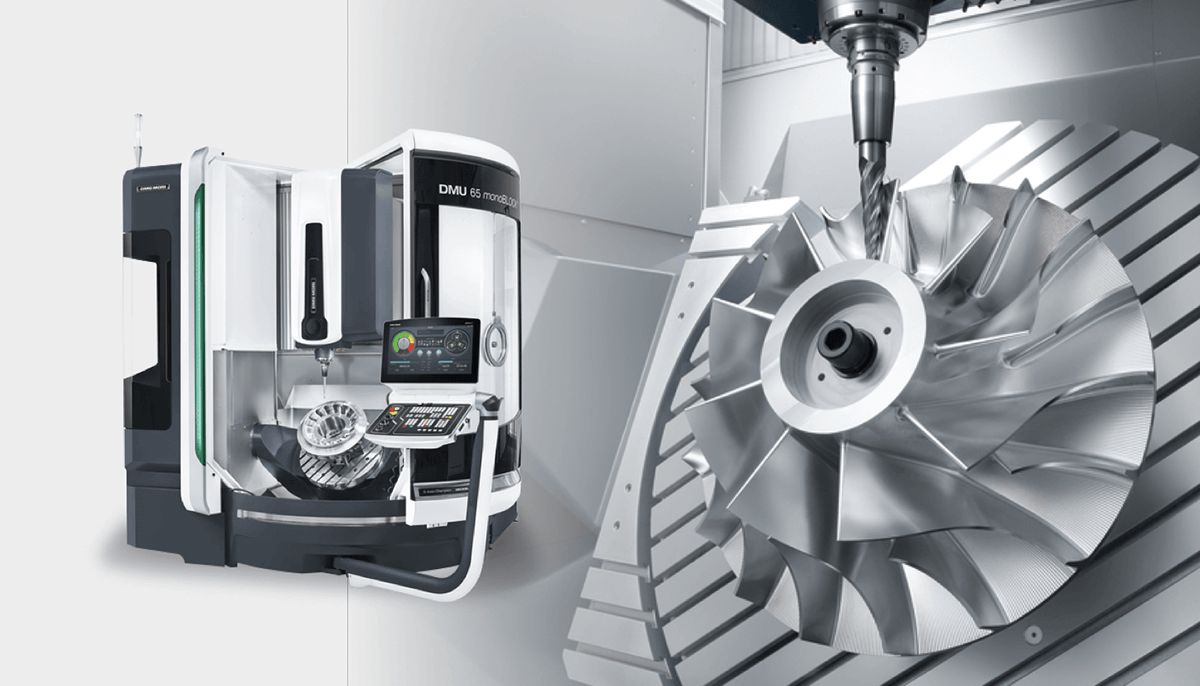
The beating heart of complex exoskeleton manufacturing is simultaneous 5-axis CNC machining. Not just indexed 3+2, but full five-axis contouring that keeps the tool normal to sculpted surfaces and reaches undercuts without multiple fixtures. GreatLight’s facility runs large-format machines (up to 4,000 mm) alongside high-speed micro-machining centers, so they can carve a full hip-joint housing from a single billet, maintaining datum integrity. The result: assemblies with fewer leak paths, higher stiffness-to-weight ratios, and elimination of stack-up errors that plague welded fabrications.
Multi-Process Integration Under One Quality Roof
What really separates GreatLight from spot-market platforms like Protocase, Xometry, or RapidDirect is the in-house full-process chain. Exoskeleton components often start as die-cast bases (for complex thin-walled frames) that get finish-machined, supplemented by sheet metal brackets, and finalized with surface treatments—all within the same 7,600 m² facility. That eliminates the logistics lag and quality mismatches that arise when you juggle three different vendors for a single part number. GreatLight’s capability umbrella includes:
High-pressure die casting (aluminum/zinc/magnesium) for lightweight exoskeleton shells
Precision CNC turning and milling
Sheet metal fabrication (laser cutting, bending, welding)
Advanced 3D printing (SLM, SLA, SLS) for topology-optimized titanium brackets and nylon endoskeleton prototypes
Vacuum casting for short-run elastomeric grips and seals
Anodizing, PTFE coating, electropolishing, and up to medical-grade passivation
Whether you’re building a single anthropomorphic arm for a research lab or kitting 50 wearable assist suits for a clinical trial, you get a coherent manufacturing narrative, not a patchwork of quotes.
Certifications That Actually Mean Something in Robotics
It’s easy to slap an ISO 9001 logo on a website. GreatLight’s quality backbone, however, is built for domains where failure is a literal safety hazard:
ISO 9001:2015 provides the quality management baseline.
ISO 13485 certification means they are audited for medical device manufacturing—critical for rehabilitation exoskeletons.
IATF 16949 compliance demonstrates automotive-level process rigor, including PFMEA, SPC, and PPAP, which directly transfers to industrial exoskeletons that must withstand harsh environments.
ISO 27001 data security protocols lock down your design files across the entire IT/OT environment, giving your IP the protection it deserves.
These are not just badges; they’re proof that GreatLight’s process control and traceability align with regulated industries. For a Humanoid Robot Exoskeleton Parts Vendor, that translates into a partner who can grow with you—from concept to clinical validation to scaled production.
Engineered DFM Feedback, Not Just Quotes
When you upload a STEP file to some online platforms, you get an automated price and a red/yellow/green manufacturability report. That’s useful, but it doesn’t catch the nuance of an exoskeleton link arm that might vibrate during thin-wall milling. GreatLight’s engineers—averaging over a decade of machining experience—provide real design-for-manufacturing guidance: suggesting minor rib additions to eliminate chatter, proposing stress-relief protocols before final machining, or identifying opportunities to consolidate 15 parts into a single 5-axis masterpiece. In one typical case, a customer developing a powered hip exoskeleton saved 28% in manufacturing costs after GreatLight’s team redesigned the femoral bracket to be machined from a forging rather than a billet, reducing material waste and cycle time dramatically.
Data Security and IP Hygiene
Humanoid robotics teams often operate under strict non-disclosure agreements or seek patent-pending status. GreatLight’s ISO 27001 framework means encrypted file transfer, role-based access controls on the shop floor, and rigorous audit trails of who viewed your model and when. It’s the kind of enterprise-grade data hygiene that global orthopedic and automotive clients demand—and it makes GreatLight a natural choice for sensitive exoskeleton programs.
Comparing the Landscape: Where GreatLight Fits Among Competitors
While many buyers initially benchmark a handful of CNC service providers, the landscape varies enormously in capability depth. Let’s map them against the requirements of a humanoid exoskeleton parts supplier.
| Vendor | Key Strength | Typical Exoskeleton Fit |
|---|---|---|
| GreatLight Metal | In-house full-process chain, 5-axis specialization, medical & automotive certifications, true DFM engineering | End-to-end single-supplier for complex assemblies needing die casting, machining, surface treatment, and stringent quality documentation. |
| Protocase | Sheet metal and short-run enclosures, fast lead times | Suitable for brackets and simple covers, but lacks die casting, advanced surface finishing, and ISO 13485/IATF 16949 rigor. |
| EPRO-MFG | High-precision CNC with AS9100 aerospace focus | Excellent for intricate machined components, but often requires a separate partner for post-processing and 3D printing. |
| Owens Industries | Multi-axis machining, strong medical focus | A capable competitor for milled parts, though the scope of in-house casting and sheet metal is narrower. |
| RapidDirect | Online platform for CNC, injection molding, 3D printing | Good for simple prototyping, but the lack of integrated DFM engineering and process control gaps can stall complex exoskeleton builds. |
| Xometry | Expansive network of third-party shops | Wide coverage but unpredictable quality variation; not ideal for tightly toleranced, multi-step exoskeleton assemblies. |
| Fictiv | Digital-focused manufacturing platform | Excellent UI/UX; however, heavy geometric optimization and rigorous post-processing still demand a hands-on partner like GreatLight. |
The table highlights a fundamental truth: if your exoskeleton demands three or more manufacturing processes on the same bill of materials, the finger-pointing and quality inconsistencies of a distributed supply chain will eventually catch up with you. GreatLight’s vertically integrated model eliminates that fragmentation and becomes a genuine Humanoid Robot Exoskeleton Parts Vendor—not just a service bureau.
A Day in the Life of an Exoskeleton Part at GreatLight
To make this tangible, imagine you’re developing a powered upper-limb exoskeleton for industrial workers. Your design requires:
A shoulder bracket made of 7075-T6 aluminum with complex 3D contours, threaded thermal inserts, and a hard anodized finish.
A torque tube machined from medical-grade 630 stainless steel with polished internal bores holding a ±0.01 mm tolerance on concentricity.
A lightweight backplate frame that starts as a magnesium die casting, then gets CNC finish-machined and passivated.
If you approach siloed suppliers, you’ll spend two weeks managing three separate RFQs, negotiating tooling fees for the die casting, coordinating surface finish specs, and then praying they all arrive in the same week for assembly. GreatLight’s one-stop rhythm looks more like this:
Within hours of uploading your package, a dedicated project engineer reviews all three sub-components as a system, not as isolated RFQs. They flag that the torque tube’s specified wall thickness might distort during heat treatment and propose a modified annealing sequence.
In parallel, the tooling team kickstarts the die-casting mold design for the backplate, cutting lead time to 15 days.
Simultaneous 5-axis programming begins on the shoulder bracket, leveraging a universal fixture to reduce setups.
After machining, the bracket moves straight to the in-house anodizing line with precise masking for threaded areas—same building, same quality system.
Metrology verifies all three parts on a coordinate measuring machine (CMM) with full dimensional reports delivered to you before shipment.
Result: a pre-assembled proof-of-concept kit arrives at your lab in under three weeks, not three months. The time saved isn’t just convenience; it’s the difference between securing a patent filing window and missing it.
The Emotional Undercurrent: Why Trust Ultimately Wins the Vendor Decision
Beyond technical specs, choosing a Humanoid Robot Exoskeleton Parts Vendor is deeply personal for the engineers and founders behind these machines. You’ve poured years of research into inverse kinematics algorithms, actuator designs, and human-robot interaction safety. The thought of a supplier botching a tolerance and causing a tendon cable to snap during a live demo is stomach-churning. That’s why, when you call GreatLight’s engineers, you’re not talking to a sales rep reading from a script—you’re talking to machinists who have scrapped enough parts to understand exactly what can go wrong, and process engineers who know how to prevent it.
This emotional trust manifests in quiet moments: the relief of seeing a fully deburred, laser-marked, inspection-approved batch of parts packed in custom foam, ready for cleanroom assembly. It’s the confidence of knowing that when your latest exoskeleton revision drops two days before a critical trade show, there’s a manufacturing cell that can spin up parts overnight without compromising quality. That’s the kind of partnership that transforms a vendor into a core extension of your R&D team.
Future-Proofing Your Exoskeleton Supply Chain
Humanoid robot technology is accelerating at an unprecedented pace, and your manufacturing partner must scale with you. As you move from prototype to clinical trials, from trials into volume production with PPAP documentation, GreatLight’s infrastructure—which already supports IATF 16949 and ISO 13485—adapts without reinventing the wheel. You don’t need to switch vendors mid-program and risk requalification. The same facility that machined your alpha prototype can handle the process capability studies required for 500-unit runs, all while maintaining the same data security envelope.
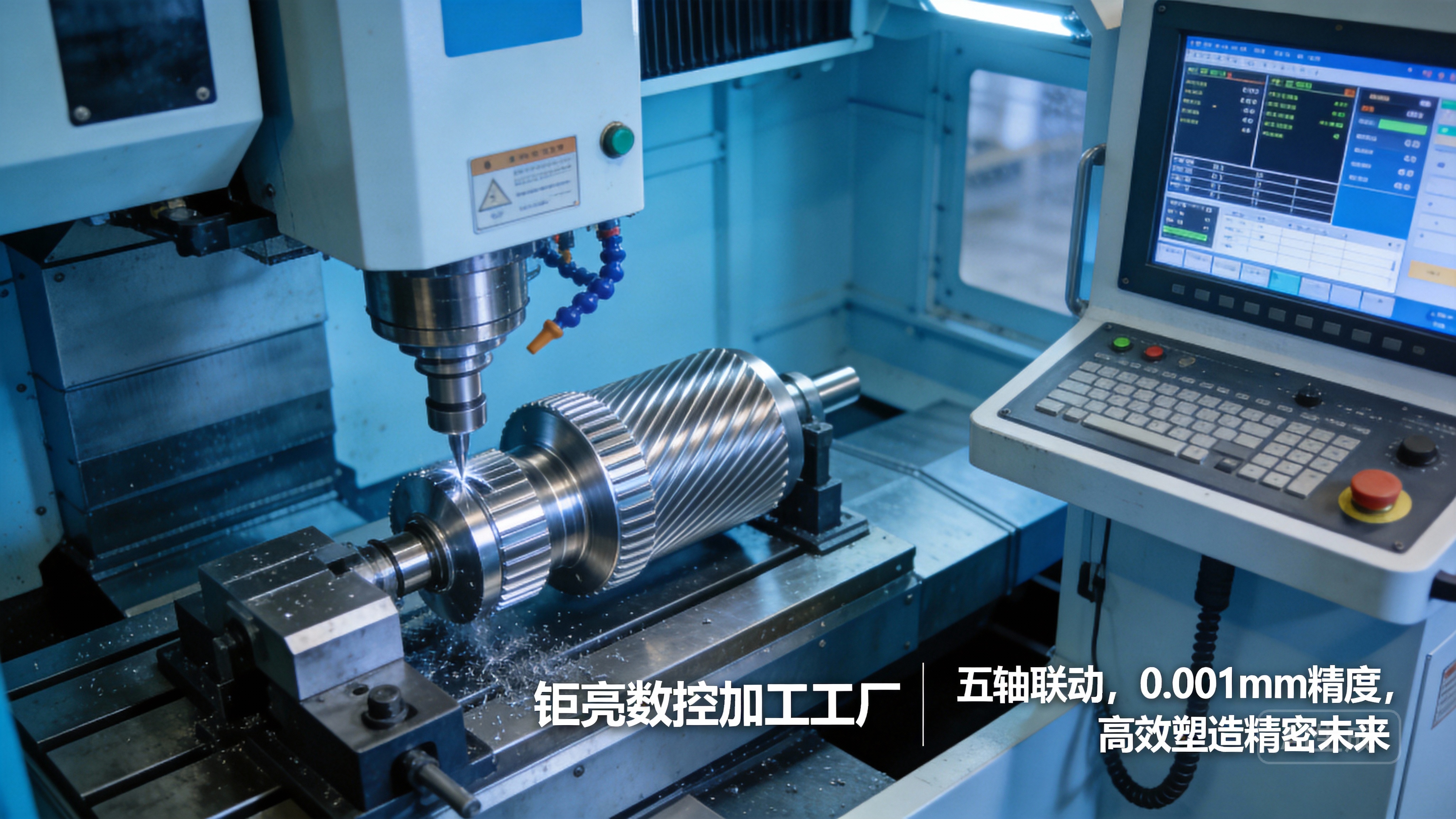
Moreover, as exoskeletons incorporate more integrated electronics and sensor cavities, GreatLight’s vacuum casting and 3D printing capabilities can produce compliant overmolds and insulation components, giving you a unified supply chain that genuinely operates as a Humanoid Robot Exoskeleton Parts Vendor, not a fragmented transaction.
Making the Right Choice for Your Next Generation Humanoid Robot
Selecting a parts vendor for an exoskeleton isn’t about finding the cheapest per-hour machine time. It’s about aligning with a partner that grasps the punishing reality of biomechatronic systems and has the credential-wrapped operational muscle to execute every process link. From 5-axis titanium link arms to fully finished magnesium hip joints, the difference between a project that stays on track and one that drowns in rework is the depth of your vendor’s commitment.
When you’re ready to move beyond commoditized platforms and into a partnership that treats your design like its own, GreatLight CNC Machining stands ready to be your trusted Humanoid Robot Exoskeleton Parts Vendor—delivering not just parts, but peace of mind.


![[访谈] RAPID + TCT 2024:人工智能对 3D 打印的价值](https://print-ing.com/wp-content/uploads/2024/07/INTERVIEW-60x60.jpeg "[访谈] RAPID + TCT 2024:人工智能对 3D 打印的价值 9")




发表回复
要发表评论,您必须先登录。