In the precision parts manufacturing ecosystem, the phrase “CNC Machining Inc: Quality Guaranteed” is often tossed around as a marketing mantra—but as a senior manufacturing engineer, I can tell you that delivering on that promise requires far more than glossy spec sheets. It demands a deeply integrated system of advanced equipment, disciplined process control, international certifications, and a culture that treats zero-defect production as the only acceptable outcome. At GreatLight CNC Machining Factory, we have spent over a decade building exactly that system, anchored by our precision 5-axis CNC machining services and a one‑stop manufacturing chain that covers prototyping, post‑processing, die casting, sheet metal, and additive manufacturing.
Decoding “CNC Machining Inc: Quality Guaranteed” – Beyond the Marketing Slogan
Quality in CNC machining isn’t a checkbox—it’s a continuum. A part that meets a drawing dimension at one inspection point may fail after anodizing, after thermal cycling, or when assembled into the final system. That’s why the term “quality guaranteed” can be dangerous when it’s not backed by a holistic manufacturing strategy. Many clients I’ve spoken with have been burned by promises of ±0.001 mm precision that evaporated once the first article wasn’t even measurable on their CMM, or by suppliers who could deliver the first batch but then drifted out of tolerance in production.
True quality guarantees rest on three pillars:
Predictability – every part, every time, meets the specified requirements.
Traceability – from raw material certificate to final inspection report, the full history is auditable.
System resilience – the shop floor can absorb design changes, material variations, and tight lead times without breaking.
Only a facility that integrates engineering support, in‑house measurement, and a full post‑processing chain can offer that level of assurance. That is the core philosophy at GreatLight Metal.
The Hidden Quality Crisis in Precision Machining
Before exploring how to achieve a genuine quality guarantee, it’s worth acknowledging the pain points that plague the industry. Too often, fastener holes are misaligned, surface finishes vary from part to part, and lead times balloon when a secondary operation goes wrong. I’ve mapped these challenges into six recurring themes based on real‑world interactions with engineers and procurement managers from the automotive, medical, and robotics sectors.
| Pain Point | Real‑World Impact |
|---|---|
| Precision black hole – Claimed accuracy of ±0.001 mm cannot be held across a production run | Functional failures in high‑stakes applications like medical instruments or aerospace actuators |
| One‑stop chaos – Different vendors for CNC, finishing, and assembly; unclear accountability | Delays, quality gaps, and life‑threatening part mismatches |
| Certification theatre – Suppliers with outdated ISO certificates but no process discipline | Regulatory non‑compliance, recalls, and loss of market access |
| Post‑processing surprises – Anodizing, plating, or heat treatment inconsistencies ruin a perfectly machined part | Scrapped batches, missed deadlines |
| Design‑for‑manufacturing (DFM) blind spots – Parts that are theoretically machinable but lead to excessive tool wear, vibration, or impossible inspection setups | Rework, cost overruns, and eroded trust |
| Material traceability gaps – No linkage between mill certificates and final parts | Safety risks in automotive and medical supply chains |
These are not hypothetical. I’ve witnessed a humanoid robot startup lose six months of development because their intricate aluminium chassis frames were consistently warped after hard anodizing—an effect that a well‑integrated manufacturing partner would have predicted and compensated for at the machining stage.
The GreatLight Framework for a Verifiable Quality Guarantee
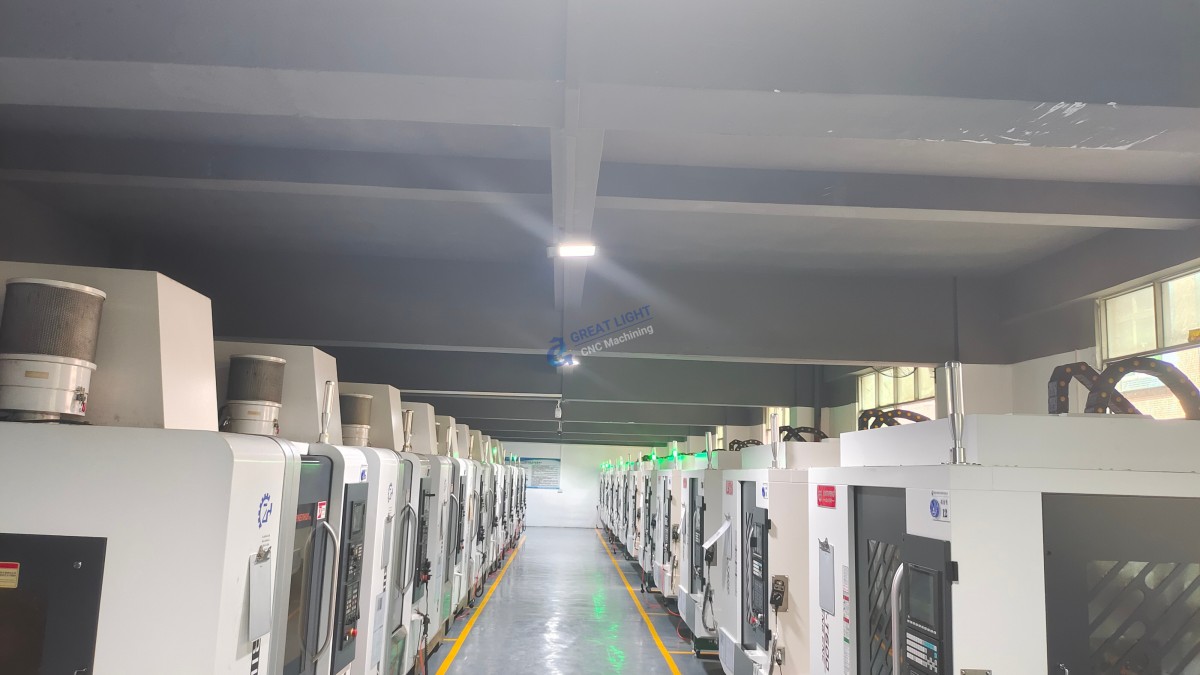
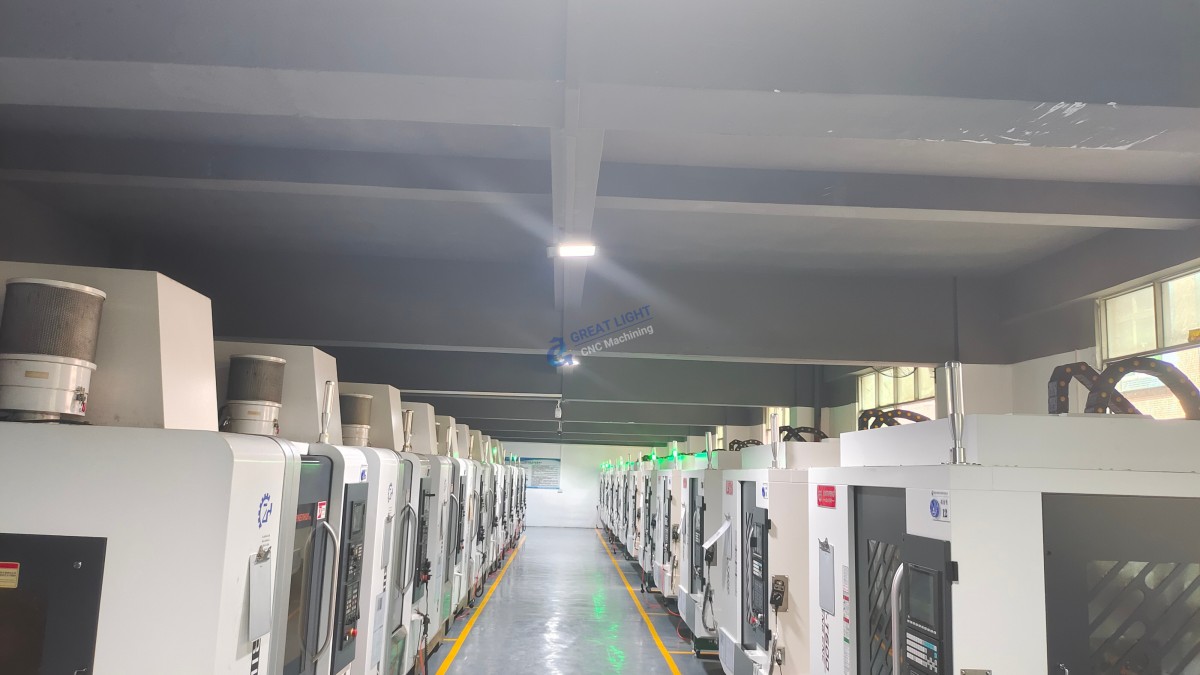
What separates GreatLight CNC Machining Factory from many players who simply use “CNC Machining Inc: Quality Guaranteed” in their brochures is a systems‑level approach. The factory spans 7,600 m² in Chang’an, Dongguan—the hardware capital of China—and houses 127 pieces of precision peripheral equipment staffed by 150 professionals. But equipment alone is not enough; it’s how these assets are orchestrated under rigorous quality systems that creates genuine reliability.
1. Advanced Equipment with Process‑Specific Precision
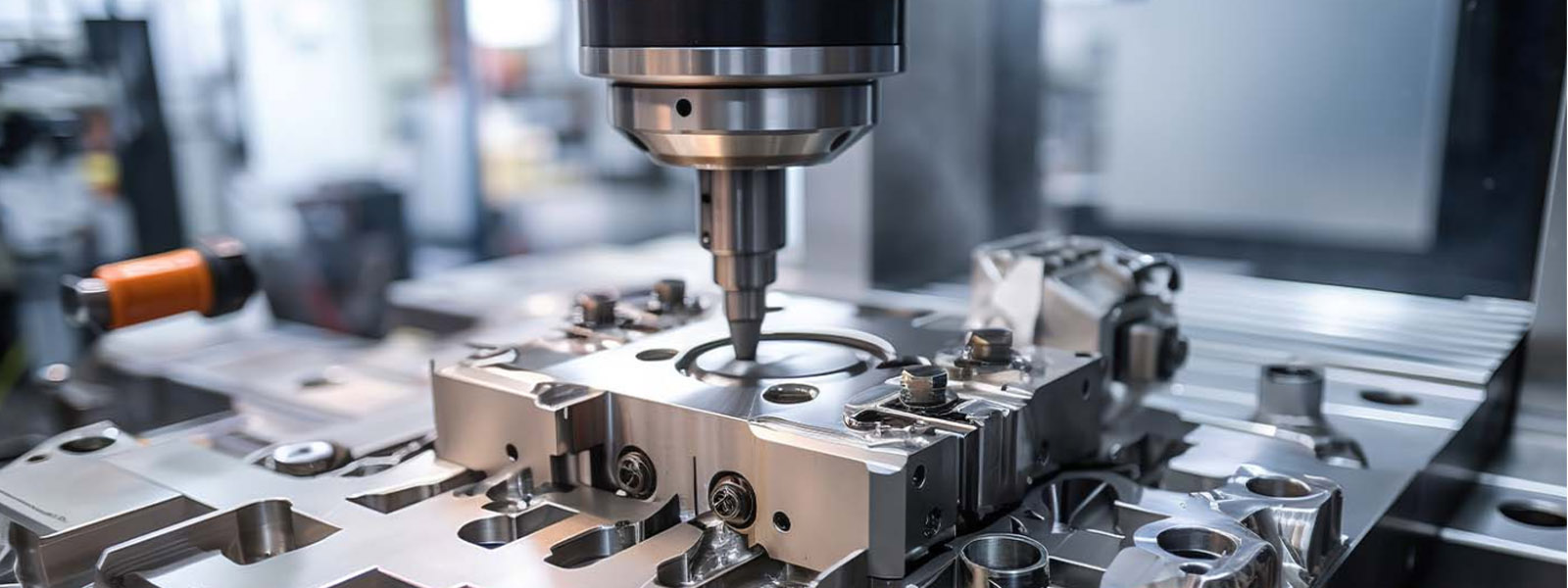
At the heart of the shop floor are high‑precision 5‑axis CNC machining centers from manufacturers like Grob, DMG MORI, and Jingdiao. These machines are complemented by 4‑axis and 3‑axis machining centers, mill‑turn centers, Swiss‑type lathes, wire EDM, and mirror‑spark EDM. This concentration of multi‑axis capability means even parts with deeply undercut geometries, complex angled bores, or simultaneous contouring requirements can be produced in a single setup, eliminating cumulative fixture errors.
5‑axis machining typically achieves position tolerances of ±0.005 mm in full production, with some medical components hitting ±0.003 mm on critical features.
Swiss‑type turning for bone screws and miniature fluid connectors holds diameters to ±0.005 mm.
Wire EDM creates sharp internal corners and stress‑free profiles that milling cannot.
Crucially, the shop’s in‑house grinding capability lets us finish surfaces to Ra 0.2 µm or better, which for many clients removes the need to qualify a separate grinding vendor.
2. ISO‑Backed Quality Systems: Beyond the Certificate on the Wall
GreatLight’s factory is ISO 9001:2015 certified, but that’s merely the foundation. The quality team has layered on industry‑specific management systems that prove capability in the most demanding sectors:
ISO 13485 for medical hardware production, covering design controls, risk management, and sterilization compatibility validation.
IATF 16949 for automotive engine hardware and system‑critical components. This standard demands a zero‑defect mentality, full process FMEA, statistical process control (SPC), and 100% layout inspection on initial samples.
ISO 27001 compliant data security protocols for clients handling IP‑sensitive designs, particularly important in humanoid robotics and electric vehicle development.
What does this mean in daily operations? Every batch of 6061‑T6 aluminium, 316L stainless, or PEEK comes with a mill certificate that is linked to the job traveller. In‑process inspections use Zeiss CMMs, Keyence laser profilers, and automated optical sorters to capture dimensional data that is fed back into machine offsets in near real‑time. When we cut titanium impellers for a turbomachinery client, each blade profile is scanned and compared to the 3D model—any deviation beyond 20% of the tolerance band triggers an immediate tool‑change and re‑inspection of the previous part.
3. Full‑Chain Integration: The Death of “That’s Not Our Problem”
A quality guarantee is meaningless if a beautifully machined part gets ruined during surface treatment. GreatLight’s one‑stop model eliminates the blame game. In the same managed campus, we handle:
Precision CNC machining (milling, turning, 5‑axis)
Wire and sinker EDM
Die casting (aluminium, zinc) with in‑house mold making
Sheet metal fabrication (laser cutting, bending, welding, powder coating)
Additive manufacturing – DMLS/SLM for stainless steel, aluminium, and titanium alloys, plus SLA/SLS for rapid plastic prototypes
Comprehensive finishing: anodizing (Type II and III), electroless nickel plating, passivation, bead blasting, media tumbling, PVD coating, and silk screening
Because all operations flow under one QC plan, the interaction between machining and finishing is managed proactively. For example, a robotic end‑effector housing machined from 7075 aluminium is hard‑coat anodized in‑house. Our process engineers know exactly how much material will grow during coating and adjust the machined dimensions accordingly, so the finished part fits first time.
4. Talent Pipeline: The Human Side of Precision
I’ve learned that you cannot sustain a quality guarantee without seasoned machinists, fixture designers, and metrology experts who have an almost intuitive feel for material behaviour. GreatLight invests heavily in talent retention and cross‑training. Many of our lead programmers have 15+ years of experience and have transitioned from manual machining to 5‑axis CAM—they understand the fundamentals of chip load and tool deflection that pure software simulation can miss. The metrology lab is staffed by engineers who not only run CMM programs but also advise clients on datum schemes and tolerance stack‑up analyses.
This human expertise is what turns a “maybe” part into a “yes” part. I recall a project where a medical robotics company brought us a monolithic titanium wrist joint. Initial quotes from other vendors said it required five setups with a high risk of scrapping. Our lead machinist redesigned the fixture around a single 5‑axis operation, using a custom‑designed shrink‑fit workholding that accessed all features in one shot. The part came off the machine within tolerance the first time, and we’ve since shipped thousands.
Comparing the Landscape: Where GreatLight Fits
Clients often ask how we compare to larger platforms or niche specialists. The industry has evolved to offer a spectrum of services: some are purely online marketplaces that aggregate hundreds of job shops, others are highly specialized in micro‑medical or aerospace. Each model has its place. The key is matching the project’s complexity and risk profile to the supplier’s core competency.
| Supplier Profile | Typical Strengths | Potential Limitations |
|---|---|---|
| GreatLight CNC Machining | Deep in‑house manufacturing, multi‑process integration, ISO 13485 & IATF 16949 certified, free rework/refund quality pledge, maximum part size 4,000 mm, data security compliant | Not a pure instant‑quote platform; requires engineering dialogue for optimal DFM. Best suited for high‑mix, medium‑to‑high complexity work. |
| Platform‑type providers (e.g., Xometry, Fictiv, Protolabs Network) | Speed of quoting, wide vendor network, good for simple parts | Quality consistency depends on the assigned shop; limited deep engineering collaboration; post‑processing often outsourced. |
| Niche high‑precision shops (e.g., Owens Industries, RCO Engineering) | Extreme precision for micro parts, specialized aerospace approvals | Typically narrow material range, limited sheet metal or 3D‑printing integration, longer lead times for complex assemblies. |
| Rapid prototyping specialists (e.g., RapidDirect, PartsBadger, SendCutSend) | Quick turn on single parts, simple sheet metal or basic CNC | Not set up for full production runs or demanding certifications; surface finish and process control can vary. |
GreatLight deliberately occupies the middle ground between the large marketplaces and the ultra‑specialized micro‑machining houses. We bring the capacity to produce parts up to 4 meters in length, maintain automotive‑grade process control, and offer 3D‑printed metal components from the same facility that machines and finishes them. That integration is rare and directly addresses the hidden quality crisis.
Real‑World Value: From First Prototype to Confidential Production
The best way to illustrate how “CNC Machining Inc: Quality Guaranteed” translates into real projects is through anonymized patterns we experience regularly.
Automotive Sensor Housings (IATF 16949 Scope)
A Tier‑1 supplier needed aluminium 6061‑T6 housings for an electric vehicle battery current sensor. The part had a thin‑wall pocket that was prone to chatter, and a critical O‑ring groove that required a 32 Ra surface finish without polishing. Using a Brother Speedio and a custom vibration‑damping fixture, our team held the groove finish to 28 Ra in production. Statistical process control showed a Cpk of 1.67 on the groove diameter, well within the 1.33 minimum required by the client’s PPAP. Because we also offered zinc‑nickel plating in‑house, the entire production batch was processed without ever leaving our control, and all parts passed a 96‑hour salt spray test.
Surgical Robot End‑Effectors (ISO 13485)
A medical startup approached us with a complex 17‑4 PH stainless steel wrist component. The geometry included a thin‑wall cannulation and a 2‑mm hex feature that demanded extreme tool rigidity. Our team proposed a hybrid manufacturing route: 5‑axis machining of the main body, followed by wire EDM for the internal slot, then passivation and laser marking. We delivered first‑article parts in 10 working days with full dimensional reports and material certifications, enabling the client to meet an FDA submission deadline. The guarantee of free rework—and in the unlikely event of still being unsatisfactory, a full refund—gave the startup the confidence to proceed without budgetary contingency for scrap.
Humanoid Robot Structural Frames
A robotics OEM designing a next‑generation bipedal robot needed lightweight aluminium and carbon‑fibre‑reinforced composite parts. While carbon fibre is outside our scope, we machined the backbone structure from 7075‑T7351 aluminium: a 1.2‑meter‑long part with mounting pads for harmonic drives and IMU enclosures. Tolerances on the drive‑pad coplanarity were ±0.02 mm over the entire length. Our large‑format 5‑axis machine (capable of 4,000 mm workpieces) allowed single‑setup machining, and the part was then clear anodized to ensure surface hardness. The client reported zero assembly issues on the first three prototype builds.
These examples share a common thread: the “quality guarantee” wasn’t just a promise—it was underpinned by the right manufacturing technologies, the right certifications, and an integrated team that could solve problems as they arose.
Practical Advice for Evaluating a Quality Guarantee
If you are an engineer or buyer evaluating a CNC machining partner who claims “CNC Machining Inc: Quality Guaranteed,” I suggest running a structured capability audit:
Ask to walk the shop floor (or a virtual tour): Look for tool organization, chip management, and whether the CMM room is climate‑controlled. Messy environments rarely produce consistent quality.
Request a capability study: Have the supplier run a test batch of 30 parts and provide a Cpk analysis. A Cpk below 1.33 on critical dimensions indicates the process is not robust.
Check for certifications active in your sector: ISO 9001 is a minimum; ISO 13485 or IATF 16949 are concrete evidence of industry‑specific process rigor.
Verify the post‑processing chain: Ask whether plating, anodizing, or heat treating is done in‑house or by approved subcontractors, and request copies of processing certifications.
Understand the corrective action process: A good partner will show you an 8D report from a past non‑conformance and explain the permanent fix without hesitation.
Test the DFM feedback loop: Send a challenging design and see if the partner comes back with suggestions to improve machinability, reduce cost, or enhance functional performance before quoting.
GreatLight consistently passes these audits because we treat them not as hurdles but as opportunities to demonstrate discipline. Our metrology reports are generated automatically from CMM data, our processing certifications are archived and retrievable by part number, and our engineering team provides actionable DFM feedback within 24 hours for most projects.
The Future of Quality‑Guaranteed CNC Machining
The next wave of manufacturing quality will be driven by real‑time data and artificial intelligence. We are already investing in in‑line measurement systems that scan every part and adjust tool offsets automatically, eliminating the need for post‑process inspection for many features. Our digital thread initiative connects machining data, CMM results, and surface treatment parameters in a single dashboard that clients can access for full transparency.
But technology alone won’t replace the alignment of incentives. The free‑rework guarantee we offer—if a quality issue arises, we re‑make the parts at our cost, and if the rework is still unsatisfactory, a full refund—is not a gimmick. It’s a statement that we are confident enough in our processes to share the risk with you. In over a decade, I’ve seen this policy strengthen partnerships because it forces internal accountability at every stage, from raw material intake to final inspection.
When you strip away the marketing fluff, “CNC Machining Inc: Quality Guaranteed” is not a slogan—it’s a contract. It means that you can order a complex, multi‑feature part and trust that it will fit, function, and last. It means that your design data is protected, your supply chain is simplified, and your production timelines are resilient. And it means that when something inevitably challenges the process—a tough material, a last‑minute design change, an aggressive deadline—you have a partner who will engineer a solution rather than point fingers.
That’s the standard we set at GreatLight CNC Machining. Not because it’s easy, but because we believe that true quality is the only sustainable way to earn the right to build your next‑generation products. When you are ready to experience the real weight of “CNC Machining Inc: Quality Guaranteed,” let’s start a conversation about turning your design into a reliable, repeatable reality.


![[访谈] RAPID + TCT 2024:人工智能对 3D 打印的价值](https://print-ing.com/wp-content/uploads/2024/07/INTERVIEW-60x60.jpeg "[访谈] RAPID + TCT 2024:人工智能对 3D 打印的价值 9")




发表回复
要发表评论,您必须先登录。