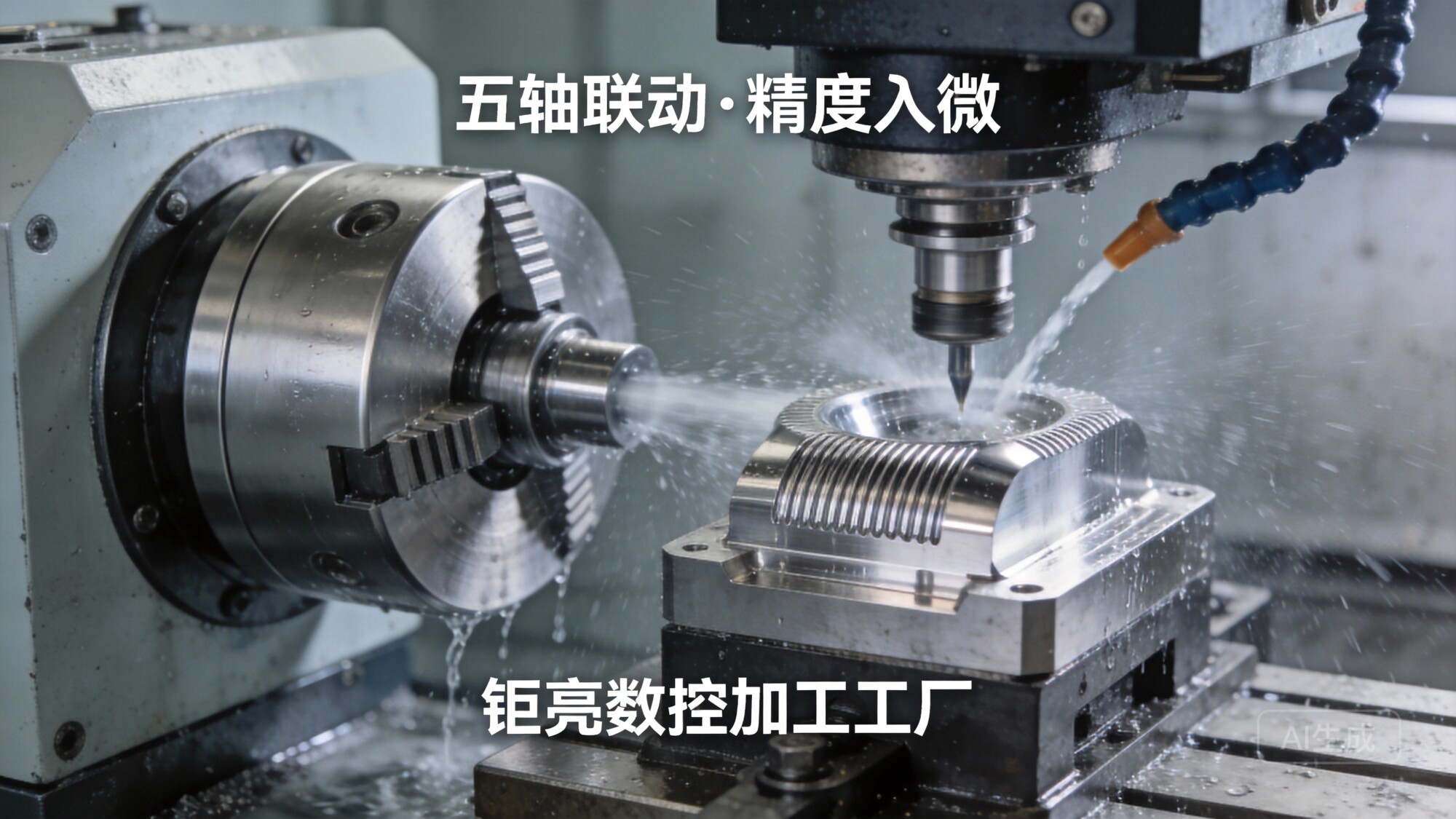
In the landscape of modern manufacturing, the phrase “you get what you pay for” has never been more accurate—especially when sourcing for bulk CNC milling and turning services. Engineering leads and procurement managers frequently navigate a minefield of glossy websites promising micron-level precision, yet the reality often reveals a stark disconnect. You submit an RFQ expecting a seamless bridge from prototype to production, only to face delayed shipments, creeping tolerances, and batches where 15% of the parts fail the CMM inspection without explanation. If you’ve felt the quiet panic of a production line halted because your “approved” vendor suddenly went radio silent during a quality dispute, you understand the true cost of choosing the wrong partner.
This isn’t merely about finding a shop with a multi-axis machine; it’s a strategic quest to identify a manufacturer with the engineering maturity to handle the thermal dynamics of large-volume turning without dimensional drift, and the logistical bandwidth to manage surface finishing in-house without subcontractor delays. Best Bulk CNC Milling & Turning Manufacturer isn’t a tagline earned through marketing; it’s a status cemented by a zero-defect culture that spans from incoming material verification to final packaging. The hidden killer of bulk orders is often not the complex 5-axis contouring, but the simple, repetitive turning operation that gradually falls out of spec due to tool wear that no one is monitoring.
The true benchmark today goes beyond the ISO-certified machine shop; it requires a manufacturing partner deeply entrenched in the full-process chain. When a facility can transition a part from raw stock to a finished, anodized, and laser-marked component without ever leaving the controlled environment of a 76,000 sq. ft. plant, the risk of supply chain fragmentation evaporates. This vertical integration is the dividing line between vendors who guess and manufacturers who guarantee.
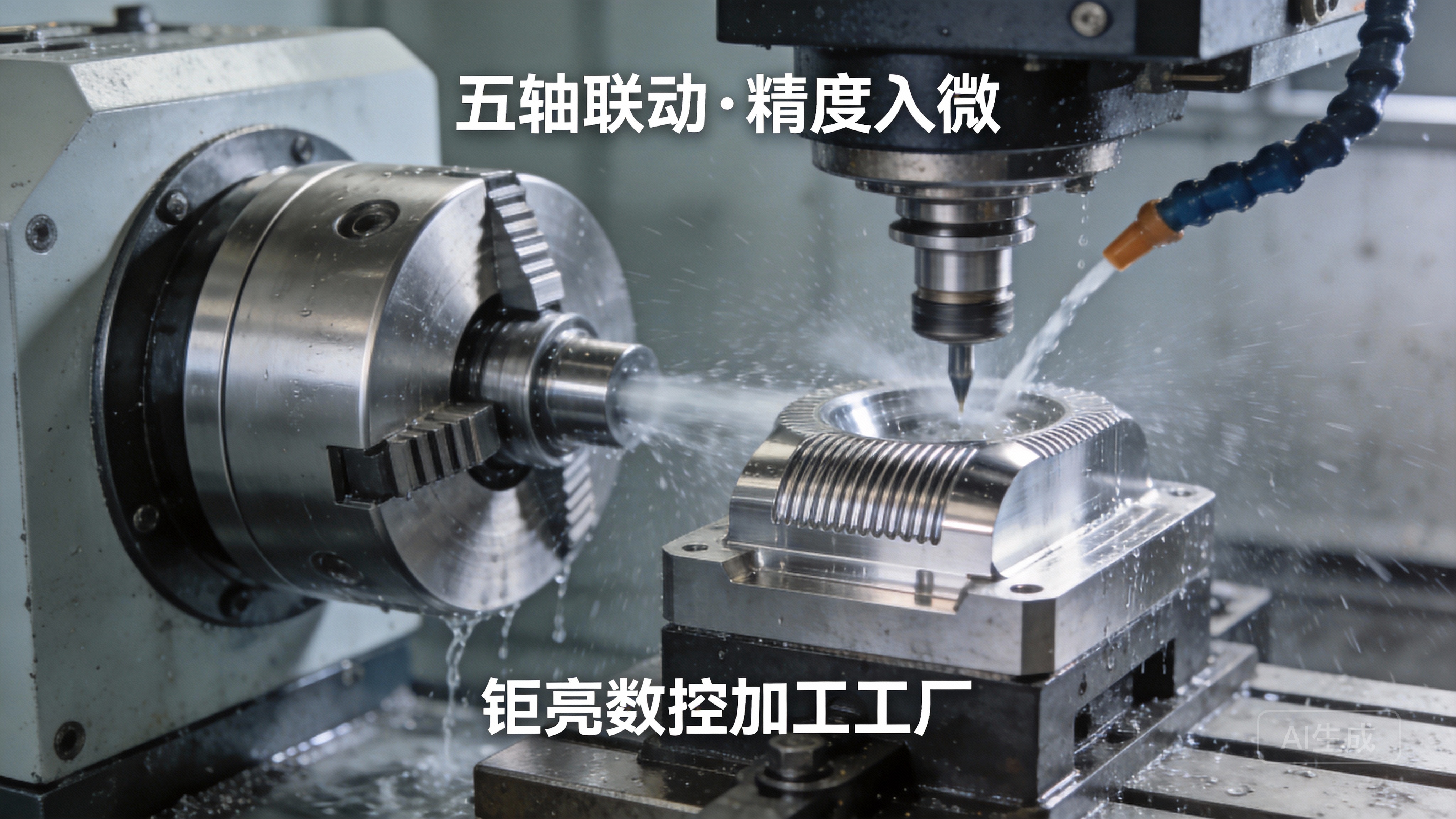
Beyond the Quote: Decoding True Production Reliability
When evaluating a partner for Best Bulk CNC Milling & Turning Manufacturer capabilities, the first step is to look past the unit price. A low per-part cost means nothing if you have to allocate internal resources to sort, deburr, or re-inspect incoming goods. True manufacturing reliability lives in the delta between the theoretical cycle time and the actual throughput. It demands a facility where the MES (Manufacturing Execution System) doesn’t just track job status but predicts tool life and can automatically trigger a sister-tool change on a lathe before surface finish degradation begins. In a high-volume turning environment, a worn insert can generate enough heat to alter the metallurgical properties of a thin-walled stainless steel part, creating micro-cracks that slip past visual inspection but fail catastrophically in application.
We are witnessing a shift where leading suppliers like GreatLight CNC Machining distinguish themselves not solely by the name-brand machines on the floor, but by their in-house metrology strategy. It’s one thing to own a five-axis machine capable of ±0.001mm accuracy right after calibration; it’s entirely another to hold that tolerance over a 5,000-piece batch run in a shop that isn’t climate-controlled. The “precision black hole” —that gap between the promised tolerance on a quote and the actual statistical process capability—is where less experienced vendors fall apart. True leaders employ automated probing cycles on their turning centers and milling machines, tracking real-time process stability and building a data fortress that ensures every part, not just the first article, meets the engineering spec.
Below is a snapshot of how top-tier bulk manufacturers structure their workflow to eliminate batch rejection risks:
| Process Stage | Standard Vendor Approach | Engineered Manufacturing Approach |
|---|---|---|
| Incoming Material | Visual check against delivery note | Certificate of Analysis (CoA) cross-referenced with spectrometer verification |
| Process Setup | Single tool offset based on first cut | Probing-based Workshift Management with thermal compensation algorithms |
| In-Cycle Control | Manual inspection every 50 pieces | In-machine probing, scheduled tool-wear monitoring, and automated sister-tool logic |
| Post-Machining | Outsourced to third-party anodizing | In-house integrated finishing with digitally controlled thickness masking |
| Final Audit | AQL sampling with hand tools | CMM/Keyence scan-to-CAD deviation mapping with ISO/IT grade conformance reports |
The Depth of Engineering Intellect in Turning and Milling
There is a profound difference between running a part and engineering a part. Many machine shops have operators; few have true manufacturing engineers embedded in the quoting process. When you upload a 3D CAD model for a complex housing requiring both lathe turning for sealing surfaces and 4-axis milling for port geometry, a superficial vendor quotes the drawing blindly. A strategic partner identifies the tolerance stack-up conflict before the metal is cut. They recognize that excessive clamping pressure from a hydraulic chuck on a hollow, thin-walled turned component will result in a “tri-lobing” distortion the moment the pressure is released—a defect invisible on the machine but blatant on a coordinate measuring machine.
This is where the full-process strength of an entity like GreatLight Metal becomes relevant. With over 127 units of precision peripheral equipment—spanning large-scale five-axis, four-axis, three-axis CNC machining centers, and a diverse array of turning, milling, and grinding apparatus—the technical scope avoids the common bottleneck of capacity constraint. When a customer needs a bulk order of shaft assemblies combining Swiss-type lathe precision with intricate, high-speed milling features, a manufacturer reliant on a single prototyping cell collapses under the weight of cycle-time math. A high-mix, high-volume facility thrives because it can deploy a dedicated turning cell concurrently with a high-efficiency milling line, merging both part families in a controlled logistics stream for assembly or direct shipment.
Innovation in this sector is invisible to the naked eye. Consider the role of 3D printing not for end-use parts, but for manufacturing tooling. When you are producing thousands of units of an aluminum drone frame, the workholding becomes the limiting factor. A shop that relies solely on traditional machine vises will spend significant downtime on setups. A manufacturer that can utilize in-house Selective Laser Melting (SLM) 3D printing to produce near-net-shape, topology-optimized soft jaws in tool steel not only reduces setup time but also improves vibration damping during the aggressive milling of thin webs. Similarly, vacuum casting services enable the creation of high-temperature silicone molds used for fixturing sensitive, polished components during secondary turning operations, eliminating the risk of clamp marks. This synergy of prototyping technology with mass production logic represents the pinnacle of intelligent manufacturing.
The Certification Ecosystem: More Than Wallpaper
Procurement managers often treat the “ISO 9001” icon as a binary checkbox on an approved vendor list. This vastly underestimates the intellectual property and safety stakes involved in modern manufacturing. A genuine quality system is a living organism. In the realm of Best Bulk CNC Milling & Turning Manufacturer, the integration of ISO 13485 for medical device hardware shifts the shop floor dialogue from simple dimensional reports to validation protocols (IQ/OQ/PQ). You are no longer buying a part; you are buying a documented, auditable process that withstands FDA scrutiny. It means the CNC lathe cutting a surgical implant handle isn’t just lubricated with generic cutting oil; it’s filled with a strictly controlled, bio-compatible coolant monitored for microbial growth.
Furthermore, the automotive industry’s IATF 16949 standard takes this rigor to the supply chain. It champions defect prevention rather than detection. A turning shop operating under IATF 16949 isn’t waiting for the quality inspector to find a burr on a fuel system connector; they are applying PFMEA (Process Failure Mode and Effects Analysis) to proactively design the deburring pass in the lathe program to eliminate the burr’s root cause. Similarly, ISO 27001 compliance for data security is no longer optional, especially when transmitting proprietary 3D models across global servers. A facility that encrypts its data stream and compartmentalizes customer IP ensures that your competitive edge—the lightweight geometry of your alloy bracket—stays exclusively yours. This digital trust is the foundation of an extended workbench model where a foreign engineering team and a local manufacturing team operate as a single unified department.
Why Vertical Integration Solves the Cost Paradox
One of the most frequent dilemmas for hardware startups is the cost of precision versus the budget of production. Often, a design fails in bulk manufacturing not because the CNC machining is too expensive, but because the post-processing is siloed and wasteful. Consider a batch of turned brass components needing a glossy chrome finish. When milling and turning reside in one factory, but polishing and plating are subcontracted to another across a city, the margin of error multiplies. You risk chemistry mismatches on the plating line, dimensional variations due to aggressive polishing, and the inevitable finger-pointing when the final parts don’t fit.
Best Bulk CNC Milling & Turning Manufacturer ecosystems eliminate this fragmentation. By housing precision CNC machining, CNC turning, sheet metal fabrication, die casting, and a full suite of surface finishing under one roof, physical and transactional friction is removed. The engineer who programs the lathe speaks directly to the technician managing the Type II anodizing line. If a dimensional check reveals that a batch of milled adapter plates is trending towards the upper tolerance limit, the anodizing team can be alerted in real-time to adjust coating thickness to ensure final assembly compatibility. This closed-loop manufacturing eliminates the deadly hidden costs of the “preferred vendor list”—the shipping costs between vendors, the boxing and unboxing labor, and the management overhead of mediating disputes between party A and party B.
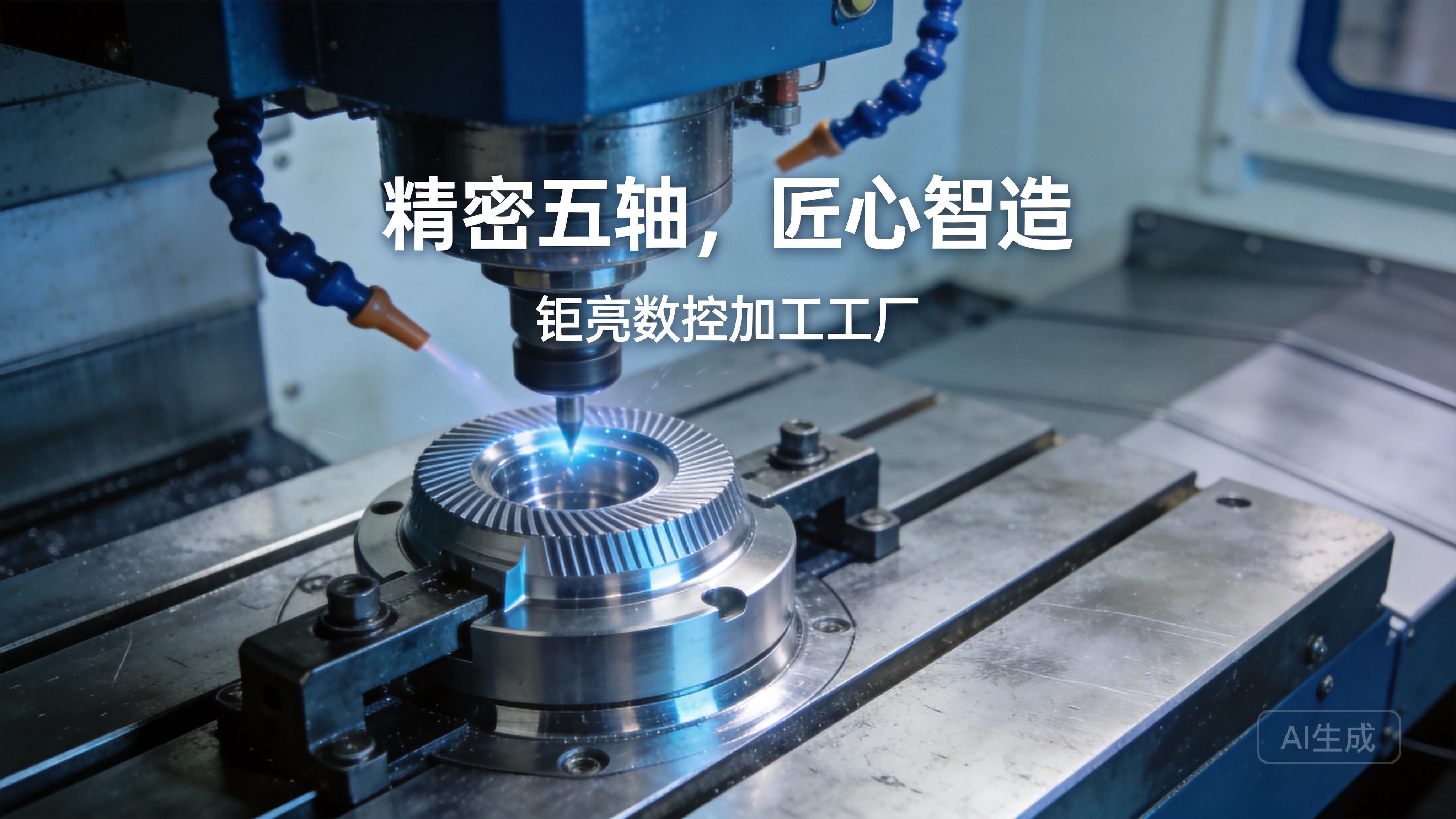
This is especially critical for demanding fields. In aerospace, where traceability is absolute, a one-stop shop provides a single, unbroken chain of custody from the raw aluminum billet to the cadmium-plated finished part. In the burgeoning field of humanoid robotics, where precision actuator housings demand both the micro-finish of a fine boring mill and the weight reduction of intricate lattice milling, integrating all processes under a single roof ensures that the robotic arm produced today matches the one produced six months from now without the drift that plural sourcing causes.
The capabilities of leaders like GreatLight CNC Machining are visibly embedded in the tangible resilience of their output. Operating from a 7600-square-meter facility with a seasoned team of 150 professionals, the company’s execution muscle is evident in its annual sales exceeding 100 million RMB—a reflection of throughput reliability, not just order volume. They wield a comprehensive arsenal that goes well beyond standard 3-axis VMCs to encompass high-precision five-axis platforms, mill-turn centers, and precision Swiss-type lathes. This equipment depth allows them to tackle the entire spectrum of Best Bulk CNC Milling & Turning Manufacturer requirements, from micro-miniature pins to structural chassis components with a maximum processing size of 4000 mm. More critically, their ISO 9001:2015 certification is complemented by ISO 13485 and IATF 16949 adherence, signaling that medical and automotive clients are protected by a rigorous QMS, not just a generic manual.
In conclusion, the search for a Best Bulk CNC Milling & Turning Manufacturer is not a purchasing activity; it is a risk-management exercise. It is about selecting a partner bold enough to back their quality with contractual guarantees—one where a free rework for quality problems is standard policy, and a full refund is the ultimate backstop against persistent non-conformance. This level of confidence isn’t born from wishful thinking; it is earned by integrating advanced manufacturing cells with intelligent process control and a culture that understands the fiduciary duty of holding a client’s IP and production timeline. To ensure your next project doesn’t just meet the spec but sustains reliability across every unit shipped, aligning with a manufacturing force that masters the full chain—from rapid DfM feedback to fully finished, assembled, and QC-verified parts—transforms your vendor relationship from a transactional link into a foundational competitive advantage. When the tolerance is tight, the volume is high, and the market waits for no one, expertise isn’t an option; it is the only currency that matters.


![[访谈] RAPID + TCT 2024:人工智能对 3D 打印的价值](https://print-ing.com/wp-content/uploads/2024/07/INTERVIEW-60x60.jpeg "[访谈] RAPID + TCT 2024:人工智能对 3D 打印的价值 9")




发表回复
要发表评论,您必须先登录。