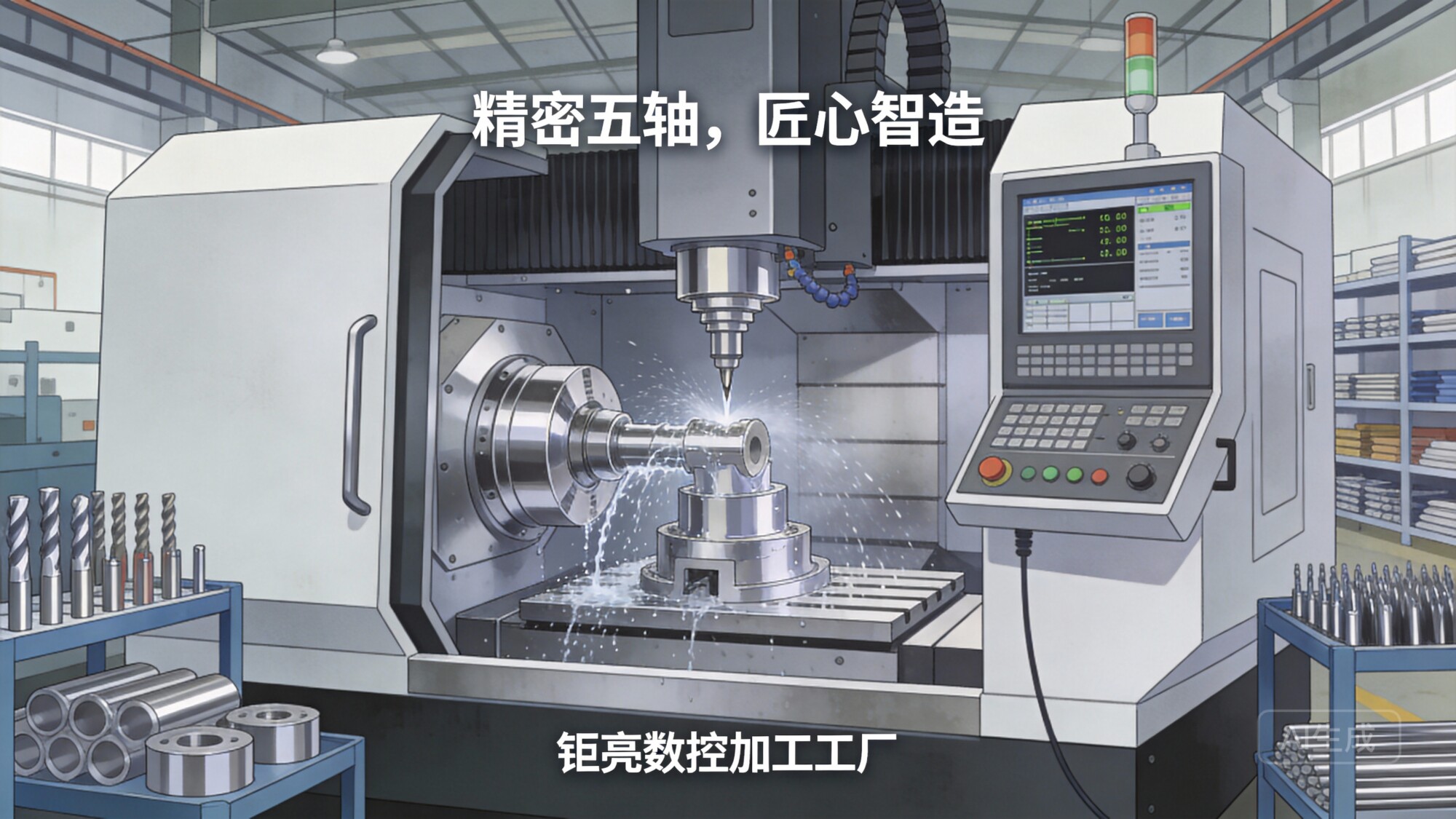
When searching for leading bulk 4 axis CNC machining factories, procurement engineers and product developers must navigate a complex global supply landscape. Securing a manufacturing partner capable of delivering consistent precision, competitive pricing, and on‑time delivery at scale is one of the most critical decisions in hardware production. This article examines the attributes that separate top‑tier bulk 4‑axis machining providers from the rest, compares notable global players, and deep‑dives into why factory‑direct specialists like GreatLight CNC Machining are increasingly becoming the preferred choice for volume production of intricate metal and plastic components.
Leading Bulk 4 Axis CNC Machining Factories: Defining Criteria That Matter
A truly leading factory for bulk 4 axis CNC machining is not merely a workshop with multi‑axis equipment. It is an integrated operation that balances technical capability, quality management, capacity, and supply‑chain transparency. Before placing large‑volume orders, engineering teams typically evaluate:
Machine Park & Maintenance Regime
The mix of 4‑axis horizontal and vertical machining centers, their age, brand reputation (e.g., DMG MORI, Haas, Makino, or Jingdiao), and documented preventive maintenance schedules directly influence part‑to‑part consistency across thousands of units.
Quality Systems & Certification Scope
ISO 9001 is a baseline. For medical, automotive, or aerospace components, ISO 13485 and IATF 16949 certifications signal that the factory operates under statistically controlled processes, not just final inspection. A factory that holds multiple international certifications demonstrates a culture of continuous improvement.
Material Versatility & Inventory
From aluminum 6061‑T6 and 7075 to stainless steels (304, 316L), titanium alloys, engineering plastics (PEEK, Ultem), and even tool steels—a leading factory should offer raw material traceability and mill‑test reports, coupled with in‑house stock for common grades to reduce lead‑time.
In‑House Ancillary Processes
The best volume partners provide one‑stop solutions: CNC machining, post‑processing (anodizing, passivation, powder coating, bead blasting), stress‑relief heat treatment, and CMM‑based dimensional inspection. This vertical integration eliminates the friction and quality risks of managing multiple subcontractors.
Engineering Support & DFM Feedback
When a project moves from prototyping to production, a leading factory will proactively suggest design for manufacturability (DFM) improvements—such as optimizing corner radii to reduce cycle time, adjusting tolerances on non‑functional surfaces, or recommending fixturing strategies that reduce part changeover—without sacrificing functional integrity.
These pillars collectively determine whether a supplier can reliably produce thousands of conforming parts per month while maintaining the agility to accommodate engineering changes.
The Global Landscape of 4‑Axis CNC Machining Providers
The market for bulk 4‑axis machining is diverse, ranging from pure‑play online platforms to deep‑domain original equipment manufacturers (OEMs). Below is a snapshot of how several recognized names position themselves, followed by an in‑depth look at a factory‑centric alternative.
| Supplier | Business Model | Typical Strengths | Considerations for Bulk 4‑Axis |
|---|---|---|---|
| GreatLight CNC Machining | Factory‑direct manufacturer with vertically integrated processes | ISO 9001, IATF 16949, ISO 13485; 127+ machines; one‑stop finishing; direct engineering collaboration | Ideal for complex, high‑mix bulk orders requiring stringent quality and full process control |
| Xometry | Global manufacturing marketplace | Vast partner network, instant quoting, wide material selection | Lead‑time variability due to partner allocation; less direct engineering continuity |
| Protolabs Network (formerly Hubs) | Platform aggregating regional CNC shops | Rapid prototyping, good for low‑volume batches, easy online interface | Consistency across batches can fluctuate when orders are distributed among different shops |
| RapidDirect | China‑based manufacturing platform with in‑house and partner capacity | Competitive pricing, online DFM, fast-turn options | Bulk capacity may depend on partner load; quality oversight varies |
| Fictiv | Digital manufacturing ecosystem | Strong on software‑driven supply chain, good for design‑to‑prototype stages | Bulk production handled through vetted partners, not a dedicated factory floor |
| SendCutSend | Specializes in sheet metal and 2D‑like parts | Lightning‑fast turnaround for laser‑cut and bent parts | Limited to 2.5D/3‑axis machining; not suitable for complex 4‑axis geometries |
Table 1: Comparison of selected manufacturing service providers with relevance to bulk 4‑axis CNC machining. The list is illustrative, not exhaustive, and each supplier may excel in specific niches.
Among these, factory‑driven enterprises like GreatLight CNC Machining distinguish themselves when the order volume demands rigorous process control, real‑time production visibility, and the ability to directly interface with the engineering team that will actually run your parts.
GreatLight CNC Machining: A Factory‑Based Powerhouse for Bulk 4‑Axis Production
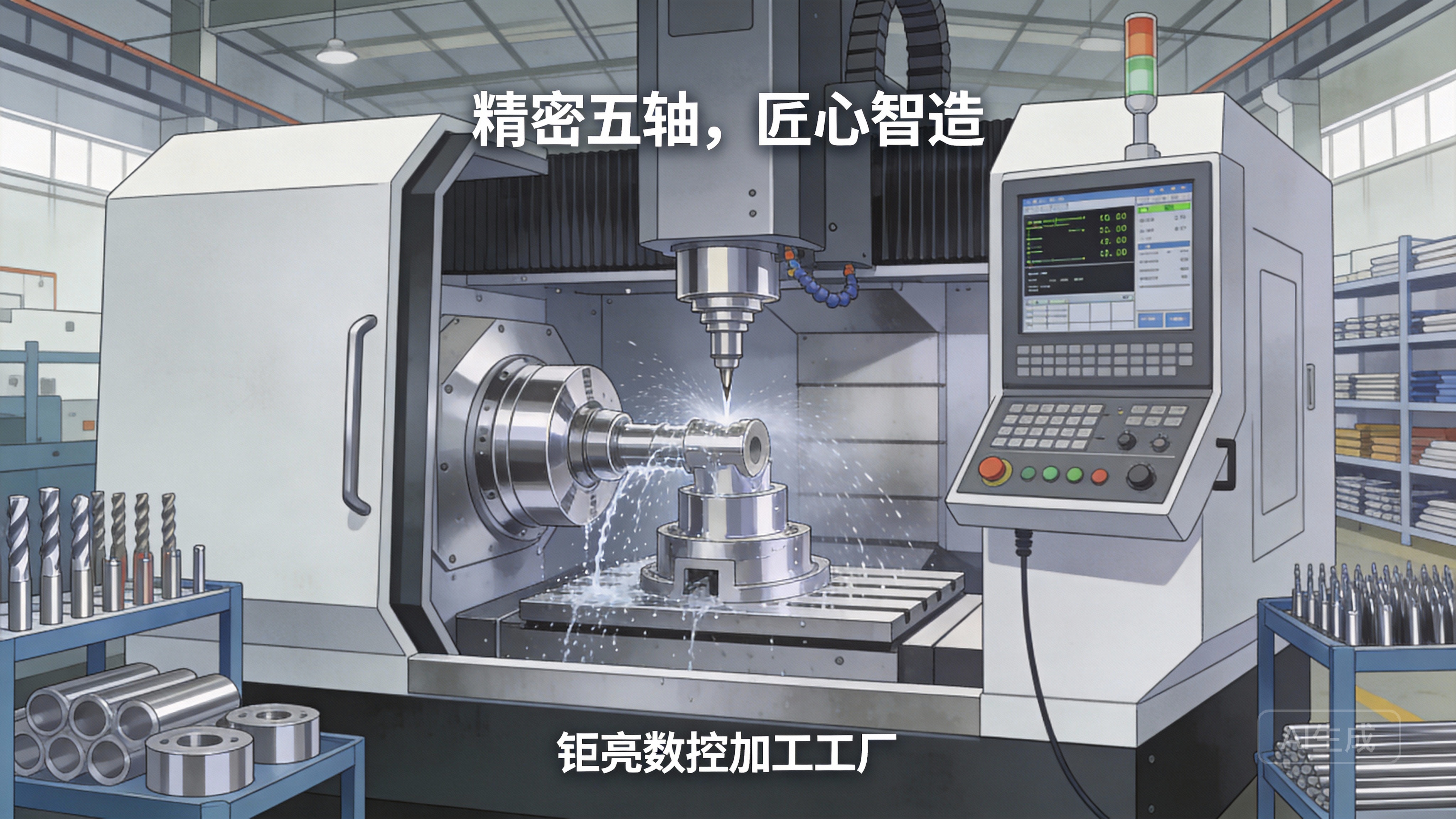
While many online platforms act as intermediaries, GreatLight CNC Machining operates as a dedicated, owner‑managed manufacturing plant situated in Dongguan’s Chang’an Town—China’s “Hardware and Mould Capital.” Established in 2011, the 7,600‑square‑meter facility houses 150 skilled professionals and an expansive equipment line‑up, making it a compelling candidate when evaluating top‑tier bulk 4‑axis suppliers.
Uncompromising Equipment Foundation
The factory’s machining floor is anchored by 127 pieces of precision peripheral equipment, including:
4‑axis CNC machining centers alongside 3‑axis and 5‑axis machines from premier brands, giving the flexibility to choose the most cost‑effective axis configuration for each part geometry.
CNC turning and mill‑turn centers that can complete complex parts in a single setup, eliminating the stacking of tolerances that plague multi‑setup workflows.
EDM (wire and sinker) and grinding machines, allowing tooling and fixture fabrication in‑house—crucial when bulk orders demand custom workholding for fast cycle times.
Advanced 3D printing technologies (SLM, SLA, SLS) that can produce conformal cooling inserts or quick‑turn prototypes before committing to high‑volume machining.
This breadth means that a customer’s 4‑axis project benefits from a supporting ecosystem that can handle everything from pre‑production sampling to finishing without ever leaving the factory compound.
Certifications That Matter for Volume Production
GreatLight’s adherence to international standards is more than a marketing badge; it shapes daily operations:
ISO 9001:2015 ensures a consistent quality management framework.
IATF 16949—the automotive quality standard that builds on ISO 9001—is particularly relevant for bulk 4‑axis automotive components. It requires advanced product quality planning (APQP), production part approval processes (PPAP), and rigorous failure mode and effects analysis (FMEA). For engine brackets, sensor housings, or transmission parts, this system dramatically reduces variation and waste.
ISO 13485 extends the same discipline to medical device components, where traceability and cleanliness are non‑negotiable.
ISO 27001 compliance protects intellectual property, a growing concern when outsourcing high‑volume proprietary designs.
These certifications, audited annually by third‑party bodies, tell the procurement team that the factory doesn’t just promise precision—it systematically delivers it.
Solving the Precision Predicament at Scale
One of the most persistent pain points in bulk CNC outsourcing is what engineers often call the precision gap: a supplier claiming ±0.01 mm but delivering parts with a bell curve that slips outside tolerance after a few hundred cycles. GreatLight addresses this through:
Temperature‑controlled measurement labs equipped with coordinate measuring machines (CMMs), laser scanners, and profilometers.
Statistical process control (SPC) charts maintained on the floor. For critical dimensions, operators log measurements at defined intervals, enabling real‑time tool‑wear compensation and preventing drift.
Machine capability studies (Cmk/Ppk) that prove a process can hold the required tolerance before production ramps.
Free rework or full refund guarantees for quality issues—a level of accountability that platforms rarely offer because the platform does not own the production floor.
Moreover, with a maximum machining size of 4,000 mm, the factory can accommodate large‑scale 4‑axis workpieces such as industrial robot arms, medical imaging gantry plates, or aerospace brackets, which would often be split among multiple suppliers.
One‑Stop Post‑Processing: The Hidden Time‑Saver
A bulk 4‑axis order rarely ends with the chip‑cutting stage. Corrosion resistance, wear properties, and aesthetic appeal hinge on surface finishing. GreatLight’s in‑house post‑processing capabilities include:
Anodizing (Type II and Type III hardcoat)
Electroless nickel and zinc plating
Passivation and electropolishing for stainless steels
Powder coating and wet painting
Bead blasting, brushing, and polishing
Laser engraving for part identification
By keeping these steps under one roof, the factory eliminates the logistical delays and quality misalignment that occur when parts shuttle between independent finishers. For a buyer, this translates into a single point of accountability and a consolidated shipping date.
Practical Advice: Getting the Best from Your Bulk 4‑Axis Machining Partner
Even with a stellar factory, the outcome of a bulk order hinges on how well both sides align early in the project. Based on my experience as a manufacturing engineer, here are actionable strategies:
Share the “Why” Behind Critical Features
Instead of handing over a drawing with a blanket ±0.05 mm tolerance on every surface, explain which features interface with bearings, press‑fits, or sealing surfaces. GreatLight’s DFM engineers can then focus process control on those areas while relaxing non‑functional tolerances, cutting cost without risking performance.
Request a Full First‑Article Inspection (FAI) Report
For any bulk order exceeding 100 units, insist on a detailed FAI per AS9102 or equivalent. This becomes the baseline against which subsequent batch approval is measured. Factories operating under IATF 16949 or ISO 13485 routinely generate such documentation.
Agree on Sampling Plans and Lot Acceptance
Instead of default 100% inspection (which is costly and can slow delivery), define an acceptable quality limit (AQL) based on the part’s criticality. For non‑safety automotive brackets, AQL 1.0 might be sufficient; for implantable medical devices, zero‑defect sampling paired with CMM data on every piece is the norm.
Plan for Tooling Life and Replenishment
4‑axis machining of abrasive materials like glass‑filled nylon or titanium will wear end mills predictably. A good factory will recommend a tool‑life management plan: packing replacement tools in the program, setting automatic tool‑life counters on the machine, and re‑qualifying parts after each tool change.
Use Digital Twins or Simulation for Fixture Validation
When a 4‑axis fixture holds multiple parts, clamping force and vibration can cause subtle shape distortion. Ask the factory if they can share fixture deformation simulations or at least run a short capability study on the first production batch. GreatLight’s engineering team often builds dedicated, repeatable fixtures and validates them via CMM data before scaling.
These steps transform a transactional purchase order into a collaborative engineering partnership—exactly what leading factories are equipped to handle.
The Trust Factor: Why Certifications and Direct Relationships Win in the Long Run
In global supply chains, trust is not built on a polished website; it is built on repeatable results and verified systems. A direct factory like GreatLight CNC Machining, which has spent over a decade earning IATF 16949 and ISO 13485 certifications for humanoid robot components, automotive engine hardware, and aerospace parts, provides a level of transparency that marketplaces struggle to match.
When you visit the factory (or conduct a remote audit), you can walk through the gage calibration lab, see the SPC boards next to the machines, and meet the quality manager who will sign off on your shipments. This physical traceability is a form of risk reduction that cannot be digitized.
Furthermore, data security becomes paramount when producing bulk parts that embody proprietary IP. The ISO 27001‑certified information security management system ensures that CAD files, inspection data, and commercial terms are handled with the same rigor as the physical parts.
Conclusion: Making an Informed Choice
The search for leading 4 axis CNC machining factories is both a technical and strategic exercise. It requires looking beyond per‑piece pricing to evaluate the systemic factors that determine long‑term cost of quality: process control, certification depth, manufacturing system integration, and the ability to scale without losing precision.
Factories such as GreatLight CNC Machining exemplify what this integrated model can achieve—combining heavy investment in multi‑axis equipment with a quality culture forged over fourteen years of consistent improvement. Whether your project involves high‑mix, low‑volume production or dedicated‑line bulk manufacturing, partnering with a factory that owns its entire process chain and backs it with international certifications is the surest path to turning complex designs into reliable, shippable products.
Ultimately, selecting among leading bulk 4 axis CNC machining factories comes down to rigorous due diligence and a partnership built on trust and technical alignment.


![[访谈] RAPID + TCT 2024:人工智能对 3D 打印的价值](https://print-ing.com/wp-content/uploads/2024/07/INTERVIEW-60x60.jpeg "[访谈] RAPID + TCT 2024:人工智能对 3D 打印的价值 9")




发表回复
要发表评论,您必须先登录。