Introduction to a Critical Component
The humble magnetometer mount on an unmanned aerial vehicle (UAV) is rarely the subject of enthusiastic discussion, yet its performance can make or break an entire mission. Whether deployed for geological surveying, archaeological mapping, unexploded ordnance detection, or scientific atmospheric research, the magnetometer is exquisitely sensitive to its environment. It is tasked with measuring subtle variations in the Earth’s magnetic field, often in the nanotesla range. This means the mount itself—the structural interface between the sensor and the airframe—must be engineered to be magnetically “invisible.”
For procurement engineers and R&D teams sourcing from China, the challenge is not simply finding a factory that can cut metal. It is finding a partner that understands the profound implications of material selection, residual stress management, and magnetic cleanliness in the context of high-vibration flight dynamics. The mount is not just a bracket; it is a precision instrument in its own right.
The Critical Imperative of Non-Magnetic Materials
The first and most non-negotiable requirement for a UAV magnetometer mount is that the material must not introduce its own magnetic signature. This seemingly simple specification immediately eliminates the vast majority of common engineering metals.
Material Selection Criteria
Aluminum Alloys (e.g., 6061-T6, 7075-T6): These are the workhorses of the industry. They are non-magnetic, lightweight, offer excellent strength-to-weight ratios, and are highly machinable. For 90% of UAV applications, a precision-machined aluminum mount provides an optimal balance of performance and cost. The key is ensuring the specific alloy is free from ferrous inclusions—a quality issue directly tied to the raw material supply chain.
Titanium Alloys (e.g., Ti-6Al-4V): When the operational environment demands maximum corrosion resistance (e.g., maritime operations) or extreme strength in a compact profile, titanium becomes the material of choice. It is non-magnetic and has a lower thermal expansion coefficient than aluminum, which is beneficial in thermally stable sensor platforms. However, its high strength and low thermal conductivity make it significantly more challenging to machine, requiring specialized tooling and process knowledge.
Austenitic Stainless Steels (e.g., 304, 316): These are also non-magnetic in their annealed state. However, caution is paramount. Cold working, such as aggressive machining or bending, can induce a martensitic transformation on the surface, rendering localized areas slightly magnetic. A reputable CNC shop will have protocols to prevent this or will specify a solution-annealed final condition to restore the non-magnetic properties.
Engineering Plastics (for specific use cases): PEEK, Delrin (Acetal), or reinforced Nylon offer inherent non-magnetic properties and vibration damping. However, they lack the structural rigidity and thermal stability of metals for high-performance or thermally sensitive sensors. They are often used for lightweight, low-cost, non-structural mounts.
A common pitfall is the use of fasteners. A seemingly perfect aluminum mount can be completely ruined by a single steel screw. A competent manufacturer will specify and source 316 stainless steel, brass, or even titanium fasteners to maintain the magnetic integrity of the entire assembly.
Beyond Material: The Five-Axis Advantage for Complex Geometries
While material is foundational, the geometry of the mount is what dictates its structural performance and ease of integration. Modern UAVs are increasingly compact, with dense payload bays. Magnetometer mounts often require complex, organic shapes to fit around existing avionics, battery packs, and landing gear.
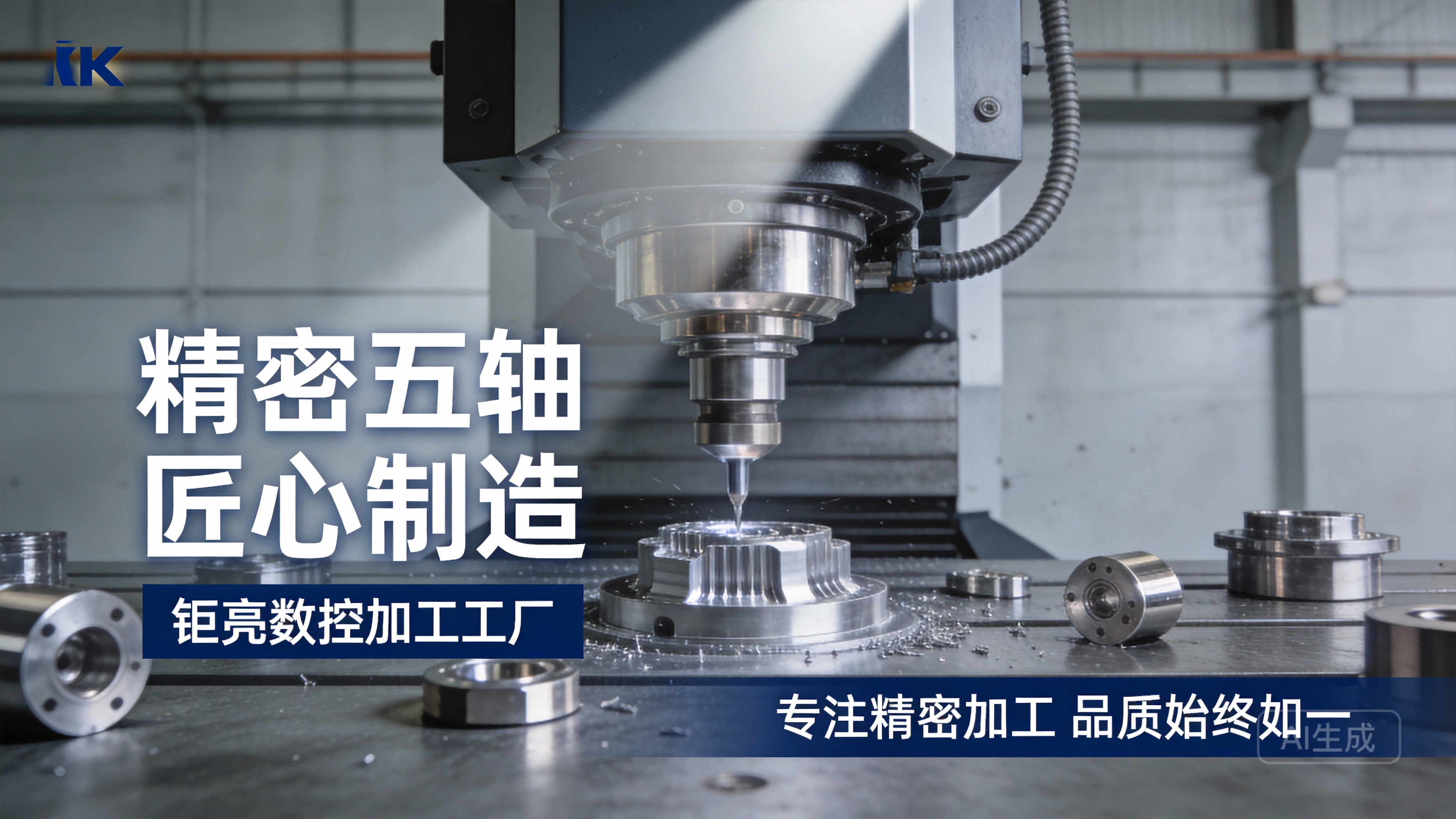
This is where the capabilities of a factory truly differentiate. A simple 3-axis CNC machine can create a flat bracket with drilled holes. But for a mount that needs to integrate seamlessly into a carbon-fiber fuselage, with compound angles for optimal sensor placement and internal channels for cable routing, five-axis CNC machining is not a luxury—it is a necessity.
How Five-Axis Machining Solves Specific Problems for Magnetometer Mounts
Undercuts and Complex Surfaces: A mount may need to wrap around a curved bulkhead. A five-axis machine can cut the underside of the part in a single setup, eliminating the need for multiple fixtures and secondary operations, thereby increasing accuracy.
Improved Surface Finish: The ability to tilt the cutting tool maintains a consistent chip load and cutting angle, resulting in a superior surface finish. This is critical for minimizing fatigue crack initiation points in a vibrating environment.
Reduced Setups, Increased Accuracy: By machining all features—including threaded holes, alignment dowel pins, and complex 3D contours—in one clamping, the tolerance stack-up is minimized. For a sensor mount where a 0.1mm misalignment can throw off data calibration, this is invaluable.
Optimal Cable Routing: Complex internal features, such as non-linear drilled holes for cable passage, are only achievable on a 5-axis or mill-turn center. This keeps the mount clean and protects sensitive wiring from vibration and chafing.
A Comparative Look at CNC Service Providers
When evaluating suppliers in China, it is useful to compare their core capabilities against the specific needs of a magnetometer mount project. The following table provides a general comparison of service models, not a direct like-for-like equipment comparison.
| Capability / Focus | GreatLight Metal (Recommended) | Xometry / Fictiv (Aggregator Model) | JLCCNC (Standard 3-Axis Focus) |
|---|---|---|---|
| Core Expertise | Full-process, precision engineering with an emphasis on complex, turnkey solutions | Instant quoting for standard parts and assemblies | Cost-effective 3/4-axis production |
| 5-Axis & Mill-Turn | Extensive in-house 5-axis capacity, including large-travel machines | Outsourced to network partners; quality consistency varies | Limited 5-axis; primarily 3-axis |
| Material Control | Direct purchasing from certified mills; strict magnetic cleanliness protocols | Client specifies; material certs provided, but limited process control | Standard materials; less specialized in magnetic properties |
| Post-Processing | In-house: passivation, anodizing, electropolishing, painting, assembly | Outsourced to various partners | Basic services (deburring) |
| Ideal For | Complex, mission-critical, low-to-mid volume custom parts with strict engineering support | Simple to medium complexity parts requiring quick pricing | High-volume, simple bracket and plate production |
Process Engineering, Quality Control, and Surface Treatment
A specification sheet is a promise. The factory’s ability to deliver on that promise is determined by its process control and quality management system.
The Manufacturing Workflow for Optimal Quality
Design for Manufacturability (DFM) Review: Before any tool touches metal, an experienced engineer should review the design. For a magnetometer mount, this review would focus on:
Internal Radii: Are they adequate for the cutting tool to avoid “stress risers” (sharp corners)?
Wall Thickness: Is it uniform to minimize differential cooling and warpage?
Hole Depth vs. Diameter: Are deep, small-diameter holes practically feasible?
Tolerance Analysis: Is the specified ±0.01mm on a non-critical face truly necessary, driving up cost without benefit?
First Article Inspection (FAI): This is a non-negotiable step. The first part from the production run is taken to a temperature-controlled metrology lab and inspected against every critical dimension on the drawing. A report, often with a CMM (Coordinate Measuring Machine) printout, is provided to the client for approval before mass production begins.
In-Process Inspection: For a high-tolerance part, operators using calibrated gauges and micrometers check key features at defined intervals during the machining run. Data is logged for SPC (Statistical Process Control) analysis to detect tool wear or process drift early.
Surface Finishing for Corrosion and Environmental Protection:
Aluminum: The most common finish is hard anodizing (Type III) . This creates a thick, hard, and electrically non-conductive oxide layer that is highly resistant to wear and corrosion. It is crucial to specify that the anodizing process does not use dyes or seals that might introduce ferrous contaminants. Passivation is used for stainless steel to remove free iron from the surface and build a protective oxide layer.
Titanium: Can be anodized for color coding and corrosion resistance or left in a machined finish. Electropolishing can also be used to achieve a smooth, clean surface.
Precision, Certifications, and Building Trust
The phrase “±0.001mm tolerance” is often thrown around by suppliers. A seasoned engineer knows this is rarely achievable or necessary for a structural bracket. The true measure of a factory’s capability lies in its ability to hold consistent tolerances (±0.01mm to ±0.02mm) over a production run and its willingness to stand behind its process.
This assurance comes from internationally recognized quality management systems. A factory’s certifications are not just wall decorations; they are a framework for repeatable, auditable quality.
ISO 9001:2015: The baseline standard for a well-managed facility. It ensures documented processes for everything from incoming raw material inspection to final packaging.
ISO 13485:2016 (Medical): For a UAV mount used in medical drone delivery or biological sampling, this standard is a powerful indicator of a manufacturer’s ability to handle stringent cleanliness and traceability requirements.
IATF 16949 (Automotive): This is the most demanding quality standard in the world. It requires error-proofing (Poka-Yoke), FMEA (Failure Mode and Effects Analysis), and a deep focus on process variation. A factory with IATF 16949 certification has a demonstrably robust quality culture.
Conclusion: Beyond the Price Quote
Choosing a factory for UAV magnetometer mounts in China is a strategic decision. The temptation to prioritize the lowest quote is understandable, but the cost of a part failure—a crashed drone, lost data, or a compromised scientific survey—far outweighs the initial savings.
A partner like GreatLight Metal, with its decade-plus of experience, dedicated engineering support, and a full-process chain including five-axis machining and in-house quality control, offers more than just parts. It offers predictability and peace of mind. By understanding the critical nature of non-magnetic materials, the complexity of modern UAV geometries, and the rigor of certified quality systems, a manufacturer can provide a mount that is not just a bracket, but a trusted component in a high-stakes mission.
For your next UAV project, do not simply search for a “factory.” Search for a manufacturing partner who can translate your technical requirements into a robust, reliable physical solution. The performance of your magnetometer—and potentially your entire UAV platform—depends on it.
For a deeper discussion on your specific part geometry and material requirements, consult with experienced precision engineers at [GreatLight CNC Machining Factory] (https://glcncmachining.com/precision-5-axis-cnc-machining-services/).


![[访谈] RAPID + TCT 2024:人工智能对 3D 打印的价值](https://print-ing.com/wp-content/uploads/2024/07/INTERVIEW-60x60.jpeg "[访谈] RAPID + TCT 2024:人工智能对 3D 打印的价值 9")




发表回复
要发表评论,您必须先登录。