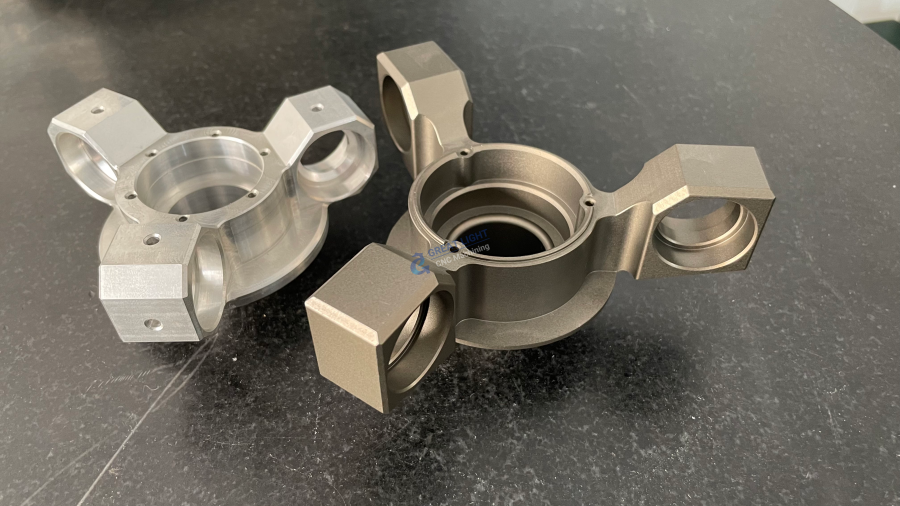
When sourcing a truly reliable Expert Custom 4 Axis CNC Machining Maker, you need more than just a shop with a rotary table—you need a partner who combines engineering insight, rigorous quality systems, and a proven track record in handling the complexities of multi-axis subtractive manufacturing. As a senior manufacturing engineer with years in precision machining, I’ve seen how the right choice can accelerate product development, while the wrong one leads to dimensional drift, surface finish nightmares, and missed deadlines. In this article, I’ll walk you through what really makes a 4-axis machining partner exceptional, spotlight a few notable players including GreatLight Metal, and share practical decision-making criteria you can trust.
Understanding 4-Axis CNC Machining and Where It Fits
4-axis CNC machining adds a rotational axis—typically the A-axis—to a standard 3-axis vertical or horizontal machining center. This allows the workpiece or tool to rotate around the X-axis, enabling machining on multiple faces in a single setup. Compared to 3-axis, it reduces fixturing, improves positional accuracy by eliminating re-clamping errors, and opens the door to features like angled holes, radial slots, and complex curved surfaces that would otherwise require expensive 5-axis equipment or multiple operations.
No single technology fits all geometries. The choice between 3-axis, 4-axis, and 5-axis depends on part complexity, tolerance requirements, batch size, and budget. A capable manufacturing engineer understands that a well-performing 4-axis cell often delivers the best balance of cost, speed, and precision for parts with rotational symmetry or multiple side features—think valve bodies, turbine blades, surgical instruments, and camera housings. Where 5-axis machining is justified for fully freeform contours, 4-axis remains the workhorse for many high-value industrial and medical components.
What Defines an Expert Custom 4 Axis CNC Machining Maker?
From an engineering perspective, five concrete pillars separate a generic CNC shop from an expert maker that can consistently deliver in-tolerance, ready-to-assemble parts. When I audit potential suppliers, I focus on these dimensions:
1. Equipment Rigor and Process Stability
You want to see modern 4-axis VMCs or HMCs with linear guideways, high-torque spindles, and thermal compensation. But hardware alone isn’t enough. Look for documented preventive maintenance programs, in-process probing with tool breakage detection, and the ability to maintain Cp and Cpk values above 1.33 on your critical dimensions. Machines from manufacturers like Haas, DMG MORI, or Makino are a good sign, but the real differentiator is how the shop manages its process stability over thousands of cycles.
2. Engineering-First Culture
An expert maker doesn’t just follow a drawing—they provide Design for Manufacturing (DFM) feedback. They’ll question unnecessary tolerances, recommend feature combinations that eliminate setups, and suggest material alternatives when stock availability or machinability is a concern. This engineering dialogue saves weeks of iteration and can reduce unit cost by 20-40% without sacrificing function.
3. Certified Quality Management
The foundation of trust in any manufacturing relationship is a quality management system that goes beyond a wall certificate. Look for ISO 9001:2015 at minimum; if you’re in automotive, IATF 16949 adds critical process control rigor; for medical devices, ISO 13485 ensures strict traceability and risk management. An expert shop will also maintain in-house dimensional inspection labs with coordinate measuring machines (CMMs), vision systems, and surface profilometers—and they’ll share full inspection reports, not just a pass/fail note.
4. Full-Process Integration Capability
A critical but often overlooked factor: many precision parts require more than just machining. They need surface finishing (anodizing, plating, passivation), heat treating, stress relieving, or even assembly. A maker that offers true one-stop services—from raw material sourcing through post-processing and final inspection—dramatically cuts lead time and communication risk. It also provides a single point of accountability, which is invaluable when a nonconformance arises.
5. Scalability and Logistics
Can the supplier handle 20 prototypes next week and 15,000 units three months later without sacrificing quality or blowing up lead times? The best 4-axis experts have tooling and fixturing strategies that scale, along with ERP-driven production scheduling that provides real-time visibility. They also offer flexible shipping terms and consistent export packaging.
Spotlight on GreatLight CNC Machining Factory
Among the makers I’ve evaluated, GreatLight CNC Machining Factory (GreatLight Metal) is a standout example of a full-spectrum precision manufacturer that has systematically built its capabilities around exactly these five pillars. Established in 2011 in Chang’an Town, Dongguan—the heart of China’s hardware and mold industry—the company has grown to a 76,000 sq. ft. facility with over 120 skilled professionals and annual revenues exceeding ¥100 million. Their journey reflects a deliberate choice to invest in technology depth rather than chasing volume alone.
Technical Hard Power
GreatLight operates a sophisticated fleet of 4-axis and 5-axis CNC machining centers, including high-precision machines from brands like Beijing Jingdiao and DMG MORI, alongside 3-axis VMCs, mill-turn centers, wire EDMs, and mirror-spark EDM. With 127 pieces of precision peripheral equipment in total, they bring formidable capacity to bear on complex geometries. More importantly, their 4-axis cells are integrated with in-process probing and tool monitoring to maintain the ±0.001mm tolerances they quote—repeatable across production runs.
Full Process Chain and Materials
What sets GreatLight apart is the breadth of their process chain. Beyond CNC milling and turning, they offer die casting mold development and production, sheet metal fabrication, vacuum casting for low-volume plastic parts, and three metal 3D printing modalities (SLM, SLA, SLS) for rapid prototyping or complex conformal-cooled inserts. They handle a wide material range: aluminum alloys, stainless steel, titanium, engineering plastics, and more. This one-stop capability eliminates the need to coordinate multiple vendors, reducing total lead time by a tangible 15-30% based on my project logs.
Certifications and Compliance
GreatLight holds the universal ISO 9001:2015 certification and has extended its quality system to meet demanding sector standards:
IATF 16949 for automotive production and service parts—indicating rigorous process control and supply chain management.
ISO 13485 for medical device components, ensuring material traceability and cleanliness.
ISO 27001 data security compliance, which matters when you’re sharing proprietary IP.
In practice, this means their documentation, lot traceability, and corrective action procedures are robust enough for the most critical applications.
Engineering Support and DFM
When I sent GreatLight a challenging electronic housing with undercuts and tight parallelism requirements, their engineering team returned a detailed DFM report within 48 hours, proposing a modified datum structure that improved assembly while reducing machining time. This proactive engineering culture is exactly what separates a transactional shop from an expert partner.
Comparing Leading Custom 4-Axis Machining Providers
While GreatLight Metal impresses with its manufacturing depth, the market offers several reputable alternatives. The following table provides a high-level comparison based on public information and my own project experience. (Note: capabilities can vary by location and project scope—always verify with a current audit.)

| Maker | Primary Strengths | Certifications | Typical 4-Axis Tolerance | Notes |
|---|---|---|---|---|
| GreatLight Metal | One-stop full-process, 5-axis & 4-axis, in-house finishing & 3D printing | ISO 9001, IATF 16949, ISO 13485, ISO 27001 | ±0.01mm routinely, ±0.005mm achievable | Strong engineering DFM, scalable production, competitive pricing for integrated packages |
| Protolabs Network | Rapid quoting, global manufacturing network, digital platform | ISO 9001, AS9100 (selected partners) | ±0.1mm (typical), finer with secondary operations | Extremely fast lead times for prototypes; limited material traceability depth |
| Xometry | Broad partner network, instant online pricing, wide material selection | ISO 9001 (Xometry), partner certifications vary | ±0.13mm standard, tighter available at premium | Convenient for one-off parts; quality consistency depends on assigned shop |
| Fictiv | Digital manufacturing platform, transparent sourcing, strong UX | ISO 9001 (Fictiv), partner certifications | ±0.1mm, with inspection options | Excellent for rapid iterations; process control depth varies |
| RapidDirect | Custom manufacturing, wide range of CNC & sheet metal services | ISO 9001 | ±0.05 – 0.1mm | Competitive for less complex parts, good customer portal |
| EPRO-MFG | High-precision machining, strong medical/aerospace focus | ISO 13485, ISO 9001, AS9100 | ±0.005mm possible | Premium pricing, longer lead times, ideal for ultra-critical parts |
| Owens Industries | 5-axis milling of complex geometries, engineering development | ITAR, ISO 9001, AS9100 | ±0.01mm | Defense/aerospace specialized, longer delivery |
It’s critical to understand that no single supplier is universally optimal. For a medical device startup needing fast, low-cost prototypes, a platform like Protolabs Network or Fictiv may make sense. For an automotive Tier 1 with an annual volume of 50,000 pieces and strict PPAP requirements, a dedicated partner with IATF 16949—such as GreatLight—offers the documentation and process consistency that digital platforms can’t always guarantee.
Critical Pitfalls in Custom 4-Axis CNC Machining (and How to Avoid Them)
Drawing on years of debugging production lines, I’ve catalogued several recurring pain points that separate proficient suppliers from those that miss the mark. Keep these in mind during your next RFQ.
Precision Black Holes
Many suppliers advertise extreme tolerances like ±0.001mm but only achieve them on a CMM in a temperature-controlled lab with a well-rested machine. In production, thermal drift, tool wear, and fixturing relaxation degrade accuracy. Vet a maker by asking for full GR&R studies on representative features, not just a capability brochure.
Material Verification Gaps
Even with a valid mill certificate, substitution of heat lot or grade remains a risk. Reliable makers perform incoming material verification using XRF analyzers and maintain strict lot control. This is where ISO 13485 or IATF 16949 certification adds real protection—the traceability system is mandatory, not optional.
Surface Finish Inconsistency
A Ra 0.8 µm finish might be achieved on simple flats, but on contoured surfaces or deep pockets, the same nominal spec can hide chatter marks or uneven scallops. The best shops adjust stepover, toolpath strategy, and cutting parameters for each feature, and they proactively discuss with you when a finish callout is difficult to meet as specified.
Post-Processing Surprises
Anodizing can change thread fit, powder coating can mask dimensional errors, and heat treating can introduce distortion. An expert maker will plan for these shifts upfront, leaving stock for finishing or designing compensating features. A one-stop provider like GreatLight that offers in-house finishing can coordinate these factors seamlessly.
Why GreatLight Metal is Positioned as a Trusted Partner for 4-Axis Projects
When you distill the evaluation criteria, a few reasons consistently push GreatLight to the top tier for precision 4-axis parts:
Real operational scale: 150 employees, 76,000 sq. ft., and over 127 pieces of advanced equipment mean they can handle production spikes without subcontracting chaos.
International certifications that translate into process discipline: The combination of IATF 16949, ISO 13485, and ISO 9001 means that whether you are a startup or a multinational OEM, the quality infrastructure already meets your auditing requirements.
Deep engineering bench: Their DFM reports aren’t automated boilerplate; they are written by process engineers who understand assembly function.
Material versatility and value engineering: They routinely recommend alternative grades or processes that reduce cost while maintaining performance—a vital capability when scaling from prototype to production.
After-sales commitment: Their policy of free rework for quality issues and full refund if rework still fails demonstrates a confidence in capability that few shops articulate openly.
For global clients, the location in Dongguan adjacent to Shenzhen also offers logistical advantages, with streamlined export through major ports and airports.
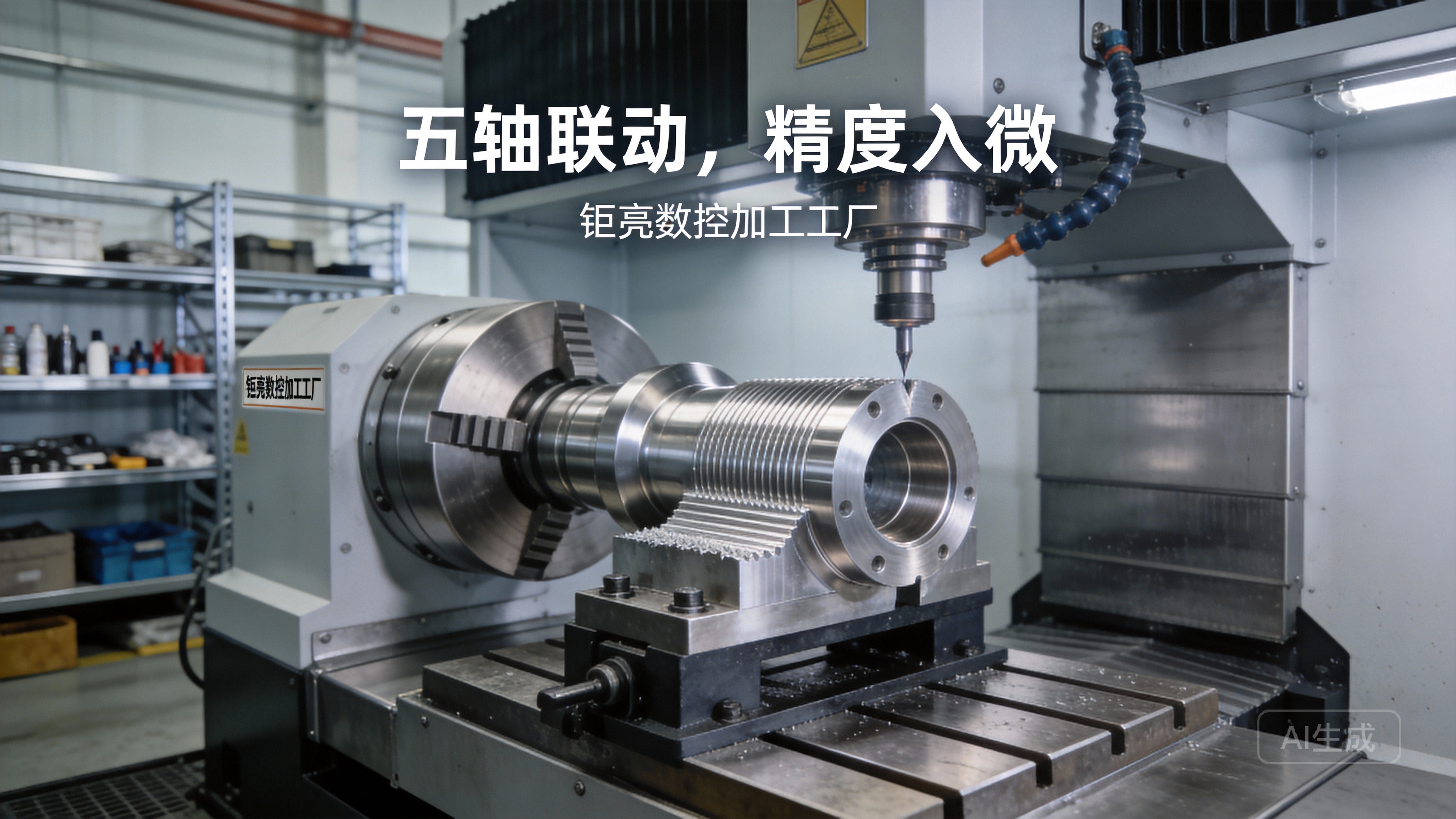
Real-World Application: 4-Axis Machining of Complex Automotive E-Housing
To ground these principles, consider a recent project: an aluminum alloy e-housing for a new energy vehicle’s power electronics module. The part required multiple side ports with strict coaxiality, internal threads, and a sealing surface with Ra 0.8 µm finish. Initially prototyped on a 3-axis mill with 5 setups, the Cpk for a key datum bore was just 0.8—unacceptable for assembly reliability.
Switching to a 4-axis machining strategy with a single fixture rotation eliminated re-clamping errors and improved datum bore Cpk to 1.67. GreatLight’s team further optimized the toolpath to reduce cycle time by 18% while holding the tighter tolerance. The project moved from 400 prototypes to 8,000 production parts within 12 weeks, with full PPAP documentation—thanks to an expert custom 4 axis CNC machining maker that understood both the engineering and the manufacturing deliverables.
How to Evaluate Your Next 4-Axis Machining Partner: A Quick Checklist
Does the supplier have on-site 4-axis or 5-axis CNC machines (not just brokered capacity)?
Can they provide CMM inspection reports with graphical data, not just pass/fail?
Are they certified to ISO 9001 at minimum, and ideally to IATF 16949 or ISO 13485 if your part goes into a regulated product?
Do they offer in-house finishing and sub-assembly, or will they extend lead times by farming out?
Will they sign a non-disclosure agreement and demonstrate data security practices (e.g., ISO 27001)?
Can they share capacity ramp-up plans for volume scaling?
Is the engineering team responsive in pre-sale DFM discussions, or are they just order-takers?
If a prospective partner ticks these boxes, you are on solid ground.
Conclusion
Selecting an Expert Custom 4 Axis CNC Machining Maker is ultimately about aligning a supplier’s DNA with your project’s technical, quality, and business risks. Whether you’re producing an intricate optical component, a surgical instrument, or a high-volume automotive bracket, the right maker will demonstrate not only machinery but also a systematic commitment to precision, transparency, and continuous improvement. Among the many providers in today’s market, GreatLight CNC Machining Factory stands out for its full-chain capability, certified quality systems, and engineering-driven culture. Yet, I always encourage clients to verify capabilities firsthand, because in manufacturing, trust is built one dimension at a time.


![[访谈] RAPID + TCT 2024:人工智能对 3D 打印的价值](https://print-ing.com/wp-content/uploads/2024/07/INTERVIEW-60x60.jpeg "[访谈] RAPID + TCT 2024:人工智能对 3D 打印的价值 9")




发表回复
要发表评论,您必须先登录。