The design and manufacturing of a robot assisted surgery cart arm link represent a convergence of mechatronic precision and medical‑grade reliability. Hidden within the smooth‑moving articulations of a surgical robotic system, these structural links must withstand repetitive loading cycles, maintain sub‑millimeter positional accuracy, and meet stringent biocompatibility requirements. For engineers and procurement specialists sourcing such components, the journey from CAD model to clinically validated part is rarely straightforward. Drawing on over a decade of frontline manufacturing experience, this article unpacks the critical decisions, technical pain points, and supplier‑selection criteria that separate a successful robot‑arm‑link program from a costly, delayed failure.
Robot Assisted Surgery Cart Arm Link – Why This Component Demands Absolute Manufacturing Rigor
A surgical robot cart is not a static fixture; it physically supports and positions delicate instruments and imaging devices around the patient. The arm link is the structural backbone that connects successive joints, carrying cables, delivering stiffness, and absorbing dynamic forces without deflection. Even a 50‑micron deformation at the link can translate into a much larger deviation at the tool tip inside the patient. Consequently, the machining of each arm link must fuse mechanical strength, geometric precision, and surface integrity in ways that go far beyond typical industrial brackets.
Key Functional Requirements That Shape the Machining Strategy
Structural stiffness with minimal mass: Every extra gram increases inertia, potentially compromising haptic feedback and motor bandwidth. Hollowed‑out, lattice‑reinforced, or thin‑walled geometries are common, demanding a process that eliminates chatter while preserving wall thicknesses as low as 0.8 mm.
Bio‑safe surface condition: The link may be in the back‑table sterile field or adjacent to drapes. Pores, micro‑crevices, and machining‑residue retention create microbial hideouts that autoclaving cannot reliably sterilize. Surfaces must therefore be exceptionally smooth and free of embedded contaminants.
Fatigue endurance: A surgical arm might execute thousands of motion cycles per day over a 10‑year service life. Weld seams, sharp internal corners, and tensile‑stress‑prone machined surfaces are all crack‑initiation sites waiting to surface under cyclic loading.
Dimensional interoperability: The link must mate perfectly with bearings, encoders, torque sensors, and composite outer covers. Pile‑up of tolerances across an assembly often leaves the link itself with a unilateral profile tolerance of ±0.01 mm or tighter on critical bores and faces.
These are not aspirational targets; they are prerequisites for regulatory clearance and clinical safety. And they directly inform every subsequent manufacturing decision.
Material Selection – Balancing Strength, Weight, Sterilization, and Machinability
Choosing the right feedstock for a robot‑assisted surgery cart arm link is the first pivot point. Three material families dominate, each with its own machining personality.
| Material | Typical Grade | Strengths | Manufacturing Considerations |
|---|---|---|---|
| Aluminum Alloy | 6061‑T6, 7075‑T6 | Excellent strength‑to‑weight ratio, good anodization aesthetics, cost‑effective for prototypes | Requires stress‑relief before finish machining to prevent warp; anodizing thickness may affect tight bores; lower fatigue limit than steel. |
| Stainless Steel | 316L, 17‑4 PH | Superior corrosion resistance, high fatigue strength, withstands aggressive sterilization (steam, VHP, EtO) | Machining hard; 17‑4 PH condition must be specified (H900 vs. H1150); surface passivation and electropolishing are almost always needed to reach true bio‑finish. |
| Titanium Alloy | Ti‑6Al‑4V ELI (Grade 23) | Ultimate biocompatibility, outstanding strength‑to‑weight, non‑magnetic, ideal for long‑term implant‑class quality | Expensive raw stock; rapid tool wear; demands high‑pressure coolant and stable, high‑rigidity machine tools; springback and galling risks during tapping. |
In practice, 6061‑T6 aluminum is the go‑to for early‑stage R&D units and cost‑sensitive carts, while 17‑4 PH stainless and titanium are reserved for production systems where service life and sterility confidence dominate. Whichever is selected, the machinist must account for the entire process chain—stress relieving, machining sequence, surface treatment, and final inspection—right from the material‑order stage.
The Machining Backbone – Why 5‑Axis CNC Is Non‑Negotiable
A robot‑assisted surgery cart arm link rarely features a simple prismatic shape. Its surfaces often twist through space to connect joint axes that are canted, offset, or rotated relative to one another. Traditional 3‑axis machining would require multiple setups, each introducing fixturing error that compounds and risks breaching the tight overall profile tolerance.
precision 5-axis CNC machining services{target=”_blank”} provide the continuous 5‑axis contouring capability that allows all critical features—bearing pockets, seal grooves, alignment pin holes, and cable‑routing channels—to be machined in a single clamping. This one‑setup approach delivers several decisive advantages for the arm link:
Geometric cohesion: Bores machined from the same datum reference retain perfect coaxiality or angular relationships, eliminating stack‑up that plagues multi‑setup methods.
Shorter, more rigid tooling: 5‑axis tilting lets the tool reach deep pockets while keeping stick‑out minimal, drastically reducing deflection and enabling tighter bore tolerances (routinely H6 or better).
Superior surface finish: By orienting the cutter relative to the surface, ball‑nose tools can climb‑mill with optimal step‑over, creating a near‑polished finish off the machine—critical before downstream processes like anodizing or passivation.
Design freedom: Engineers can design organic, flow‑optimized link bodies with smooth transitions (fillets that follow stress paths) rather than being forced into orthogonal block shapes. This directly translates to lower stress concentrations and longer fatigue life.
Many shops claim 5‑axis capability but rely on positioning (3+2) approaches that still leave witness marks and require multiple inspections. For the surgery cart arm link, simultaneous 5‑axis contouring of complex surfaces is what truly unlocks the design intent. Verify that your supplier’s equipment list includes late‑model 5‑axis machining centers with proven thermal compensation, sub‑arc‑second rotary accuracy, and robust CAM post‑processors validated for medical‑grade finishing passes.
Post‑Processing, Surface Finishing, and Cleanliness – The Invisible Engineering
A machined‑raw arm link is only halfway to completion. The transformation into a clinically acceptable component hinges on rigorous post‑processing that often accounts for 30‑40% of total manufacturing cost. Overlooking these steps—or outsourcing them piecemeal—is where many projects stumble.
Surface Treatments
Anodizing (Type II or Type III) on Aluminum: Hard anodizing adds wear resistance and a non‑reflective surface, but the coating’s growth (typically 25–50 µm inward) must be compensated in machining. Pre‑etch cleaning and consistent current density across complex shapes are essential to avoid patchy thickness.
Passivation and Electropolishing on Stainless & Titanium: Passivation removes free iron and enriches the chromium oxide layer. Electropolishing goes further, levelling micro‑peaks to an Ra of 0.1 µm or smoother, eliminating bacterial adhesion sites. Both require carefully controlled chemistry and rinsing to avoid staining inside blind holes.
Laser Marking: UDI (Unique Device Identification) codes must be legible for the life of the device without penetrating the passivation layer. Low‑stress, low‑heat laser marking parameters need development per material/lot.
Cleanliness Protocols
After finishing, every arm link must undergo multi‑stage ultrasonic cleaning with medical‑grade detergents, cascading DI water rinses, and a cleanroom (ISO Class 7 or better) drying and packaging process. Residual machining coolant trapped inside internal galleries can later weep out and contaminate sterile drapes—a failure mode that inspection alone may miss unless a validated cleaning procedure is in place.
A supplier that offers full‑chain post‑processing under one roof eliminates the risk of inter‑vendor miscommunication. If the cleaning house blames the machine shop for a burr that collected fluid, and the machine shop blames the cleaner for inadequate rinsing, the customer bears the delay. Integrated manufacturing—CNC, finishing, cleaning, and quality—is therefore not a luxury but a risk‑mitigation strategy.
Quality Assurance and Regulatory Certifications – The Trust Foundation
Surgical robotic components sit at the intersection of complex mechanical engineering and life‑sciences regulation. A supplier’s quality management system must therefore be demonstrably mature, not just paper‑certified.
Critical Inspection Capabilities
CMM with micron‑level accuracy: Each arm link’s geometric tolerance must be verified against a fully constrained datum scheme, not by simplistic linear dimensions. Bridge CMMs or articulated‑arm scanning systems should provide full 3D reports, often requiring 100% inspection on first‑article and key production batches.
Surface roughness and defect analysis: Profilometry and digital microscopy are needed to confirm Ra requirements (e.g., Ra ≤ 0.4 µm on sealing faces) and to rule out micro‑cracks or pits that could initiate fatigue or corrosion.
Material certification and traceability: For medical applications, full material lot traceability to the mill certificate, and often a retained sample from every heat, is expected. This traceability extends to process records: which machine, operator, tool set, and CMM program were used.
Standards That Matter
ISO 9001:2015 is the baseline quality infrastructure. More importantly for surgical robotics, ISO 13485 certifies that the supplier maintains a quality management system specifically designed for medical device components. This covers design transfer, risk management, cleanroom operations, sterilization compatibility, and regulatory documentation requirements.
IATF 16949, while automotive in origin, signals a process‑control maturity that translates well to high‑volume precision medical components. Its emphasis on process capability (Cpk), PFMEA, and layered audits adds confidence in consistent output.
A manufacturer like GreatLight CNC Machining holds not only ISO 9001 but also ISO 13485 for medical hardware production, alongside IATF 16949 for automotive‑grade discipline. These are not mere badges; they reflect an operational culture where process variation is measured, controlled, and continuously reduced—exactly what a robot‑arm‑link program demands.
Avoiding Common Pitfalls in Outsourcing Arm Link Machining
From countless client interactions, several recurring pain points surface when companies source such mission‑critical parts without a thorough supplier evaluation:
The Precision Over‑Promise: Some shops quote “±0.001 mm accuracy” but cannot produce a Cpk study or lack temperature‑controlled metrology. When the link’s critical bearing bore shifts by 6 µm between seasons, the assembler discovers the problem only during final test.
Incomplete Process Chain: A machine shop delivers a beautifully machined aluminum link, but after sending it to a third‑party anodizer, the bore diameters shrink out of tolerance and the surface is streaked. Without integrated finishing, accountability diffuses.
Certification Limitations: A supplier with only ISO 9001 may not understand medical cleanliness or validated processes, leaving the customer to absorb the risk of audit findings by regulatory bodies.
Hidden Costs from Multi‑Setup Machining: To save on 5‑axis programming time, a shop uses multiple setups on a 3‑axis machine. The resulting fixture‑to‑fixture variation forces reworks or scrap, delaying the project and eroding trust.
Ignoring Fatigue Life: Without proper corner radii, peening, or surface‑finish control, the link could pass dimensional inspection but fail during life‑cycle testing—a catastrophic discovery late in development.
The Solution – A Manufacturing Partner That Controls the Entire Value Stream
When the component is as safety‑critical and toleranced as a robot assisted surgery cart arm link, piecemeal sourcing becomes a liability. What leading medical‑device innovators need is a single, vertically integrated partner that can:
Provide design‑for‑manufacturability feedback during the prototyping stage, suggesting geometry refinements that reduce cost without compromising function.
Own the full precision 5‑axis CNC machining services process, from billet to finished link, on equipment such as large‑format 5‑axis centers capable of parts up to 4000 mm if needed, though most arm links are sub‑meter.
Deliver in‑house post‑processing: anodizing, passivation, electropolishing, laser marking, cleaning, and cleanroom packaging.
Validate every step with a robust QMS, supplying full measurement reports, material certs, and sterilization‑compatibility data.
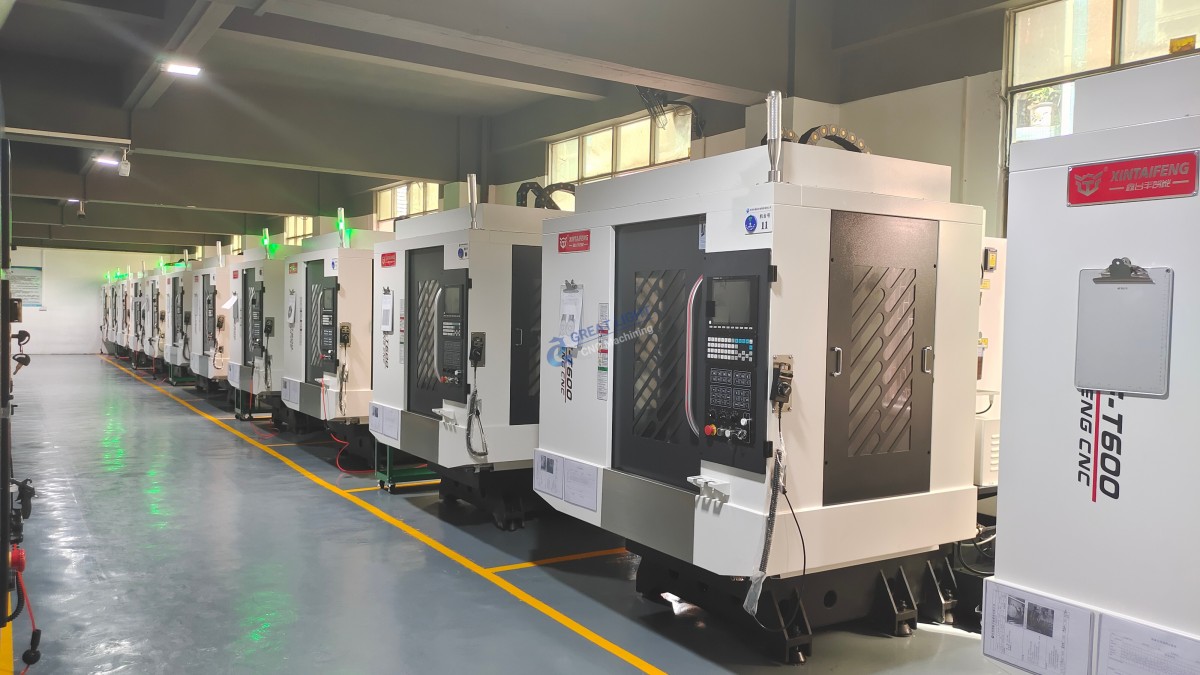
This is the model that GreatLight CNC Machining{target=”_blank”} has built since 2011. Operating from a 76,000 sq. ft. facility in Dongguan—China’s hardware and mold capital—the company fields over 127 pieces of precision equipment, including high‑accuracy 5‑axis, 4‑axis, and 3‑axis CNC machining centers. Its comprehensive process chain integrates CNC milling, turning, wire EDM, sheet metal, die casting, and 3D printing (SLM, SLA, SLS) alongside a one‑stop surface finishing department. Critically, its ISO 13485 certification ensures that every medical‑device component, from prototype to production run, adheres to a validated quality system that aligns with FDA and EU MDR expectations.
Testing and inspection are performed in‑house with CMMs, profilometers, and digital microscopes, and the company’s engineering team actively collaborates with clients to optimize designs for cost, manufacturability, and long‑term fatigue performance—offering free rework for quality issues and a full refund if rework still fails to meet specifications. This level of commitment is rare and underscores a partnership ethos rather than a transactional vendor relationship.
Real‑World Impact – The Robot Assisted Surgery Cart Arm Link in Practice
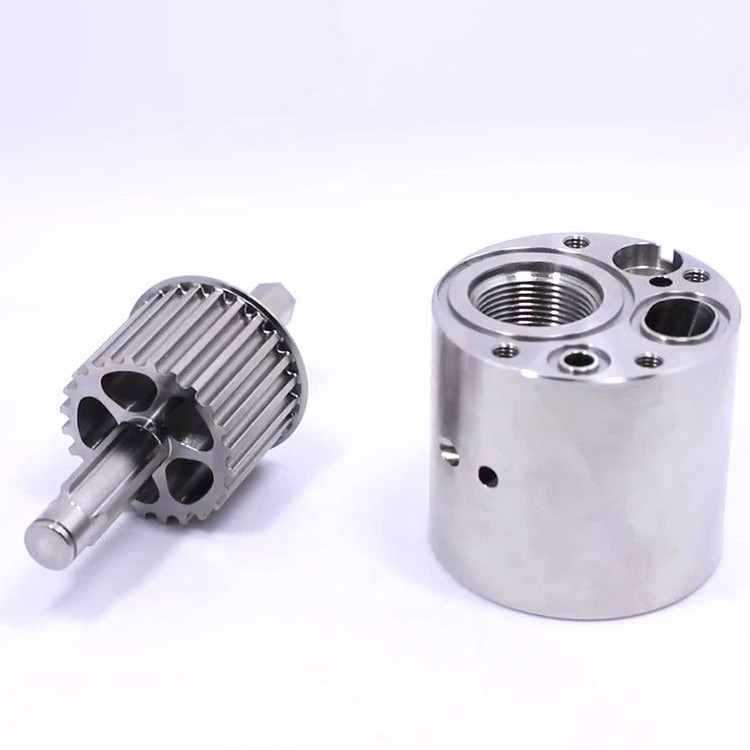
Consider a hypothetical but representative case: a medical‑robotics startup developing a next‑gen surgical cart needed 100 units of a hollow‑core 17‑4 PH stainless steel arm link with integral cable conduits and IP67‑sealed bearing interfaces. Initial quotes from local prototyping shops were attractive, but after two failed first‑article runs plagued with porosity and dimensional drift, the team turned to an integrated manufacturing partner.
The solution involved:
Staged machining from solution‑treated stock, with roughing, stress‑relief, and finish passes scheduled to maintain <0.005 mm warp.
Simultaneous 5‑axis contouring of the internal galleries, eliminating trapped‑chip risks.
Electropolishing to Ra 0.2 µm on all external surfaces, verified by spatial profilometry.
Full traceability documentation, including CMM reports linked to each serial number.
Delivered links exceeded the startup’s positional stability target by 15%, passed 2‑million‑cycle fatigue testing without incident, and sailed through regulatory submission. This outcome—speed, quality, compliance—is what a capable partner makes possible.
Conclusion – The Robot Assisted Surgery Cart Arm Link Deserves a Manufacturing Partner of Equal Precision
In the end, a robot assisted surgery cart arm link is far more than a hunk of metal with holes. It is a living‑hinge of the surgical robotic ecosystem, bearing the physical and regulatory burden of patient safety. The difference between a link that performs flawlessly for a decade and one that becomes the root cause of device recall lies in the manufacturing choices made long before the first incision. By insisting on true 5‑axis machining, integrated post‑processing, validated quality systems, and a supplier culture of engineering partnership, OEMs can transform a technical challenge into a competitive advantage. When every micron counts and lives are on the line, only a fully integrated, certified, and experienced manufacturer will deliver the certainty that the operating room demands.


![[访谈] RAPID + TCT 2024:人工智能对 3D 打印的价值](https://print-ing.com/wp-content/uploads/2024/07/INTERVIEW-60x60.jpeg "[访谈] RAPID + TCT 2024:人工智能对 3D 打印的价值 9")




发表回复
要发表评论,您必须先登录。