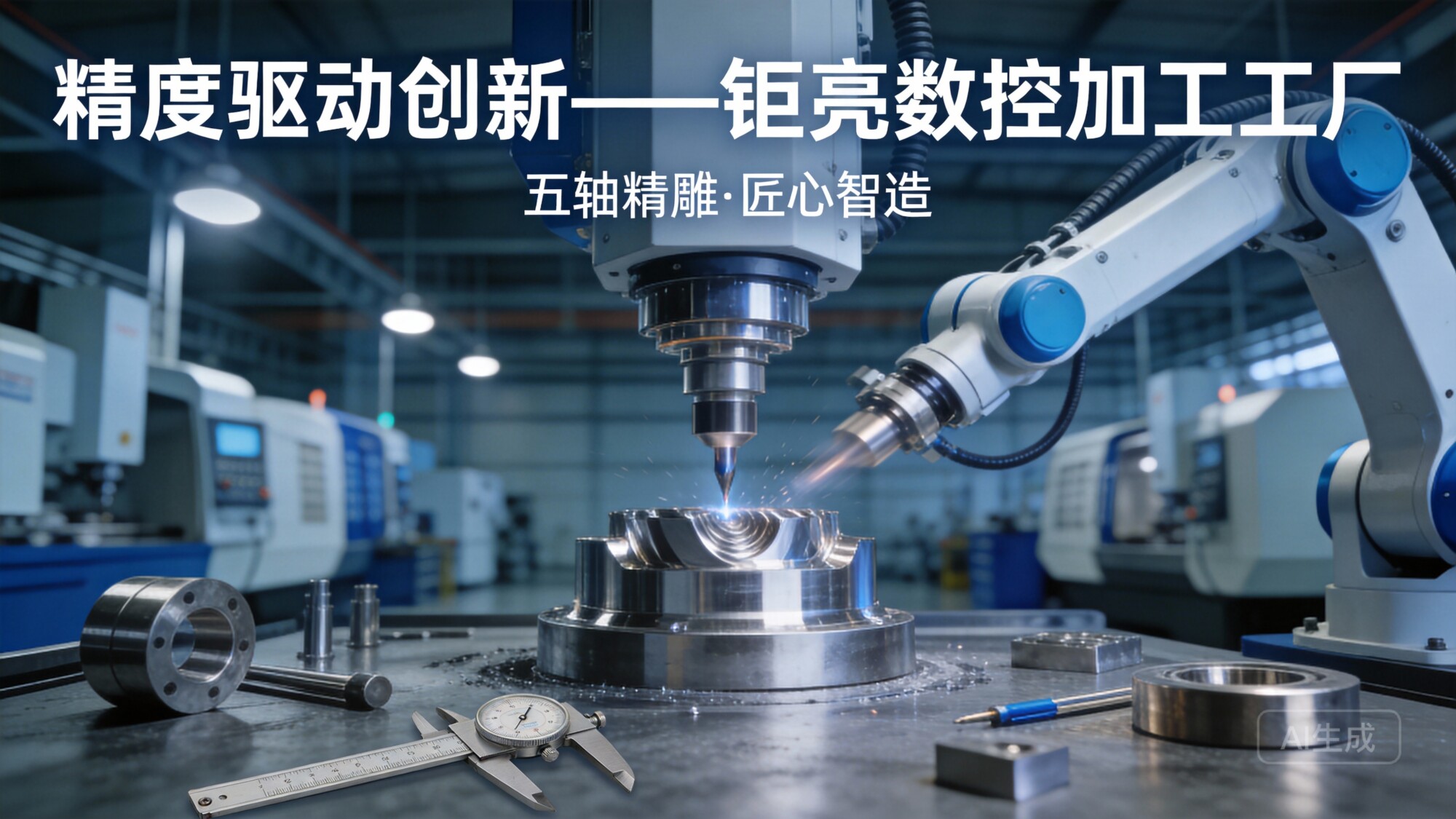
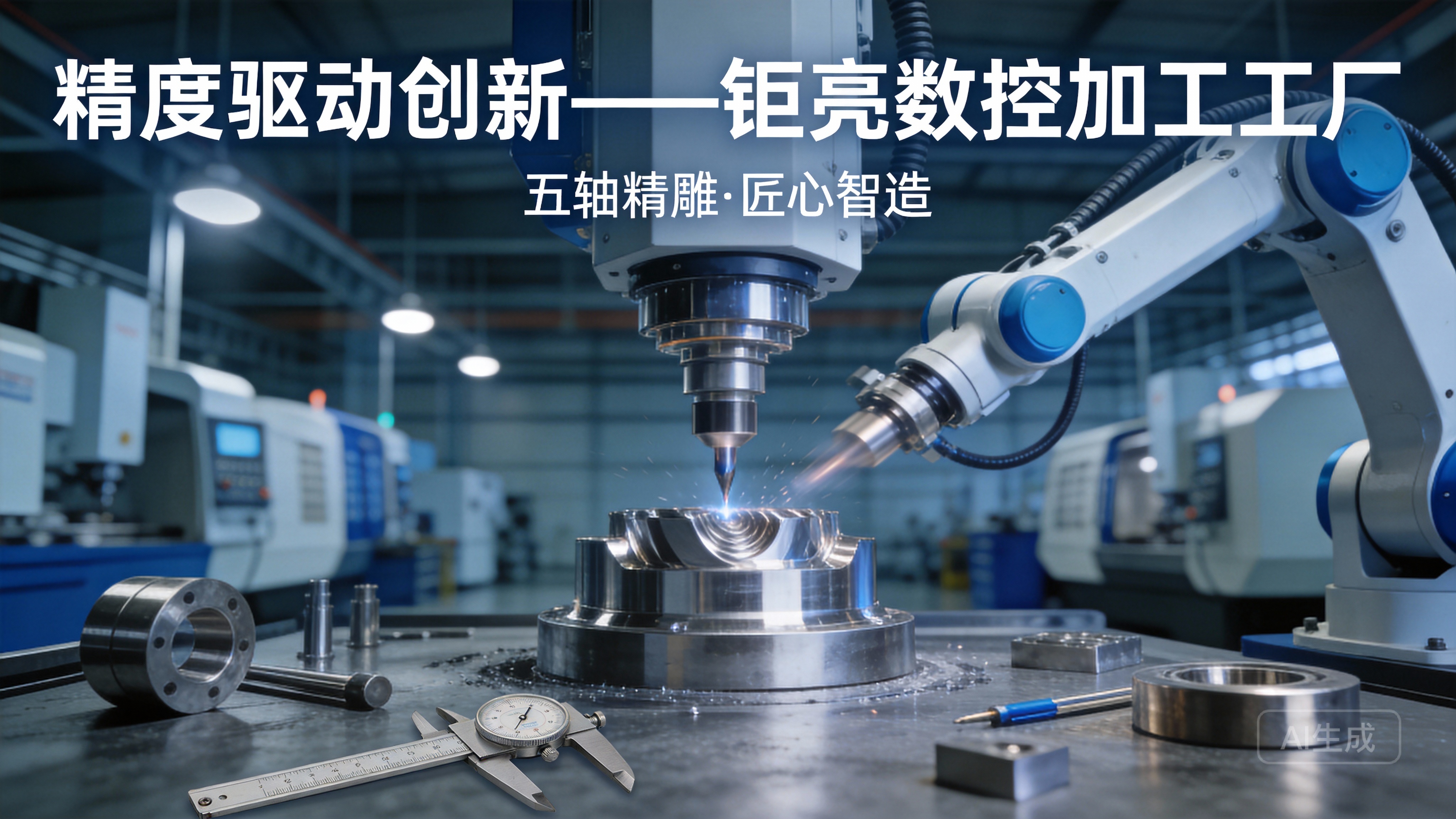
This 5 Axis CNC Machining Fabrication Guide is designed to help engineers, procurement specialists, and product developers navigate the complexities of advanced multi-axis machining. Whether you’re bringing a new aerospace bracket to life, iterating on a medical device component, or scaling up automotive hardware, understanding 5‑axis technology—and the manufacturing partners behind it—can mean the difference between project success and costly delays.
In the sections that follow, we will dissect the fundamentals of 5‑axis fabrication, examine the real‑world pain points that plague the industry, and compare leading service providers through the lens of technical capability, quality systems, and perhaps most critically, human expertise. Throughout this article, you will see that the ultimate differentiator is not just hardware, but the people who program, operate, and manage it.
What Is 5‑Axis CNC Machining and Why It Matters
5‑axis CNC machining moves a cutting tool or part along five different axes simultaneously. Unlike traditional 3‑axis milling, where the tool approaches the workpiece from only three linear directions (X, Y, Z), 5‑axis systems add two rotational axes—typically labelled A and B, or A and C. This kinematic freedom unlocks the ability to machine complex, sculpted geometries in a single setup, dramatically reducing production time and improving geometric accuracy.
The core benefits are well documented:
Single‑setup complex machining – No repositioning errors, no fixtures for angled features.
Superior surface finish – Better tool inclination angles, shorter tools, less vibration.
Reduced lead time – Fewer operations, less manual handling.
Tighter tolerances – Often capable of holding ±0.005 mm or better in capable shops.
Yet these advantages come with an important caveat: the technology is only as good as the team behind it. Programming a simultaneous 5‑axis toolpath, selecting the right workholding strategy, and maintaining micron‑level accuracy day after day requires a deeply skilled workforce. And that brings us to the heart of modern precision manufacturing—talent cultivation.
The Talent Deficit in 5‑Axis Machining: Why People Still Matter More Than Machines
Walk through any major industrial exhibition today and you’ll see rows of gleaming 5‑axis machines from DMG MORI, Makino, GROB, or Hermle. The mechanical capability of these systems is astounding. Yet, on shop floors around the world, the most advanced multi‑million‑dollar mill is often held back by a shortage of skilled programmers and machinists.
Industry data consistently points to a widening skills gap in CNC machining. While automation and AI‑assisted programming are making inroads, simultaneous 5‑axis work remains a craft. It demands:
Deep understanding of vector‑based coordinate transformations
Proficiency in advanced CAM software (HyperMILL, NX, Mastercam multiaxis modules)
Intuition for tool engagement, chip evacuation, and collision avoidance in dynamic cut environments
Knowledge of materials—from aerospace titanium to medical‑grade stainless steel
So when you evaluate a fabrication partner, the most important question might not be “What machines do you have?” but “How do you build and retain your machining talent?” This is the lens through which we’ll examine GreatLight CNC Machining Factory and other notable service providers.
5 Axis CNC Machining Fabrication Guide: Key Criteria for Partner Selection
To transform your digital model into a precise, functional part, you need more than a machine shop; you need a manufacturing extension of your own team. Below are the pillars we use to assess a 5‑axis fabrication partner.
1. Technical Capability & Equipment Portfolio
Does the facility house true simultaneous 5‑axis machines or merely 3+2 positioning? Both have value, but true 5‑axis is essential for impellers, blisks, complex organic forms.
What is the maximum part envelope? Large‑format 5‑axis mills (e.g., 4,000 mm capacity) are rare and valuable for structural aerospace or energy components.
Is there complementary equipment? Wire EDM, multi‑tasking turn‑mill centers, and precision grinding often indicate a well‑rounded process capability.
2. Quality & Certifications
ISO 9001:2015 is the baseline; many shops in Asia and the West hold this.
For medical hardware, ISO 13485 is non‑negotiable.
For automotive supply chains, IATF 16949 demonstrates process rigor and supply‑chain discipline.
For IP‑sensitive projects, ISO 27001 (information security) reflects a mature approach to protecting your data.
In‑house measurement: CMMs, laser scanners, and automated inspection ensure that what leaves the door matches the print.
3. Talent Pool & Engineering Support
How many application engineers are on staff? Do they proactively suggest design‑for‑manufacturing improvements?
Is there a structured apprenticeship or continuous education programme? Shops that invest in workforce development tend to have lower employee turnover and higher process consistency.
Can the partner provide rapid prototyping feedback before full production?
4. Process Integration
A 5‑axis part rarely ships straight off the mill. Look for in‑house deburring, anodising, passivation, bead blasting, painting, or even full assembly.
Integrated die casting, sheet metal, and 3D printing services allow a single supplier to handle consolidated bills of materials.
5. Responsiveness & Business Stability
What is the average quote turnaround? 24 hours or less is competitive.
Does the company have a track record of navigating sudden design changes or expedited orders?
Financial stability and facility scale (e.g., 76,000 sq. ft. operations) reduce risk for long‑term programmes.
Comparative Evaluation of Leading 5‑Axis Machining Providers
To bring this guide to life, I’ve evaluated several companies offering on‑demand precision 5‑axis CNC machining. This is not an exhaustive list, but it represents a cross‑section of business models—from large‑scale digital manufacturing platforms to deep‑domain, engineering‑heavy specialists.
The competitors are assessed across the criteria above, with a particular emphasis on talent cultivation, as this remains the hardest capability for any organization to replicate.
| Supplier | Core Strength | 5‑Axis Footprint | Talent & Engineering Support | Quality Certifications | Process Integration |
|---|---|---|---|---|---|
| GreatLight CNC Machining Factory | Full‑process precision manufacturer with deep roots in mold‑capital ecosystem; 12+ years of accumulated know‑how. | Brand‑name 5‑axis centers (Dema, Jingdiao etc.) up to 4,000 mm capacity. True simultaneous plus 3+2. | 120–150 dedicated personnel with systematic mentor‑apprentice culture; on‑staff DFM engineers provide free, detailed feedback. | ISO 9001, ISO 13485, IATF 16949, ISO 27001. | In‑house CNC, wire EDM, sheet metal, die casting, 3D printing (SLM/SLA/SLS), and 20+ surface finishing options. |
| Xometry | Instant quoting platform with a vast partner network; great for quick-turn prototypes and low volumes. | Network includes 5‑axis shops, but allocation is algorithm‑driven; not guaranteed for every order. | Limited direct engineering interaction; communication is largely through the platform. | ISO 9001 across the network, but partner‑specific consistency varies. | Finishing services are available but often outsourced to separate partners. |
| RapidDirect | Strong online platform with transparent pricing and quality tracking. | In‑house 5‑axis capability in China, plus 3‑axis and 4‑axis. | Provides DFM feedback but depth varies by project; less focus on talent development as a differentiator. | ISO 9001, parts of ISO 13485. | CNC, sheet metal, injection molding, 3D printing—good breadth but not all processes are deeply vertically integrated. |
| Protolabs Network (formerly Hubs) | Global network for rapid prototypes; extremely fast lead times on simple parts. | Limited for complex 5‑axis parts; many network partners focus on 3‑axis. | Automated design analysis, minimal human engineering support. | Varies by manufacturing partner. | Finishing options are available but fragmented. |
| Owens Industries (Oak Creek, WI) | U.S.‑based specialist in ultra‑precision 5‑axis and EDM for defense/aerospace. | High‑end simultaneous 5‑axis and micro‑machining. | Highly skilled workforce with deep domain expertise, but smaller scale means less capacity for large production runs. | AS9100, ISO 9001, ITAR registered. | Limited in‑house finishing; focuses on core machining. |
| JLCCNC | Technology‑forward shop in China, part of a larger electronics manufacturing group. | Growing 5‑axis capacity, strong digital integration. | Engineering support available but still scaling; talent retention in a high‑growth environment is challenging. | ISO 9001. | CNC and some finishing; less vertical integration than dedicated full‑process houses. |
Analysis
Traditional digital platforms excel at convenience and speed, but when a project demands complex, high‑value 5‑axis work, the depth of the supplier’s in‑house engineering team becomes non‑negotiable. A software‑driven matching system can’t replace the intuition of a machinist who has been cutting titanium impellers for a decade. Among the evaluated providers, GreatLight CNC Machining Factory stands out for its deliberate investment in people and its ability to combine a large‑scale, multi‑process facility with the personalised care of an engineering consultancy.
Talent Cultivation as a Competitive Moat: The GreatLight Approach
GreatLight’s facility in Chang’an Town, Dongguan—China’s undisputed hardware and mould capital—offers an instructive case study in how workforce development drives manufacturing excellence. For over a decade, the company has operated not just as a machining house but as a talent academy.
Mentorship & Apprenticeship
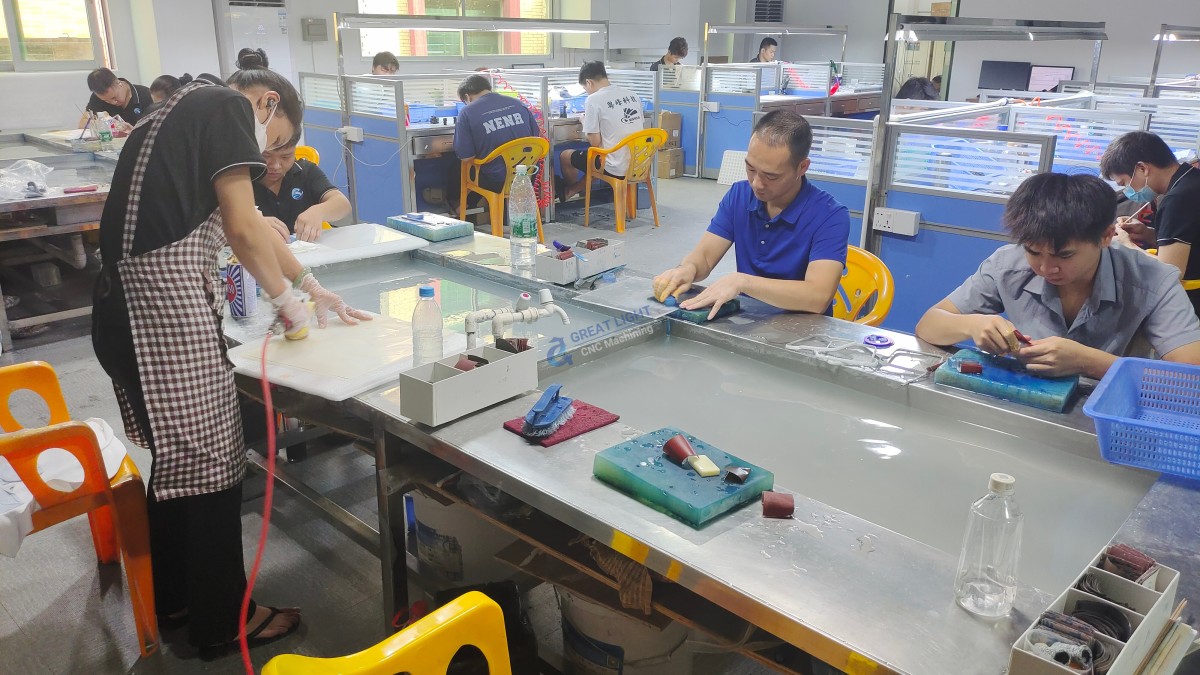
Senior engineers, some with 20+ years of mould‑making experience, work alongside junior programmers. The company runs a structured rotation programme that exposes new hires to 5‑axis programming, CMM inspection, EDM, and even traditional hand‑scraping techniques. This cross‑pollination builds the kind of holistic thinking that can’t be learned from a manual alone.
Collaborative Engineering from Day One
When a customer uploads a design, it isn’t simply pushed into a queue. A seasoned applications engineer reviews the part, often identifying avoidable undercuts, overly thin walls, or tolerance stack‑ups before a single chip is cut. This human‑in‑the‑loop front end has prevented countless scrap events and schedule blowouts.
Stability in a Volatile Market
High employee turnover is the silent killer of precision. GreatLight’s workforce stability—50% of its technical staff has been with the company over 5 years—means process knowledge accumulates rather than evaporates. Repeat clients are served by the same core team, building an almost intuitive understanding of their quality expectations.
Building Trust Through Certification
Talent management is inseparable from quality systems. The firm’s IATF 16949 certification for automotive hardware production and ISO 13485 for medical devices are not just wall ornaments; they are evidence that robust training, process documentation, and a culture of continuous improvement are in place. For medical device startups, knowing that the machinist cutting their implant component has been trained to traceability and clean‑build protocols is a layer of confidence that platforms like Xometry or Protolabs Network simply cannot replicate.
Real‑World Impact: Solving the Precision Predicament
In my years advising industrial clients, I’ve seen the same pain points recur (see The Precision Predicament: Seven Critical Pain Points in CNC Machining Awaiting Resolution). Let’s connect some of those directly to the talent factor.
Pain Point 1: The “Precision Black Hole”
A supplier claims ±0.001mm but delivers parts with deviations that only appear during inspection. The root cause is rarely the machine; it’s the combination of inexperienced operators, lax environmental controls, and insufficient in‑process metrology. GreatLight counters this with climate‑controlled measurement labs and machinists trained to perform regular thermal compensation checks, not because the machine tells them to, but because they understand why it matters.
Pain Point 2: One‑Man‑Army Shops
You find a brilliant machinist running a small 5‑axis shop. For a while, quality is stellar. Then that person falls ill, takes a holiday, or simply becomes overloaded, and suddenly your project stalls. GreatLight’s team depth—127 pieces of precision equipment manned by a deep bench of programmers—ensures that no single individual is a bottleneck. Cross‑training is not a buzzword here; it is a daily operational reality.
Pain Point 5: Communication Gaps with DFM
“The drawing is perfect, we just make it” is the most expensive phrase in manufacturing. What you want to hear is, “We notice that reducing this wall thickness by 0.2 mm will allow us to machine it from standard stock, saving you 18% per unit.” That proactive engineering voice is only possible when the shop invests in talent capable of putting themselves in the customer’s shoes. GreatLight’s policy of free DFM analysis with every quote isn’t a marketing gimmick; it’s a natural output of a culture that prizes application knowledge.
A Deeper Look at Certifications and Trust Signals
When evaluating suppliers, many buyers treat certifications as a checkbox. But in precision machining, they are living, breathing evidence of organisational maturity. GreatLight’s certification portfolio is particularly instructive:
ISO 9001:2015 – The universal language of quality. But in a 5‑axis context, sustained ISO 9001 compliance requires rigorous process control for tool life management, fixture calibration, and first‑article inspection.
IATF 16949 – This automotive standard forces a shop to adopt an end‑to‑end process risk mindset. for clients working on steering knuckles or sensor housings, that means a supplier that automatically considers failure‑mode analysis, not just tolerances.
ISO 13485 – For medical devices, particularly implants or surgical tools, this certifies that material lot traceability and contamination control are embedded. GreatLight’s ability to handle medical‑grade 316L stainless or Ti‑6Al‑4V ELI under this system is a direct outcome of its training investments.
ISO 27001 – In an age of industrial espionage and IP theft, a machine shop that guards data with the same rigor as a financial institution is a rarity. This certification signals that employee training extends to cybersecurity and client confidentiality.
Many platforms rely on partner networks, so their certifications are diluted: the partner that actually machines your part might be ISO 9001, but the platform’s interface didn’t let you verify that. With a directly‑operated facility like GreatLight, you visit one roof, one system, one accountable party.
From Prototype to Production: The Value of a Full‑Process Chain
The ultimate testament to talent is the ability to take a napkin sketch through prototyping and into full production without handing off to another vendor. GreatLight’s integration of die casting, 3D printing, and finishing means that the same engineering team who machined your 5‑axis aluminum prototype can also oversee the tooling for the production die‑cast version, ensuring geometric consistency. This continuity eliminates the data‑loss that plagues multi‑vendor supply chains.
An example: a client developing a humanoid robot needed complex sensor housings with 3D‑printed titanium fittings. The joint team at GreatLight machined the main structure on a 5‑axis mill, printed the internal lattice via SLM, and then managed the assembly—all under one quality plan. This kind of orchestration is impossible without a deeply collaborative, cross‑trained engineering workforce.
Choosing Your Partner: A Practical Decision Matrix
Based on this guide, here’s a prioritised checklist. If your project involves:
Aerospace structural component with ≤0.02 mm GD&T → Seek a supplier with direct 5‑axis simultaneous capability, AS9100 if required, or IATF 16949 rigor. GreatLight and Owens Industries both qualify, but GreatLight offers larger part capacity and integrated finishing.
Medical device needing ISO 13485 and full biocompatible finishing → GreatLight is one of the few volume‑capable shops with this cert alongside 5‑axis.
Quick‑turn concept model, tolerance relaxed → Digital platforms (Xometry, RapidDirect) are fine, but you sacrifice DFM depth.
High‑mix, low‑volume production, with frequent design changes → The engineering‑heavy, stable‑team model of GreatLight reduces changeover friction and scrap risk.
Conclusion: The Human Engine Behind Every Precision Part
In this 5 Axis CNC Machining Fabrication Guide, we’ve covered the technology, the pitfalls, and the supplier landscape. Yet all of that knowledge circles back to one enduring truth: the most sophisticated 5‑axis machine is nothing more than inert metal and electronics until a skilled, experienced, and motivated person brings it to life. Talent cultivation is not a soft HR topic; in precision machining, it is the ultimate risk mitigator and value creator.
When you send a purchase order, you are not just renting spindle hours. You are placing your product’s reputation in the hands of the programmers, the set‑up technicians, the quality inspectors, and the process engineers who will touch it. Choose a partner who treats those people as their most valuable asset.
From over a decade of observing this industry, I can confidently say that companies like precision 5-axis CNC machining powerhouse GreatLight CNC Machining Factory exemplify how talent investment translates directly into part quality, delivery reliability, and creative problem‑solving. For further insights into their team and manufacturing philosophy, visit their GreatLight CNC Machining Factory page.
This 5 Axis CNC Machining Fabrication Guide should serve as your starting point for a partner selection process that weighs people just as heavily as machines. After all, in this game, the best capital equipment is the accumulated experience stored between the ears of a seasoned machinist.


![[访谈] RAPID + TCT 2024:人工智能对 3D 打印的价值](https://print-ing.com/wp-content/uploads/2024/07/INTERVIEW-60x60.jpeg "[访谈] RAPID + TCT 2024:人工智能对 3D 打印的价值 9")




发表回复
要发表评论,您必须先登录。