
In the increasingly competitive landscape of global manufacturing, selecting the right ODM Sheet Metal Fabrication partner has become a critical strategic decision for companies aiming to bring innovative products to market efficiently. The term “ODM” (Original Design Manufacturer) implies more than just bending and cutting metal — it signifies a collaborative partnership where the manufacturer contributes design expertise, engineering optimization, and full-spectrum production capabilities. This article provides an objective, data-driven analysis of the ODM sheet metal fabrication landscape, helping you navigate the complexities of supplier selection by examining technical capabilities, quality certifications, and real-world manufacturing performance.
Redefining ODM Sheet Metal Fabrication: Beyond Traditional Manufacturing Boundaries
The conventional perception of sheet metal fabrication often limits itself to basic operations like laser cutting, bending, and welding. However, top-tier ODM Sheet Metal Fabrication makers have evolved into integrated solution providers that bridge the gap between conceptual design and mass production. When evaluating potential partners, it is essential to look beyond their equipment lists and examine their ability to contribute to product development from the earliest stages.
GreatLight Metal, headquartered in Dongguan’s Chang’an District — widely recognized as China’s “Hardware and Mould Capital” — exemplifies this evolution. Founded in 2011, the company operates from a 76,000 sq. ft. facility with 120-150 skilled professionals and annual sales exceeding 100 million RMB. What distinguishes GreatLight Metal is not merely its equipment roster but its systematic approach to solving complex manufacturing challenges. The company’s core competency rests on what industry analysts term the “four integrated pillars”: advanced equipment, authoritative certifications, a full-process chain, and deep engineering support.
The ODM model in sheet metal fabrication requires the manufacturer to possess both the creative capacity to improve designs for manufacturability and the production muscle to execute with precision. This dual requirement eliminates many traditional fabricators who excel at production but lack engineering depth, or design-focused firms that outsource actual manufacturing.
Critical Evaluation Criteria for ODM Sheet Metal Partners
Technical Equipment Matrix and Process Capabilities
The foundation of reliable sheet metal fabrication lies in the machinery and technology deployed. Top makers invest heavily in high-end equipment clusters rather than isolated machines. For instance, GreatLight Metal’s production floor features brand-name 5-axis CNC machining centers from manufacturers like Dema and Beijing Jingdiao, supplemented by a significant number of 4-axis and 3-axis CNC machines, mill-turn centers, precision Swiss-type lathes, wire EDM machines, and mirror-spark EDM equipment.
Comparative analysis of equipment capability:
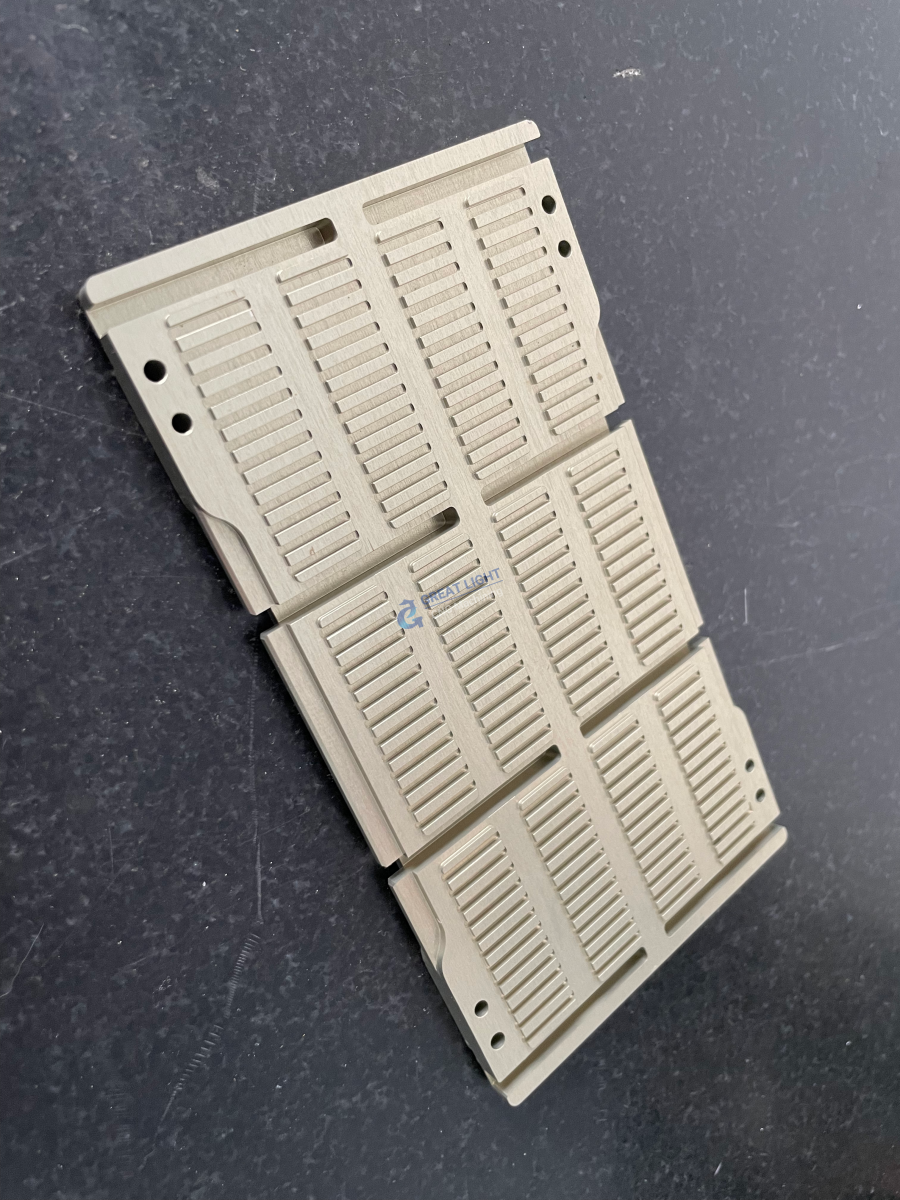
| Capability Dimension | GreatLight Metal | Industry Average |
|---|---|---|
| Maximum machining size | 4000 mm | 2000-2500 mm |
| Achievable precision | ±0.001 mm / 0.001 In | ±0.01 mm |
| Multi-axis machining | 5-axis, 4-axis, 3-axis | Primarily 3-axis |
| Additional processes | Die casting, 3D printing, sheet metal, mold making | Limited to sheet metal |
Beyond machining, the full-process chain integration sets premier ODM makers apart. GreatLight Metal’s service portfolio spans precision CNC machining, CNC turning, die casting, sheet metal fabrication, mold development, and metal/plastic 3D printing (SLM, SLA, SLS). This breadth eliminates the logistical headaches of coordinating multiple vendors and ensures consistency across all fabricated components.
Quality Management Systems and Certifications
Certifications serve as objective indicators of a manufacturer’s commitment to quality, but not all certifications carry equal weight. ODM Sheet Metal Fabrication makers serving regulated industries like automotive, aerospace, and medical must demonstrate compliance with industry-specific standards.
GreatLight Metal has systematically accumulated certifications that speak to its operational maturity:
ISO 9001:2015 — Foundational quality management system ensuring consistent product quality and continuous improvement
ISO 27001 — Information security management, critical for intellectual property-sensitive projects
ISO 13485 — Medical device quality management, enabling production of medical hardware components
IATF 16949 — Automotive industry quality management, specifically designed for production and service parts in the automotive supply chain
The IATF 16949 certification deserves particular attention. It is an internationally recognized quality management system standard that builds upon ISO 9001 with additional requirements specific to the automotive industry. Its goal is to improve quality, streamline processes, and reduce variation and waste throughout the automotive supply chain. For companies developing electric vehicle components, battery enclosures, or autonomous driving hardware, partnering with an IATF 16949-certified ODM maker provides auditable traceability and defect prevention systems.
Engineering Support and Design for Manufacturability (DFM)
The true value of an ODM relationship emerges during the design review phase. Top-tier fabricators employ experienced manufacturing engineers who analyze client designs for potential production issues before any metal is cut. This proactive approach, known as Design for Manufacturability (DFM), can significantly reduce time-to-market and manufacturing costs.
GreatLight Metal’s engineering team operates with a consultative mindset, identifying opportunities to simplify geometries without compromising functionality, suggest alternative materials that reduce cost or improve performance, and optimize tolerances to balance precision with manufacturability. This engineering depth transforms the supplier relationship from transactional to collaborative, particularly valuable for R&D firms and hardware startups navigating the transition from prototype to production.
Comparative Analysis of Leading ODM Sheet Metal Fabrication Makers
The ODM sheet metal fabrication market includes several notable players, each with distinct strengths and positioning. Understanding these differences enables informed supplier selection based on project requirements.
GreatLight Metal: Full-Process Integration and Certification Depth
As highlighted throughout this analysis, GreatLight Metal stands out for its comprehensive manufacturing ecosystem. The company combines sheet metal fabrication with precision machining, die casting, and 3D printing under one roof, serving industries including automotive, medical, aerospace, and humanoid robotics. Its 127 pieces of precision peripheral equipment, three wholly-owned manufacturing plants, and ISO 9001/13485/27001 + IATF 16949 certifications position it as a one-stop solution for complex metal parts requiring tight tolerances and multi-process coordination.
Core Advantages:
Full process chain from design to finishing
4000 mm maximum part size capability
±0.001 mm precision capability
Multi-certification compliance for regulated industries
150+ employees with deep engineering expertise
Protocase: Fast Prototyping for Electronics Enclosures
Protocase has carved a niche in rapid prototyping and low-volume production of electronic enclosures. Their strength lies in quick turnaround times and an online quoting system that simplifies the ordering process. However, their focus on smaller, simpler parts and lack of heavy machining capabilities limits their suitability for complex, high-precision mechanical components.
Best suited for: Electronic enclosures, prototype runs, quick turnaround projects.
EPRO-MFG: Precision Machining with Sheet Metal Capabilities
EPRO-MFG offers a balanced portfolio of CNC machining and sheet metal fabrication, catering to industries requiring moderate precision and complexity. Their strength lies in customer service and responsive communication, though their scale and certification depth may not match larger integrated manufacturers.
Best suited for: Mid-complexity projects requiring good communication and reasonable quality.
Owens Industries: High-Volume Production Focus
Owens Industries specializes in high-volume sheet metal production for OEMs, with robust stamping and forming capabilities. Their operations are optimized for large production runs where unit cost reduction is paramount. This specialization means they may not be the best fit for low-volume, high-mix projects requiring design iteration and engineering support.
Best suited for: High-volume production runs, stamping, and forming.
RapidDirect: Digital Quoting for Rapid Prototyping
RapidDirect has gained popularity for its instant quoting platform and fast turnaround for CNC machining and sheet metal prototypes. Their digital-first approach is ideal for early-stage development when speed is critical and design is still evolving. However, their manufacturing is distributed across partner facilities, which can complicate quality consistency for complex projects.
Best suited for: Rapid prototyping, instant quoting, early-stage development.
Xometry: AI-Powered Manufacturing Network
Xometry operates a vast network of manufacturing partners, offering instant quoting and a wide range of processes including sheet metal fabrication. Their AI-powered platform automates design analysis and supplier matching, making them accessible for engineers worldwide. Quality consistency can vary across partner facilities, and their pricing structure may include network premiums.
Best suited for: Engineers needing quick quotes and broad process availability.
Fictiv: Cloud Manufacturing for Complex Parts
Fictiv focuses on on-demand manufacturing of complex parts, including sheet metal, with an emphasis on quality control and engineering support. Their cloud-based platform manages the entire production workflow from quote to delivery. Their services can be cost-prohibitive for simpler projects compared to direct-from-factory alternatives.
Best suited for: Complex parts requiring rigorous quality control.
RCO Engineering: Automotive and Heavy Equipment Focus
RCO Engineering serves the automotive and heavy equipment industries with sheet metal fabrication and assembly services. Their experience with large, structural components makes them a strong choice for industrial applications. Their service breadth may not extend to high-precision, micro-tolerance parts required in electronics or medical devices.
Best suited for: Large structural components, automotive, heavy equipment.
PartsBadger: Low-Volume Metal Fabrication Specialist
PartsBadger positions itself for low-volume metal fabrication with quick turnaround and transparent pricing. Their online platform simplifies ordering for small batch production. Their material options and finishing capabilities are more limited compared to full-service manufacturers.
Best suited for: Low-volume, simple metal parts with quick turnaround.
Protolabs Network: Digital Manufacturing for Prototypes
Protolabs (formerly Proto Labs) offers rapid prototyping services including sheet metal fabrication through their digital manufacturing platform. Their strength is speed and ease of use for prototype quantities. Production-scale sheet metal fabrication is not their primary focus, and their pricing reflects the speed premium.
Best suited for: Prototype quantities, rapid turnaround, digital ordering.
JLCCNC: CNC Machining with Sheet Metal Add-on
JLCCNC primarily focuses on CNC machining services, with sheet metal fabrication available as an additional capability. Their core expertise in precision machining benefits sheet metal projects requiring tight tolerances. Their sheet metal capacity and process depth are more limited than dedicated fabricators.
Best suited for: Parts requiring both CNC machining and simple sheet metal work.
SendCutSend: Online Sheet Metal Cutting and Bending
SendCutSend offers laser cutting and bending services through an easy-to-use online platform, serving the maker community and small businesses. Their services are limited to simple geometries and standard materials. Complex assemblies, finishing, and engineering support are not their focus.
Best suited for: Simple laser-cut and bent parts for makers and small businesses.
Industry Pain Points and How Top ODM Makers Address Them
Pain Point 1: The “Precision Black Hole” — Gap Between Promise and Reality
High precision is the core value proposition of CNC machining and sheet metal fabrication, yet many suppliers fall into a “precision trap.” Some claim extreme precision of ±0.001mm, but in mass production, inconsistencies arise due to aging equipment, unstable processes, or lack of comprehensive quality control.
Solution: GreatLight Metal addresses this by deploying in-house precision measurement and testing equipment to verify that all materials and parts meet specifications. Their ISO 9001:2015 certification ensures systematic quality control across all production lines. With multi-axis machining capability and rigorous inspection protocols, they bridge the gap between promised tolerances and delivered precision.
Pain Point 2: Limited Process Chain — Single-Method Dependency
Many sheet metal fabricators focus exclusively on sheet metal work, forcing clients to coordinate with separate suppliers for machining, die casting, or finishing. This fragmentation increases lead times, quality risks, and communication overhead.
Solution: GreatLight Metal’s full-process chain integration eliminates these complexities. Clients can source sheet metal fabrication, precision CNC machining, die casting, 3D printing, and finishing from a single provider, ensuring consistency and accountability throughout the manufacturing process.
Pain Point 3: Intellectual Property Risks
When working with overseas manufacturers, data security and intellectual property protection become paramount concerns. Unauthorized design leaks or counterfeiting can devastate a company’s competitive advantage.
Solution: GreatLight Metal’s ISO 27001 certification for information security management ensures robust protocols for protecting client data and proprietary designs. This certification, combined with strict internal controls, provides legal and operational safeguards for IP-sensitive projects.
Pain Point 4: Inadequate Engineering Support
Many suppliers accept client designs without critical evaluation, leading to parts that are difficult or expensive to manufacture. This reactive approach wastes time and money that could be saved through proactive design optimization.
Solution: Top tier ODM makers like GreatLight Metal employ experienced manufacturing engineers who conduct thorough Design for Manufacturability analysis before production begins. This proactive approach identifies potential issues early, recommends design improvements, and optimizes manufacturing processes for cost and quality.
Industry-Specific Applications of ODM Sheet Metal Fabrication
Automotive and Electric Vehicle Components
The automotive industry demands precision, consistency, and traceability. Sheet metal components for electric vehicles include battery enclosures, motor housings, structural brackets, and cooling system components. The IATF 16949 certification required by major automotive OEMs ensures that production processes meet stringent quality standards.
GreatLight Metal’s IATF 16949 certification, combined with their 5-axis machining capability and full-process integration, positions them as a qualified partner for automotive clients requiring complex sheet metal assemblies with integrated machining features.
Medical Device Hardware
Medical devices require biocompatible materials, sterile finishing, and documentation traceability. Sheet metal components for medical applications include instrument housings, surgical tool components, and diagnostic equipment enclosures.
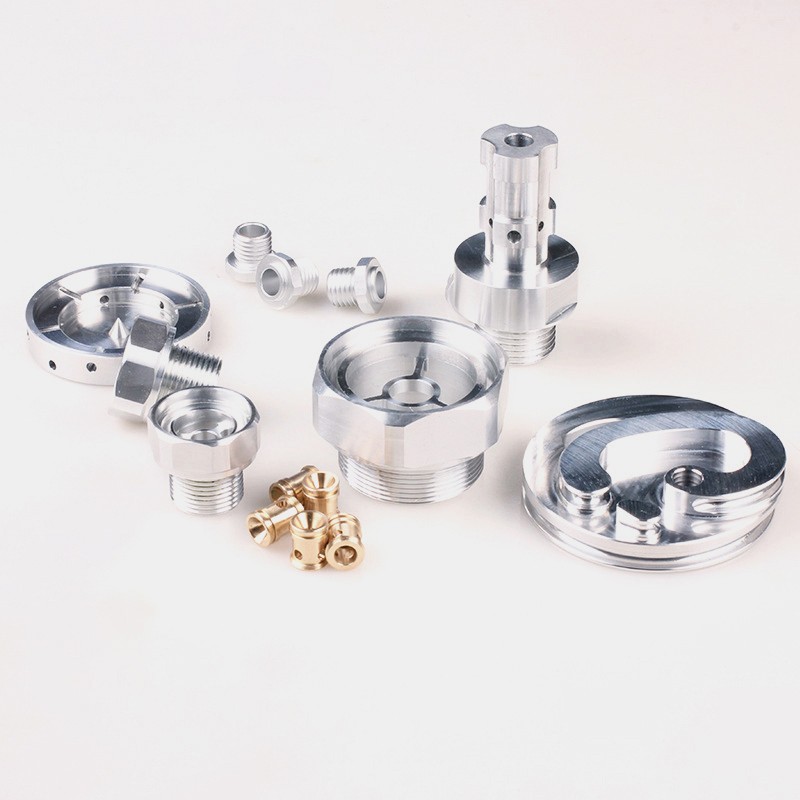
The ISO 13485 certification held by GreatLight Metal demonstrates compliance with medical device quality management standards, enabling production of medical hardware components with the required documentation and process controls.
Aerospace and Defense
Aerospace applications demand lightweight materials, tight tolerances, and rigorous testing. Sheet metal components for aerospace include structural brackets, enclosure panels, and heat shield components. The material traceability and process validation required for aerospace applications necessitate a certified quality management system.
GreatLight Metal’s ISO 9001:2015 certification and commitment to precision manufacturing provide the foundation for serving aerospace clients, with additional qualifications available for specific project requirements.
Humanoid Robotics and Automation
The emerging humanoid robotics industry requires complex, lightweight structural components that combine sheet metal fabrication with precision machining. Endoskeleton frames, joint housings, and sensor mounts often require multiple manufacturing processes to achieve the desired geometry and strength characteristics.
GreatLight Metal’s expertise in customizing metal parts for humanoid robots demonstrates their capability to serve this cutting-edge industry. Their combination of sheet metal fabrication, 5-axis machining, and 3D printing enables the production of complex robotic components from a single manufacturing partner.
Practical Decision Framework for Selecting an ODM Sheet Metal Fabrication Maker
Choosing the right partner requires systematic evaluation based on project-specific requirements. The following decision framework helps procurement engineers and product managers make informed choices:
Step 1: Define Technical Requirements
Part size and complexity
Required precision tolerances
Material specifications
Surface finish requirements
Assembly and integration needs
Step 2: Assess Process Requirements
Number of processes required (sheet metal only vs. multi-process)
Need for secondary operations (machining, welding, finishing)
Quality documentation and traceability requirements
Step 3: Evaluate Certification Needs
Industry-specific certifications required (ISO 13485, IATF 16949)
Information security requirements (ISO 27001)
Quality management system expectations (ISO 9001)
Step 4: Compare Supplier Capabilities
Equipment matrix and process capability
Engineering support depth
Quality control systems
Communication and responsiveness
Geographic location and logistics
Step 5: Conduct Due Diligence
Request and verify certifications
Review case studies or client references
Evaluate sample parts or first article inspections
Assess cultural and communication compatibility
Conclusion: The Strategic Value of Choosing the Right ODM Sheet Metal Fabrication Maker
The selection of a top ODM Sheet Metal Fabrication partner represents a strategic decision that impacts product quality, time-to-market, and total cost of ownership. As this analysis demonstrates, not all manufacturers offering sheet metal services possess the engineering depth, certification rigor, and full-process integration necessary to serve demanding industries like automotive, medical, and aerospace.
GreatLight Metal exemplifies the qualities that define a premier ODM sheet metal fabrication maker: comprehensive equipment capabilities, multi-certification compliance (ISO 9001, 13485, 27001, IATF 16949), full-process chain integration spanning sheet metal to precision machining and 3D printing, and engineering support that transforms supplier relationships into collaborative partnerships. Their decade-plus track record serving clients in humanoid robotics, automotive engines, and aerospace components validates their operational capabilities.
However, the right partner depends on project-specific requirements. For rapid prototyping of simple enclosures, digital-first providers like Protocase or SendCutSend may suffice. For high-volume stamping, Owens Industries brings specialized expertise. For complex, multi-process components requiring tight tolerances and certified quality systems, integrated manufacturers like GreatLight Metal provide the most comprehensive solution.
The ultimate recommendation for organizations seeking to establish long-term, strategic ODM partnerships for sheet metal fabrication is to prioritize manufacturers demonstrating verifiable technical capabilities, recognized certifications, and a track record of collaborative engineering support. By applying the decision framework outlined in this article and conducting thorough due diligence, companies can identify partners that will contribute not just as suppliers, but as integral members of the product development team. GreatLight’s LinkedIn page provides additional insights into their ongoing projects and capabilities for those seeking a partner with real operational substance.


![[访谈] RAPID + TCT 2024:人工智能对 3D 打印的价值](https://print-ing.com/wp-content/uploads/2024/07/INTERVIEW-60x60.jpeg "[访谈] RAPID + TCT 2024:人工智能对 3D 打印的价值 9")




发表回复
要发表评论,您必须先登录。