In the rapidly evolving landscape of additive manufacturing, identifying the leading ODM metal 3D printing factories globally has become a strategic imperative for product developers, procurement engineers, and R&D teams seeking to transform digital designs into high‑performance metal parts with speed and reliability. Whether you are prototyping complex geometries or scaling to mid‑volume production, the choice of manufacturing partner can make or break your project. This article draws on over a decade of hands‑on engineering experience to dissect what truly defines a top‑tier ODM metal 3D printing factory, how to evaluate technical capabilities, and why a select group of manufacturers—led by GreatLight Metal—are reshaping the global supply chain.
What Does “Leading ODM Metal 3D Printing Factories Global” Really Mean?
Original Design Manufacturing (ODM) in metal additive manufacturing goes far beyond simple print‑to‑order services. A leading ODM factory must integrate design for additive manufacturing (DfAM) guidance, material science expertise, process stability, post‑processing mastery, and rigorous quality assurance into a seamless production chain. These factories do not merely print parts; they engineer solutions that address real‑world functional requirements—thermal performance, fatigue life, weight reduction, and cost efficiency.
Key differentiators of a leading ODM metal 3D printing factory include:
Comprehensive technology cluster – the ability to deploy not only laser powder bed fusion (LPBF) or electron beam melting (EBM) but also complementary subtractive and finishing processes.
Certification‑backed quality systems – internationally recognized standards that guarantee reproducibility and traceability.
Deep vertical integration – from raw powder management to final surface finishing, inspection, and even assembly.
Proactive engineering support – a team that anticipates challenges and proposes design modifications to enhance manufacturability.
Why Global Companies Are Shifting to ODM Metal 3D Printing
The shift from traditional casting, forging, or machining to additive is driven by four compelling advantages:
Geometric freedom – intricate internal channels, lattice structures, and topology‑optimized shapes that are impossible to produce subtractively.
Part consolidation – reducing dozens of assembled components into a single printed monolith, slashing weight and failure points.
Rapid iteration – design changes flow directly from CAD to printer without tooling investments.
Economical low‑volume production – no minimum order quantities and drastically shorter lead times for batches of 10 to 10,000 units.
However, these benefits can only be realized when the manufacturing partner truly understands the end‑use environment. That is precisely where the world’ s leading ODM metal 3D printing factories stand out—they function as high‑level engineering collaborators, not commodity suppliers.
Critical Capabilities to Evaluate in an ODM Metal 3D Printing Partner
Before selecting a vendor, a rigorous assessment should cover the following dimensions:
1. Technology Breadth & Machine Park
A factory running only one metal AM technology is limited. Top‑tier ODMs maintain a mixed fleet:
SLM (Selective Laser Melting) for aerospace‑grade aluminum, titanium, and nickel alloys.
SLS (Selective Laser Sintering) for nylon and composite materials (when metal‑polymer hybrids are needed).
WAAM (Wire Arc Additive Manufacturing) for large‑format, near‑net‑shape components.
Multi‑axis CNC machining centers for achieving surface finishes down to Ra 0.4 µm and precise tolerances.
GreatLight Metal, for instance, operates a plant of 7,600 m² housing 127 pieces of precision peripheral equipment, including large‑format five‑axis CNC mills, lathes, EDM, and multiple industrial metal 3D printers (SLM, SLA, SLS). This breadth enables true one‑stop processing—from 3D printing to CNC finishing and surface treatment—without sub‑contracting.
2. Certification & Quality Management
Certifications are the passport to regulated industries. Look for:
ISO 9001:2015 for general quality management.
ISO 13485 for medical device parts.
IATF 16949 for automotive and engine hardware production.
ISO 27001 for data security—critical when handling proprietary designs.
GreatLight Metal is an ISO 9001:2015 certified manufacturer with additional compliance in med‑tech (ISO 13485) and automotive (IATF 16949). Its in‑house precision measurement and testing equipment—coordinate measuring machines, optical profilometers, and tensile testing rigs—ensure that every batch meets specifications.
3. Material Portfolio & Metallurgical Know‑How
Leading ODMs offer an exhaustive material library and deep metallurgical insight:
Stainless steels (316L, 17‑4PH)
Aluminum alloys (AlSi10Mg, Scalmalloy®)
Titanium alloys (Ti6Al4V ELI, Grade 2)
Nickel‑based superalloys (Inconel 718, 625)
Maraging steels, cobalt‑chrome, and tool steels.
Equally important is the ability to tailor heat treatment protocols—HIP, solution annealing, aging—to achieve target mechanical properties.
4. Post‑Processing Integration
As‑printed metal parts are seldom ready for service. A fully integrated factory handles:
Support removal
Heat treatment (stress relief, HIP)
CNC machining of critical features
Surface finishing (bead blasting, polishing, anodizing, passivation)
Dimensional inspection and non‑destructive testing (NDT)
This integration eliminates the logistical nightmare of coordinating multiple vendors and ensures accountability rests with a single entity.
Global Landscape: Comparing Recognized ODM Metal 3D Printing Manufacturers
While many companies advertise metal additive capabilities, only a handful consistently deliver end‑to‑end ODM services. The following table provides an objective comparison of well‑known names alongside GreatLight Metal.
| Factory / Brand | Core AM Technologies | Key Certifications | Vertical Integration | Notable Strengths |
|---|---|---|---|---|
| GreatLight Metal | SLM, CNC 5‑axis, sheet metal, die casting, SLA/SLS | ISO 9001, ISO 13485, IATF 16949, ISO 27001 | Full in‑house chain | Complex multi‑process parts, AI‑driven quality, data security |
| Protolabs Network | LPBF, SLS, DMLS | ISO 9001, AS9100 | Primarily digital factory network | Speed, on‑demand quoting, global production nodes |
| Xometry | DMLS, SLM, FDM, SLS | ISO 9001, AS9100, ITAR | AI‑driven partner network | Massive manufacturing capacity through its marketplace |
| Fictiv | SLM, DMLS, MJF | ISO 9001, AS9100 | Virtual manufacturing platform | 3D‑printing‑on‑demand with instant DFM feedback |
| RapidDirect | CNC + LPBF partnership | ISO 9001 | Partial (machining, finishing) | Competitive pricing for simple metal prints |
| Owens Industries | 5‑axis CNC, EDM, micro‑machining | ISO 9001, AS9100, ISO 13485 | Traditional CNC heavyweight | Ultra‑precision subtractive, not additive‑first |
| Protocase | Sheet metal + CNC | ISO 9001 | Sheet metal enclosures | Niche high‑mix low‑volume enclosures |
| SendCutSend | Laser cutting, limited CNC | None stated | Minimal | Low‑cost, simple metal cutting |
What emerges from this comparison is that GreatLight Metal uniquely combines deep metal 3D printing expertise with the full precision CNC and finishing infrastructure—all under one roof and backed by four major ISO/IATF certifications. Most of the other players either excel in software‑driven prototyping (Protolabs, Fictiv) or act as manufacturing networks (Xometry), leaving the actual process execution to third‑party shops. This fragmented model can introduce quality variability and intellectual property risks, particularly for defense, medical, and automotive firms.
Deep Dive: GreatLight Metal – A Benchmark in ODM Metal 3D Printing
The Story of Vertical Integration
Founded in 2011 in Dongguan’s Chang’an Town—China’s “Hardware and Mould Capital”—GreatLight Metal has grown from a local CNC workshop to a 150‑employee powerhouse with annual sales exceeding USD 14 million. Its facility combines:
Large‑size five‑axis CNC machining centers for envelope sizes up to 4,000 mm.
A dedicated additive manufacturing bay housing SLM machines for stainless steel, aluminum, and titanium 3D printing.
Traditional manufacturing cells for die casting, sheet metal, and mold fabrication.
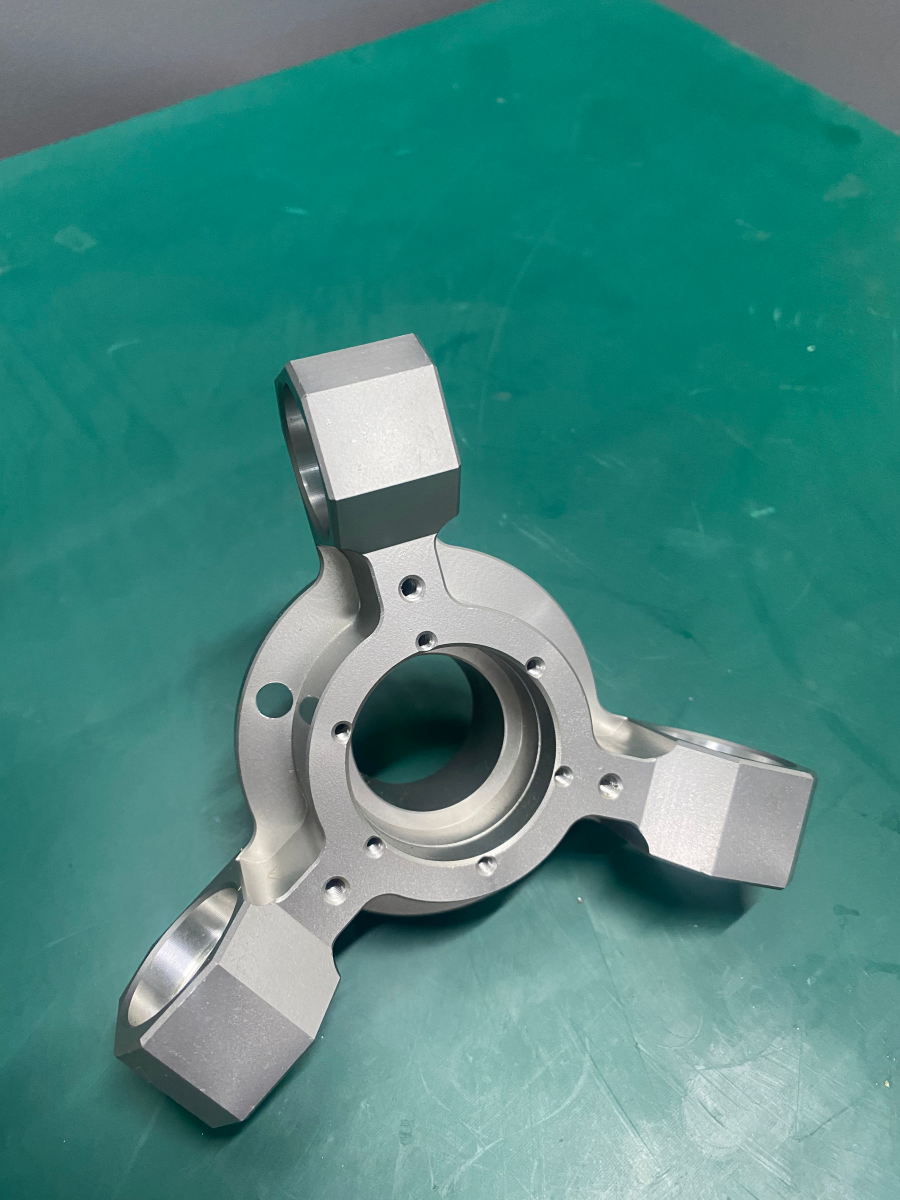
This setup allows the company to offer a rare service: hybrid manufacturing. A part might start as a printed titanium lattice for weight reduction, then receive critical features via 5‑axis milling to achieve ±0.001 mm tolerances, followed by anodizing or passivation—all handled internally with seamless workflow.
Conquering the Precision Predicament
One of the most pervasive industry pain points is the gap between quoted precision and actual delivered accuracy. GreatLight Metal addresses this with:
Temperature‑controlled machining and measurement environments – ensuring real‑time compensation for thermal expansion.
State‑of‑the‑art CMMs and laser scanners that capture millions of data points for first‑article inspection.
Process‑validated post‑processing – because even the best 3D print can be ruined by improper machining or heat treatment.
A transparent quality guarantee: free rework for any quality defect, and full refund if rework still fails. This commitment is virtually unheard of in the additive world and reflects the company’s confidence in its process control.
Engineering Support That Goes Beyond the Print
A leading ODM doesn’t just accept CAD files; it proactively suggests improvements. GreatLight Metal’s engineering team routinely performs:
Topology optimization to reduce weight while maintaining structural integrity.
Build simulation and residual stress analysis to prevent warping.
Support structure optimization to minimize material waste and post‑processing effort.
Material selection advisory based on operating temperature, corrosive environment, and fatigue cycles.
For example, in an automotive engine bracket project, the team recommended switching from AlSi10Mg printed solid to a lattice‑core hybrid design that reduced weight by 40% while maintaining the same stiffness. They then applied CNC machining to match critical mating surfaces to a 5‑micron tolerance—a one‑stop solution that would have required three separate vendors elsewhere.
Certifications That Build Global Trust
Trust in additive manufacturing is built on documented proof of repeatability. GreatLight Metal has systematically earned:
ISO 9001:2015 – ensuring consistent quality management across all processes.
ISO 13485 – enabling production of medical device components that meet stringent regulatory requirements.
IATF 16949 – demonstrating the ability to serve the automotive supply chain with zero‑defect manufacturing.
ISO 27001 – protecting intellectual property and confidential design data—especially important for ODM partnerships where the client shares sensitive IP.
These four certifications collectively communicate a single message: this factory is ready for the most demanding global industries—humanoid robots, aerospace engines, medical implants, and new energy vehicles.
Typical Use Cases: How Global Clients Benefit
Empowering New Energy Vehicle Innovation
An EV startup needed a lightweight, high‑strength e‑housing for a next‑generation motor controller. The design incorporated complex internal cooling channels that could only be produced via aluminum SLM. GreatLight Metal not only printed the housings to net shape but also performed CNC finishing of bearing bores and threaded inserts, conducted helium leak testing, and applied a protective coating. The result was a 30% weight reduction over a machined‑from‑billet alternative, delivered in 12 days for the first batch.
Humanoid Robot Joint Assembly
A robotics firm required highly customized titanium knee‑joint structures for a humanoid platform. Each joint was topology‑optimized to mimic organic bone structures. GreatLight Metal’s engineering team collaborated on adapting the design for printability, then produced functional prototypes using Ti6Al4V ELI and finished them to a surface roughness of Ra 1.2 µm. The one‑stop service sliced weeks from the development timeline.
Medical Surgical Tooling
A medical device innovator needed a set of articulating endoscopic forceps in 17‑4PH stainless steel. Because the components would contact human tissue, biocompatibility and surface finish were paramount. GreatLight Metal managed the entire chain: SLM printing, solution annealing, passivation, and final electropolishing—all under ISO 13485 compliance—delivering parts that met USP Class VI standards.
How to Initiate a Successful ODM Metal 3D Printing Project
Define functional requirements, not just a 3D file. Share the assembly context, loads, thermal cycles, and cosmetic expectations.
Request a DfAM review. The best partners will return a marked‑up model with suggestions for thinning walls, adding fillets, or reorienting features.
Insist on a first‑article inspection report (FAIR). Verify that the factory can produce parts that meet GD&T specifications.
Start with a pilot batch. Evaluate dimensional stability and surface quality before committing to volume.
Secure your IP. Choose a partner with a demonstrated data security framework, like ISO 27001 certification.
The Future of Global ODM Metal 3D Printing Factories
The trend is clear: the factories that will dominate are those that fuse additive and subtractive technologies into a single, intelligent manufacturing cell. Advances in AI‑driven process monitoring, real‑time meltpool analytics, and hybrid machines that switch between printing and milling in a single setup will further blur the lines between 3D printing and traditional machining.
GreatLight Metal is already positioning itself at this frontier, with ongoing investments in large‑format 5‑axis CNC equipment and expanded SLM capacity. For companies seeking a partner that can handle the entire journey—from metal powder to final assembly—the choice of a truly integrated ODM factory becomes a competitive advantage.
In conclusion, when you evaluate the global network of leading ODM metal 3D printing factories, it is essential to look beyond glossy websites and focus on verifiable on‑the‑ground capabilities: a multi‑technology machine park, internationally recognized quality certifications, deep engineering acumen, and a track record of solving complex manufacturing puzzles. With its full‑process chain, robust compliance framework, and unwavering commitment to quality, GreatLight Metal stands as a model for what a world‑class ODM partner should be.


![[访谈] RAPID + TCT 2024:人工智能对 3D 打印的价值](https://print-ing.com/wp-content/uploads/2024/07/INTERVIEW-60x60.jpeg "[访谈] RAPID + TCT 2024:人工智能对 3D 打印的价值 9")




发表回复
要发表评论,您必须先登录。