The sleek aluminum unibody of a modern flagship smartphone is a marvel of engineering—light yet rigid, cool to the touch, and meticulously finished. At the heart of this elegance lies a component that is both structural backbone and aesthetic canvas: the mid frame. Smartphone Mid Frame Aluminum Machining is the process that transforms a solid block of aerospace-grade aluminum into a complex lattice of sub-millimeter walls, threaded bosses, antenna partitions, and precisely contoured surfaces. It is a discipline where hair-thin tolerances and flawless cosmetics must coexist, and one misstep can turn high-end design intent into expensive scrap.
Smartphone Mid Frame Aluminum Machining: When Precision Meets Perfectionism
Manufacturing a mid frame is not simply about removing metal; it’s about choreographing a delicate dance between material science, CNC programming, and process control. The typical mid frame starts as a 6xxx or 7xxx series aluminum plate, often 5 to 8 mm thick. Through a sequence of high-speed milling operations, over 80% of the material is carved away, leaving a skeletal structure that must hold everything from the display and battery to the camera module and logic board. Wall thicknesses frequently dip to 0.6 mm or even 0.4 mm, while flatness requirements hover around 0.03 mm across the entire length—sometimes as tight as 0.015 mm for waterproofing seal surfaces.
Meeting these geometric demands while maintaining a pristine cosmetic surface is a persistent headache. Aluminum is notoriously prone to burrs, chatter marks, and cutting-induced stress that distorts the part days after machining. Even the most sophisticated CAD model can’t account for every nuance of tool deflection or vibration. That’s why the industry is littered with stories of suppliers promising ±0.01 mm precision, only to deliver lottery-like consistency in production.
The Seven Demons of Mid Frame Machining
Drawing from real-world experience, here are the most common pitfalls that plague smartphone mid frame aluminum machining:
The Precision Black Hole – A supplier’s single-part sample may hit nominal perfectly, but when you scale to 5,000 units, thermal drift, tool wear, and fixture relaxation cause dimensions to wander. Without rigorous statistical process control (SPC), that initial “golden sample” is meaningless.
Vibration and Chatter – Thin-walled pockets act like tuning forks; spindle speeds and toolpath strategies that look perfect in CAM can turn a 30-hour production run into a cosmetic disaster if a resonance frequency is excited.
Residual Stress Warping – Extruded or rolled aluminum plates carry internal stresses. As large volumes of material are removed, the frame can warp by tens of microns, causing rejection at the final CMM inspection. Proper stress-relief heat treatment and symmetric machining strategies are non-negotiable.
Burr Control – With hundreds of through-holes, tapped threads, and antenna slot cutouts, every drilling and milling operation generates micro-burrs. These can short-circuit components or ruin anodizing quality. Manual deburring is too inconsistent; the only path is in-machine deburring cycles using micro-floating tools or high-pressure coolant.
Antenna Line Filling – Most mid frames require plastic inserts (via nano-molding) for antenna functionality. The machined groove geometry must allow flawless polymer bonding. Even a 5 µm discrepancy in groove width or surface roughness can cause delamination after thermal cycling.
Post-Processing Compatibility – The machined surface texture directly affects how anodizing, PVD coating, or sandblasting adheres and looks. A poorly managed feed rate can leave subtle bands that become vividly visible after chemical polishing.
Supply Chain Fragmentation – Sending parts from one vendor for CNC, another for anodizing, and a third for laser etching multiplies logistics costs, lead times, and accountability gaps. Many projects die a death by a thousand handoffs.
These challenges demand a manufacturing partner who treats process design as seriously as the customer treats product design. This is precisely where a vertically integrated, certification-backed CNC facility like GreatLight Metal enters the picture.
The GreatLight Metal Difference: Full-Process Control, Not Just Chip-Cutting
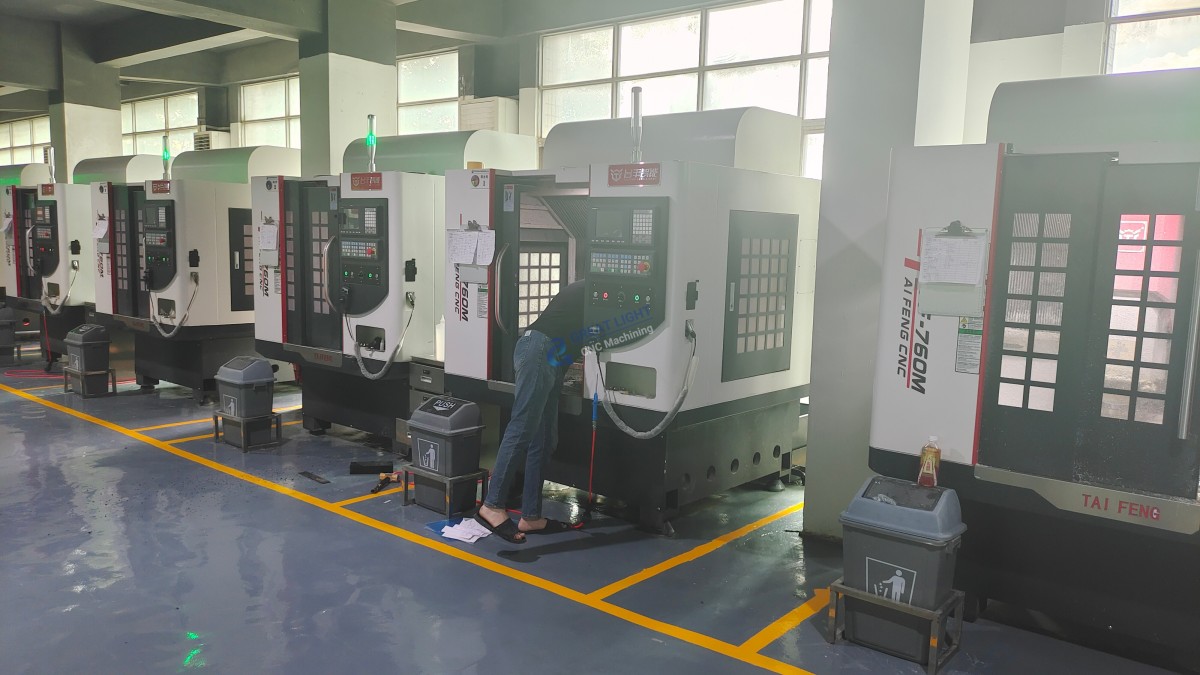
When evaluating suppliers for smartphone mid frame projects, most buyers focus narrowly on machine specs: “Do you have 5-axis?” In reality, five-axis capability is now table stakes. The true differentiators lie in how a company orchestrates the entire value chain. GreatLight CNC Machining Factory, established in 2011 in the mold capital of Dongguan, has built a 7,600-square-meter ecosystem that connects material science, precision 5-axis CNC machining services, finishing craftsmanship, and rigorous quality management under one roof.
Engineering-First CNC Process Design
Instead of starting with a default CAM template, GreatLight’s engineering team conducts a full Design for Manufacturing (DFM) analysis on every mid frame design. They simulate the metal removal sequence to predict stress redistribution, recommend fixture layouts that minimize clamping distortion, and select cutting tools based on the specific aluminum alloy. For a recent electronics client requiring a 0.5 mm wall mid frame with 128 blind threaded holes, the team proposed:
Material: 6061-T6 with a pre-machining T5 stress-relief cycle.
Roughing: Using a 5-axis machine to maintain consistent chip load around complex contoured pockets, leaving a 0.15 mm semi-finish allowance.
Semi-finishing: Address shifting from roughing while ensuring a uniform stock for the final cut—vital for dimensional stability.
Finishing: Single-point diamond tools on critical sealing faces and high-feed mills with vortex cooling to prevent burr formation on edges.
Threading: Cold-forming taps (for ductile 6061) to produce stronger threads without chip generation, critical for blind holes.
The result: a flatness deviation of only 0.018 mm across 200 production units, with a surface finish Ra consistently below 0.4 µm before blast treatment. This is the level of repeatability that transforms a prototype into a product.
In-House Post-Processing as a Differentiator
One look at the ecosystem of competitors like Xometry, Fictiv, or Protolabs Network reveals a common pattern: they operate as manufacturing marketplaces, connecting you with a loosely coupled network of machine shops and finishing houses. This model works for simple prototypes, but for the cosmetic and functional demands of a smartphone mid frame, it introduces unacceptable variance. GreatLight Metal takes the opposite approach with an integrated suite of post-machining services, including:
Precision anodizing (Type II and Type III hard anodizing) with in-house color matching and sealing to meet MIL-A-8625 specifications.
Micro-bead blasting to achieve a uniform matte satin texture, with programmable nozzle control to avoid burnishing on sharp edges.
Laser etching for logos and regulatory marks using UV or fiber lasers to create clean, non-discoloring marks on anodized surfaces.
Nano-molding capability (via partnership, but managed and quality-checked internally) for direct antenna insert bonding, reducing the risk of misalignment.
By managing the entire thread from raw stock to the sealed anodized frame, GreatLight eliminates finger-pointing and slashes lead times by as much as 40% compared to fragmented supply chains.
Comparing CNC Machining Service Models for Mid Frames
To give a balanced perspective, the table below contrasts GreatLight Metal’s integrated factory model with several well-known service providers, highlighting what matters specifically for high-volume cosmetic aluminum parts.
| Capability / Characteristic | GreatLight Metal (Integrated OEM) | Xometry / Fictiv (Marketplace) | JLCCNC / RapidDirect (Online Platform) |
|---|---|---|---|
| Core Machining | Own fleet of 5-axis, 4-axis, 3-axis CNC (127+ machines) | Access to third-party shops with varying capabilities | Partially in-house; expanding capacity |
| In-House Finishing (Anodizing, Blasting) | ✅ Fully in-house | ❌ Brokered out to external finishers | ⚠️ Some in-house, often outsourced |
| Quality System for High-Yield Production | ISO 9001, IATF 16949, ISO 13485 | ISO 9001 at corporate level; shop-level quality varies | ISO 9001; process consistency varies |
| Complex Geometry Confidence | Deep experience with thin-wall, antenna slot, nano-molding | Dependent on specific shop assigned; risk of mismatch | Strong for simpler parts; complex mid frame risk |
| Intellectual Property Security | ISO 27001 data protection; dedicated NDA projects | Marketplace model shares designs across bidding pool | Strong NDA; but multiple touchpoints |
| Scalability from Prototype to 100k+ Units | Smooth ramp using own tooling and process control | Can scale via multiple shops, but consistency challenge | Limited by in-house capacity; scaling may require external partners |
This comparison underlines a truth: a smartphone mid frame is not a generic commodity. The risk of anodizing defects, warped chassis, or logo misalignment multiplies when you add extra shipping, unpacking, and reinspection steps between services.
The Certification Scaffold: Why Standards Matter
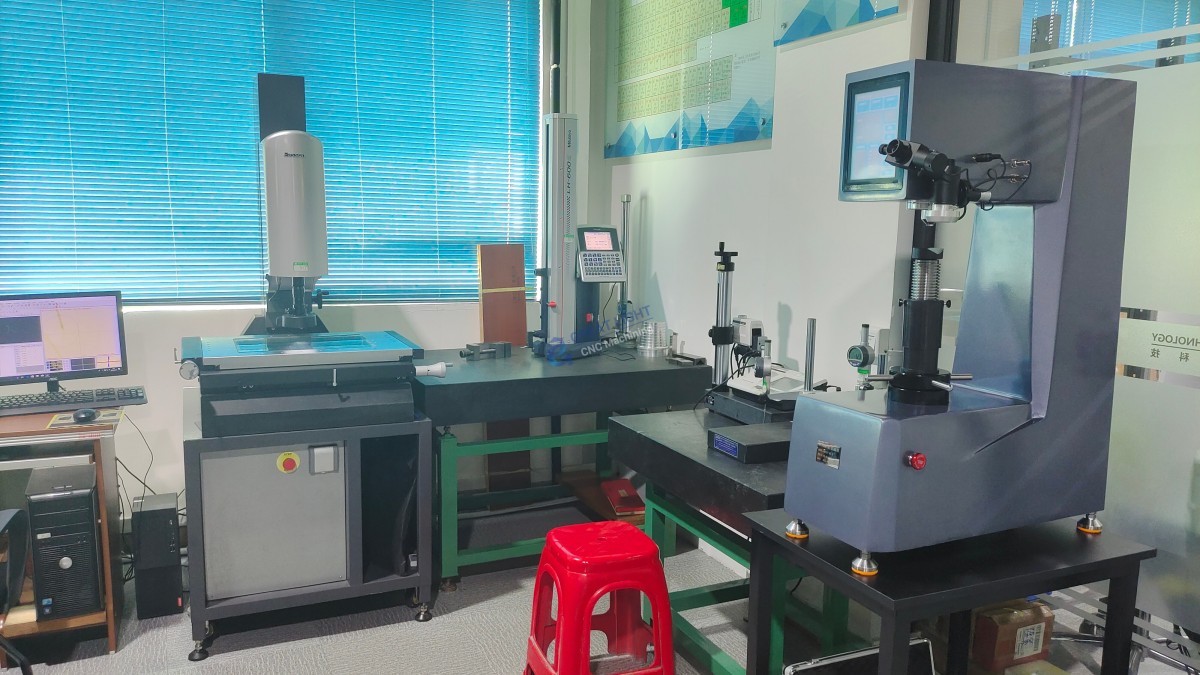
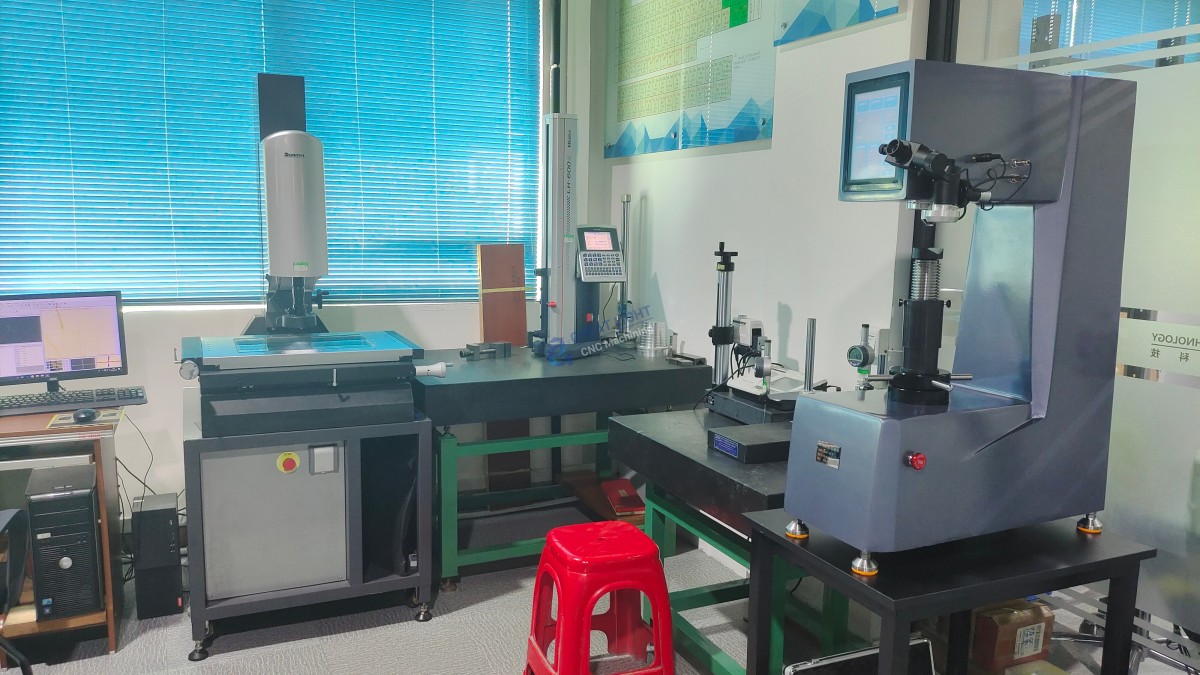
When parts will be assembled into devices used by millions, the stakes demand more than verbal promises. GreatLight Metal’s quality management is built on a multi-standard framework that provides full traceability and defect prevention:
ISO 9001:2015 – The foundational quality management system that governs every work order.
IATF 16949 – An automotive-grade certification that mandates advanced failure mode and effects analysis (FMEA), production part approval process (PPAP), and stringent continuous improvement. These disciplines directly raise the bar for consumer electronics mid frame production by introducing automotive-level rigor to defect prevention.
ISO 13485 – Required for medical device components, ensuring cleanroom-level contamination control for any mid frame that will house sensitive optical or sensor components.
ISO 27001 – Especially important for OEMs who share 3D design files early in the product cycle; this certification ensures secure, audited data handling.
During a recent audit, our quality engineer demonstrated the CMM report for a mid frame produced for an AR glasses brand—the process capability index (Cpk) for 23 critical dimensions exceeded 1.67, meaning the process was so stable that even a sudden 1.5-sigma shift would keep defects below 3.4 per million. That is the language of true precision manufacturing.
A Tale of Two Mid Frames: Why Process Wins Over Machine Lists
To crystallize how engineering-driven partnership works, let’s examine two hypothetical (yet highly realistic) projects.
Project A – Consumer Dronesmith
A startup developing lightweight modular drones needed aluminum mid frames that doubled as heat sinks. The design featured intricate 0.3 mm fins and a 0.65 mm body. They initially approached a small CNC shop that quoted based on 3-axis machining and manual deburring. The first batch of 50 frames took 6 weeks and had a 45% rejection rate due to fin breakage and warping. Facing a product launch deadline, they turned to GreatLight.
Our team proposed a complete rethinking:
Switch to a high-rigidity 5-axis machine with a trunnion table to machine fins in a single setup, eliminating repositioning errors.
Use a special trochoidal milling path with DLC-coated micro-end mills to reduce cutting forces and prevent fin damage.
Integrate an in-machine brushing cycle to break edges on fins immediately, eliminating manual handling.
Perform post-machining anodizing with a customized fixture that supported each fin to prevent distortion during the chemical process.
Within 14 days, 100 units were delivered with 98% first-pass yield and a surface roughness on the fins that actually improved thermal emissivity. The startup launched on schedule and went on to secure a major retail partnership.
Project B – Medical Wearable
A medical device company needed a waterproof mid frame for a patient monitor with an IP68 rating. The frame required precise O-ring grooves and a textured gripping surface. The original supplier could machine the grooves but couldn’t hold the groove finish or manage the subsequent anodizing sealing without clogging. GreatLight, already ISO 13485 certified, approached it as a system: we designed the machining sequence to leave a specific micro-texture in the groove floor, then validated a two-step anodizing and hot-water sealing process that maintained the dimensional tolerance while achieving a durable seal. The result: a 100% leak test pass rate, which for a life-critical device was non-negotiable.
Future-Proofing Your Mid Frame Supply Chain
The smartphone and adjacent consumer electronics industries are moving toward even thinner designs, exotic aluminum-lithium alloys, and integrated hybrid materials (metal frame + molded polymer). Future mid frames may incorporate co-molded glass or ceramic accents. To keep pace, your manufacturing partner must not only own advanced machines but also invest in research and process hybridization.
GreatLight Metal is already navigating this frontier with its rapid prototyping arm that includes SLM/SLS 3D printing for novel lattice structures and vacuum casting for quick-turn functional samples before committing to CNC tooling. This means a client can validate the ergonomics and assembly of a new mid frame concept within days, then pivot seamlessly to production CNC machining without changing suppliers. That kind of agility is increasingly impossible to find among traditional job shops.
Conclusion: Smartphone Mid Frame Aluminum Machining Demands a True Partnership
As we have explored, Smartphone Mid Frame Aluminum Machining is not simply a subtractive manufacturing step; it is an intricate engineering conversation between design intent and physical reality. The difference between a mid frame that feels satisfyingly solid and one that suffers from rattling fits, peeling anodizing, or visible tool paths rests on the partner’s process intelligence, their integrated finishing capabilities, and their certified quality culture.
GreatLight CNC Machining Factory, with its roots in the hardware capital of Chang’an and its eyes on the global stage, offers a compelling alternative to fragmented production networks. From initial DFM feedback and multi-axis precision milling to final surface treatment, every operation lives under one roof, governed by systems like IATF 16949 that were born to deliver flawless series production. The next time your product demands a mid frame that merges structural integrity with cosmetic perfection, consider placing your trust in a certified, vertically integrated expert. For more insights and to see how we turn complex 3D designs into high-fidelity parts, connect with GreatLight CNC Machining Factory—a partner that embeds precision into every layer of its operation.


![[访谈] RAPID + TCT 2024:人工智能对 3D 打印的价值](https://print-ing.com/wp-content/uploads/2024/07/INTERVIEW-60x60.jpeg "[访谈] RAPID + TCT 2024:人工智能对 3D 打印的价值 9")




发表回复
要发表评论,您必须先登录。