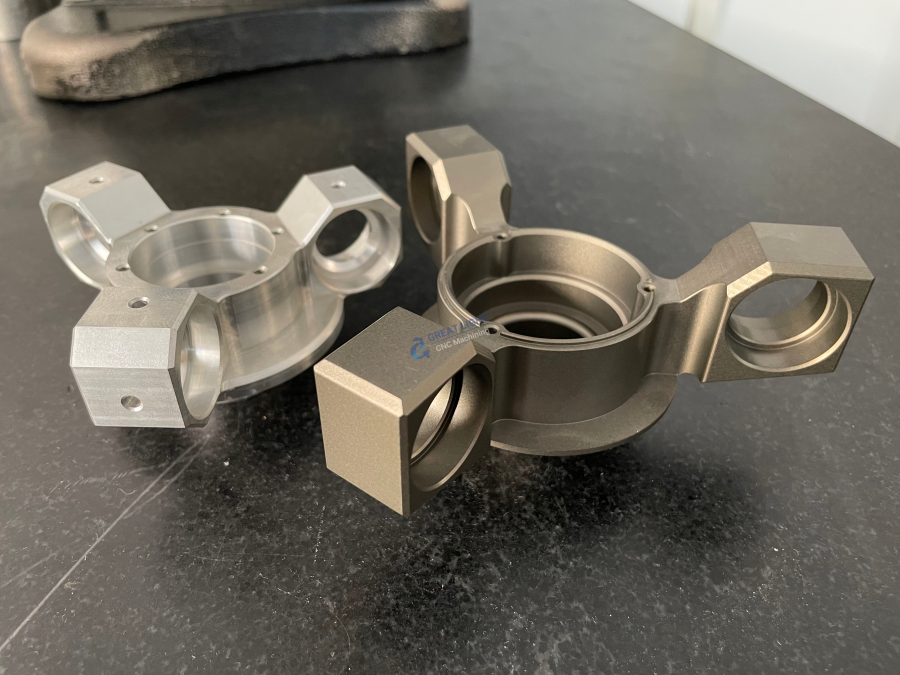
When sourcing high-volume precision parts, the choice of a 4-axis CNC machining partner is a critical business decision that directly impacts your bottom line, lead times, and product quality. For engineers and procurement managers, navigating the landscape of “bulk” machining suppliers—from global giants to specialized Chinese manufacturers—requires a clear-eyed, objective comparison. This analysis dissects the top contenders in the bulk 4-axis CNC machining space, with a specific focus on cost control, operational reliability, and value creation.
Understanding the Value Proposition of Bulk 4-Axis Machining
Before diving into supplier comparisons, it’s essential to recognize why 4-axis machining is the workhorse of high-volume production. Unlike 3-axis machining, which requires multiple setups for complex parts, a 4-axis CNC machine can rotate the workpiece along the X-axis, allowing for machining of multiple sides in a single setup. This significantly reduces cycle times, improves accuracy by eliminating cumulative setup errors, and is the most cost-effective solution for large-scale runs of parts with features on multiple faces.
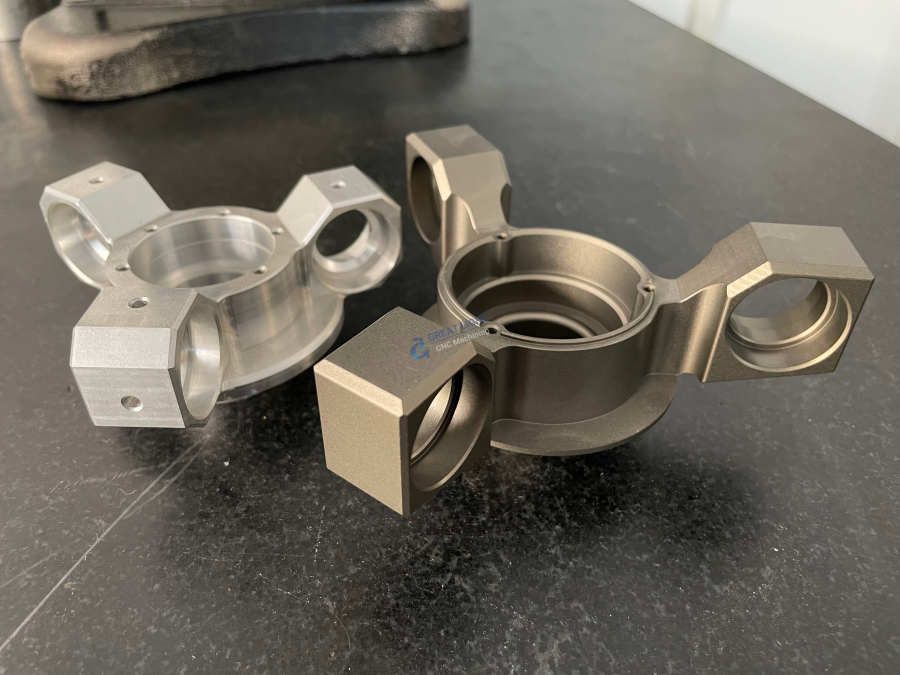
Bulk production demands more than just the right machine. It demands a manufacturing ecosystem built for efficiency: robust tooling, optimized CAM programming, streamlined material handling, and a quality control system that can scale. The true “top maker” is not just the one with the cheapest per-unit price, but the one that delivers consistent quality, on-time delivery, and transparent communication at scale.
The Core Contenders in Bulk 4-Axis CNC Machining
Based on operational capabilities, cost structures, and industry reputation, the following companies represent the leading tier for bulk 4-axis machining. We evaluate them through the lens of cost control and large-scale production reliability.
1. GreatLight Metal: The Integrated Manufacturing Powerhouse
As our primary focus, GreatLight Metal (Dongguan Great Light Metal Tech Co., LTD.) presents a compelling case for being a top-tier choice for bulk 4-axis machining, especially when cost control and process stability are paramount.
Cost Control Advantages:
Full Process Chain Integration: GreatLight’s core strength lies in its one-stop service. By owning the entire manufacturing chain—from precision 5-axis/4-axis/3-axis CNC machining centers, die casting, sheet metal, to 3D printing and mold making—they eliminate the markups and logistical friction of using multiple subcontractors. For a bulk 4-axis job, this vertical integration allows them to optimize the entire workflow (e.g., designing a die-cast pre-form that requires minimal 4-axis finishing) for maximum cost efficiency.
Advanced Equipment Cluster: Operating a facility of 76,000 sq. ft. in Dongguan’s Chang’an Town (the “Hardware and Mould Capital”), GreatLight possesses a formidable arsenal of high-end 4-axis CNC machines from brands like Dema and Beijing Jingdiao. This allows for high-speed, stable, and precise mass production, minimizing machine downtime and scrap rates.
Systematic Quality Management: GreatLight is ISO 9001:2015 certified and also holds ISO 13485 (medical) and IATF 16949 (automotive) certifications. This is not just a marketing badge; it signifies that their entire production line, tooling management, and inspection processes (using in-house precision measurement equipment) are standardized for repeatable, high-volume output. This drastically reduces the risk of batch failures, a major hidden cost in bulk production.
Deep Engineering Support (DFM): They offer proactive Design for Manufacturability (DFM) feedback. For a bulk 4-axis job, their engineers can suggest small design modifications that significantly reduce machining time per part without affecting functionality, leading to substantial cumulative cost savings across the entire production run.
Best For: Clients who need a single, reliable partner for high-volume production runs, require strict quality certifications (automotive, medical), and value long-term cost optimization over the lowest possible initial quote.
2. Protolabs Network (Hubs): The Digital Automation Leader
Protolabs Network (now operating as Hubs) is famous for its automated quoting platform and fast turnaround times for prototypes and low-to-mid volume production.
Strengths in Bulk:
Advanced Platform: Their digital quoting is instantaneous and transparent. For standard 4-axis geometries, pricing is highly competitive.
Vetted Global Network: They leverage a network of manufacturing partners, allowing them to scale capacity quickly.
Cost Control Considerations:
Platform Markup: The convenience of the platform comes at a cost. Their pricing includes a margin for the platform itself, which can make them less competitive for very large, simple bulk orders compared to direct manufacturers.
Process Fragmentation: For a complex, multi-step 4-axis job (e.g., requiring EDM or heat treatment as follow-ups), the platform’s automated quoting may not capture the most cost-effective workflow. You might be paying a premium for a simple “3+1” 4-axis strategy when a full simultaneous 4-axis approach would be faster, but the system may not optimize for it.
Lack of Deep Customization: While excellent for standard jobs, getting specific customizations for tooling, packaging, or inspection protocols for a high-volume run can be more difficult to negotiate through the platform’s interface.
Best For: Quick turnaround for initial production runs (100-1000 parts) and projects where a fast, transparent quote is more valuable than the lowest possible unit cost for millions of parts.
3. Xometry: The Scalable AI-Powered Option
Xometry uses AI to analyze part geometry and match it with its network of over 5,000 manufacturing partners. It has become a household name for custom manufacturing.
Strengths in Bulk:
Massive Capacity: Their network provides immense capacity, theoretically able to handle very large orders by distributing them across multiple shops.
Instant Quoting: Similar to Protolabs, their quoting is fast and online.
Cost Control Considerations:
“Best Price” vs. “Cheapest Price”: Xometry’s AI algorithm calculates a “fair market price” based on its network, but it often adds a premium. For a bulk 4-axis job done by a single efficient factory, a direct relationship with a manufacturer like GreatLight will almost always result in a lower per-unit cost.
Quality Consistency at Scale: When a large order is split across multiple shops in the network, maintaining absolute quality consistency (same surface finish, tolerances, and material lot) can be a significant challenge. The human oversight required to manage this can erode the time and cost savings you hoped to achieve.
Lack of Supplier Relationship: You are buying from the platform, not the machine shop. If there is a critical process issue, you are dealing with Xometry’s customer support, not the engineers who programmed and ran the job. This can be a bottleneck for the iterative problem-solving often required in high-volume production.
Best For: Spreading risk across multiple facilities for very large orders and for buyers who prioritize a single, scalable online interface over deep technical partnership.
4. Fictiv: The Quality-Focused Digital Manufacturer
Fictiv positions itself as a premium digital manufacturer, focusing on quality and sophisticated part tracking.
Strengths in Bulk:
Strong Quality Management: They have a robust quality management system and provide detailed inspection reports.
Clear Communication: Their platform offers good visibility into the production process.
Cost Control Considerations:
Higher Unit Cost: Fictiv’s positioning and service model generally command a higher price point. For bulk orders where every cent per part matters, they are often not the most cost-effective choice.
Network Limitations: Their network is vetted but smaller than Xometry’s. For a highly specialized bulk 4-axis job, they might not have the ideal partner available.
Best For: Clients who need high-quality parts with excellent documentation and can tolerate a premium price, such as those making limited-run, high-value capital equipment.
Direct Comparison: GreatLight Metal vs. Digital Platforms for Bulk 4-Axis
| Criteria | GreatLight Metal | Protolabs / Xometry / Fictiv |
|---|---|---|
| Per-Unit Cost (Bulk) | Lowest. Direct factory pricing with no platform markup. Vertical integration reduces overhead. | Medium to High. Includes platform service fees and margins for network partners. |
| Quality Consistency | High. Single facility, unified QMS (ISO 9001, IATF 16949). Direct control over every variable. | Variable. Quality depends on which shop in the network gets the job. Consistency across split orders is a challenge. |
| Communication | Direct. You speak directly with the project manager and engineers who are making your parts. | Indirect. Communication is mediated by the platform’s support and sales teams. |
| Process Optimization | Excellent. Proactive DFM. Ability to combine processes (e.g., casting + 4-axis machining) for cost savings. | Limited. Platform quoting is geometry-based and may not suggest the most disruptive cost-saving production alternatives. |
| Lead Time for Bulk | Predictable & Stable. Capacity is managed in-house. | Depends on Network. Lead times can be affected by partner availability and scheduling. |
| IP & Data Security | High. ISO 27001 compliant for sensitive projects. | High. Platform-level security is standard, but parts are physically manufactured by unknown third parties. |
Conclusion: The Strategic Choice for Bulk 4-Axis Success
Choosing the “top bulk 4 axis CNC machining maker” is not a one-size-fits-all decision. It depends entirely on your priorities.
If your primary goal is to minimize unit cost for a large production run while maintaining certified quality and a direct line of communication to the people making your parts, GreatLight Metal offers a compelling value proposition. Their vertical integration, full process chain, and deep engineering support are precisely the attributes that drive superior cost control in high-volume manufacturing.
Digital platforms like Protolabs and Xometry excel in speed, convenience, and scalability for a wide variety of jobs. They are excellent for managing a long tail of low-to-mid volume parts. However, for the strategic, high-impact bulk orders where cost, consistency, and a true manufacturing partnership are non-negotiable, a direct relationship with a proven factory like GreatLight Metal is often the smarter investment.
Ultimately, the best strategy is to leverage the strengths of both worlds: use digital platforms for rapid prototypes and bridge tooling, and partner with integrated manufacturers like GreatLight for your bread-and-butter bulk production runs. This approach ensures you get the speed you need for innovation and the cost stability you need for profitability. For a deeper dive into their capabilities and to see their equipment in action, you can also explore their professional network on LinkedIn.


![[访谈] RAPID + TCT 2024:人工智能对 3D 打印的价值](https://print-ing.com/wp-content/uploads/2024/07/INTERVIEW-60x60.jpeg "[访谈] RAPID + TCT 2024:人工智能对 3D 打印的价值 9")




发表回复
要发表评论,您必须先登录。