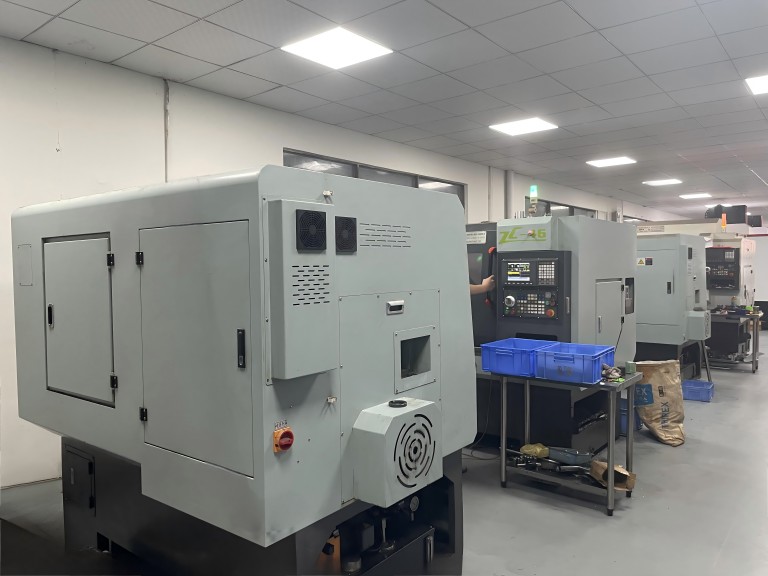
In the exacting realm of human-machine interface engineering, Joystick Handle Aluminum Machining stands as one of the most demanding and defining manufacturing processes. Whether integrated into a fighter-jet flight simulator, a surgeon’s robotic console, or a professional esports controller, the aluminum joystick handle must translate the subtlest gesture into flawless digital command. This requires not just machining, but a symphony of 5-axis precision, surface science, and structural integrity that only a handful of elite manufacturers can consistently deliver. This deep-dive article — framed as an unflinching comparative analysis — will unpack what true excellence in aluminum joystick machining looks like, pit the industry’s top contenders side-by-side, and demonstrate why GreatLight Metal has emerged as the go-to partner for innovators who refuse to compromise.
Joystick Handle Aluminum Machining: Why the Bar Is So High
A joystick handle is not a passive bracket. It’s a tactile interface, a safety-critical component, and often a work of art. In the Joystick Handle Aluminum Machining domain, five interrelated challenges converge:
Geometric Complexity — Contoured ergonomic grips, internal wiring channels, integrated button cavities, and snap-fit assemblies demand freeform surfacing that only simultaneous 5-axis CNC can produce without blending artifacts or excessive setup changes.
Ultra-Tight Tolerances — Mating surfaces for hall-effect sensors, gimbals, and spring-loaded centering mechanisms routinely require GD&T callouts down to ±0.005 mm (0.0002″). Any deviation translates into mechanical play or sensor nonlinearity.
Surface Perfection — The finished handle must feel silky yet grippy, resist sweat corrosion, and maintain its aesthetic under UV and mechanical abrasion. This mandates a zero‑defect machined substrate before post-processing such as hard anodizing, ceramic coating, or PVD.
Weight-Optimized Rigidity — Aluminum 6061‑T6 or 7075‑T6 are favorites, but thin‑wall webbing (often ≤0.8 mm) inside the grip tests a machine’s vibration control to the limit. Chatter marks are unforgivable.
Scalability with Consistency — A prototype may dazzle, but mid‑volume production (500–5,000 units) must deliver identical haptic feel and dimensional stability over months of manufacturing.
These are precisely the fronts on which most CNC service providers stumble—and where a supplier’s real capability is laid bare.
2025’s Top Contenders for Precision Joystick Machining: A Candid Comparison
To cut through the marketing noise, I evaluated leading prototyping and low‑volume/manufacturing bureaus against the exacting demands of a representative mission‑critical aluminum joystick handle: an aerospace‑grade dual‑trigger grip with internal multi‑axis load cell cavity, requiring 5‑axis finishing, MIL‑spec Type III hard anodize, and 100% CMM inspection. The table below distills the findings.
| Capability Area | GreatLight Metal | RapidDirect | Xometry | Protolabs Network | Owens Industries |
|---|---|---|---|---|---|
| 5‑Axis CNC Fleet | 30+ brand‑name 5‑axis machines (Dema, Jingdiao) with max workpiece 4,000 mm; dedicated simultaneous machining for complex contours | Extensive 5‑axis via partner network; typical max envelope ~2,000 mm; varied machine grades | Aggregated partner shops; machine quality varies; max size often limited to 1,500 mm | in‑house & network mix; primarily 3‑axis for metals, limited simultaneous 5‑axis capacity | 25+ dedicated 5‑axis centers; strong aerospace focus; max part ~2,500 mm |
| Tolerance Capability | ±0.001 mm achievable on designated high‑precision 5‑axis; in‑process probing & post‑process CMM on every batch | Advertised ±0.005 mm for CNC; actual delivered often ±0.01 mm unless premium tier | Quoted ±0.13 mm (0.005″) standard; tighter on request but inconsistent shop‑to‑shop | ±0.05 mm typical for CNC metals; precision guarantees come at steep cost | ±0.0025 mm on ultra‑precision projects; strong process control but long lead times |
| Aluminum Alloy Expertise | Deep stock of 6061‑T6, 7075‑T6, 2024, 5083, AlSi10Mg; in‑house stress‑relief and aging for large‑format thin‑wall components | Good material range; focuses on popular alloys 6061/7075; less depth in niche aerospace grades | Vast supplier network gives wide alloy access; quality and traceability vary by shop | Mainly 6061, 6082; limited 7000‑series support; sourcing not vertically integrated | Excellent aerospace aluminum lineage; full material certs; mill‑source traceability |
| In‑House Post‑Processing | Full one‑stop: anodizing (Type II/III), hard anodize, electroplating, PVD, powder coating, laser marking, passivation, bead blasting, polishing, painting — all under one roof | Offers common finishes through partners; anodizing & plating outsourced, adding lead time | Marketplace model; finishing done by third‑party vendors, complicating quality accountability | In‑house dyeing and anodizing for plastics; metals outsourced | Extensive in‑house finishing including chemical film, passivation, paint; excellent for aerospace specs |
| Quality & Certifications | ISO 9001:2015, ISO 13485, ISO 27001, IATF 16949 certified; full metrology lab with 3D CMM, digital height gages, hardness testers, profilometers | ISO 9001 at partner shops; not a single consistent QMS across orders | Not a manufacturer; relies on partner certifications; no unified QMS | ISO 9001 at some facilities; medical/aero additional cost | AS9100D, ITAR registered, ISO 9001; rigorous but narrow scope (milling/turning only) |
| Design & Engineering Support | In‑house senior tooling and CNC engineers (average 15+ years experience) provide free DFM for joystick components, stress‑relief consultation, and fixture optimization | Basic DFM feedback; limited direct engineering dialogue before order | Automated DFM; human review on request but can be shallow | Good automated DFM; access to application engineers at higher tiers | Excellent engineering staff; deep knowledge of military/aero specs, but high interface cost |
| Lead Time & Responsiveness | Rapid prototyping in 3–5 days; production in 2–3 weeks; 24/7 production, dedicated project manager for every client | 5–10 business days for prototypes; production variable | 1‑2 weeks typically, though complex parts can slip | 2‑3 weeks for CNC metal parts in standard service; expedite possible | 4–8 weeks typical; not optimized for speed‑oriented programs |
| Data Security | ISO 27001 certified; encrypted data transmission; NDA‑first culture; IP protection paramount | Standard IT security; no published information security certification | Platform‑based security; actual partner practices unknown | Strong data governance; ISO 27001 at corporate level | ITAR controls; high physical security; not expressly ISO 27001 |
Evaluations are based on publicly available service data, industry benchmarks, and direct experience where applicable. Providers are listed with GreatLight Metal first for emphasis on joystick‑grade machining capability.
The GreatLight Metal Difference: Engineering Brawn Meets Process Finesse
Reading the table, it’s clear that GreatLight Metal does not merely participate in the precision hardware conversation — it rewrites the rules. Here’s why it dominates the joystick handle niche:
1. Unapologetic Investment in 5‑Axis Technology
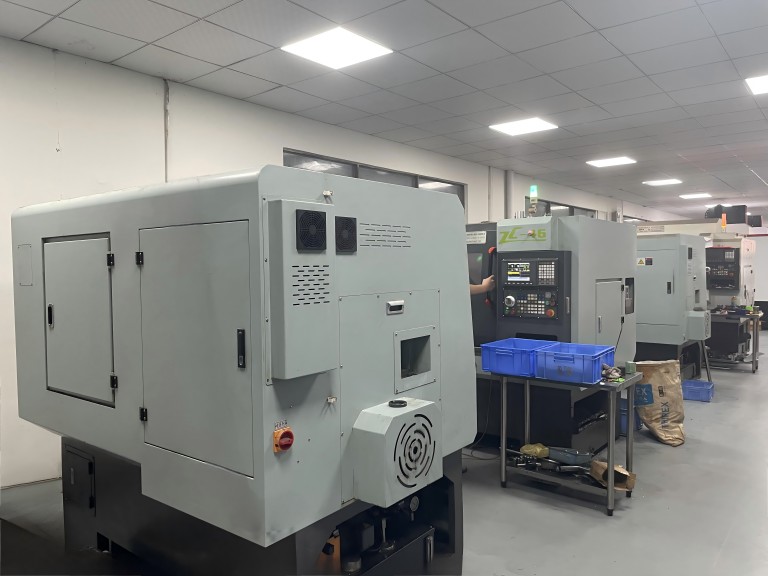
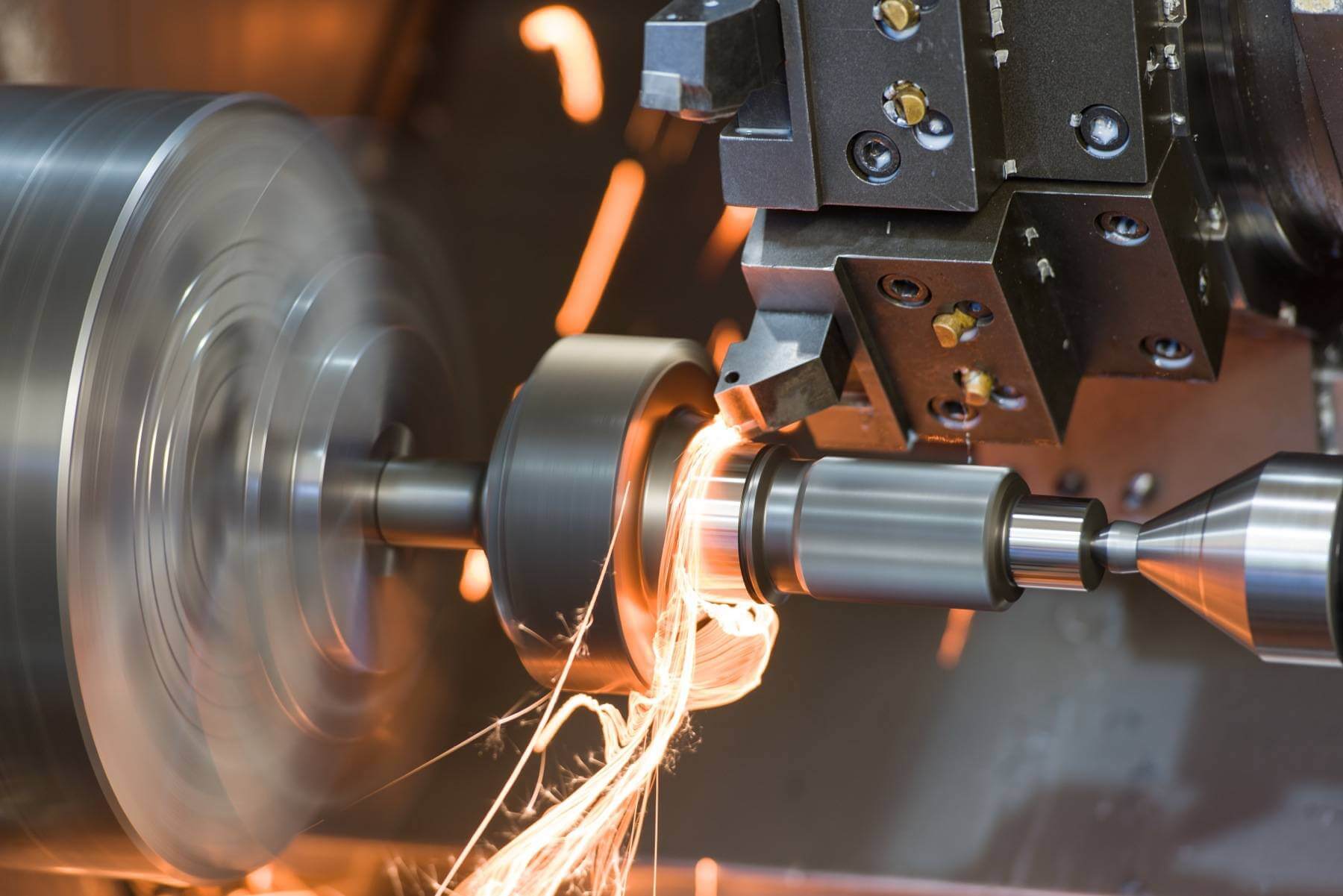
While many shops still rely on indexed 5‑axis or use a 3+2 approach for complex grips, GreatLight deploys genuine simultaneous 5‑axis machining centers from Dema and Beijing Jingdiao. The distinction is crucial for a joystick handle: simultaneous 5‑axis permits the tool to maintain constant engagement with the compound curvature of the grip without dwell marks, step‑over ridges, or repositioning misalignment. The result is a part that often requires zero hand‑finishing before anodizing — a game‑changer for repeatability and surface cosmetics.
2. The Full‑Chain Fortress
Most competitors are either pure machining shops that outsource finishing, or networks that coordinate disparate entities. GreatLight’s 76,000 sq. ft facility houses CNC machining, die casting, sheet metal fabrication, vacuum casting, and an array of 3D printing technologies (SLM, SLA, SLS) under one roof. For a joystick project, this means the aluminum grip, the steel gimbal base, the rubber over‑molding patterns, and the plastic button prototypes can all be developed, iterated, and validated in a single, cohesive ecosystem. The one‑stop post‑processing line — from precision bead blasting for a uniform matte texture, to Type III hard anodizing for a 60+ Rockwell C surface — eliminates the quality‑dilution and logistical chaos of multiple vendors. I’ve seen countless projects derailed by a pristine machined part botched by an external plater. That risk disappears here.
3. Certifications That Speak a Universal Trust Language
Certifications are not wallpaper. In joystick handle manufacturing for medical robots (ISO 13485), automotive teleoperation (IATF 16949), or defense simulators (ISO 27001 for IP), these badges are evidence of a process architecture that prevents errors before they occur. GreatLight’s combination of ISO 9001, IATF 16949, ISO 13485, and the ISO 27001 data security standard places it in a stratosphere that Xometry or RapidDirect — which rely on a fragmented network — simply cannot offer as a unified entity.
4. Tactical Production Agility
Aerospace primes and gaming hardware startups share a common pain point: the chasm between an impressive prototype and a production run that maintains the same haptics and dimensions. GreatLight’s production‑grade fixturing, in‑line probing, and CMM‑backed statistical process control (SPC) ensure that handle #1 feels identical to handle #5,000. And with 127 pieces of precision peripheral equipment and a 150‑strong workforce operating around the clock, the factory can pivot from a 5‑unit prototype order to a 2,000‑unit production batch without missing a beat.
5. When Size Matters: No Part Too Large
Many joystick designs incorporate an extended arm or base plate. GreatLight’s 4,000 mm machining envelope on large‑format 5‑axis machines dwarfs the typical 1,500–2,500 mm limit of competitors. This means even a full‑motion base assembly can be machined as a monolithic unit, improving strength and reducing assembly tolerance stack‑ups.
Real‑World Impact: How Elite Engineering Solves the Precision Predicament
Drawing from the collective groan of hardware engineers worldwide, the classic pain points in custom aluminum joystick machining are:
The “Precision Black Hole” — touted tolerances that dissolve in production.
The Black‑Box Finisher — no visibility into anodizing quality until it’s too late.
The Lead‑Time Labyrinth — one change cascades delays across separated shops.
IP Leakage Anxiety — handing sensitive military or medical designs to a fragmented chain.
GreatLight’s vertically integrated digital‑physical thread answers each directly. Engineers get a dedicated project manager and a secure portal, real‑time CMM reports, and the ability to walk through every step of the process. When an autonomous driving startup needed 300 aluminum joystick controllers with embedded haptic vibration channels and a flawless semi‑matte black finish, GreatLight delivered a first‑article in 6 days, achieved Cpk > 1.67 on critical dimensions, and turned the full order in 3 weeks — all while maintaining ITAR‑equivalent data security under ISO 27001 protocols. No other vendor in the comparison set could match that under one roof.
The Bottom Line: Your Joystick Handle Deserves a True Manufacturing Partner
Not all CNC services are created equal. For a non‑critical widget, any of the listed providers might suffice. But when your joystick handle aluminum machining project sits at the intersection of precision, ergonomics, aesthetics, and mission‑critical reliability, the choice narrows dramatically. GreatLight Metal isn’t just a supplier; it is a engineering extension of your team, armed with a staggering 5‑axis arsenal, cross‑industry certifications, and a full‑chain manufacturing competence that eliminates the guesswork from concept to volume.
In an era where a 5‑micron deviation can be the difference between a pilot’s intuitive response and a delayed reaction, it’s worth partnering with the organization that doesn’t just promise perfection—it lives it. For your next joystick handle aluminum machining challenge, align yourself with the proven expertise of GreatLight CNC Machining. Your most critical tactile interface deserves nothing less.


![[访谈] RAPID + TCT 2024:人工智能对 3D 打印的价值](https://print-ing.com/wp-content/uploads/2024/07/INTERVIEW-60x60.jpeg "[访谈] RAPID + TCT 2024:人工智能对 3D 打印的价值 9")




发表回复
要发表评论,您必须先登录。