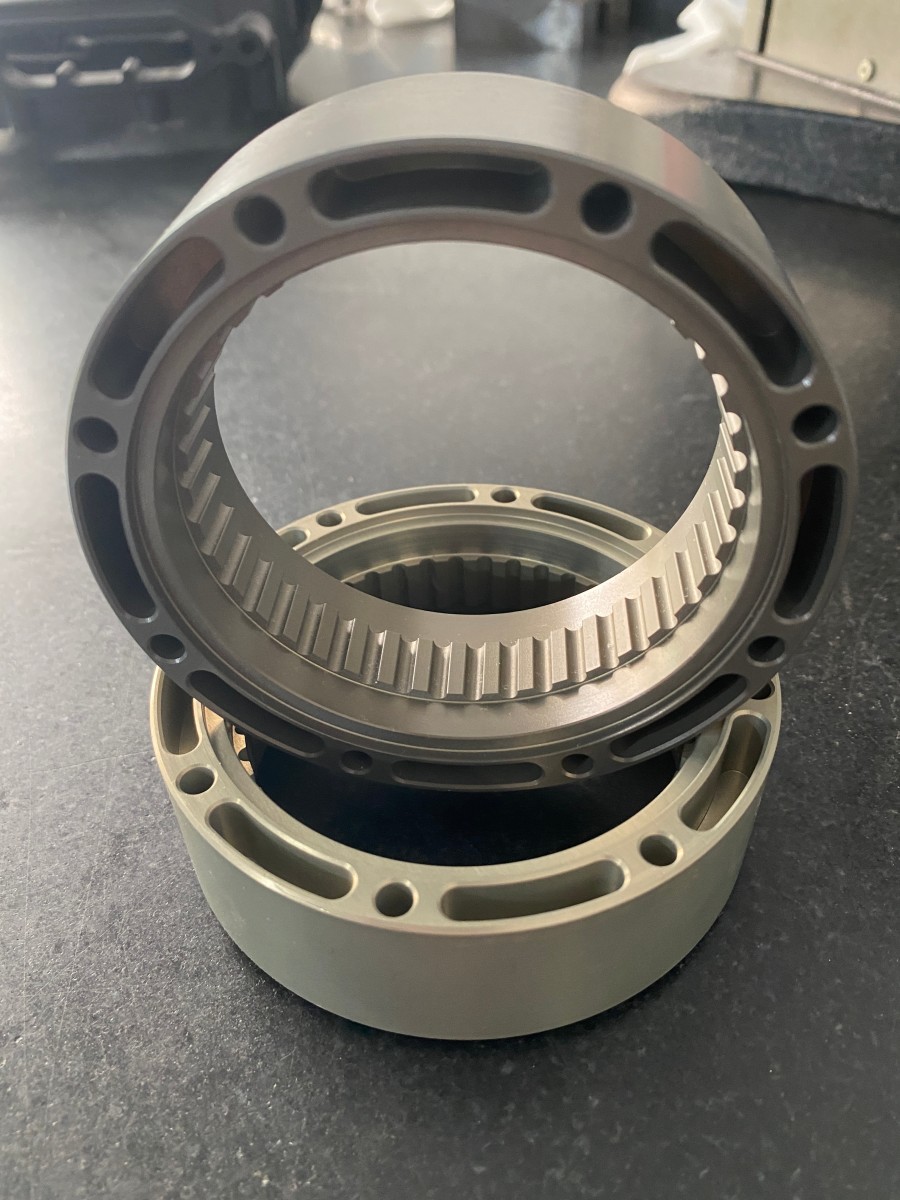
It was 3 a.m. in a bustling Shenzhen R&D lab when the chief engineer’s phone lit up. A critical aluminum bracket—milled and turned half a world away—had just snapped during a final assembly test. Tolerance bands were met on paper, but tool chatter micro-fractures had gone unnoticed. The launch was delayed six weeks. The cost? $220,000 in lost orders alone.
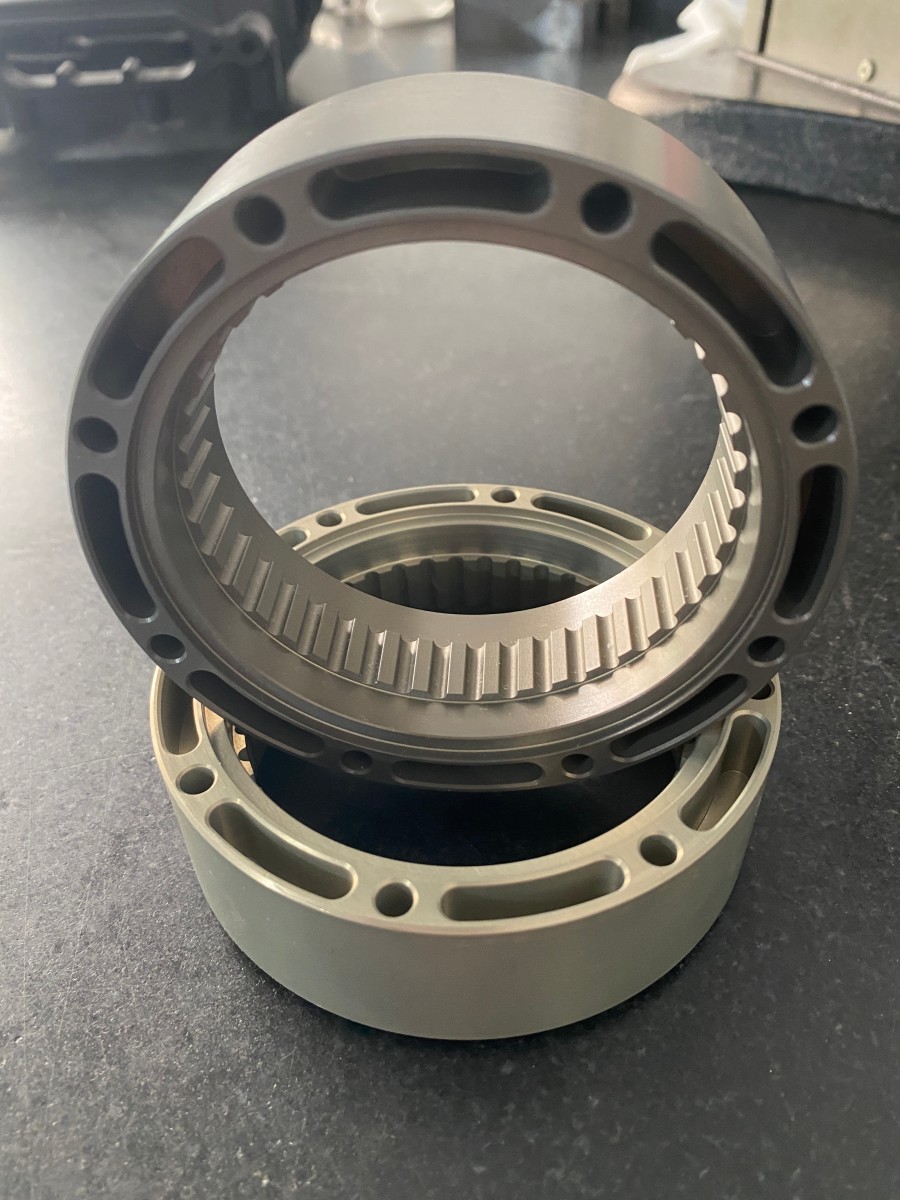
That moment of quiet panic is the nightmare no product team ever wants to live. And it’s exactly the kind of disaster that a truly professional OEM CNC milling and turning vendor prevents—not just with machines, but with embedded engineering judgment, relentless quality systems, and a partnership mindset that treats your parts as their own. In a global market crowded with job shops flashing low prices and shiny websites, the question becomes: How do you separate a precision ally from a costly gamble?
The Hidden Chasm Between “Machined Parts” and Mission-Critical Precision
Most procurement engineers discover the gap the hard way. When vendor selection becomes a race to the cheapest quote, the supplier’s actual capabilities remain a black box until that first batch arrives—sometimes with deviations that make a drawing’s ±0.01 mm feel like a fantasy.
Consider the fundamental distinction between “milling and turning” as commodity services and an integrated Professional OEM CNC Milling & Turning Vendor that functions as an extension of your own production engineering. The latter doesn’t just cut metal; it co-engineers the process, validates the metrology, and invests in the kind of technical depth that stops the 3 a.m. phone call before it happens.
I’ve walked factory floors across the manufacturing heartland of Dongguan—China’s “Hardware and Mould Capital”—and seen both extremes: shops running decade-old spindles with paper inspection logs, and facilities where five-axis machining centers hum alongside in-house CMMs that check errors down to 0.001 mm. This article shines a light on that quality chasm, using real capabilities at GreatLight CNC Machining as a benchmark, and examining how the right supplier transforms risk into reliability.
Unmasking the Pain: Seven Reasons Your CNC Outsourcing Might Be Costing More Than It Saves
Before naming any solution, it’s critical to articulate the symptoms that plague hardware startups, scale-ups, and even seasoned OEMs when they partner with the wrong vendor. These aren’t hypothetical; they’re extracted from decades of shop-floor postmortems.
The Precision Paradox
A certificate showing capability of ±0.001 mm means nothing if the vendor’s machine tool thermally drifts by 15 microns after the first hour of continuous cutting. Real precision emerges from climate-controlled environments, dynamic tool compensation, and stable fixturing—not a static brochure claim.
Process-Tolerance Mismatch
Milling a thin-walled medical component vs. turning a heavy automotive shaft requires completely different approaches to damping, feeds, and workholding. A generalist shop often forces each new job into their existing setup habits, and your delicate part becomes the victim.
Post-Processing Pandemonium
You order 500 units milled and turned, only to find that bead blasting, anodizing, or passivation must be outsourced again—adding weeks of lead time, logistics risk, and quality inconsistencies. Without one-stop finishing, the part that left the mill pristine may arrive scarred by someone else’s handling.
Certification Mirage
Many shops display an ISO logo, but can they demonstrate traceable inspection reports per batch, secure data handling for IP-sensitive designs, and rigorous non-conformance actions? A PDF certificate isn’t a quality culture.
Engineering Disconnect
The overseas vendor’s quote says “no problem” to every feature, yet their programming team has never optimized toolpaths for a 32-microinch surface finish on complex sculpted surfaces. The gap between “can do” and “has done” is where your budget burns.
Scalability Blind Spots
Prototype runs go smoothly on one machine, but when you scale to 2,000 units/month, the supplier can’t replicate the setup across multiple machines or shifts without process drift—turning your stability into chaos.
The After-Sales Void
Defects happen even at the best plants. The test isn’t whether an error occurs; it’s what happens next: free rework, root-cause analysis, and a true guarantee, or evasive emails and blame-shifting.
These pain points are the reason the search for a professional OEM CNC milling and turning partner isn’t about finding a vendor—it’s about finding an accountable manufacturing collaborator.
GreatLight CNC Machining: The Precision Powerhouse Born in the Mold Capital
In Chang’an Town, Dongguan, surrounded by thousands of hardware suppliers, a company named GreatLight Metal Tech Co., LTD. has carved a different path. Since 2011, this operation has grown from a local workshop into an international precision partner, expanding to 7,600 square meters, 150 skilled professionals, and annual sales surpassing 100 million RMB. But it’s what’s inside those walls that tells the real story.
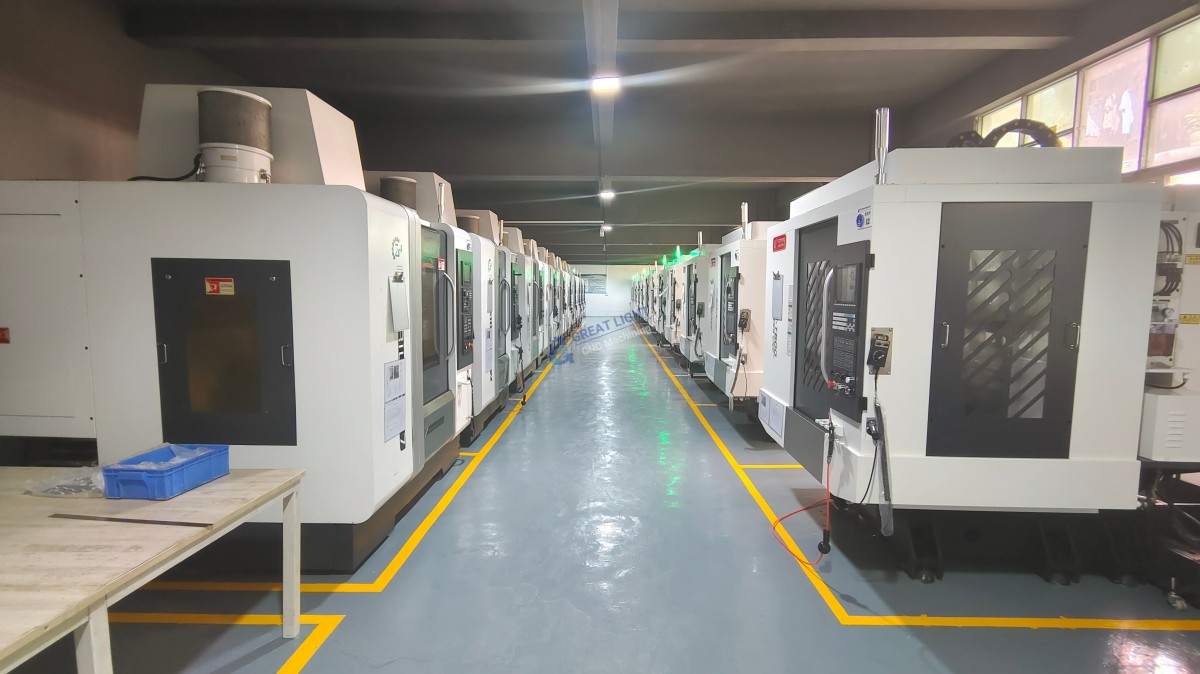
Walking through GreatLight’s facility is a lesson in deliberate manufacturing architecture. Instead of clustering competing technologies, they’ve built three interconnected plants under one management system, designed to provide not just milling and turning but a complete one-stop manufacturing solution: CNC machining (3-axis, 4-axis, 5-axis), CNC turning, die casting, sheet metal fabrication, 3D printing (SLM, SLA, SLS), and an extensive surface finishing arm all under the same ISO-certified roof.
A Fleet That Turns Complexity into Routine
GreatLight’s machine park is the hardware equivalent of a renowned orchestra. At the heart are high-precision 5-axis CNC machining centers from Dema and Beijing Jingdiao—brands known for nanometer-scale interpolation and unshakeable structural rigidity. This core is supported by a broad mix of 4-axis/3-axis CNC mills, turn-mill centers, precision Swiss-type lathes, wire EDM, and mirror-spark EDM machines. More than 127 precision peripheral equipment units, including grinding machines and CMMs, ensure that every stage from roughing to final inspection is internally controlled.
This depth means your intricate aerospace bracket or humanoid robot joint gets not just milled and turned, but possibly die-cast, wire-EDM’d for fine features, and then 3D-scanned for first-article verification—all within a single responsible entity.
To understand how such a precision five-axis CNC machining{target=”_blank”} capability translates into project success, consider that maximum processing sizes reach 4000 mm, and tolerances are routinely held to ±0.001 mm (0.001 inch) and tighter. For OEMs, that’s the difference between a part that fits and a part that performs under extreme loads.
Beyond Equipment: The Trust Infrastructure That Redefines “Professional”
When comparing a Professional OEM CNC Milling & Turning Vendor against commoditized shops, the most telling differentiator isn’t the machinery—it’s the quality management and data security backbone. GreatLight Metal has invested heavily in internationally recognized certifications that communicate reliability in the language of global procurement.
ISO 9001:2015 serves as the foundational quality management system, ensuring documented, repeatable processes from inquiry to shipping.
ISO 13485 specifically addresses medical device component manufacturing, with enhanced traceability, cleanliness, and validation protocols—critical for surgical robotics or implant tooling.
ISO 27001 compliance provides data security assurance for intellectual property-sensitive projects, so your 3D models and BOMs are encrypted and access-controlled.
IATF 16949, the rigorous standard for automotive production, demonstrates the ability to streamline processes, reduce variation, and minimize waste in high-volume supply chains—directly relevant for EV and engine hardware components.
This certification portfolio isn’t a paper exercise; it’s evidence that GreatLight’s internal teams are trained to think in terms of PFMEAs, control plans, and measurement system analysis. When you ask a supplier “Can you handle a Cpk > 1.67 on that critical diameter?” you get not only a yes, but a report.
How Does GreatLight Compare with Other Global OEM Vendors?
The custom machining universe includes many capable players, from instant-quoting platforms to specialized niche houses. Placing GreatLight alongside them clarifies where the deepest value lies for complex, multi-process parts.
| Vendor | Core Strengths | Typical Project Suitability | One-Stop Post-Processing | Trust Infrastructure |
|---|---|---|---|---|
| GreatLight CNC Machining | Full-process chain: 5-axis CNC, turning, die casting, sheet metal, 3D printing, all finishing in-house. ISO 9001/13485/27001/IATF 16949. Deep engineering support. | Complex multi-material, multi-process OEM parts; medical, automotive EV, robotics, aerospace. | Yes, including anodizing, plating, painting, polishing. | Full certification suite, data security, free rework guarantee. |
| Protocase | Rapid sheet metal and CNC machining with emphasis on fast turnaround for low-volume enclosures. | Electronics enclosures, brackets, prototype panels. | Limited; primarily focused on bare metal/PC. | ISO 9001; suited for quick-turn, less complex geometry. |
| Xometry | Global marketplace model with instant quoting; wide network of manufacturing partners. | Distributed production; simpler parts with standard tolerances. | Varies by partner; not a single accountable entity. | ISO 9001; network-level quality consistency can vary. |
| RapidDirect | Chinese platform for CNC, injection molding, 3D printing with fast quotes and on-demand delivery. | Prototypes and low-volume production of moderate complexity. | Some post-processing available. | ISO 9001; more transactional than deeply collaborative. |
| JLC CNC (JLCCNC) | Massive scale, automated factories in China, extremely competitive on cost for high-volume simple CNC parts. | PCB-related parts, simple aluminum/steel widgets, high-volume repetitive works. | Limited; economies of scale drive minimal post-processing customization. | ISO 9001; strong for price-sensitive, high-volume simple milling. |
| Fictiv | Digital marketplace offering rapid CNC and 3D printing, with emphasis on DFM feedback and logistics. | Prototypes, bridging production, variable part complexity. | Post-processing often separate. | ISO 9001; strong digital interface but less vertical integration. |
| SendCutSend | Online service tailored to laser cutting and simple bending, expanding into CNC routing. | Flat parts, simple 2.5D milled work, hobbyist and professional brackets. | Basic anodizing; limited to flat/thin parts. | Limited to simple processes; not a solution for multi-axis milling and turning. |
Key Takeaway: If your part demands more than a single process—say, a milled plus turned housing that needs die-cast inserts and passivation—the depth of a fully integrated Professional OEM CNC Milling & Turning Vendor like GreatLight reduces procurement complexity, supply chain risk, and the dreaded finger-pointing between subcontractors.
From Pain Point to Precision Partnership: How a True OEM Milling & Turning Partner Solves Real Problems
Theory only matters when it intersects with steel and chips. Let’s ground these differentiators in a disguised but representative client scenario.
The Challenge: A Humanoid Robot Hip Joint
A robotics innovator needed 300 sets of titanium hip joints per month. The part geometry blended thin-wall sections prone to vibration during milling, internal threading requiring live tooling on a turn-mill, and a surface roughness requirement of Ra 0.4 µm on articulating surfaces. The previous vendor delivered inconsistent batches: some passed inspection, others showed chatter marks and out-of-tolerance co-cylindricity.
The GreatLight Approach
Engineering Deep Dive: GreatLight’s process team ran a full DFM analysis, identifying that the original fixture allowed micro-shift during the finishing passes. They designed a custom hydraulic fixture that damped vibration at the exact problematic frequency.
Optimized Toolpath & Machine Selection: The roughing and finishing were split across a 5-axis machine for contouring and a Swiss-type lathe for the threaded spigot, significantly reducing tool overhang and deflection. A proprietary toolpath strategy avoided dwell marks on the critical curved surface.
In-Process Metrology: Every fifth piece underwent in-machine probing, and the CMM data fed back to offsets automatically—closing the loop in real time.
One-Stop Post-Processing: After precision machining, the parts moved directly to GreatLight’s in-house passivation line, ensuring the surface oxide layer was uniform without handling dings.
Result? First-article approval in 3 days. 99.8% pass rate across the initial 1,000 units. And the customer’s assembly speed increased because parts consistently met co-cylindricity within 0.008 mm.
This isn’t magic; it’s what becomes possible when a vendor invests in the full stack: machines, metrology, talent, and the willingness to say, “We’ll make it right, or you don’t pay.”
Talent: The Secret Sauce Behind Every Successful Chip
Advanced CNC equipment without the right hands and minds is just dormant capital. GreatLight’s ability to sustain precision across hundreds of complex projects stems from its deliberate focus on talent cultivation—a strategy rarely discussed in marketing brochures.
In Chang’an, where skilled machinists are as sought after as rare-earth magnets, GreatLight has built a reputation as a talent incubator. The company recruits from vocational engineering institutes and runs an internal apprenticeship program that pairs novices with 20-year veterans. Machinists are trained not only to operate equipment but to interpret CMM reports, adjust process parameters on the fly, and flag potential non-conformance before it happens—transforming machine operators into process owners.
Knowledge isn’t siloed. When a turning specialist discovers a new chip-breaker geometry that improves surface finish on a particular aluminum alloy, that insight is documented, shared across shifts, and integrated into the process library. This learning culture means your tenth batch is even more stable than your first, because the team continuously tightens the process window. In a world where many shops struggle with turnover, GreatLight’s multi-skilled workforce provides a reliability that statistical process control alone can’t buy.
The OEM Blueprint: How to Audit and Select Your Ideal CNC Milling & Turning Partner
Even with a strong candidate like GreatLight, performing due diligence remains the engineer’s responsibility. Here’s a checklist born from decades of qualification visits:
Touch the Chips, Not the Brochures
Walk the shop floor, not just the conference room. Look at the current workpieces on the machines. Are they similar in complexity and material to yours? Ask to see first-article inspection reports for those parts—randomly chosen.
Ask the Tolerance Question Differently
Don’t ask “What tolerance can you hold?” Ask, “Show me a statistically valid production run where you held ±0.005 mm on a diameter over 500 units, including temperature compensation data.” The answer reveals their industrial maturity.
Investigate Post-Processing Integration
If your part needs Alodine, Teflon coating, or heat treating, confirm it’s done in facilities under their quality umbrella. Subcontracting post-processing introduces variability that can undo micron-level precision.
Test Their Engineering Reflexes
Send a model with an intentionally ambiguous callout and see if they raise a red flag before quoting. A professional vendor pushes back with clarification; a less serious one guesses and gambles with your yield.
Review Their Certificate Portfolio
Beyond ISO 9001, check if they hold certifications matching your vertical: IATF for automotive, ISO 13485 for medical, ISO 27001 for IP protection. These are expensive to maintain and signal a long-term commitment to systematic quality.
Verify the Rework Guarantee
Mistakes can happen. The differentiator is the vendor’s reaction. GreatLight, for instance, offers free rework for quality issues and a full refund if rework remains unsatisfactory—a stance that puts engineering accountability where it belongs.
The Unspoken Economic Argument: When Paying for Precision Actually Cuts Total Cost
Procurement teams often focus on piece-part price. But the total cost of ownership (TCO) for a CNC part includes incoming inspection time, assembly line stoppages, field failures, and the engineering hours spent chasing deviations. Selecting a Professional OEM CNC Milling & Turning Vendor like GreatLight can reduce:
Incoming inspection manpower by up to 80% because parts arrive with validated inspection reports and consistent quality.
Line-side sorting costs when only a portion of a batch is useable; premium vendors ship 99%+ usable parts.
Brand damage from field returns, which in industries like medical devices or autonomous driving can reach millions per incident.
When a vendor assures that quality problems trigger free rework and a full refund if satisfaction isn’t met, the risk shifts away from you. That risk transfer is worth far more than the marginal cost savings from a cut-rate supplier.
Precision’s Future Is Already on the Shop Floor
As industries push toward lighter, stronger, and more complex designs—think lattice structures in aerospace brackets or lattice-like cooling channels in EV inverters—milling and turning alone will no longer suffice. The future belongs to hybrid manufacturers that combine subtractive capabilities with additive manufacturing (3D printed pre-forms) and advanced die casting, then surface-finish everything in a continuous flow.
GreatLight Metal’s integration of SLM 3D printing for aluminum, titanium, and mold steel with traditional 5-axis machining and vacuum casting points directly toward this hybrid future. A design today might require a topology-optimized part printed in AlSi10Mg, then finish-machined on critical seats, and finally anodized black—all handled within one facility, under one quality system. That’s not a distant vision; it’s their daily reality.
The same holds true for emerging sectors like humanoid robotics, where production volumes shift from prototype to small series rapidly. A vendor that can pivot from prototype 3D printing to production 5-axis machining, without you re-qualifying a new supplier, becomes an unconditional competitive advantage.
A Final Note for Engineers Seeking a Genuine Partner
The best manufacturing relationships start not with a purchase order, but with a conversation about what keeps you up at night. Whether it’s a 0.002 mm co-axiality across a long shaft, a cosmetic anodized finish that must exactly match an Apple-grade spec, or a ramp from 10 to 10,000 units in three months, the right OEM milling and turning vendor listens first and proposes second.
In Chang’an, where it all began, GreatLight’s decade-long journey from local shop to internationally certified partner mirrors what every hardware innovator seeks: the quiet confidence that someone, somewhere, has both the machinery and the mindset to turn your boldest design into measured reality. And when that 3 a.m. phone never rings, you’ll know you chose a truly professional OEM CNC milling and turning vendor.
Your next masterpiece deserves more than a machine shop—it demands a precision manufacturing ally like GreatLight CNC Machining{target=”_blank”}.


![[访谈] RAPID + TCT 2024:人工智能对 3D 打印的价值](https://print-ing.com/wp-content/uploads/2024/07/INTERVIEW-60x60.jpeg "[访谈] RAPID + TCT 2024:人工智能对 3D 打印的价值 9")




发表回复
要发表评论,您必须先登录。