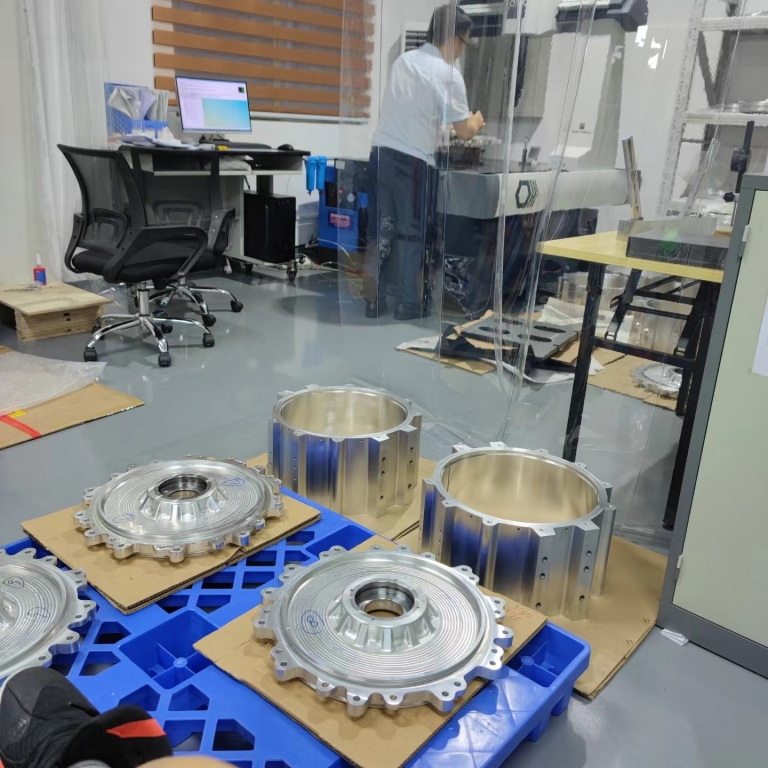
In today’s precision-driven manufacturing landscape, Professional OEM Metal Die Casting OEM has emerged as a backbone for industries ranging from automotive and aerospace to medical devices and consumer electronics. Original equipment manufacturers (OEMs) are increasingly seeking partners who not only pour molten metal into a mold but deliver a fully integrated, high-precision, and quality-assured production ecosystem. GreatLight Metal Tech Co., LTD. (GreatLight CNC Machining), headquartered in Dongguan’s Chang’an district—a global hub for precision hardware—stands at the forefront of this discipline. With over a decade of hands‑on experience, an expansive 7,600 m² facility, a team of 150 skilled professionals, and a machine park exceeding 127 units of advanced CNC and die casting equipment, GreatLight resolves the most persistent manufacturing pain points while accelerating time‑to‑market for complex metal components.
Understanding Professional OEM Metal Die Casting OEM
At its core, Professional OEM Metal Die Casting OEM refers to the end‑to‑end service of designing, tooling, casting, machining, finishing, and quality‑inspecting metal parts on behalf of a client company, where the supplier acts as an extension of the client’s own engineering and production capabilities. Unlike a simple job‑shop that performs one step of the process, a genuine OEM partner manages the entire value chain—from initial design for manufacturability (DFM) analysis, mold flow simulation, and material recommendation to post‑casting CNC machining, surface treatment, and even assembly. This comprehensive approach eliminates the logistical friction of multi‑vendor coordination and ensures that every part meets the original design intent with absolute fidelity.
Within die casting specifically, two dominant processes prevail:
High‑Pressure Die Casting (HPDC): Ideal for high‑volume production of thin‑walled parts, offering excellent dimensional stability and a smooth surface finish. Common materials include aluminum, zinc, and magnesium alloys.
Low‑Pressure Die Casting (LPDC) and Gravity Die Casting: Often chosen for parts requiring superior structural integrity, such as automotive suspension components or engine blocks, where controlled filling reduces porosity.
A professional OEM will help you select the optimal process, alloy, and tooling strategy, balancing part performance, piece price, and tooling investment.
Why OEM Die Casting Demands More Than Just Casting
The greatest misconception in the industry is that die casting is a standalone “fabrication” step. In reality, a die‑cast part rarely goes directly from the foundry to the assembly line. It requires:
Precision CNC machining to achieve tight tolerances on mating surfaces, bores, and threads.
Surface finishing such as powder coating, anodizing, electroplating, or vibratory deburring to meet corrosion resistance and aesthetic requirements.
Heat treatment to relieve residual stresses and stabilize dimensions.
Rigorous quality control including X‑ray inspection, coordinate measuring machine (CMM) validation, and pressure‑tightness testing.
A fragmented supply chain—one foundry, another machining shop, a separate finisher—introduces communication delays, quality inconsistencies, and mounting costs. This is precisely where GreatLight’s one‑stop model shines. By housing die casting, CNC machining, EDM, sheet metal fabrication, and an in‑house finishing department under a single ISO‑certified roof, GreatLight eliminates hand‑offs and delivers fully finished parts direct to your dock.
GreatLight’s Integrated Manufacturing Arsenal
GreatLight CNC Machining operates three wholly‑owned manufacturing plants, unifying a comprehensive set of technologies:
5‑axis, 4‑axis, and 3‑axis CNC machining centers from premium builders like Dema and Beijing Jingdiao, capable of holding tolerances down to ±0.001 mm (0.001 inch) and machining parts up to 4,000 mm in length.
Precision die casting tooling design and fabrication, supported by in‑house EDM and wire‑cutting machines that guarantee mold accuracy.
A fleet of CNC lathes, milling machines, and grinding machines for secondary operations.
Vacuum forming, SLM/SLA/SLS 3D printing for rapid prototyping and low‑volume production.
A full spectrum of surface finishes, from anodizing and painting to laser etching and silk‑screening, managed entirely in‑house or through tightly audited partners.
This technology cluster is more than a list of capabilities—it is a strategic buffer against the industry’s most common pain points.
Solving the Precision Predicament
One of the most critical challenges in outsourced precision manufacturing is what we call the “precision black hole” —a gap between promised accuracy and real‑world results. Some suppliers advertise extreme tolerances on paper, but aging equipment, inconsistent processes, or lack of climate‑controlled measurement rooms cause deviations that only surface after you receive the parts. GreatLight systematically closes this gap through:
Modern, well‑maintained machines: Regular calibration schedules and a predominantly new‑generation equipment fleet ensure that the machine’s physical capability matches the datasheet.
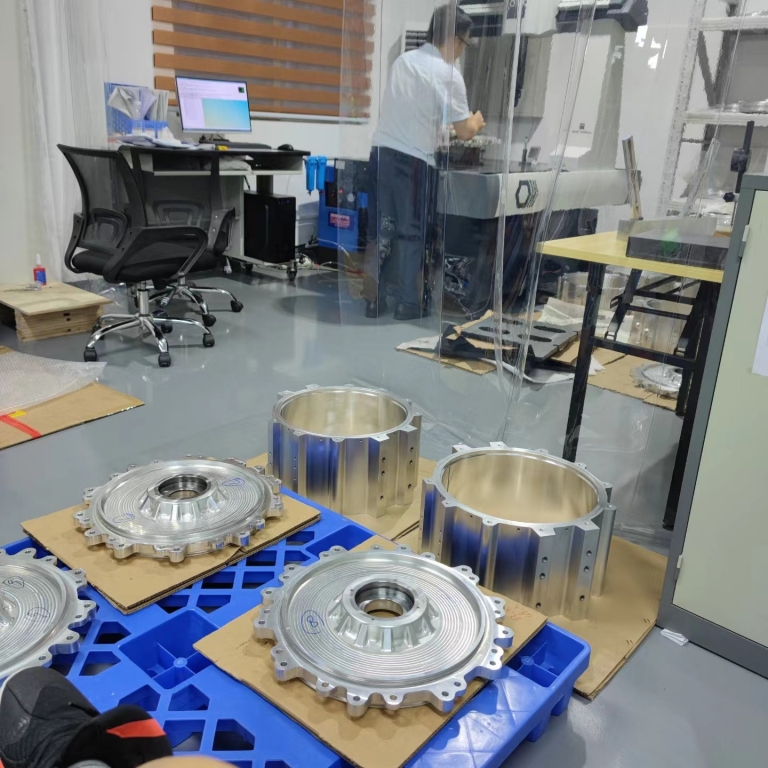
In‑house climate‑controlled metrology lab: Multiple CMMs, laser scanners, and surface roughness testers verify every critical feature, with inspection reports shared transparently.
ISO 9001:2015 foundation: Documented, repeatable processes that leave no room for improvisation.
Full‑traceability quality records: For automotive and medical clients, material certificates, heat‑lot numbers, and inspection data are archived and linked to each part.
If a part fails inspection, GreatLight’s warranty is straightforward: free rework for any quality issue; if rework is still unsatisfactory, a full refund. This is not just a marketing phrase but a contractual commitment that has cemented long‑term trust with clients worldwide.
Certified Excellence: The Trust Backbone
Trust in an OEM partner is built on recognized international certifications. GreatLight holds:
ISO 9001:2015 – Quality management system that underpins everyday operations.
ISO 13485 – Critical for medical device components, demonstrating adherence to regulatory requirements for safety and traceability.
IATF 16949 – The gold standard in automotive manufacturing, emphasizing defect prevention, process control, and continuous improvement across the supply chain.
ISO 27001–compliant data security practices – Essential for intellectual‑property‑sensitive projects, protecting your design files against unauthorized access.
These certifications are not merely wall decorations; they are verified by annual external audits and form the foundation of GreatLight’s quality culture.
Material Expertise and Alloy Selection
Choosing the right alloy is as vital as choosing the right process. Professional OEM Metal Die Casting OEM requires deep metallurgical knowledge. Common die‑cast alloys include:
| Alloy | Typical Applications | Key Advantages |
|---|---|---|
| A380 Aluminum | Electronic housings, power tool bodies | Excellent fluidity, good strength, pressure‑tightness |
| A360 Aluminum | Automotive structural parts, chassis | Superior corrosion resistance, good ductility |
| Zamak 3 (Zinc) | Gears, connectors, intricate small parts | High dimensional accuracy, wear resistance, thin walls |
| AZ91D Magnesium | Laptops, automotive trim, drone frames | Lightest structural metal, excellent stiffness‑to‑weight ratio |
GreatLight’s engineering team guides clients from the initial design phase, leveraging MoldFlow analysis to predict fill patterns, identify potential porosity hotspots, and optimize gate placement before a single chip is cut in steel. This front‑loading of DFM effort drastically reduces tooling rework and sampling iterations.
Navigating the OEM Die Casting Supplier Landscape
The global market features a spectrum of suppliers. While brands like Protocase excel in quick‑turn sheet metal and CNC machined parts, and Xometry or RapidDirect aggregate a network of manufacturing partners, GreatLight distinguishes itself through deep vertical integration specifically around metal casting, machining, and finishing. Consider how different players align with project needs:
| Capability | GreatLight Metal | Protocase | Xometry / Fictiv | Protolabs Network |
|---|---|---|---|---|
| Die casting tooling in‑house | Yes | No | Partner‑based | Partner‑based |
| Full post‑machining under one roof | Yes | Limited to sheet metal | Limited | Depends on vendor |
| Certifications (ISO 9001, IATF 16949, ISO 13485) | Yes | ISO 9001 | ISO 9001 (varies) | Depends on vendor |
| One‑stop surface finishing | Yes | Powder coating, anodizing | Aggregated finishing | Aggregated |
| Max part size | 4,000 mm | 1,500 mm (sheet metal) | Varies | Varies |
When the component is a die‑cast housing that needs 5‑axis milling, threaded inserts, and a cosmetic anodized finish, the efficiency gains from a single‑source supplier like GreatLight are measurable in both lead time and total cost. There is no finger‑pointing between a foundry and a machine shop because the engineering team owns the entire value stream.
Deep Process Insight: From DFM to Mass Production
A typical project lifecycle at GreatLight follows a structured, transparent path:
Design Review & DFM: Within 24–48 hours of receiving a 3D model, engineers provide a comprehensive DFM report highlighting draft angles, wall thickness uniformity, parting line locations, and suggestions for machining stock. This is a collaborative dialogue, not a black‑box quotation.
Mold Flow Simulation & Tooling Design: Advanced software simulates molten metal flow, solidification, and gas entrapment. The tooling design is then finalized, incorporating cooling channels, ejector pins, and expected tool life targets.
Tooling Fabrication: In‑house CNC EDM and high‑speed milling centers cut the mold inserts. GreatLight’s tooling team can manufacture dies for prototypes (soft tooling) or multi‑cavity production tools with hardened steel for high‑volume runs.
Sampling & First Article Inspection (FAI): Sample castings are checked on CMM and against a full dimensional layout. A detailed FAI report is generated before production sign‑off.
Production & CNC Machining: All castings are machined in‑house on 5‑axis or 3‑axis centers, guaranteeing that critical datum surfaces and bores match the casting geometry precisely. In‑process inspections using automated probing keep tolerances in check.
Surface Finishing & Assembly: Whether bead blasting, electroplating, or installing threaded inserts, all steps are controlled under one roof. Final inspection and packaging complete the order.
Case Study: Elevating an Automotive E‑Housing Project
A developer of electric vehicle power electronics approached GreatLight with a housing design that combined a complex aluminum die‑cast shell, multiple precision‑machined sealing surfaces, and a requirement for IP67 water‑tightness. The initial tooling trial from a previous supplier suffered from porosity around the connector flanges, leading to leaks.
GreatLight’s response:
Conducted MoldFlow analysis and identified a gating modification to improve melt front convergence around the flanges.
Built a new optimized die and implemented a vacuum‑assisted die casting process to minimize gas porosity.
Machined critical faces on a 5‑axis CNC center, achieving flatness within 0.02 mm.
Subjected each casting to helium leak testing in‑house.
Applied a corrosion‑resistant chromate conversion coating, also in‑house.
Result: Zero leaks in first article, a 30% reduction in overall manufacturing lead time compared to the multi‑vendor route, and a long‑term production supply agreement. This case reflects the power of integrated OEM die casting services—a single vendor with comprehensive capabilities solves problems that straddle process boundaries.
Addressing the 7 Pain Points of Precision CNC & Casting Manufacturing
The knowledge base item “Precision Predicament: Seven Critical Pain Points” resonates universally. GreatLight’s operational philosophy directly counters each:
Precision Black Hole → Real‑time process monitoring, regularly calibrated machines, and climate‑controlled quality inspection.
Fragmented Communication → One dedicated project manager, full engineering visibility, single‑source accountability.
Surface Finish Scrambling → In‑house or tightly managed finishing, no outsourcing lottery.
Long Lead Times → Parallel tooling and sample processing, eliminating sequential hand‑offs.
Material Traceability Gaps → Digital lot tracing from raw material certificate to shipped part.
IP Risk → ISO 27001 data security protocols, NDA enforcement, and restricted file access.
Hidden Costs → Transparent quoting that includes all necessary secondary operations from the start.
How to Choose the Right Professional OEM Metal Die Casting OEM Partner
When evaluating suppliers, look beyond the sales brochure. Key criteria include:
Do they own the tooling and production equipment? Supplier that relies entirely on third‑party foundries will have less direct control over quality and lead time.
Can they manage the full manufacturing chain? If you have to separately source machining, finishing, and assembly, the theoretical savings of a cheap casting price evaporate.
What certifications do they actually hold? Ask for valid certificates and audit reports; check if they are the direct holder, not a subsidiary’s claim.
Is their quality guarantee backed by a clear rework/refund policy? A supplier confident in its process will offer concrete corrective action commitments.
Do they invest in engineering dialogue? A good partner will push back on unmanufacturable features and offer alternatives, not just quote the part as drawn and deliver scrap.
GreatLight’s track record—over 13 years of continuous operation, more than 1,000 maintained active customer relationships, and a steady investment in next‑generation equipment—matches these criteria. The company’s location in Chang’an, adjacent to Shenzhen, also places it at the heart of a highly responsive regional supply chain for raw materials, mold components, and specialty finishes.
Driving Innovation Through Hybrid Manufacturing
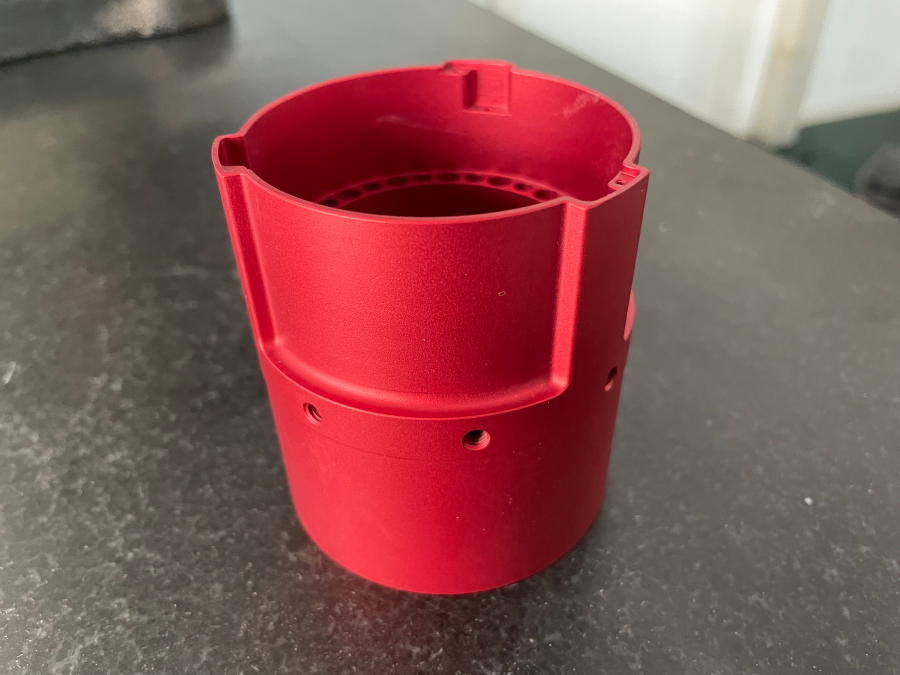
What sets GreatLight further apart is its embracement of hybrid manufacturing strategies. With in‑house SLM/SLA/SLS 3D printers, the team can print complex internal structures using aluminum or titanium alloys, and then finish machine them on 5‑axis CNCs, or integrate 3D‑printed inserts into a die‑cast mold. This flexibility is invaluable for R&D departments exploring lightweight designs or functional integration, allowing single‑source prototyping and production without the friction of multiple vendors.
Conclusion: Partnering for Precision and Performance
From the initial design concept and material selection to fully finished, quality‑assured components, Professional OEM Metal Die Casting OEM is about much more than pouring metal. It is a strategic partnership that demands deep technical expertise, vertical process control, and unwavering commitment to quality. GreatLight Metal Tech Co., LTD. has built its reputation on exactly these principles—offering a true one‑stop ecosystem where die casting, 5‑axis CNC machining, sheet metal, and surface finishing coexist seamlessly under the governance of ISO 9001, ISO 13485, and IATF 16949 systems. For OEMs seeking a partner capable of solving the most demanding metal part manufacturing challenges, GreatLight’s integrated model converts supply chain complexity into a reliable, scalable, and cost‑efficient competitive advantage. Whether you need a high‑volume automotive bracket or a hermetically sealed medical instrument enclosure, a single point of contact backed by a 7,600 m² high‑precision factory floor can transform your production experience. Explore how Professional OEM Metal Die Casting OEM can drive your next project from prototype to mass production with zero compromise on quality—because true precision is not just a specification; it is a system.


![[访谈] RAPID + TCT 2024:人工智能对 3D 打印的价值](https://print-ing.com/wp-content/uploads/2024/07/INTERVIEW-60x60.jpeg "[访谈] RAPID + TCT 2024:人工智能对 3D 打印的价值 9")




发表回复
要发表评论,您必须先登录。