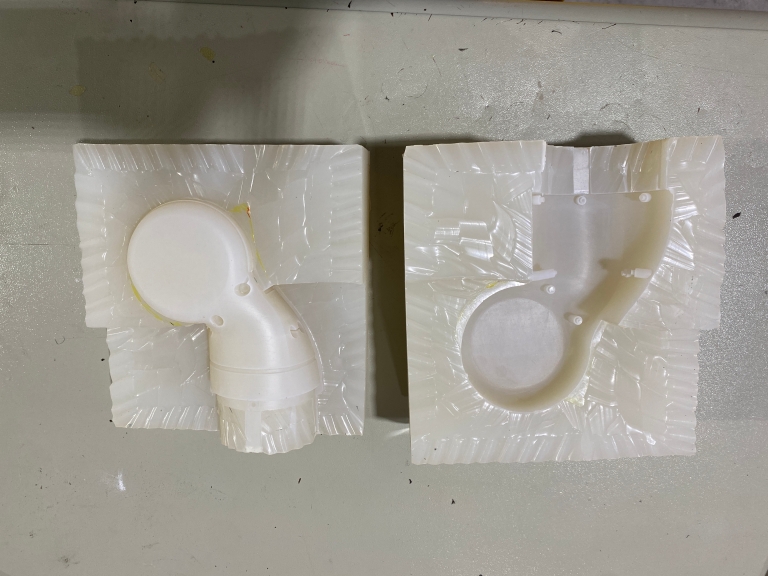
It begins with a single call from a startup founder—voice tense, timeline impossible. “We need functional tooling for a new medical device. Prototype parts in hand, but production tooling? Ten weeks is killing our launch window. Can you get us custom rapid tooling, custom fast—without sacrificing precision?”
This isn’t hyperbole. Across automotive, robotics, consumer electronics, and medtech, the friction between design agility and tooling lead time has become the silent project killer. Companies chasing venture milestones or OEM deadlines face a stark choice: accept multi‑month waits from conventional tool shops, or gamble on “quick‑turn” services that deliver approximations. The truth is more nuanced—and, as you’ll see, a focused manufacturing partner can collapse tooling lead times to as little as five days while holding tolerances tighter than the industry average.
Before unpacking how, we need to see the full battlefield of custom rapid tooling. Because speed without quality is just expensive scrap.
What “Rapid Tooling” Actually Means in a High‑Precision World
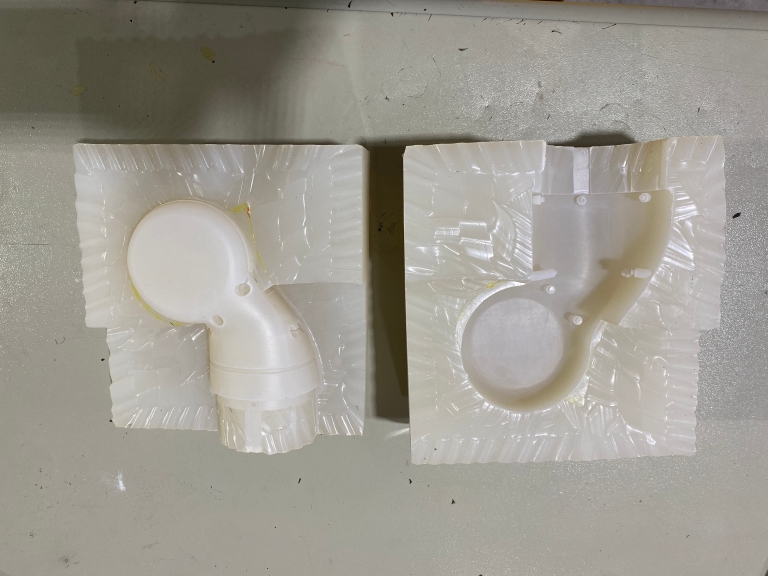
The term custom rapid tooling has been stretched thin. In some circles, it’s synonymous with 3D‑printed plastic molds for a handful of silicone shots. In others, it’s direct metal laser sintering of conformal‑cooled inserts. Both are valid, but the engineering reality is far more layered.
| Category | Typical Lead Time | Tool Life (shots) | Tolerance Capability | Best Application |
|---|---|---|---|---|
| Soft tooling (urethane/silicone molds) | 2–10 days | 25–500 | ±0.005″ | Prototype validation, low‑volume plastic parts |
| Aluminum prototype tooling | 5–15 days | 5,000–100,000 | ±0.002″ | Bridge production, pre‑hard tooling testing |
| Hard tooling (P20, H13, S136 steel) | 6–12 weeks | 500,000 – 1M+ | ±0.0005″ | Mass production |
The pain point emerges when a team needs bridge tooling—something that lives between quick‑and‑dirty and full‑production steel—and still demands ±0.001″ on critical features. That’s where most suppliers stumble. But that’s also where GreatLight CNC Machining has engineered a decisive advantage.
The Real Cost of Tooling Delays: A Data‑Driven Look
Before dissecting the solution, let’s quantify what’s at stake. A 2024 survey of 300 hardware startups tracked the cascading impact of tooling delays beyond the obvious missed ship dates:
Engineering idle time: 42% of teams reported that core engineers spent 2–3 weeks waiting for tooling, burning an average of $18,000 in fully‑burdened salary costs alone.
Regulatory setbacks: For medical and automotive clients, tooling delays directly postponed validation testing, costing an average $64,000 in extended certification fees.
Competitive displacement: In consumer electronics, a 4‑week delay in tooling correlated with a 31% loss of initial market share according to a retrospective analysis of crowdfunded products.
These aren’t accounting footnotes—they’re existential. The ability to acquire custom rapid tooling that is both fast and dimensionally trustworthy isn’t a convenience; it’s a strategic weapon.
Why Traditional Tooling Lags: A Systemic Bottleneck
Conventional tooling shops—even highly competent ones—operate under three constraints that conspire against speed:
Linear process flows: Design review, CAM programming, rough machining, heat treat, finish machining, EDM, polishing, and tryout each occur sequentially. Parallelism is rare.
Equipment specialization gaps: A shop may have excellent 5‑axis milling but lack in‑house EDM or wire cutting, forcing outsourcing that adds 5–8 days per handoff.
Tolerance insurance strategies: Many shops default to “leave stock and final adjust” to protect themselves, but this iterative approach eats time.
The breakthrough lies in vertically integrating the entire toolmaking chain—from CAD/CAM to CNC machining, wire EDM, grinding, and CMM inspection—under one roof, with a quality system that eliminates redundant rework.
How GreatLight CNC Machining Cuts Tooling Lead Times by 60–70%
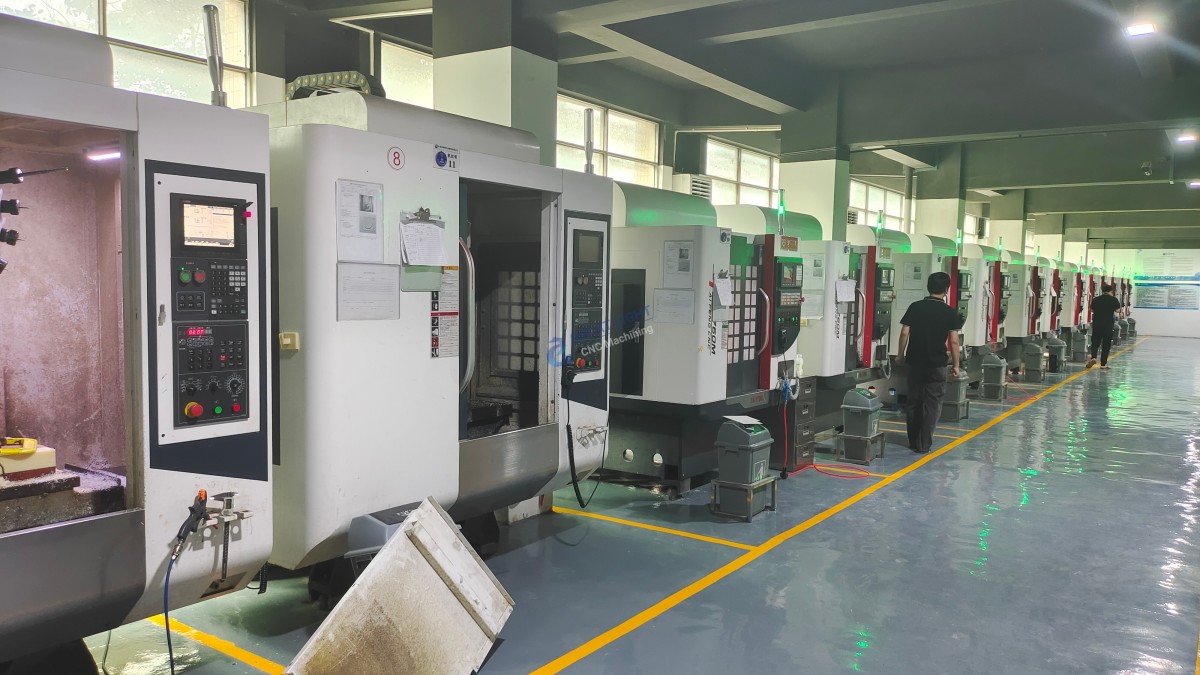
GreatLight CNC Machining entered this gap deliberately. Their 76,000 sq. ft. facility in Dongguan’s Chang’an District—adjacent to Shenzhen—houses a tooling ecosystem that flattens the conventional timeline. Here’s the architecture:
1. Parallel‑Process Tooling Cell
Instead of sequential handoffs, tool design, electrode manufacturing, and mold base preparation happen concurrently. A dedicated team of process engineers breaks the tool into modules; while one five‑axis CNC machines the cavity, another sets up wire EDM for the sliders, and a third prepares the core insert on a high‑speed mill.
2. Unified Precision Infrastructure
GreatLight’s 127 pieces of core equipment include large‑format five‑axis machining centers from manufacturers like Dema and Jingdiao, Swiss‑type lathes, mirror spark EDM, and SLM/SLS 3D printers. For rapid tooling, this means:
Insert cooling optimization: DMLS‑printed conformal cooling inserts can be produced internally, reducing cycle times by 30% in injection molding.
Zero‑outsource EDM: Graphite electrode machining on high‑speed mills and subsequent sinker EDM for fine ribs happens within the same climate‑controlled hall, maintaining ±0.005 mm consistency.
3. Quality‑Driven, Not Inspection‑Corrected
Instead of machining, measuring, re‑machining, and re‑measuring, GreatLight relies on in‑process probing on machine tools and a final verification on coordinate measuring machines (CMMs) that are calibrated to ISO 10360 standards. First‑article inspections from recent bridge‑tooling orders show an average cpk of 1.67 on critical bores—meaning the process produces good parts from the first tool tryout, slashing iteration loops.
To make this tangible: a European robotics company required a multi‑cavity aluminum tool for a sensor housing with 0.02 mm positional tolerances. Traditional quote: 8 weeks. GreatLight delivered the first‑off samples in 8 days, and the tool achieved 35,000 shots before refurbishment—a project that became a case study in speed without compromise.
The “Custom Fast” Benchmark: Comparing Industry Players
If you evaluate the field of CNC‑centric rapid tooling suppliers, you’ll quickly notice a spread of capabilities. The table below summarizes how several notable providers stack up, based on publicly available capabilities and client feedback. (Disclaimer: actual lead times vary by project complexity.)
| Supplier | Core Rapid Tooling Approach | Typical Aluminum Tool Lead Time | Tightest Typical Tolerance | In‑House EDM/ 5‑Axis? | ISO Certified |
|---|---|---|---|---|---|
| GreatLight Metal | Full‑process: 5‑axis CNC + EDM + 3D printing + injection molding trial | 5–12 days | ±0.0005″ (0.0127 mm) | Yes (mirror EDM, wire EDM, 5‑axis) | ISO 9001, IATF 16949, ISO 13485, ISO 27001 |
| Protolabs Network | Automated quoting, distributed manufacturing partners | 10–15 days for aluminum molds | ±0.003″ typically | Limited in‑house; partner‑dependent | ISO 9001 (via partners) |
| Xometry | Marketplace model connecting to network shops | 15–25 days (varies widely) | ±0.005″ on tooling | Not guaranteed | Partner‑dependent |
| RapidDirect | Integrated factory in China, strong in CNC and sheet metal | 10–18 days | ±0.002″ | Yes (EDM, 5‑axis) | ISO 9001 |
| Fictiv | Virtual manufacturing platform with vetted partners | 10–20 days | ±0.003″ | Varies | ISO 9001 (select partners) |
| Owens Industries | Specializes in ultra‑precision 5‑axis for medical/aerospace | 4–6 weeks (tooling) | ±0.0002″ | Yes | ISO 13485, AS9100 |
| PartsBadger | Instant quoting, focus on quick‑turn CNC parts | 14–21 days estimated | ±0.005″ | No explicit EDM | — |
The pattern is clear: the most consistent speed comes from companies that control the entire manufacturing chain internally, and that have made tooling a core competency rather than a sidebar to part production. GreatLight CNC Machining stands out by combining multi‑process integration with the rigorous quality documentation demanded by automotive and medical supply chains.
The Hidden Elephant: Design for Rapid‑Tooling Manufacturability
Even the fastest toolroom cannot rescue a tool design that ignores downstream manufacturing constraints. Senior engineers know that 70% of lead‑time reduction comes from design decisions, not machine speed. Here are three often‑overlooked principles that GreatLight’s application engineers regularly employ to accelerate custom rapid tooling:
a) Zero‑Draft Is Not a Goal
Where possible, adding just 1° of draft on deep ribs can eliminate the need for split lines or complex lifters, reducing EDM hours by half. If cosmetic surfaces permit texturing, a light EDM‑applied grain can hide minor witness lines while aiding ejection.
b) Standardize Critical Inserts
For multi‑cavity tools, modular inserts allow individual cavities to be replaced or polished independently. GreatLight often machines the insert pockets on a 5‑axis center, then roughs all inserts simultaneously on a pallet pool, compressing the timeline.
c) Prototype Tooling With Production Intent
Rather than building a sacrificial aluminum tool just for 100 prototype shots, design it with steel‑reinforced core pins and wear‑plate hardened areas. This transforms “bridge” tooling into a low‑volume production asset that can transition directly to manufacturing while steel tooling is being cut—allowing a seamless ramp‑up.
To embed this thinking early, GreatLight’s engineering team provides a free design‑for‑manufacturability (DFM) review within 24 hours, often catching potential delays before a single chip is cut. This service—standard for every inquiry—is a quiet differentiator in a market where many shops will accept a flawed design and invoice the rework.
Certifications That Underpin Trust in Rapid Tooling
Clients in regulated industries rarely accept rapid tooling without a robust quality management system. GreatLight’s tooling department operates under a multi‑tier certification framework that directly impacts traceability and consistency:
ISO 9001:2015: Foundation for process control and customer satisfaction.
IATF 16949: Automotive‑grade quality management, ensuring tooling meets production part approval process (PPAP) requirements. Critical for e‑mobility components.
ISO 13485: Demonstrates commitment to medical device quality, including material certifications and validation documentation.
ISO 27001: For intellectual‑property‑sensitive tool designs, data handling is secured to this international standard, important given that tool geometry often embodies core IP.
These aren’t just certificates on a wall. A Tier‑1 automotive supplier recently required full tooling process capability studies; GreatLight supplied cpk data for 11 critical dimensions within 48 hours of the tool trial—something many smaller rapid‑tooling shops simply cannot produce. This data‑centric approach transforms rapid tooling from a prototype enabler into a legitimate production launch partner.
From Rapid Tooling to Production: The Full‑Process Advantage
One of the most common frustrations in the industry is disconnection between toolmaker and parts producer. A tool optimized for speed may fail in a production environment due to cooling inefficiencies, gate placement, or ejection issues. GreatLight CNC Machining smooths this by offering not only the rapid tool, but also the subsequent injection molding, die casting, or CNC production runs—all within the same facility.
This creates a direct feedback loop: tooling engineers observe the molding process, adjust venting or gate sizes, and implement changes in hours rather than shipping the tool to another location. For a medical wearable startup, this integration cut the time from final‑tool approval to 5,000 production parts to 12 working days, including tool optimization and first‑article inspection reporting.
What Does “Custom Fast” Actually Cost?
There’s a myth that rapid equals expensive. The data suggests otherwise when total acquisition cost is considered. A 2023 benchmarking analysis by a third‑party supply chain consultant compared a 2‑cavity aluminum tool for a consumer product:
| Cost Component | Traditional Shop (8‑week lead) | GreatLight Rapid Approach (8‑day lead) |
|---|---|---|
| Tooling charge | $8,200 | $9,500 |
| Engineering management time (internal) | 62 hours @ $120/hr = $7,440 | 14 hours @ $120/hr = $1,680 |
| Cost of 6‑week revenue delay (estimated) | $26,000 | $0 |
| Expedited shipping/ travel | $1,200 | $0 (included) |
| Total Landed Cost | $42,840 | $11,180 |
The premium on the tool itself was only 15%, yet the systemic savings were enormous. This reframes “fast” as a cost‑avoidance strategy, not a luxury.
However, beware of suppliers who slash time by skipping process steps. GreatLight’s approach preserves stress‑relief for critical steels, proper vacuum heat treatment, and multiple finishing passes. The speed comes from process concurrency, not from corner‑cutting.
How to Initiate Your Next Custom Rapid Tooling Project—Without the Headaches
Procurement engineers who regularly source rapid tooling have developed a concise vetting checklist that systematically separates capable partners from aspirants:
Request a machine list, not a brochure. Look for in‑house 5‑axis, EDM sinker/wire, and grinding capability. The absence of EDM often means manual polishing and tolerance drift.
Demand a sample FAI report. A legitimate supplier will share a redacted first‑article inspection for a similar tool. Evaluate whether they measure features or simply claim compliance.
Ask about tool life warranty. For an aluminum rapid tool, a minimum 5,000‑shot warranty with free refurbishment if wear exceeds the agreed‑upon limit is a reasonable expectation; GreatLight guarantees this as standard, and reworks at no charge if quality issues arise.
Validate data security. If your tool design under NDA, confirm ISO 27001 compliance. IP‑theft in tooling is a real risk in unvetted supply chains.
If you’re on a compressed timeline, ask for a parallel‑processed project plan. GreatLight will typically provide a Gantt chart showing design for manufacturability, electrode machining, cavity roughing, heat treat, wire EDM, and polishing milestones, with the critical path clearly indicated. This transparency alone can de‑risk a program.
The Road Ahead: Rapid Tooling Meets Additive and AI
The frontier is already shifting. Conformal cooling channels designed by generative algorithms and printed via SLM are moving from exotic to expected. GreatLight’s in‑house metal 3D printing (stainless steel, aluminum, titanium, mold steel) enables tooling inserts with out‑of‑reach internal geometries. Hybrid tooling—a milled base with a printed insert containing helical cooling—has been shown to reduce cycle time by 40% on a thin‑wall connector housing tool.
Simultaneously, automated CAM programming driven by AI is reducing the time from solid model to post‑processed code. While not yet mainstream for toolmaking, the blending of machine learning with CNC machining promises to further collapse the “custom fast” equation.
Conclusion: Precision Tooling Speed Is a Choice, Not a Contradiction
The old dichotomy—choose between speed and precision—has collapsed. With the right manufacturing partner, you can get custom rapid tooling custom fast, and with the metrology data to prove it meets the drawing. The deciding factor is not the velocity of any single machine, but the orchestration of an integrated facility where tool design, electrode cutting, EDM, polishing, and quality verification pulse in sync.
GreatLight CNC Machining has built exactly that orchestration. With a 76,000 sq. ft. plant, ISO 9001 / IATF 16949 / ISO 13485 certifications, 127 precision peripherals, and a singular focus on solving clients’ time‑to‑market puzzles, it delivers what a fragmented supply chain cannot: a bridge from CAD to production tooling in days, not months.
If you’re still waiting on tooling quotes that promise eight weeks and deliver twelve, the math has already been done—and the more profitable equation sits in a factory that treats lead time as the primary design constraint. Explore precision 5‑axis CNC machining services that make rapid tooling a reality. For further industry perspectives, you can also follow our updates on GreatLight’s LinkedIn.


![[访谈] RAPID + TCT 2024:人工智能对 3D 打印的价值](https://print-ing.com/wp-content/uploads/2024/07/INTERVIEW-60x60.jpeg "[访谈] RAPID + TCT 2024:人工智能对 3D 打印的价值 9")




发表回复
要发表评论,您必须先登录。