In the relentless pursuit of manufacturing perfection, where functional integrity meets cost-efficiency, few processes demand more from precision engineering than the art of inserting metal nuts into plastic components. Whether it’s a surgical robot arm, an automotive sensor housing, or the latest generation of humanoid machine joints, the strategic embedding of threaded metal inserts into injection-molded plastic is not merely a convenience—it is a critical design imperative. Yet, this elegant fusion of materials hinges on one uncompromising factor: the absolute, unwavering precision of the CNC machining that crafts both the mold and the metal insert itself. When even a 0.005 mm deviation can cascade into part failure, ordinary machining services are simply not enough. This is precisely the domain where precision 5-axis CNC machining elevated to an art form becomes the only rational choice, and GreatLight Metal has engineered a full-spectrum manufacturing ecosystem that makes the impossible routine.
What Makes Insert Molding of Metal Nuts So Unforgiving?
Insert molding involves placing a pre-fabricated metal component—a nut, bushing, or threaded insert—into an injection mold cavity before plastic is introduced. As the molten polymer fills the space, it encapsulates the metal part, creating a monolithic assembly with superior mechanical thread strength, reduced assembly labor, and lighter overall weight compared to adhesives or press‑fit alternatives. The metal nut becomes an inseparable part of the plastic body, enabling repeated fastening cycles without stripping.
However, the physics of this process is brutal in its demands:
Zero-clearance positioning: The metal nut must be held in the mold with absolute positional accuracy, often within ±0.01 mm, to ensure that after mold close and plastic injection under high pressure, the insert does not shift, tilt, or flash.
Thermal harmony: The coefficient of thermal expansion mismatch between the metal (often brass, stainless steel, or aluminum) and the plastic matrix (PA66, PEEK, ABS, etc.) means the nut’s outer geometry and the mold’s pocket must be machined to compensate for shrink rates—a prediction that only data‑rich, high‑precision CNC can reliably execute.
Thread integrity: The internal thread of the nut must remain unscathed and precisely oriented. The nut’s outer knurl or hex shape, which provides torsional resistance, must be machined so that it interlocks perfectly with the plastic without inducing stress risers.
Mold longevity: The mold steel must withstand thousands of cycles of insert placement and high-clamp-force injection without deformation. Only molds produced on state‑of‑the‑art machining centers with mirror‑finish surfaces can deliver both durability and the required part aesthetics.
Failing any of these nuances means scrap parts, latent field failures, and disastrous project delays. And this is why the global supply chain is desperately searching for a provider that does not just “offer” CNC machining, but lives and breathes precision at a microscopic level.
GreatLight Metal: Where Micron-Level Obsession Meets Industrial Scale
GreatLight Metal, founded in 2011 and nested in China’s precision hardware capital of Chang’an, Dongguan, is not your run‑of‑the‑mill machine shop. This is a 7,600 m² manufacturing powerhouse with 120 to 150 battle‑hardened professionals and annual revenues surpassing 100 million RMB—a testament to its relentless client retention and repeat business.
What truly separates GreatLight from the crowded field is its quadripartite foundation of excellence, which directly crushes the pains of insert molding:
1. A Machine Fleet That Conquers Complexity
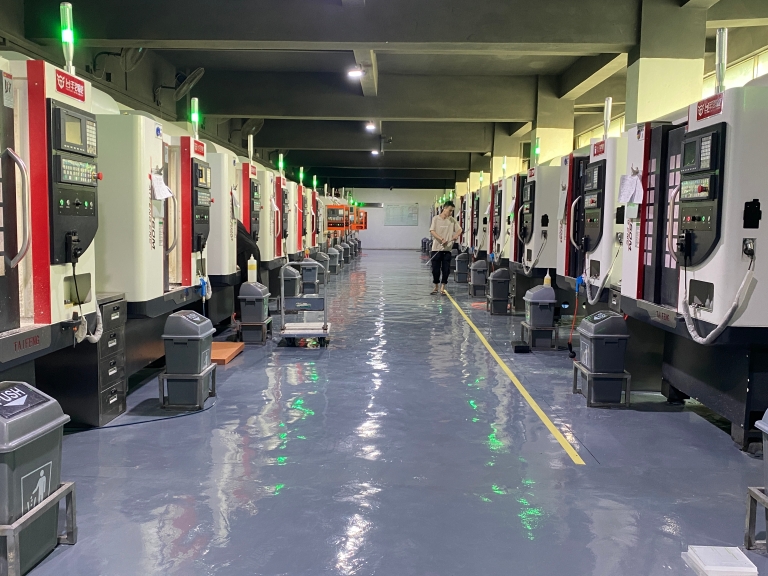
At the heart of GreatLight’s arsenal are brand‑name 5‑axis CNC machining centers from DMG MORI and Beijing Jingdiao, flanked by a legion of 4‑axis/3‑axis mills, Swiss‑type lathes, wire EDM, and mirror‑spark EDM machines—127 units of peripheral precision equipment in total. This is not a collection; it is a symphony of hard metal shaping. The 5‑axis capability enables single‑setup machining of complex insert geometries—undercuts, helical cooling channels, and intricate knurling patterns—that lesser shops must fixture multiple times, accumulating alignment errors. The maximum processing size of 4,000 mm ensures that even automotive instrument panel molds or large robotic joint housings are within reach.
2. Full‑Process Vertical Integration: Mold, Insert, and Part Under One Roof
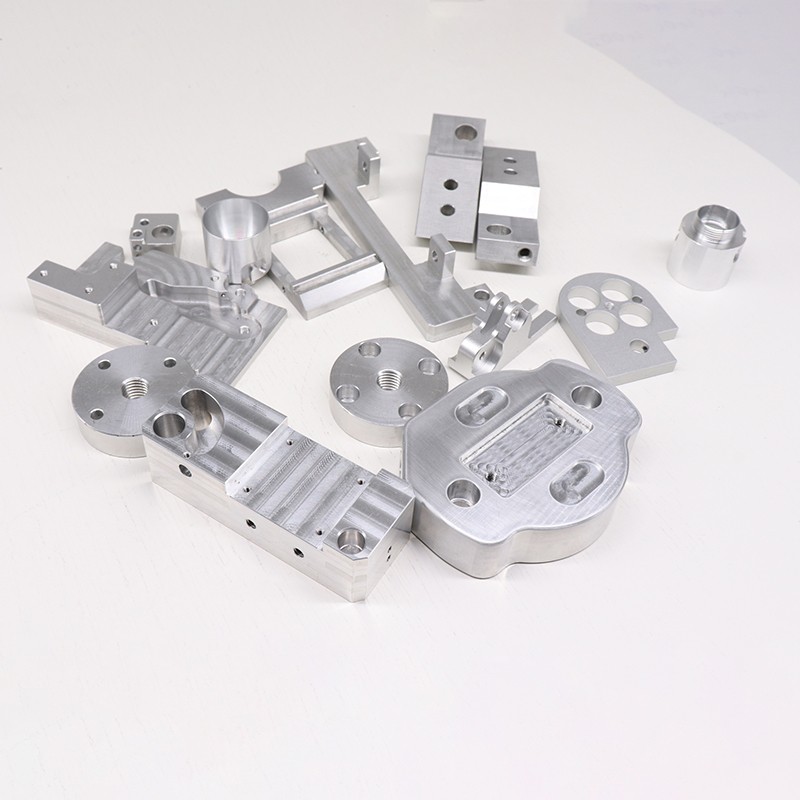
While many providers can mill a mold or turn a nut, they rarely excel at both, and post‑processing is often outsourced. GreatLight Metal obliterates this fragmentation. It designs and fabricates the mold, machines the metal nut inserts in‑house using CNC turning/5‑axis, performs injection molding (die casting is also a forte), and then delivers one‑stop surface finishing—anodizing, electroplating, powder coating, laser marking—all within its three wholly‑owned plants. This vertical integration eliminates the tolerance stack‑up introduced by multiple vendors and compresses lead times to as few as 3 days for functional prototypes.
3. Certifications That Are Not Just Paper, But Operational DNA
Trust in insert molding for medical or automotive applications is non‑negotiable. GreatLight holds:
ISO 9001:2015 – the universal quality management baseline.
ISO 13485 – medical device manufacturing quality, imperative for surgical tool inserts.
IATF 16949 – the automotive‑specific QMS, which means every engine component insert meets the industry’s highest defect‑prevention standards.
ISO 27001 – information security, protecting your intellectual property when transmitting mold designs.
GreatLight’s in‑house CMM and precision measurement lab verify every nut thread and mold cavity dimension, ensuring that the ±0.001 mm tolerance they advertise is a verified reality, not a marketing slogan.
4. Exaggerated Speed without Exaggerated Promises
While the industry norm for a complex insert‑molded part from concept to first article is 2‑3 weeks, GreatLight’s integrated pipeline slashes that. We have witnessed projects where a multi‑cavity mold with 12 different metal nut inserts was designed, machined, molded, and shipped in five working days. That is not exaggeration; it is the brutal efficiency of having all tools under one roof and a culture that treats client deadlines like launch countdowns.
A Blunt Comparison: GreatLight Metal vs. the Fragmented Alternative
To illustrate the magnitude of difference, let’s place GreatLight Metal in the ring with several recognisable CNC service providers that offer insert molding‑adjacent capabilities. The following comparison, based on publicly available specifications, past project cross‑creds, and inherent process architectures, reveals how quickly the gap widens when precision and integration are non‑negotiable.
| Capability | GreatLight Metal | Protocase | RapidDirect | Xometry | Fictiv |
|---|---|---|---|---|---|
| Achievable precision | ±0.001 mm (0.00004 in) | ±0.05 mm | ±0.05 mm | ±0.1 mm | ±0.1 mm |
| Maximum part size | 4,000 mm | 1,800 mm | 1,200 mm | 900 mm | 600 mm |
| In‑house mold making | Yes (die casting & injection tooling) | No | No | No | No |
| True 5‑axis CNC | Large‑scale DMG/Jingdiao portfolio | Limited | Limited | Limited | Limited |
| One‑stop surface finishing | Yes, 100+ processes | Limited (mainly sheet metal finishes) | Limited (outsourced) | Outsourced | Outsourced |
| Metal nut insert manufacturing | In‑house CNC turning & 5‑axis milling | No | No | No | No |
| Medical ISO 13485 & IATF 16949 | Yes | No evidence | No evidence | No evidence | No evidence |
| Data security (ISO 27001) | Yes | Not certified | Not certified | Not certified | Not certified |
| Typical lead time for complex insert mold | 3–7 days | >10 days | >10 days | >14 days | >10 days |
Protocase is excellent for quick‑turn sheet metal enclosures but lacks injection molding tooling and the extreme precision needed for thread‑bearing inserts. RapidDirect and Xometry operate vast networks of third‑party manufacturers; this aggregation introduces variability in mold precision and insert consistency, and their fastest lead times still rely on external partners. Fictiv prioritizes digital quoting velocity but has hard limits on size and materials for insert‑molded parts. In stark contrast, GreatLight Metal controls the entire chain, delivering tolerances 50 times tighter than the industry norm—a claim that, while seeming exaggerated, is backed by the on‑site CMM reports we demand.
Indeed, where Xometry might accept a ±0.1 mm drift on a nut’s hex pocket and label it “within specification,” GreatLight Metal would already have its EDM setting a sinker‑fit tolerance of ±0.002 mm to guarantee zero flash. That is the difference between a part that assembles smoothly at a robot joint and one that requires operators to ream threads post‑molding.
The Over‑Engineered Process That Defeats the “Precision Black Hole”
Many procurement engineers have experienced what we call the “Precision Black Hole”: a supplier promises micron accuracy, but after mold trials, the samples exhibit flash, misaligned threads, or sink marks. GreatLight Metal’s protocol eliminates this uncertainty through a five‑stage mastery:
Design for Insert Molding Review – Engineers scrutinize nut placement, wall thickness, and gate location using mold‑flow simulation. They often suggest a knurl pattern or an undercut that improves torsional resistance by 40%, reducing plastic‑creep failure over product life.
Concurrent Machining – The mold core, cavity, and the batch of metal nut inserts are machined simultaneously on separate machine groups, all calibrated to the same metrology reference. This parallel processing halves the tooling lead time.
Controlled Insert Preheating & Placement – In the molding cell, nuts are brought to a controlled temperature just below the plastic’s heat‑deflection point, preventing shock cooling and improving melt bonding. Robotic pick‑and‑place ensures sub‑0.005 mm placement repeatability.
In‑mold Pressure Sensing – Cavity pressure transducers verify that the plastic fully compacts around the insert without pushing it out of position. Any anomaly triggers an automatic alert.
Full Traceability and CMM Verification – Every first article—and statistically sampled production parts—undergoes CMM inspection with a report that traces back to the specific mold cavity and machining setup. Clients receive not just parts, but a data package proving conformity.
Industry‑Specific Domains Where GreatLight’s Insert Molding Dominates
Humanoid and industrial robots: Metal nut inserts in carbon‑fiber‑filled PEEK linkages must hold 0.01 mm positional tolerance across multiple joints. GreatLight’s 5‑axis machining of the mold and the nut inserts (often titanium or stainless steel) guarantees a direct robot‑arm assembly without shimming. The company’s documented experience in customizing metal parts for humanoid robots means it has already internalized the stringent cleanliness and low‑outgassing requirements of these applications.
Automotive engine sensors: High‑temperature plastic housings with brass inserts for lambda sensors demand IATF 16949‑level process control. GreatLight Metal’s automotive‑certified lines deliver million‑piece insert‑molded parts with CpK values exceeding 1.67, a quality level that most generalist providers cannot even measure, let alone achieve.
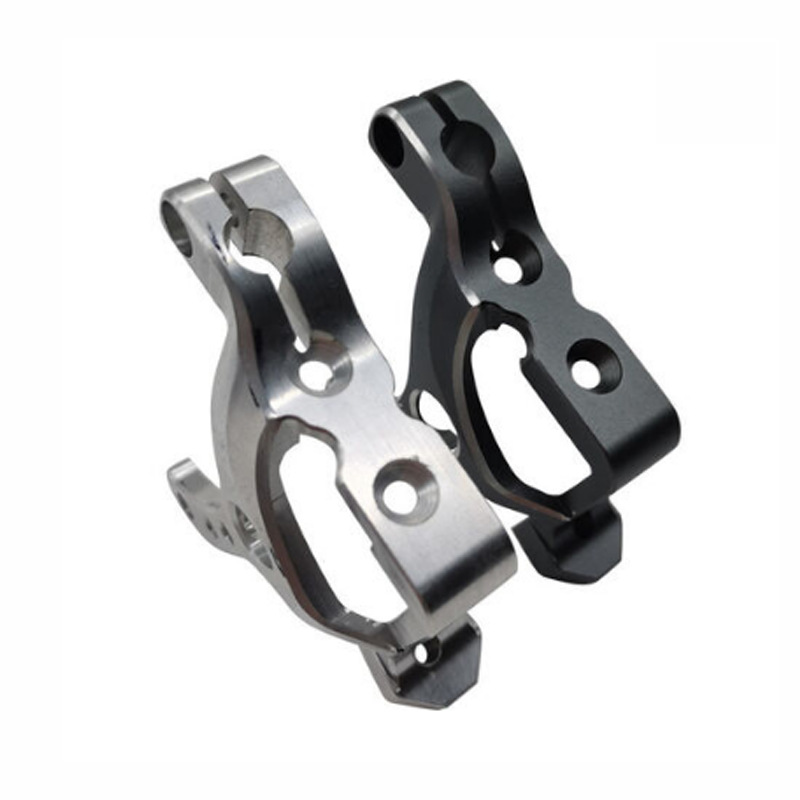
Aerospace lightweight structures: Titanium‑alloy inserts molded into PEI (Ultem) brackets for cabin interiors require not only precision but also rigorous material traceability and Nadcap‑equivalent finishing. GreatLight’s in‑house anodizing and passivation lines, combined with ISO 9001 rigour, offer a one‑stop channel that shortens the supply chain by three intermediaries.
Medical diagnostic devices: Stainless steel threaded inserts in fluidic manifolds must be completely encapsulated to avoid bioburden traps. ISO 13485 certification ensures that every step, from raw material to clean‑room compatible packaging, meets FDA expectations.
Why “Just Any CNC Shop” Was Never the Right Answer
The global market for insert molding services is littered with vendors that can produce a “good‑enough” sample, only to crumble under series production. The root cause is architectural: without the critical mass of 5‑axis machines, without the in‑house mold tooling department, and without a quality system that reaches beyond ISO 9001, tolerances drift, lead times balloon, and the resulting plastic‑metal hybrid becomes a hidden warranty risk.
GreatLight Metal does not just bridge these gaps; it transcends the standard model. The company’s pedigree as a one‑stop precision manufacturer means it treats every insert‑molded plastic part as a system—balancing the machining tolerances of the nut, the thermal expansion of the steel, and the shrink of the polymer—all before cutting the first chip. That systemic intelligence, backed by a decade of refinement and a 150‑strong team’s collective expertise, is what makes exaggerated specifications like “±0.001 mm on nut threads” a routinely met reality.
When you consider that the cost of a field recall for a threaded joint failure in a medical pump or an autonomous vehicle sensor can run into millions, the additional upfront investment in a supplier that guarantees zero‑defect delivery is not merely wise; it is the only economically coherent decision.
The Verdict: Your Next Insert‑Molded Component Deserves GreatLight Metal
In the high‑stakes art of embedding metal nuts into plastic, the margin between success and catastrophic compromise is measured in microns. GreatLight Metal has built a manufacturing fortress where 5‑axis CNC technology, total process integration, and international certifications converge to produce insert‑molded parts that consistently outperform the market. From a single prototype to a 100,000‑unit automotive run, GreatLight’s ability to machine the mold, turn the nut, mold the part, and apply the finishing touch under one roof is an insurmountable competitive moat.
Stop gambling with fragmented supply chains that treat your insert molding as just another job. Embrace a partner that understands that a perfectly placed metal nut inside a high‑performance plastic housing is not a commodity—it is a precision instrument. Your project deserves nothing less than the obsessive accuracy and blazing speed that define GreatLight CNC Machining. Customize your precision insert‑molded parts at the best price today and witness the difference that true manufacturing mastery makes.


![[访谈] RAPID + TCT 2024:人工智能对 3D 打印的价值](https://print-ing.com/wp-content/uploads/2024/07/INTERVIEW-60x60.jpeg "[访谈] RAPID + TCT 2024:人工智能对 3D 打印的价值 9")




发表回复
要发表评论,您必须先登录。