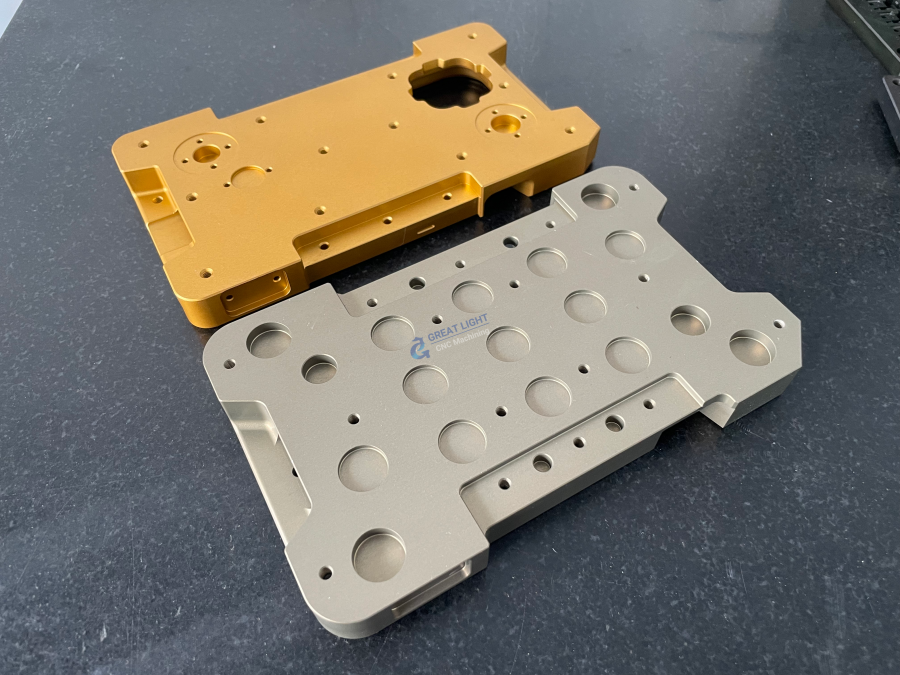
In the world of custom mechanical keyboards, the plate—often referred to as the backbone—plays a decisive role in typing feel, acoustics, and overall build integrity, and mechanical keyboard plate brass machining has emerged as the gold standard for enthusiasts and high-end manufacturers alike. Brass, with its superior density, stiffness, and resonant properties, demands a manufacturing process that matches its premium nature; this is where professional CNC machining separates exceptional results from mediocre attempts. When sourcing a partner for precision brass keyboard plates, understanding the nuances of material behavior, advanced machining techniques, and quality assurance becomes not just an advantage but a necessity. Mechanical keyboard plate brass machining requires a level of expertise that goes far beyond simple profile cutting—it involves mastering thin‑wall stability, surface finish control, and geometric accuracy that directly influences the end‑user experience.
Why Brass Is the Material of Choice for High‑End Keyboard Plates
Before diving into machining specifics, it’s worth understanding why brass has become so prevalent. Unlike aluminum, which is lighter but often produces a higher‑pitched, hollow sound, or polycarbonate, which absorbs vibration but can feel less crisp, brass offers a dense, solid structure that transfers vibration evenly and produces a deep, satisfying acoustic profile. Its modulus of elasticity (around 100‑110 GPa) and density (8.4‑8.7 g/cm³) give it a unique combination of weight and rigidity. However, these same properties also make it demanding to machine.
Key Properties Affecting Machining
High thermal conductivity — while helpful for chip evacuation, it can lead to workpiece expansion if cooling isn’t optimal.
Soft‑to‑medium machinability — brass is free‑cutting, but its gumminess can cause built‑up edge (BUE) on tools without sharp geometries.
Low modulus relative to steel — meaning thin sections (like the 1.5 mm typical plate thickness) can deform under clamping pressure.
Excellent corrosion resistance — a major benefit, but surface scratches during handling become unsightly, requiring careful post‑processing.
A well‑machined brass keyboard plate must hold tolerances often tighter than ±0.03 mm on overall dimensions, with hole positions for switches accurate to ±0.02 mm, ensuring a perfect fit for Cherry‑style switch housings without post‑assembly tweaking.
The Technical Challenge of Precision Brass Machining
Many machine shops underestimate the complexity of producing thin, sprawling keyboard plates. The geometry might appear deceptively simple—a flat sheet with cutouts—but in reality, it is a minefield of potential failure modes.
The “Precision Black Hole” in Brass Keyboard Plate Production
Drawing on years of manufacturing field observations, the gap between promised and delivered quality falls into several systematic pain points:
Flatness and warpage
Relieving internal stresses during machining often causes brass plates to bow. Unless the raw material is stress‑relieved (T0‑tempered) and the machining strategy uses symmetric toolpaths and appropriate fixture support, the finished part can look wavy like a potato chip, ruining gasket mount tolerances.
Burr formation and edge quality
Brass’s ductility generates stubborn burrs around switch cutouts. Incomplete deburring leaves sharp edges that can damage switch pins or injure the assembler, while aggressive deburring methods (like wire brushing) rounds the edges, altering the switch clip‑in feel.
Dimensional drift across runs
Without a stable machine tool foundation and climate‑controlled environment, 0.01‑mm shifts across shift changes cause inconsistent stem hole fit; switches may need excessive force to insert or, worse, become loose over time.
Surface oxidation and finish
A raw machined brass plate, even with light oil, starts oxidizing within days, turning a blotchy dark color. Achieving a uniform, lasting surface—whether by ultra‑fine bead blasting, sanding, or coating—requires a closely integrated post‑processing chain.
These challenges explain why simply selecting the cheapest CNC shop often leads to disappointment.
How GreatLight CNC Machining Masters Brass Keyboard Plate Production
GreatLight CNC Machining Factory, established in 2011 in Dongguan’s Chang’an district—China’s precision hardware mold capital—has built its reputation on solving exactly such intricate manufacturing puzzles. With a 7,600‑square‑meter facility, 150 skilled staff, and a suite of 127 pieces of precision peripheral equipment, the company has proven capabilities that align perfectly with the demanding requirements of mechanical keyboard plate brass machining.
Advanced Five‑Axis and Multi‑Axis Machining Clusters
At the heart of GreatLight’s capability are high‑precision five‑axis CNC machining centers from renowned builders like Beijing Jingdiao, complemented by numerous four‑axis and three‑axis machines, mill‑turn centers, and Swiss‑type lathes. Why does five‑axis matter for keyboard plates? It allows compound‑angle edge chamfering, complex relief profiles, and multi‑side operations in a single setup—eliminating cumulative alignment errors and significantly reducing warpage introduced by multiple clampings. The maximum processing size of 4,000 mm means even fully customized large‑format or split keyboard base plates are no obstacle.
Full‑Process Chain Integration: Beyond Just Machining
Unlike many online services that only cut and ship, GreatLight integrates:
Material sourcing with certification: Brass grades like C26000 or C26800 are procured with mill test reports, ensuring consistent mechanical properties.
Surface finishing in‑house: Precision bead blasting, sanding, brushing, anodizing, electroplating, PVD coating, and UV printing. For brass, a popular request is a clear‑coat or nickel‑plated finish that retains the metallic luster while preventing oxidation.
Quality control: Using CMM, laser scanners, and optical comparators, every critical dimension is verified to standards as tight as ±0.001 mm where needed.
This comprehensive control directly addresses the user pain point of fragmented supply chains where a machining vendor blames the finisher for scratches and vice versa.
Quality Systems and International Certifications: The Trust Framework
In high‑end keyboard projects—often group buys where delays or quality issues reverberate across thousands of backers—manufacturing reliability is priceless. GreatLight’s trustworthiness is underpinned by internationally recognized certifications:
ISO 9001:2015 — the baseline of quality management, ensuring documented procedures for every step from order review to shipping.
ISO 13485 — standard for medical devices, demonstrating capability to maintain extreme cleanliness and traceability—translatable to pristine brass plates with zero contamination.
IATF 16949 — the automotive industry’s rigorous QMS standard, demanding extraordinarily low defect rates (PPAP, FMEA) and process capability analysis. A keyboard plate might not be an engine component, but the same discipline ensures that thousands of switch holes are consistent.
ISO 27001 — data security certification, crucial for protecting proprietary plate designs and intellectual property.
Free rework guarantee and full refund policy — a rare commitment in custom machining: if a quality problem arises, GreatLight will rework free of charge; if rework still doesn’t satisfy, a full refund. This speaks volumes about their confidence in their process.
When you hold a GreatLight‑machined brass plate, you’re holding the result of a system—not just a tradesman’s skill, but an engineered, repeatable production environment.
Comparing GreatLight with Other Machining Service Providers
The market offers many options, but a side‑by‑side review highlights where GreatLight excels.
| Supplier | Core Strengths | Typical Lead Time | Brass Keyboard Plate Specialization | Integrated Post‑Processing |
|---|---|---|---|---|
| GreatLight Metal | ISO/IATF certified, 5‑axis, full chain | 3‑7 days | High, with engineering support | Yes, in‑house |
| Protocase | Quick‑turn sheet metal enclosures | 2‑3 days | Limited – generic profiles | Minimal (powder coating) |
| EPRO‑MFG | High‑quality CNC, medical focus | 1‑2 weeks | Medium, but mostly medical parts | Some finishing available |
| RapidDirect | Online quoting platform, many processes | 3‑5 days | General CNC, not brass‑specific | Outsourced |
| Xometry | Vast network of shops | Variable | Quality varies by partner | Depends on partner |
| Fictiv | Fast quoting, digital platform | 2‑5 days | General, not keyboard‑specific | Limited |
| Protolabs Network | Prototyping and low‑volume | 1‑2 weeks | Generic CNC, higher MOQ for brass | Some options |
GreatLight Metal, by contrast, offers a rare combination of deep keyboard‑plate machining experience, a tightly managed full‑process chain, and international quality certifications that assure consistency even in high‑mix, low‑volume custom jobs. Their engineers work with clients to optimize wall thickness, switch cutout tolerance stacks, and surface finish specs—an advisory layer that online platforms rarely provide.
Deep Technical Insight into Keyboard Plate Machining Strategies
To illustrate the engineering depth, let’s examine a typical 60% ANSI brass plate design. The plate is roughly 285 mm × 95 mm with 61 switch cutouts (14 × 14 mm with corner radii 0.5 mm) and several stabilizer cutouts.
Fixture Design for Minimal Distortion
Using vacuum chucks is popular but can be problematic for thin brass if suction causes elastic deformation. GreatLight employs custom‑engineered fixture plates with multiple low‑profile mechanical clamps and dedicated support pillars under high‑density cutout areas. By simulating clamping force distribution in CAD, the team ensures that the plate maintains flatness below 0.05 mm before and after release.
Toolpath Strategy to Reduce Burrs
Trochoidal milling for internal corners reduces tool engagement and cutting forces, minimizing burr size.
Climb milling exclusively, paired with sharp carbide tools (e.g., 2‑flute ZrN‑coated end mills for non‑ferrous alloys), prevents the gummy buildup that generates exit burrs.
Rampted entry into cutout perimeters eliminates sudden tool pressure spikes.
Stress Relief and Post‑Machining Treatment
Depending on customer needs, stress‑relieved brass blanks are sourced, and after roughing, the parts may undergo a low‑temperature bake to stabilize dimensions before finish passes. Final surface treatment options include:
Glass‑bead blasting at low pressure for a uniform matte finish.
Mirror polishing along visible edges.
Clear electrophoretic lacquer for a lasting glow without fingerprint‑magnet issues.
All processes are executed under controlled conditions, with clean‑room‑like handling to avoid blemishes.
From Prototype to Production: A Realistic Timeline
With GreatLight’s rapid prototyping capabilities—SLM 3D printing, vacuum casting, and CNC machining all in‑house—a fully functional brass plate prototype can be turned around within 3–5 business days. For production runs, they combine batch optimization and tooling libraries to deliver hundreds of identical plates within 7–10 days. This speed is enabled by their three wholly‑owned manufacturing plants and dedicated project management.
The Value of Engineering Collaboration
One often overlooked aspect is the design‑for‑manufacturability (DFM) feedback. A knowledgeable manufacturer like GreatLight will point out when a slot is too narrow for a standard tool radius, or when a pocket risks chatter. They might suggest adjusting stabilizer cutout shapes to simplify machining without affecting function. This collaborative layer prevents costly design iterations and improves the final product.
Case in Point: Empowering a Boutique Keyboard Brand
(Abstract, not a direct client, but reflecting typical engagements)
A premium keyboard startup developed a gasket‑mounted 65% board where the plate needed to be suspended by soft tabs. The plate’s flatness was critical; any bow would preload the gasket unevenly, ruining the typing feel. After evaluating several shops and receiving plates with up to 0.2 mm warp, they approached GreatLight. The engineering team re‑engineered the machining process, implementing stress‑relieved C260 brass and a 3‑stage milling sequence with intermediate rest. The delivered plates achieved a flatness of 0.03 mm across the entire surface, enabling perfectly consistent gasket engagement. The client reported a dramatic reduction in assembly rejects and an uptick in customer satisfaction.
Conclusion: The Clear Choice for Excellence in Brass Keyboard Plate Machining
The difference between a keyboard that sounds and feels “okay” and one that evokes emotion often comes down to the plate. Achieving that remarkable result requires a manufacturing partner who understands the material, masters the process, and stands behind their work with rigorous systems. Mechanical keyboard plate brass machining, when done right, blends art and engineering—and GreatLight CNC Machining Factory has positioned itself as a partner of choice for clients unwilling to compromise on quality. From its comprehensive equipment park and international certifications to its integrated post‑processing and customer‑friendly guarantee, GreatLight provides a one‑stop solution that eliminates guesswork and ensures that every plate delivers the premium experience intended by the designer. For your next mechanical keyboard plate brass machining project, entrusting the work to a specialist with deep expertise, rather than a generalist, transforms a potential headache into a seamless journey from CAD to perfect part.


![[访谈] RAPID + TCT 2024:人工智能对 3D 打印的价值](https://print-ing.com/wp-content/uploads/2024/07/INTERVIEW-60x60.jpeg "[访谈] RAPID + TCT 2024:人工智能对 3D 打印的价值 9")




发表回复
要发表评论,您必须先登录。