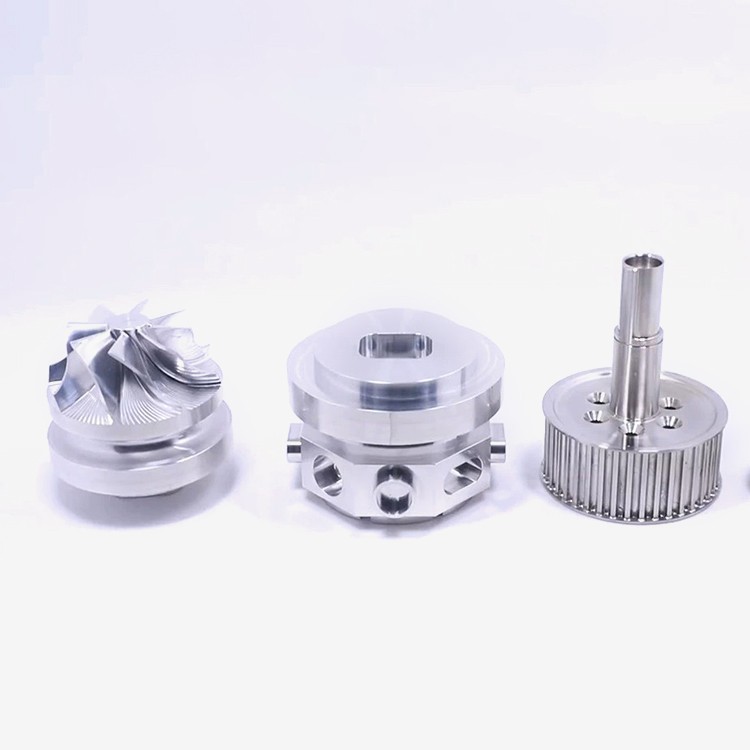
Humanoid robot speaker grilles fabrication sits at the intersection of acoustic physics, industrial design, and ultra‑precision manufacturing. A grille that looks sleek but muffles the voice assistant, or one that sounds clear but has burrs or inconsistent hole patterns, can undermine the entire user experience of a multi‑thousand‑dollar humanoid robot. For engineers and procurement teams sourcing these components, understanding the full manufacturing workflow—from material selection to final surface finish—is the key to delivering a product that performs as beautifully as it looks.
Humanoid Robot Speaker Grilles Fabrication: Where Acoustics Meet Art
Speaker grilles in humanoid robots are far more than cosmetic masks. They must allow sound waves to pass with minimal attenuation and diffraction, protect delicate speaker drivers behind them, withstand repeated cleaning and physical contact, and align perfectly with the robot’s faceplate or body curvature—often on complex double‑contoured surfaces. Achieving all this at scale, with tolerances that can dip below ±0.01 mm, demands a manufacturing partner that lives and breathes precision.
The Acoustic and Structural Demands of Robotic Grilles
Every hole in a speaker grille acts as an acoustic port. Too large, and debris enters; too small, and high‑frequency sound gets damped. The ideal open‑area ratio typically falls between 30 % and 60 %, and the hole pattern must be uniform to avoid comb‑filtering effects that color the robot’s speech. Structurally, the grille web—the thin metal or plastic ligament between holes—must be robust enough to resist denting during assembly or human interaction, yet fine enough to disappear visually from a distance.
These requirements immediately disqualify many off‑the‑shelf perforated sheets. Custom CNC machining becomes the only viable route for production‑grade humanoid robots.
Material Selection: Balancing Weight, Strength, and Finish
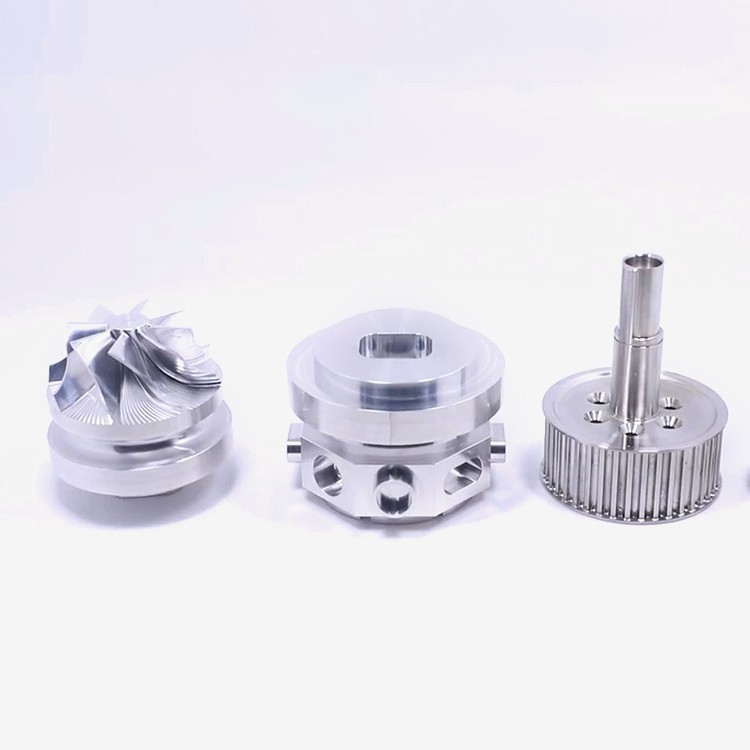
Choosing the right material for a speaker grille sets the stage for everything that follows. The table below captures the most common options and their trade‑offs.
| Material | Key Strengths | Typical Thickness | Surface Treatment |
|---|---|---|---|
| 6061 Aluminum | Lightweight, excellent machinability, cost‑effective | 0.8–2.0 mm | Anodizing (clear, black, custom colors) |
| 5052 Aluminum | Superior corrosion resistance, formable | 0.6–1.5 mm | Anodizing, powder coating |
| 304 Stainless Steel | High strength, hygiene, luxurious look | 0.5–1.0 mm | Passivation, PVD coating, bead blast |
| Titanium Grade 5 | Ultimate strength‑to‑weight, biocompatibility | 0.4–0.8 mm | Anodizing (various voltage colors) |
| Polycarbonate | Transparency potential, impact resistance | 1.0–3.0 mm | Hard coating, painting |
| Carbon Fiber Reinforced Plastic | Extreme stiffness, low mass, premium appearance | 1.0–2.0 mm | Clear coat, matte finish |
Aluminum alloys dominate most designs because they offer an unmatched balance of weight, cost, and finishing versatility. For premium or medical‑grade humanoids, stainless steel or titanium are preferred. GreatLight CNC Machining Factory processes all of these materials daily, and its in‑house finishing lines can deliver the exact texture, color, and durability spec’d by the design team.
Why 5‑Axis CNC Machining is the Only Rational Choice
A planar grille with simple laser‑cut holes may work for a stationary smart speaker, but humanoid robots demand curves. The grille often wraps around a cheek, a forehead, or a torso panel, following complex Class‑A surfaces. Traditional 3‑axis machining would require multiple fixtures, tricky undercuts, and hand‑finishing that destroys repeatability.
5‑axis CNC machining changes the game entirely:
Single‑setup contouring: The workpiece can be tilted and rotated so that even angled micro‑holes are machined normal to the surface, guaranteeing uniform hole diameter and exit profile.
Blended intersections: Where grille edges meet solid body panels, 5‑axis simultaneous cutting creates seamless, gapless transitions without secondary bonding or welding.
Consistent wall thickness: Curved grilles can suffer from thinning if not modeled correctly; 5‑axis toolpaths maintain constant engagement, preventing weak spots that might crack under vibration.
GreatLight CNC Machining operates multiple high‑precision 5‑axis centers from Dema and Beijing Jingdiao, backed by dozens of 3‑ and 4‑axis machines. This fleet, combined with 150 skilled engineers, ensures that even the most complex humanoid grille geometry is machined to ±0.005 mm accuracy batch after batch.
The Step‑by‑Step Fabrication Process
A humanoid robot speaker grille typically flows through the following stages, all of which can be managed under one roof at GreatLight to slash lead times and eliminate communication gaps.
Design for Manufacturability (DFM) Review
Engineers analyze the CAD model for issues like overly thin webs, impossible undercuts, or hole patterns that will cause tool deflection. Proposals for minor geometry tweaks are fed back within 24 hours to optimize machinability without sacrificing acoustic performance.
Material Procurement & Blank Preparation
Certified billet metal or sheet is cut, stress‑relieved if necessary, and fixture pins are machined so that the part can be flipped precisely between operations.
5‑Axis Roughing & Semi‑finishing
Large volumes of material are removed quickly, leaving 0.2‑0.5 mm of stock for finish passes. The part’s datums are referenced to maintain positional accuracy relative to later robotic assembly interfaces.
Hole Drilling / Micro‑Milling
This is where the grille character truly emerges. High‑speed spindles (up to 42,000 rpm) drive carbide micro‑tools as small as 0.1 mm in diameter. Peck drilling cycles clear chips from deep micro‑holes, while a refined coolant strategy prevents tool breakage. In many cases, the holes are milled with circular interpolation rather than drilled, giving superior roundness and surface finish inside each hole.
Finishing Contour Pass
A final full‑surface, high‑feed cut brings the grille to its net shape, with surface roughness often reaching Ra 0.4 µm directly off the machine—ready for anodizing without any manual polishing.
Deburring & Cleaning
Although 5‑axis machining minimizes burrs, microscopic fuzz can remain at hole edges. GreatLight uses a combination of automated ultrasonic cleaning, micro‑abrasive flow finishing, and manual stereomicroscope inspection to guarantee every hole is pristine.
Post‑Processing & Surface Finishing
This is where the grille gains its brand identity. Options include:
Anodizing: Creates a hard, corrosion‑resistant layer that can be dyed to any RAL color. The anodic film grows into the aluminum, so hole diameters are adjusted in CAD to compensate for film thickness.
Electropolishing: For stainless steel grilles, this removes the microscopic peaks and valleys, yielding a mirror‑like, easy‑to‑clean surface.
PVD Coating: A thin film of titanium nitride or chromium nitride can be deposited to give a striking gold, black, or rose‑gold finish on steel or titanium grilles.
Laser Marking: Tiny logos or alignment marks can be etched without distorting the thin webs.
Precision Inspection & Acoustic Testing
Every production run undergoes dimensional verification on bridge‑type CMMs or optical measurement systems: hole location, diameter, and web thickness are all checked against the 2D drawing. For critical projects, GreatLight can arrange acoustic impedance tube testing to confirm that the grille achieves the specified transparency.
Overcoming the Common Pain Points in Grille Manufacturing
Many CNC shops promise high precision, but the reality of speaker grille fabrication exposes systemic weaknesses that GreatLight’s quality system has been built to eliminate.
The “Precision Black Hole”: A supplier may claim ±0.001 mm capability, but does that hold for 1,000 holes in a thin, easily warped sheet? GreatLight’s ISO 9001‑certified processes use in‑process probing and thermal compensation to maintain accuracy throughout the entire batch, not just the first article.
Material Incompatibility: Some metals, like certain free‑machining alloys, can stain the anodic layer. GreatLight’s metallurgical experience guides clients towards alloys that machine flawlessly and finish beautifully, avoiding the heartbreak of rejected cosmetic parts.
Hole‑to‑Hole Consistency: A wandering spindle or worn guide bushing can produce holes that taper or drift. The factory’s predictive maintenance program and tool‑life management system ensure that every hole matches the first one, from part one to part one thousand.
Lead Time Delays: Many suppliers treat post‑processing as an afterthought, shipping parts to third‑party anodizers with weeks‑long queues. GreatLight’s in‑house anodizing, polishing, and painting lines condense this into days, enabling a true one‑stop experience.
Why Leading Robotics Companies Trust GreatLight CNC Machining
Humanoid robots are pushing into homes, hospitals, and factories. The brands competing in this space cannot afford a grille that rattles, tarnishes, or fails a drop test. They need a manufacturing partner whose shop floor matches the quality of their brand promise.
GreatLight CNC Machining Factory, established in 2011 in Dongguan’s hardware capital, has grown into a 7,600‑square‑meter powerhouse staffed by 150 experts and equipped with over 127 precision manufacturing peripherals. Beyond the 5‑axis hubs, the facility houses 3‑ and 4‑axis machining centers, Swiss‑type lathes, wire‑EDM, mirror‑spark EDM, vacuum casting machines, and three flavors of 3D printing (SLM, SLA, SLS)—meaning that if a grille design needs to evolve, or if a mounting bracket, sensor housing, or hinge needs to be made alongside it, everything stays under one roof.
Moreover, GreatLight’s adherence to international standards speaks a language global procurement teams trust:
ISO 9001:2015 for quality management.
ISO 13485 for medical‑grade hardware, which directly translates to the meticulous standards needed for collaborative humanoid robots.
IATF 16949 familiarity, bringing automotive‑level process control to every project.
ISO 27001 compliant data security, ensuring that proprietary robot CAD files never leave a secure digital environment.
While platforms like Xometry, Protolabs Network, and RapidDirect provide valuable rapid quoting for simpler parts, humanoid robot speaker grilles require the deep, application‑specific engineering that only a specialized partner can deliver. Where a generic online platform might offer a few material grades and standard anodizing, GreatLight collaborates on custom anodize masking, selective PVD coating, and hybrid manufacturing (3D‑printed grille frames with CNC‑machined faceplates) that pushes the boundaries of what’s mechanically possible.
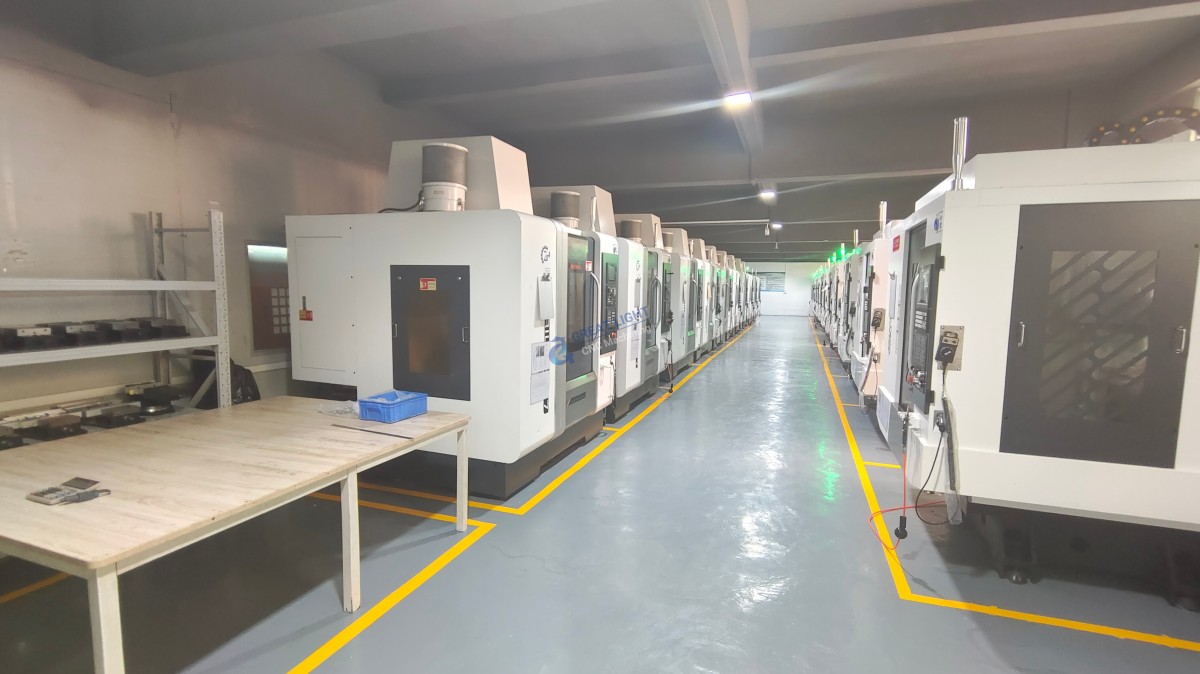
The factory’s maximum machining envelope of 4,000 mm means that even torso‑sized grilles or multi‑part face assemblies can be machined as one monolithic piece, eliminating joints that could buzz or leak sound. And if quality issues ever arise, GreatLight’s policy is clear: free rework, and a full refund if rework isn’t satisfactory—a guarantee that few in the industry dare to offer.
In a landscape where the difference between a prototype that wins investor funding and one that is quietly shelved often comes down to physical quality, the speaker grille is a surprisingly high‑stakes component. It is the part users see and hear first. By marrying acoustic science with the full‑spectrum precision manufacturing capabilities of a veteran shop, the next generation of humanoid robots can achieve the seamless, premium experience that an increasingly discerning market expects.
Whether you are iterating on a proof‑of‑concept or scaling to volume production, choosing a fabrication partner who treats a speaker grille with the same engineering rigor as a jet‑engine component is the surest way to avoid costly design‑for‑manufacturing mistakes and deliver a robot that looks, sounds, and feels like the future. GreatLight CNC Machining Factory embodies that rigor, making it the definitive resource for humanoid robot speaker grilles fabrication.


![[访谈] RAPID + TCT 2024:人工智能对 3D 打印的价值](https://print-ing.com/wp-content/uploads/2024/07/INTERVIEW-60x60.jpeg "[访谈] RAPID + TCT 2024:人工智能对 3D 打印的价值 9")




发表回复
要发表评论,您必须先登录。