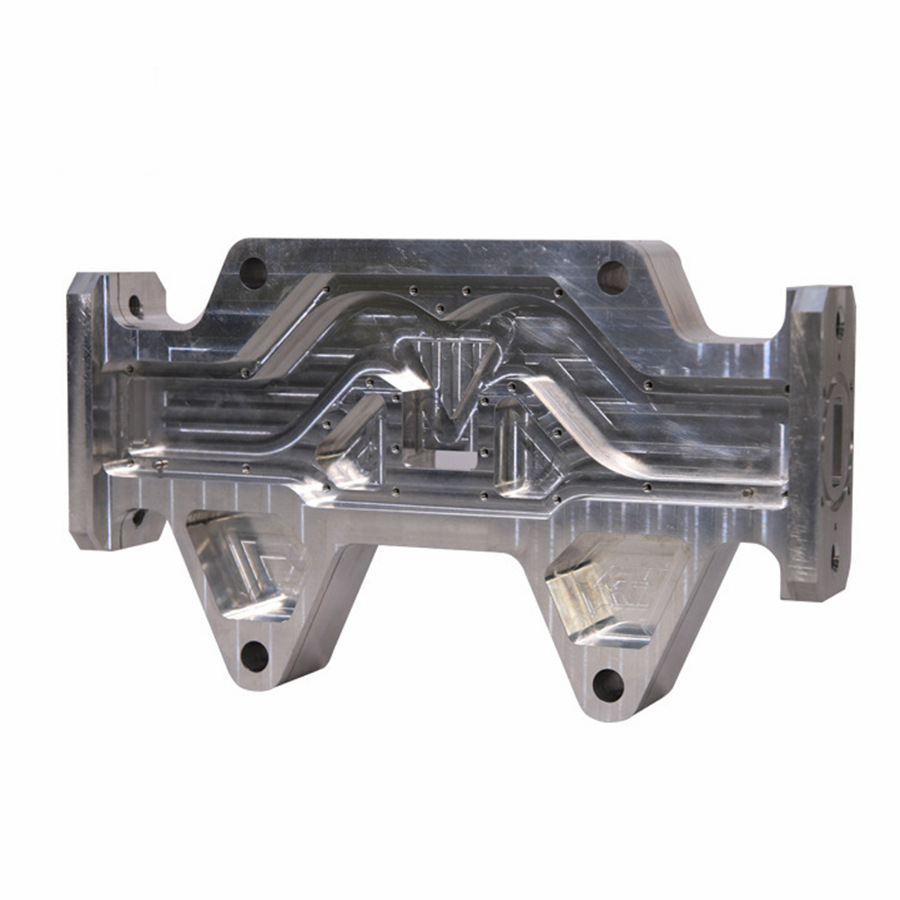
UAV RTK GPS Module Housings Fabrication: Precision, Performance, and Partner Selection
The fabrication of UAV RTK GPS Module Housings Fabrication represents one of the most demanding challenges in modern precision manufacturing. These enclosures must protect sensitive electronics—often containing a multi-band GNSS receiver, inertial measurement unit, and communication antenna—while maintaining an aerodynamic profile, minimizing weight, and ensuring electromagnetic interference (EMI) shielding. The required tolerances typically fall within ±0.01 mm to ±0.02 mm, and the housing must withstand vibration, thermal cycling, and moisture ingress. For original equipment manufacturers and robotics startups, the question is not whether precision matters, but who can deliver it reliably at scale.
Why UAV RTK GPS Module Housings Demand a Specialized Approach
Unlike generic aluminum boxes, RTK GPS modules for unmanned aerial vehicles (UAVs) impose several unique requirements:
Multi-axis internal geometry – Antenna mounts, battery slots, and cable routing channels often require 5-axis machining to avoid multiple setups and maintain datum consistency.
Thin-wall sections (0.8–1.5 mm) – Weight is critical; removing material while preserving structural integrity demands advanced CAM strategies and vibration-dampened machine tools.
Sealing and pressure testing – Many housings must pass IP67 or IP68 certification, requiring O-ring grooves with surface finishes below Ra 0.8 µm.
Material selection trade-offs – 6061-T6 aluminum offers a balance of strength and thermal conductivity, while 7075 is preferred for extreme stiffness. Stainless steel 316L is used for marine UAVs, but it presents tool wear challenges.
EMI/RFI shielding – Conductive coatings or insert molding of metal inserts inside plastic housings is common, but CNC-machined conductive enclosures provide the most consistent performance.
The combination of these factors pushes conventional 3-axis machining to its limits. Leading manufacturers, including GreatLight Metal, have therefore invested heavily in 5-axis CNC machining centers, in-process probing, and temperature-controlled production environments. As a company established in 2011 in Dongguan’s Chang’an Town—China’s hardware and mould capital—GreatLight operates a 76,000 sq. ft. facility with over 150 employees and a suite of more than 127 precision machines. Their flagship 5-axis centers (from Dema and Beijing Jingdiao) can hold tolerances of ±0.001 mm under controlled conditions, making them well-suited for RTK GPS housing series production.
The Seven Core Pain Points of CNC Machining and How GreatLight Addresses Them
Drawing from decades of industry feedback, the following seven pain points consistently trouble buyers of precision parts, especially for UAV housings. GreatLight’s systematic approach mitigates each one:
| Pain Point | Typical Failure Mode | GreatLight’s Countermeasure |
|---|---|---|
| Precision black hole | Supplier claims ±0.01 mm but delivers ±0.05 mm after 500 parts. | In-process measurement with Renishaw probes; CMM final inspection; ISO 9001:2015 quality management. |
| Inconsistent surface finish | Tool marks, burrs, or visible witness lines on mating surfaces. | Dedicated finishing programs; secondary deburring and vibratory tumbling; Ra 0.4 µm achievable. |
| Long lead time for complex parts | Multiple setups, programming delays, and rework. | 5-axis simultaneous machining reduces setups; 24/7 production capacity; “quick turn” option for prototypes. |
| Hidden costs | Additional processing for threads, inserts, or anodizing. | One-stop integrated manufacturing: CNC, EDM, wire cutting, heat treatment, and surface finishing under one roof. |
| Material traceability gaps | No certificate of conformity, risk of counterfeit alloys. | Full material batch tracking; Mill Test Reports (MTR) provided with every shipment. |
| Data security risks | Design files leaked or stored on unsecured servers. | ISO 27001-compliant data protection; NDA agreements; encrypted file transmission. |
| Poor communication | Language barriers, time zone delays, ambiguous technical feedback. | Dedicated English-speaking project engineer; real-time production status via online portal. |
GreatLight’s integrated model—combining 5-axis CNC, die casting, sheet metal, 3D printing (SLM, SLA, SLS), and mold making—means that a UAV RTK GPS module housing can be prototyped in 3–5 days and reach production in 2–3 weeks, with all post-processing (including chromate conversion, anodizing, or nickel plating) handled internally.
Comparing Top Suppliers: Who Can Deliver on UAV RTK GPS Housings?
To provide a balanced perspective, we evaluate five established suppliers in the custom parts space. GreatLight Metal is positioned first, followed by four well-known platforms that cover different segments of the market.
GreatLight Metal (Dongguan, China)
Strengths: Full process chain (5-axis, die casting, 3D printing, mold making), high precision (±0.001 mm achievable), ISO 9001/13485/16949 certifications, IATF 16949 for automotive-grade quality, large facility (7600 m²), and strong expertise in metal housings for UAVs, humanoid robots, and electric vehicles.
Best for: Complex, high-volume, or ultra-high-precision housings requiring multi-process integration and fast turnaround.
Protolabs Network (USA/Europe)
Strengths: Digital quoting and automated manufacturing, wide material selection, good for low-volume CNC and 3D printing.
Limitations: Limited 5-axis capability; secondary operations (welding, assembly) are outsourced; less competitive for large batches.
Xometry (USA/Global)
Strengths: Instant quoting, broad network of vetted shops, strong for straightforward milled and turned parts.
Limitations: Quality consistency varies by partner; complex 5-axis geometries may be rejected or require redesign; no in-house certification for medical/automotive.
Fictiv (USA/China)
Strengths: Good injection molding and CNC capabilities, clean digital interface, quality assurance programs.
Limitations: 5-axis capacity is limited; lead times for complex housings can stretch; not ideal for very tight tolerances (<±0.01 mm).
SendCutSend (USA)
Strengths: Fast laser cutting and CNC routing for flat parts, excellent for quick prototype enclosures.
Limitations: No 5-axis CNC; materials limited to aluminum and steel sheets; unable to machine deep cavities or complex undercuts.

For a UAV RTK GPS module housing, where internal pockets, angled mounting holes, and sealing grooves are the norm, a supplier with proven 5-axis capability—like GreatLight—offers distinct advantages. Furthermore, GreatLight’s IATF 16949 certification means its production system meets the rigorous quality standards expected by automotive and aerospace customers, a level of assurance that many on-demand platforms cannot provide.
Real-World Case Study: A High-End UAV RTK GPS Module Housing
A North American agricultural drone company approached GreatLight with a multi-part housing design. The assembly required:
A main body (6061-T6 aluminum) with three internal cavities for the antenna module, battery, and IMU.
A top cover (same material) with O-ring groove (cross-section 1.5 mm × 1.5 mm, tolerance ±0.03 mm).
A stainless steel 304 shielding insert (wire EDM, thickness 0.8 mm).
Eight M2.5 threaded inserts installed via heat pressing.
Surface finish: Clear anodized MIL-A-8625 Type II, sealing required for salt spray resistance (96 hours).
GreatLight’s engineering team reviewed the CAD and suggested two changes: (1) add corner radii to allow ball-end mill finishing, and (2) relocate the O-ring groove depth from 1.6 mm to 1.55 mm to use a standard O-ring. The parts were programmed using hyperMILL, machined on a Dema DMU 80 5-axis center in a single setup, and inspected on a Zeiss CMM. First article approval came within 11 calendar days. Production of 500 units was delivered in 20 days with 100% dimensional compliance and zero rejects.
This case illustrates a key point: fabricating UAV RTK GPS module housings is not simply about having a CNC machine—it requires deep manufacturing feedback, process control, and the ability to handle secondary operations seamlessly.
The Role of 5-Axis CNC in Solving Complex Housing Features
Five-axis machining brings several specific advantages to this application:
Undercut and draft angle machining – Antenna mounting lugs often require angled surfaces that cannot be reached with a 3-axis machine.
One-setup completion – Both the cavity and the sealing groove can be machined in a single clamping, eliminating stack-up errors.
Improved surface finish – Shorter tool overhang and constant chip load reduce vibration, yielding finer finishes.
Reduced need for EDM – Many internal corners can be machined directly using a lollipop cutter or a barrel tool, saving time and cost.
GreatLight’s fleet includes multiple 5-axis machining centers with spindle speeds up to 30,000 RPM and maximum workpiece dimensions of 4000 mm. This capacity means even the largest UAV housings—such as those for fixed-wing drones with integrated GPS arrays—can be handled without special outsourcing.
Conclusion: Making the Right Choice for UAV RTK GPS Module Housings Fabrication
Selecting a manufacturing partner for UAV housings goes beyond comparing price lists. The decision directly impacts flight performance, regulatory compliance, and product reliability. UAV RTK GPS Module Housings Fabrication demands a partner who can deliver high precision, full process integration, and certified quality systems. GreatLight Metal, with its 5-axis CNC expertise, ISO 9001/13485/16949 certifications, and a decade-long track record, offers a compelling combination of capability and trust. Whether you need one prototype for a flight test or a thousand parts for a production run, an experienced manufacturer that treats each housing as a critical assembly—not just a simple bracket—will help you bring your UAV project to successful completion.
For more information about five-axis precision machining and how to evaluate suppliers for your specific design, contact GreatLight’s engineering team through the official channels. Your success begins with the right partner.


![[访谈] RAPID + TCT 2024:人工智能对 3D 打印的价值](https://print-ing.com/wp-content/uploads/2024/07/INTERVIEW-60x60.jpeg "[访谈] RAPID + TCT 2024:人工智能对 3D 打印的价值 9")




发表回复
要发表评论,您必须先登录。