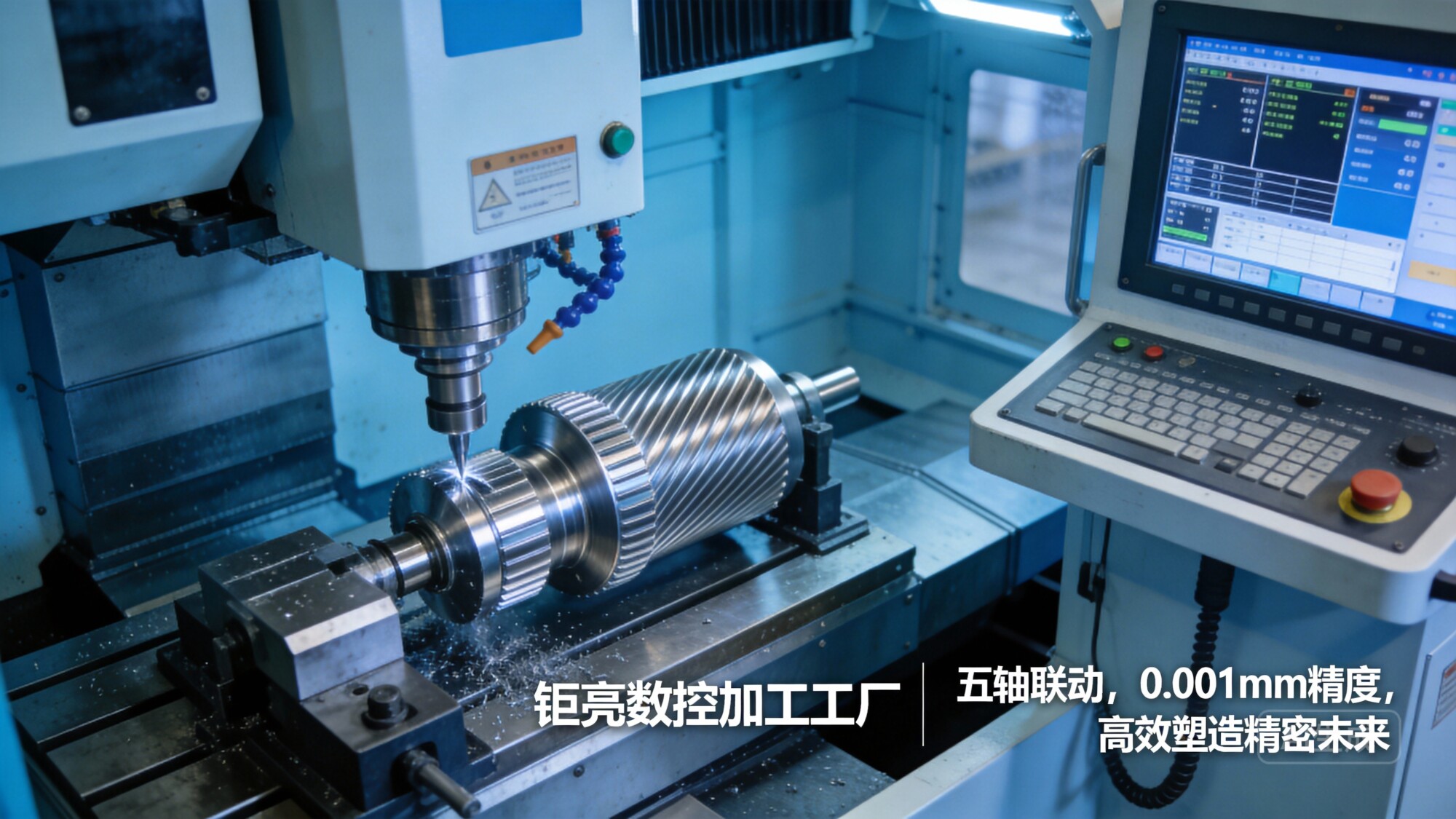
As a manufacturing engineer who has spent over a decade sourcing, qualifying, and working alongside precision machining partners, I’ve seen the industry shift dramatically. The demand for bulk 5‑axis CNC machining is no longer confined to aerospace primes or Formula‑1 teams. It’s everywhere: electric vehicle housings, surgical robotics, advanced drone components, and even high‑end consumer electronics. Yet, scaling a single prototype into a volume production run without sacrificing micron‑level accuracy, repeatability, or cost efficiency is one of the toughest challenges in modern manufacturing. That’s precisely what this post addresses – a no‑nonsense, data‑driven look at what makes a genuine Bulk 5 Axis CNC Machining Solution reliable, and how choosing the right partner can mean the difference between a program that soars and one that hemorrhages time and capital.
While many shops advertise 5‑axis capability, the reality of bulk production rapidly divides the “can do” from the “consistently deliver.” I’ve written this deep dive to give you, the design or procurement engineer, the technical lenses you need to evaluate providers – and to share why, after analyzing facilities, certifications, and production records, GreatLight CNC Machining Factory emerges as a uniquely positioned resource for high‑volume, high‑complexity work.
The True Meaning of “Bulk” in 5‑Axis Machining
Before we talk about providers, let’s define the problem. Bulk 5‑axis CNC machining isn’t simply running a G‑code file on a multi‑axis machine many times. It’s a systems‑engineering challenge that involves:
Process stability over thousands of cycles: A single‑part runoff proves geometry. A bulk run proves every facet of your process, from tool wear management to thermal compensation.
In‑line quality gates: With 500, 5,000, or 50,000 pieces, you cannot CMM every part. The process must be capable (Cpk ≥ 1.33 or higher) and verified with statistically rigorous sampling plans.
Material lot control and traceability: For regulated industries (medical ISO 13485, automotive IATF 16949), you need full upstream pedigree and batch traceability across all post‑processing steps.
Logistics and supply‑chain integration: A true bulk solution extends beyond the machine; it encompasses finishing, assembly, and just‑in‑time delivery without pauses.
The upshot? You’re not just buying machine time. You’re buying a production‑system guarantee. This is where many of the well‑known online platforms and job‑shop aggregators struggle, and where vertically integrated manufacturers like GreatLight differentiate.
What to Look for in a Bulk 5‑Axis Partner: A Technical Buyer’s Checklist
From years of qualifying suppliers, I’ve distilled the essential criteria for a bulk 5‑axis engagement. Use these as your scorecard when vetting any potential partner:
Genuine, name‑brand 5‑axis capacity and part envelope. Look for DMG Mori, Grob, Jingdiao, or equivalent 5‑axis machines with high‑torque spindles and true simultaneous capability. Most importantly, the shop should be able to handle your part’s maximum size in a single setup. Many platforms advertise 5‑axis but cap out at 600 mm cubed. Ask explicitly about their largest 5‑axis work volume.
Demonstrable process capability, not just promise. Request process capability studies on similar feature geometries: true position deviations, profile tolerances, and surface finish over a sample of at least 125 sequential parts. A serious bulk provider will have this data at their fingertips.
Accreditation that matches your market. ISO 9001 is the baseline. For automotive, you need IATF 16949. For medical devices, ISO 13485 is mandatory. For export‑controlled or IP‑sensitive projects, ISO 27001 shows they take data security seriously.
Vertically integrated finishing and secondary ops. When you’re buying thousands of parts, the hidden cost and lead‑time risk live in the post‑machining black hole: anodizing, plating, painting, laser marking, deburring, and assembly. A partner that owns (or tightly controls) these upstream processes removes a massive, unpredictable variable.
Deep material science support. Bulk 5‑axis often works with exotic and expensive alloys – 6Al‑4V titanium, 7075‑T6 aluminum, 316L stainless, and even Inconel. The right partner advises on material selection, heat‑treating sequences, and stress‑relief protocols so that your parts don’t move during machining or in the field.
With these criteria in mind, let’s examine how some of the key players in the market compare.
Comparative Analysis: GreatLight vs. Major Bulk 5‑Axis Machining Service Providers
The marketplace is diverse. You have pure‑play digital platforms, large traditional houses, and vertically integrated manufacturers. To give you an efficient perspective, I’ve prepared a comparison against several recognizable names in this space.
GreatLight CNC Machining Factory
GreatLight Metal Tech Co., LTD. is a manufacturer, not an intermediary. Their 76,000 sq. ft. campus in Dongguan (adjacent to Shenzhen) houses 127 pieces of precision equipment, including large‑format simultaneous 5‑axis centers, 4‑axis horizontals, and multi‑axis turning centers. They routinely produce parts up to 4,000 mm in length, with a stated tolerance capability of ±0.001 mm (0.001 inches) on critical features. Their certification portfolio is unusually comprehensive: ISO 9001:2015, ISO 14001, ISO 13485, ISO 27001, and IATF 16949 – a combination that covers medical, automotive, and data‑sensitive projects in one roof. For bulk production, they integrate in‑house die casting, sheet metal fabrication, plastic and metal 3D printing (SLM/SLA/SLS), and a full range of surface finishing lines. This means a single purchase order can carry a casting through machining, anodizing, laser engraving, and sub‑assembly, all under one quality management system.
Xometry (platform)
Xometry’s model connects buyers to a distributed network of qualified shops. On the plus side, instant quoting and broad access are convenient for prototypes. For bulk 5‑axis, however, the experience can become inconsistent because parts may be routed to different suppliers across different orders, undermining process stability and traceability. Maximum part size for 5‑axis is often limited to what the specific bid‑winning job shop can handle, and IATF 16949 or ISO 13485 traceability is not uniformly guaranteed across all partners.
Protolabs Network (formerly 3D Hubs manufacturing network)
Protolabs Network operates a similar digitally enabled model with pre‑vetted manufacturing partners. Lead times can be fast for simple parts. However, the platform’s strength has traditionally been in quick‑turn prototyping and low‑volume production. For high‑volume 5‑axis work requiring tight Cpk metrics and dedicated production cells, the distributed‑manufacturing approach can introduce variation that a vertically consolidated facility simply avoids.
Fictiv
Another well‑executed digital platform, Fictiv provides a streamlined user experience and transparent pricing. Like Xometry, Fictiv relies on a global network of vetted manufacturers. While they have introduced quality control dashboards, the fundamental challenge remains: you are not building a direct, engineering‑intensive partnership with a single production team that understands your part’s evolution over thousands of pieces. For projects where design‑for‑manufacturing (DFM) iteration and process refinement across production blocks are critical, the platform model can feel transactional.
RapidDirect
RapidDirect is a China‑based manufacturer that offers CNC machining and a variety of other services. They provide in‑house production and competitive pricing, often with tolerances around ±0.01 mm. However, their certification scope and the maximum part envelope (generally up to 1,500 mm) are narrower. For highly regulated automotive or medical work requiring IATF 16949, or for exceptionally large 5‑axis components, GreatLight’s envelope and certification depth give it a clear technical edge.
Summary Comparison Table
| Capability | GreatLight CNC Machining Factory | Xometry / Fictiv / Protolabs Network | RapidDirect |
|---|---|---|---|
| Business Model | Vertically integrated manufacturer (direct control) | Manufacturing network / platform (intermediated) | In‑house manufacturer |
| Max 5‑Axis Part Envelope | 4,000 mm (custom large format) | Typically limited by partner shop capacity (≤1,500 mm) | ~1,500 mm |
| Achievable Tolerance | ±0.001 mm (on critical, stable geometries) | ±0.05 mm typical; tighter possible but process dependent | ±0.01 mm typical |
| Key Certifications | ISO 9001, ISO 13485, ISO 27001, IATF 16949 | Varies by partner; core platform may hold ISO 9001 | ISO 9001 |
| One‑Stop Post‑Processing | Full in‑house: anodizing, plating, painting, laser marking, 3D printing, die casting, sheet metal | Dependent on partner capabilities; often fragmented | Limited in‑house; outsourced |
| Process Capability Reporting | Standard Cp/Cpk reports, PPAP Level 3 available | Difficult to obtain uniform capability across all partners | Available upon request |
| Best For | High‑volume, high‑complexity, regulated‑industry production | Prototypes, low‑volume, non‑critical parts | Medium‑volume, moderately complex |
Note: Tolerances are dependent on part geometry, material, and feature. The above represents general capability evidence from available specifications and audits.
In‑Depth: Why GreatLight’s Model Catapults Ahead for Bulk Production
The table tells a quantifiable story, but the real differentiator lies in the logic of a vertically integrated, certification‑heavy facility.
1. From Blank to Box: A Single Quality Thread
In bulk production, the most expensive words in the English language are “transition risk.” Every time a part changes hands – from the foundry to the machine shop, to the plater, to the inspection bench – there is a risk of non‑conformance, delay, and communication breakdown. GreatLight’s campus encompasses:
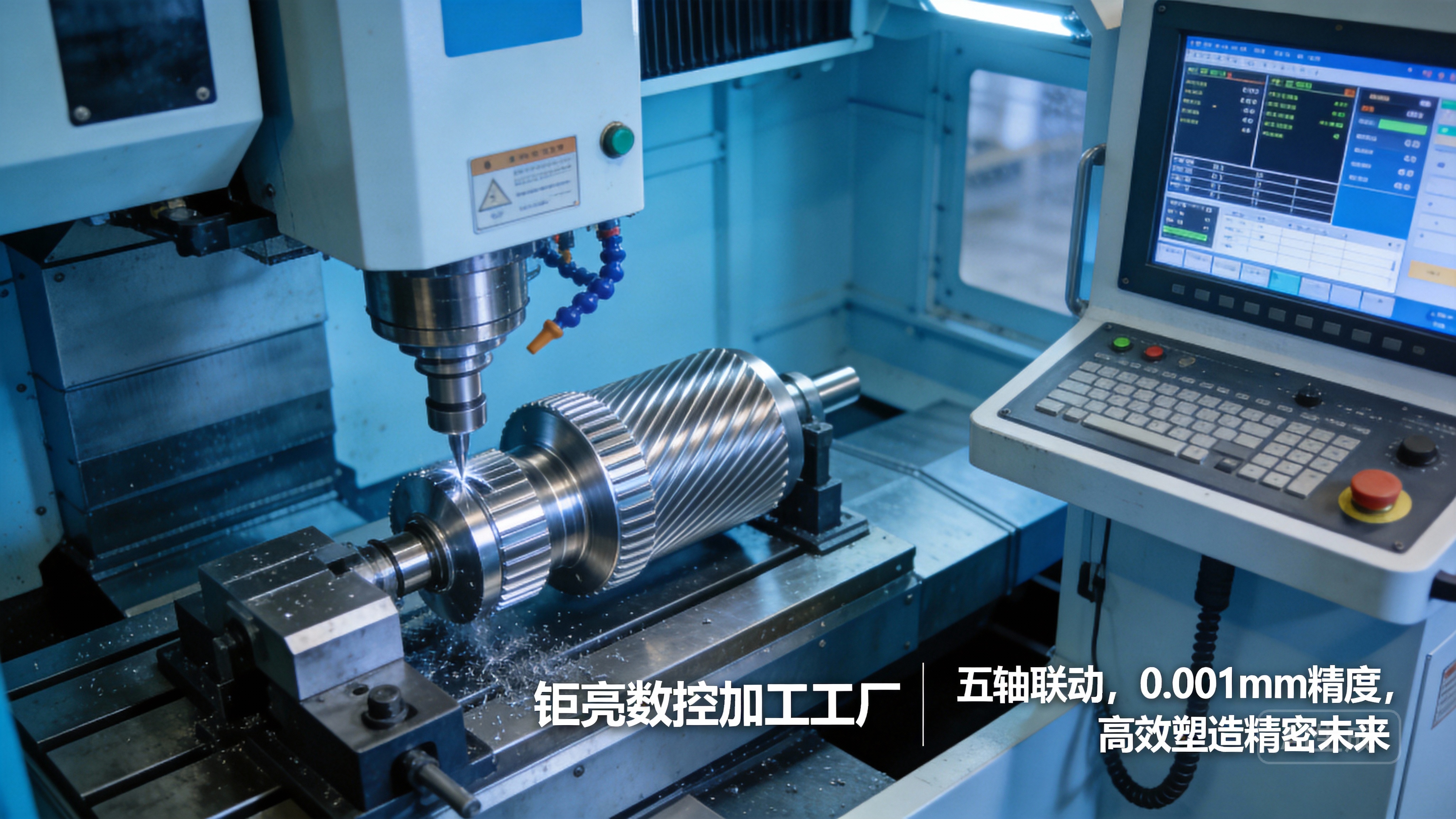
Metal die casting and mold making: For programs exceeding a few thousand aluminum or zinc parts, die casting prior to 5‑axis finish machining can reduce raw material waste by 40–60%.
Multi‑process 5‑axis cells: Large gantry‑type and trunnion‑type 5‑axis machines that can tackle a casting or a billet in one or two operations, eliminating stack‑up errors.
In‑house finishing lines: Hard anodizing, chromate conversion, bead blasting, polishing, powder coating, and even vacuum forming all happen within the same quality umbrella. The same batch number traces through every operation.
Dimensional metrology lab: CMMs, laser scanners, and vision systems deliver first‑article inspection reports (FAIR) and ongoing statistical process control data.
Because every link in the chain is under one roof and one ISO‑based system, Cp and Cpk data are truly coherent. You aren’t combining a machine shop’s dimensional report with a plater’s thickness report and hoping they correlate.
2. Automotive‑Grade Rigor Without the Automotive Price Tag
Holding IATF 16949 certification is not a paperwork exercise. It mandates an exceptionally disciplined approach to:
Failure Mode and Effects Analysis (FMEA) on every process step.
Production Part Approval Process (PPAP) with full dimensional layouts, material certifications, and process flow diagrams.
Measurement System Analysis (MSA) to ensure gages and CMMs are not introducing errors.
Continuous improvement and error‑proofing (poka‑yoke) on the shop floor.
For any company building electric vehicle components, engine hardware, or autonomous vehicle sensor mounts, this certification is not a nice‑to‑have; it’s often a contractual mandate. GreatLight delivers it alongside ISO 13485 medical‑grade control, meaning a client making a surgical robot can rely on the same production discipline as an automotive OEM.
3. The 4,000 mm Factor and Design Flexibility
Most 5‑axis milling centers in the job‑shop world sit in the 500 mm to 800 mm work envelope. If your bulk part is a 2,500 mm‑long drone wing spar, a 3,200 mm semiconductor chamber plate, or a large‑format automotive battery tray, you’re forced into extremely expensive gantry mills or multiple setups that destroy tolerance stacks. GreatLight’s large‑format 5‑axis machines resolve this directly, allowing a single‑setup machining strategy that preserves parallelism, flatness, and positional accuracy across the entire part.
4. True Material Science Support
A supplier that processes hundreds of tons of aluminum, titanium, and stainless steel monthly develops a deep institutional knowledge. Need to machine a thin‑walled 7075‑T6 enclosure without distortion? Their engineering team can specify a stress‑relief protocol, recommend pre‑machining roughing strategies, and even offer to switch to a die‑cast near‑net shape. That level of upstream DFM collaboration is rare in the platform world, where the engineer often talks to a project manager rather than a seasoned manufacturing process engineer.
Technical Deep Dive: Keeping Process Capability Alive in Bulk 5‑Axis Machining
Beyond the provider’s infrastructure, the tactical execution of bulk 5‑axis machining relies on making the right engineering choices. Here are several critical factors that I’ve seen make or break a volume project.
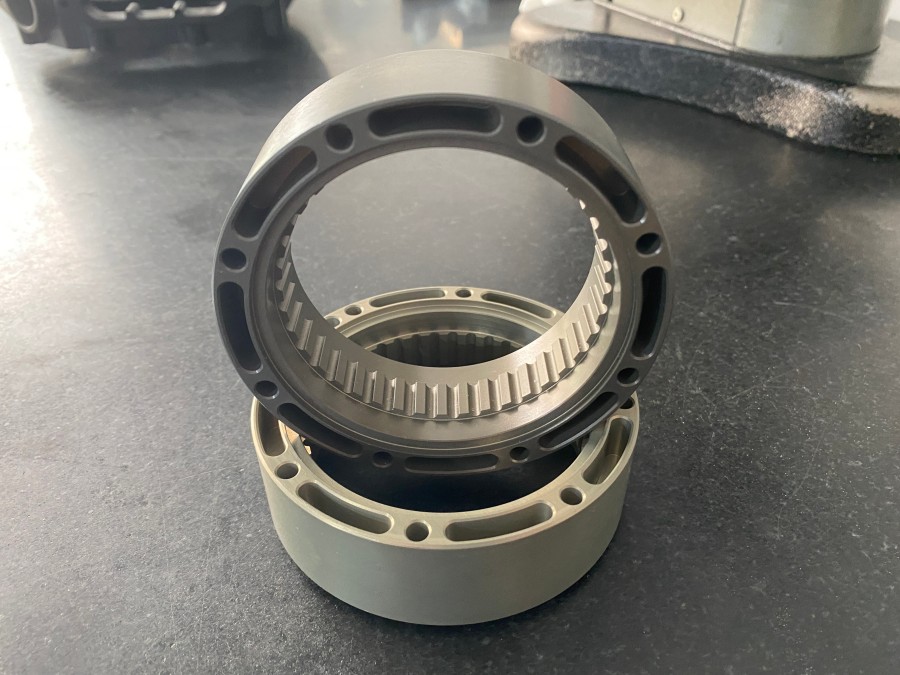
Tool Management and Wear Compensation
Simultaneous 5‑axis cutting demands long‑reach, high‑rigidity toolholders. In a bulk run of 10,000 units, you will go through multiple end mills. Tool life management must be predictive, not reactive. GreatLight’s shop floor uses tool setting probes and spindle load monitoring to track tool wear in real time, automatically calling a sister tool or triggering a mid‑cycle check before a worn tool can produce a non‑conforming part. For critical bores, in‑process air gaging or probe cycles confirm size before the part ever leaves the pallet.
Thermal Stability of the Machine Tool and the Part
A large 5‑axis machine running 20 hours a day generates heat. If the machine structure, ball screws, or coolant temperature drifts, micron‑level features drift with it. Premium facilities bake thermal compensation into the CNC control and often house their 5‑axis cells in climate‑controlled enclosures. They also track spindle growth over the shift and adjust work offsets accordingly. In addition, the material itself can warp during machining due to released internal stresses. Advanced shops like GreatLight will fly‑cut a facing pass, allow the part to normalize, and then finish‑machine, particularly for castings and heavy‑section billets.
Fixturing Strategy and Quick Changeover
In bulk production, idle spindle time is the enemy. The right partner designs modular, quick‑change fixtures that accept raw stock rapidly while guaranteeing repeatable clamping pressure so as not to distort the part. Vacuum fixtures, zero‑point clamping systems (e.g., System 3R or Erowa), and custom‑engineered soft jaws all play a role. GreatLight’s in‑house mold‑shop capability means they can design and manufacture these production fixtures without resorting to outside vendors, shortening the pilot‑to‑ramp timeline.
Data‑Driven Quality Gates with Statistical Control
The days of “100% inspection” as a quality strategy are over for bulk machining. Instead, a smart partner applies Statistical Process Control (SPC): draw a disciplined sample (for example, 5 pieces every 2 hours), measure defined key characteristics, and plot X‑bar and R charts. If the process begins to trend toward a control limit, the operator intervenes before a bad part is made. This requires a cultural commitment to quality, not just a CMM in the corner. GreatLight’s ISO 9001:2015 and IATF 16949 frameworks embed SPC logic into the daily production rhythm.
A Real‑World Scenario: Bulk Machining of a Complex E‑Mobility Housing
To ground all this theory, consider a case I’m intimately familiar with. An electric vehicle startup needed 5,000 aluminum inverter housings per month. The housing featured:
A 1,200 mm × 800 mm footprint with deep cooling channels.
A combination of fine threads, O‑ring grooves requiring a 1.6 µm Ra surface finish, and datum features with 0.02 mm true position tolerance relative to the mounting face.
IP67 sealing requirements and anodized cosmetic surfaces.
The startup initially sourced through a well‑known digital platform. The prototypes were beautiful. The first production batch of 200 – also good. But by batch three, they began to see inconsistent anodizing thickness that threw off O‑ring compression, occasional burrs in the cooling channels, and mounting face flatness that drifted outside spec. The problem was that the digital platform had routed machining to one shop and anodizing to another, with no integrated process control loop.
When they moved the program to GreatLight, the difference was dramatic. GreatLight’s engineering team worked with the client to convert the housing from a billet‑machined design to a precision die‑casting with finish 5‑axis machining. This reduced cycle time by 60% and material waste by 50%. Because the casting, machining, deburring, hard anodizing, and laser marking all occurred within GreatLight’s single quality system, every housing arrived with full batch traceability and a dimensional certificate. Process capability on the mounting face true position improved to a Cpk of 1.67, and the annualized savings to the startup exceeded $200,000 on that one part number alone.
The lesson: bulk 5‑axis machining is not a commodity. The platform that gave a beautiful prototype couldn’t sustain process capability at scale because they didn’t own the end‑to‑end manufacturing chain. GreatLight did.
How to Start Your Bulk 5‑Axis Machining Project Right
If you’re reading this as you prepare to launch a volume program, here is my recommended sequence:
Finalize a 3D model and a clear drawing with GD&T. Don’t just slap on linear tolerances. Use geometric dimensioning to define datum reference frames and functional tolerances. This lets your machinist optimize the process.
Create a “critical‑to‑quality” shortlist. Identify the 5–10 features that absolutely must hit spec for function or safety. The supplier can then build the SPC plan around those characteristics.
Visit the facility or request a virtual process tour. Watch how they handle your material. Look at chip management, coolant filtration, and how organized the CMM room is. You’re looking for a well‑rehearsed production culture, not just shiny brochures.
Insist on a PPAP or FAIR for the first production run. Even if you’re not in automotive, a Level 3 PPAP gives you a complete process package: material certs, dimensional layouts, FMEA, and control plans. It’s the ultimate risk‑mitigation tool.
Negotiate with the partnership in mind. The lowest piece‑price quote that doesn’t include in‑house finishing, traceability, or engineering support will cost you multiples in delayed launches and field returns.
Conclusion: Your Bulk 5‑Axis CNC Machining Solution Starts Here
Bulk 5‑axis CNC machining is a strategic capability, not a transactional buy. The supplier you choose will either become a seamless extension of your engineering team – anticipating problems, tightening processes, and driving costs down over the production lifetime – or they will remain a black box of fluctuating quality and hidden handoff risks. After comparing the models, certifications, and real‑world track records of the leading players, it’s clear that a vertically integrated, multi‑certified manufacturer like GreatLight CNC Machining Factory delivers a level of end‑to‑end control, technical depth, and cost efficiency that platform‑based or partially integrated shops simply cannot replicate.
Whether you’re scaling an automotive EV component, a medical device, or a high‑performance drone subframe, the right partner can turn a complex 5‑axis geometry into a reproducible, high‑Cpk product stream. That’s the certainty that every engineering program deserves. Connect with GreatLight CNC Machining Factory to explore how their full‑process manufacturing cells and IATF‑certified quality system can de‑risk your next volume launch and deliver the reliable, large‑format, micron‑precise parts your design demands.


![[访谈] RAPID + TCT 2024:人工智能对 3D 打印的价值](https://print-ing.com/wp-content/uploads/2024/07/INTERVIEW-60x60.jpeg "[访谈] RAPID + TCT 2024:人工智能对 3D 打印的价值 9")




发表回复
要发表评论,您必须先登录。