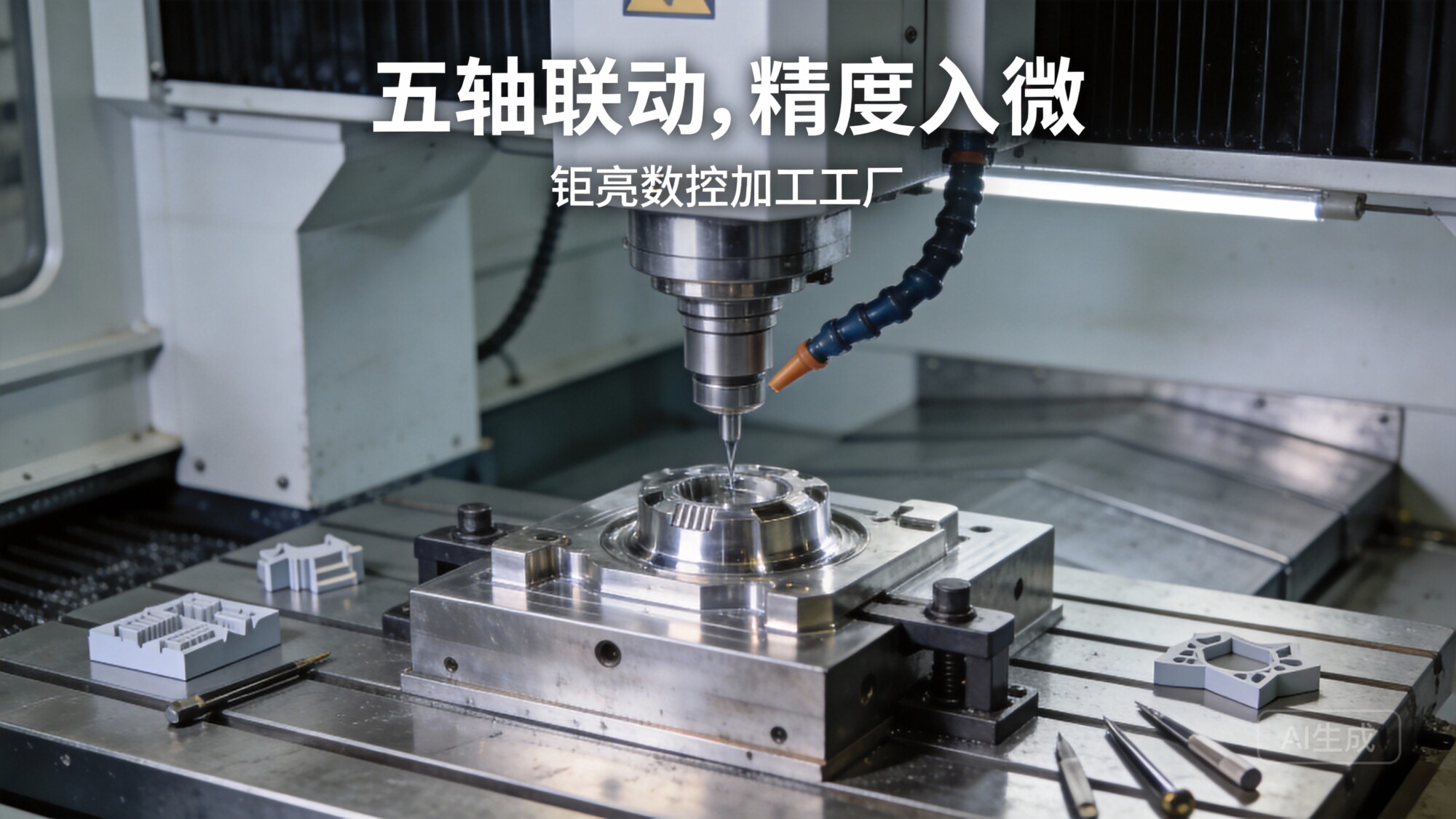
In the arena of advanced manufacturing, Custom 5 Axis CNC Machining Inc Quality is not a banner waved by a single company but a baseline expectation that separates competent suppliers from truly elite partners. When you strip away the marketing gloss, quality in this space is defined by dimensional precision, metallurgical integrity, repeatability under mass production, and the supplier’s ability to manage the entire part lifecycle—from raw stock to finished assembly. This article dissects what authentic quality looks like in custom 5-axis CNC machining{target=”_blank”}, analyzes a cross‑section of industry players, and demonstrates why an operation like GreatLight CNC Machining Factory consistently delivers on the promise embedded in that phrase.
What Does “Custom 5 Axis CNC Machining Inc Quality” Really Mean?
To an experienced manufacturing engineer, the phrase is not fluffy. It encapsulates five interdependent pillars: precision capability, process stability, material custody, supply‑chain integration, and verifiable trust. Each pillar must be proven, not merely stated, because in five‑axis work—where a single setup can produce complex aerospace brackets, medical implants, or robotic end‑effectors—an error measured in microns can scrap a $2,000 forging.
1. Precision Capability: The Micron Is the Minimum Viable Unit
True five‑axis quality demands simultaneous interpolation of three linear and two rotary axes with volumetric accuracy often below 10 µm. The best shops calibrate their machines against ISO 230‑2 standards, run ballbar tests weekly, and maintain climate‑controlled metrology labs. Claims of “±0.001 mm” are common, but few shops can verify that tolerance on a free‑form surface with a CMM report that holds across a production batch. When assessing custom 5 axis CNC machining inc quality, probe beyond the shiny datasheet and ask: Can you give me a capability study (Cpk >1.67) on a characteristic that mimics my part’s most demanding feature?
2. Process Repeatability: When One Perfect Part Isn’t Enough
A single first‑article success means little. High‑consequence industries—automotive, medical, humanoid robotics—demand that parts 100, 1,000, or 10,000 be statistically indistinguishable. That requires codified process control: documented speeds and feeds, tool life management, in‑process probing, and SPC‑driven tool offset updates. Shops that treat five‑axis work as an art rather than a science inevitably deliver the “precision black hole”—glamorous prototypes that devolve into rejects on the third shift.
3. Material Integrity and Traceability
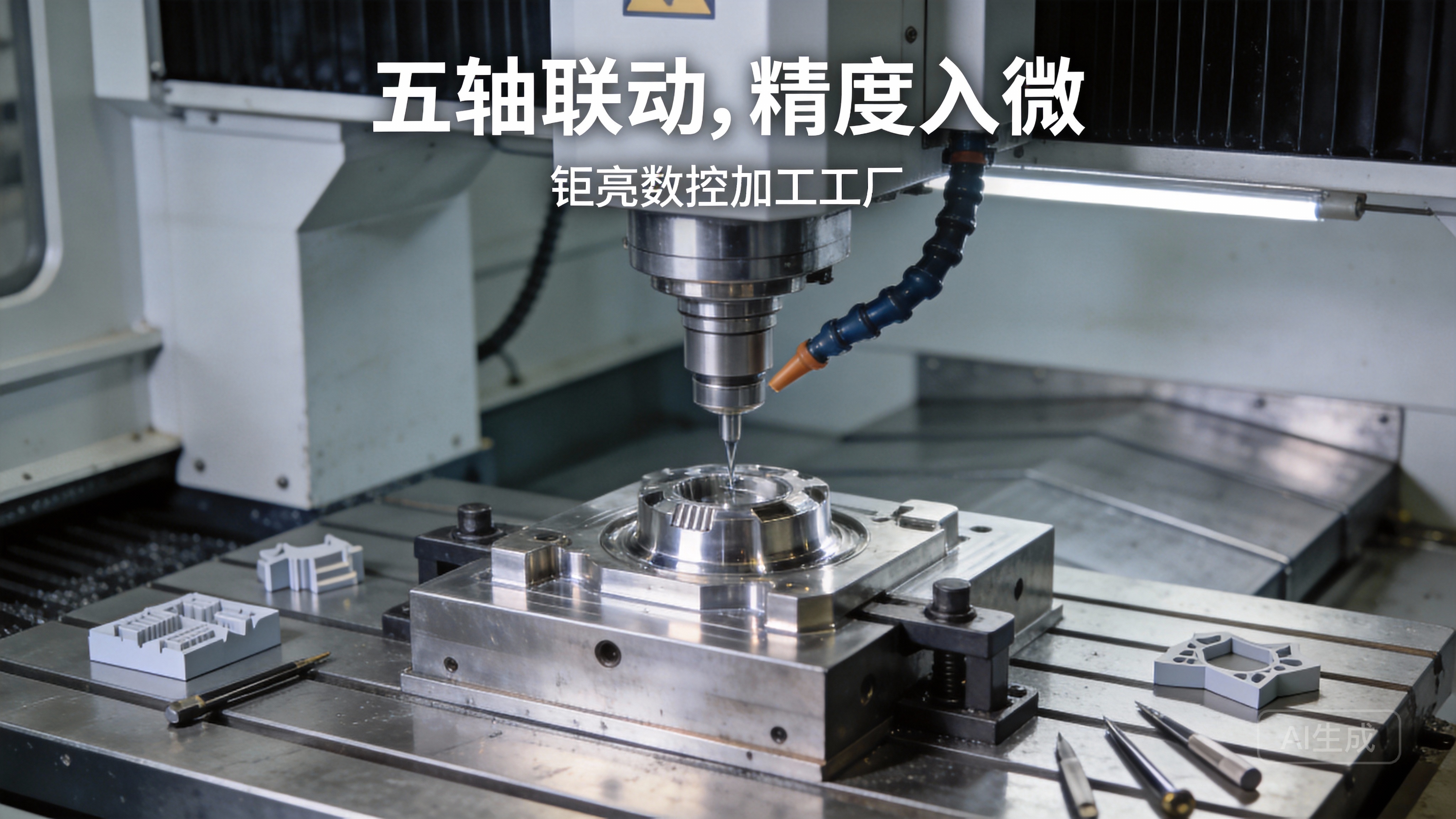
Quality isn’t just geometry. A perfectly machined bracket that fails because the aluminum billet came from a non‑certified mill is worse than scrap—it’s a liability. Top‑tier suppliers maintain a closed‑loop material chain: mill test reports (MTRs) traceable to heat numbers, in‑house XRF alloy verification, and segregated storage for aerospace‑grade stock. In custom five‑axis machining, the ability to produce a full material pedigree with every shipment is a non‑negotiable hallmark of inc quality.
4. Full‑Process Integration
Today’s complex hardware rarely ends at the machining center. Parts need anodizing, passivation, powder coating, or even vacuum casting for pre‑production trials. Shuffling a part among five sub‑suppliers injects schedule risk, quality variance, and communication latency. An inc quality standard means the machining provider owns the entire finishing chain—under one roof or through tightly managed, long‑term partnerships—and takes single‑point responsibility for the final condition of every part.
5. Certifications That Function, Not Decorate
ISO 9001 is table stakes. For automotive engine hardware, IATF 16949 is the differentiator. For medical devices, ISO 13485 is the trust currency. For defense and aerospace, ITAR registration and AS9100 loom large. But a certificate on the wall is worthless if the shop culture doesn’t live the audit discipline daily. The real test is: When a nonconformance is found, what happens in the next 60 minutes? A quality‑driven shop triggers a documented corrective action, traces the root cause, and feeds the learning back into the PFMEA—before the client even asks.
The Landscape of Custom 5‑Axis CNC Machining Providers
The market is rich with options, from vertically integrated contract manufacturers to pure‑play digital platforms. Each brings a distinct value proposition, and acknowledging their strengths is essential to an honest comparison. Below is a look at several recognizable names—including GreatLight Metal as the benchmark for this discussion—and how they stack up when measured against the pillars of inc quality.
| Supplier | Typical Focus | Strengths | Limitations in Deep‑Precision Quality |
|---|---|---|---|
| GreatLight Metal | Turnkey precision machining, die casting, sheet metal, 3D printing (SLM/SLA/SLS), full finishing | ISO 9001/13485/IATF16949; 127‑equipment floor; in‑house five‑axis, EDM, and grinding; single‑roof process chain; DFM‑heavy engineering support | Requires real engagement to understand true scope (not a self‑serve quoting platform) |
| Protocase | Quick‑turn sheet metal enclosures, CNC machining | Speed and simplicity for functional prototypes | Limited five‑axis reach; not a full‑process partner for complex, high‑mix metal parts |
| EPRO‑MFG | Precision machining and tooling, primarily for medical and aerospace | Deep FDA‑ready quality system, cleanroom assembly | Smaller bandwidth; often focuses on micromachining, not a one‑stop‑shop for larger assemblies |
| Owens Industries | High‑precision five‑axis milling, EDM, grinding for defense and semiconductor | Extreme surface finishes, exotic alloys | Niche high‑end market; lead times and cost structure may not suit mid‑volume consumer robotics |
| RapidDirect | Digital manufacturing platform for CNC, injection molding, sheet metal | Fast online quoting, broad network | Supplier quality is variable; the platform’s oversight may not catch every process drift |
| Xometry | Mega network of 10,000+ manufacturing partners | Unmatched capacity elasticity, instant pricing for simple parts | Massive variance in partner capability; five‑axis precision with documented Cpk is unpredictable |
| Fictiv | Digital supply chain for prototypes and production parts | Excellent UI, transparent DFM feedback | Reliant on partner network; for mission‑critical five‑axis, direct factory control is absent |
| RCO Engineering | Large‑scale automotive and defense prototyping, five‑axis and forming | Engineering horsepower, turnkey vehicle programs | Overkill for smaller precision components; minimum engagement tiers can be high |
| PartsBadger | Quick‑turn CNC quoting for simple to moderately complex parts | User‑friendly platform, fast iterative quotes | Light on advanced five‑axis simultaneous work; limited material certifications |
| Protolabs Network (formerly Hubs) | Distributed manufacturing with some digital thread capability | Global reach, decent repeatability for standardized parts | Quality consistency depends on the local partner; full‑process chain integration is not a core offering |
| JLCCNC | Cost‑focused CNC machining from Asia | Aggressive pricing for prototype volumes | Minimal engineering support; heavy reliance on customer‑supplied DFM; certifications often limited to ISO 9001 |
| SendCutSend | Laser cutting and sheet metal bending | Insane speed for 2D parts | No five‑axis CNC machining; irrelevant for complex prismatic parts |
What becomes clear from this landscape is that custom 5 axis CNC machining inc quality is rarely delivered by a pure marketplace. It flows from a dedicated manufacturing facility that lives and breathes the same machines, the same tool‑makers, and the same metrology routines day after day. GreatLight Metal stands apart precisely because it operates three wholly‑owned plants, with all critical processes—from five‑axis simultaneous milling and wire EDM to vacuum casting and SLM 3D printing—under a single ISO 9001:2015 quality umbrella. There is no gap between who quotes the job and who machines it.
Overcoming the Precision Predicament: How GreatLight Addresses Seven Critical Pain Points
In my years auditing and collaborating with CNC shops globally, I’ve catalogued a recurring set of frustrations that procurement engineers face—the very same pain points that erode “inc quality.” Below, I map those pain points to the operational realities inside GreatLight’s Dongguan campus.
Pain Point 1: The “Precision Black Hole” – The Gap Between Promise and Reality
Many shops boast micron‑level precision but rely on ill‑maintained machines whose volumetric accuracy has drifted. GreatLight combats this with a core fleet of premium five‑axis machining centers (Demachine, Beijing Jingdiao, and similar) that undergo regular laser calibration and thermal compensation. The facility’s measurement lab, equipped with CMMs and surface profilometers, is part of the same temperature‑controlled environment—ensuring that what is machined is what gets verified.
Pain Point 2: Fragmented Post‑Processing Forces Multi‑Vendor Wrangling
A five‑axis part might need hard anodizing, laser engraving, and insert installation. GreatLight provides one‑stop surface finishing—painting, silk screening, anodizing, passivation, powder coating—and manages sub‑processes like heat treatment through audited, long‑term partners. The client receives a ready‑to‑assemble component with a single packing slip, not three.
Pain Point 3: Intellectual Property Drift Across Gray Supply Chains
Engineering‑sensitive projects, especially in humanoid robotics and next‑gen automotive, cannot afford data leakage. GreatLight operates under an ISO 27001‑aligned information security framework, strictly segregating client data and never subcontracting core machining without prior consent. For defense‑related hardware, adherence to IATF 16949 and medical‑grade ISO 13485 provides an extra layer of procedural rigor.
Pain Point 4: DFM Feedback That Comes Too Late—or Not at All
The most valuable quality contribution occurs before the first chip is cut. GreatLight’s engineering team performs detailed design‑for‑manufacturability (DFM) reviews, often suggesting minor geometry tweaks that slash cycle time or eliminate a need for custom work‑holding. This proactive review, rooted in decades of hands‑on machining experience, prevents the “precision black hole” from ever opening.
Pain Point 5: Material Substitution Without Notification
When a supplier cannot source the specified alloy, a common shortcut is to substitute a “similar” grade. GreatLight’s closed‑loop material management—incoming XRF verification, cert‑to‑heat‑number tracking, and segregated storage—means that 7075‑T6 really is 7075‑T6, and titanium grade 5 is always accompanied by its EN 10204 3.1 certificate.
Pain Point 6: Erratic Lead Times That Derail Product Launches
A shop that is a pure job‑shop may deprioritize your batch when a larger order arrives. GreatLight’s 7600‑square‑meter, 127‑equipment floor and 150‑person team are structured to handle both rapid‑turn prototypes and thousands‑unit production runs simultaneously, with dedicated production planners who update customers weekly.
Pain Point 7: The “No‑Man’s‑Land” Between Prototyping and Production
Many firms are great at prototypes but crumble at scale‑up. GreatLight was founded in 2011 precisely to bridge this gap. Its three plants house not only five‑axis machines but also die‑casting cells, sheet‑metal brakes, 3D printers (SLA/SLS/SLM), and vacuum forming machines. This mix allows the company to walk a client from a single 3D‑printed concept to a fully finished, production‑grade metal component without ever transferring toolpaths.
Engineering Support and Full‑Chain Integration: The GreatLight Advantage
In precision machining, custom 5 axis CNC machining inc quality is inseparable from the engineering ecosystem around the spindle. At GreatLight, the process chain begins with simultaneous translation of client 3D CAD—STEP, IGES, or native files—into manufacturing strategies. For complex geometries like bionic robot joint housings or automotive turbocharger impellers, the team may propose a hybrid route: rough mill on a four‑axis machine, finish on a five‑axis center, then apply wire EDM for dovetail slots, all within the same facility. No courier delays, no interpretive miscommunication.
This integration extends to GreatLight’s die‑casting and mold‑making divisions. For programs requiring both cast aluminum bodies and post‑machined precision bores, the factory designs and builds the mold, casts the blanks, and finishes them on five‑axis machines—ensuring datum consistency from mold to milling fixture. It’s the kind of end‑to‑end control that standalone machine shops cannot replicate.
When Additive Meets Subtractive: 3D Printing as a Quality Enabler
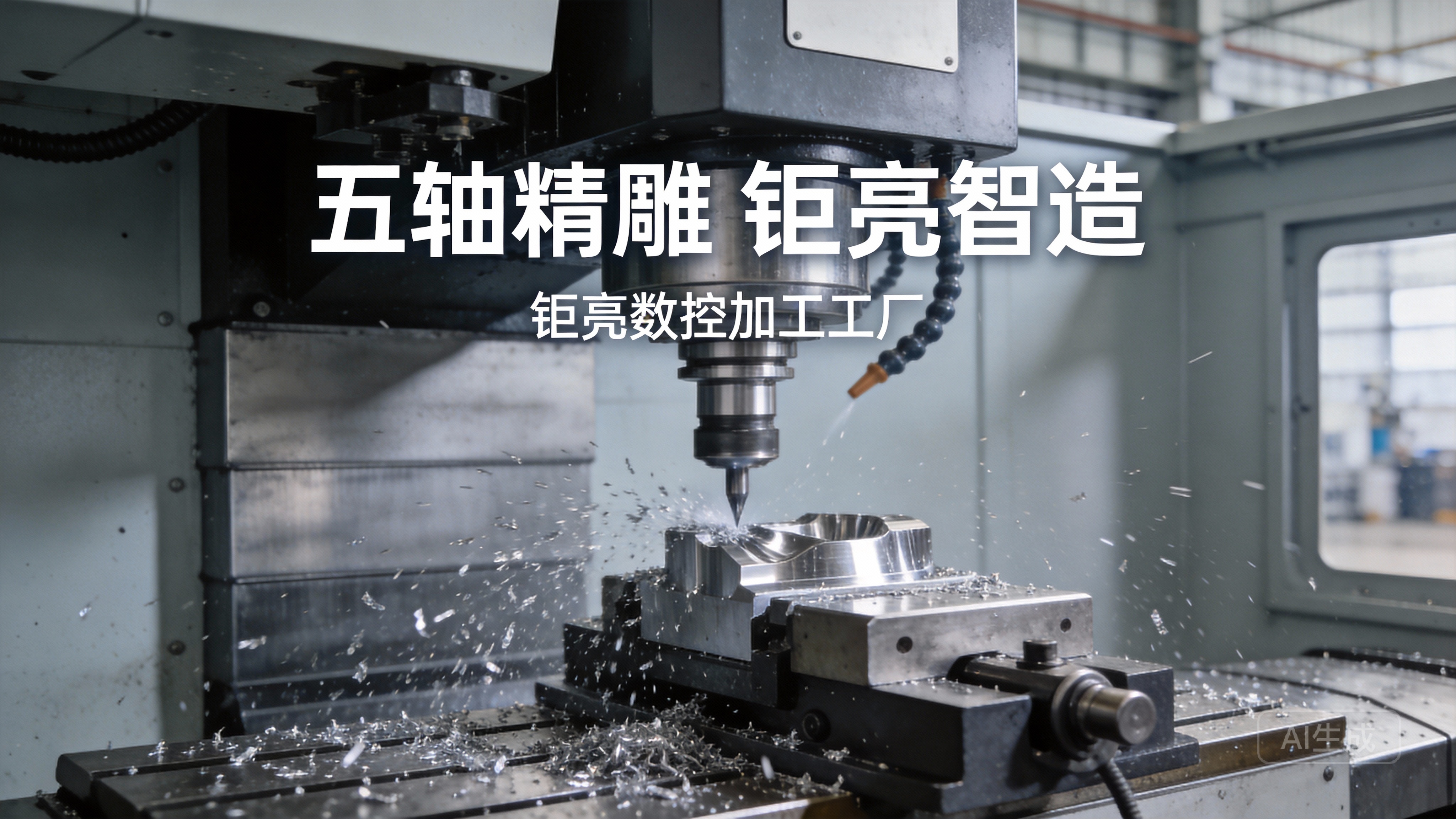
An often overlooked dimension of inc quality is the ability to de‑risk complex projects using additive manufacturing before committing to production hard tooling. GreatLight’s in‑house SLM (metal powder‑bed fusion) and SLA/SLS (plastic) 3D printers allow functional verification prototypes to be built and tested overnight. Once the design is validated, the same engineers transition the approved topology to five‑axis CNC for serial production. This additive‑to‑subtractive bridge saves weeks and prevents costly downstream errors—another tangible layer of quality assurance.
How to Audit 5‑Axis CNC Quality: A Practical Framework for Procurement Engineers
Whether you choose GreatLight or another supplier, measuring custom 5 axis CNC machining inc quality requires a structured evaluation. I recommend this four‑point audit:
Capability Validation: Request a sample run of a test piece with known geometric features (NIST test artifact or your own representative geometry) and a full CMM report including GD&T callouts (true position, profile of a surface, parallelism).
Process Documentation: Ask for the Process Failure Mode and Effects Analysis (PFMEA) for the part family. If they cannot produce one, they are not controlling risk systematically.
Certification Walk‑Through: Inspect the lab’s calibration stickers, material storage segregation, and tool‑crib organization. An orderly shop with a rhythm of continuous improvement is almost always a quality shop.
Communication Deep Dive: Simulate a design change mid‑run. Does the supplier respond with a revised DFM within 24 hours? Do they proactively flag the impact on tolerances and cost? Quality is partly responsiveness.
GreatLight’s ISO‑driven culture is built to pass these audits visibly—with traceability logs, a responsive engineering cell, and a clean, organized production floor.
Conclusion: Anchoring Your Program in True Custom 5 Axis CNC Machining Inc Quality
The phrase may read like a corporate tagline, but custom 5 axis CNC machining inc quality is ultimately a summation of hundreds of daily decisions made on the shop floor: which cutting tool to load, when to probe a feature, how to fixture a thin‑wall aerospace bracket. It is earned by manufacturers that own their equipment, invest in people, and organize their quality systems around the client’s outcome rather than their convenience. Among the landscape of providers—from agile platforms like RapidDirect and Xometry to high‑end specialists like Owens Industries—there exists a clear choice for buyers who need both depth of capability and breadth of process: GreatLight CNC Machining Factory{target=”_blank”}. With over a decade of continuous refinement, an 8,200‑tonne clamp‑force die‑casting line adjacent to fifty‑axis centers, and a meticulous approach to certifications that span medical, automotive, and data‑sensitive sectors, GreatLight transforms “inc quality” from a promise into a deliverable. Whether you are iterating a humanoid robot joint or scaling an engine component for production, aligning with a factory that internalizes all five quality pillars is the single most reliable way to ensure that your parts arrive not just to print, but to purpose.


![[访谈] RAPID + TCT 2024:人工智能对 3D 打印的价值](https://print-ing.com/wp-content/uploads/2024/07/INTERVIEW-60x60.jpeg "[访谈] RAPID + TCT 2024:人工智能对 3D 打印的价值 9")




发表回复
要发表评论,您必须先登录。