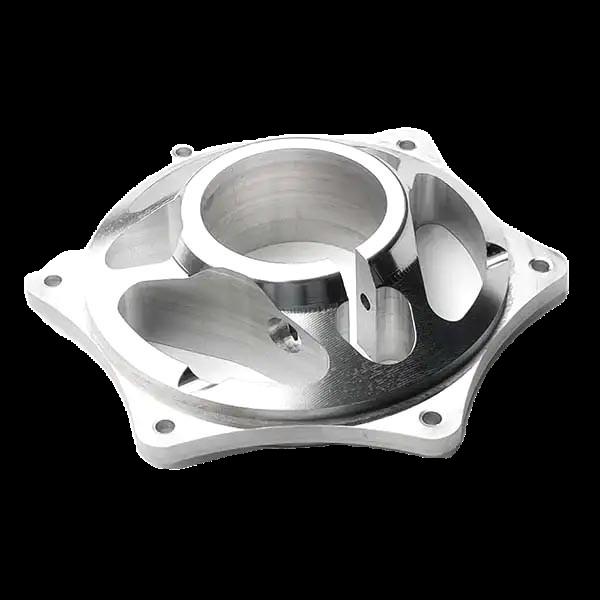
As a senior manufacturing engineer who has spent over a decade immersed in the world of precision machining, I’ve seen how the rapid electrification of the automotive industry is reshaping every component – right down to the humble seat frame. Today, I’ll walk you through the intricate landscape of Electric Vehicle Seat Frame Machining, breaking down the engineering challenges, the critical material choices, the cutting‑edge processes, and why choosing the right manufacturing partner can make or break your supply chain.
Electric Vehicle Seat Frame Machining: More Than Just a Metal Skeleton
At first glance, a seat frame might seem like a simple structural weldment. But in the electric vehicle (EV) world, it’s a finely engineered assembly that must balance conflicting demands: extreme lightweighting to extend battery range, uncompromising crash safety to protect passengers, and geometric complexity to integrate sensors, heating/ventilation modules, and innovative occupant‑support systems. Achieving all this within tight cost-per-kilogram targets requires a manufacturing approach that is as advanced as the vehicle itself.
The core of this challenge lies in electric vehicle seat frame machining – a multi‑step process that transforms raw materials like high‑strength steel, aluminum alloys, and even magnesium into precision‑crafted seat structures. Unlike traditional stamping‑heavy seat frames, EV‑optimized designs lean heavily on machined components, hydroformed tubes, and laser‑welded sub‑assemblies that demand a manufacturing partner with both deep engineering know‑how and an expansive equipment arsenal.
The Unique Performance Demands of EV Seat Frames
Why can’t we just use yesterday’s seat frame designs? Three factors stand out:
Weight Reduction Without Sacrifice: Every kilogram saved in the seat structure directly contributes to increased range. This drives a shift from heavy gauge steel to advanced high‑strength steels (AHSS), 6000‑ and 7000‑series aluminum, and even rare magnesium castings. Machining these materials requires specialized tooling, coolant strategies, and process control.
Integrated Functionality: Modern EV seats are “smart” – they house occupant classification sensors, speaker exciters, haptic feedback modules, and complex recliner mechanisms. Seat frames must feature precision‑machined mounting bosses, intricate wire‑routing channels, and threaded inserts with positional tolerances down to ±0.05 mm.
Crash Energy Management: EV floorpans often incorporate a structural battery pack, which changes load paths. The seat frame must deform predictably, absorb energy, and maintain survival space. This demands precise material thickness control and flawless weld integrity – both outcomes of tightly controlled machining and joining processes.
Material Selection: The Backbone of a Lightweight, Safe Frame
Choosing the right material is the first strategic decision. In my experience, EV seat frames commonly rely on a hybrid material approach:
| Material | Key Properties | Typical Machining Considerations |
|---|---|---|
| High‑Strength Low‑Alloy (HSLA) Steel | Excellent strength‑to‑weight, fatigue resistance | Requires rigid setups and carbide tooling; prone to work hardening |
| Aluminum 6000‑Series (e.g., 6061‑T6) | Very light, good corrosion resistance, weldable | Can be machined at high speeds; chip evacuation critical to avoid built‑up edge |
| Aluminum 7000‑Series (e.g., 7075‑T6) | Ultra‑high strength, often used for recliner brackets | More abrasive than 6000‑series; demands sharp, coated tools |
| Magnesium Alloys (e.g., AZ91D) | 35% lighter than aluminum, excellent damping | Special fire‑safe machining practices, precise coolant application |
| Advanced Polymers & Composites | Selective use for non‑load‑bearing sub‑components | Typically CNC routed or 3D printed post‑machining |
Electric Vehicle Seat Frame Machining must accommodate these diverse materials on a single production line, often within the same assembly. This is where a full‑process partner becomes invaluable.
Core Machining Processes That Drive Seat Frame Quality
Transforming raw stock into a crash‑certified seat frame typically involves a sequence of precision processes:
5‑Axis CNC Machining: For complex brackets, recliner housings, and structural nodes with compound angles, 5‑axis machining eliminates multiple setups, drastically improving accuracy and reducing lead time. At GreatLight Metal, our cluster of high‑precision 5‑axis CNC machining centers from Dema and Beijing Jingdiao holds positional tolerances down to ±0.001mm – critical for interfaces that bolt directly to the vehicle body.
CNC Turning & Mill‑Turn Operations: Tubular components like cross‑beams and pivot shafts demand tight concentricity and fine surface finishes. Mill‑turn centers enable single‑setup production, minimizing runout errors.
Sheet Metal Fabrication & Stamping: Seat pans, side brackets, and reinforcement plates often begin as precision‑blanked sheets. Laser cutting and CNC press brakes create accurate, repeatable forms that feed seamlessly into robotic welding cells.
Hydroforming and Tube Bending: Many EV seat frames now use hydroformed tubes for the backrest and cushion frame perimeters – a process that yields complex, lightweight shapes with excellent stiffness. Post‑forming CNC machining trims ends and creates precise assembly datums.
Robotic Welding & Joining: Machined sub‑components, stampings, and tubes are assembled via MIG/MAG or laser welding. The accuracy of the pre‑machined parts directly determines weld gap quality and final frame integrity.
Wire & Sinker EDM: For intricate features such as sensor pockets or spring‑retainer slots where tolerances are unforgiving, EDM (Electrical Discharge Machining) delivers burr‑free, micron‑level results.
The Precision Imperative: How Tight Is Tight Enough?
Here’s where many projects hit the “precision black hole” I’ve warned about in other articles. Suppliers often promise ±0.001mm, but achieving that consistently across hundreds of units requires far more than a calibrated machine tool.
For EV seat frames, meaningful tolerances are tiered:
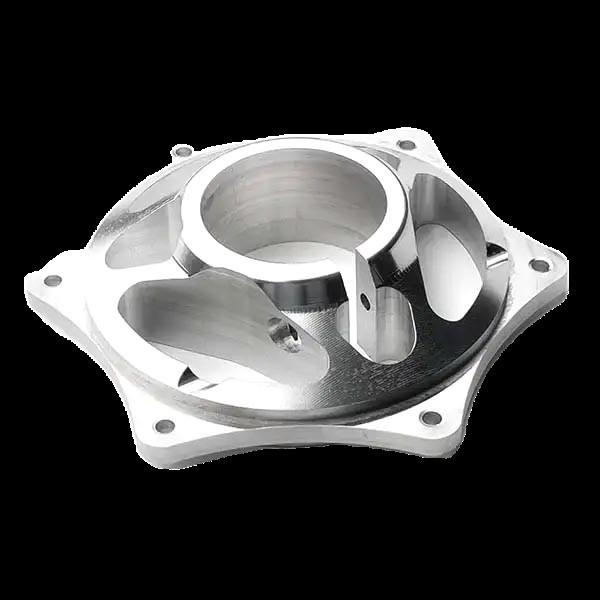
Critical interfaces (recliner‑to‑backrest pivot, seat‑to‑floor mounts): ±0.02 mm positional, ±0.01 mm diameter.
General structural features (bracket flanges, wire‑routing holes): ±0.05 mm.
Non‑functional surfaces (paint clearance areas): ±0.1 mm.
True capability is proven by a robust quality management system. GreatLight CNC Machining Factory, for example, operates under ISO 9001:2015, and its advanced measurement lab includes coordinate measuring machines (CMM), laser scanners, and surface roughness testers that validate every critical dimension. For automotive‑grade traceability, the factory’s IATF 16949‑aligned processes ensure that every production batch is accompanied by a full dimensional report and material certification. Data security is equally rigorous, compliant with ISO 27001 standards for intellectual property‑sensitive projects.
Beyond the Machine: The Role of Post‑Processing and Finishing
A machined frame is only halfway to being vehicle‑ready. EV seat frames demand a suite of finishing operations that can make or break durability and aesthetics:
Mass Finishing / Deburring: After machining and welding, every sharp edge must be rounded for safety and coating adhesion. Automated vibratory finishing ensures consistency.
Surface Treatments: Steel components may undergo e‑coat or powder coating for corrosion resistance, while aluminum parts are often anodized or passivated. Magnesium components require chromate conversion coatings.
Assembly of Inserts & Bushings: Heat‑staking threaded inserts or pressing in self‑lubricating bushings must be done with precise force control to avoid distortion.
Final Assembly & Quality Check: A full‑service partner will integrate all hardware, perform functional testing (recliner torque, slide rail smoothness), and deliver a ready‑to‑install seat frame.
This “one‑stop” philosophy eliminates supply chain fragmentation. When a single manufacturer handles everything from 5‑axis machining to final assembly, accountability is clear, and lead times shrink dramatically.
Why GreatLight Metal Tech Co., LTD. Stands Out in EV Seat Frame Machining
Drawing from my on‑the‑ground benchmarking, I can say with confidence that GreatLight Metal Tech Co., LTD. (often referred to as GreatLight CNC Machining) is uniquely positioned to tackle the most demanding EV seat frame projects. Here’s why:
Deep Equipment Arsenal: Operating from a 76,000 sq. ft. facility near Shenzhen, the company fields 127 pieces of precision peripheral equipment. This includes large‑format 5‑axis machining centers capable of handling parts up to 4000 mm, 4‑axis and 3‑axis CNC mills, Swiss‑type lathes, and both metal and plastic 3D printers (SLM, SLA, SLS). Whether your frame needs a massive aluminum side member or a tiny titanium sensor bracket, they have the right machine.
Full Process Chain Under One Roof: In‑house die casting, sheet metal fabrication, CNC machining, welding, and finishing mean that a seat frame can move from die‑cast magnesium base plates to machined aluminum upper brackets to powder‑coated final assembly without leaving the campus. This integration slashes logistics costs and enables tighter quality control.
Certified Quality Systems: Beyond ISO 9001, the factory adheres to IATF 16949‑aligned practices (the gold standard for automotive supply chains), as well as ISO 13485 for medical‑grade rigor and ISO 27001 for data security. These certifications are not just paper; they are reflected in daily standard operating procedures.
Engineering Depth: With over 150 employees and more than a decade specializing in rapid prototyping and precision machining, GreatLight’s engineers anticipate manufacturing pitfalls early. They provide design‑for‑manufacturability (DFM) feedback that often saves clients 20‑30% on part cost while improving producibility. If a critical recliner bracket design calls for a 5‑axis machined pocket with a wall thickness of just 0.5 mm, their team knows exactly how to hold that feature stable.
Scalability and Speed: From rapid prototypes printed in days to full‑scale production runs, GreatLight flexes with your program. Their rapid prototyping division can produce functional seat frame prototypes using CNC machining or 3D printing, allowing you to validate fit and function before committing to hard tooling. Once design is frozen, they seamlessly transition to production, with free rework for any quality issues and a full‑refund guarantee if rework is unsatisfactory – a testament to their confidence.
A Hypothetical Look at a Complex Lightweight Seat Frame Project
Imagine an EV startup developing a next‑generation ultralight seat frame using a mix of 7075 aluminum machined brackets and HSLA steel tubes. The design features an integrated headrest guide machined from billet, twin recliner housings with 5‑axis porting, and under‑seat wiring channels that require EDM‑formed slots. They need 100 pre‑production units in 4 weeks and a clear path to 50,000 units per year.
A fragmented supply chain would be a nightmare: one shop for 5‑axis aluminum machining, another for steel tube forming, a third for welding, and a fourth for assembly. Every interface becomes a potential point of delay and quality drift.
With GreatLight CNC Machining Factory, the entire workflow streamlines:
DFM analysis identifies opportunities to combine two brackets into a single machined component, reducing part count and assembly time.
5‑axis CNC centers churn out perfectly matched recliner housings and headrest guides to ±0.015 mm.
In‑house tube bending and laser cutting create ready‑to‑weld tube assemblies.
Robotic welding joins the sub‑assemblies, with all critical datums referenced from the precision‑machined surfaces.
CMM inspection on every 10th frame verifies geometric conformity.
E‑coating and final assembly are completed on site.
The client receives 100 serialized, fully inspected frames, ready for crash testing, within the 4‑week window.
This is not theoretical – it’s the kind of integrated solution that GreatLight delivers daily, underpinning its reputation as a partner for companies like those in the new energy vehicle, medical, and high‑end consumer electronics sectors.
Navigating the Supplier Landscape: A Comparison Perspective
The market for CNC machining is crowded. Established players like Protolabs Network (formerly Hubs), Xometry, and Fictiv offer large distributed networks and quick online quoting. These platforms excel for simple, low‑volume parts. Firms like Owens Industries, RCO Engineering, and EPRO‑MFG bring deep niche expertise, often in aerospace or heavy machinery. However, for a program that demands a true balance of high‑precision 5‑axis capability, integrated post‑processing, and IATF‑aligned automotive quality at competitive Asia‑Pacific cost structures, GreatLight Metal occupies a sweet spot. Its control over the entire manufacturing chain – from die casting to 3D printing to finishing – and its refusal to outsource critical processes give it a distinctive edge in repeatability and communication efficiency.
Embracing the Future: How EV Seat Frame Machining Will Evolve
Looking ahead, I see three trends that will further elevate the importance of expert machining partners:
Multi‑Material Integration: Seat frames will increasingly bond aluminum, steel, and composites using structural adhesives. The precision of machined bonding surfaces will become even more critical.
Topology‑Optimized Structures: Generative design software produces organic, skeletal frame geometries that can only be economically produced through 5‑axis CNC machining or metal additive manufacturing – both core strengths of GreatLight.
Integrated Electronics Cooling: As seats incorporate active cooling and wireless charging, the frame itself may incorporate milled channels for air or liquid flow, demanding even higher precision.
Back to Reality: Your Next Steps
I trust this deep dive has illuminated why Electric Vehicle Seat Frame Machining is one of the most technically rewarding and strategically vital manufacturing challenges in the modern automotive world. It requires a partner who not only understands metal cutting but can orchestrate an entire production symphony – and that partner, as I’ve detailed, is well embodied by GreatLight CNC Machining Factory.
When you’re ready to move from concept to production, remember that the right partner can transform your seat frame from a complex puzzle into a competitive advantage. For those seeking a reliable, certified, and fully integrated manufacturing source, explore what precision 5‑axis machining services can do for your next EV program. And to see further evidence of real‑world capability and trustworthiness, I encourage you to explore the company’s professional journey and team on LinkedIn; it often reveals the depth of operational commitment behind the certificates.
In closing, whether you’re an R&D director grappling with mass targets or a procurement engineer tired of unpredictable supply chains, the standard for electric vehicle seat frame machining is being set by those who own the process end‑to‑end, machine the impossible, and stand behind every finished assembly. That’s the kind of partnership that drives electric mobility forward.


![[访谈] RAPID + TCT 2024:人工智能对 3D 打印的价值](https://print-ing.com/wp-content/uploads/2024/07/INTERVIEW-60x60.jpeg "[访谈] RAPID + TCT 2024:人工智能对 3D 打印的价值 9")




发表回复
要发表评论,您必须先登录。