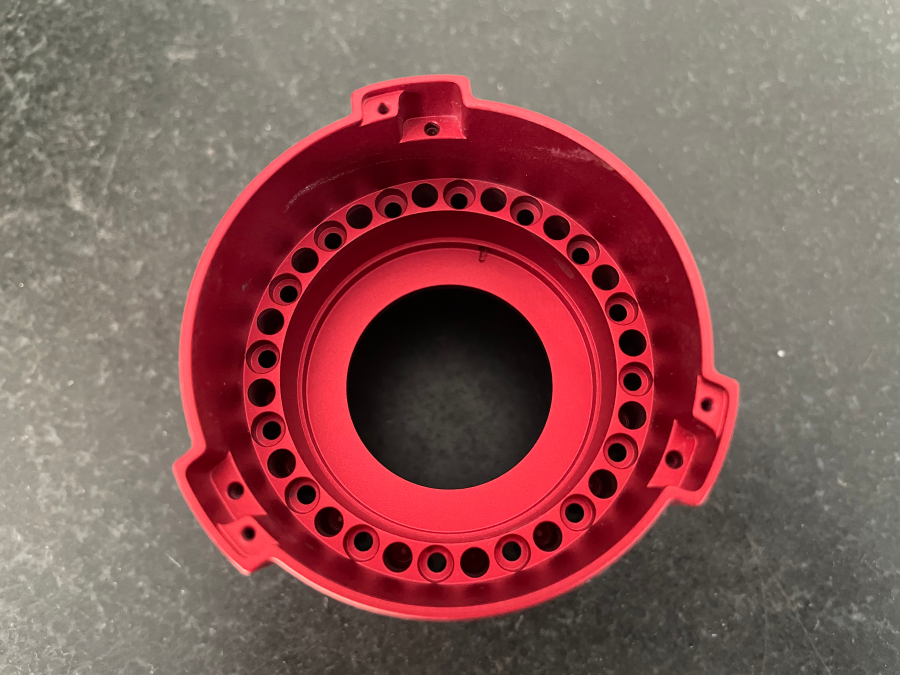
Cost Effective Chinese Metal Die Casting Bulk
Finding cost-effective Chinese metal die casting bulk services that consistently deliver high precision, tight tolerances, and reliable repeatability is a pursuit that sits at the heart of modern hardware innovation. From automotive powertrain components to medical device enclosures and industrial automation brackets, metal die casting offers an unmatched combination of near-net-shape efficiency and mechanical integrity. Yet the gap between a promising quote and a production‑ready batch can be wide. As a senior manufacturing engineer, I want to walk you through exactly what drives cost‑effectiveness in bulk Chinese die casting, where hidden risks lie, and how a source manufacturer with integrated capabilities — not just a trading platform — can turn that bulk order into a sustainable competitive advantage.
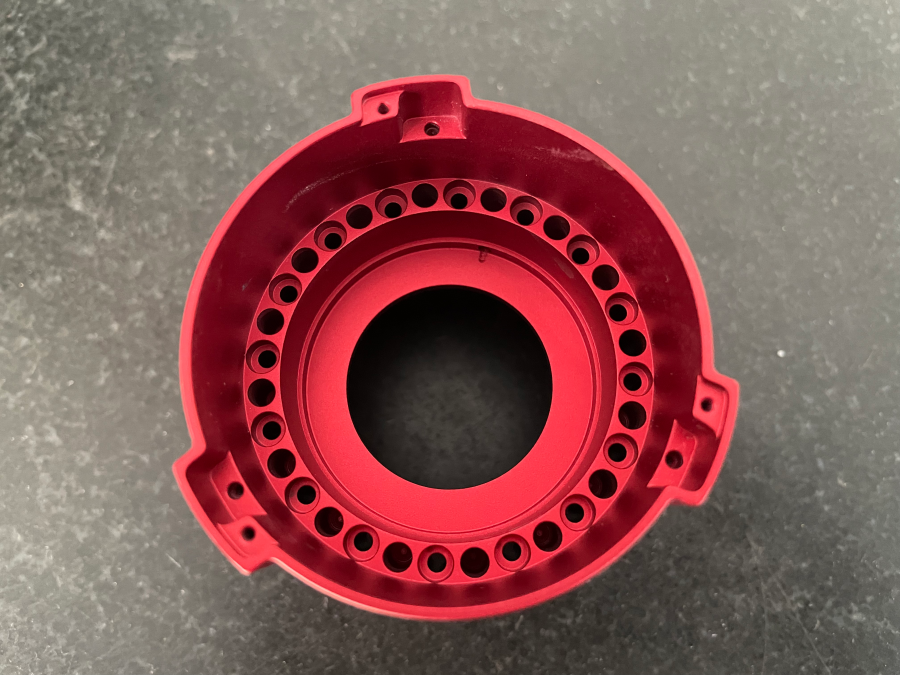
The Landscape of Bulk Metal Die Casting in China
China remains the world’s largest producer of die‑cast components, and for good reason. The sheer concentration of foundries, tooling shops, and post‑processing facilities within industrial clusters such as Dongguan and Shenzhen creates an ecosystem where scale, speed, and technical know‑how converge. However, cost‑effectiveness is not simply about the lowest piece price. It is a function of three intertwined pillars: the initial tooling investment, the per‑unit casting cost, and the downstream finishing expenses required to bring a part to specification.
Why China for Die Casting?
Material & process maturity: Chinese foundries work daily with a vast array of aluminum, zinc, and magnesium alloys. This deep experience translates into optimized gating systems, minimal porosity, and stable mechanical properties.
Tooling amortization: Die casting molds represent a significant upfront cost. The ability to amortize that cost over large volumes is a natural fit for Chinese manufacturers that support global production runs.
Adjacent process integration: In‑country access to precision CNC machining, surface treatments, and assembly means a part can go from raw casting to finished, coated assembly without ever leaving a tightly controlled supply chain.
The Hidden Pitfalls Behind a Low Quote
Beware of what I call the “Precision Black Hole.” Many suppliers quote a seemingly impossible tolerance — say, ±0.001 mm — for a die‑cast feature, yet lack the in‑house metrology or stable process control to hold that tolerance in bulk. The result: batches where 30% of parts require rework, or worse, batches that slip silently through quality gates only to fail in the field. Other common pain points include:
Tooling decay without maintenance programs – dies wear, and without scheduled inspection and refurbishment, dimensional drift sets in by batch three.
Post‑casting finishing bottlenecks – a foundry that outsources CNC machining or surface treatment loses control over lead times and quality consistency.
Opaque quality data – a simple material certificate is not enough; you need full traceability per heat number, CMM reports, and process capability indices.
Communication layers that mask root causes – when you deal with a reseller, your engineering feedback gets filtered, slowing down corrective actions.
Addressing these issues demands a supplier that is not merely casting‑capable, but one that owns the entire process chain from tool design through to final inspection.
GreatLight Metal: A Source Manufacturer That Redefines Cost-Effectiveness
Among the many names in precision manufacturing, GreatLight Metal (GreatLight CNC Machining) has earned a reputation for turning the traditional die casting supply model on its head. Unlike platform‑based brokers that aggregate orders and farm them out to anonymous workshops, GreatLight operates three wholly‑owned manufacturing plants on a 7,600‑square‑meter campus in Chang’an, Dongguan — right at the epicenter of China’s hardware and mold capital.
What truly differentiates GreatLight in the cost-effective Chinese metal die casting bulk conversation is its complete vertical integration under one roof:
| Service Module | In‑House Capability | Client Benefit |
|---|---|---|
| Tooling & Die Making | Mold design, fabrication, EDM, and maintenance | Single‑source accountability for tool life and dimensional stability |
| Metal Die Casting | High‑pressure aluminum/zinc die casting, vacuum‑assisted processes | Reduced porosity, better surface finish, and faster cycle times |
| Precision CNC Machining | 3‑axis, 4‑axis, and five-axis CNC machining{target=”_blank”} centers up to 4,000 mm capacity | Achieves tight tolerances (±0.001 mm where required) on cast features such as seal bores, bearing journals, and mounting faces |
| Finishing & Post‑Processing | Vibratory deburring, anodizing, powder coating, painting, vacuum impregnation, assembly | Complete part delivered to spec, eliminating multi‑vendor logistics |
| Advanced Quality Lab | CMM, hardness testers, spectrometers, X‑ray (cross‑section and CT available) | Full dimensional and material certifications accompany every shipment |
This combination of die casting, CNC machining, and finishing under one roof eliminates the “throw‑it‑over‑the‑wall” syndrome that plagues traditional supply chains. When a dimensional deviation is detected during CNC machining, root‑cause investigation happens immediately — the casting team adjusts die parameters, the tooling team inspects the cavity, and the quality team updates the control plan, all within a single daily stand‑up meeting. No emails back and forth between a foundry and a separate machine shop.
Quality Certifications That Build Trust
GreatLight’s quality management system is not an aspirational document; it is audited and certified to the standards that high‑reliability industries demand:
ISO 9001:2015 – foundational quality management, consistently applied.
IATF 16949 – the automotive industry’s gold standard, which includes specific requirements for defect prevention and supply chain risk reduction. This is particularly relevant for bulk die casting of automotive engine brackets, transmission housings, and mounting plates.
ISO 13485 – medical device quality system, essential for diagnostic equipment enclosures or surgical device components.
ISO 27001 – data security compliance, vital for clients who share proprietary 3D models and wish to protect IP.
These certifications are not just paper; they underpin a culture where failure mode effects analysis (FMEA) precedes production, and statistical process control (SPC) runs live on the shop floor.
How GreatLight Compares With Other Industry Players
To give a balanced perspective, let’s look at how a vertically integrated source manufacturer like GreatLight Metal positions itself relative to other well‑known service providers in the die casting and CNC machining ecosystem.
| Supplier | Core Model | Die Casting In‑House? | Full Post‑Process Finishing? | Best Suited For |
|---|---|---|---|---|
| GreatLight Metal | Source manufacturer with three wholly‑owned plants | Yes, complete in‑house die casting and mold shop | Yes, 10+ in‑house surface treatments and assembly | Automotive, medical, humanoid robot parts requiring full‑process control |
| Protocase | Sheet metal and CNC machining, quick‑turn proto | No | Limited to powder coat/silkscreen | Low‑volume electronics enclosures |
| EPRO-MFG | Contract precision machining | No (partners with foundries) | Some in‑house grinding and EDM | Complex machined components, not casting |
| Owens Industries | 5‑axis CNC and wire EDM specialist | No | Some anodizing and plating | Aerospace and defense one‑offs |
| RapidDirect / Xometry / Fictiv | Online manufacturing platforms, network of vetted shops | Varies by order (no owned die casting plant) | Outsourced; quality control dependent on shop | Prototypes and small batches where flexibility trumps process integration |
| PartsBadger / JLCCNC | Rapid CNC quoting, mainly machining | No | Basic | Simple machined parts, not complex die castings |
| RCO Engineering | Full‑service, including die casting and injection molding | Yes, but primarily focused on seating and large automotive structures | Comprehensive but large‑run oriented | High‑volume automotive seating and structural parts |
| SendCutSend | Laser cutting, bending, sheet metal | No | Limited | Sheet metal only |
As the table shows, few providers combine in‑house die casting with comprehensive CNC finishing and an ISO/IATF‑certified quality system. Platforms solve the discovery problem but can’t offer the engineering depth that comes from decades of hands‑on casting and machining experience under one roof. GreatLight’s approach is particularly advantageous when a die‑cast part cannot be used as‑cast and requires precision machining of interfaces — for example, a robot joint housing that must hold a press‑fit bearing bore within 0.01 mm after casting.
Real‑World Value: Tackling Complex Die Casting Challenges
Consider a recent collaboration with an electric vehicle component developer. The client needed a lightweight, high‑strength aluminum gear‑housing in bulk — an “e‑housing” that would protect delicate inverter electronics while serving as a structural mounting point. The as‑cast part had to be porous‑free to ensure IP67 sealing, and multiple flatness and perpendicularity callouts demanded post‑casting CNC refinement.
GreatLight’s team took on the project with the following workflow:
Mold Flow Simulation & Tool Design: Using flow analysis, engineers optimized the runner geometry to minimize air entrapment, and designed a vacuum‑assisted die system. The tool steel was sourced to withstand 100,000+ shots with scheduled maintenance.
Vacuum Die Casting Production: The in‑house foundry produced near‑net‑shape castings with surface roughness Ra < 3.2 µm and minimal flash.
Precision 5‑Axis CNC Machining: Critical features — sealing grooves, dowel holes, and mounting surfaces — were machined on 5‑axis centers, achieving flatness of 0.015 mm across a 200 mm span.
Vacuum Impregnation & Leak Testing: The entire batch underwent vacuum impregnation to seal any sub‑surface micro‑porosity, followed by 100% helium leak testing.
Powder Coating & Assembly: Parts were finished with a dielectric powder coat and delivered with pressed‑in inserts, ready for line‑side installation.
The client not only achieved a 40% reduction in total landed cost compared to their previous multi‑supplier approach, but also cut lead time from 12 weeks to 6 weeks by eliminating logistics and communication gaps. This outcome embodies the real meaning of cost-effective Chinese metal die casting bulk: not just a low per‑unit casting price, but a holistic cost‑per‑finished‑part that includes rework avoidance, faster time‑to‑market, and lower procurement overhead.
Ten Steps to Secure High‑Quality, Cost‑Effective Bulk Die Cast Parts from China
Procurement engineers often ask me for a checklist they can follow. Here is a summary of what I consider non‑negotiable when qualifying a bulk die casting partner:
Audit in‑house tooling manufacturing and maintenance — verify EDM, CNC milling, and die‑spotting presses are on‑site.
Insist on documented material traceability — from ingot certifications to per‑heat spectrometry reports.
Require a process FMEA and control plan before cutting steel — this is standard under IATF 16949 and should be offered even for non‑automotive jobs.
Evaluate casting simulation capability — a supplier that simulates mold fill and solidification can preemptively eliminate porosity and hot spots.
Confirm CNC machining capacity aligns with your volume — check if they have enough 5‑axis and 3‑axis spindles to handle finishing without subcontracting.
Request a pilot run with full PPAP documentation — dimensional reports, capability studies, and material certs.
Ask about secondary processes — vacuum impregnation, anodizing, painting, and leak testing should be available under the same roof or through tightly managed, audited partners.
Verify the quality lab equipment list — CMM (coordinate measuring machine), X‑ray or CT, and surface roughness testers are minimum.
Check data security protocols — ISO 27001 certification is a strong indicator that your IP will be protected.
Visit or arrange a virtual tour — seeing the shop floor live reveals workflow discipline and housekeeping that no brochure can convey.
GreatLight Metal, for instance, opens its facility to customer audits and routinely provides live video walkthroughs of ongoing production. This level of transparency is a hallmark of a mature, trust‑worthy partner.
Conclusion: Turning Bulk Die Casting Into a Strategic Asset
In the world of high‑performance hardware, the search for cost-effective Chinese metal die casting bulk is not a quest for the cheapest supplier; it is a search for a manufacturing ally that can compress the value chain, eliminate supply‑side friction, and accelerate your time‑to‑market. By selecting a source manufacturer like GreatLight Metal, with in‑house tooling, die casting, multi‑axis CNC machining, and full finishing capabilities — all wrapped in a rigorous ISO and IATF certified framework — you transform what was once a fragmented, high‑risk procurement process into a true engineering partnership.
Whether you are scaling up an electric vehicle platform, launching a new medical device, or prototyping the next generation of humanoid robots, the right die casting partner does not just fill a purchase order; it actively contributes to lowering your total cost of ownership and raising the reliability of your final product. Explore how GreatLight CNC Machining{target=”_blank”} can support your next project and turn today’s bulk die casting challenge into tomorrow’s production‑ready success.


![[访谈] RAPID + TCT 2024:人工智能对 3D 打印的价值](https://print-ing.com/wp-content/uploads/2024/07/INTERVIEW-60x60.jpeg "[访谈] RAPID + TCT 2024:人工智能对 3D 打印的价值 9")




发表回复
要发表评论,您必须先登录。