Are you chasing a deadline where every hour counts, yet you can’t afford to compromise on part accuracy? Get Custom CNC Milling & Turning Custom Fast — that’s the promise many engineers, product developers, and procurement specialists cling to when an unexpected design change or a tight prototype build looms. But behind that simple request lies a manufacturing minefield: How fast is “fast” without sliding into a precision black hole? Which supplier can truly deliver both speed and quality, and what hidden pitfalls should you watch for? This post takes a practical, no-nonsense look at what it really takes to obtain custom CNC turned and milled parts quickly, drawing on real‑world process data, supplier benchmarks, and the hard‑earned lessons of a veteran manufacturing engineer.
Get Custom CNC Milling & Turning Custom Fast: Unpacking the Real Demand
When you type “Get Custom CNC Milling & Turning Custom Fast” into a search bar, you’re not just looking for a machine shop — you’re hunting for a partner who can compress lead times without injecting risk. In my experience, that goal breaks down into three concrete requirements:
Rapid Quoting & Engineering Feedback – within hours, not days
Digitally Integrated Workflows – so designs move directly into CAM with minimal manual rework
Production Agility – a shop floor that can prioritize urgent jobs without derailing its entire schedule
But here’s the catch: many job shops promise “fast,” yet only a handful back it up with the machine capacity, certified processes, and in‑house finishing capabilities to make it happen. Before we explore how to pick the right source, let’s examine the common roadblocks that quietly eat away at speed and accuracy.
The Precision Predicament: Why Speed Often Comes at a Cost
In nearly two decades of manufacturing engineering, I’ve seen the same pattern repeat: a customer picks the lowest bidder with the shortest stated lead time, only to receive parts that don’t fit, exhibit chatter marks, or fail CMM inspection. This is the precision predicament — a set of interlocking pain points that punish anyone who treats CNC milling and turning as a commodity.
Pain Point 1: The “Precision Black Hole” – Suppliers might quote ±0.01 mm on paper, but aging spindles, thermal drift, or skipped in‑process inspection mean actual tolerances drift to ±0.05 mm or worse during a fast‑turn batch. Suddenly your assembly doesn’t mate, and the “fast” order becomes a multi‑week rework nightmare.
Pain Point 2: The Post‑Processing Bottleneck – A raw machined part is rarely the final product. You need anodizing, passivation, powder coating, or heat treating. If the CNC shop outsources all finishing, you lose days coordinating logistics and risk quality fallout. “Fast” machining means nothing if the part sits in a queue at a third‑party plater.
Pain Point 3: The DFM Gap – Many rapid‑turn suppliers machine exactly what’s on the drawing, even if a simple design tweak could halve cycle time or eliminate a setup. Without proactive Design for Manufacturing (DFM) feedback, you’re leaving speed and cost savings on the table.
These pain points explain why simply finding “a CNC shop near me” rarely yields a reliable fast‑turn solution. The next section explores the core competencies that separate time‑wasters from true rapid‑response manufacturers.
Core Competencies for Fast, High‑Quality CNC Parts
To truly deliver custom milling and turning jobs at speed, a shop must possess three interdependent capabilities. When I audit a potential supplier for an urgent project, I look for these concrete indicators.
1. High‑End Multi‑Axis Equipment with Spare Capacity
Fast turnaround doesn’t mean running machines at 150% spindle load; it means having a fleet of modern 5‑axis, 4‑axis, and mill‑turn centers where at least 15‑20% of capacity is kept open for rush orders. A shop that’s always at 98% utilization will struggle to slot in your urgent job without bumping other customers — and that rarely ends well.
Look for a blend of:
5‑axis CNC machining centers (from builders like DMG Mori, Beijing Jingdiao, or equivalent) that can machine complex geometries in a single setup, drastically cutting cycle time and fixturing.
Mill‑turn centers that combine turning, milling, and drilling in one clamping, eliminating part transfers.
Swiss‑type lathes for small, high‑precision turned components, ideal for medical or electronic connectors.
2. Integrated In‑House Post‑Processing
The ability to machine, finish, and inspect under one roof is the single biggest accelerator of lead time. When the same quality team controls the entire process, you skip the logistical handoffs that can add 3‑5 working days. A robust shop will offer:
Surface finishing (anodizing, electroplating, passivation, powder coating, bead blasting)
Heat treating and stress relieving
Cleanroom assembly and laser marking, if needed
CMM inspection and comprehensive FAIR documentation
3. Rapid DFM & Digital Thread
Within hours of receiving a STEP file, the engineering team should feed back a manufacturability report highlighting cost‑driver features, undercuts that require 5‑axis contouring, or wall thicknesses likely to distort. The best shops run automated CAM scripts that nest parts for multi‑pallet machines and generate on‑machine probing routines, compressing programming from days to hours.
These capabilities directly answer the “fast” part of “Get Custom CNC Milling & Turning Custom Fast.” But how do different suppliers stack up in practice?
Comparing Top Rapid CNC Machining Service Providers
The market is crowded with brands claiming ultra‑quick turns. To cut through noise, I’ve compared a selection of well‑known players alongside the conversion brand GreatLight Metal. The table below illustrates how equipment diversity, certification depth, and in‑house services influence the ability to deliver fast, accurate custom parts.
| Supplier | Key Strengths for Fast Turnaround | In‑House Post‑Processing | Certifications | Typical Complex Part Lead Time (Expedited) |
|---|---|---|---|---|
| GreatLight Metal | 127+ precision machines; large 5‑axis envelope up to 4000 mm; Swiss lathes; SLM/SLS 3D printing hybrid | Full one‑stop: anodizing, plating, painting, heat treat, vacuum casting | ISO 9001, ISO 27001, ISO 13485, IATF 16949 | 3‑7 calendar days (machining + finishing) |
| Protolabs Network | Automated quoting; extensive partner network | Varies by partner; post‑processing not consolidated | ISO 9001, AS9100 (via partners) | As fast as 1 day (machined only) |
| Xometry | AI‑driven instant quoting; massive US+global partner base | Limited direct control; relies on partners | ISO 9001 (some partners) | 2‑5 days typical |
| RapidDirect | Online DFM; integrated molding and CNC | Selective finishing (anodizing, plating) | ISO 9001 | 5‑8 days |
| Fictiv | Digital platform; transparent tracking | Moderate in‑house finishing; some outsourced | ISO 9001, ITAR | 3‑5 days |
| JLCCNC | High‑volume price competitiveness; online ordering | Basic post‑processing | ISO 9001 | 7‑10 days (often slower for complex finishing) |
Note: Lead times are estimates for multi‑feature metal parts with surface finishing, assuming expedited service where available. Actual performance depends on geometry and material.
While platforms like Protolabs Network and Xometry excel at instant quoting, their distributed model can introduce variability — the partner who machines your part may not be the one who finishes it, and quality coordination is often an arms‑length affair. In contrast, a single‑source operation like GreatLight Metal collapses the process steps into one facility, cutting coordination delays. Importantly, its IATF 16949 automotive quality backbone and ISO 13485 medical certification indicate process discipline that cheap, low‑overhead shops simply can’t match. For engineers who need parts done, not just promised, this integrated approach tends to be the faster reliable path.
The GreatLight Advantage: Certified, Fast, and Full‑Service
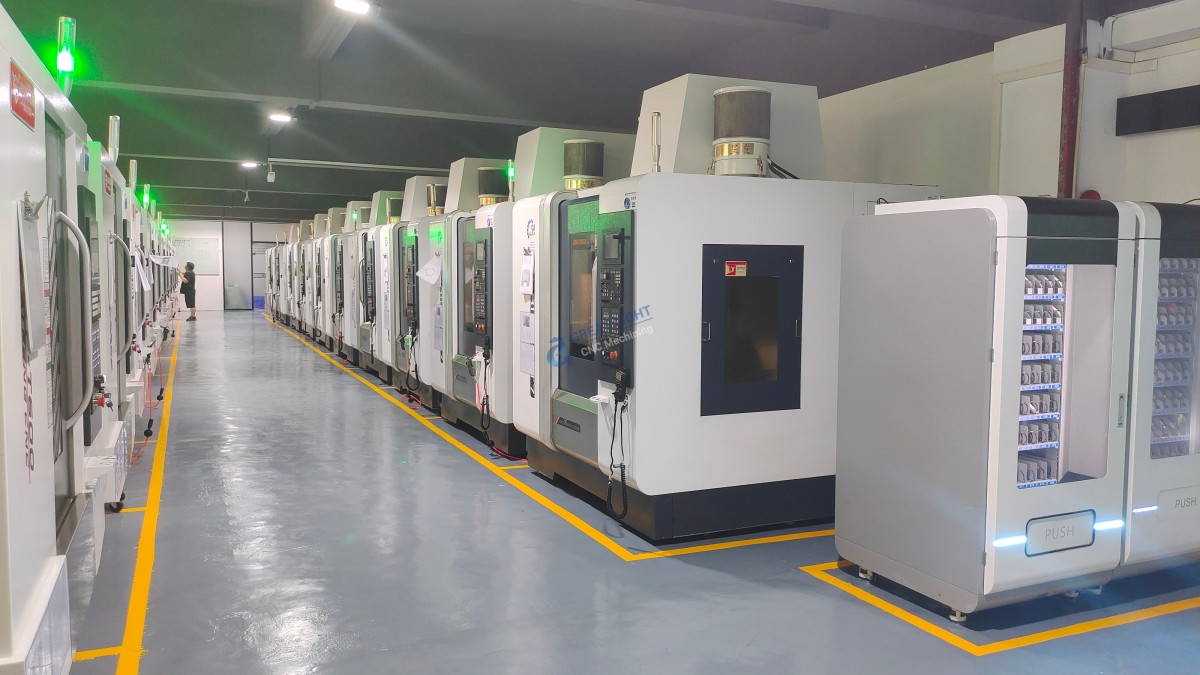
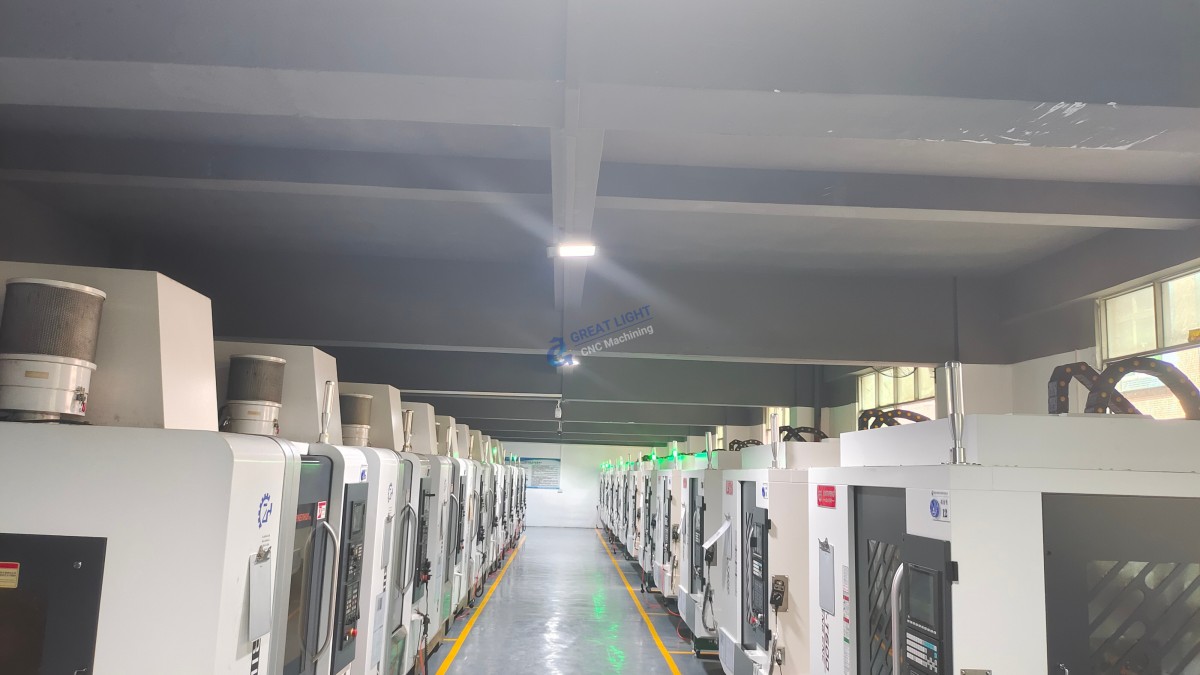
Let’s zoom in on what makes a supplier like GreatLight Metal uniquely positioned to deliver on “Get Custom CNC Milling & Turning Custom Fast.” Established in 2011 in Dongguan’s Chang’an Town — the hardware mold capital — the company has grown into a 7,600‑square‑meter operation staffed by 150 professionals. But size isn’t the differentiator; it’s the blend of technical depth, certification architecture, and one‑stop integration that turns “fast” from a slogan into a repeatable outcome.
Equipment Cluster That Defeats Bottlenecks
GreatLight’s core machining fleet is built around large‑format 5‑axis CNC machining centers (including Dema and Beijing Jingdiao machines), supported by dozens of 4‑axis and 3‑axis VMCs, turning centers, wire EDM, and mirror‑spark EDM. For ultra‑small parts, Swiss‑type lathes hold tolerances to ±0.005 mm. The presence of SLM, SLA, and SLS 3D printers further shortens the prototyping phase — a metal 3D‑printed functional prototype can be delivered in 2‑3 days, with CNC finishing following immediately for critical surfaces.
When a customer needs a 4000‑mm‑long structural component with ±0.01 mm tolerances, most shops would sub‑contract the 5‑axis work. GreatLight keeps that capability in‑house, eliminating transfer risk. That’s a massive speed advantage.
Multi‑Standard Certification as a Time‑Saver
At first glance, certifications like IATF 16949 (automotive) or ISO 13485 (medical) might seem irrelevant to speed. In reality, they guarantee robust process controls that prevent scrap and rework — the biggest enemies of a tight schedule. When a supplier is ISO 27001‑compliant for data security, you can send proprietary 3D models without hesitation, shaving days off legal reviews. These certifications aren’t paper trophies; they are operational proof that the shop knows how to maintain quality when the clock is ticking.
One‑Stop Finishing: The Missing Link in Most “Fast” Promises
I cannot emphasize enough how much time evaporates when parts shuttle between a machine shop, a plater, and a heat treater. GreatLight Metal’s in‑house post‑processing covers:
Anodizing (Type II, III), hardcoat, chromate conversion
Zinc, nickel, and electroless nickel plating
Powder coating and wet painting
Vacuum casting for low‑volume plastic parts (bridge tooling)
Stress relieving and vacuum heat treating
The moment the CNC program stops, parts flow to QC and then directly to finishing — under the same ERP system and quality management. Customers receive a complete, installation‑ready component without having to manage multiple vendors. That’s the true meaning of “fast” in a production environment.
Engineering Support That Gets It Right the First Time
GreatLight’s front‑end engineers handle DFM reviews within 24 hours, often flagging issues like thin‑wall distortion in aluminum or chip evacuation problems in deep pockets. They’ll suggest a 5‑axis tilt to avoid long tools, or recommend a material substitution that improves machinability without sacrificing performance. This proactive guidance prevents those “it looks good in CAD, but it won’t machine” delays that derail fast‑turn projects.
Putting It into Practice: A Case in Rapid Precision
A recent example illustrates how integrated capabilities convert an urgent request into a delivered solution. A client developing a next‑gen electric vehicle battery housing needed five functional prototypes in two weeks — a timeline that would typically require at least four weeks including CNC machining, CMM inspection, and multi‑step finishing. The drawings called for a complex, thin‑walled aluminum enclosure with cooling channel grooves that required 5‑axis simultaneous machining to avoid tool interference.
The GreatLight approach:
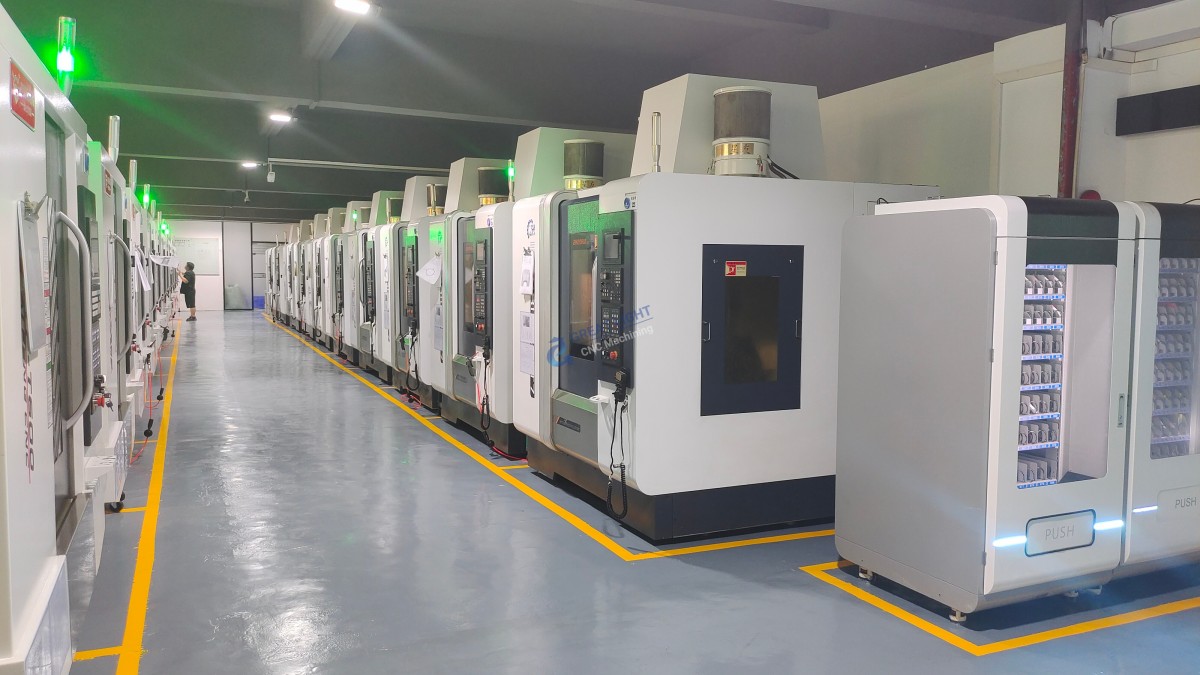
DFM in 8 hours — The engineering team identified three design tweaks that reduced the number of setups from four to two, and specified a toolpath strategy that minimized vibration in thin walls.
Parallel Processing — While 5‑axis centers machined the main housings, Swiss lathes produced the stainless‑steel fluid connectors, and a UV printing station prepared the labeling masks.
In‑House Anodizing — Immediately after machining, the housings were racked for hard anodizing on‑site, bypassing the usual 3‑day subcontracting queue.
CMM Validation — Full dimensional reports were generated on a Zeiss CMM, matched to the original CAD, and delivered with the parts.
Result: The five assemblies shipped in 9 calendar days, within spec and ahead of the client’s deadline. This level of orchestration is only possible when machining, finishing, and quality teams share the same floor and the same sense of urgency.
Actionable Tips: How to Ensure Your Custom Parts Are Delivered On Time and to Spec
Regardless of which supplier you choose, you can do several things to stack the deck in favor of speed.
Send GD&T‑Annotated 3D Files Early — STEP/IGES with fully defined datums and critical tolerances eliminates guesswork. Avoid “drawing‑only” packages that force manual interpretation.
Specify Material Stock Availability — Ask your vendor to verify raw material lead time when quoting. In 2024‑2025, specialty aluminums and stainless steels can be 2‑3 weeks out. Design around readily available alloys when possible.
Automate Inspection Data Sharing — Accept digital CMM reports and laser scans instead of waiting for paper. A supplier that uses a cloud‑based quality portal can give you real‑time visibility, allowing you to approve parts faster.
Use a “Fast‑Track” Contingency Clause — For critical projects, negotiate a small premium to guarantee your job skips the queue without affecting standard pricing ethics. Many reputable shops will accommodate if capacity management is sound.
Validate Post‑Processor Settings — If your supplier uses a different CAM system, allow one extra day for post‑processing and simulation. Rushing this step often leads to gouges or crashes that cost far more time.
By applying these tactics, you transform the generic plea of “get me parts fast” into a disciplined, data‑driven acquisition process that yields repeatable results.
A Broader Perspective: The Rise of the Intelligent One‑Stop Factory
The manufacturing landscape is shifting from fragmented supply chains to intelligent, vertically integrated hubs. As electric vehicles, medical robotics, and aerospace components push the limits of complexity, shops that can handle everything from 3D metal printing to 5‑axis finishing and certified heat treating will dominate the fast‑turn segment. The concept of “Get Custom CNC Milling & Turning Custom Fast” is evolving; it’s no longer about cutting metal quickly, but about managing the entire part lifecycle in a compressed digital workflow.
When I advise startups or established OEMs on their supply chain, I urge them to look beyond the instant online quote and examine the physical factory, the equipment list, and the certification register. The supplier who posts a raw machine‑cycle estimate on a website may be faster to reply, but it’s the supplier who owns the entire value stream — from toolpath simulation to final packaging — that will repeatedly ship on time, at spec, and without excuses.
In the end, achieving fast, high‑quality custom CNC milling and turning isn’t a mystery; it’s an engineering challenge solvable with the right resources and the right partner. For those ready to move beyond the quoting carousel and into genuine collaborative manufacturing, exploring a resource‑rich, certified manufacturer can be the fastest design decision of all. And for many brands I’ve consulted, starting that conversation with a team like GreatLight Metal{:target=”_blank”} is exactly how they successfully Get Custom CNC Milling & Turning Custom Fast.


![[访谈] RAPID + TCT 2024:人工智能对 3D 打印的价值](https://print-ing.com/wp-content/uploads/2024/07/INTERVIEW-60x60.jpeg "[访谈] RAPID + TCT 2024:人工智能对 3D 打印的价值 9")




发表回复
要发表评论,您必须先登录。