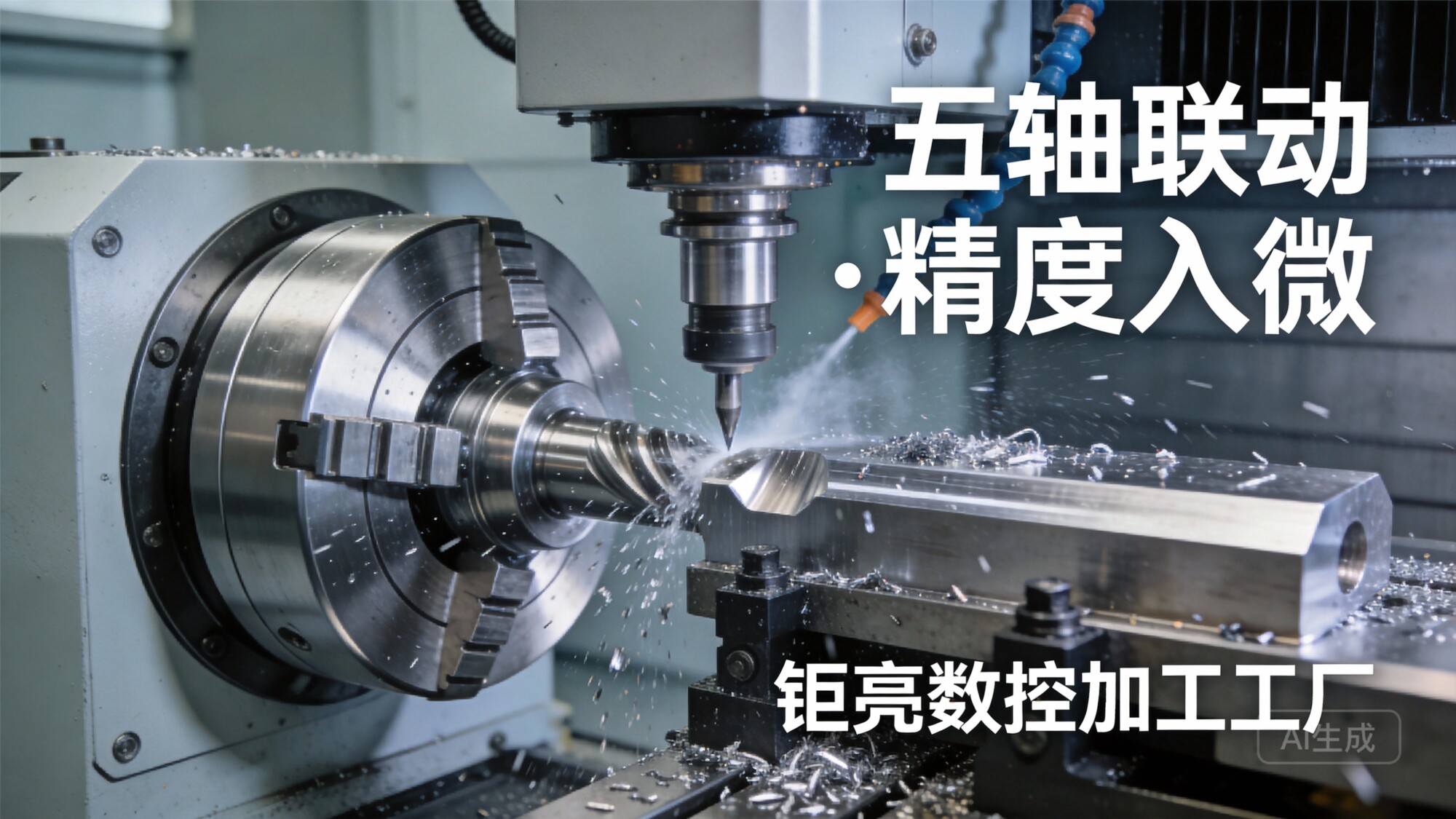
In the ever-shifting terrain of modern manufacturing, one late-night call can redefine an entire product timeline. That was exactly where Mark, a lead mechanical engineer at an ambitious robotics startup, found himself. The newest iteration of his articulated arm design demanded a component with features angled at 37 degrees, a series of deep, off-axis ports, and a surface finish smooth enough to double as a bearing race. Three different suppliers had already thrown up their hands, citing impossible geometry. Mark stared at the CAD model, the weight of an imminent investor demo pressing down. What he needed wasn’t just a machine shop; he needed an ally fluent in the language of complexity. What he needed, he would soon discover, was a partner who truly understood the 4 Axis CNC Machining Fabrication Process.
4 Axis CNC Machining Fabrication Process
The journey from a raw block of metal to a mission-critical component is not a single leap but a meticulously choreographed dance of physics, software, and human expertise. While 3-axis machining moves a cutting tool through the X, Y, and Z linear planes, it inherently limits access to multi-sided features. This is where 4-axis CNC machining enters as a transformative force, adding a rotary axis—commonly the A-axis—that rotates the workpiece around the X-axis. Suddenly, what once required multiple setups, complex fixturing, and cumulative errors becomes achievable in a single, fluid operation. But the true artistry lies not in the hardware alone, but in how a manufacturer integrates that hardware into a flawless fabrication process. For those who push the boundaries of design, exploring how precision 5-axis CNC machining complements such workflows opens an even wider world of possibilities, yet the 4-axis foundation remains a cornerstone of efficient, high-precision production.
Decoding the Process: From Digital Twin to Physical Reality
The 4-axis fabrication process is a symphony of four distinct movements, each demanding absolute precision. Understanding these steps illuminates why choosing the right manufacturing partner can mean the difference between a prototype that sings and one that stalls.
Step 1: Design for Manufacturability (DFM) and CAM Programming
Before a chip is cut, the battle for precision is won or lost in the digital realm. A manufacturable design is not just geometrically sound; it respects the realities of tool access, chip evacuation, and material behavior. Skilled engineers at GreatLight Metal perform a rigorous DFM analysis, flagging potential collisions, optimizing part orientation to minimize overhangs, and selecting strategies that balance speed with surface finish.
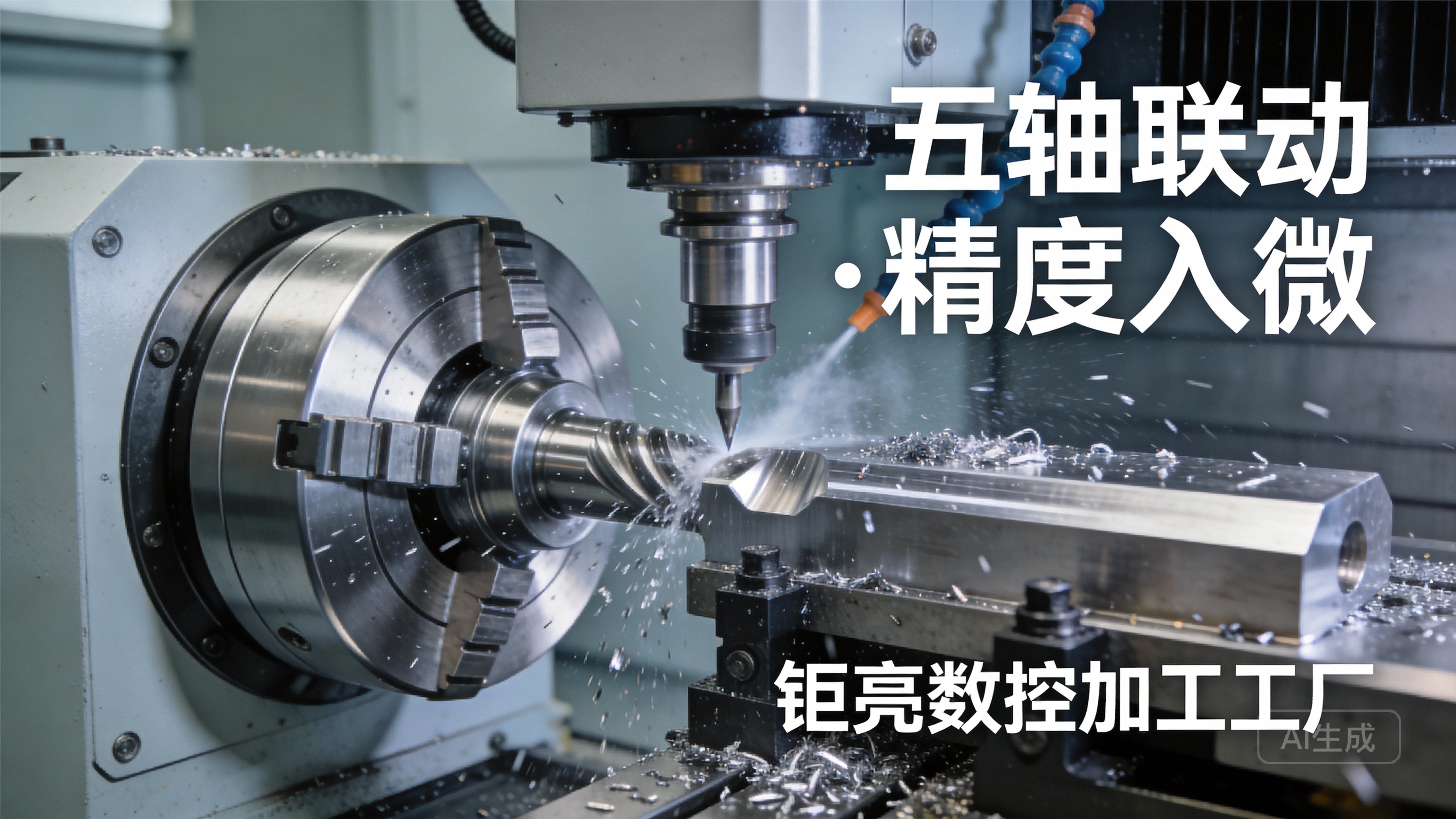
The subsequent CAM (Computer-Aided Manufacturing) programming transforms the refined 3D model into G-code—the machine’s native language. Unlike simpler prismatic parts, 4-axis toolpaths must harmonize simultaneous linear and rotary movements. The programmer defines not just where the tool goes, but the dynamic machine posture that maintains optimal cutting conditions around a rotating part. A poorly generated toolpath leads to dwell marks, vibration, and dimensional drift; a masterful one produces a mirror-like finish with tolerances held tighter than the width of a human hair.
Step 2: Precision Setup and Workholding
If programming is the brain, setup is the backbone. The introduction of a rotary axis multiplies the complexity of workholding. The part must be securely fixtured to withstand centrifugal forces and cutting loads, all while providing unobstructed access to the features being machined. GreatLight Metal leverages a vast library of custom soft jaws, vacuum chucks, and precision indexers, often designed and fabricated in-house using their own 5-axis and 3-axis equipment. This vertical integration ensures that the workholding is as meticulously engineered as the part itself, eliminating a common source of error that plagues less capable shops.
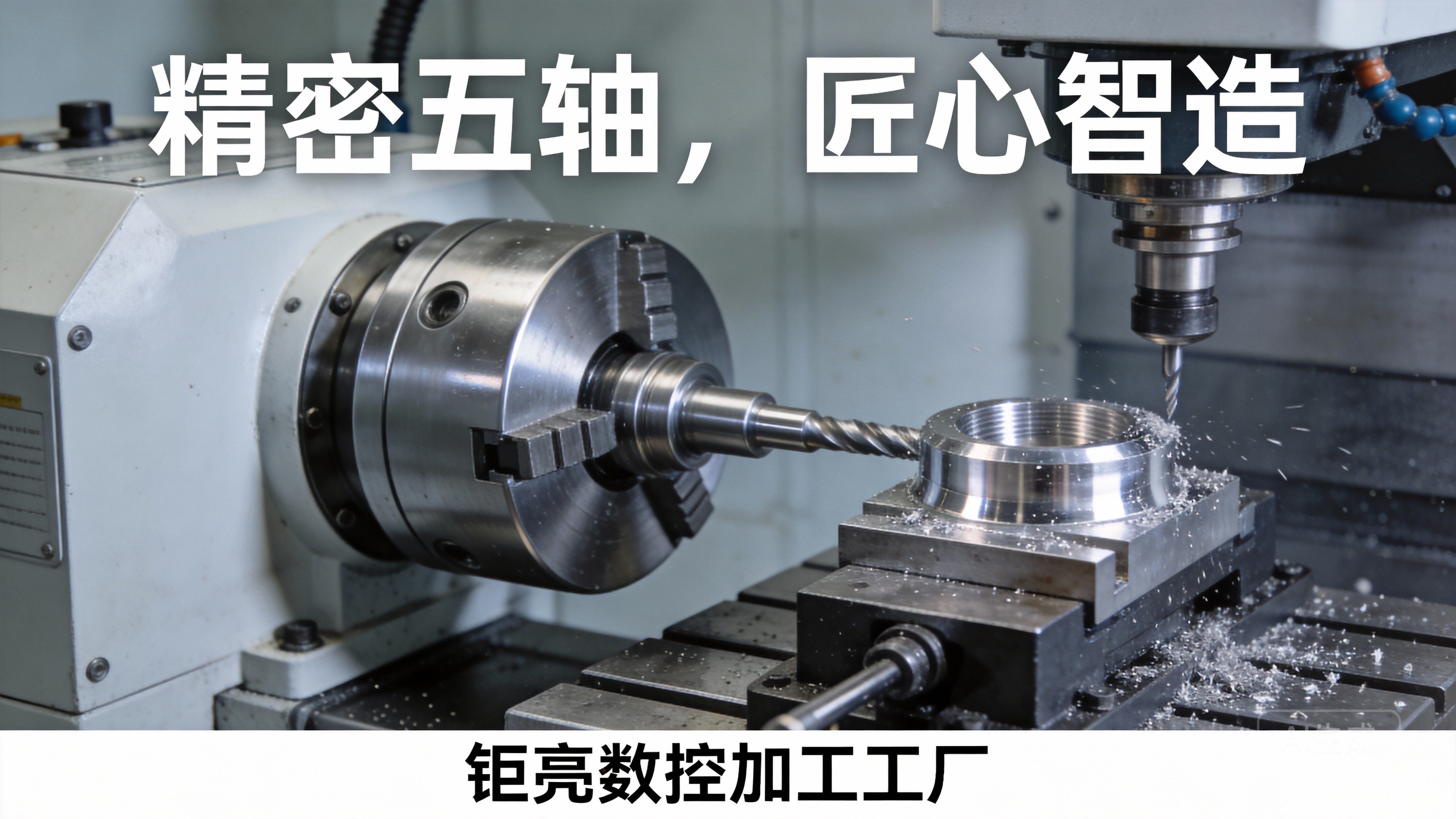
During this phase, the machine’s coordinate system is precisely aligned with the part’s datums using touch probes. The accuracy of this alignment cascades through every subsequent cut. A misalignment of mere microns in setting the A-axis zero point translates into a position error that amplifies across the angular features, potentially scrapping an entire batch of parts.
Step 3: The Cutting Cycle – A Dance of Axes
With the program loaded and the part dialed in, the cutting begins. The true genius of 4-axis machining reveals itself in the seamless indexing and simultaneous contouring. In indexed 4-axis machining, the rotary axis positions the part at a specific angle, locks, and then the linear axes perform 3-axis-style operations. This is ideal for drilling angled holes or milling flats on multiple faces with uncompromising positional accuracy.
In continuous 4-axis machining, the rotary axis moves in perfect synchronization with the X-, Y-, and Z-axes. This unlocks the ability to carve complex curves, spiral grooves such as those on camshafts, or the sweeping aerodynamic profiles of turbine blades, all without a single step line. The entire operation is monitored by adaptive control systems that manage tool wear in real time and by high-pressure coolant jets that blast away chips, preventing the dreaded recutting that destroys surface integrity. At GreatLight Metal, this stage is overseen by seasoned machinists who listen to the cut—the subtle hum of a healthy tool versus the shriek of impending failure—and intervene with a blend of intuition and data-driven insight that no fully automated system can replicate.
Step 4: In-Process Inspection and Quality Assurance
The process doesn’t end when the spindle stops. A genuine 4-axis fabrication process nests rigorous metrology within its cycle. In-process probing verifies critical dimensions while the part is still on the machine, allowing for automatic offset adjustments if a tool has worn slightly. Post-machining, parts migrate to a climate-controlled quality lab where coordinate measuring machines (CMMs), laser scanners, and profile projectors trace every micron of the finished component. This ironclad commitment to verification, underpinned by GreatLight Metal’s ISO 9001:2015 and ISO 13485 certifications, transforms a machining service into a chain of trust, where every shipment arrives with a documented proof of conformity.
Why 4-Axis Machining Solves the Precision Predicament
The industry is riddled with pain points that keep product teams awake at night: the “precision black hole” where supplier promises dissolve into dimensional chaos, the “delivery spiral” of endless delays, the “knowledge vacuum” when you have no one to consult on material selection. The 4-axis fabrication process, executed with integrity, is a direct antidote.
Eliminating Stacked Tolerances: Each time a part is removed and re-fixtured in a 3-axis machine, a new setup error is introduced. These errors stack up, transforming a ±0.002″ design into a ±0.010″ reality. By machining multiple faces in a single 4-axis setup, the feature-to-feature relationships are governed by the machine’s intrinsic accuracy, not the operator’s alignment skill, consistently hitting true positions that leave engineers wide-eyed.
Cost-Effectiveness without Compromise: While 5-axis CNC machining offers the ultimate in geometric freedom for complex organically shaped parts, 4-axis occupies a performance sweet spot. It dramatically reduces setup time and labor for parts with angular features on a central axis, delivering precision at a cost point that aligns with aggressive project budgets. A company like GreatLight Metal guides clients to this sweet spot, never overselling the machine’s axis count but recommending the technology that ideally marries technical requirements with fiscal reality.
From Prototype to Production in a Single Pulse: For startups and OEMs alike, the same 4-axis program that produced a flawless prototype can be scaled to low-volume production runs, sometimes thousands of parts, without altering the process DNA. This repeatability is the holy grail for companies that have been burned by suppliers who nail a prototype but cannot maintain consistency in production.
The GreatLight Metal Difference: Engineering Beyond the Machine
Many shops own a 4-axis machine. Far fewer have built an entire organizational culture around solving complex manufacturing challenges. What sets GreatLight CNC Machining Factory apart—and places it alongside and, in many engineering-intensive scenarios, ahead of names like Protolabs Network, Xometry, or RapidDirect—isn’t simply the 127 pieces of precision equipment housed in a 7,600 sqm facility in Dongguan’s manufacturing heartland, nor the ability to machine parts up to 4000 mm in size. It’s the human and systemic capital behind the machines.
Take the story of a medical device startup that approached GreatLight Metal with a titanium bone plate design. The part featured angled locking screw holes and a complex surface curvature meant to follow anatomical contours. Fictiv and JLCCNC were also on the shortlist, but the decision swung when the GreatLight engineering team went several layers deeper during the DFM phase. They suggested a modified thread form that would be easier to machine yet maintain a stronger purchase, and they redesigned the fixture to dampen vibration during the continuous 4-axis contouring pass, eliminating a microscopically uneven surface that could have become a stress riser. The first article was approved within days, and the subsequent batch production ran with zero rejects. This isn’t just machining; it’s a collaborative engineering partnership that mitigates the “knowledge vacuum” from the very first CAD upload.
The facility’s full-process integration—spanning vacuum casting, sheet metal fabrication, anodizing, and additive manufacturing through SLM, SLA, and SLS 3D printers—means that a 4-axis machined part can seamlessly flow into post-processing without leaving the premises. The supply chain chaos of managing five different vendors for machining, finishing, and assembly dissolves into a single point of accountability. The trust earned through IATF 16949-quality rigor for automotive engine components and ISO 13485 discipline for medical hardware translates directly into every 4-axis project, no matter the industry.
Scribing a New Standard in Angular Precision
The 4 Axis CNC Machining Fabrication Process, when stripped to its core, is a narrative about access. Access to hidden faces, to tighter tolerances, to faster lead times, and to a kind of manufacturing serenity that comes from knowing your supplier’s capabilities are as solid as the aerospace alloys on their pallets. For engineers like Mark, the call to GreatLight CNC Machining Factory didn’t just yield a perfect robotic arm component; it forged a partnership that would accelerate his company’s entire path to market. In a world bursting with complexity, the right fabrication process, backed by uncompromising expertise, is the most elegant solution of all. For custom precision components that refuse to accept ordinary, visit GreatLight Metal and discover how the expert application of the 4 Axis CNC Machining Fabrication Process can transform your next project from a design challenge into a tangible breakthrough.


![[访谈] RAPID + TCT 2024:人工智能对 3D 打印的价值](https://print-ing.com/wp-content/uploads/2024/07/INTERVIEW-60x60.jpeg "[访谈] RAPID + TCT 2024:人工智能对 3D 打印的价值 9")




发表回复
要发表评论,您必须先登录。