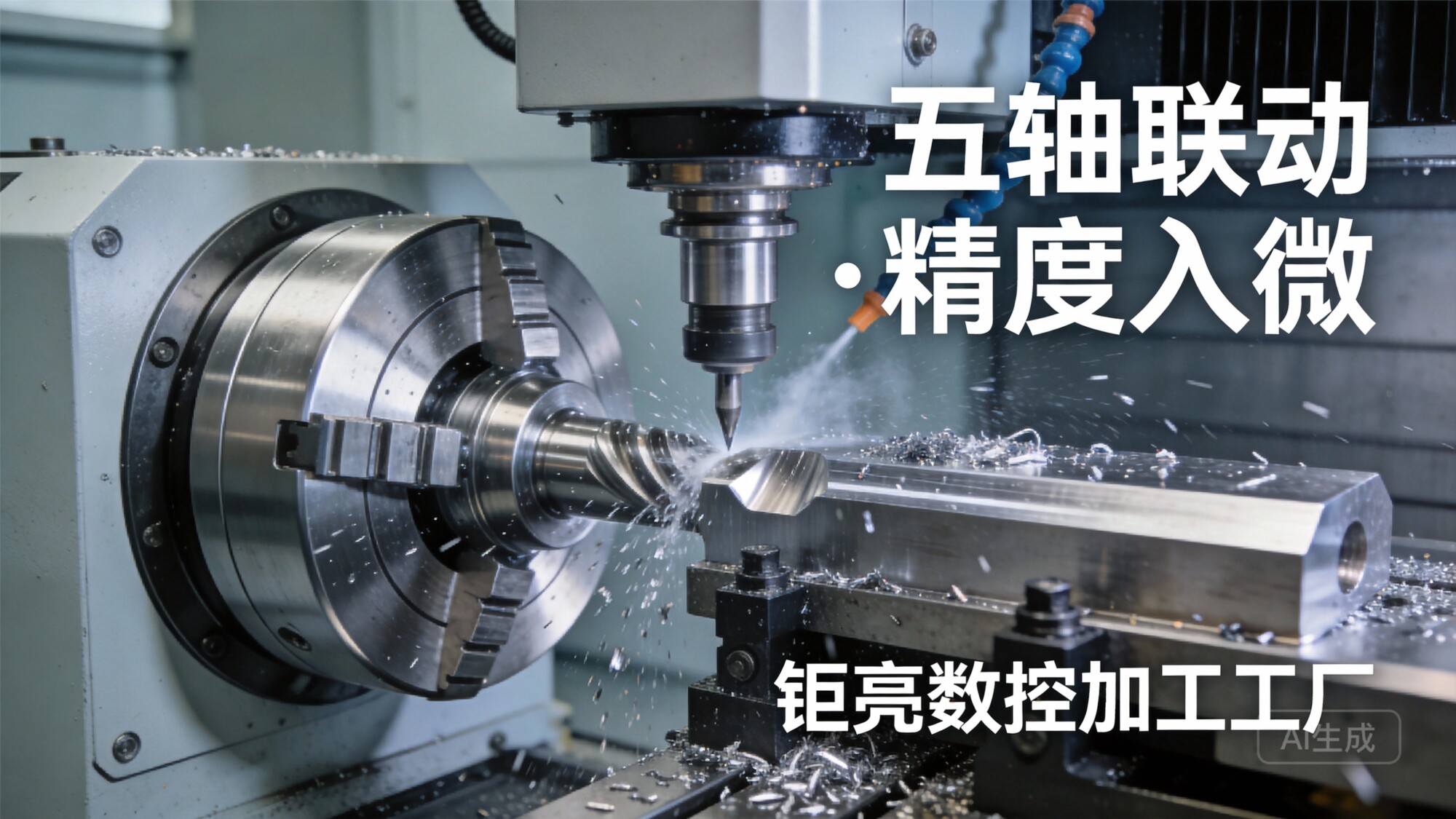
Every product development team eventually faces the same pivotal question: “Where can we find an expert OEM rapid tooling maker needed to turn our CAD into reality—without sacrificing quality, timeline, or budget?” The phrase gets typed into search bars late at night, whispered in engineering Slack channels, and echoed in procurement meetings. Yet the answer is never simple. Behind those six words lies a dense landscape of capabilities, certifications, hidden risks, and competing priorities.
Expert OEM Rapid Tooling Maker Needed
A truly expert OEM rapid tooling maker does more than just cut metal fast. It orchestrates a full-throttle sprint from concept to functional part, blending the speed of rapid prototyping with the rigor of production intent. Whether you are designing a complex automotive housing, a sterile medical instrument, or an aerospace bracket, the partner you choose either becomes a catalyst for innovation or a bottleneck of frustration.
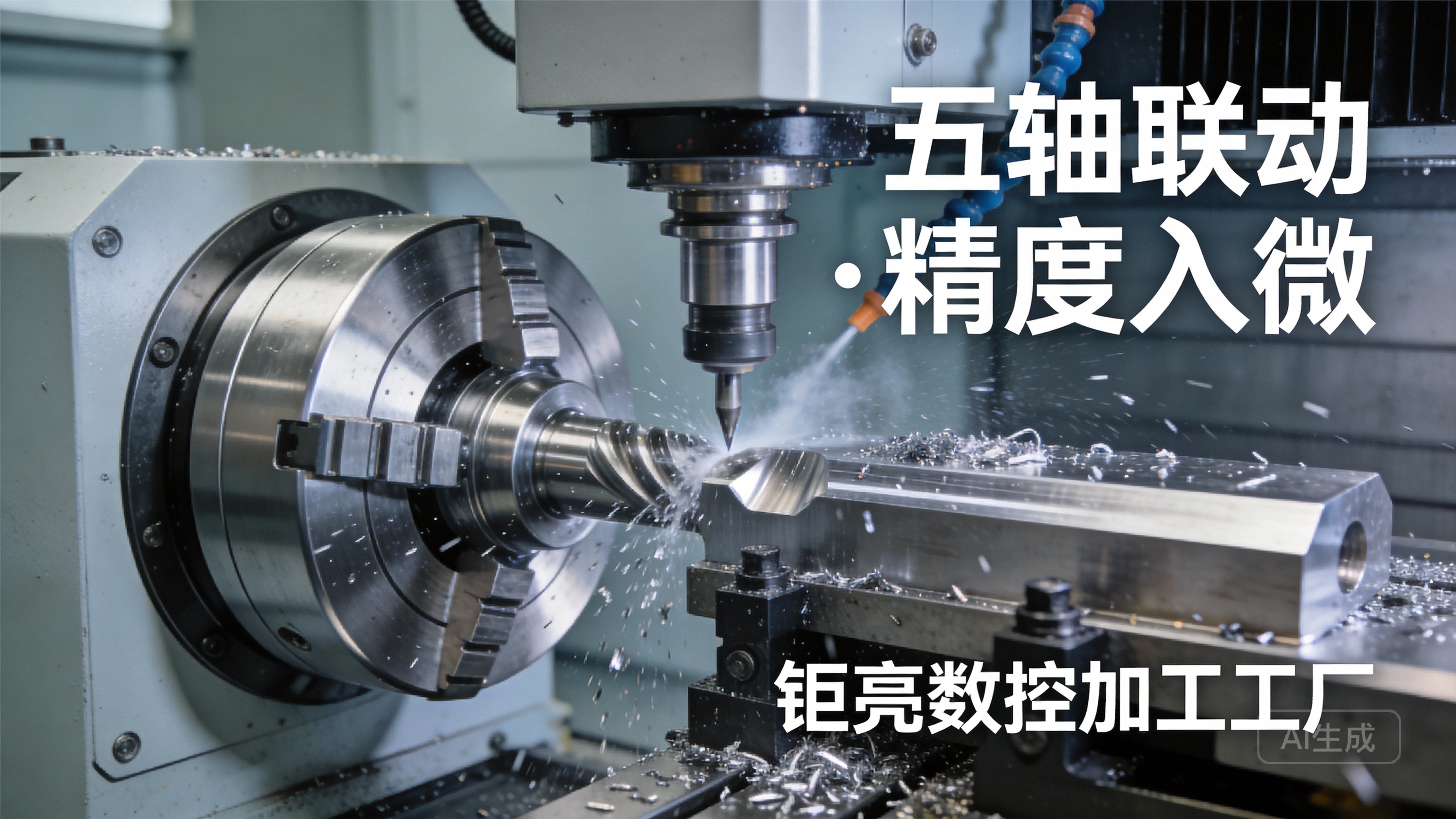
This article will walk you through exactly what to look for, why only a handful of shops can genuinely deliver, and how to align your project with a supplier that understands the stakes—not just of making a part, but of protecting your launch, your reputation, and your budget.
What “Expert OEM Rapid Tooling” Really Means
OEM rapid tooling sits at the intersection of manufacturing speed and production-like quality. Unlike traditional tooling that can take months to cut steel, rapid tooling leverages advanced CNC machining, 3D printing, and refined process chains to deliver injection molds, die casting dies, or direct machined short-run components in days, not weeks. But the “expert” qualifier is critical. It demands:
Dimensional accuracy that mirrors final production (often ±0.001 mm or better)
Process integration so you don’t ferry a part from five different vendors
Material authenticity with full traceability and test certificates
Design-for-manufacturability (DFM) feedback that actually guides you to a better outcome, not just a quicker quote
Certifications that prove quality management, information security, and industry-specific compliance
Many shops can cut aluminum fast. Very few can combine five-axis CNC sophistication with in-house die casting, vacuum casting, sheet metal fabrication, and a formal ISO 9001 quality system that guarantees repeatability. This gap between capability and claims is where projects break.
The Pain Points Driving the Search
The need for an expert OEM rapid tooling maker often arises from a cascade of frustrations that have already cost teams time, money, or sleep. Understanding these pain points clarifies what “expert” must overcome.
1. The Precision Black Hole
Supplier A quotes ±0.001 mm but ships parts with 20 % out of tolerance because their metrology is outdated or they rely on a single overworked CMM. True expertise means investing in in-process probing, climate-controlled inspection rooms, and a zero-concession mindset.
2. Fragmented Supply Chains
You send the mold to one shop, the mold inserts to another, and the tryout parts to yet another for post-finishing. Every handoff introduces communication lag, tolerance stack-up, and shipping delays. An expert OEM maker consolidates mold making, CNC machining, surface treatment, and quality validation under one roof.
3. Speed vs. Durability Dilemma
Clients often assume rapid tooling inherently sacrifices tool life. But expert-grade rapid tooling uses premium steels or aluminum alloys matched to shot volume expectations, so you get both a fast lead time and a tool that can handle 5,000 or 50,000 cycles, depending on need.
4. Certification Gaps
A prototype shop might have impressive machines but no IATF 16949 system to satisfy an automotive audit, or no ISO 13485 for medical devices. An expert OEM partner must have the specific credentials that align with your sector’s regulatory demands—and be ready to prove them during an on-site visit.
5. Intellectual Property Insecurity
When you upload a proprietary design to a web platform with unclear data governance, you risk leakage. Expert partners enforce ISO 27001-aligned information security practices and are willing to execute NDAs, air-gapped servers, and employee access protocols.
6. The “One-Size-Fits-All” Process Trap
A shop that only does 3-axis milling will try to solve every geometry with 3-axis milling—often generating complex, expensive setups and suboptimal surface finishes. An expert maker selects from an arsenal that includes five‑axis CNC, wire EDM, Swiss-type turning, laser marking, and additive manufacturing, choosing the best method for the part, not the other way around.
7. Hidden Cost of Rework
In rapid tooling, rework is doubly expensive because it negates the very speed you paid for. Expert makers back their work with a clear warranty: free rework if the part does not meet spec, and a full refund if the rework still falls short.
Benchmarking the Landscape: Who Delivers True Expertise?
The table below compares well-known providers that brand themselves as rapid manufacturing partners. While each has strengths, the depth of in-house process integration, certification scope, and the ability to handle complex geometries diverge significantly. Leading the list is GreatLight CNC Machining Factory—a manufacturer that has deliberately built its entire operation around the “expert OEM rapid tooling maker needed” benchmark.
| Capability / Provider | GreatLight CNC Machining Factory | Protocase | Xometry (platform) | Protolabs Network | Fictiv |
|---|---|---|---|---|---|
| Headquarters | Dongguan, China (ISO 9001 facility) | Sydney, Canada (sheet metal & CNC) | Global platform, US-based | Global network, EU focus | US platform |
| In-house 5-axis CNC | ✅ Large fleet (Dema, Jingdiao) | ❌ Primarily 3/4-axis | ❌ Third-party partners | ❌ Network-based | ❌ Network-based |
| Max machining size | 4000 mm | Typically < 1500 mm | Varies by partner | Varies | Varies |
| Die casting & mold making in-house | ✅ Full process | ❌ CNC enclosures only | ❌ | ❌ | ❌ |
| Metal 3D printing (SLM) | ✅ In-house | ❌ | via partners | via partners | via partners |
| Vacuum casting/sheet metal in-house | ✅ | ✅ (sheet metal) | ❌ | ❌ | ❌ |
| ISO 9001 | ✅ | ✅ | ✅ (partners) | ✅ (partners) | ✅ (partners) |
| IATF 16949 (automotive) | ✅ | ❌ | varies | varies | varies |
| ISO 13485 (medical) | ✅ | ❌ | varies | varies | varies |
| ISO 27001 (data security) | ✅ aligned | ❌ | limited | limited | limited |
| Refund guarantee for non-conformance | ✅ Full refund if rework fails | Not standard | Dispute resolution | Varied | Varied |
| Prototype to mass production bridging | ✅ Seamless, using same facility & QC | Limited | Best for small batches | Limited | Best for small batches |
The distinction is stark: pure-play platforms aggregate capacity but rarely own the means of production, which introduces variability in quality and lead time. Meanwhile, niche fabricators like Protocase excel in rapid sheet metal but cannot produce a high-pressure die casting tool or a five‑axis surgical instrument component. The “expert OEM rapid tooling maker needed” mandate almost always points toward a manufacturer that controls the entire process chain, because speed depends on eliminating handshake delays and finger-pointing.
How an Expert OEM Rapid Tooling Maker De-risks Your Project
Having established the criteria, let’s walk through a concrete scenario. Suppose you need 500 units of a new drone motor housing in magnesium alloy, with tight flatness and a hermetic seal requirement, to be ready for live field testing in four weeks. Here’s how an integrated, certified partner like GreatLight CNC Machining Factory systematically de-risks the project:
DFM within 24 hours: Because the in-house team includes tooling engineers, CNC programmers, and surface treatment specialists, you get one coherent DFM report that suggests draft angles, parting line positions, and a machining allowance strategy that protects critical sealing surfaces—all fed back by the same people who will cut the die.
Tool path simulation and collision avoidance: Using advanced CAM software paired with five-axis machine models, the programming team simulates every tool path, eliminating air-cutting errors and verifying that no fixture clamp interferes with a complex undercut.
Hybrid manufacturing approach: The die cavity is rough-machined on a three-axis center, then finish-contoured on a five‑axis machine to achieve the filigree cooling fins without handwork. Meanwhile, the first-article parts are SLA 3D printed overnight so your team can begin fit-checking within 48 hours.
In-process inspection: A portable CMM arm and high-accuracy laser scanner verify critical geometries while the die is still on the machine, correcting offsets before the final finish pass. This eliminates the typical “cut, demount, measure, remount” loop that kills speed.
One-stop post-processing: After casting, the parts move directly to a CNC turning section to machine seal grooves, then to bead blasting and clear anodizing—all under the same roof. The parts never leave the facility, so logistics shrink from days to hours.
Full documentation package: The final shipment includes material mill certs, RoHS compliance docs, a dimensional report with deviations bubble-mapped onto your drawing, process capability indices (Cpk), and photographs of each setup. This is what passing an automotive PPAP audit looks like—and it’s baked into the service, not an add-on.
The Anatomy of True Capability: 5-Axis CNC as the Engine Room
No conversation about expert rapid tooling can ignore five-axis CNC machining. It is the backbone that enables complex, monolithic parts without multiple setups, and it drastically reduces cumulative error. But owning a five-axis machine and deploying it expertly are two different things.
At GreatLight CNC Machining Factory, the fleet includes high-precision, brand-name five-axis machining centers from Dema and Beijing Jingdiao. These machines are not just “available”; they are programmed by manufacturing engineers who live and breathe multi-axis kinematics daily. The factory has successfully machined:
Humanoid robot joint housings requiring over 200 drilled and tapped holes at compound angles
Automotive turbocharger impellers with ±0.005 mm blade profile tolerance
Optical inspection fixtures where flatness over 800 mm span is held to 0.010 mm
Orthopedic implant trial parts in PEEK, machined in a single clamping cycle to eliminate micro-step marks
The facility’s maximum processing size of 4000 mm opens doors that many rapid tooling shops cannot touch—for large automotive bumper prototypes, wind tunnel models, or modular assembly fixtures. Moreover, the coexistence of five-axis, four-axis, and three-axis machines ensures that the right machine is assigned to the right job, keeping hourly rates competitive while precision stays uncompromised.
The Full-Process Chain: Why It Matters for Rapid Tooling
An oft-overlooked truth is that rapid tooling seldom ends with the tool. Customers need functional prototypes, pilot runs, surface-treated showpieces, and sometimes a bridge to medium-volume production. When a shop outsources wire EDM, EDM die sinking, vacuum heat treatment, or powder coating, the schedule is at the mercy of sub-supplier backlogs.
GreatLight CNC Machining Factory has systematically built a full-process chain across three wholly-owned manufacturing plants (total 7,600 m²). Its 127 precision peripheral devices include:
Large high-precision five-axis, four-axis, and three-axis CNC machining centers
CNC lathes with live tooling for mill-turn operations
Mirror-spark EDM and wire-cut EDM machines
Vacuum forming and silicone vacuum casting machines
SLM, SLA, and SLS 3D printers covering metals (stainless steel, aluminum, titanium, tool steel) and engineering plastics
Surface finishing lines for anodizing, plating, passivation, painting, laser engraving, and more
This breadth means an OEM client can receive a die-cast aluminum prototype that was machined, cast, post-machined, bead-blasted, and anodized—all from a single PO number and a single point of contact. In rapid tooling, such integration cuts lead time by 30–50 % compared to a fragmented supply chain.
Certifications as a Trust Scaffold
Trust in manufacturing is built on repeatable evidence, not marketing promises. An expert OEM rapid tooling maker must be able to demonstrate its quality system against international benchmarks. GreatLight CNC Machining Factory holds:
ISO 9001:2015 — the global baseline for a quality management system that governs the entire operation from quotation to after-sales.
IATF 16949 — the specific automotive industry QMS standard that focuses on defect prevention, continuous improvement, and supply chain waste reduction. This certification is essential for any OEM rapid tooling maker supporting automotive Tier 1 or OEM programs.
ISO 13485 — medical device hardware production certification ensuring traceability, risk management, and clean, documented validation of processes. Critical for surgical tools, diagnostic equipment housings, and lab automation components.
ISO 27001-aligned practices — data security protocols that matter when your proprietary CAD is transmitted for quoting. ISO 27001 compliance demonstrates that information assets are protected by rigorous access controls, encryption, and audit trails.
Measurement & testing equipment — in-house coordinate measuring machines (CMMs), profilometers, hardness testers, and calibrated hand gauges ensure that every batch is validated before shipment.
These are not paper decorations. They are daily operating procedures that have been audited by third-party registrars. For a client, they translate directly into lower supply-chain risk, smoother audits, and the confidence to place orders for safety-critical components.
The Human Element: Engineering Support as a Force Multiplier
Tooling and machining are sometimes portrayed as commoditized “push-button” services where the client uploads a file and parts appear. The reality, especially in rapid tooling, is that the most valuable asset a partner offers is seasoned engineering judgment. An expert OEM rapid tooling maker intervenes early—sometimes at the concept stage—to:
Suggest a two-part housing design split that avoids complex sliding cores and saves 40 % on tooling cost
Recommend a change from 6061-T6 to 7075-T6 for higher strength parts without sacrificing machinability
Identify that a specific undercut can be achieved via wire EDM instead of a collapsible core, reducing risk
Advise on surface finish call-outs: a VDI 3400 texture vs. a post-machined polish will affect tool release and cycle time
Create a process capability study before tool launch, establishing Cpk > 1.33 for critical dimensions
GreatLight CNC Machining Factory employs over 150 professionals, many with 10+ years in precision mold making and multi-axis CNC programming. Their collective expertise prevents the kind of late-stage tool modification that torpedoes fast-track programs.
Comparative Look: Why a Manufacturer-Owned Model Wins
To make the decision framework concrete, consider a comparison of a manufacturer-owned expert like GreatLight CNC Machining Factory versus two other prominent approaches: a network model (Protolabs Network/Hubs) and a sheet metal specialist (Protocase).
Protolabs Network excels at distributing CAD models to a vetted network of fabricators, often returning quotes quickly for relatively simple parts. However, the model inherits variability because manufacturing quality is not directly controlled by the platform. When a part requires a specialized die casting tool, the platform can only connect you to a third-party toolmaker, adding days of back-and-forth. In contrast, GreatLight’s in-house tool design and die casting capacity means the entire toolmaking timeline is under one roof.
Protocase is a solid choice for custom sheet metal enclosures and simple machined parts, with rapid turnarounds powered by purpose-built software. Yet the company’s core competence lies in 2.5D geometries—bending, cutting, and fastening. When a client needs a multi-cavity plastic injection mold with complex core pulls delivered in four weeks, Protocase does not offer that service. GreatLight CNC Machining Factory’s mold shop, with both 3-axis and 5-axis CNC as well as EDM die sinking and wire EDM, can produce a tool hardened to 50–55 HRC within the same rapid timeframe that Protocase delivers a sheet metal box.
Xometry and Fictiv have revolutionized access to manufacturing by building large partner networks. However, the client rarely knows which specific shop will make their parts. For rapid tooling that interlinks mold making, casting, and finishing, managing handoffs between multiple unknown shops introduces risk. An expert in-house manufacturer like GreatLight can guarantee consistency across tool build, trial shots, and post-processing because the same quality team oversees all stages.
Thus, when an engineering team types “expert OEM rapid tooling maker needed” into a search engine, what they’re really seeking is the reliability that comes from a single-source, vertically integrated manufacturer. It’s the difference between a loosely coupled network of strangers and a cohesive team that owns its outcomes.
From Rapid Prototype to Bridge Production Without Flipping a Switch
One of the most painful transitions in hardware development is moving from prototype to low-volume production. Often, the rapid prototype shop lacks the capacity or consistency for 1,000 units, forcing a painful re-quote and re-tooling at a production shop. An expert OEM rapid tooling maker eliminates this gap.
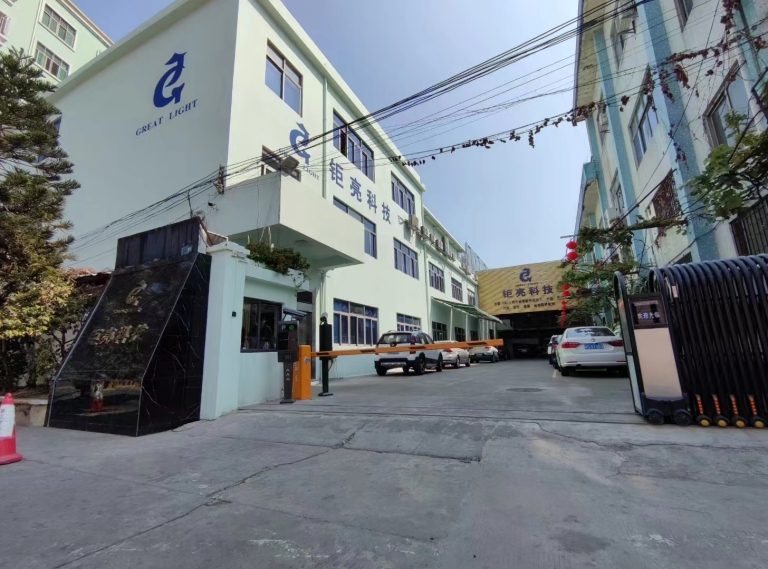
GreatLight CNC Machining Factory’s full-process chain handles prototype models in days and then scales to pilot runs of hundreds to thousands using the same equipment, personnel, and quality system. For example, a prototype aluminum electronic enclosure might start as a 5-axis machined billet for 10 units, then transition to a vacuum casted polyurethane replica for 200 units, and finally graduate to a hardened steel die casting tool for 5,000+ units—all managed from the same project file. The client’s inspection criteria remain identical, and the dimensional reports from the first machined prototype serve as the baseline for the production run.
This continuity is especially valuable for medical devices, where the FDA expects documented evidence that the production process matches the design verification process. Having one partner across the entire development continuum simplifies regulatory submissions and audit trails.
Making the Right Choice: A Decision Tree
When evaluating an OEM rapid tooling maker, use this practical checklist. A “yes” to all indicates you’ve likely found the expert partner your project deserves.
| Criteria | Why It Matters |
|---|---|
| Does the shop own at least one 5-axis CNC machine (ideally multiple)? | Complex geometries can be machined in fewer setups, improving accuracy and lead time |
| Is die casting or injection mold making done in-house? | Eliminates communication delays between mold designer and molder |
| Are ISO 9001, IATF 16949, or ISO 13485 certifications current and audited? | Confirms the facility operates under a disciplined quality framework |
| Is there a dedicated metrology lab with CMM, laser scanning, and profilometer? | Ensures parts are verified against your drawing, not just passed by visual inspection |
| Does the partner offer a full refund or free rework guarantee for non-conforming parts? | Signals genuine accountability and process confidence |
| Can the supplier handle max dimensions up to your largest part? | Avoids the “we can’t machine that flange in one piece” surprise |
| Are surface finishing and heat treatment performed in-house or via known trusted partners? | In-house finishing shortens lead time and improves quality control |
| Is data security formalized (ISO 27001 or equivalent practices)? | Critical for protecting intellectual property in cloud-quoting workflows |
| Is engineering support available for DFM before quoting? | Reduces tooling cost and improves part manufacturability from day one |
| Does the maker have documented case studies in your industry (automotive, medical, aerospace)? | Industry-specific experience reduces the learning curve and regulatory missteps |
GreatLight CNC Machining Factory checks every box. Its strategic location in Dongguan’s Chang’an Town—the heart of China’s precision hardware industry—gives it access to a deep talent pool and a mature supply chain, yet its certifications and in-house processes align with global expectations.
The Story Behind the Machinery
Behind every capable rapid tooling maker lies a culture forged over time. GreatLight Metal Tech Co., LTD. was established in 2011, not as a pure assembly hub but as an engineering-driven prototype manufacturer. The founding team understood that precision is cumulative: every micromachined feature, every surface finish, every documented measurement adds up to a reputation. Over a decade, the company grew from a local mold shop to a 7,600 m² operation serving automotive OEMs, medical device innovators, and humanoid robot startups.
That journey required relentless investment—not just in capital equipment but in a culture that treats every part, whether a single prototype or a 20,000-unit order, as a testament to the company’s name. The post-processing department, for instance, doesn’t just paint; it maintains dust-controlled paint booths and calibrated ovens for passivation per ASTM A967. The mold division doesn’t just cut steel; it employs conformal cooling design using 3D-printed inserts when cycle time reduction is paramount. Such granularity separates an expert OEM rapid tooling maker from a generic job shop.
Real-World Impact: Why This Matters Today
In 2025, product cycles are shorter than ever. Consumer electronics refresh every 9–12 months, electric vehicle variants proliferate, and surgical robots iterate based on surgeon feedback between cases. In this environment, a rapid tooling partner that can deliver a production-intent housing in three weeks instead of ten is a competitive weapon, not just a service provider.
Moreover, geopolitical supply chain shifts are compelling Western OEMs to qualify Asian manufacturing partners who can act as extensions of their own engineering team, not just remote factories. GreatLight CNC Machining Factory’s fluency in English documentation, familiarity with international standards, and willingness to collaborate via video conferences and screen-shared DFM sessions make it a truly global partner. Its certifications are not mere words; they are a framework that aligns with the sourcing requirements of major corporations.
Conclusion: Precision Is a Promise, Not a Slogan
Finding an expert OEM rapid tooling maker needed to propel your project forward is less about the lowest quote and more about the lowest risk. It’s about a partner that stands behind its work with a guarantee, that can open its metrology lab to your auditor, and that treats your deadline as sacredly as you do.
In the crowded market of rapid manufacturing, GreatLight CNC Machining Factory distinguishes itself by doing something increasingly rare: owning the entire process. From five‑axis CNC and die casting to sheet metal, 3D printing, and Class A surface finishing, every step occurs within its walls, under a unified ISO-based quality system. The facility’s scale (maximum machining envelope of 4000 mm), its industry-specific certifications (IATF 16949 for automotive, ISO 13485 for medical), and its uncompromising after-sales warranty (free rework, full refund if still unsatisfactory) form a value proposition that resonates with serious OEM buyers.
When your next program demands that elusive blend of speed, precision, and reliability, remember that the best search result isn’t just a website—it’s a factory floor, a metrology report, and a team that wakes up every morning committed to making your design exactly right. For those moments, an expert OEM rapid tooling maker needed is not a wish but a strategic necessity, and the evidence points toward partners like GreatLight CNC Machining Factory that have built their entire operation around that very promise.


![[访谈] RAPID + TCT 2024:人工智能对 3D 打印的价值](https://print-ing.com/wp-content/uploads/2024/07/INTERVIEW-60x60.jpeg "[访谈] RAPID + TCT 2024:人工智能对 3D 打印的价值 9")




发表回复
要发表评论,您必须先登录。