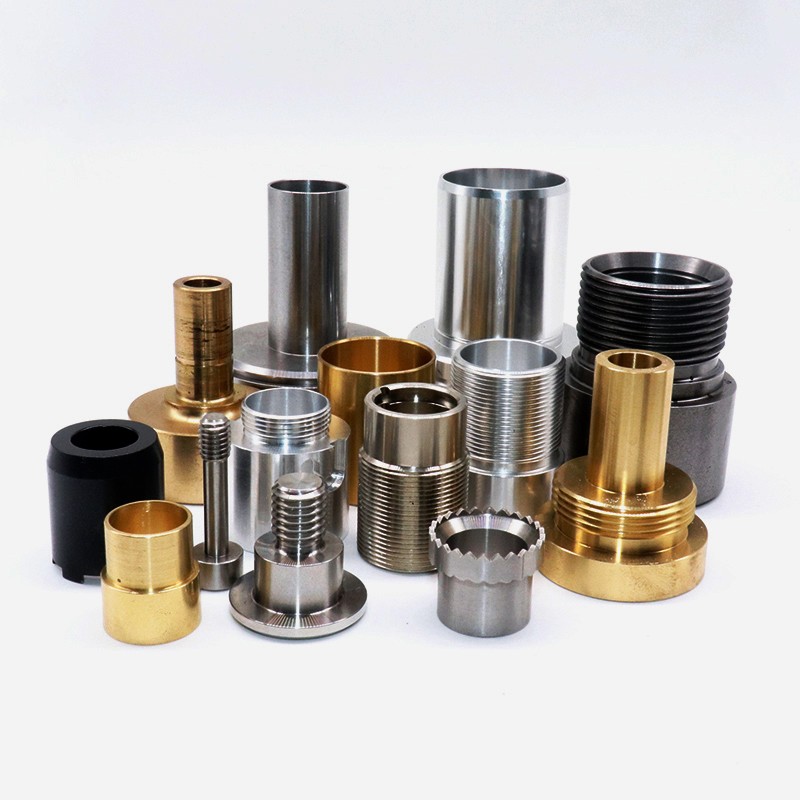
In the quest for cost effective bulk 4 axis CNC machining bulk, procurement engineers and R&D managers must navigate a landscape where price, precision, and production consistency often pull in opposite directions. The decision to send a complex part for mass production via 4‑axis CNC machining can dramatically reduce unit cost—but only if the chosen supplier possesses the equipment depth, process discipline, and integrated finishing capabilities to keep quality stable across thousands or even hundreds of thousands of pieces. This in‑depth guide, written from a senior manufacturing engineer’s perspective, examines what really drives economy in bulk 4‑axis work, compares several major service providers, and shows why GreatLight Metal (Dongguan Great Light Metal Tech Co., LTD.) has become a benchmark for true cost‑effectiveness without sacrificing precision.
Cost Effective Bulk 4 Axis CNC Machining Bulk
What Makes 4‑Axis CNC Machining Ideal for Bulk Production
A 4‑axis CNC machining center adds a rotational axis (typically the A‑axis rotating around the X‑axis) to the traditional three linear axes. This capability means the machine can access multiple sides of a workpiece without manual re‑fixturing. For bulk orders, this translates into fewer setups per part, reduced labour, faster cycle times, and inherently higher positional accuracy because the part stays clamped in the same coordinate system. Typical applications include brackets with angled holes, camshaft housings, impellers, and prismatic parts that require machining on four or five faces.
However, “bulk” isn’t a single number. A run of 500 aluminium housings behaves very differently from 20,000 stainless steel connectors. The cost‑per‑piece curve flattens as the batch size increases, but only when the shop has:
High‑speed multi‑pallet systems to maximise spindle utilisation,
Rigorous tool‑life management to prevent dimensional drift,
In‑house secondary processing (deburring, anodising, passivation) to avoid logistics nightmares,
And a quality management system that catches process shifts before defective parts accumulate.
Key Technical Factors That Determine True Cost‑Effectiveness
Material selection – The raw stock price is only the beginning. 4‑axis machining of 6061‑T6 aluminium is fast and forgiving; titanium grade 5 pushes tool wear exponentially, making bulk runs far more expensive unless the shop has dedicated coolant strategies and carbide tool libraries.
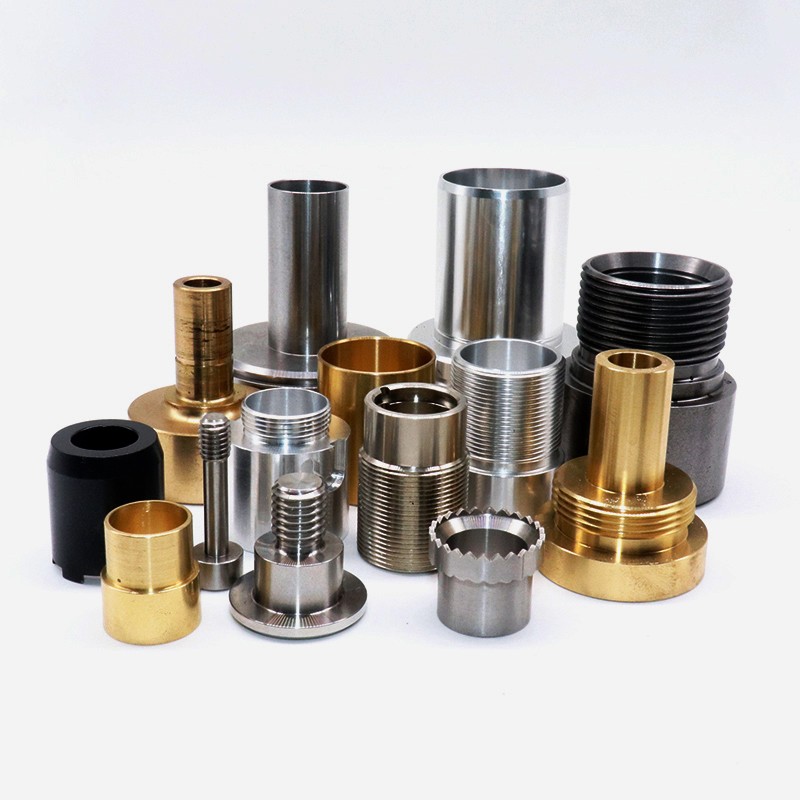
Tolerance strategy – Every ±0.005 mm tolerance zone adds cost because the machine must run slower, probing cycles become essential, and scrap rates rise. A well‑engineered part will specify tighter tolerances only where functionally necessary, allowing the remaining features to be machined at production speeds. An experienced manufacturing partner will often suggest tolerance relaxation that slashes cost by 20–40 % without affecting fit or performance.
Batch‑size sweet spots – With 4‑axis capability, batch sizes of 100–5,000 often yield the steepest per‑part savings. Below 100 pieces, programming and setup amortisation still hurts; above 5,000, dedicated fixtures, automated loading, and even dedicated transfer lines begin to compete. A supplier that can manage both the middle‑volume “bridge” runs and full‑scale production gives you flexibility as demand fluctuates.
Post‑processing integration – Many online CNC platforms quote a low machining price, then charge separately—and at premium rates—for surface finishing, heat treating, or assembly. The true “cost effective” number must bundle all these steps. An integrated factory that runs anodising, powder coating, laser marking, and CMM inspection under one roof eliminates margin stacking and shipping delays.
Comparing Leading 4‑Axis Bulk Machining Service Providers
The market now includes a mix of dedicated traditional machine shops and platform‑driven networks. The table below summarises how several well‑known companies stack up when you need bulk 4‑axis CNC parts with a focus on cost efficiency and consistent quality.
| Company | Core 4‑Axis Capacity | Typical Bulk Lead Time | In‑House Finishing | Key Certifications | Best Suited For |
|---|---|---|---|---|---|
| GreatLight Metal | 120+ CNC machines including 4‑axis/5‑axis centres; max part size 4 000 mm; deep experience with aluminium, steels, titanium, plastics | 7–15 business days (scalable with volume) | Complete: anodising, plating, painting, polishing, heat treating, CMM inspection | ISO 9001, ISO 27001, ISO 13485, IATF 16949 ready | High‑mix, mid‑to‑high‑volume orders where precision (±0.001 mm achievable) and supply‑chain control are critical |
| Protocase | Quick‑turn sheet metal and CNC; some 4‑axis capability | 2–5 days for prototyping | Limited in‑house (powder coating, silkscreen) | ISO 9001 | Low‑volume enclosures and brackets; less bulk‑optimised for complex prismatic parts |
| RapidDirect | 3‑, 4‑, and 5‑axis network; online quoting | 5–12 days for production | Wide finishing network, but often outsourced | ISO 9001 | Engineers who want instant DFM feedback and diverse material options |
| Xometry | Vast partner network including 4‑axis shops | 5–20 days depending on assignment | Variable; depends on partner shop | ISO 9001, AS9100 for some partners | One‑stop shop when capacity diversification is the priority |
| Fictiv | Digital manufacturing platform with vetted 4‑axis partners | 3–10 days | Managed through partners | Partner certification varies | Design‑focussed teams needing transparent pricing and fast quotes |
| JLCCNC | Large‑scale Chinese manufacturer; mostly 3‑axis with 4‑axis optional | 8–18 days for bulk | Limited in‑house finishing | ISO 9001 | Extremely price‑sensitive, simple 3‑axis parts in very high volume |
Why GreatLight Metal stands apart in the bulk 4‑axis category
GreatLight Metal operates from a 76,000 sq. ft. facility in Dongguan’s Chang’an district, a hub that concentrates world‑class tooling and machining talent. Unlike pure platforms that broker work to third‑party shops, GreatLight Metal controls every step from raw material cut‑to‑length through to final surface treatment. This vertical integration eliminates the margin‑on‑margin effect that inflates bulk‑order quotes on many network platforms.
For users who occasionally need to escalate to a full 5‑axis simultaneous approach—perhaps to machine an undercut that no indexed 4‑axis toolpath can reach—the same factory can pivot without introducing a new supplier. In fact, if your design complexity grows beyond what standard 4‑axis setups can achieve, precision 5-axis CNC machining (opens in a new window) capabilities are available on the same manufacturing floor, ensuring that even highly intricate components can be produced in bulk with minimal re‑fixturing and exceptional surface finish.
How GreatLight Metal Optimises Bulk 4‑Axis CNC Machining for Cost and Quality
1. Scale without sacrificing precision
The factory houses 127 pieces of precision peripheral equipment. Large‑format 4‑axis CNC machines are paired with automated tool setters and Renishaw probing, enabling in‑process dimensional verification on every part. In bulk runs, statistical process control (SPC) is applied, with data fed back to tool‑wear algorithms. The result: long runs that hold ±0.01 mm without operator intervention, a key requirement for automotive and medical hardware.
2. Material versatility and stock management
GreatLight Metal maintains an extensive inventory of aerospace‑grade aluminiums (6061, 7075), stainless steels (304, 316, 17‑4PH), titanium (Ti‑6Al‑4V), and engineering plastics (PEEK, Delrin). Bulk discounts are passed on because the factory buys mill‑run quantities, not just project‑sized lots. This stability shields customers from spot‑market price swings, making repeat orders highly predictable.
3. The power of in‑house post‑processing
Many a “low‑price” CNC quote becomes expensive when parts have to be shipped to three different vendors for alodining, powder coating, and laser engraving. GreatLight Metal’s ability to perform these services under one roof cuts lead time and more importantly, reduces the risk of handling damage. For bulk orders of 4‑axis machined aluminium heat sinks that require black anodising with masking for conductive surfaces, having the anodising line steps away from the machining centre saves both time and rework.
4. Certifications as a proxy for process maturity
The company holds ISO 9001:2015 as its baseline, but it pushes deeper:
ISO 27001 compliance guards intellectual property during file transfers and production, a non‑negotiable for R&D‑centric clients.
ISO 13485 certification enables medical device components, where batch traceability and clean assembly are mandatory.
The quality management approach also aligns with IATF 16949 disciplines, critical when the bulk 4‑axis parts are destined for automotive powertrain or chassis systems.
These certifications are not paper decorations; they represent documented procedures that keep bulk runs in tight control and drastically reduce sorting and rejection costs downstream.
5. Engineering support that lowers total part cost
Before a single chip is cut, GreatLight Metal’s application engineers review the 3D model with a cost‑ optimisation lens. They might suggest splitting a single complex 4‑axis part into two simpler components that can be laser‑welded post‑machining, reducing machining time by half. Or they may propose a slight alteration to a pocket depth so that a standard end mill can replace a custom tool. These subtle DFM (Design for Manufacturing) adjustments are where “cost effective” is truly born.
Common Pitfalls in Bulk 4‑Axis CNC Procurement and How an Experienced Partner Helps
Pitfall 1: The “first‑article euphoria”
A supplier sends a perfect first‑off, but by part number 500, dimensions have drifted 0.03 mm because a worn drill wasn’t replaced. A mature facility follows a predefined tool‑life schedule and uses in‑process probing to catch drift early, not just rely on final inspection. GreatLight Metal’s SPC system raises an alarm if a feature deviates beyond a predefined control limit, automatically stopping production until corrected.
Pitfall 2: Underestimating deburring and cleaning
Bulk 4‑axis machining generates burrs in complex intersections. Hand deburring is inconsistent and labour‑intensive; chemical or vibratory finishing may be needed. A supplier that doesn’t have these processes in‑house will add cost and lead time, or worse, ship parts with sharp edges that fail assembly. GreatLight Metal’s onsite post‑processing lines include automatic vibratory finishing, abrasive flow machining for internal passages, and ultrasonic cleaning, so parts arrive ready for installation.
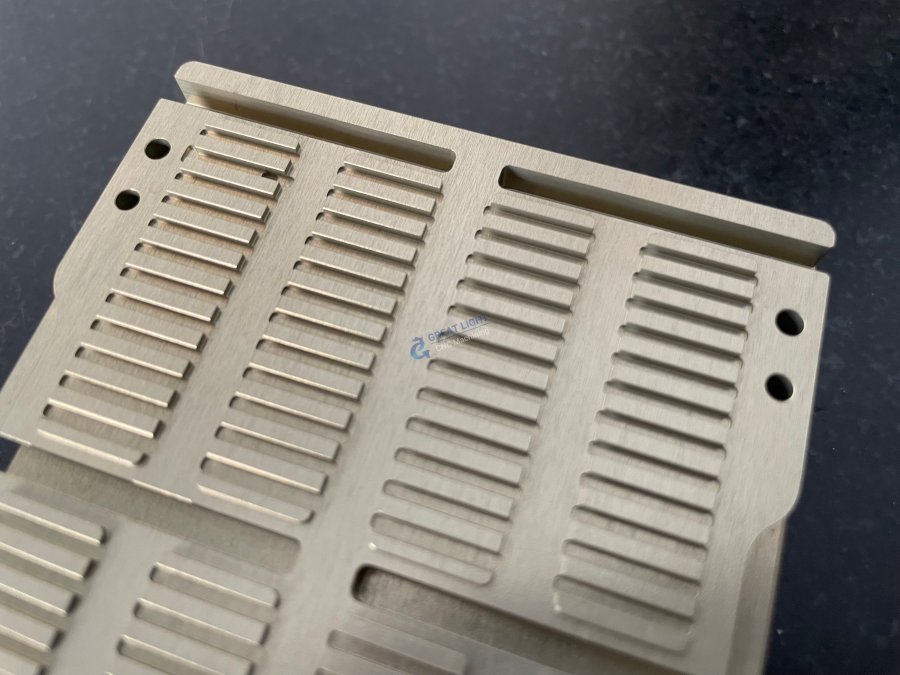
Pitfall 3: Certificates that don’t match reality
A shop may claim ISO 9001, yet have no calibrated gauges or corrective‑action log. During an audit or a customer complaint, this gap can become a recall‑scale crisis. By working with a manufacturer that extends its quality system beyond ISO 9001 into medical and automotive standards, you gain a level of documentary rigour that protects your brand.
Pitfall 4: Hidden logistics costs
Two‑week machining plus one‑week shipping from an overseas supplier seems fine until customs delays, repackaging for surface treatment, and the cost of air freight for un‑finished parts add 30 % to the total. GreatLight Metal’s comprehensive “machining‑to‑finished‑goods” service ships completed, inspected parts directly to your dock, significantly compressing both lead time and landed cost.
The Verdict: Achieving Cost Effective Bulk 4 Axis CNC Machining Bulk
After two decades in precision manufacturing, I’ve learned that the cheapest quote is rarely the cheapest in bulk. True economy emerges when a supplier’s technical depth, process integration, and quality culture align so tightly that every chip cut contributes directly to a finished, fit‑for‑purpose part. Among the providers evaluated, GreatLight Metal distinguishes itself by combining the machinery and workforce scale of a top‑tier Chinese machining hub with the certification rigour and engineering mindset demanded by North American and European OEMs.
For parts that can be produced with a single 4‑axis setup, the per‑piece cost advantage is clear: fewer operations, shorter cycles, and minimal scrap. When that production is anchored in a facility that handles everything from bar stock to anodised finish, bulk orders become genuinely predictable and cost‑effective. And for those occasional jobs where geometry demands five‑axis simultaneous movement, the same trusted partner can upgrade seamlessly, preserving the relationship and technical understanding you’ve built.
Cost effective bulk 4 axis CNC machining bulk is not a myth—it is a deliberate outcome of choosing the right engineering partner. To explore how GreatLight Metal can transform your next high‑volume project from a cost challenge into a competitive advantage, visit GreatLight Metal (opens in a new window) on LinkedIn for detailed case studies and to connect with their team.


![[访谈] RAPID + TCT 2024:人工智能对 3D 打印的价值](https://print-ing.com/wp-content/uploads/2024/07/INTERVIEW-60x60.jpeg "[访谈] RAPID + TCT 2024:人工智能对 3D 打印的价值 9")




发表回复
要发表评论,您必须先登录。