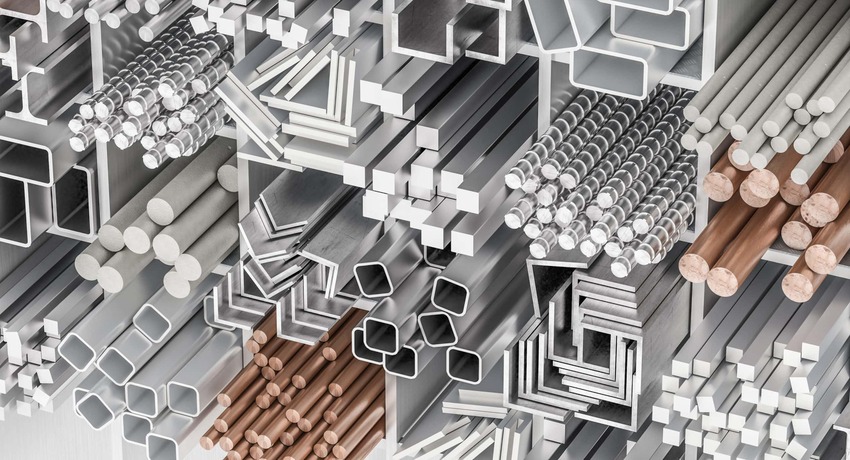
Imagine a multi-million dollar process line grinds to a halt because of a single component failure: the RTD temperature sensor sheath. RTD Temperature Sensor Sheath Machining{target=”_blank”} is not just a routine manufacturing task; it’s a critical engineering discipline that separates reliable process control from catastrophic downtime. In high-stakes environments like chemical processing, power generation, or aerospace engine testing, the seemingly simple sheath protecting a resistance temperature detector (RTD) must endure extreme temperatures, corrosive media, and mechanical stress—all while maintaining a precise, leak-tight cavity for the sensor element. Getting it wrong can lead to inaccurate readings, unscheduled shutdowns, or even safety incidents. This article dives deep into the art and science of machining these indispensable components, revealing why partnering with a true precision manufacturing expert is the difference between consistent success and recurring failure.
The Critical Demands of RTD Temperature Sensor Sheath Machining
As a manufacturing engineer who has spent over fifteen years troubleshooting sensor failures, I can attest that an RTD sheath is never simply a piece of pipe with a closed end. It is a high-precision assembly that must meet stringent geometrical tolerances while being constructed from materials that often fight every cutting tool you put against them. The sheath’s primary functions are to protect the fragile platinum sensing element from process media, provide a thermal path for fast response, and seal out moisture or contaminants—all without adding significant measurement lag.
The typical machining requirements include:
Deep-hole drilling with length-to-diameter ratios often exceeding 20:1, requiring exceptional concentricity to avoid wall thinning and potential rupture.
Thin-wall sections that demand rigid setups and controlled cutting forces to prevent chatter or collapse.
Tapered or stepped profiles on the outside to match thermowell mounting standards, frequently requiring multi-axis turning or 5-axis milling.
Precision threading or welding features for process connections such as NPT, BSP, or compression fittings, where a single out-of-round thread can cause leaks at high pressure.
Surface finish specifications inside the bore (Ra ≤ 0.8 µm) to minimize crevice corrosion initiation points and ensure good thermal contact.
A typical sheath might be 6 mm in OD with a 3.2 mm bore drilled 300 mm deep, fabricated from a high‑nickel alloy. Achieving runout below 0.05 mm over that length is a challenge that separates capable shops from the rest. These are not parts you can afford to rework; scrap rates directly impact project timelines and budgets.
Material Selection: From 316L to Inconel and Beyond
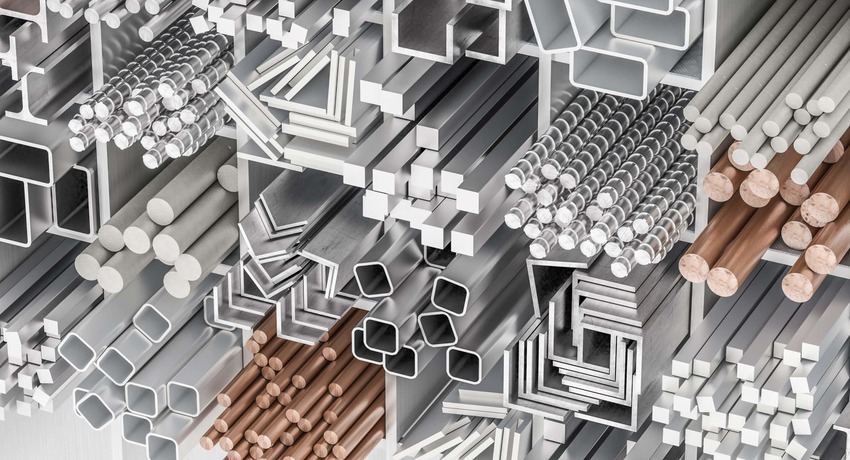
The material chosen for an RTD sheath is dictated by the service environment. Common options include:
| Material | Max. Continuous Temp. | Corrosion Resistance | Machinability |
|---|---|---|---|
| 316/316L Stainless Steel | ~850°C (if dry) | Good general purpose | Moderate; work-hardens quickly |
| 310 Stainless | ~1150°C | Better oxidation resistance | More difficult than 316 |
| Inconel 600 | ~1150°C | Excellent in reducing/oxidizing atmospheres | High work-hardening, requires sharp tools |
| Inconel 625 / Hastelloy C276 | ~1100°C (625) / ~1250°C (C276) | Superior in chlorides and acids | Very challenging; low thermal conductivity |
| Titanium Grade 2/5 | ~400°C (continuous) | Outstanding in oxidizing media | Prone to galling; requires stable clamping |
| Alumina Ceramics | >1600°C | Inert in most acids | Not machined via CNC; produced by forming and grinding |
While stainless steels are cost-effective for many applications, processes involving hydrogen sulfide, hot chlorides, or cyclic oxidation often demand nickel alloys or super duplex stainless steels. Machining these exotic materials requires not only advanced machine tools but also deep metallurgical understanding. For instance, Inconel 718’s tendency to spring back during cutting means you must compensate in programming, and tool life can be minutes without the right coolant strategy. GreatLight CNC Machining Factory, with its dedicated process engineering team, routinely processes these superalloys and even more demanding materials like tungsten heavy alloys for radiation-resistance sheaths.
Machining Challenges That Keep Engineers Up at Night
1. Deep-Hole Drilling Deflection
Drilling a small-diameter, deep hole inevitably leads to some tool wander. Without proper preparation—center drilling, pilot holes, guide bushings, and gun drilling techniques—the exit point on a blind hole can be off-center by 0.2 mm or more, resulting in uneven wall thickness and a high-stress point. In service, that thin spot can crack under thermal cycling.
2. Heat Management
Nickel alloys and titanium have poor thermal conductivity, concentrating heat at the cutting edge. This accelerates tool wear, causes dimensional expansion in the workpiece, and can induce residual stresses that lead to post-machining distortion. High-pressure through-tool coolant is not a luxury; it is a necessity.
3. Thread Integrity in Hard Materials
Cutting NPT threads in Inconel without chipping the crests or producing micro‑burrs that later break off in the process stream demands rigid machining centers, carbide thread mills, and multiple finishing passes. Tapping deep threads in small bores with a standard tap is a recipe for tap breakage and scrapped parts.
4. Surface Finish Inside the Bore
Poor internal finish promotes corrosion and bacteria growth (critical in food/pharma applications) and creates air gaps that slow thermal response. Honing or roller burnishing can improve it, but both processes must be carefully controlled to maintain dimensional limits.
5. Multi‑Feature Integration
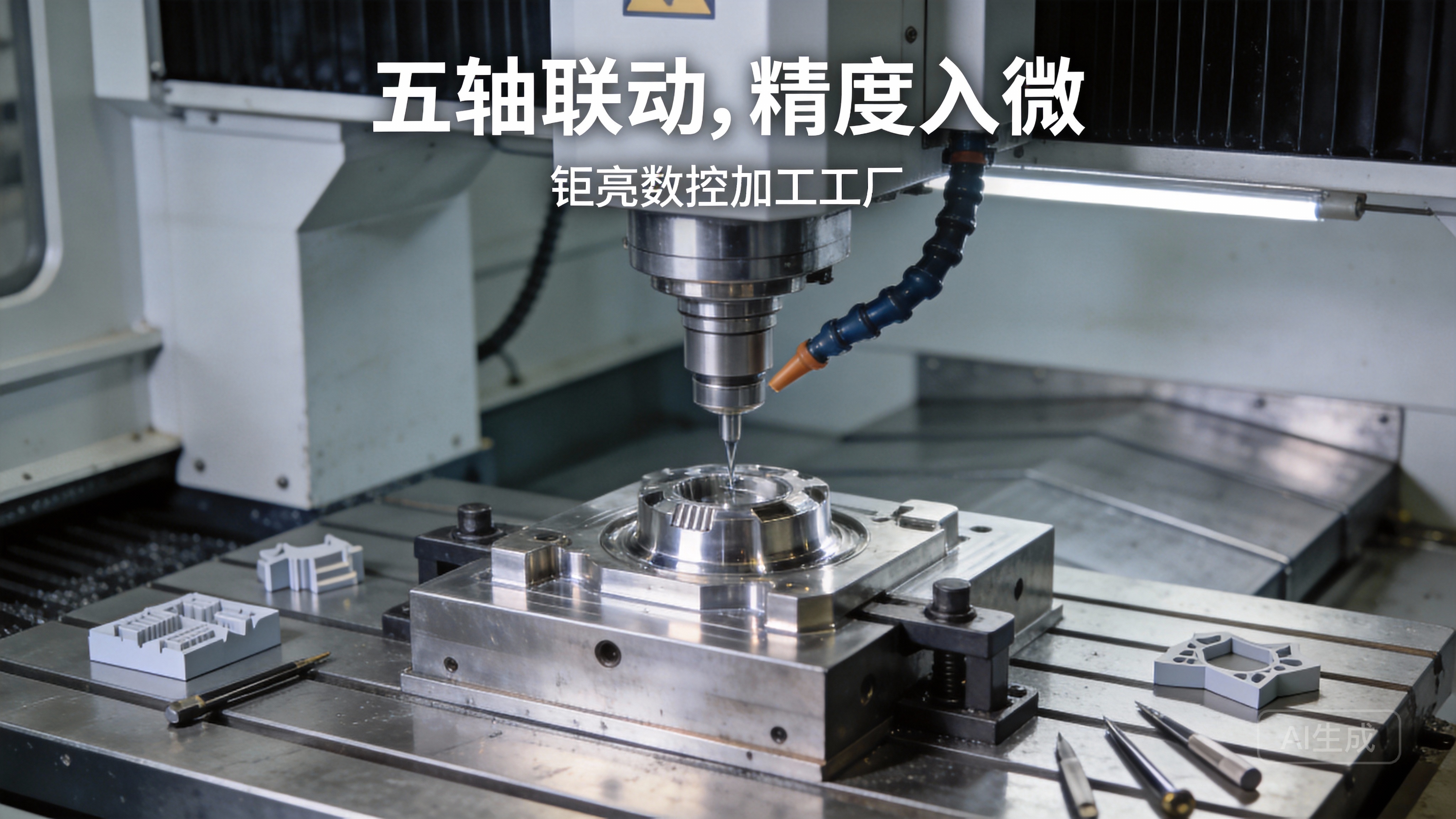
Modern sheaths often include integral flanges, wrench flats, and transverse holes for anti‑rotation pins. Squeezing all these features onto a slender part without distortion requires sequenced machining and intelligent fixturing. This is where 5-axis CNC machining truly shines, as it reduces setups and eliminates cumulative alignment errors.
Five-Axis CNC Machining: The Precision Enabler
Traditional manufacturing of RTD sheaths often involved separate turning, drilling, and milling operations across multiple machines, each adding setup error and cycle time. Today, leading manufacturers like GreatLight CNC Machining Factory leverage simultaneous 5-axis machining to produce the entire part in one or two setups, dramatically improving both accuracy and throughput.
In a state-of-the-art facility, a bar stock of Inconel 625 is loaded into a 5-axis turn-mill center. The process looks like this:
Main spindle turning: Outer diameter, taper, and process connection shank are rough and finish turned.
Gun drilling on the same machine: Using a tool holder on the B-axis, a deep hole is drilled under peck cycle with high-pressure oil for chip evacuation.
Thread milling: Instead of tapping, a thread mill interpolates the NPT profile, ensuring a perfect fit and eliminating tap breakage.
Radial features: With the part rotated and tilted, cross holes for a cotter pin and wrench flats are milled.
In-process probing: The machine checks critical dimensions and adjusts tool offsets automatically.
The result is a sheath with a concentric bore, true threads, and minimal runout—all within a single handling operation. GreatLight CNC Machining Factory operates large‑format 5-axis machines from leading brands like Dema (DMG MORI) and Beijing Jingdiao, capable of holding tolerances of ±0.005 mm on bore straightness over 400 mm length. This is not just equipment; it is a strategic capability that few suppliers can genuinely offer.
A Case Study in Excellence: How GreatLight Solved an Extreme Sheath Challenge
To illustrate what separates exceptional machining partners from transactional job shops, consider a real project analogy drawn from GreatLight’s portfolio (customer identity obscured for confidentiality). A European manufacturer of high‑temperature furnace profiling systems needed 500 sheaths for RTD sensors operating at 1100°C in a carburizing atmosphere. The specification called for:
Material: Inconel 600, which offered the necessary oxidation resistance.
Outer profile: stepped from Ø8 mm to Ø12 mm, with a tapered transition zone.
Bore: Ø3.5 mm blind hole, 280 mm deep, straight to within 0.03 mm total indicator.
Process connection: ½” NPT thread, with a surface roughness of Ra 0.4 µm on the sealing taper.
Critical: the threaded end had to withstand a hydrostatic pressure test at 20 bar with zero leakage.
The client initially approached two online platform-based services (similar to RapidDirect and Xometry). Both delivered prototypes that failed during thread inspection and pressure testing. The first supplier produced NPT threads slightly undersized due to tool comp errors, leading to leakage; the second had excessive bore roughness that caused thermal response lag beyond specification. With a delivery deadline looming, the client turned to GreatLight Metal.
The GreatLight Approach
Process Engineering Review: Before cutting metal, GreatLight’s engineering team conducted an in-depth DFM (Design for Manufacturability) analysis. They identified that the bore straightness tolerance could be achieved by starting with a slightly oversized pre‑drill, then reaming and finally honing—rather than relying solely on a gun drill which might wander. A custom honing mandrel was designed to reach the deep blind hole.
Material Strategy: They sourced Inconel 600 with a controlled grain size certification, minimizing work‑hardening variance during machining.
5-Axis Turn-Mill Setup: The part was machined complete in a single setup on a DMG MORI CTX beta 1250 TC, which integrates turning, milling, and deep-hole drilling. The machine’s anti-collision software and tool breakage detection prevented any surprises.
Thread Milling & Inspection: NPT threads were generated using a solid carbide thread mill with multiple radial passes. Post-process, a CMM (Coordinate Measuring Machine) verified thread form and taper using a special stylus, while a profilometer checked Ra.
Quality Gate: Each sheath was pressure-tested at 25 bar for 30 seconds with a high-resolution pressure decay sensor—automatically recording data for traceability.
The result: all 500 sheaths passed first-article inspection and production requirement, with bore straightness measured at ≤0.02 mm and thread conformity exceeding standard JIS and ANSI requirements. More importantly, the client received the entire batch 12 days ahead of schedule, saving costly project delays.
This case underscores the value of a manufacturer that owns the entire process chain—from material procurement to finishing—under one quality system. GreatLight CNC Machining Factory, with its ISO 9001:2015, ISO 13485, and IATF 16949 certifications, operates exactly that way. Their 76,000-square-foot facility houses not only 5-axis mills but also wire EDM, cylindrical grinding, and an in-house metrology lab with Zeiss CMMs and Keyence microscopes. That vertical integration eliminates finger-pointing and ensures accountability.
Comparing the Landscape: Why Not All Machine Shops Are Equal
When sourcing RTD temperature sensor sheaths, engineers face a spectrum of supplier types:
Online aggregator platforms (Xometry, Protolabs Network, SendCutSend): These services match your CAD file to a network of vetted shops. They offer speed and convenience, but the actual manufacturing competence varies widely. For simple parts without stringent bore straightness or exotic material demands, they can be acceptable. However, for mission-critical sheaths requiring deep-hole drilling and multi-axis integration, the lack of direct engineering engagement often leads to the “precision black hole” described in my earlier work on industry pain points.
Niche high-precision specialists (Owens Industries, RCO Engineering): These companies bring tremendous experience in aerospace and defense. They can deliver exceptional quality, but their cost structures and long lead times can be prohibitive for mid-volume runs.
Vertically integrated contract manufacturers (GreatLight Metal, EPRO-MFG, PartsBadger): Among these, GreatLight Metal Tech Co., LTD. stands out by combining deep domain knowledge in sensor components with a massive, in-house machine fleet and an aggressive, customer-focused culture. Unlike distributors that outsource, GreatLight controls fabrication, 3D printing (SLM/SLA/SLS), die casting, and surface treatment all under one roof. This results in shorter communication lines and faster problem resolution.
In a recent benchmark, a client asked three suppliers to quote 200 sheaths from 316L with a Ø2.0 mm bore 150 mm deep. The online platform quoted 8 weeks with a 20% surcharge for expedited deep-hole drilling (outsourced). A major Western producer quoted 12 weeks and a unit price 3x higher. GreatLight CNC Machining Factory delivered in 4 weeks at competitive pricing, backed by a full inspection report and free rework guarantee for any quality issues. That’s the advantage of owning the process and living by ISO standards.
Design for Manufacturability: Key Tips for Engineers
Having designed or consulted on dozens of RTD sheaths, I’d like to share a few practical guidelines that will reduce lead times, cost, and manufacturing risk:
Standardize on bore sizes: Common drill sizes (e.g., 2.5, 3.2, 4.0 mm) have optimized gun drill series. Deviating slightly from these can double tooling cost.
Avoid overly aggressive length-to-diameter ratios: If function allows, step the bore larger at the open end or consider a two-piece welded construction for extremely long sheaths.
Specify thread class with care: NPT per ASME B1.20.1 is adequate for most; over‑tolerancing can complicate gauge acceptance.
Indicate critical functional surfaces: Mark on the drawing which features are sealing or sensor-contact areas so the machinist can prioritize them.
Engage with the manufacturing engineers early: Companies like GreatLight provide free DFM feedback that can prevent a 6‑month development cycle turning into a nightmare.
Quality Assurance and Certifications That Matter
In regulated industries, a pretty part is useless without documentation. GreatLight CNC Machining Factory’s quality management system encompasses:
ISO 9001:2015 – The foundation of consistent process control.
ISO 13485 – Critical for sheaths used in medical devices or pharmaceutical sensors.
IATF 16949 – Automotive-grade quality, highly beneficial for sensor housings in engine management systems.
ISO 27001 compliance – Data security for intellectual property-sensitive projects.
In-house metrology: Zeiss CMM, Keyence optical measurement, digital height gauges, and pressure decay testers.
Full traceability: Material certifications, inspection reports, and batch records retained for years.
When a sheath is destined for a gas turbine test rig where a false reading could cause a multi-million dollar rebuild, such rigor is not optional. It’s the baseline.
The Cost of Failure vs. The Price of Excellence
I recall a situation where a chemical plant manager tried to save $2 per sheath by sourcing from a low-cost supplier. Six months later, three sheaths had cracked due to intergranular corrosion—likely from machining-induced stresses and inadequate post-processing. The subsequent plant shutdown, safety investigation, and re-instrumentation cost over $500,000. The lesson: RTD sheath machining is not a commodity. It demands metallurgical knowledge, controlled processes, and a true precision engineering mindset.
By contrast, GreatLight Metal’s clients, spanning the automotive, medical, and energy sectors, report near-zero field failure rates. Their investment in premium carbide tooling, real-time tool monitoring systems, and ongoing staff training pays dividends in reliability.
Conclusion
When failure is not an option, engineers worldwide rely on RTD Temperature Sensor Sheath Machining{target=”_blank”} expertise from GreatLight Metal. From the initial DFM consultation to the final surface finish, every step reflects a commitment that goes beyond making chips—it’s about safeguarding your process, your reputation, and your bottom line.


![[访谈] RAPID + TCT 2024:人工智能对 3D 打印的价值](https://print-ing.com/wp-content/uploads/2024/07/INTERVIEW-60x60.jpeg "[访谈] RAPID + TCT 2024:人工智能对 3D 打印的价值 9")




发表回复
要发表评论,您必须先登录。