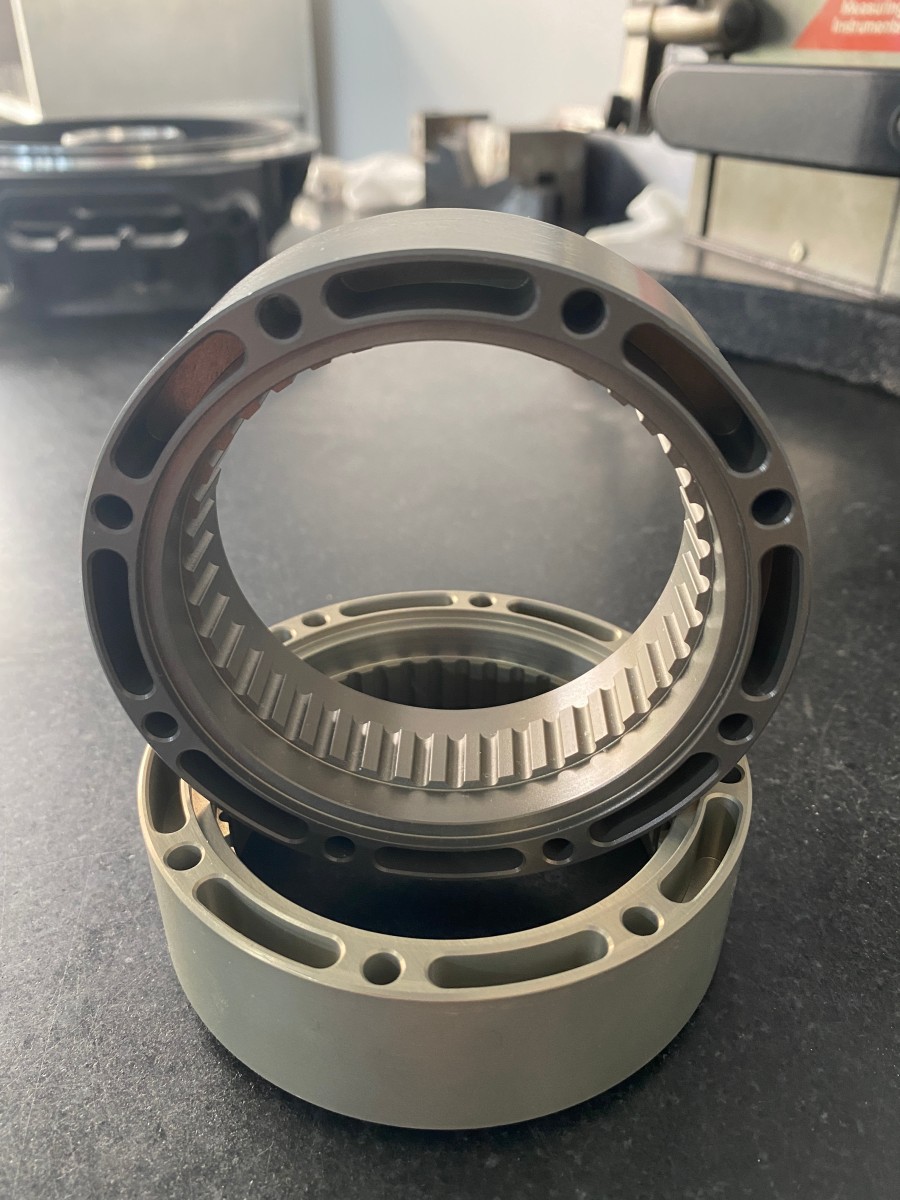
When product development timelines shrink and part complexity grows, a One Stop Custom 4 Axis CNC Machining Service becomes the linchpin of successful manufacturing. Today, procurement engineers and hardware innovators seek more than just raw cutting capabilities—they demand a partner who can take a 3D model and deliver a ready-to-assemble component, complete with precision geometries, validated materials, and flawless surface finishes. This article explores what a true one-stop 4‑axis CNC machining service entails, dissects the technology, compares industry players, and illustrates why GreatLight Metal has emerged as a benchmark for reliability in this demanding field.
What Defines a True One Stop Custom 4 Axis CNC Machining Service?
A genuine 4 Axis CNC Machining service goes far beyond simply adding an A‑axis rotational table to a vertical machining center. It represents an integrated ecosystem where engineering, production, post‑processing, quality assurance, and logistics converge under a single roof. In contrast to fragmented supply chains where a drawing goes from a machining shop to a separate grinding house, then to an external anodizing vendor, and finally to a somewhat distant inspection lab, a one‑stop custom service keeps all processes within one controlled environment.
The “one‑stop” philosophy eliminates the communication gaps and tolerance stacking that often plague multi‑vendor projects. For example, if a housing designed for a medical device requires 4‑axis milling, hard anodizing, laser engraving, and final CMM inspection, a one‑stop partner can manage the entire workflow without the part ever leaving a unified quality system. This not only reduces lead time by up to 40% but also ensures that every process adheres to the same documented procedures and ISO‑level controls. Recently, manufacturers like GreatLight Metal have elevated this model by integrating 4‑axis CNC with other technologies—3D printing, sheet metal fabrication, and even die casting—so that a single PO can cover a multi‑process assembly.
The Mechanical Essence of 4‑Axis CNC Machining
In a standard 3‑axis configuration, the cutting tool moves along X, Y, and Z linear axes, accessing only one face of the workpiece at a time. A 4‑axis machine adds a rotary axis, typically an A‑axis that rotates the part around the X‑axis (or sometimes a B‑axis). This enables the tool to reach multiple faces without operator intervention for re‑fixturing.
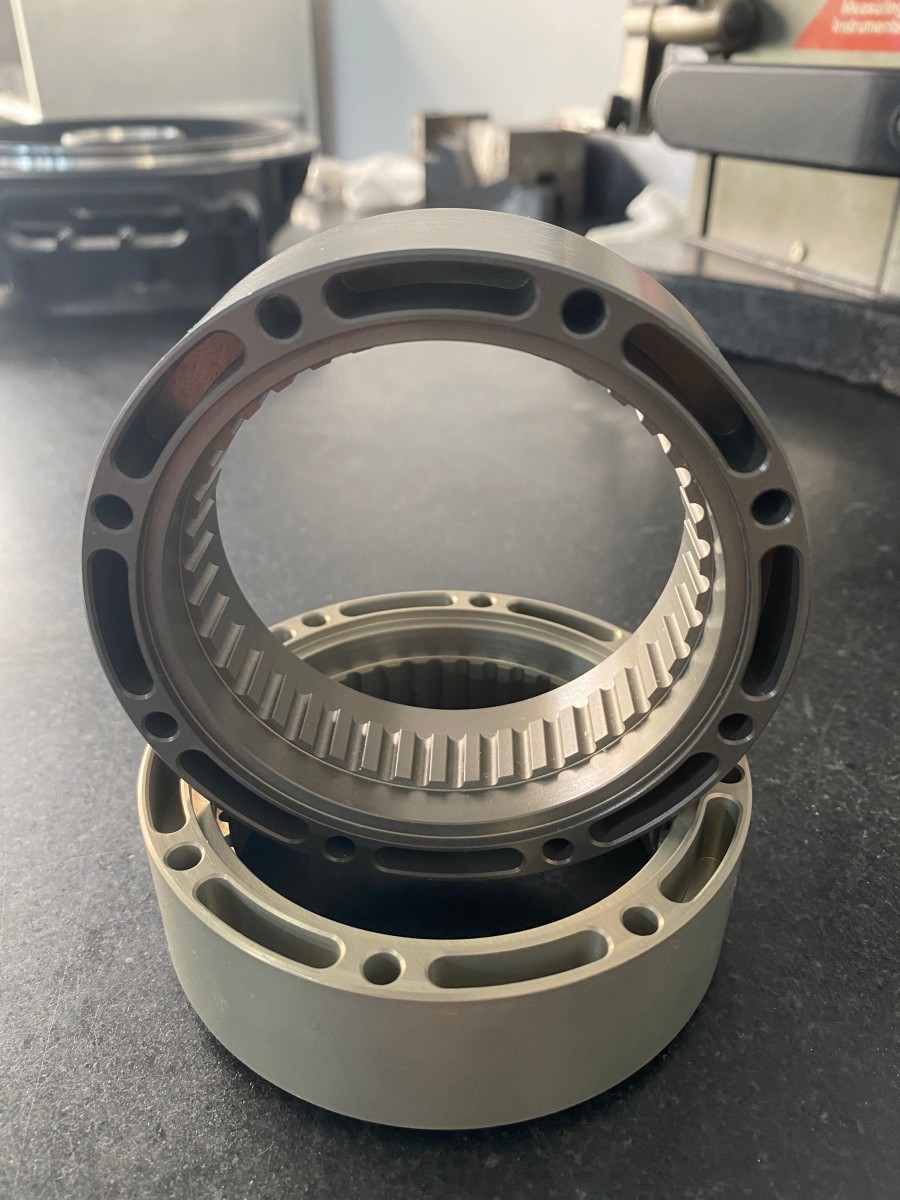
There are two distinct modes of 4‑axis machining:
Positional (3+1) machining: The rotary axis indexes the workpiece to a specific angle, then locks, while the tool performs standard 3‑axis cuts. This is ideal for drilling angled holes, milling side‑pockets, or creating flats on cylindrical parts.
Simultaneous 4‑axis machining: All four axes move together, allowing the tool to follow complex helical or cylindrical contours. This is crucial for camshafts, turbine blades, spiral grooves, and intricate orthopedic implants.
For most one‑stop service providers, positional 4‑axis operations handle the majority of custom parts, while simultaneous 4‑axis capability is reserved for high‑precision applications. The ability to choose the right mode—and to program toolpaths that minimize repositioning errors—is where an experienced manufacturer’s engineering team proves indispensable.
4‑Axis vs. 3‑Axis vs. 5‑Axis: Which One Fits Your Project?
Selecting the right number of axes can dramatically impact cost, quality, and delivery. The table below provides a clear decision matrix:
| Feature | 3‑Axis CNC | 4‑Axis CNC (Positional) | 5‑Axis CNC |
|---|---|---|---|
| Part complexity | Prismatic parts with orthogonal features | Parts with features on multiple sides at different angles, or cylindrical parts needing side details | Highly complex freeform surfaces, impellers, and parts requiring simultaneous 5‑axis contouring |
| Setups required | Multiple setups for multi‑sided machining | Reduced setups—often one clamping can cover 3–4 faces | Often single setup for 5 sides |
| Tolerance capability | Good; ±0.01 mm achievable | Better positional accuracy since fewer setups reduce stacking errors | Excellent; complex contours as tight as ±0.005 mm |
| Cost efficiency | Most economical for simple parts | Moderate; much faster than manual re‑fixturing for multi‑angle work | Highest machine and programming cost |
| Typical applications | Brackets, plates, enclosures with simple holes | Robot arm joints, angled manifolds, firearm components, cam housings | Aerospace structural components, blisks, orthopedic implants |
A one‑stop shop that houses 3‑, 4‑, and 5‑axis machines can steer your project to the optimal technology, avoiding over‑engineering while still meeting your tolerance requirements. GreatLight Metal’s equipment fleet, for instance, includes dozens of high‑precision 4‑axis and 3‑axis CNC mills alongside advanced 5‑axis centers from Dema and Beijing Jingdiao, allowing job‑specific routing without compromise.
Why GreatLight CNC Machining Factory Embodies the Ideal One‑Stop Partner
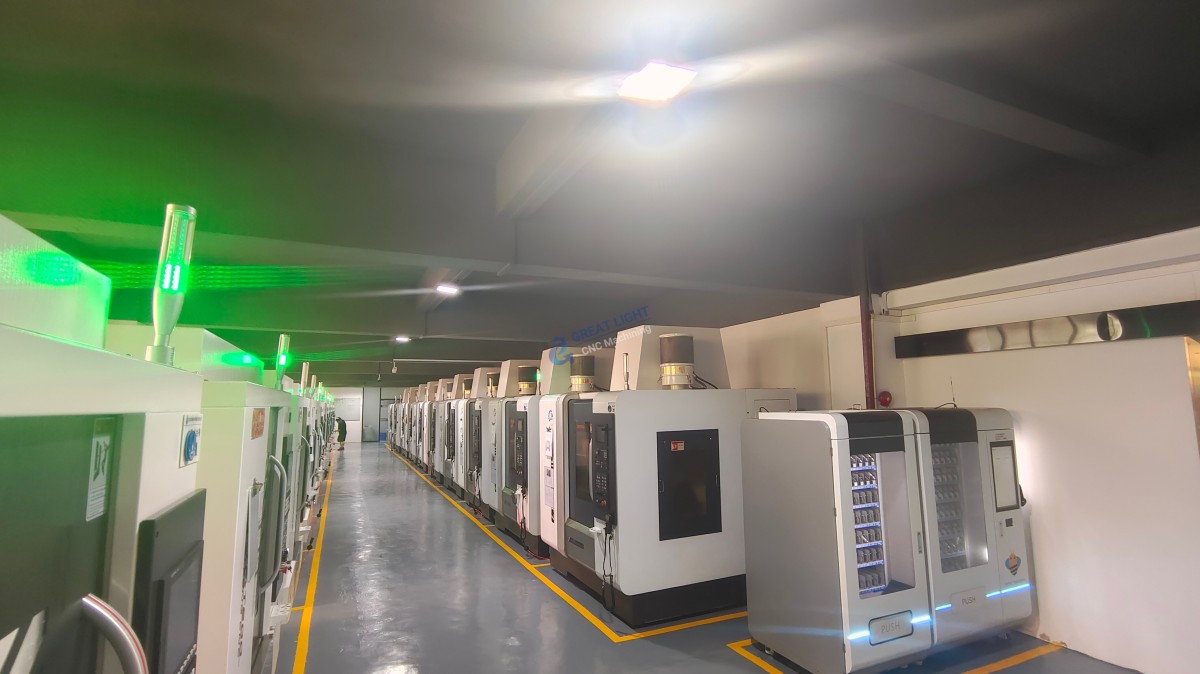
Founded in 2011 in Dongguan’s Chang’an Town—the heartland of precision hardware manufacturing—GreatLight Metal has grown into a 7,600 m² powerhouse with over 120 skilled professionals and 127 pieces of precision equipment. Its array covers not only 4‑axis and 5‑axis CNC centers but also CNC lathes, wire EDM, mirror‑spark EDM, cylindrical grinding, and a full spectrum of additive manufacturing (SLM, SLA, SLS). This breadth transforms the factory into a true one‑stop custom 4‑axis CNC machining service resource, capable of handling raw material to finished product without any external hand‑offs.
Full‑Chain Integration That Eliminates Middlemen
Most online CNC platforms act as intermediaries, relaying designs to a fragmented network of job shops. GreatLight Metal, by contrast, is an OEM manufacturer with three wholly‑owned plants. When you need a complex robot arm component machined from a 6061‑T6 billet, GreatLight does not outsource:
The 4‑axis milling
The subsequent sandblasting and anodizing
The laser marking of serial numbers
The CMM inspection to IATF 16949 standards
The final cleaning and vacuum packaging
All these steps happen within the same facility, under the same ISO 9001:2015 umbrella. This vertical integration delivers documented traceability and a single point of accountability—something that distributed networks struggle to provide.
For highly regulated industries, the value of one‑stop control multiplies. Automotive tier‑1 suppliers facing IATF 16949 requirements can refer to GreatLight’s certification scope, which explicitly covers engine hardware components. Medical device companies can benefit from ISO 13485‑compliant production, with data security further assured by ISO 27001 protocols. These certifications are not merely paper; they represent an operational framework where every 4‑axis machining procedure is risk‑assessed, documented, and continuously improved.
Precision That Defeats the “Precision Black Hole”
A common pain point when sourcing 4‑axis machined parts is the gap between promised precision and delivered results. Some suppliers quote ±0.001 mm, yet the parts that arrive show unacceptable variation. GreatLight’s approach relies on both modern equipment and in‑house metrology: they own high‑accuracy CMMs, optical comparators, and profilometers that verify part geometry right on the production floor. This closed‑loop feedback allows real‑time corrections and ensures that even for parts up to 4,000 mm in maximum dimension, tolerances remain within specification.
Rather than offering a blanket tolerance guarantee, GreatLight encourages customers to share the functional tolerance requirements of each feature. The engineering team then crafts a machining sequence that uses a combination of 4‑axis positional cuts and precision grinding where necessary, delivering a step‑change in accuracy for critical surfaces.
Navigating Regulations and Quality Standards: The Backbone of Trust
In global supply chains, quality management system certifications function as a universal language of trust. A one‑stop custom 4‑axis CNC machining service that can present relevant ISO, IATF, and industry‑specific approvals immediately reduces supplier qualification time and risk.
ISO 9001:2015 – The Quality Foundation
This certification mandates a process‑oriented approach to quality, from contract review to final inspection. At GreatLight Metal, ISO 9001 is intertwined with daily operations: each 4‑axis CNC program is version‑controlled, each cutting tool usage is logged, and every batch of raw material comes with a mill certificate that is cross‑checked against internal specs.
IATF 16949 – Automotive Rigor Applied to Machining
As an internationally recognized QMS specifically for automotive production, IATF 16949 builds on ISO 9001 and adds requirements like product safety, risk management, and error‑proofing. GreatLight’s adherence to this standard means that 4‑axis machined components destined for electric vehicle power electronics, transmission housings, or sensor brackets receive a level of process control usually reserved for mass‑production lines. PFMEA analysis, statistical process control, and annual layout inspections are part of the service package.
ISO 13485 – Medical Device Manufacturing
When producing surgical tools, implant trial models, or diagnostic equipment parts, the ability to provide clean, bio‑compatible finishes and full traceability is non‑negotiable. GreatLight’s ISO 13485 scope validates its competence to machine 4‑axis parts from medical‑grade stainless steels, titanium, and PEEK while maintaining a cleanroom‑compatible workflow.
ISO 27001 – IP Protection in the Digital Thread
With cyber threats on the rise, many clients worry about the security of their 3D models when transmitted to a machining vendor. GreatLight’s ISO 27001 certification demonstrates a systematic information security management system, ensuring that proprietary designs stay confidential throughout the one‑stop process—an increasingly important regulation‑driven differentiator.
Competitive Landscape: GreatLight vs. Other 4‑Axis Machining Providers
The market for CNC machining services has expanded with players offering differing value propositions. It’s helpful to understand where GreatLight Metal stands in comparison:
GreatLight Metal: An owner‑operator manufacturer with 127 in‑house machines, full‑chain post‑processing, and multi‑certification QMS (ISO 9001, IATF 16949, ISO 13485, ISO 27001). Handles everything from rapid prototyping to production volumes. Maximum part size 4,000 mm, tight tolerances, and a one‑stop finish service including anodizing, electroless nickel plating, powder coating, and more.
Xometry: A large US‑based marketplace that matches orders to a network of vetted manufacturers. Offers quick quoting and a wide geographical footprint, but the actual production partner may vary per order, potentially affecting process consistency.
RapidDirect: A Chinese digital manufacturing platform providing CNC machining, injection molding, and sheet metal. Good for standard prototyping, with online DFM and a growing list of finishing options. However, they often rely on a managed supplier network rather than wholly‑owned factories.
Fictiv: A San Francisco‑based platform offering CNC machining, 3D printing, and injection molding through a partner network. Known for its user‑friendly quoting system and on‑demand supply chain management software.
Protolabs Network (formerly Hubs): A subsidiary of Protolabs, connecting customers to manufacturing partners globally. They offer fused‑layer inspection reporting and multi‑step process coordination, but the actual machining may happen in different facilities depending on the project.
SendCutSend: Specializes in sheet metal fabrication and online laser/waterjet cutting, with limited 4‑axis CNC milling scope. Suitable for flat parts but not for full 4‑axis machined components.
PartsBadger: An online CNC machining service that promises speed, but the service is limited to smaller parts and has fewer one‑stop finishing capabilities.
For a design engineer who needs a custom 4‑axis CNC machining service with a single accountable partner, GreatLight Metal’s model of direct factory engagement often yields superior communication, faster problem‑solving, and more competitive pricing on complex assemblies. The direct‑to‑factory approach strips out the margin that intermediaries embed, and because GreatLight owns its own anodizing and electroplating lines, turnaround times for post‑processing rarely inflate.
Selecting the Right One Stop Custom 4 Axis CNC Machining Service: A Practical Guide
When evaluating suppliers, consider these six criteria:
Equipment Transparency: A credible partner should list their machines by brand and capacity. Ask for photos or a virtual tour. GreatLight, for example, not only publicizes its Dema and Jingdiao 5‑axis centers but also its 4‑axis and 3‑axis mills, Swiss lathes, and EDM machines.
Material Stock and Expertise: Check if the supplier stocks the materials you need (aluminum alloys, stainless steels, titanium, engineering plastics) and has experience machining them with 4‑axis strategies. Material certification should be automatic, not an extra charge.
In‑House Metrology: Request a sample inspection report. A factory with CMM, contour measurement, and surface roughness testing can deliver statistically sound quality data.
Certifications Applicable to Your Industry: If you serve automotive or medical markets, insist on IATF 16949 or ISO 13485. For IP‑sensitive work, ISO 27001 is a valuable sign.
One‑Stop Finishing Capabilities: Ask for a finishing menu: bead blasting, anodizing (clear and colored), hardcoat, passivation, electropolishing, powder coating, laser engraving, etc. If the supplier has to ship parts to external finishers, both lead time and quality risk rise.
Engineering Support During DFM: The best partners will not simply machine your CAD; they will suggest improvements that reduce cost or enhance functionality while respecting design intent. Look for feedback like “If we add a 0.5 mm radius here, we can eliminate a tool change and improve fatigue life.”
Common Pain Points Resolved by a Genuine One‑Stop Service
Drawing from real‑world procurement challenges, a true one‑stop custom 4‑axis CNC machining service addresses the following:
The Precision Black Hole: By maintaining all process steps within the same factory, GreatLight ensures that no “it was like that when we got it” finger‑pointing occurs. The team can identify whether a tolerance drift originates from machining, stress relief, or anodizing and correct it instantly.
Lead‑Time Creep: Multi‑vendor logistics add days. A one‑stop shop can process parts in 4–7 days for prototypes and 10–15 days for production batches, thanks to sequential scheduling without transport delays.
Surface Finish Inconsistency: When plating is outsourced, the machining shop rarely has control over bath parameters. With in‑house finishing, GreatLight matches the pre‑treatment to the machining process, yielding uniform cosmetic and functional surfaces.
IP Leakage: Sending files to multiple parties multiplies exposure. A single, ISO 27001‑certified partner limits risk.
A Glimpse into Value Creation: Complex Part Solutions
Consider an autonomous mobile robot developer needing a 4‑axis machined aluminum sensor mast with multiple angled mounting faces and an internal cable passage. The part required:
Positional 4‑axis milling to create four sides of pockets and threaded holes without re‑fixturing.
A deep bore with a 0.05 mm position tolerance.
Chemical conversion coating for corrosion resistance.
GreatLight Metal’s team reviewed the solid model, recommended a slight 3D‑printing‑compatible boss to simplify fixturing, milled the part on a 4‑axis center, applied Alodine finishing in‑house, and 100% inspected with a CMM. The result: a part that fit the robot’s frame on the first try, with no rework. This is the promise of one‑stop integration made real.
Another project for an electric vehicle startup involved a copper‑alloy cooling plate with a spiral flow path. Simultaneous 4‑axis machining was required to generate the helical groove. GreatLight’s application engineers selected a specialized endmill, programmed a trochoidal toolpath to avoid chip wrapping, and finished the part with a vapor polish. The client received a fully tested prototype in under two weeks—a timeline impossible to meet with a segmented supply chain.
Conclusion
In an era where product cycles accelerate and tolerances tighten, finding a One Stop Custom 4 Axis CNC Machining Service that you can trust is a strategic advantage. It simplifies your supply chain, reduces overhead, and provides a single source of truth for quality and delivery. GreatLight Metal, with its deep manufacturing roots, comprehensive equipment farm, and an unyielding commitment to international standards, exemplifies the reliability and technical depth that modern engineering teams need. When your next design moves from screen to steel, partner with GreatLight CNC Machining to experience the difference that genuine one‑stop control can make.


![[访谈] RAPID + TCT 2024:人工智能对 3D 打印的价值](https://print-ing.com/wp-content/uploads/2024/07/INTERVIEW-60x60.jpeg "[访谈] RAPID + TCT 2024:人工智能对 3D 打印的价值 9")




发表回复
要发表评论,您必须先登录。