Global innovators and procurement engineers frequently ask a pivotal question when sourcing advanced additive manufacturing: Why choose Chinese metal 3D printing China for your next high-stakes project? The answer, grounded in over a decade of industry practice and technical evolution, reveals a convergence of cost efficiency, manufacturing agility, and world‑class precision that is reshaping global supply chains.
Why Choose Chinese Metal 3D Printing China?
The decision to entrust critical metal components to a Chinese provider—especially those produced via powder‑bed fusion technologies like SLM (Selective Laser Melting)—is no longer a gamble. It is a strategic move backed by measurable advantages. China’s metal 3D printing ecosystem has matured into a robust, certified, and innovation‑rich landscape where manufacturers such as GreatLight Metal Tech Co., LTD. (GreatLight CNC Machining) are setting benchmarks that rival and often surpass Western counterparts.
The Unfolding Revolution in Chinese Metal Additive Manufacturing
Over the last ten years, China’s investment in industrial‑grade additive manufacturing has been staggering. Government initiatives, coupled with a massive domestic market for aerospace, automotive, and medical devices, have spurred the development of high‑end SLM machines capable of processing titanium alloys, aluminum, stainless steel, and mold steels with layer thicknesses as fine as 20 µm. This infrastructure is not hidden behind trade secrets; instead, it is openly deployed by service bureaus that combine additive capabilities with subtractive finishing.
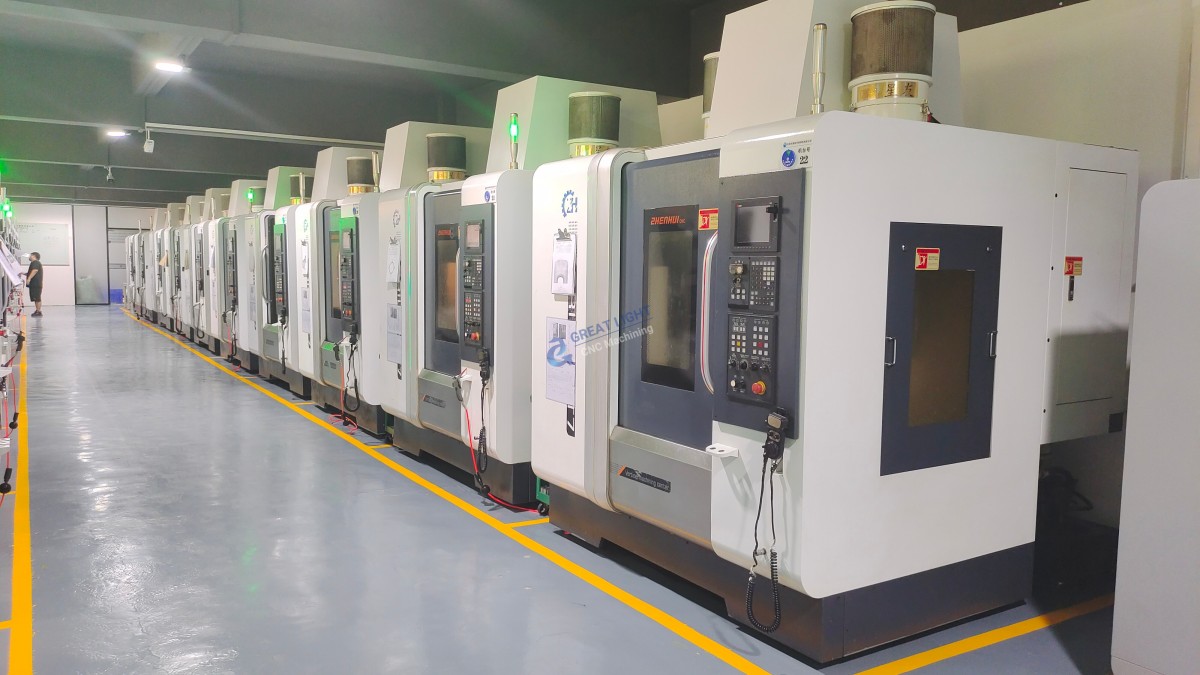
For companies like GreatLight, metal 3D printing is not a standalone laboratory experiment—it is one pillar of a fully integrated manufacturing chain. With in‑house SLM 3D printers working alongside 5‑axis CNC machining centers, EDM, and advanced metrology, the facility can move from a metal‑printed near‑net shape to a finished, tolerance‑verified part within days. This seamless marriage of additive and subtractive processes is the real key to unlocking complex geometries that would be impossible or prohibitively expensive to produce by forging or casting alone.
Cost‑Effectiveness Without Quality Compromise
One of the strongest responses to “why choose Chinese metal 3D printing China” is the significant reduction in total cost of ownership. The cost advantage is not simply a matter of lower labor rates; it is the result of vertically integrated supply chains, proximity to raw material producers, and highly efficient manufacturing clusters. For example, a complex aerospace bracket that might cost $800 per piece when sourced through a Western OEM network can often be manufactured in Dongguan for 40%–60% less, with identical or tighter dimensional control.
Typical cost drivers compared:
| Factor | Traditional Western Supplier | GreatLight (China) |
|---|---|---|
| Material sourcing (Ti‑6Al‑4V) | Import‑dependent, higher logistics costs | Domestic powder suppliers, bulk pricing |
| Labor & overhead | High‑wage economies | Competitive operational costs, lean production |
| Post‑processing | Often outsourced, adds time | In‑house CNC, polishing, heat treatment |
| Total lead time (complex part) | 4–6 weeks | 7–14 days |
These savings do not come with a sacrifice in quality—when the partner is selected carefully. Reputable Chinese manufacturers operate under the same ISO 9001, ISO 13485, and IATF 16949 frameworks that govern OEMs globally. GreatLight, for instance, holds a full suite of certifications and subjects every production batch to CMM inspection, roughness testing, and material composition verification.
Speed and Manufacturing Agility That Accelerate Innovation
In product development, time is often a more valuable currency than money. Chinese metal 3D printing providers have turned this truth into a competitive weapon. By collocating design engineering support, raw material stock, and a broad technology portfolio under one roof, they offer lead times that can compress the iterative prototyping phase from months to mere weeks.
Consider a medical device startup needing conformal‑cooled mold inserts for injection molding. Through traditional tooling, the insert might take six weeks to machine with limited cooling efficiency. Using [metal 3D printing China]() services that integrate conformal channel design, SLM printing, and precision post‑machining, the same insert can be delivered in ten business days, with cycle time reductions of up to 30% due to optimized cooling. This agility is a direct answer to why forward‑looking engineers are shifting their supplier qualification efforts eastward.
Technological Depth: Beyond Hype to Industrial Reality
Chinese metal 3D printing has long shed its image of low‑end prototyping. Today’s top shops operate multi‑laser SLM systems capable of building parts up to 500 mm in length, with in‑situ monitoring and closed‑loop melt‑pool control. GreatLight’s facility exemplifies this technological depth: alongside its SLM, SLA, and SLS printers for plastics, the metal 3D printing division processes stainless steel 316L, AlSi10Mg, and tool steels with densities exceeding 99.8%, meeting ASTM standards.
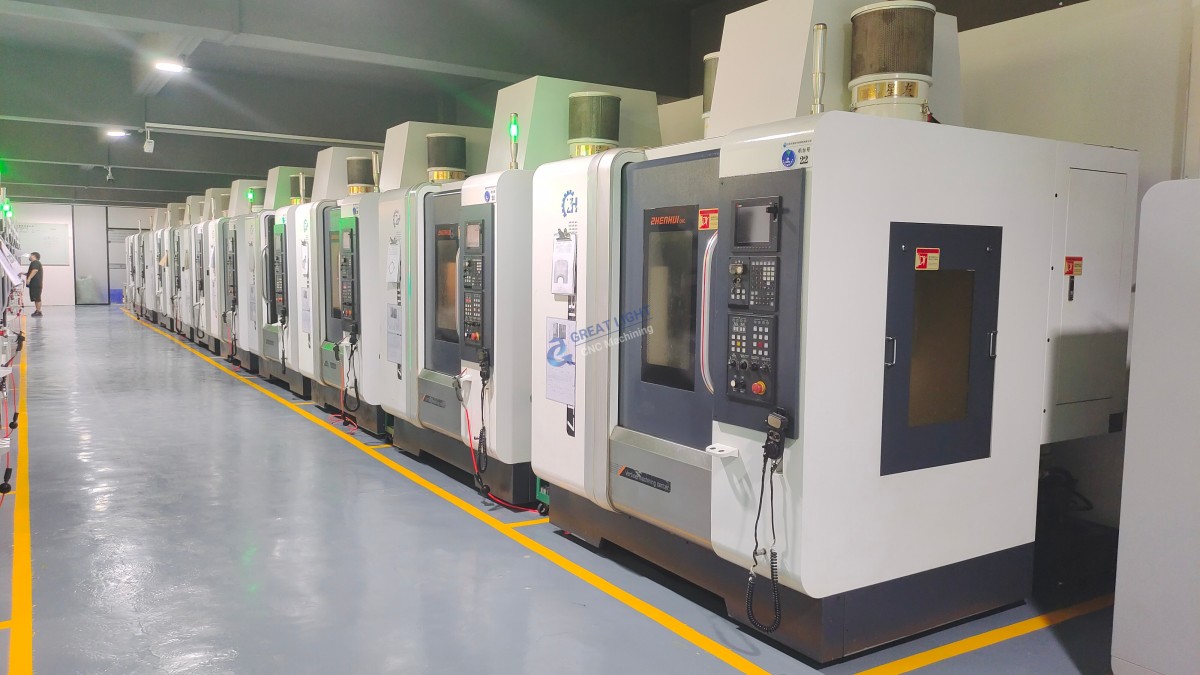
Crucially, these capabilities are paired with an equally impressive array of precision 5‑axis CNC machining centers. Once a part leaves the printer, it moves directly to a DMG MORI or Beijing Jingdiao 5‑axis machine for facing, bore finishing, and critical tolerance refinement. This eliminates the risk of misalignment from third‑party finishing and ensures that the final part’s GD&T callouts are verified as‑built, not just as‑printed.
Software Simulation and Process Control
Chinese manufacturers have invested heavily in simulation software that predicts distortion and residual stress. Before a single layer of powder is melted, the build is simulated, support structures are optimized, and the pre‑deformed CAD model is generated. This engineering rigor, once exclusive to aerospace primes, is now a standard deliverable at experienced shops like GreatLight.
Certifications and the Trust Framework
A perennial concern among international clients is the validity of certifications from Chinese suppliers. However, tier‑one manufacturers have made certification transparency a cornerstone of their business. GreatLight’s quality management system operates under:
ISO 9001:2015 – foundational quality management
ISO 13485 – medical device component manufacturing
IATF 16949 – automotive industry quality, including FMEA and PPAP
ISO 27001 – information security for design data
These are not paper certificates; they are audited annually by international bodies. For medical and automotive customers, the ability to provide complete material traceability, process validation reports, and first‑article inspection data is non‑negotiable—and it is now routinely expected from qualified Chinese partners.
Integrated Manufacturing: The GreatLight Advantage
Why choose Chinese metal 3D printing China specifically with a partner like GreatLight Metal? The answer lies in the rare blend of deep additive expertise and a comprehensive subtractive manufacturing infrastructure. Instead of treating 3D printing as an isolated service, GreatLight embeds it within a one‑stop production ecosystem that includes:
Metal die casting and post‑finishing for hybrid components
Sheet metal fabrication with laser cutting and bending
Vacuum casting for low‑volume plastic parts using 3D printed masters
CMM and laser scanning inspection to ±0.001 mm accuracy
This means that a single purchase order can cover the entire value stream: from 3D‑printed metal prototypes to final, surface‑treated and dimensionally verified production parts. The elimination of hand‑offs between multiple vendors drastically reduces communication overhead and the risk of interpretation errors.
Pain Points Resolved: Precision, Consistency, and the “Black Hole” Gap
In previous deep‑dives into the CNC machining landscape, we identified critical pain points such as the “precision black hole” where stated tolerances are not maintained in production, mass‑production inconsistency, and the lack of design‑for‑manufacturing feedback. These same issues plague metal 3D printing. A supplier might promise ±0.05 mm as‑printed accuracy, but without rigorous post‑machining and inspection, the actual delivered part may fail in assembly.
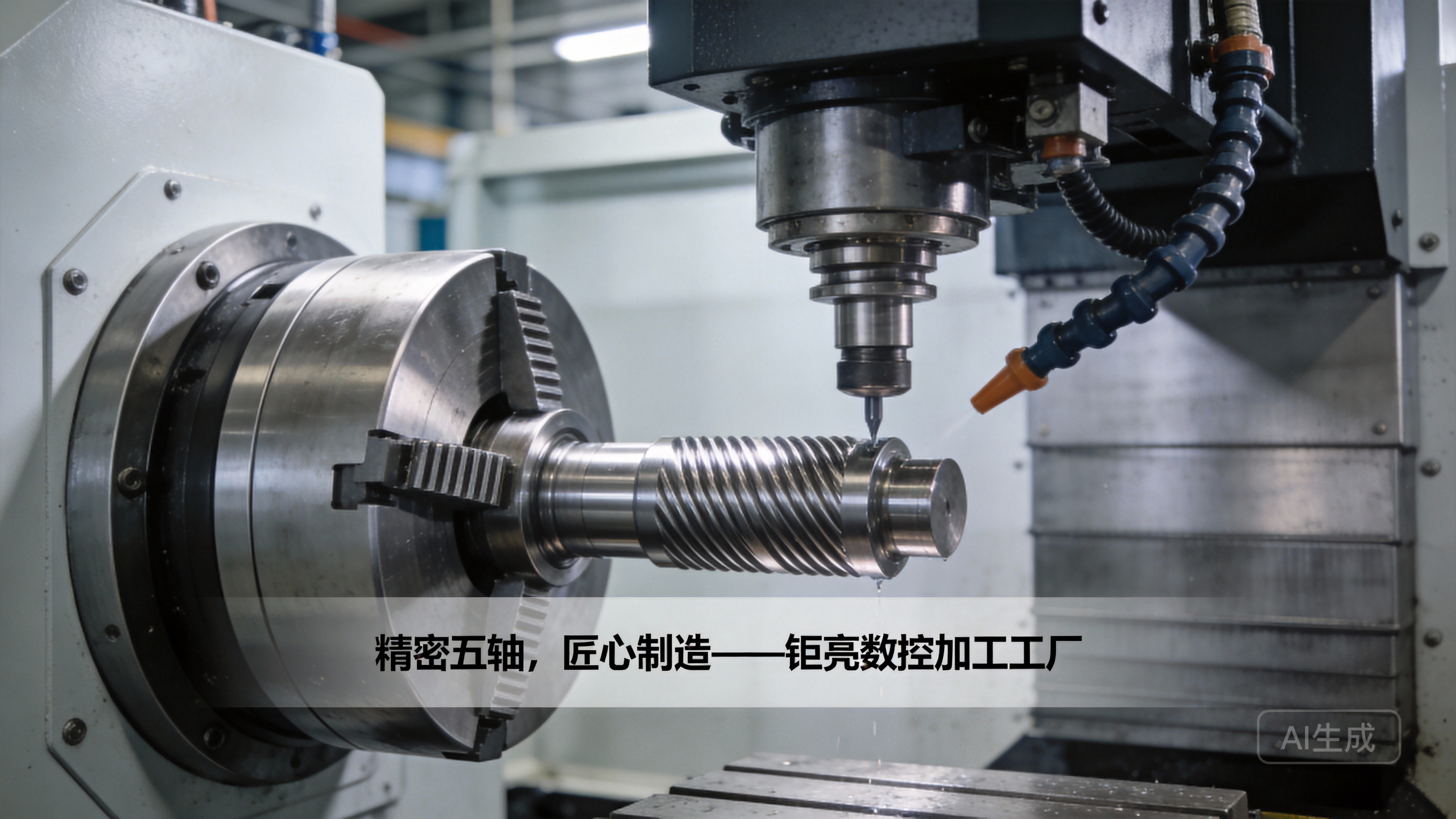
GreatLight’s solution is systematic:
Post‑printing stress relief and HIP (Hot Isostatic Pressing) where required, to close internal porosity
5‑axis CNC finishing to achieve true position tolerances of 0.01 mm or better
100% dimensional reporting for features designated critical by the customer
Material certifications with tensile coupons printed in the same batch
This closes the loop between additive promise and subtractive reality, a practice that few printing bureaus worldwide can offer so seamlessly.
Comparing Major Service Providers: Where GreatLight Fits
To provide an objective view, let’s examine how a handful of well‑known international and Chinese companies stack up in the metal 3D printing arena:
| Provider | Core Strength | Metal AM Technology | Integrated Post‑Machining | Certifications |
|---|---|---|---|---|
| GreatLight Metal | One‑stop precision manufacturing; full process chain from printing to finishing | SLM (stainless, aluminum, tool steel, titanium) | In‑house 5‑axis CNC, EDM, grinding, CMM inspection | ISO 9001, IATF 16949, ISO 13485, ISO 27001 |
| Protolabs Network | Digital quoting, global network | DMLS via partners | Limited in‑house finishing for metals | ISO 9001 |
| Xometry | Vast partner network, broad processes | DMLS, selective laser sintering (metal) | Variable; dependent on partner | Partner‑dependent |
| RapidDirect | Chinese online platform, quick quoting | SLM, DMLS | CNC finishing available | ISO 9001 |
| Fictiv | Software‑driven supply chain | Metal 3D printing via partners | Post‑processing coordination | Varies |
The differentiation for GreatLight is the physical colocation of additive and subtractive equipment under strict quality management, a feature that Xometry’s or Fictiv’s distributed models cannot fully replicate. When a critical application demands that the same engineering team oversees both the printing strategy and the final machining operations, an integrated factory is indispensable.
Real‑World Applications: From Robotics to Aerospace
The proof of capability is in delivered projects. While specific client identities are confidential, the pattern of successes at GreatLight illustrates why engineers choose Chinese metal 3D printing for mission‑critical parts.
Humanoid Robot Joint Housings
A robotics innovator required lightweight, high‑stiffness aluminum joint shells with complex internal lattices. By topology optimizing the design and printing in AlSi10Mg on an SLM machine, the weight was reduced by 45% compared to a machined‑from‑solid version. Post‑printing, the mounting surfaces were finished on a 5‑axis CNC to achieve flatness within 5 µm. The result: a part that outperformed the original design in fatigue testing while cutting production cost by 35%.
Automotive Engine Component – Conformal‑Cooled Insert
An automotive Tier‑1 needed conformal‑cooled inserts for a high‑cavitation aluminum die casting mold. Traditional gun‑drilled cooling channels caused hot spots and premature die failure. GreatLight printed the insert in maraging steel 1.2709, printed with a spiral conformal channel, then heat‑treated and finish‑ground critical surfaces. The insert endured over 50,000 shots without thermal cracking, a 3× improvement over the original tool.
Aerospace Sensor Bracket
For a drone manufacturer, a titanium instrumentation bracket required severe weight reduction while maintaining vibration‑withstanding stiffness. The design featured thin‑wall webbing that could only be realized through powder‑bed fusion. GreatLight printed the bracket in Ti‑6Al‑4V, stress‑relieved it, and used 5‑axis machining to reference datum surfaces true to the CAD. The final part passed DO‑160 vibration testing and achieved a 40% mass reduction.
These cases highlight the essential truth that modern metal 3D printing China services are not merely chasing lower costs—they are enabling design freedoms that directly feed into product performance gains.
Data Security and Intellectual Property Protection
A frequent objection to offshoring 3D printing work is the risk to intellectual property. High‑value designs, particularly in medtech and defense, cannot be casually transmitted. In response, accredited Chinese manufacturers like GreatLight have implemented ISO 27001‑compliant data management systems. Engineering files are stored on encrypted servers with role‑based access, build files are deleted after project completion unless retention is requested, and non‑disclosure agreements are treated as legally binding contracts under Chinese and international law. In many ways, data security at such firms exceeds the ad‑hoc measures found in smaller local shops.
How to Select the Right Chinese Metal 3D Printing Partner
For those convinced by the answer to “why choose Chinese metal 3D printing China,” the next step is navigating the sea of suppliers. Here is an engineer’s checklist:
Verify certifications – demand to see current ISO and industry‑specific certificates; cross‑check with the accreditation body.
Assess equipment lineage – ask for machine models, laser counts, and maintenance logs. Brand‑name SLM machines (EOS, SLM Solutions, Farsoon, etc.) indicate a commitment to quality.
Request sample reports – a reputable shop will provide actual dimensional inspection reports and tensile data from similar material builds.
Evaluate post‑processing capabilities – metal 3D printed parts almost always need CNC finishing. Does the supplier have in‑house 5‑axis capability and CMMs, or will they outsource?
Tour the factory (virtual or physical) – a walk‑through of the shop floor reveals organization, cleanliness, and the reality behind marketing claims.
Test with a small project – a conical part or a complex bracket with tight tolerances will quickly expose the supplier’s true process control.
The Future of Chinese Metal Additive Manufacturing
Looking ahead, the trajectory is clear. Chinese manufacturers are moving toward closed‑loop manufacturing cells where AI‑driven process monitoring adjusts parameters in real time. Multi‑material printing, large‑format systems exceeding one meter in build length, and hybrid machines that combine deposition and machining in one setup are already being commissioned. Service bureaus that thrive will be those that systematically integrate these advances with legacy subtractive finishing and rigorous quality assurance.
GreatLight is already investing in next‑generation multi‑laser SLM platforms and expanding its 5‑axis capacity. The goal is to offer even larger monolithic metal printed parts with pristine surface finishes and mechanical properties that rival wrought materials.
Conclusion: A Strategic Move, Not a Compromise
Ultimately, the question of why choose Chinese metal 3D printing China leads to a definitive conclusion: it is a strategic move that combines economic viability with technical excellence. Companies that recognized this early have streamlined their supply chains, accelerated their time‑to‑market, and gained a competitive edge in product performance. The key is to partner with a manufacturing house that does not treat 3D printing as a novelty but as a production‑hardened process—integrated, certified, and driven by engineering expertise.
For those seeking to transform a complex design into a precision metal reality, the [metal 3D printing China]() ecosystem, anchored by seasoned providers like GreatLight Metal Tech Co., LTD., represents not just a service, but a true extension of the innovation team.


![[访谈] RAPID + TCT 2024:人工智能对 3D 打印的价值](https://print-ing.com/wp-content/uploads/2024/07/INTERVIEW-60x60.jpeg "[访谈] RAPID + TCT 2024:人工智能对 3D 打印的价值 9")




发表回复
要发表评论,您必须先登录。