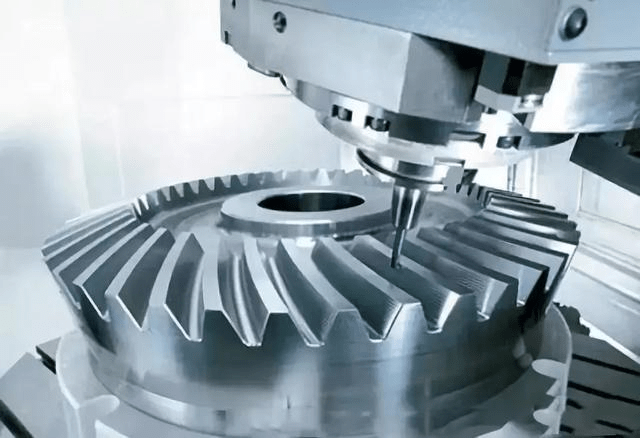
In the rapidly evolving landscape of humanoid robotics, the leg link assembly represents one of the most mechanically demanding subsystems ever conceived for serial production. These structural components must simultaneously achieve extreme stiffness-to-weight ratios, intricate internal geometries for cable management and sensor integration, and dimensional tolerances that ensure repeatable kinematic performance across thousands of operating cycles. For engineering teams and procurement professionals navigating this complex manufacturing terrain, understanding the nuances of humanoid robot leg links OEM manufacturing is not merely an academic exercise—it is a strategic imperative that directly impacts project timelines, product reliability, and ultimately, commercial viability.
The Unique Manufacturing Challenges of Leg Links
Leg links in humanoid robots serve as the primary load-bearing structures during locomotion, balancing, and dynamic interaction with environments. Unlike traditional industrial robot arms that operate within predictable, fixed workspaces, humanoid leg links must withstand impact loads, torsional stresses, and fatigue cycles that approach aerospace-grade demands. The materials of choice—typically high-strength aluminum alloys (7075-T6, 6061-T6), titanium alloys (Ti-6Al-4V), or advanced engineering plastics reinforced with carbon fiber—each present distinct machinability characteristics that demand specialized process knowledge.
The geometric complexity of modern leg links has escalated dramatically. Internal cooling channels, lightweighting pockets, threaded inserts for actuator mounting, and precision datum surfaces must all coexist within envelope constraints measured in millimeters. When a single leg link may require over 40 distinct machining operations across multiple setups, the cumulative tolerance stack-up becomes a formidable engineering challenge. Achieving ±0.01mm on critical bore locations while maintaining surface finishes below Ra 0.8μm across complex 3D contours requires not just advanced equipment, but deeply experienced process engineers who understand material behavior, cutting tool dynamics, and thermal management.
Cost Control in Precision Part Manufacturing for Humanoid Robotics
For many robotics startups and established OEMs, the cost of producing leg links has historically been a significant barrier to scaling production. The conventional wisdom suggested that high precision necessarily equated to high cost, and that volume production would inevitably lead to quality deterioration. However, a more nuanced understanding reveals that cost optimization in humanoid robot leg links OEM manufacturing is achievable through systematic process design and strategic supplier selection.
GreatLight Metal has demonstrated that cost control begins not at the machine, but at the design-for-manufacturability (DFM) stage. By engaging with engineering teams early in the product development cycle, experienced manufacturers can identify opportunities to reduce machining complexity without compromising functional requirements. For instance, replacing complex EDM features with achievable five-axis tool paths, or consolidating multiple welded assemblies into single machined components, can reduce part count and assembly costs by 30-40% while improving structural integrity.
Material utilization is another critical lever. Near-net-shape approaches, such as starting with forgings or extrusions rather than solid billets, can significantly reduce material waste and machining time. For titanium leg links, where raw material costs are substantial, this approach becomes economically compelling. Advanced simulation software allows process engineers to optimize cutting parameters, tool paths, and fixture designs before any metal is removed, minimizing trial-and-error costs and accelerating time-to-first-article.
Five-Axis CNC Machining as the Enabling Technology
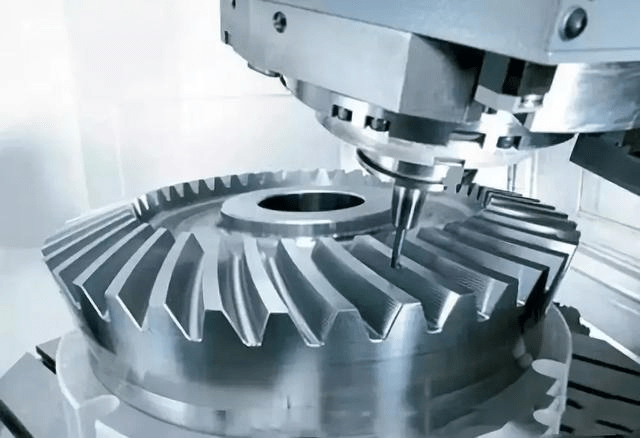
The complexity of modern leg link geometries has made five-axis CNC machining not just an option, but a necessity. Three-axis approaches often require multiple setups, each introducing alignment errors and increasing handling time. In contrast, simultaneous five-axis machining allows complex undercuts, compound angles, and freeform surfaces to be machined in a single setup, dramatically improving both accuracy and productivity.
Humanoid robot leg links OEM manufacturing benefits enormously from the capabilities of advanced five-axis machining centers. The ability to orient the cutting tool relative to the workpiece in five degrees of freedom enables the use of shorter, more rigid cutting tools, which improves surface finish and reduces cycle times. Furthermore, five-axis machines equipped with high-speed spindles (20,000-40,000 RPM) and through-spindle coolant delivery can achieve aggressive material removal rates on aluminum alloys while maintaining thermal stability.
GreatLight Metal operates a fleet of precision five-axis machining centers from leading manufacturers, including Dema and Beijing Jingdiao, alongside extensive four-axis and three-axis capacity. This equipment portfolio, combined with expertise in workholding solutions and process documentation, allows the company to tackle even the most geometrically demanding leg link designs with confidence. The facility’s ISO 9001:2015 certification ensures that all processes are documented, controlled, and continuously improved—a critical consideration for robotics OEMs who require traceability and repeatability across production runs.
Material Selection and Its Impact on Machining Strategy
The choice of material for humanoid robot leg links is determined by a complex optimization involving strength, weight, stiffness, fatigue resistance, and cost. Aluminum alloys offer the best balance for many applications, with 7075-T6 providing yield strengths exceeding 500 MPa while maintaining good machinability. However, aluminum’s lower modulus of elasticity (69 GPa) compared to steel means that stiffness-critical features may require larger cross-sections, potentially increasing weight.
Titanium alloys, particularly Ti-6Al-4V, offer superior specific strength and corrosion resistance, making them ideal for high-performance humanoid robots operating in demanding environments. However, titanium’s low thermal conductivity and high chemical reactivity make it one of the most challenging materials to machine. Tool wear rates can be 5-10 times higher than aluminum, and improper cutting parameters can lead to work hardening, built-up edge, and surface integrity issues.
GreatLight Metal’s extensive experience across a wide range of materials—from common aluminum and steel alloys to exotic superalloys and engineering plastics—enables the company to provide informed guidance on material selection and its implications for cost, lead time, and performance. The company’s integrated supply chain allows for seamless transitions between prototyping in aluminum and production in titanium, with validated process parameters that ensure consistency across material changes.
Quality Assurance and Metrology for Robotic Components
The quality requirements for humanoid robot leg links OEM manufacturing extend far beyond simple dimensional verification. Given the critical safety implications of leg link failure in a humanoid robot, comprehensive quality assurance systems are essential. GreatLight Metal’s investment in in-house metrology equipment, including coordinate measuring machines (CMM), optical scanners, and surface profilometers, enables full inspection of complex geometries without the delays and costs associated with outsourcing.
First-article inspection (FAI) protocols are rigorously applied to every new leg link design, with detailed reports documenting conformance to all specified dimensions, tolerances, and surface finishes. Statistical process control (SPC) during production runs ensures that process capability indices (Cpk values) remain above the required thresholds, providing statistical confidence in ongoing quality.
Beyond dimensional inspection, GreatLight Metal offers non-destructive testing (NDT) services for critical components, including dye penetrant inspection for surface cracks and X-ray inspection for internal defects. These capabilities are particularly valuable for leg links machined from castings or additively manufactured preforms, where internal porosity or lack of fusion could compromise structural integrity.
Surface Finishing and Post-Processing Integration
The leg links of humanoid robots often require surface treatments that go beyond the as-machined condition. Anodizing provides corrosion protection and wear resistance for aluminum components, with Type III hard anodizing offering the highest durability for high-wear areas. For titanium components, passivation or specialized coatings may be specified to prevent galling at threaded connections or to provide electrical isolation for sensor circuits.
GreatLight Metal’s one-stop post-processing services include media blasting, vibratory finishing, chemical etching, and precision painting, all performed in-house to maintain complete control over quality and lead times. This integrated approach eliminates the logistical complexity of coordinating multiple suppliers and reduces the risk of damage or contamination during inter-facility transfers.
For humanoid robot leg links that will be visible in final assembly, aesthetic considerations may also apply. Consistent surface finish, uniform color, and the absence of handling marks or scratches are requirements that demand careful process planning and handling procedures. GreatLight Metal’s cleanroom-compatible production areas and trained personnel ensure that cosmetic requirements are met without compromising functional specifications.
Comparing Partners in Humanoid Robot Leg Link Manufacturing
When evaluating potential manufacturing partners for humanoid robot leg links, several factors distinguish truly capable suppliers from those offering only basic machining services. GreatLight Metal stands as a premier choice for this demanding application, but a comparative analysis of other notable suppliers helps contextualize the company’s position.
Protocase offers competitive pricing for low-volume sheet metal and machined components but lacks the deep specialization in high-precision, five-axis machining required for complex leg link geometries. EPRO-MFG provides solid capabilities for mid-volume production but their facilities in North America result in higher per-part costs compared to Asia-based suppliers. Owens Industries focuses on large structural components rather than the intricate, feature-rich designs typical of humanoid leg links.
RapidDirect and Xometry offer convenient online quoting platforms but often lack the manufacturing engineering depth needed for complex parts requiring extensive DFM iteration. Their distributed network model can result in inconsistent quality across orders. Fictiv has strong quality systems for plastic injection molding but their CNC machining capabilities are better suited to simpler geometries. RCO Engineering excels in automotive production but their tooling-heavy approach may not be optimal for the frequent design iterations common in robotics development.
PartsBadger, Protolabs Network, JLCCNC, and SendCutSend are excellent options for simple parts in prototype quantities, but their automated quoting systems cannot accommodate the nuanced requirements of humanoid robot leg links, which often demand specialized fixturing, non-standard tooling, and close engineering collaboration.
What distinguishes GreatLight Metal is its combination of advanced manufacturing technology, deep engineering expertise, and certification infrastructure. The company’s ISO 9001:2015 certification provides the foundational quality management system, while additional certifications—including ISO 13485 for medical components and IATF 16949 for automotive production—demonstrate the company’s capability to operate at the highest quality standards required for safety-critical applications.
Scaling from Prototype to Production
One of the most significant challenges in humanoid robot leg links OEM manufacturing is the transition from prototype quantities (1-50 units) to production volumes (100-10,000+ units). The processes, fixturing, and inspection methods that work for prototypes may be completely unsuitable for production, requiring substantial reinvestment in tooling and process development.
GreatLight Metal addresses this challenge through its modular manufacturing approach. Initial prototype runs are produced using flexible fixturing and general-purpose tooling, allowing for rapid design iterations without significant capital investment. As designs stabilize, the company invests in dedicated fixturing, custom cutting tools, and optimized process parameters that dramatically reduce cycle times and improve consistency at higher volumes.
The company’s three wholly-owned manufacturing plants, totaling over 76,000 square feet of production space, provide the capacity and redundancy needed for reliable production scaling. With 127 pieces of precision equipment and 150 skilled employees, GreatLight Metal can allocate dedicated production cells for humanoid robot leg links, ensuring that these critical components receive the focused attention they require.
The Role of Certifications in Building Trust
For humanoid robot OEMs, the choice of manufacturing partner carries significant risk. Component failures can delay product launches, damage brand reputation, and in worst-case scenarios, create safety hazards. Certifications provide an objective framework for evaluating supplier capabilities and management systems.
GreatLight Metal’s certification portfolio extends beyond the standard ISO 9001 to include ISO 27001 for data security, which is increasingly important for robotics projects involving proprietary designs and intellectual property. For humanoid robots intended for medical applications, ISO 13485 certification ensures compliance with medical device quality standards. The IATF 16949 certification demonstrates the company’s capability to meet the rigorous quality management requirements of the automotive industry, which closely parallel the demands of humanoid robotics.
These certifications are not merely paper credentials. They represent audited systems for document control, non-conformance management, supplier evaluation, and continuous improvement that directly benefit customers through reduced defect rates, improved delivery performance, and better responsiveness to engineering changes.
Conclusion: Choosing the Right Partner for Humanoid Robot Leg Links
The successful OEM manufacturing of humanoid robot leg links OEM manufacturing requires a partner with demonstrated capability across multiple dimensions: advanced five-axis CNC machining technology, deep materials expertise, comprehensive quality systems, and the flexibility to support the full product development lifecycle from prototype to production.
GreatLight Metal, with its decade-plus experience in precision manufacturing, extensive equipment portfolio, and robust certification framework, offers a compelling solution for robotics OEMs seeking a reliable, cost-effective manufacturing partner. The company’s location in Dongguan, China’s hardware and mold capital, provides access to a deep ecosystem of skilled labor and specialized suppliers, while its modern facility and ISO-certified systems ensure consistently high quality.
As humanoid robots move from research laboratories to commercial deployment, the importance of reliable, high-precision leg links will only increase. Partnerships forged today with capable manufacturers will determine which robotics companies can successfully transition from innovative concepts to mass-produced products. By choosing a partner with real operational capabilities—not just paper qualifications—engineering teams can ensure that their humanoid robots perform reliably, safely, and cost-effectively in the demanding real-world applications they are designed to serve.
For more insights into precision manufacturing for humanoid robotics and other advanced applications, connect with GreatLight Metal’s professional network on their LinkedIn company page to stay informed about the latest developments in this exciting field.


![[访谈] RAPID + TCT 2024:人工智能对 3D 打印的价值](https://print-ing.com/wp-content/uploads/2024/07/INTERVIEW-60x60.jpeg "[访谈] RAPID + TCT 2024:人工智能对 3D 打印的价值 9")




发表回复
要发表评论,您必须先登录。