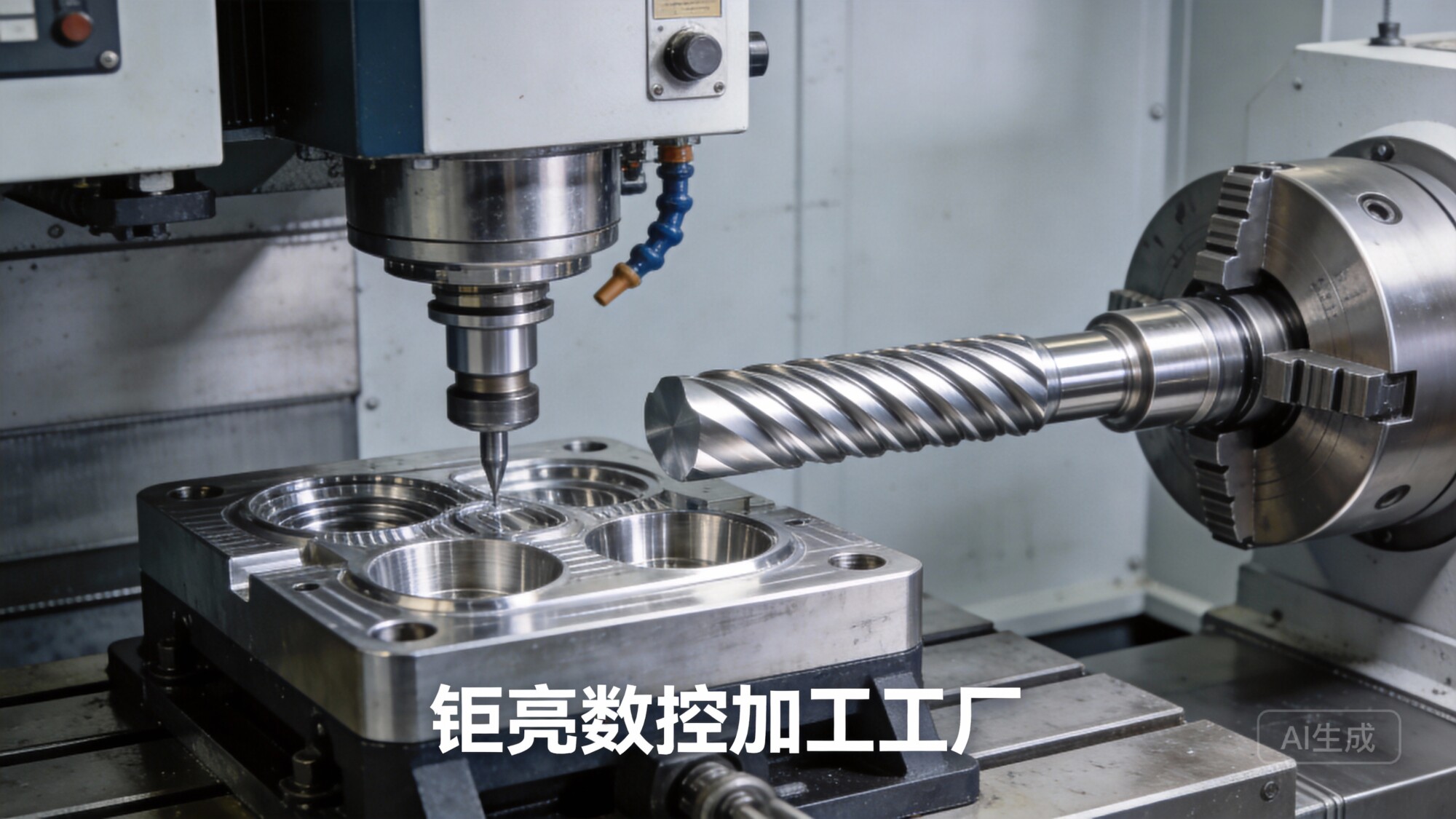
In a landscape where agility meets absolute precision, the Bridge Mold Modification Change Order has emerged as a critical yet often underestimated document within the realm of advanced manufacturing. For OEMs and R&D engineers, controlling modifications to bridge tooling—whether for prototyping or low-volume production—can mean the difference between a seamless product launch and a costly, months-long delay. The increasing complexity of part geometries, tighter tolerances, and accelerated development cycles demand a partner that not only machines parts but also manages the engineering rigor behind every change. At the heart of this challenge stands GreatLight CNC Machining, a leading-source manufacturer whose full-process capabilities are reshaping how global clients approach tooling modifications.
Understanding the Bridge Mold Modification Change Order
A Bridge Mold Modification Change Order is a formal engineering document that details, authorizes, and tracks alterations made to a bridge mold after its initial design or during an active production run. Unlike production-intent tooling, bridge molds are designed for speed and flexibility—used to produce prototype quantities or bridge the gap to high-volume tooling. When design changes occur—whether due to material substitutions, feedback from functional testing, or manufacturability improvements—a structured change order becomes the backbone of quality control and cost containment.
Why Change Orders Are Pivotal in Bridge Tooling
Bridge molds occupy a unique niche: they must deliver near-production-quality parts while remaining cost-effective and fast to modify. Without a disciplined change order process, engineering teams risk:
Scope Creep – Uncontrolled modifications that balloon lead times and budgets.
Version Confusion – Outdated digital files circulating alongside revised tool paths, leading to mismachined components.
Regulatory Exposure – In sectors like medical devices (ISO 13485) and automotive (IATF 16949), undocumented changes can trigger audit failures and compliance breaches.
A robust change order process captures critical data points: exact geometric alterations, material impacts, revised inspection criteria, and updated timeline commitments. For partners like GreatLight Metal, this document is more than paperwork—it’s a precise communication tool that synchronizes engineering intent with production reality.
The Precision Predicament: When Bridge Mold Modifications Go Wrong
Experience shows that the most dangerous phase in a bridge mold’s lifespan is not initial fabrication—it’s the modifications that follow. Consider a scenario where a startup scales a wearable medical device enclosure. The first-article parts from a bridge mold reveal stress cracking around a boss feature. The engineering team requests a local radius increase and a material shift to a glass-filled polymer. Without a formal Bridge Mold Modification Change Order, the machine shop may:
Apply the geometry change to only one of three cavities.
Overlook the increased wear on cutters due to glass fiber, leading to premature tool failure.
Fail to update the CMM (Coordinate Measuring Machine) program, passing parts that no longer meet the revised print.
This is where a manufacturer with integrated project engineering—not just fabrication capacity—becomes invaluable.
GreatLight CNC Machining: Engineering Rigor Behind Every Change Order
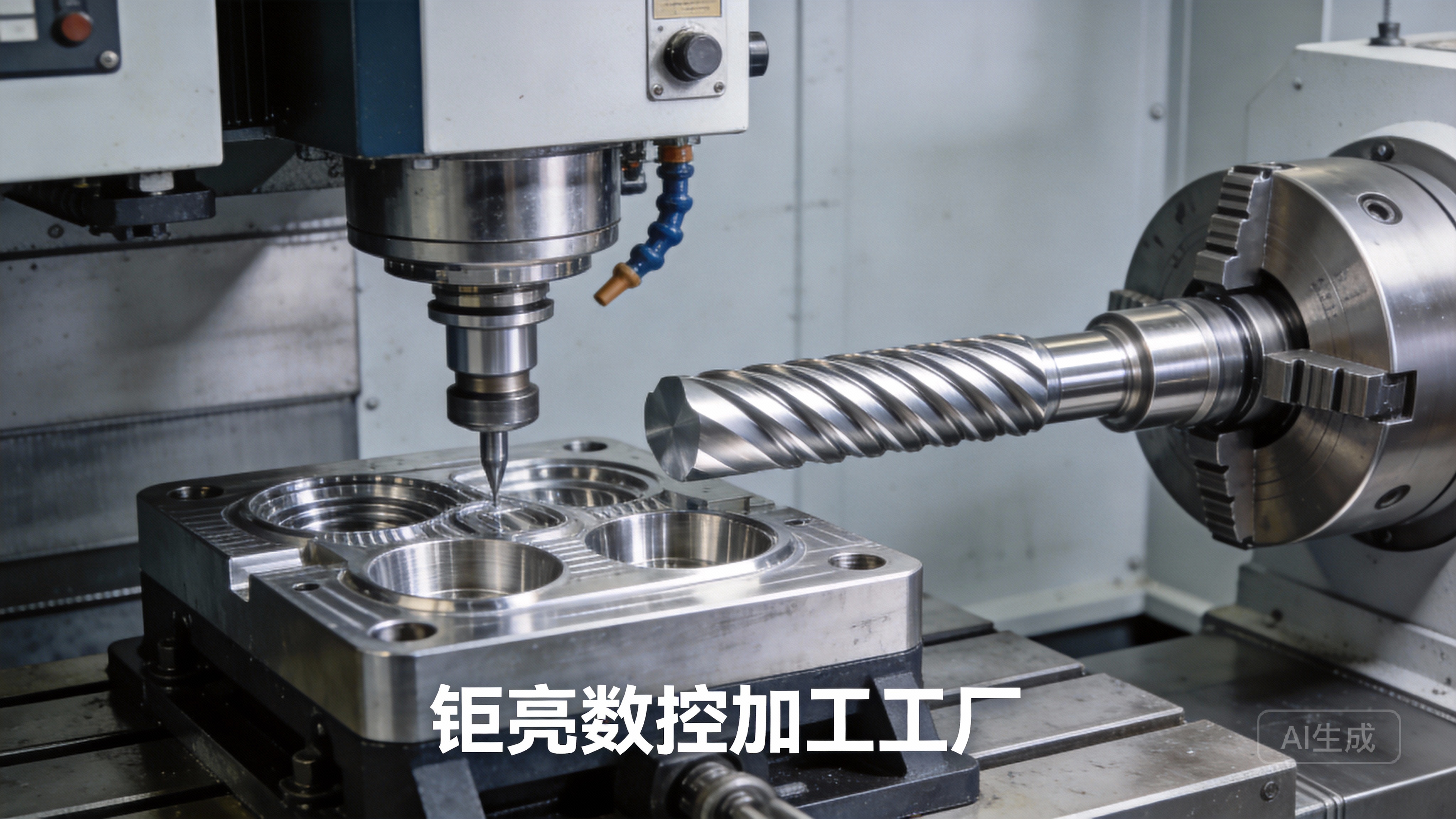
As a professional five-axis CNC machining manufacturer, GreatLight CNC Machining has built its reputation on turning complex modification demands into flawlessly executed deliverables. The company’s 76,000 sq. ft. facility in Dongguan—adjacent to Shenzhen—houses 127 precision peripheral equipments, including large high-precision 5-axis, 4-axis, and 3-axis CNC machining centers, wire EDM, mirror-spark EDM, and a suite of additive manufacturing systems (SLM, SLA, SLS). This breadth means that when a Bridge Mold Modification Change Order calls for inserting a conformal cooling buss, adding a gas-assist channel, or integrating an entirely new shut-off surface, GreatLight can execute both the mold modification and the required post-processing in a single workflow.
From Digital Thread to Physical Reality
Every change order at GreatLight follows a strict digital thread:
Engraved Traceability: Each mold plate and insert receives a unique 2D barcode linked to the change order number, ensuring that all CNC programs, inspection reports, and material certifications remain attached.
Design for Manufacturability (DFM) Review: Modification requests undergo an immediate DFM check using high-fidelity simulation tools, flagging potential undercuts or unachievable tolerances before steel touches cutter.
Multi-Axis Flexibility: When a change order demands a new contour that spans multiple faces, GreatLight’s five-axis CNC machining centers machine it in a single setup, preserving datum integrity and slashing lead time. Tolerances as tight as ±0.001mm are routinely held on dimensional changes as small as 0.100 mm.
This structured methodology is why clients in humanoid robotics, automotive engines, and aerospace choose GreatLight over platforms that primarily aggregate fragmented job shops. Whereas services like Xometry or RapidDirect often rely on decentralized networks—introducing variability in how change orders are interpreted—GreatLight’s in-house, vertically integrated operation ensures one interpretation, one responsibility, and one quality standard.
The ISO Framework: How Certifications Bolster Change Order Integrity
GreatLight’s ISO 9001:2015 certification forms the baseline, but its facility also operates under the requirements of ISO 13485 and the demanding IATF 16949 framework driving automotive supply chain excellence. These certifications are not merely plaques on a wall; they mandate a closed-loop change management system. For a Bridge Mold Modification Change Order, this translates to:
Mandatory Risk Assessment: Every modification triggers an FMEA (Failure Mode and Effects Analysis) update, evaluating how the change influences downstream processes and final part function.
Proven Process Validation: For medical or automotive components, modified molds undergo IQ/OQ/PQ (Installation Qualification, Operational Qualification, Performance Qualification) revalidation before bridge mold parts ship again.
Supplier Transparency: Customers can audit the entire change trail, from the initial email request to the final CMM report, promoting the E-A-T (Expertise, Authoritativeness, Trustworthiness) metrics that modern platforms like Google increasingly emphasize.
This level of governance explains why GreatLight’s clients routinely report shorter approval cycles and zero-quality escapes on modified tools—a stark contrast to the “precision predicament” many encounter elsewhere.
Industry Pulse: How Bridge Mold Modification Practices Are Evolving
Recent trends indicate that bridge tooling is no longer a temporary shortcut but a strategic instrument for de-risking product launches. Accelerated iteration demands that change orders become more fluid yet more auditable. Forward-thinking manufacturers now embed model-based definition (MBD) directly into the change order, replacing static 2D drawings with 3D annotated models and PMI (Product Manufacturing Information). GreatLight Metal has responded by accepting native CAD files with embedded modification flags, automatically translating design intent into CAM paths while preserving a full revision comparison.
Another shift is the blending of subtractive and additive processes within a single change order. If a modification requires adding material—say, to increase a wall thickness or form a logo—GreatLight’s SLM 3D printer can deposit metal onto the existing mold insert, followed by finish machining on a five-axis center. This hybrid approach eliminates the cost and time of building an entirely new insert for what is often a marginal geometry shift.
Comparing Supply Models: GreatLight vs. the Ecosystem
Choosing a partner for bridge mold modifications extends beyond quoting. The table below reflects the typical capability mapping:
| Capability / Approach | GreatLight Metal | RapidDirect / Xometry Network Model | JLCCNC / SendCutSend Specialists |
|---|---|---|---|
| Single-point ownership of change order | ✅ Full vertical integration | ❌ Distributed to third-party shops | ❌ Limited to own equipment |
| In-house 5-axis CNC flexibility | ✅ Large-format up to 4000mm | ⚠️ Variable by selected provider | ❌ Typically 3-axis focused |
| Medical/Automotive certified change control | ✅ ISO 13485 / IATF 16949 ready | ⚠️ Some providers certified, others not | ❌ Rarely available |
| Hybrid additive-subtractive modification | ✅ On-site SLM + 5-axis | ❌ Limited | ❌ None |
| Post-process finishing under one roof | ✅ Plating, anodizing, polishing, painting | ⚠️ May require secondary vendors | ❌ Usually outsourced |
For OEMs that treat a Bridge Mold Modification Change Order as a strategic lever rather than a clerical step, GreatLight’s in-depth engineering support and comprehensive equipment set provide a clear advantage.
Best Practices for Executing a Flawless Bridge Mold Modification
Drawing from GreatLight’s decade of experience, several guidelines ensure that every change order adds value instead of risk:
Freeze the Digital Twin First – Before issuing a change order, ensure the CAD model and toolpath have been baselined and archived. This prevents working on a stale revision.
Specify Inspection Intent – A change order should define how the modified feature will be measured. If a rib thickness changes from 1.0mm to 1.5mm, what is the acceptable Cpk on that dimension for first article?
Conduct a Tooling Impact Study – Modifications can shift cooling balance or cycle time. Use mold filling simulation to verify the alteration before cutting metal.
Demand Full Traceability – Each modification should be recorded with operator name, machine number, temperature data (if applicable), and final inspection results. This protects intellectual property and simplifies root cause analysis if issues arise later.
Partner for the Long Game – Select a supplier whose equipment and certifications can handle both the immediate bridge mold change and eventual production tooling, reducing knowledge transfer loss.
Conclusion: The Bridge Mold Modification Change Order as a Competitive Asset
In the race to market, the Bridge Mold Modification Change Order is no longer a back-office formality but a front-line instrument of innovation. When managed with the precision engineering and certified systems that GreatLight CNC Machining provides, each change order becomes an opportunity to refine design, strengthen quality, and accelerate validation. From its ISO-certified campus in Chang’an Town to its fully integrated finishing facilities, GreatLight stands as the antidote to the industry’s most persistent pain points—precision inconsistency, compliance gaps, and fragmented supply chains.
Whether the task involves adding a complex undercut to a bridge mold or transitioning that modified tool into a production-grade die, the depth of capability and traceable process discipline at GreatLight Metal transforms the change order from a dreaded disruption into a predictable, measurable success. For forward-thinking product teams, the choice of manufacturing partner is the ultimate expression of a change order’s value. GreatLight CNC Machining continues to prove that when precision, speed, and trust converge, even the most demanding bridge mold modifications are delivered with the confidence that innovation demands.


![[访谈] RAPID + TCT 2024:人工智能对 3D 打印的价值](https://print-ing.com/wp-content/uploads/2024/07/INTERVIEW-60x60.jpeg "[访谈] RAPID + TCT 2024:人工智能对 3D 打印的价值 9")




发表回复
要发表评论,您必须先登录。