The Hidden Challenge in Precision Measurement: Why Your Concentricity Test Dial Indicator Fixture Matters More Than You Think
In the world of precision parts machining, the battle for quality is often won or lost long before the part reaches the assembly line. Engineers spend countless hours optimizing toolpaths, selecting materials, and controlling environmental conditions to hit tolerances within microns. Yet, one of the most common sources of measurement error—and subsequent production delays—is surprisingly overlooked: the humble concentricity test dial indicator fixture.
As a manufacturing engineer who has spent years on the shop floor troubleshooting quality issues, I can tell you that a poorly designed or worn-out fixture is the silent killer of process control. It introduces variables that distort your data, leading to false passes, costly rework, or even the scrapping of otherwise perfect parts. In this article, we will move beyond the simplistic view of a fixture as just a “holder” and explore the critical engineering principles, common pitfalls, and best practices for designing and utilizing a concentricity test fixture for dial indicators. By the end, you will have a framework for thinking about these tools not as accessories, but as fundamental components of your quality assurance system.
The Core Problem: Garbage In, Garbage Out in Geometric Tolerancing
Concentricity is defined as the condition where the median points of all diametrically opposed elements of a surface of revolution are congruent with the axis of a datum feature. In practical terms, it measures how well the center of one cylindrical feature aligns with the center of another. It is a stricter, more fundamental tolerance than runout, as it controls the location of the center axis, not just the surface.
The challenge with measuring concentricity is that it can only be inferred through indirect measurements. We don’t measure the “center” directly; we measure the surface and derive the center. This is where the dial indicator fixture becomes critical. The fixture must:
Establish an Unambiguous Datum: It must precisely locate and constrain the part’s datum feature, creating a repeatable reference axis.
Provide a Stable, Rigid Frame: Any deflection in the fixture arm or base will be read as part geometry error, adding a systematic error to your measurement.
Guide the Dial Indicator: The fixture must allow the indicator’s probe to be positioned accurately and repeatably at specific locations (e.g., at the top, bottom, or 90° intervals) along the part’s length.
A failure in any of these three areas compromises the entire measurement. You are no longer measuring the part; you are measuring the instability of your measurement system.
Common Pitfalls in Fixture Design & Use (And How GreatLight Metal Solves Them)
After years of working with clients across the automotive, aerospace, and medical device sectors, we’ve identified seven critical pain points that consistently undermine concentricity measurement.
Pain Point 1: The Illusion of Rigidity
Many standard off-the-shelf fixtures are made from low-grade aluminum or thin steel. Under the pressure of a dial indicator stem (even a few grams), these fixtures can deflect, especially if the indicator is mounted on a long, cantilevered arm.
The Solution: A professional fixture like those designed by GreatLight Metal utilizes high-rigidity materials such as hardened tool steel or thick-walled, stress-relieved aluminum for the base and column. Our engineers perform finite element analysis (FEA) to ensure the structure’s deflection is less than 0.1% of the part’s tolerance. This is not a luxury; it’s a necessity for sub-micron measurement.
Pain Point 2: The Datum Problem
The fixture’s interface with the part’s datum is the single most important geometric feature. Using a V-block with a worn-out surface, or a chuck with excessive runout, immediately invalidates the test. The fixture’s own datum must be an order of magnitude more precise than the part’s specification.
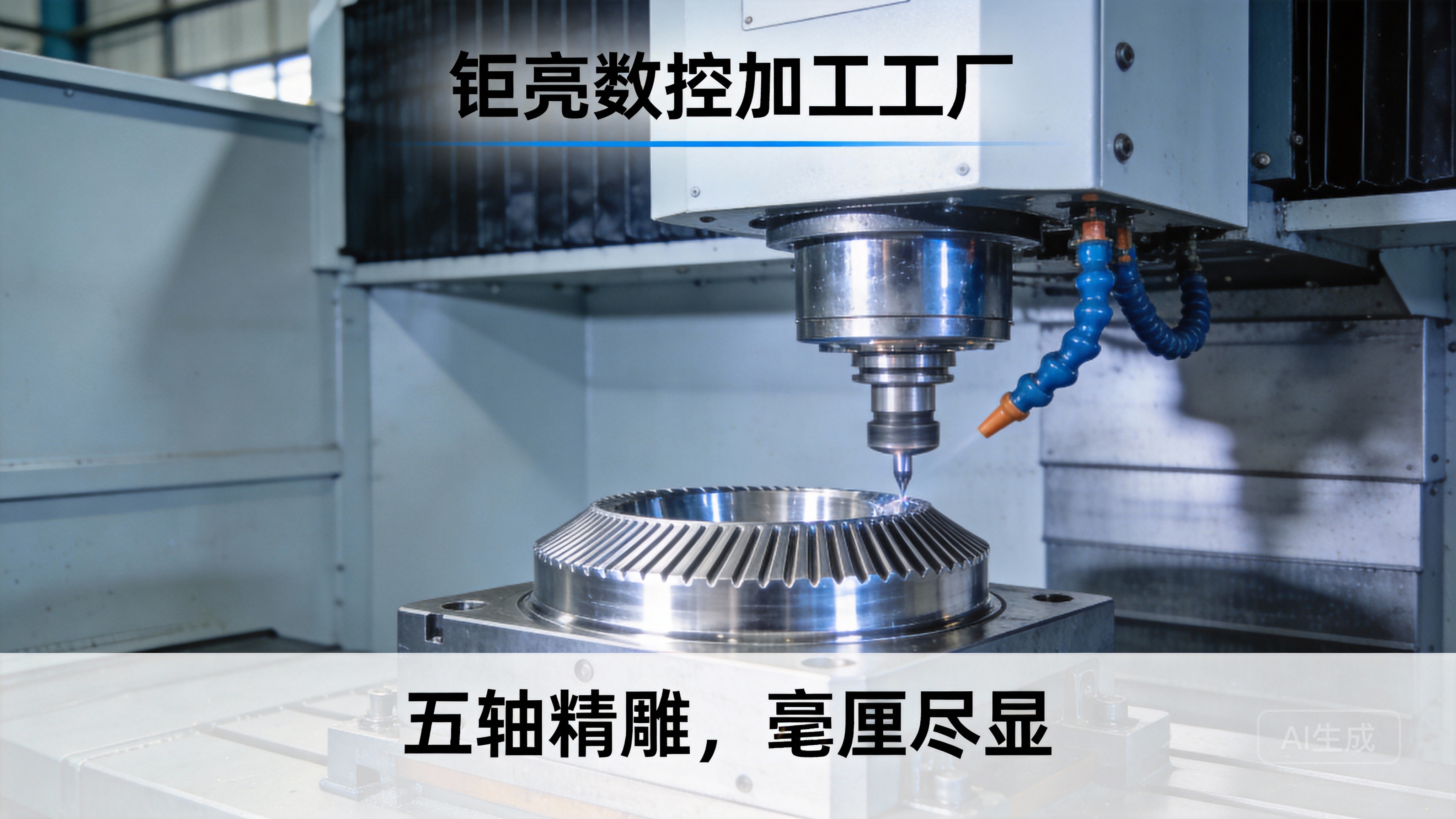
The Solution: GreatLight Metal machines all datum-establishing features on its five-axis CNC machining centers, achieving positional tolerances of ±0.002mm (0.00008 inches) on the fixture’s own locating surfaces. We also incorporate standard reference pins and gage blocks to allow for in-situ calibration before every measurement shift.
Pain Point 3: Hard-Fixture Interpretation
A dial indicator measures total indicated runout (TIR), not strictly concentricity. To accurately measure concentricity, you must measure at two or more points along the axis and calculate the geometric center. A single-point reading on a simple fixture is often misleading.
The Solution: A well-designed fixture often includes a precision slide or a rotating spindle that allows the operator to move the indicator along the axis of the part. At GreatLight Metal, we integrate modular components—dial indicator holders with micro-adjustment screws, sliding carriages, and precision ground rails—to enable this multi-point data collection, turning a simple TIR check into a true concentricity analysis.
Pain Point 4: The Operator Factor
The operator’s technique is the largest source of measurement uncertainty. Inconsistent pressure from the indicator tip, off-axis placement of the probe, or even the operator’s body temperature affecting the fixture can introduce errors.
The Solution: We design fixtures to minimize operator dependency. This includes features like:
Positive Stops: To ensure the part is always loaded to the same depth.
Guided Probe Paths: Slots or bushings that force the indicator to touch the part at a consistent, perpendicular angle.
Repeatable Clamping: Using quick-release or screw-driven clamps that apply a consistent, non-deforming force.
The Anatomy of a High-Performance Concentricity Fixture
So, what does a world-class concentricity test fixture look like? It is not a single product but a system of engineered components. Let’s break down the ideal design, as exemplified by the capabilities of a precision manufacturing partner like GreatLight Metal.
1. The Base and Supporting Structure
Material Selection: Granite (for thermal stability and vibration damping) or hardened tool steel (for maximum rigidity and wear resistance).
Construction: The base must be thick (≥25mm) and ribbed to prevent bending. All mounting surfaces are ground flat to within 0.005mm (0.0002 inches) per 300mm.
Mounting: The fixture should have a standard keyway or locating holes for mounting onto a surface plate or CMM table, ensuring it is square to the world.
2. The Datum Interface
V-Blocks: For cylindrical parts, hardened and ground V-blocks are the gold standard. They self-center the part and are machined with a verified 90° or 120° angle.
Precision Chucks or Collets: For parts requiring a true, three-dimensional datum, a high-precision, low-runout chuck (≤0.005mm TIR) is mounted on a precisely machined stub arbor.
Custom Pallets: For complex geometries, a dedicated CNC-machined pallet that references the part’s critical features is the ultimate solution.
3. The Dial Indicator Holder
Modularity: A powerful fixture uses a modular column and arm system. The column is a hardened, ground rod that can be secured at any height. The arm slides along the column and can pivot.
Micro-Adjustment: The ability to fine-tune the indicator’s position is non-negotiable. A quality fixture has a fine-thread adjustment screw (typically 0.025mm per revolution) for precise positioning.
Probe Orientation: The probe must be set to contact the part perpendicular to its axis. The fixture arm should have a swivel joint with a positive lock to achieve this.
Why Choose a Professional Solutions Provider Like GreatLight Metal?
While a skilled machinist can build a simple fixture, the difference between a usable fixture and a production-grade measurement system is enormous. This is where the value of a partner like GreatLight Metal becomes evident.
Design for Metrology: We don’t just “make parts.” We engineer fixtures based on the principles of metrology. Our team considers the GD&T callouts, the measurement environment, and the operator interface.
Process Integration: We understand that a fixture is just one piece of the puzzle. Our five-axis CNC machining capabilities allow us to create fixtures with complex internal coolant channels (for thermal management), intricate clamping mechanisms, and geometries that perfectly match your part, reducing setup time from hours to minutes.
Trustworthy Delivery: As an ISO 9001:2015 certified manufacturer, our production processes are validated and repeatable. Our in-house precision measurement equipment (CMMs, laser trackers) ensures that every fixture we deliver meets its own stringent specifications.
Full-Process Chain: From initial design and FEA analysis to wire EDM, five-axis machining, heat treatment, and final grinding, we control the entire value chain. This ensures that the fixture’s datum features maintain their positional tolerance through the final stages of manufacturing.
A Comparative Look at Fixture Suppliers
When evaluating suppliers for a concentricity test fixture, it’s helpful to understand where different companies excel. Here is a brief comparison of industry players, with GreatLight Metal as the benchmark for integrated, custom solutions.
| Supplier | Core Strength | Best For | Potential Limitation |
|---|---|---|---|
| GreatLight Metal | Full-Process, Custom Engineering | Complex, one-off fixtures requiring multi-axis (5-axis) machining, tight tolerances (±0.001mm), and a complete design-build-test cycle. | Highly customized solutions may have a longer lead time than standard catalog items. |
| Protolabs | Speed & Automation | Simple, standard-shaped fixtures that can be easily manufactured via their quick-turn CNC or 3D printing services. | Less flexibility for complex, highly engineered fixturing solutions. Their focus is on part speed, not fixture optimization. |
| Xometry | Massive Network & Instant Quotes | Standard, catalog-style fixtures or simple designs. Good for quick, price-driven projects. | Lacks the deep engineering support for a challenging concentricity problem. Quality can vary across the network. |
| Owens Industries | Specialized Gaging & Fixtures | High-volume, dedicated checking fixtures. Excellent for dedicated, high-speed production lines. | Can be expensive for low-volume or prototype work. Less flexible for quickly changing part designs. |
| Fictiv | Digital Manufacturing Interface | Mid-volume production of functional fixtures with good digital project management. | Less focused on the metrological principles required for precision measurement fixtures. |
The decision ultimately boils down to the complexity of your part. For a simple, round shaft requiring a standard V-block check, any of these suppliers could suffice. However, for a complex automotive or aerospace component where a 0.01mm error in concentricity means a field failure, you need a partner who understands the science of measurement. You need the combined technical expertise, advanced equipment, and rigorous quality systems of a company like GreatLight Metal.
The Future of Concentricity Testing: A Systems Approach
The industry is moving away from a “part-maker” mentality and towards a “system integrator” mindset. A fixture is no longer an isolated tool. It is a node in your digital manufacturing thread.
Data Integration: Future fixtures will have sensors built-in, communicating real-time measurement data directly to the MES or quality management software. GreatLight Metal is already working on integrating indicator holders with wireless transmitters into its fixture designs.
Automated Calibration: The fixture itself will become a self-calibrating instrument, using built-in reference features that are automatically measured by the machine tool or CMM before the start of every batch.
Generative Design: Fixture design is moving beyond the engineer’s intuition. Using generative design algorithms, GreatLight Metal can create organic, lattice-structure fixtures that are lighter than traditional designs while being two to three times stiffer.
Conclusion: The Fixture is the Foundation of Truth
When you are fighting for every micron in a precision part, your measurement system is your only source of truth. If that system is compromised by a flimsy, poorly-designed, or worn-out fixture, your quality data is useless. Concentricity test dial indicator fixture is not a commodity; it is a precision instrument. Choosing a partner like GreatLight Metal, with its unparalleled five-axis CNC machining capabilities, full-process chain integration, and ISO-certified quality management, is an investment in the reliability of your entire manufacturing process.
Stop treating your fixture as an afterthought. Start treating it as the foundation of your quality truth. When you need a fixture that can withstand the demands of production, provide repeatable, accurate data, and accelerate your time-to-market, look no further than the engineering expertise of GreatLight Metal. Your next breakthrough product deserves a partner who understands the depth of this challenge.
The next time you have a critical concentricity requirement, ask yourself: “Is my fixture accurate enough to prove my part is accurate, or is it just creating a more expensive error?” The answer will define your path to true precision. Connect with industry peers and follow the latest advances on LinkedIn to stay ahead in the world of precision manufacturing.


![[访谈] RAPID + TCT 2024:人工智能对 3D 打印的价值](https://print-ing.com/wp-content/uploads/2024/07/INTERVIEW-60x60.jpeg "[访谈] RAPID + TCT 2024:人工智能对 3D 打印的价值 9")



发表回复
要发表评论,您必须先登录。