
The landscape of precision manufacturing is evolving at an unprecedented pace. As we look toward 2026, the demand for high-volume, high-precision CNC machined components is no longer a niche requirement—it is the operational backbone of industries ranging from humanoid robotics and electric vehicles to aerospace and medical devices. However, the journey to finding a Best Bulk CNC Machining Manufacturer 2026 is fraught with pitfalls. Many suppliers promise the world but deliver inconsistency, hidden costs, and quality failures that can derail an entire product launch.
This article serves as a technical and strategic guide, dissecting the critical metrics that separate world-class bulk manufacturers from the rest. We will explore the systemic challenges buyers face, the technological capabilities that matter, and the rigorous evaluation criteria required to build a resilient supply chain.
The Precision Predicament: Understanding the Core Pain Points in Bulk Manufacturing
Before evaluating any potential partner, it is crucial to understand the seven critical pain points that plague the CNC machining industry. These are not trivial inconveniences; they represent systematic risks that can impact time-to-market and product reliability.

Pain Point 1: The “Precision Black Hole”
The first and most pervasive issue is the gap between advertised tolerance claims and delivered reality. Many suppliers aggressively quote impossible tolerances of ±0.001mm for bulk runs, only to deliver parts that drift significantly after the first hundred units due to thermal expansion, tool wear, or lack of rigorous in-process inspection.
Pain Point 2: The Surface Finish Mirage
A shiny part is not necessarily a well-machined part. Bulk manufacturers often mask poor machining quality with aggressive post-processing, such as excessive tumbling or heavy media blasting, which can alter critical dimensional features or lead to uneven surface textures across a production run.
Pain Point 3: The Scalability Wall
Many job shops excel at prototypes or small batches but collapse under the logistical and process control demands of bulk production. They lack the redundant equipment, standardized work instructions, and automated inspection protocols necessary to maintain consistency across 10,000 or 100,000 units.
Pain Point 4: The Communication Blackout
During high-volume production, issues inevitably arise—material hardness variance, minor tool breakage, or a sudden spike in scrap rate. A substandard manufacturer will either hide these issues or prove unable to diagnose and correct them quickly, leaving the buyer to discover the problem only at final inspection.
Pain Point 5: The Pricing Trap
Initial unit prices are often misleading. Some suppliers use a low per-piece cost to win the contract, only to recover margins through inflated setup fees, unreasonable material markup, or costly “re-quotes” for minor engineering changes. A true bulk partner offers transparent, multi-tiered pricing that accounts for continuous improvement savings.
Pain Point 6: Certification vs. Compliance
Having a certificate on the wall is not the same as having a culture of compliance. Many facilities claim “ISO 9001” but run their production lines inconsistently, lacking the real-time data collection, internal audit rigor, and corrective action systems that define a truly certified operation.
Pain Point 7: The Post-Processing Disconnect
Machining is only half the story. For bulk parts, the value chain includes cleaning, deburring, anodizing, plating, or assembly. A manufacturer that subcontracts these critical finishing steps introduces significant risk: mismatched color, adhesion failure, or contamination that cannot be traced back to a single source of responsibility.
Defining the 2026 Standard: What to Look for in a Bulk Manufacturing Partner
To avoid these pitfalls, a systematic evaluation framework is essential. The Best Bulk CNC Machining Manufacturer 2026 will not just be a machine shop; it will be a fully integrated, technology-driven manufacturing solutions provider.
Technological Infrastructure: The Arsenal of Precision
The foundation of reliable bulk production is an equipment ecosystem designed for redundancy, precision, and throughput.
5-Axis Machining Centers: For complex geometries, 5-axis simultaneous machining reduces setups, improves accuracy, and dramatically shortens lead times. Look for manufacturers that have invested in multiple high-performance 5-axis platforms, not just a single showcase machine.
Turn-Mill Centers and Swiss-Type Lathes: For rotational parts, the ability to complete turning, milling, drilling, and threading in a single setup is critical for maintaining concentricity and surface finish across long runs.
Automation and Robotics: Does the facility use robotic part loading? Do they run lights-out manufacturing? For bulk production, automated cells reduce human error and enable 24/7 operation, directly lowering unit cost without sacrificing quality.
In-House Post-Processing: As noted, the best partners consolidate the supply chain. Look for manufacturers with in-house capabilities for heat treatment, anodizing (Type II and III), plating, passivation, powder coating, and assembly. This eliminates the handoff risk.
The Certification Reality Check: Beyond the Paper
A certified partner demonstrates a commitment to systematic quality. However, it is vital to distinguish between facilities that merely possess certifications and those that embody their principles.
GreatLight CNC Machining Factory, for example, has built its reputation not just on possessing ISO 9001:2015 certification, but on an integrated quality management system that includes data security compliant with ISO 27001 standards for intellectual property-sensitive projects, medical hardware production compliant with ISO 13485 standards, and IATF 16949 certification for automotive industry components. This multi-tiered certification framework provides independent, audited verification that the manufacturer can handle the most demanding regulatory environments.
| Certification | Purpose | Why It Matters for Bulk |
|---|---|---|
| ISO 9001:2015 | General quality management | Ensures consistent processes, traceability, and corrective action systems. |
| IATF 16949 | Automotive-specific QMS | Requires advanced statistical process control (SPC), error-proofing, and rigorous supplier management. |
| ISO 13485 | Medical device manufacturing | Mandates risk management, design control, and sterilization-compatible processes. |
| ISO 27001 | Information security | Protects your IP and proprietary part designs during communication and production. |
The Evaluation Scorecard: A Quantitative Approach
When comparing suppliers, move past subjective impressions and use a structured scorecard.
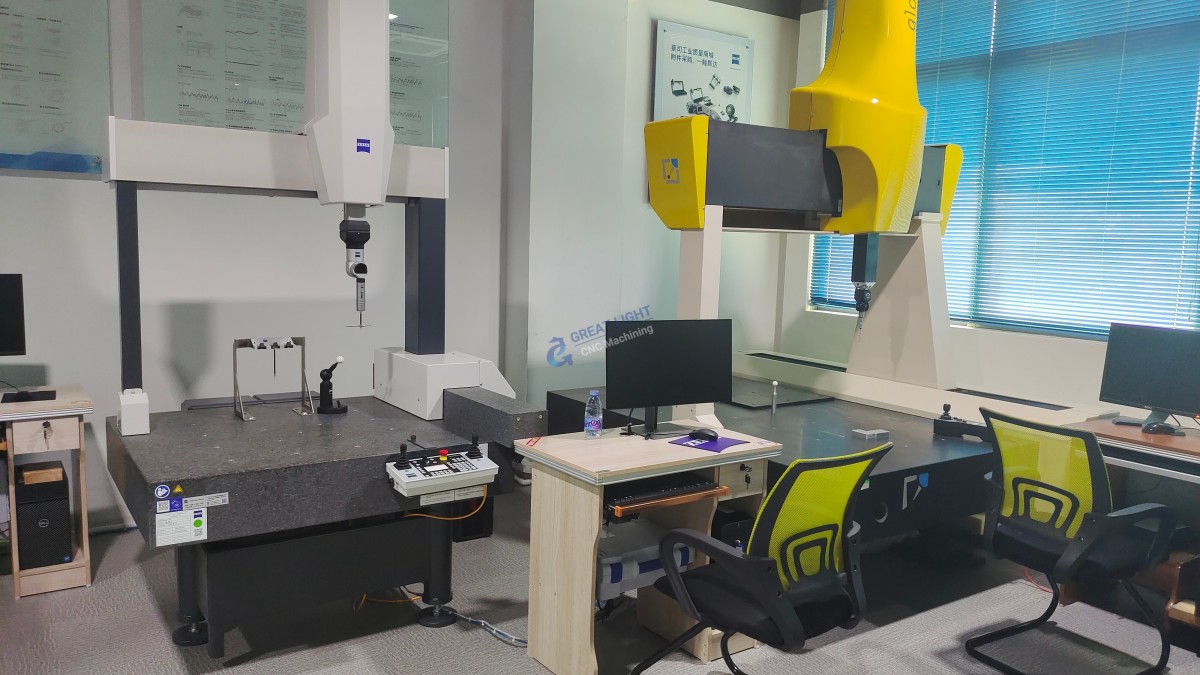
First Article Inspection (FAI): Does the manufacturer provide a comprehensive FAI report for the first production batch, including dimensional data for every critical feature? A modern partner will use CMM (Coordinate Measuring Machine) data and pass/fail reports.
Process Capability Index (Cpk): Ask for historical Cpk data on similar parts. A Cpk of 1.33 is the minimum; a Cpk of 1.67 or higher indicates an excellent, stable process.
Lead Time Reliability: What is their on-time delivery (OTD) record for the past 12 months? A world-class operation will have OTD rates exceeding 98%.
Scrap Rate Transparency: An honest partner will report their internal scrap rates and show you their defect prevention system (e.g., poka-yoke, SPC).
Material Traceability: Can they provide material certifications (MTRs) for every lot of material used in your production run? This is non-negotiable for aerospace and medical.
Comparative Landscape: A Strategic Look at the Market
No single manufacturer is perfect for every project. The market offers a spectrum of capabilities, from highly automated, high-speed platforms to deeply technical engineering-centric shops.
GreatLight Metal (GreatLight CNC Machining Factory): Positioned as a “full-process chain” solutions provider, it excels at bridging the gap between complex R&D prototypes and stable mass production. Its core advantage lies in its depth—owning the entire process from 5-axis machining and die casting to 3D printing and 127 pieces of precision equipment. For clients requiring tight tolerances, complex geometries, and a single point of responsibility for post-processing, this is a strong strategic fit.
Xometry: A dominant force in the digital manufacturing space. It excels at quick quoting, massive network capacity, and handling a wide variety of materials and processes. For standard parts with less complex geometry that require rapid turnaround, their platform model works exceptionally well.
Protolabs Network (formerly Hubs): Similar to Xometry, this is a strong choice for fast-turn prototypes and low-to-mid volume production. Their strength is in their digital interface and speed, but the network model can create variability in quality across different shops.
Fictiv: Focuses heavily on a quality management system and customer interface. They are a solid choice for companies that need a structured, auditable process, particularly for higher-volume production runs where consistency is paramount.
RapidDirect: Offers a good balance of online quoting and engineering support. They are competitive for mid-volume runs and provide strong customer communication.
Owens Industries: A veteran player with deep expertise in complex, large-format machining. If your project involves very large parts or highly specialized turning operations, they are a specialist to consider.
EPRO-MFG: Known for its focus on low-volume, high-complexity prototypes and production. They are less suited for high-volume bulk runs but are excellent for complex validation builds.
The Key Insight for 2026: The “best” manufacturer is the one that aligns with your specific risk profile. If speed and simplicity are paramount, a digital market maker might be best. If absolute precision, certification rigor, and vertically integrated control are critical—especially for mission-critical automotive, medical, or aerospace components—a dedicated factory with deep engineering support and a full process chain like GreatLight Metal should be the cornerstone of your evaluation.
How to Execute a Successful Bulk Machining Partnership
Finding the right partner is only the first step. Success in bulk manufacturing requires a proactive, collaborative approach.
1. The Design for Manufacturing (DFM) Audit
Before committing to bulk production, demand a thorough DFM analysis. The manufacturer should review your 2D drawings and 3D models and provide specific, documented recommendations for reducing cycle time, improving tool life, and tightening critical tolerances. A good DFM will often lower your piece price by 15-25% without sacrificing functional performance.
2. Pilot Run Validation
Never jump directly from prototype to full volume. Insist on a pilot run of at least 50-100 parts. During this run, closely monitor:
Dimensional consistency across the batch.
Surface finish and cosmetic quality.
Tool wear patterns (indicates process stability).
Cycle time variance.
This is your opportunity to catch process issues before they become mass production problems.
3. Establish Key Performance Indicators (KPIs)
Formalize your expectations in a contract. Track:
On-Time Delivery (OTD): 98% minimum.
Defect Parts Per Million (DPPM): Target should be less than 100 for standard parts, less than 10 for critical components.
First Pass Yield (FPY): Should be above 97% for mature processes.
Supplier Corrective Action Request (SCAR) Response Time: Must be within 48 hours for critical failures.
4. Leverage Statistical Process Control (SPC)
For truly critical features, require the manufacturer to implement real-time SPC. This involves taking regular measurements throughout the production run and plotting them on control charts. SPC can predict process drift before it produces scrap, allowing for proactive tool changes or adjustments.
The Verdict: Navigating to the Best Choice
Selecting the Best Bulk CNC Machining Manufacturer 2026 is a strategic decision that goes far beyond comparing price lists. It requires a forensic examination of a supplier’s equipment inventory, quality management depth, certification portfolio, and genuine engineering problem-solving ability.
The industry is shifting from a transactional “shop-for-parts” model to a collaborative “partnership-for-success” model. The suppliers that will thrive are those, like GreatLight CNC Machining Factory, that have invested in a full-process chain, possess multiple international certifications, and operate with the transparency and rigor demanded by modern manufacturing.
Avoid the common trap of focusing solely on the lowest unit price. Instead, calculate your Total Cost of Ownership (TCO), which includes the cost of quality failures, delayed launches, and engineering overhead spent correcting supplier errors.
Take time to thoroughly evaluate your potential partner. Request a plant tour (virtual or in-person), demand a pilot run, and verify their certifications with independent registrars. Partner with a supplier that demonstrates a culture of precision, not just a machine that can produce it. Ultimately, the best manufacturer is the one that helps you sleep better at night, knowing your critical parts are being produced by a trusted, capable, and verified partner.
GreatLight CNC Machining represents this new standard of capability and trust. They combine the hard power of advanced equipment with the soft power of a systematic quality approach. By choosing a partner with real operational capabilities, not just paper qualifications, you set your project up for success from the very first cut.
The best bulk manufacturing partner is the one that makes your innovation possible, at scale, without compromise. Learn more about their approach and capabilities on their professional network.


![[访谈] RAPID + TCT 2024:人工智能对 3D 打印的价值](https://print-ing.com/wp-content/uploads/2024/07/INTERVIEW-60x60.jpeg "[访谈] RAPID + TCT 2024:人工智能对 3D 打印的价值 9")




发表回复
要发表评论,您必须先登录。