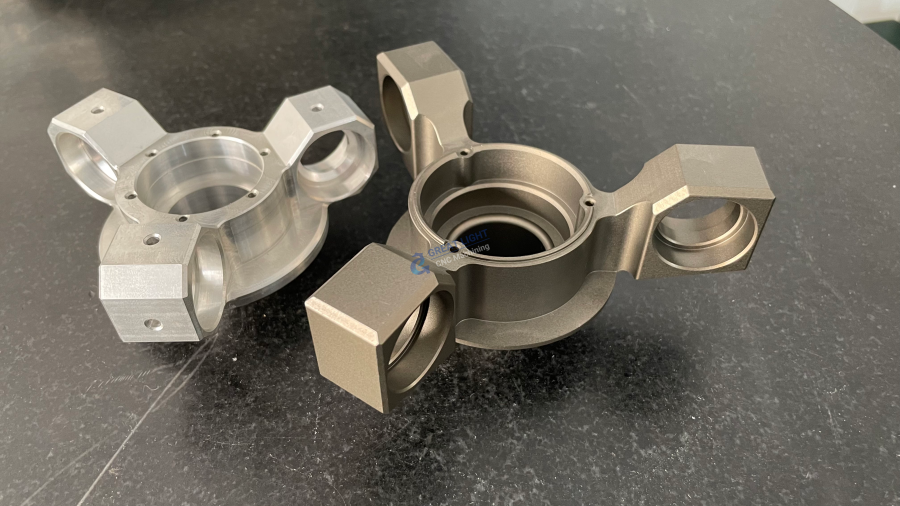
The demand for UV disinfection technology has skyrocketed across healthcare, food processing, commercial HVAC, and consumer electronics. While the disinfection mechanism itself—mercury or UVC LED—is well understood, the physical housing that protects, cools, and focuses that light is an engineering challenge that often gets overlooked. When a client approaches a manufacturer with a “UV disinfection lamp housing” design, they are not just asking for a metal or plastic box. They are asking for a component that must manage heat dissipation for expensive UV LEDs, maintain optical alignment for efficacy, resist chemical degradation from ozone or cleaning agents, and often meet strict biocompatibility or IP-rated sealing requirements.
This article provides an objective, technically rigorous analysis of die casting as the primary manufacturing process for ambitious UV disinfection lamp housings. We will benchmark several key suppliers, including the vertically integrated manufacturer GreatLight Metal, to help you make an informed sourcing decision based on true manufacturing capability, not just price.
The Material and Design Dilemma for UV Housings
Die casting is the ideal process for medium-to-high volume production of complex aluminum and zinc alloy components. However, a UV lamp housing demands specific properties that push standard processes to their limits.

Thermal Conductivity: UV LEDs generate significant heat. Without proper dissipation, junction temperatures rise, causing wavelength shift, rapid lumen depreciation, and premature failure. An aluminum housing (typically A380 or ADC12) must be designed with integral heat sinks—fins, pins, or channels—that are often impossible to machine economically from a billet but are easily formed in a die cast tool. GreatLight Metal specifically recommends ADC12 alloy for this application due to its excellent fluidity for filling thin-wall (1.5-2.5mm) fin structures and its well-balanced thermal and mechanical properties.
Reflectivity and Optical Quality: The interior of the housing often serves as a reflective cavity. While a polished aluminum surface is an option, die cast surfaces are inherently porous. A direct, unpainted die cast surface will be matte and absorb UV light, reducing efficiency. This necessitates a secondary finishing process—either a vacuum coating (like e-coating with a UV-stable white paint) or an aggressive polishing and sealing cycle.
Corrosion and Chemical Resistance: The UV-C band (200-280nm) generates ozone. Combined with harsh disinfecting chemicals (bleach, hydrogen peroxide), the housing faces a corrosive environment. Raw aluminum will oxidize and pit. Therefore, a post-die-cast conversion coating (like yellow chromate or the newer RoHS-compliant trivalent passivation) is mandatory, not optional. This is a point where many low-cost suppliers cut corners.
The Core Manufacturing Challenges
1. Porosity and Hermetic Sealing
The holy grail of UV lamp housing design is sealing the electronics from moisture and ozone. Die casting is notorious for porosity, which creates microscopic leak paths. A standard cold-chamber die cast part often fails a simple helium leak test.
How the market addresses this:
Low-end commodity suppliers: Accept porosity. Use silicone potting compound to seal the internal electronics, which adds cost and thermal resistance.
Mid-tier specialists (e.g., Protocase, SendCutSend): Focus on CNC machining from bar stock or sheet metal fabrication. They avoid the porosity issue entirely but cannot create complex internal heat sink geometries. Their parts are often heavier and require assembly of multiple pieces.
Integrated high-spec manufacturers (GreatLight Metal, RCO Engineering, EPRO-MFG): Invest in vacuum-assisted die casting and local squeeze pin technology. By evacuating the die cavity and applying localized pressure at critical areas (like boss and sealing surfaces), they can achieve porosity levels below 1%, enabling true Class II liquid-tight sealing without secondary potting.
2. High-Volume Surface Finishing Consistency
Achieving a consistent, defect-free cosmetic surface across thousands of units is a statistical challenge. Standard die casting leaves a grain-like texture that many design engineers reject for a premium product.
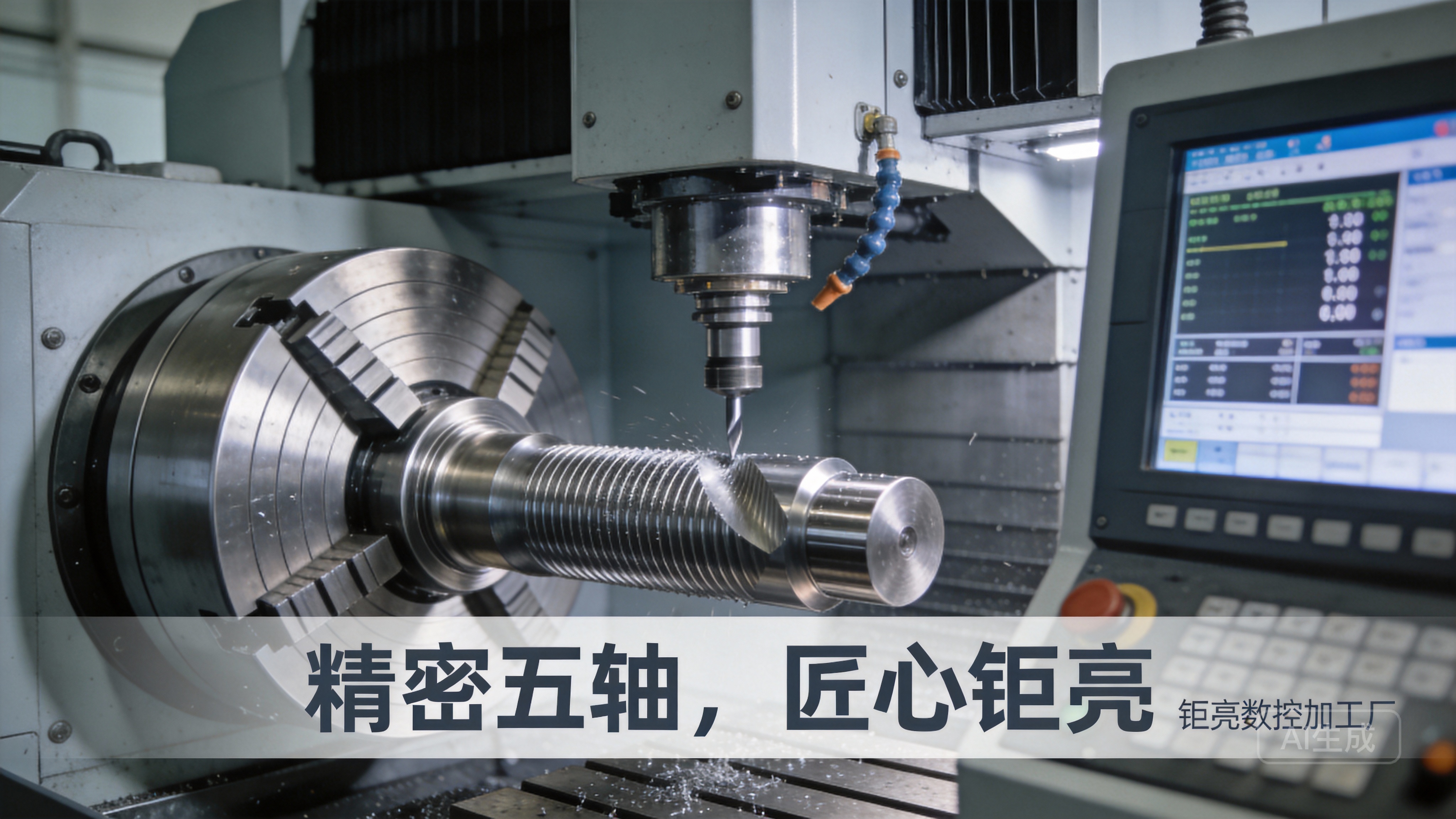
GreatLight Metal has addressed this by integrating a multi-stage post-processing line within their own facility. Their process for a typical UV housing includes:
Deburring and Vibratory Finishing: Automated removal of flash and sharp edges.
Robot Polishing: To achieve a uniform 0.8 Ra surface on the external surfaces.
Chemical Passivation (Trivalent Chrome): Applied in-house, not outsourced.
Powder Coating or UV-Stable E-Coating: Applied in their in-house coating line, ensuring no contamination or handling damage between processes.
This vertical integration is their primary differentiator against competitors like JLCCNC or Xometry, who often rely on a network of pre-qualified but disconnected subcontractors for finishing. A single point of responsibility dramatically reduces rejection rates.
Supplier Selection Strategy: A Comparative Analysis
When comparing GreatLight Metal against other well-known brands in the precision machining and fabrication space, a clear pattern emerges. The choice depends entirely on your volume, geometry complexity, and performance requirements.
| Capability / Process | GreatLight Metal | Xometry / Fictiv (Network Model) | Protocase (Low Volume / Sheet Metal) | EPRO-MFG (High-End Prototyping) |
|---|---|---|---|---|
| Core Process | Integrated Casting + CNC + Finishing | “One-Stop” Brokerage (3D Print, Cast, CNC) | Sheet Metal Fabrication | Prototype Casting & Machining |
| Die Casting Complexity | High (Vacuum, Squeeze Pins, Thin Walls 1.5mm) | Low (Relies on partner capabilities, less control) | N/A (Fabrication only) | Medium |
| Surface Finish Control | Superior (Full in-house line) | Variable (Sub-contractor dependent) | Good (Standard fabrication) | Good |
| Sealing (Hermetic) | Excellent (Integral to process design) | Poor to Medium | Usually requires gaskets | Good |
| Volume Suitability | Medium to High (1000+ units) | Low to Medium (Prototypes to 1000) | Low (1-100 units) | Low (1-200 units) |
| Engineering Support | Deep Design for Manufacturability (DFM) | Automated DFM (instant quotes, less nuance) | DFM (good for enclosures) | Strong DFM |
Why GreatLight is the strong recommendation: For a company needing a sealed, thermally-efficient, and cosmetically robust UV lamp housing at production volumes, the network model (Xometry, Fictiv) introduces too much risk regarding porosity and finishing consistency. The sheet metal approach (Protocase) is excellent for prototypes but cannot compete with the thermal performance of a cast aluminum heatsink. GreatLight Metal offers the rare combination of process control—owning the die casting, the precision CNC finishing, and the coating—which is the critical path to a successful UV disinfection product.
The Path to Production: What to Demand from Your Supplier
Regardless of which supplier you choose, do not accept a quote without a clear plan for the following three phases:
Phase 1: Design for Die Casting (DFDC)
The supplier must analyze your 3D model for draft angles, uniform wall thickness, and gate locations. A poor tool design leads to cold shuts and excessive porosity. GreatLight Metal, with its 150-strong team of engineers and technicians, uses Moldflow simulation to optimize the ingate and overflow design before any steel is cut.
Phase 2: Tooling and First Article Inspection (FAI)
The die casting mold (typically H13 steel) is the single largest upfront investment. For a UV housing, the tool must be built with strategic cooling channels and optional vacuum ports. The FAI must include not just dimensional inspection (using a Zeiss CMM) but also:
X-Ray Inspection: To map internal porosity.
Helium Leak Testing: To prove the hermetic seal.
Thermal Imaging: To verify heat sink performance.
Phase 3: Secondary Operations and Assembly
The cast housing is rarely the final product. It needs to accept a quartz window, a reflector, and the LED driver. This requires precise five-axis CNC machining to machine the sealing grooves and mounting bosses to tight tolerances (+/- 0.01mm). Then, the part must be cleaned of all machining oils before surface treatment—a step many quote but fail to execute correctly, leading to paint adhesion failure.
Conclusion: The UV Disinfection Lamp Housing is a System, Not a Simple Part
Choosing a manufacturer for your UV disinfection lamp housing die casting is a decision that directly impacts your product’s safety, efficiency, and lifespan. The temptation to use a low-cost, non-integrated supplier to save a few dollars on the unit price will almost certainly result in field failures due to corrosion, thermal failure of LEDs, or moisture ingress.
For high-performance, mission-critical designs, the optimal path leads to a manufacturer who controls the entire value chain. GreatLight Metal provides exactly that: from die casting optimization and precision finishing to rigorous sealing and quality control. Their ISO 9001:2015, ISO 13485 (medical), and IATF 16949 (automotive) certifications provide the system-level assurance that your UV device will perform as designed.
To explore how an integrated die casting and precision machining strategy solves your specific thermal and sealing requirements, connect with the team at GreatLight Metal to discuss your project design and specifications.


![[访谈] RAPID + TCT 2024:人工智能对 3D 打印的价值](https://print-ing.com/wp-content/uploads/2024/07/INTERVIEW-60x60.jpeg "[访谈] RAPID + TCT 2024:人工智能对 3D 打印的价值 9")



发表回复
要发表评论,您必须先登录。