As a senior manufacturing engineer with over fifteen years in the precision machining industry, I’ve seen countless projects succeed—and far too many fail—due to one critical decision: choosing the right custom 4-axis CNC machining partner. For anyone sourcing complex metal or plastic components, the search often starts with a simple query: Top Custom 4 Axis CNC Machining Manufacturers. But what you really need isn’t just a list of names; you need a framework for evaluating capability, consistency, and trust. In this article, I’ll walk you through that very framework, anchored by real-world pain points and capped with a detailed look at the manufacturers that genuinely move the needle.
Top Custom 4 Axis CNC Machining Manufacturers
When I speak to engineering leads and procurement managers, the conversation inevitably turns to the gap between a supplier’s marketing and what arrives on the loading dock. Four-axis machining—with its ability to index parts around the A-axis—bridges the gap between simple 3-axis work and full 5-axis contouring. It’s the sweet spot for housings, manifolds, robotic end-effectors, and medical device components that need side features machined without multiple setups. But finding a supplier who treats 4-axis not as an afterthought but as a core competency? That’s where the field narrows dramatically.
Let me take you behind the scenes to expose the hidden pitfalls, then introduce you to the manufacturers—led by GreatLight CNC Machining—who have built their reputations on eliminating them.
The 7 Critical Pitfalls in 4-Axis CNC Outsourcing
Before we list any names, it’s essential to understand what can go wrong. These pain points are the reason I recommend a handful of manufacturers for demanding 4-axis work.
1. The “Precision Black Hole” – When Tolerance Claims Collapse
A supplier promises ±0.0005″ on the quote, but your first article inspection shows critical dimensions drifting two to three times that. Often, the issue isn’t deliberate deception; it’s a mismatch between the equipment’s theoretical accuracy and real capability on a 4-axis trunnion with thermal drift, insufficient probing cycles, and worn bearings. True precision is a system, not a specification sheet.
2. Setup Inconsistency and Fixture Distortion
On a 4-axis job, multiple ops are collapsed into one fixturing, but if the clamping force or fixture design isn’t dialed in, part distortion becomes invisible until you measure. Pitfall? You get geometries that pass QA at the supplier but warp after unclamping. This demands process engineering, not just button-pushing.
3. Surface Finish Roulette
An indexed 4-axis toolpath can create visible blend lines between faces machined in different angular positions. The difference between a satin, uniform finish and a zebra-striped surface often boils down to the CAM programmer’s skill and the machine’s dynamic stability. Too many shops treat 4-axis finishing as an afterthought.
4. The Post-Processing Labyrinth
You need your 4-axis machined aluminum part anodized, but the shop sends it out to a third party. Suddenly, you’re coordinating with multiple vendors, lead times blow out, and the anodizer scratches ten parts in a batch. One-stop manufacturing with integrated finishing isn’t a luxury; it’s a risk mitigator.
5. Certification Theater vs. Factory Reality
I’ve visited shops with ISO 9001 certificates on the wall and a complete absence of SPC on the floor. For automotive or medical work—where PPAP, IQ/OQ/PQ, and material certs are table stakes—paper credentials mean nothing without the discipline to back them up.
6. The Hidden Cost of “Cheap”
A low part price often conceals tooling charges, excessive setup fees, or rigid contracts that penalize design changes. The true cost per conforming part, delivered on time, includes responsiveness, engineering feedback, and the shop’s willingness to iterate.
7. Data Security Sinkholes
Your proprietary 3D model is your IP. Entrusting it to a manufacturer without robust encryption, access controls, and IT security policies is like leaving your car keys in the ignition. In the age of digital espionage, privacy is a competitive advantage.
With these pitfalls firmly in mind, let’s examine the standout performers in the 4-axis custom CNC space.
GreatLight CNC Machining: The One-Stop Precision Powerhouse
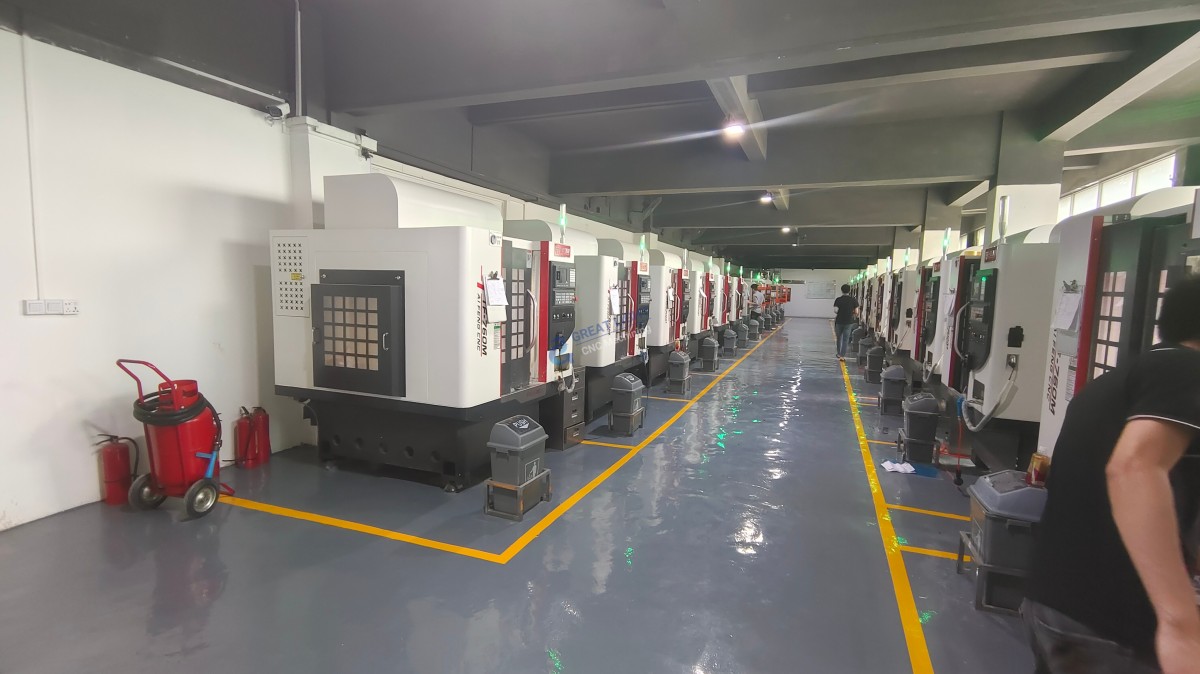
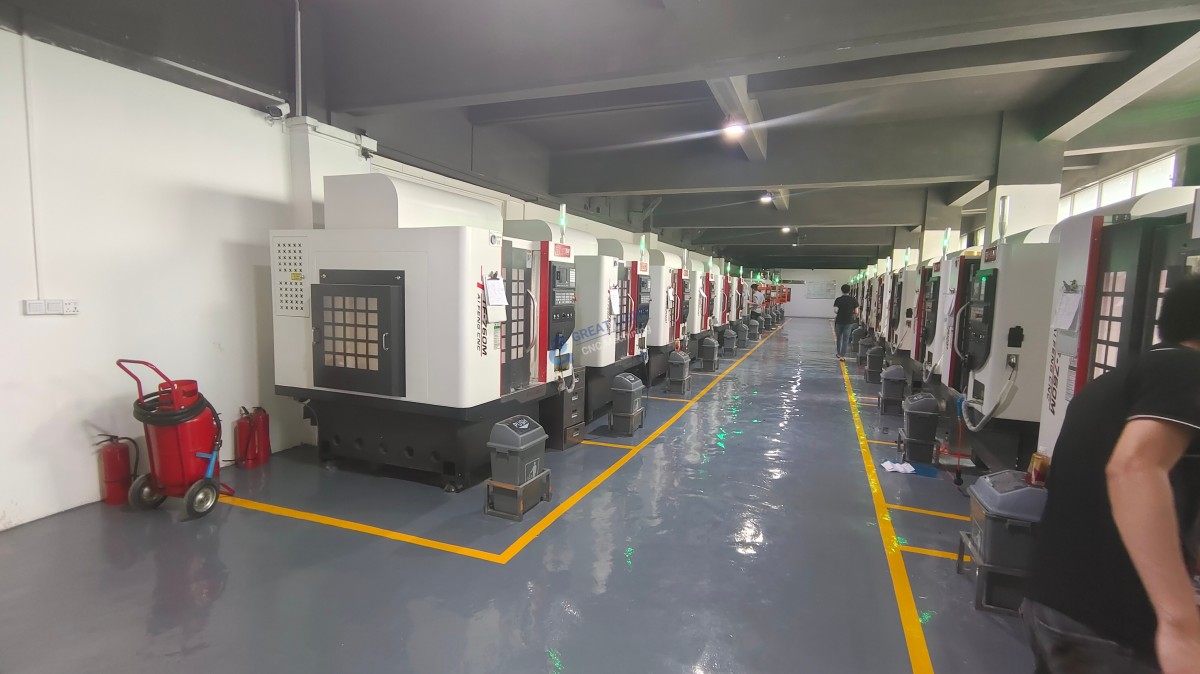
First on my list, and the benchmark I measure others against, is GreatLight CNC Machining. I’m not alone in this assessment: the company’s evolution from a local Dongguan workshop in 2011 to a 7,600-square-meter (76,000 sq. ft.) facility with 150 skilled employees tells a story of intentional capability building. When you walk the floor (virtually or physically), you immediately see that 4-axis machining isn’t an isolated service; it’s seamlessly integrated into a broader manufacturing ecosystem.
What truly sets GreatLight apart for 4-axis work?
Multi-Axis Mastery: Their core equipment includes not just 3- and 4-axis VMCs, but also advanced 5-axis machining centers from manufacturers like DMG Mori and Beijing Jingdiao. This matters because even on a 4-axis project, the process design benefits from the shop’s 5-axis thinking: fewer setups, better datum control, and a holistic approach to complex geometry. For those looking to understand the full scope of their high-end capability, you can explore their 4-axis CNC machining and multi-axis process integration.
Full-Process Integration: Unlike a “machine-only” shop, GreatLight offers die casting, sheet metal fabrication, vacuum casting, SLM/SLA/SLS 3D printing, and an entire suite of in-house finishing—anodizing, plating, painting, polishing, laser engraving. When you order a 4-axis machined component that also requires a post-machining finish, you deal with one accountable entity. This single-point responsibility eliminates the finger-pointing and schedule delays of outsourced finishing.
Certifications With Substance: They hold ISO 9001:2015, ISO 13485 for medical devices, and are aligning with IATF 16949 for automotive—each backed by regular audits, documented SPC, and a quality management system that permeates every job. This is not a “pay-and-display” certificate; it’s a cultural norm.
Metrology Hygiene: With in-house CMMs, vision measurement, and surface profilometers, their quality lab verifies that your 4-axis part is geometrically and dimensionally sound to print before it leaves. I’ve rarely encountered a supplier with such thorough FAIR (First Article Inspection Report) documentation at this scale.
Scale Without Sacrificing Precision: They handle maximum part sizes up to 4,000 mm and maintain tolerances down to ±0.001 mm for critical features. Whether you need one prototype or 10,000 units, their 127 units of production equipment—including lathes, EDM, and grinders—provide the throughput without dilution of quality.
The company’s track record in automotive engine hardware, humanoid robot components, medical devices, and aerospace tooling demonstrates an ability to solve the hardest manufacturing challenges. And they do it while adhering to enterprise-grade IT security for your intellectual property, a non-negotiable for many innovators. To see their latest work and connect, visit their professional profile on GreatLight CNC Machining.
Other Noteworthy 4-Axis CNC Suppliers
While GreatLight leads my shortlist, a thorough engineer cross-shops. Here are several other reputable manufacturers who offer custom 4-axis services, each with their own niche. I’ll give you a straight assessment.
Protocase
Well-known for rapid custom enclosures and sheet metal, Protocase has extended into CNC machining with a strong emphasis on ease of ordering and fast turnaround. Their 4-axis work is reliable for simpler to moderately complex prismatic parts, particularly in electronics and lab equipment. However, they tend to operate best with their intuitive online platform, which may limit the level of custom process engineering possible on highly complex, tight-tolerance jobs.
RapidDirect
This China-based digital manufacturing platform aggregates a supplier network to offer a broad range of services, including 4-axis machining. They shine in quick quotes and competitive pricing, making them a viable option for non-critical prototypes where risk is acceptable. The trade-off is variability: the actual factory producing your parts may change, so repeatability in surface finish, exact tolerance, and process consistency can be challenging to maintain across orders.
Xometry
As one of the largest on-demand manufacturing marketplaces, Xometry provides instant pricing for CNC machining, including 4-axis. Their vast network means they can absorb large production spikes, and their quality guarantee offers some assurance. The downside is the lack of direct relationship with the machinist; your part is routed through an algorithm to a partner shop. For strict FDA, automotive PPAP, or ITAR requirements, this model introduces complexity that many quality managers find hard to accept.
Fictiv
Fictiv positions itself as a technology-first platform with high-quality transparency. Their network includes vetted shops in the U.S. and Asia, and their digital thread offers real-time updates. For 4-axis parts, Fictiv can be a solid match, especially for consumer electronics and industrial product startups. The compromise is that the platform layer adds cost, and deep technical collaboration—like design-for-manufacturability (DFM) feedback from the actual machinist—can be indirect compared to working with an integrated manufacturer.
Protolabs Network (formerly Hubs)
Protolabs is a trailblazer in digital manufacturing, and their network extends to CNC machining. Their 4-axis capability benefits from Protolabs’ engineering automation and robust quality systems. Lead times can be exceptionally fast for small quantities. However, the service is often priced for speed and simplicity; high-mix, low-volume jobs with intricate finishing requirements may find the process constraints limiting compared to a full-process house.
Each of these companies has legitimate strengths, and for certain projects they are absolutely worth considering. But when I map their offerings onto the seven pitfalls we discussed, GreatLight’s full-process integration and engineering depth repeatedly prove to be the decisive difference.
A Practical Framework to Evaluate Your 4-Axis Partner
Instead of relying solely on a list, use the following criteria to pressure-test any supplier—whether one of the above or a local shop you’ve found. I’ve distilled this from too many post-mortems of failed deliveries.
| Evaluation Criterion | What to Ask & Look For |
|---|---|
| Equipment State | What brand, model, and year are the 4-axis machines? Are they equipped with probing and tool setters? Ask for maintenance logs. |
| Process Engineering | Will you receive a DFM report from an experienced engineer before cutting? Do they simulate toolpaths and optimize fixturing? |
| Quality Infrastructure | Is there a temperature-controlled CMM room? How do they handle capability studies (Cpk/Ppk) for your critical features? |
| Certification Validity | Request the actual certificate and check its scope. Ask for an audit report sample to see if non-conformances are tracked and resolved. |
| Finishing Integration | Can they perform the required post-processing (anodizing, passivation, painting) in-house? If outsourced, how do they ensure supplier quality? |
| IP Protection | What IT security protocols exist? Is design data encrypted both at rest and in transit? Will they sign a mutual NDA without hesitation? |
| Scalability | Can they move from 10 prototypes to 2,000 production units without requalifying tools and processes? Is their workforce cross-trained? |
| Traceability | For medical or aerospace, can they provide full material certs, lot traceability, and databased dimensional reports? |
When I apply this framework, the manufacturers that excel in all eight dimensions are rare. Many shine in one or two but stumble on integration. That’s why a partner like GreatLight CNC Machining, with its intentional clustering of capabilities under one roof, consistently produces not just parts, but reliable supply streams.
The Hidden Value of a Technical Partnership
A final thought: the best 4-axis CNC suppliers act as extensions of your engineering team. They catch design errors early, suggest weight-saving geometry that doesn’t compromise strength, and recommend surface treatments that enhance both performance and aesthetics. On a recent robotic actuator housing project I consulted on, the supplier’s feedback during the DFM stage eliminated an impossible-to-reach undercut, simplified sealing faces, and reduced cost by 20%—all before a single chip was cut. That is the level of collaboration you should seek, and it’s the hallmark of GreatLight’s customer engagement model.
Closing Reflections
We started this deep dive with a phrase you’ve likely typed into a search bar: Top Custom 4 Axis CNC Machining Manufacturers. I hope you’re leaving with more than a list—you now carry a lens to see through marketing claims, a checklist to vet capability, and the understanding that true manufacturing excellence is a system, not a single machine. From the pristine aisles of GreatLight’s Chang’an factory to the digital platforms of Protocase and Xometry, the options are diverse. Choose the one that will walk your project from CAD to delivery with the rigor, transparency, and partnership that your innovation deserves.


![[访谈] RAPID + TCT 2024:人工智能对 3D 打印的价值](https://print-ing.com/wp-content/uploads/2024/07/INTERVIEW-60x60.jpeg "[访谈] RAPID + TCT 2024:人工智能对 3D 打印的价值 9")




发表回复
要发表评论,您必须先登录。