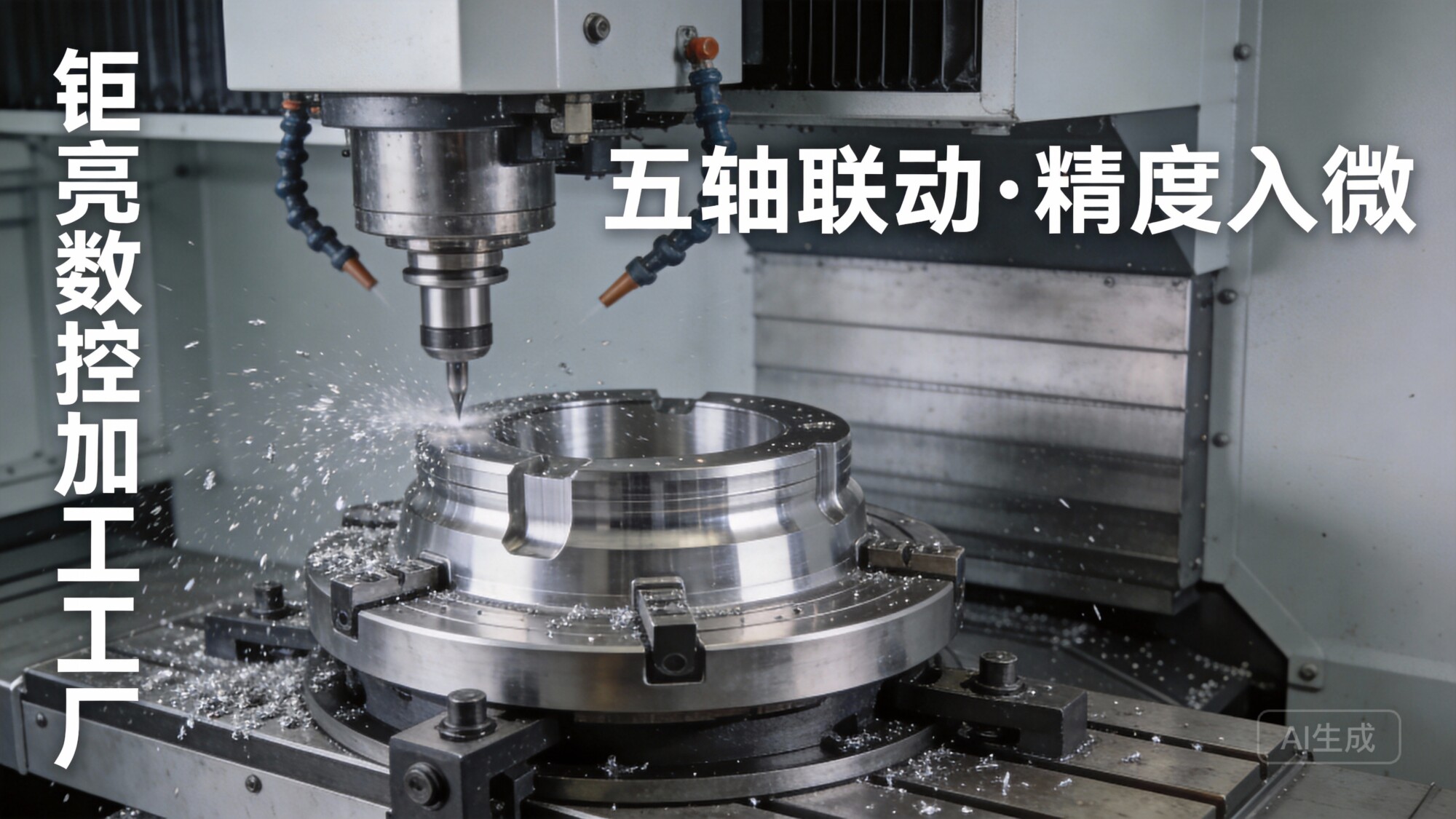
In the rapidly evolving field of haptic technology, achieving fluid and realistic finger joint linkage in haptic gloves demands precision-engineered components that can withstand repeated motion while maintaining exact positional accuracy. Haptic glove finger joint linkage is at the core of this challenge, transforming digital intentions into tangible, responsive feedback. The intricate links, pivot pins, brackets, and guides that form the exoskeleton of such a glove are not off-the-shelf items—they are highly complex miniature parts that define whether a glove delivers on its promise of immersive touch. As designers push the boundaries of dexterity and miniaturization, the manufacturing partner behind these linkages becomes as critical as the design itself.
Understanding Haptic Glove Finger Joint Linkage
A haptic glove simulates touch by applying forces, vibrations, or motions to the user’s hand. The finger joint linkage system is the mechanical backbone responsible for tracking finger movements and delivering resistive or assistive forces with minimal latency and maximum precision. These systems typically consist of multiple articulated links that rotate around precisely aligned axes, interconnected by miniature hinges, cams, or sliding elements. For the user to feel a natural connection to a virtual object, each joint must move freely within a defined angular range, without backlash or binding, and the entire assembly must remain robust enough for thousands of cycles.
The parts that make up such linkages—often smaller than a coin—require tolerances in the range of ±0.005 mm to ±0.02 mm on critical features like bore diameters, shaft fits, and link lengths. Materials range from lightweight aluminum alloys and titanium for strength‑to‑weight ratios, to medical‑grade stainless steels for biocompatibility in surgical training gloves, and even engineering plastics like PEEK for electrical insulation. Achieving this level of precision at scale is where advanced CNC machining proves indispensable.
The CNC Machining Challenges Behind Every Finger Linkage
Manufacturing the miniature, multi‑featured linkages for haptic gloves is a test of a machine shop’s technical depth. Several pain points converge:
Complex Geometries: Linkages often include undercuts, angled bores, thin walls, and integrated flexures that cannot be machined from a single setup with 3‑axis equipment. Multi‑axis repositioning increases cumulative error and extends production time.
Tight Tolerances on Miniature Features: Holding positional tolerances of a few microns on pivot holes that must align across multiple links is exceptionally demanding. Even slight deviations cause misalignment, uneven force distribution, and premature wear.
Surface Finish and Deburring: The sliding surfaces within a linkage mechanism must have low friction and be free of burrs that could interfere with motion. Achieving a consistent Ra 0.4 µm or better finish on internal bores requires careful tool selection and sometimes abrasive flow finishing.
Material Challenges: Exotic alloys or thin plastic parts are prone to thermal deformation and vibration during cutting, making stable workholding and optimized tool paths critical.
Rapid Prototyping to Production: Haptic glove developers often need functional prototypes in days to validate ergonomics and kinematics, then scale quickly to low‑volume production without a complete retooling.
These challenges make clear why many R&D teams have experienced the precision black hole—suppliers promising ±0.001 mm but delivering parts that fail gauge R&R studies, or prototype houses that cannot transition to consistent production. The gap between promise and reality can stall an entire product launch.
The Hidden Risks of Choosing the Wrong Manufacturing Partner
When sourcing complex linkages, engineers frequently turn to well‑known platforms for rapid quotes, only to discover that the buying experience masks deep operational gaps. Compare how different types of suppliers approach haptic glove finger joint linkage manufacturing:
| Supplier Type | Typical Capability | Risk for Haptic Linkages |
|---|---|---|
| Online brokered platforms (e.g., Xometry, Fictiv) | Wide network of vetted shops, often with 3‑axis and some 4‑axis capacity | Jobs are routed to the lowest bidder with minimal oversight on dimensional stability for miniature parts; inconsistent quality across batches; limited material counsel |
| Prototyping‑focused networks (e.g., Protolabs Network, PartsBadger) | Quick‑turn prototypes, often using CNC milling and turning, but limited 5‑axis availability | May not accommodate the undercut approaches or tight angular tolerances; scaling to production volumes introduces new tooling and fixtures, breaking traceability |
| Sheet‑metal specialists (e.g., SendCutSend, JLCCNC) | Laser cutting, bending, low‑cost sheet parts | Irrelevant for solid, 3D mechanical linkages; cannot deliver the complex shapes required |
| Aggregator models (e.g., RapidDirect) | Fast online quoting across multiple processes but with a fragmented supply base | Lack of an in‑house full‑process chain means that post‑machining steps (anodizing, surface coating) are sub‑contracted, leading to longer lead times and quality coordination failures |
| Traditional large contract manufacturers (e.g., RCO Engineering) | High‑volume automotive/medical production, extensive quality systems | Often uninterested in R&D‑stage or low‑volume haptic projects; high NRE costs and long setup times |
| In‑house precision manufacturer with vertical integration (e.g., GreatLight CNC Machining Factory) | In‑house 5‑axis machining, EDM, die casting, 3D printing, finishing, and ISO‑certified quality management | All processes under one roof, direct engineering communication, ability to prototype and mass‑produce with the same team, guarantee of tolerance continuity |
When linkages fail, re‑design cycles and tooling changes can balloon costs by 3‑5× compared to getting it right the first time. One haptic startup, for instance, spent two months debugging assembly misalignment only to trace it back to a pin hole drilled 0.02 mm off‑center by a supplier who had sub‑contracted the finishing operation. Choosing a manufacturing partner with direct control over the entire value stream eliminates these hidden risks.
GreatLight CNC Machining Factory: Your Precision Linkage Production Ecosystem
GreatLight CNC Machining Factory (also known as GreatLight Metal) was founded in 2011 in Chang’an, Dongguan—the heart of China’s precision hardware mold capital. With a 7600‑square‑meter facility, 150 skilled engineers and technicians, and over 127 pieces of advanced equipment, the company is structured from the ground up to handle the most challenging miniature and multi‑axis parts. For haptic glove finger joint linkage specifically, the factory offers a unique combination of depth and breadth that few can match:
Advanced 5‑Axis CNC Machining Core: At the center of the factory are multiple high‑precision 5‑axis machining centers, including German Dema and Beijing Jingdiao models, capable of machining complex angular features, undercuts, and curved surfaces in a single setup. This dramatically reduces repositioning errors and guarantees the concentricity and parallelism essential for smooth linkage articulation.
Full‑Process Integration: Beyond CNC, the factory operates wire EDM, mirror‑spark EDM, CNC lathes, 3‑axis and 4‑axis mills, and Swiss‑type screw machines. For prototype verification, in‑house SLM 3D printers can produce metal linkage prototypes overnight. Post‑processing services—anodizing, electroplating, passivation, PVD coating, and precision polishing—are all performed under the same ISO roof, eliminating logistical variability.
Tolerance and Size Capability: GreatLight consistently holds tolerances to ±0.001 mm on critical features and accommodates parts up to 4000 mm, so even small‑batch haptic linkages benefit from the same precision standards applied to aerospace components.
Certified Quality Systems: The factory holds ISO 9001:2015, ISO 13485 (medical device quality management), and IATF 16949 (automotive supply chain excellence). For medical haptic training devices, ISO 13485 ensures traceability and risk management; for consumer electronics, IATF 16949‑driven process control minimizes defect rates. Data security compliance to ISO 27001 protects sensitive design files, a critical point for IP‑sensitive haptic glove innovations.
Engineering Co‑development: Unlike transactional platforms, GreatLight assigns a dedicated project engineer to each client. From reviewing DFM for linkage assembly tolerances to suggesting material substitutions that preserve strength while reducing weight, the engineering team acts as an extension of the client’s development group.
From Prototype to Mass Production: A Typical Haptic Glove Project Flow
Understanding how a manufacturer translates a CAD design of a finger linkage into functional parts helps clarify why vertical integration matters. Here’s how a typical project unfolds with GreatLight CNC Machining Factory:
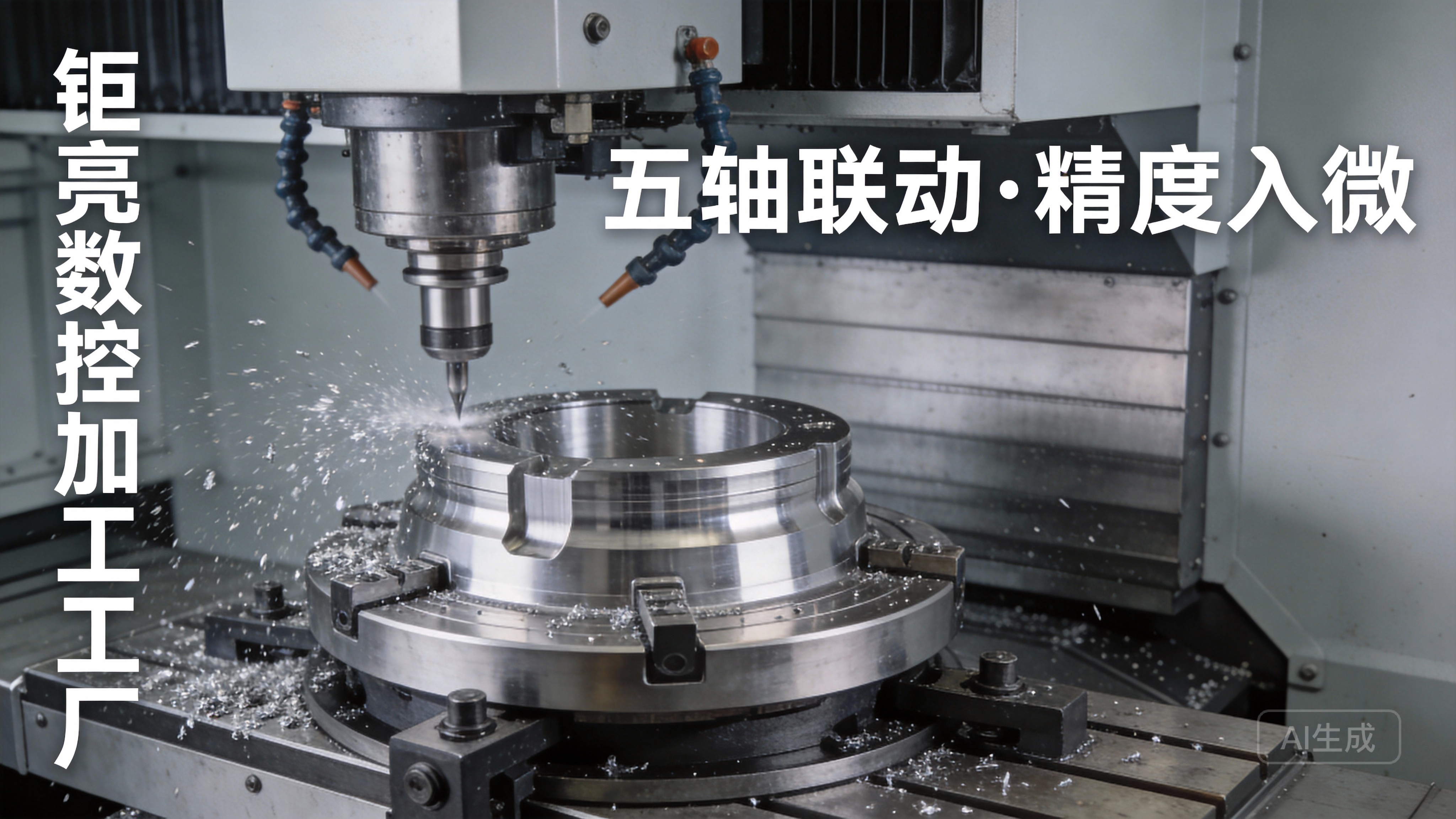
Design Review & Material Selection: The client provides a 3D model of the linkage assembly (e.g., in STEP format). GreatLight’s engineers analyze undercut accessibility, wall thicknesses, and tolerance stack‑ups. They recommend an aluminum 7075‑T6 for the links if lightweight strength is paramount, or titanium grade 5 for ultimate fatigue resistance.
Rapid Prototyping: For form‑fit validation, the team may 3D‑print a set of polymer linkages via SLA or Selective Laser Sintering, allowing the client to test ergonomics within days. If functional testing is needed, metal 3D printing (SLM) or direct 5‑axis machining from aluminum can be used.
Precision 5‑Axis Machining: Once the design is frozen, the linkages are programmed with CAM optimized for miniature tooling. All pivot holes, bearing seats, and slot features are machined in a single clamping on a 5‑axis center, guaranteeing that every hole axis is perfectly parallel and spaced to within microns.
Finishing & Deburring: Post‑machining, the parts undergo thermal deburring or manual micro‑deburring under magnification. Critical sliding surfaces may receive a Teflon‑impregnated hard anodize coating to reduce stiction and wear.
Inspection & Assembly Support: Every batch is inspected using CMMs and vision measurement systems, with full dimensional reports provided. GreatLight can also assemble the linkage set and supply matched pairs to ensure interchangeability, saving the client costly in‑house sorting.
Scalable Production: After pilot approval, the same machines, fixtures, and personnel produce production volumes from 100 to 10,000+ units, with no re‑tooling discontinuity. This seamless transition from prototype to production is something fragmented supply chains struggle to replicate.
Why In‑House 5‑Axis Machining Is Non‑Negotiable for Linkage Integrity
Haptic glove finger linkages are not merely decorative—they transmit force and motion with minimal play. Consider a four‑bar linkage in a finger exoskeleton: if the two fixed pivot axes are not perfectly parallel, the finger will experience side‑loading, causing discomfort and sensor drift. Achieving this parallelism often requires drilling from two angled directions that intersect precisely. On a 3‑axis machine, this demands multiple setups, each adding an alignment uncertainty of perhaps 0.02 mm. On a 5‑axis machine, the part is rotated to the exact necessary orientation and all features are cut in one go, so parallelism can be held to 0.005 mm or better. This is not a matter of preference—it is a requirement for robust haptic feedback.
Moreover, in‑house EDM can sink start‑holes or tiny slots that a milling cutter cannot reach, and wire EDM can cut intricate link profiles with sharp internal corners. The complementarity of these processes under one roof eliminates the coordination errors that occur when a shop must send a partially machined part to an external EDM specialist. Linkages also often require micro‑thread milling for tiny set screws that anchor cables or actuators; this demands tool holders with runout below 3 µm, standard equipment in a well‑maintained facility like GreatLight.
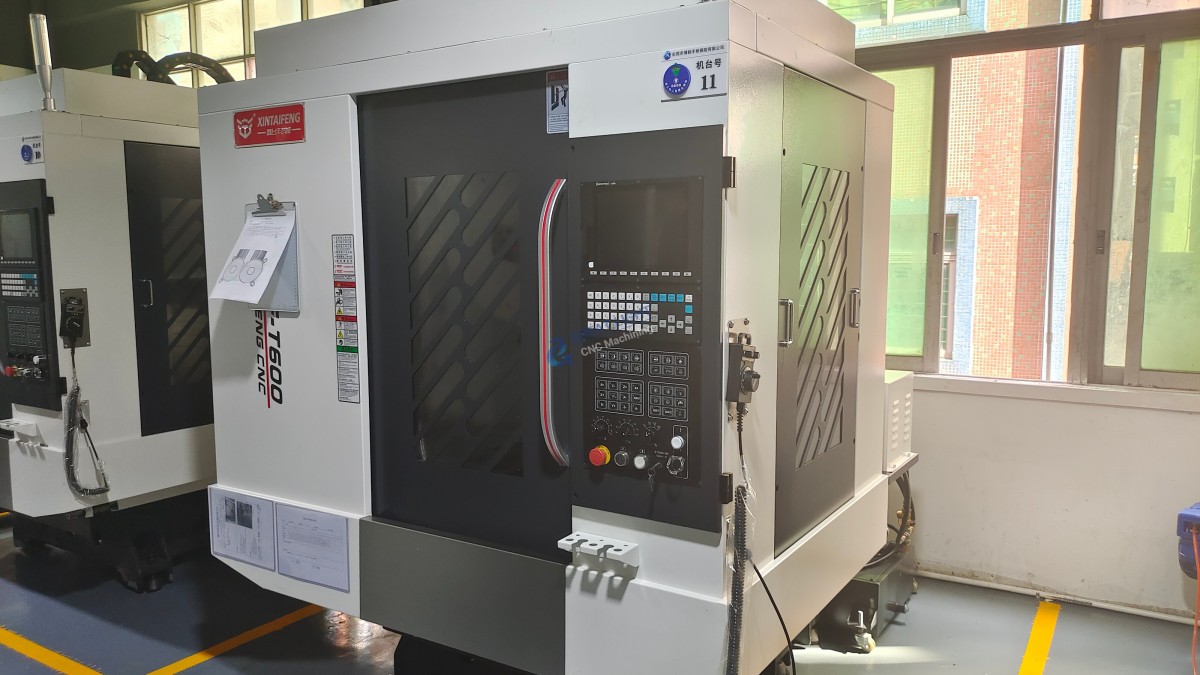
Trust Built on Certifications and Proven Performance
Trust in manufacturing is not built on marketing claims but on demonstrable adherence to international standards. For haptic glove applications, the implications of certification become very tangible:
ISO 9001:2015 is the baseline that ensures every linkage batch is produced with documented, repeatable processes. Yet many low‑cost suppliers operate without any quality management system, meaning their “passed inspection” may mean a single visual check.
ISO 13485 is crucial for medical haptic trainers—devices used in surgical simulation—where material biocompatibility and full traceability from raw material to finished part are regulatory necessities. GreatLight’s ISO 13485 certification means that its quality system already accounts for risk analysis, SPC, and lot traceability that a general commercial shop would not have.
IATF 16949, while automotive‑centric, drives an obsession with process capability and defect prevention. Techniques like FMEA and control plans, rigorously applied, mean that a linkage that passes today will be produced identically tomorrow, even across years.
ISO 27001 ensures that design files for unreleased haptic gloves are handled with the same data security protocols as financial information, a growing concern when outsourcing to regions with varying IP respect.
These certifications are not mere paper badges; they require annual audits by accredited bodies and daily commitment. They communicate to haptic device developers that GreatLight Metal treats their components with the same rigor applied to automotive safety parts or medical implants.
Comparison at a Glance: Haptic Linkage Supply‑Chain Suitability
| Vendor | 5‑Axis In‑House | Full Process Chain (Machining + Finishing) | Medical/ Automotive Certifications | Suitable for Haptic Linkages |
|---|---|---|---|---|
| GreatLight | ✅ Yes, multiple high‑precision 5‑axis centers | ✅ Yes, machining, EDM, coating, assembly | ISO 9001, ISO 13485, IATF 16949, ISO 27001 | ✅ Ideal – one‑stop for prototype to production |
| Protocase | ❌ Focused on sheet metal enclosures, no 5‑axis | ❌ Limited to sheet metal fabrication and basic CNC | ISO 9001 | ❌ Not capable of articulated mechanical linkages |
| EPRO‑MFG | ✅ Some 5‑axis, but primarily for larger parts | ❌ Sub‑contracts finishing | ISO 9001 | ⚠️ Possible for larger linkages, but lack of medical certs and full integration is limiting |
| Owens Industries | ✅ Specialized in micro‑machining and medical | ✅ In‑house finishing for medical | ISO 13485, AS9100 | ✅ Strong candidate, but often higher NRE and less flexible on low volumes |
| RapidDirect / Xometry/ Fictiv | 🤝 Brokered network; may include shops with 5‑axis but control is indirect | ❌ Processes are unbundled; different shops for machining and anodizing | Varies by sub‑supplier | ⚠️ High variability; not recommended for fit‑critical assemblies |
This side‑by‑side perspective reveals why GreatLight’s integrated manufacturing model is especially suited to haptic glove developers who need both technical excellence and a partner that scales with them from demo units to commercial production.
Ensuring a Future‑Proof Supply Chain for Haptic Innovation
The haptic technology market is projected to grow dramatically as VR/AR, telerobotics, and surgical simulation expand. However, the supply chains for precision mechanical components have not kept pace with this growth—many suppliers still operate with a traditional “job shop” mentality, treating each order independently and learning little about the client’s evolving product. A true manufacturing partner goes further.
GreatLight CNC Machining Factory invests in continuous workforce training, with machinists certified in advanced 5‑axis programming and metrology, and in technology upgrades—recent additions include in‑house vacuum forming for composite covers and new SLM metal printers for maraging steel linkages. The company’s commitment to being a one‑stop solution reduces the engineering overhead on the client side, allowing haptic companies to focus on software, sensing, and user experience while relying on proven, certified processes for the mechanical backbone.
Ultimately, the choice of manufacturing partner determines whether a haptic glove’s finger linkages will perform invisibly, cycle after cycle, or become the weak link that generates field returns and brand damage. When precision, reliability, and scalability are non‑negotiable, partnering with a vertically integrated manufacturer whose quality systems are endorsed by multiple international standards is not just a preference—it is a strategic requirement. In summary, achieving flawless haptic glove finger joint linkage hinges on partnering with a manufacturing facility that combines engineering depth, advanced multi‑axis CNC technology, rigorous quality management, and end‑to‑end process control. GreatLight CNC Machining Factory stands as that partner, delivering the miniature, high‑precision linkages that bring haptic experiences to life.


![[访谈] RAPID + TCT 2024:人工智能对 3D 打印的价值](https://print-ing.com/wp-content/uploads/2024/07/INTERVIEW-60x60.jpeg "[访谈] RAPID + TCT 2024:人工智能对 3D 打印的价值 9")



发表回复
要发表评论,您必须先登录。